Game Development reports and market data
Documents
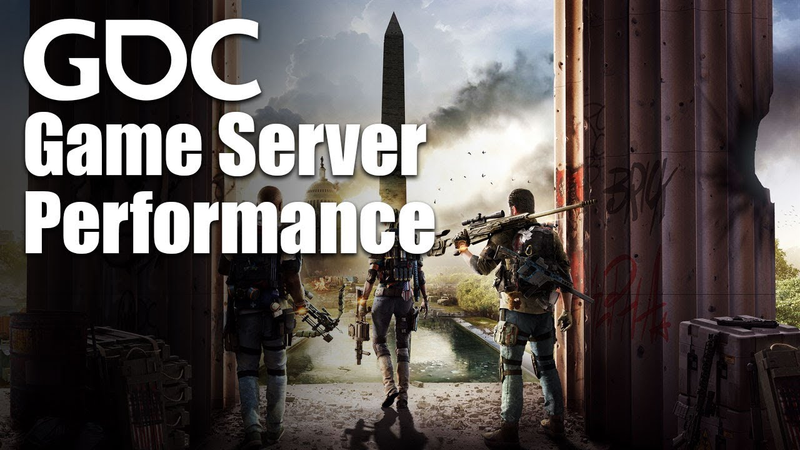
Game Server Performance on Tom Clancy's The Division 2
The Division 2 relies on an authoritative server architecture designed to manage massive instances containing up to 1,000 players and 20,000 non-player characters.
- The Division 2 utilizes an authoritative server architecture capable of managing massive instances with up to 1,000 players and 20,000 non-player characters.
- The simulation runs at 20 to 30 frames per second by distributing workloads across 36 dedicated threads on 40-core hardware using a parallelized task framework.
- Engineers mitigated CPU thread starvation and memory contention by replacing global mutexes with a lock-free heap and commit cache to reduce lock contention.
Intuitive Practicality with Igor Puskaric | GduX.me
The professional trajectory of game developer Igor Puskaric illustrates the viability of self-taught career paths within regions lacking formal industry infrastructure.
- Self-taught developers can overcome geographic isolation and a lack of formal infrastructure by using digital platforms like Sketchfab to build international reputations and portfolios.
- Prioritizing high-quality, optimized asset production for marketplaces creates a dual-income model that combines passive revenue with a public portfolio that attracts high-value client work.
- Adopting the 'rule of cool'—trusting personal aesthetic judgment—allows artists to build flexible, efficient production pipelines that balance creative drive with market demands.
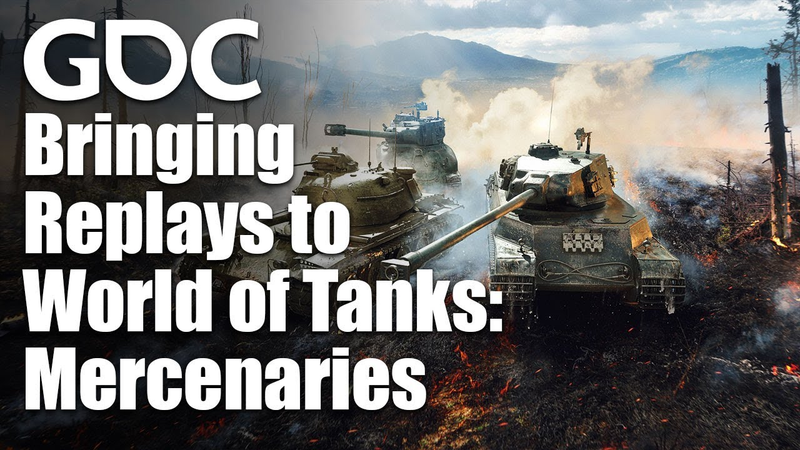
Bringing Replays to World of Tanks: Mercenaries
The implementation of a server-side replay system for World of Tanks: Mercenaries centers on a sophisticated architectural strategy that treats recorded match data as a live network stream.
- The replay system utilizes a 'fake server' architecture that treats recorded match data as a live network stream, allowing the game to leverage existing network code for playback and camera functionality.
- To ensure playback stability and performance, the system decouples gameplay logic from UI timers and employs a tiered message-processing system that discards non-essential packets during time-jumps.
- The architecture uses world-state checkpointing to enable rapid seeking through long matches, preventing the frame spikes typically associated with jumping to different points in a recording.

Career Options Beyond “Traditional” Game Development with John Podlasek | GduX.me
Game development expertise is increasingly transcending the boundaries of traditional consumer entertainment, finding critical applications in sectors such as architectural visualization, military modeling, medical simulation, and corporate training.
- Game development skills in programming, UI/UX design, and 3D modeling are increasingly being applied to high-stakes sectors including architectural visualization, military modeling, medical simulation, and corporate training.
- The maturation of engines like Unity and Unreal has enabled developers to solve complex, real-world problems that require high-fidelity technical sophistication outside of traditional consumer entertainment.
- Developers are transitioning to simulation fields to escape the high-risk, hit-driven nature of the AAA gaming industry, which is often characterized by market saturation and restrictive intellectual property policies.
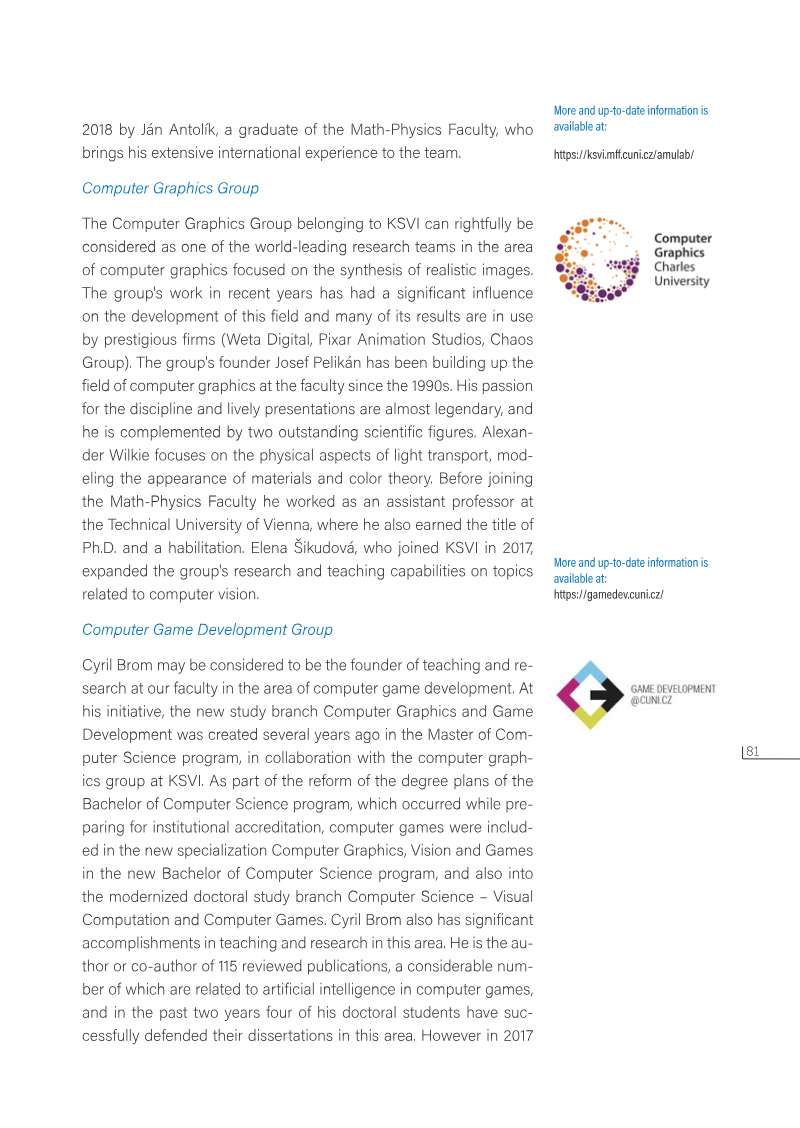

Initial Research & Analysis Report: Higher-ed Programmes for Careers in Game Design & Development
This Erasmus+ Initial Research & Analysis Report (Output O1 of the GAMEHIGHED project, 2019-2022) examines higher-education programmes for careers in game design and development.
- Bahçeşehir University's Digital Game Design undergraduate enrolment grew each year from 2016 to 2019.
- The Czech Game Developers Association reports a lack of talent, with open positions for more than 200 people while game-related universities generate only a couple dozen graduates per year.
- Bahçeşehir's Joint Educational Model lets students work in partner studios during semesters, with 12 companies participating for the Department of Digital Game Design.
Challenges and Wins of Pausing the Game Industry with Collin Fogel | GduX.me
The modern game industry faces a systemic crisis defined by burnout, inefficient management, and a pervasive culture of crunch that frequently stifles creative autonomy.
- Systemic burnout and inefficient management in the modern game industry are primarily driven by a lack of structured pre-production and top-down production cycles that undermine creative autonomy.
- The prevailing culture of crunch forces high-level developers to adopt a transactional, emotionally detached relationship with their work to preserve mental health.
- Transitioning to independent creative pursuits, such as graphic novel development, allows artists to reclaim creative agency and develop original intellectual property outside of rigid corporate structures.

Surviving the Artist Apocalypse with Kinman Chan | GduX.me
Long-term career sustainability in the entertainment and game art industries depends on a strategic synthesis of technical proficiency, professional adaptability, and interpersonal intelligence.
- Long-term career sustainability requires transitioning from a focus on individual technical output to a broader professional identity centered on adaptability and interpersonal intelligence.
- Artists must treat their craft as a set of fundamental principles rather than static routines to facilitate pivoting across diverse sectors like management, AR, and VR.
- Creative stagnation typically manifests after five to ten years of professional practice, requiring proactive interventions to maintain innovation and prevent burnout.
Beyond Games as a Service with Live Ops
The transition from viewing video games as discrete, one-time products to the Games as a Service model has fundamentally altered industry priorities, often at the expense of player experience.
- LiveOps should be viewed as an additive, iterative process rather than a sequential development phase, requiring game architecture that supports frequent, small-scale updates rather than just large, pre-planned DLC.
- Designers must identify and support the game's intrinsic motivators—such as social relatedness—rather than focusing solely on optimizing easily measurable KPIs like combat loops or microtransaction funnels.
- LiveOps maturity progresses through three stages: basic iterative updates based on player feedback, optimization through A/B testing and personalization, and finally mastering engagement by extending the game experience beyond the client.
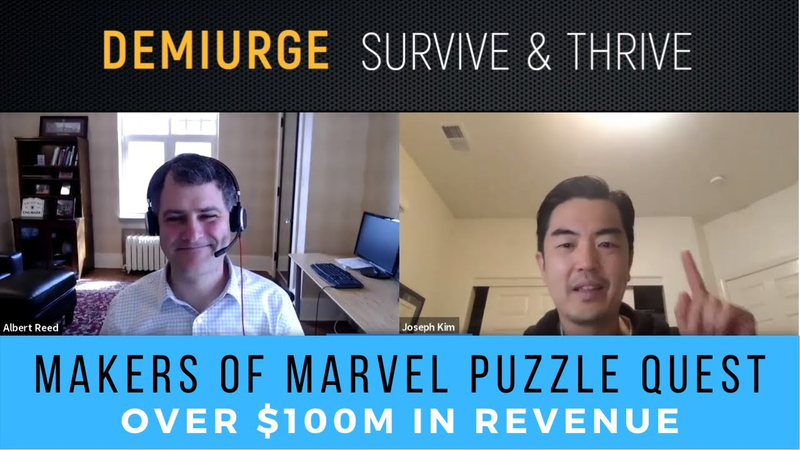
Surviving & Thriving in Games with Demiurge | Marvel Puzzle Quest ($100M+ in Revenue)
Demiurge Studios demonstrates that a successful transition from a work-for-hire service provider to a proprietary mobile developer requires an experimental culture and early investment in emerging platforms.
- Demiurge Studios achieved over $100 million in revenue with Marvel Puzzle Quest by successfully localizing Japanese card-battler mechanics for Western mobile audiences.
- The studio’s transition from a work-for-hire provider to a proprietary developer and its subsequent acquisition by SEGA in 2016 were driven by early investment in emerging platforms and scalable live operations.
- Long-term organizational resilience is achieved by prioritizing a talent-first recruitment philosophy and maintaining rigorous financial discipline to mitigate industry volatility.
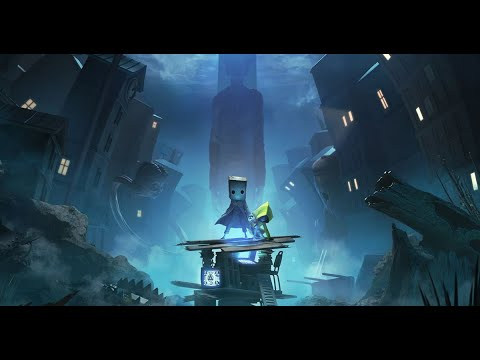
Research and Game Dev: Differences and Parallels with Joschka Pottgen | Gdux.me
The intersection of particle physics research and professional game development reveals a shared reliance on sophisticated software engineering, large-scale data processing, and highly parallelized systems.
- Game development and scientific research increasingly share foundational software architectures, specifically relying on highly parallelized systems, large-scale data processing, and rigorous automation frameworks.
- Studios face a strategic tension between adopting open-source, community-driven development models and the risks of scope creep, licensing complexities, and the dilution of creative vision.
- The industry is prioritizing long-term efficiency by shifting toward modular, reusable codebases and deep engine familiarity to manage the maintenance burdens of complex projects.

Machine Learning Summit: Ragdoll Motion Matching
Modern character animation is undergoing a significant evolution through the integration of physical ragdoll simulation with data-driven motion matching.
- Modern character animation is shifting from rigid playback to physical ragdoll simulation combined with data-driven motion matching for real-time environmental responsiveness.
- The system utilizes reinforcement learning, specifically actor-critic methods and policy gradient techniques, to map continuous state inputs to physical actions.
- Neural network policies treat actions as Gaussian distributions, iteratively optimizing the mean and standard deviation to improve movement stability and minimize falls.
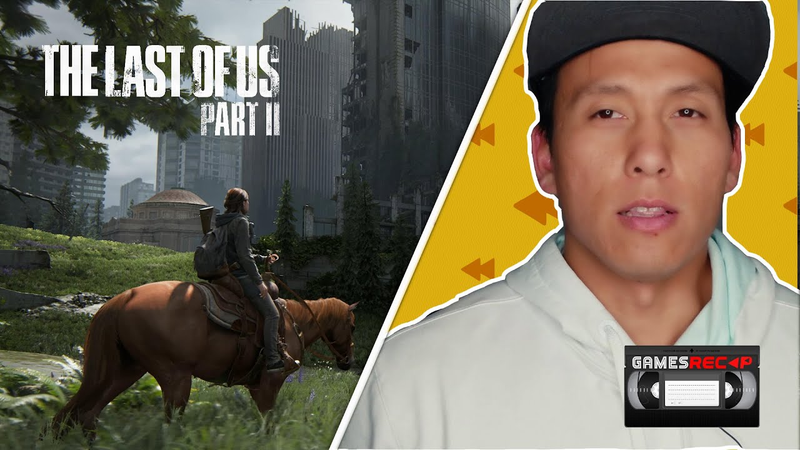
Last of Us Part 2 Delayed Indefinitely | Games ReCAP
The indefinite delay of The Last of Us Part 2, originally scheduled for a May 2020 release on PlayStation 4, serves as a primary case study for the logistical challenges facing the video game industry during the COVID-19 pandemic.
- Sony Interactive Entertainment indefinitely delayed the May 2020 release of The Last of Us Part 2 due to the logistical inability to guarantee a synchronized global launch.
- The decision to delay was primarily driven by disruptions in physical distribution chains and concerns that global internet infrastructure could not support a purely digital-only rollout.
- Naughty Dog confirmed the game was in its final stages of development, focusing on bug fixes, when the pandemic-related constraints forced the postponement.
Writers
Games and companies
Games