Loading the document
1 free read left. Create a free account for unlimited reading + AI research.
Create free account
Research and Game Dev: Differences and Parallels with Joschka Pottgen | Gdux.me
Key insights
6 takeaways- 01Game development and scientific research increasingly share foundational software architectures, specifically relying on highly parallelized systems, large-scale data processing, and rigorous automation frameworks.
- 02The industry is prioritizing long-term efficiency by shifting toward modular, reusable codebases and deep engine familiarity to manage the maintenance burdens of complex projects.
- 03Studios face a strategic tension between adopting open-source, community-driven development models and the risks of scope creep, licensing complexities, and the dilution of creative vision.
- 04Technological advancements in cloud streaming and artificial intelligence are lowering barriers to entry for new talent while fundamentally restructuring traditional development workflows.
- 05Future development is increasingly focused on the ethical implications of autonomous systems and the potential for game technology to serve as a tool for scientific research and education.
- 06The migration of experts from scientific fields into gaming is accelerating, positioning the industry as a central hub for technological innovation and cross-disciplinary problem solving.
Ask AI about this video
Transcript
[Music] I'm basically gonna talk about very similar things as we did during the podcast a couple of weeks ago and that's basically how I come from a maybe not very usual background of particle physics research into game development and where I see differences and parallels in the two somewhat different industries and some of you might be surprised how many pellets that are oh let's jump right in and it's just what I've been doing and what I'm doing currently right now I work in a studios a small indie company in the south of Sweden where I'm lead of our of one of our tech teams before that of five years I did a particle physics research part
of which was doing my PhD in that topic and after that I joined tazza as DevOps first and then since a year or a year and a half I now lead a team so what does I am I gonna talk about as I said before it's kind of my personal journey how I ended up from a first glance very different topic in game development and what I perceive as being key differences or also parallels between the two first of all so we're all kind of on the same page I'm gonna give a quick overview about what particle physics actually is and how it is to work in research and particularly the lab where I worked and then kind of try to elaborate or pick out a few examples of parallels and differences between the two and yeah then also go into where I see some potential where
one could learn from the other or the other way around before I jump I just want to give a quick disclaimer that everything I say here about the particle physics lab where I worked it's just my own view and there's no in no way it connects to the left yes yeah so let's start off with introducing tao-tsay studios we've been around for a couple of years now we were founded in 2006 we currently have 65 employees and there is kind of a timeline of the different titles that we shipped and we as you can see here we had a long-standing collaboration with Media Molecule on the little planet a franchise where we first started out as contractors for Media Molecule and then did our own version of the game with the PS vita version and then also we collaborated with them on tearaway unfolded and yeah two years ago we released our first self developed IP titles with static and
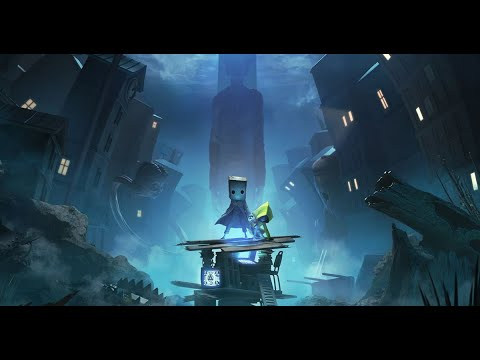
little nightmares which actually were released in the same week there was a pretty active week and yeah we were based in in the south of Sweden and malmö to be precise and we currently work on the second iteration of the dimers game that has been announced at Gamescom earlier this year and I'm sure there will be some people who have seen the trailer and it's very excited exciting to work on this next iteration of the title so that's about now so what what about particle physics like what is that actually and just to take that up front it's not the same as what you understand in video game video games are a particle simulation and other similar stuff so what is it actually and this is gonna be short don't be afraid but essentially what what particle physics tries fans
where are two questions what is the nature of our universe and what it is what is it made of and essentially for them we look at how matter is composed and I'm sure most of you know from school that if you look closely at different kinds of metric you see molecules and then if you look a little bit closer you see the different atoms in the molecule and if you look even closer you come to the nucleus that's surrounded by electrons and then if you look even closer you find protons and neutrons and that's still not an elemental particle the elemental particles are actually the particles that compose the proton in Neutron or quarks and those kind of particles is exactly what particle physics is all about so it's a it's a very interesting interplay between theoretical physicists and experimental physicists where the theory kind of tries to explain and predict the behavior of these elemental particles and then the experiment goes ahead and tries to either falsify a very
valid theory and also of course expose anything that was not predicted and the experiments that we do here and I actually work on experiments like this they range in sizes from something that you can fit in your pocket okay so kind of books or something like that up to things that are bigger than buildings so it's a it's a wide variety of technology that's being used to to this kind of research and then a big part of experimental physics physics experimental particle physics excuse me is the statistical analysis of essentially big data so there's a lot of simulation there's a lot of computing and there's a lot of machine learning all kind of terms that are also probably familiar to anybody who's working on games and then let's talk very briefly about also the lab at which I work which is called CERN it's the European
particle physics lab and it's actually the biggest particle physics lab in the world it has 2,500 permanent employees and about 12,000 or so scientists that work with the data that comes out of the experiments that are hosted by CERN and these scientists come from over 70 countries as you can see here on the left it's put up in different kinds of participation in CERN but essentially you see that all over the world people are working with the data or actually on the experiments that are hosted by this lab and it's also home of the largest physics experiment called the Large Hadron Collider which some people may be heard about it shows like The Big Bang Theory or thank you something like that all right so it's kind of all I want to say about particle physics so most of you will probably now think okay how's that related to game development and for
that I want to first go ahead and explain to you how I work and when I was working at these experiments let me go back here just what to say on the right you see a photo of a few things permit I worked on and you can see these guys and hard helmets there just to give you an idea of how large these experiments actually are and it's overwhelming when you're there and see this basically huge volume that is as big as a house act full of custom hardware that was just developed movies and things but now like how did my everyday work kind of look like I wasn't one of the people going down there without helmets and actually installing hardware I did a lot of programming in C++ and Python and I maintain a build system and I coordinated people who were working on different parts of the software that we were using and kind of I do exactly the same stuff right now when I work on game
development and like my tongue in cheek and have summary of this is like in the end it's all just kind of software development and I mean obviously that's a bit of an a bit of a statement even that you need very different kind of backgrounds for the two different subjects right you got anybody who can do software can maybe participate in particle physics experiments and not everybody who knows something about how software development can work in games but I want to explain to you where I think there is actually a large amount of overlap so obviously when you think about it first or at least to me that's obvious the motivation and the challenges are quite different right one one is about big data processing in physics where try to acquire and share knowledge and the other one is about real time applications that are essentially made or entertaining
then if you think about entertainment to me like good entertainment actually is something that challenges the status quo it tries to educate people in various life experiences that were perceived by the developers of that entertainment and they also try to criticize society or something like that maybe so in the end its kind of also acquiring knowledge for the players or sharing knowledge or experiences from the developers point and then if you think about it in the end it's kind of just you know two very different approaches to similar stuff where you want to share your experiences with other people and try to change how society works and things like of course that's not true for every game but this definitely some overnight and then the methods that we are using to do these different things are actually quite similar you need optimized data representation
processing like if you do real-time rendering or also when you do these big data analyses and you need highly parallel applications and that's basically a physics simulation and just as one example like that's both valid or something that we need to do in particle physics and also in game development physics simulation plays a big role it's just different kinds of physics that we're trying to model here and then machine learning algorithms they are slowly or quickly currently coming in to game development where you know there's a lot of research being done on AI with deep learning methods you I recently read a paper on on physics simulation and trying to speed that up with machine learning algorithms in games actually I mean in the end it all kind of tries boils down to trying to model various kinds of complex systems and trying to take shortcuts through XI learning and
doing so and then of course automation automation is kind of something that states everywhere and is being done as much as possible and this is one of the examples here that I'm trying to pick Alex and elaborate on a little bit where where the parallels are because that's actually something that I worked on specifically at CERN and also at osseous to begin and at CERN the amount of automation is very different depending on where you look there's a huge IT department where of course all kinds of different workflows that are related to booting up a lot of virtual machines for all these different scientists that are trying to do their research are involved so there's a lot of continuous integration and deployment that's being done but also when you look at yes actually physical research and like for example data taking or the data analysis all these different methods are highly
relevant continuous integration and testing is something that's super important when you collaborate with thousands of people on a code base that tries to do try to verify a various phenomenon so you want to like have a good testing matrix where you way you know exactly what change in the code effects which analysis in what way and intarsia essentially the same stuff and overplays right we have continuous integration and deployment when it comes to our build system but also we go a step further where we also look at asset creation level design tools and trying to understand pressures and that's just one example here on the right where you select for example to immediately get a stack trace to simplify fixing crashes for our programmers when anybody on site and has a crash within the editor that we're using and I'm testing as I said before it plays a very important role in
at CERN and it's something that we're slowly trying to adapt at Tasi as well there's definitely some some people in the games industry who do this much more than we do currently like for example we had some really great great talks on how they use a script development on Co thieves or like the blog post by by the guys we're doing factorial or are pretty cool they do a lot of continuous testings and we're trying to get there slowly but surely and so from here like what what could we transfer I look for particle physics to claim therefore to more specifically asset Asya or the other way around so let me just talk a little bit about tools and reusability reusability of tools is basically something that's key anywhere right especially for a small
company like us it's important that we keep using the same kind of set pipelines so so everybody who's on the project and changes from one project to the other immediately knows how things work and then we make the best of the time of the people that we have on these different project build system is something that's completely independent of the game development itself so obviously that's something that should be reused everywhere and anything that's connected to that as well and then of course infrastructure like anything that's related to that should be as abstract as possible and have nothing to do with the actual project and then like if you if you look at what what is being done at CERN the same kind of applied we have these different collaborations with thousands of people working on it and how do we make sure that we don't waste a lot of effort on on reinventing the wheel from from one experiment to the next and the methods how this itself is
actually quite different right within our company it's of course very easy to share stuff across different projects but in a community of many many people you need to think of different different ways of doing this and the way CERN is doing this is facing you with open-source and that kind of brings me to the question could there be more open source in games so certainly basically is all about open data and open source so essentially everything that is used for doing research and this is not quite true there's for example some delay in the data that they are publishing but essentially everything is accessible and it's accessible for free likewise all publications that are done on star data they are completely free and accessible to anybody around the world and so I really see is open source as a way to grow community reach out to people and make sure to involve as many
people as possible right because you you basically tap a potential of of many many people that otherwise wouldn't be able to country contribute in a and of closed community deaths and expose either problems in your code or a vet would have completely new ideas on how you could look at the data and find stuff that you might have thought of thought of before so it's a very interesting tool and it's a very interesting interesting community that grows around this in games this is being done a little bit less at least that's how I perceive it right now definitely like Unreal Engine doing this step of being open sourced by a biopic that's a huge step right suddenly we have a very large code base available to anybody and per produce by
anybody there's also some tools like blender for example that are open source and great tools for creating games and there's also more and more Studios talking about open source but it's it's kind of me it seems like this is not being done to the full potential that it actually has for me this is something where like the whole in the community could kind of come together and and empower each other more and more by sharing all the different tools and all the different things that are being done that make makes making games easier that is of course not to say that this is a trivial step right like within tazza for example we've been discussing this over the last year or so what we could open-source how we could open-source what that actually means for stuff like maintenance of the code support for people like she is starting to use yourself because especially as an indie studio where you don't have that many people maintaining your code it can also
come as a large burden when your tool actually gets adapted by a lot of people and the people come in with a mindset that you should fix the problems that they are seeing on the other hand of course open source that the point of open source is that you bring people together to contribute to the same tool instead of just one person or one one side one studio supporting that too and of course you need to start thinking about stuff like licensing and depending on the license you choose you might end up in a situation where you don't want to end up where actually the things that you're creating with those tools need also to be in some form free and open which of course becomes very tricky when you when you start working together with publishers and then you know if you like one one example that you might think of this how how could we open up more different middleware pieces like for
example you have a library that solves inverse kinematics for you how but we may be open source that in some way and there you also open up yourself to some you might open up yourself to some trouble because you know how how can you verify that everybody who worked on this did their due diligence and made sure that any code that is within that tool is actually open and open source so it's it's definitely not a trivial problem and I see why things are moving slowly or more slowly than some people might want but I think there's a lot of opportunity here where we can come together and work work together to make it easier to make the kind of games we want to play ourselves and make ourselves and lastly let me talk a little bit about like how I see the games industry
like i'm tributing to particle physics or how where there's a lot of overlap or a lot of influence from the games industry into a particle the first one I guess it's kind of something that's that's true for any industry that that works with computing or anything related to that which is that anybody profits from a half-hour verse that is mostly done because of the sheer market size of games right and that also ties into my second point we're in data processing there are a lot of problems that are overlapping so for example a lot of the data analyses that are being done in particle physics could put highly benefit from being run on GPUs so that's where stuff like OpenCL comes into play and yeah a lot of learnings from the
games industry and we actually transferred into research and help with speeding up various processes that are being done there and lastly that's kind of something that I'm really passionate about which is how I think we are in augmented reality as well and a huge impact on things like outreach education and communication about these kinds of things you know it's like thinking about the opportunities if you if you could show to young people how if they're a virtual tour of CERN essentially and show them these these impressive large experiments that people are working on and if them an idea of how it is to work on these things you know that could bring so many people into research or motivate them to go into into these different paths of Education it could
also make it could just bring people together to talk about these different things and yeah that to me just this is an amazing opportunity I mean in the end like if you think about it it's essentially what games are about right putting out there some sort of experience that in some way touches people and brings them to think about things in a different way or yeah brings them to take another step in their in their life and influence how they see something that's already at the end of my presentation and so a may have convinced a few of you that particle physics to games is actually not as largest as it might see if purse plants that they are actually a few parallels and opportunities where like one could learn from the other so yeah let me close by thanking everybody for
listening I was a little bit quicker than I anticipated but let me also quickly plug here that we're also looking for new people so if you're in Sweden or you want to move this week and are looking for an opportunity to work with us hit our website and feel free to contact us awesome well yashka I've always said this before and we've talked about two three times now since the last recording and if you can switch your webcam this is the Q&A portion would love to kind of talk to you you're impressive guy having to a dual career which is no easy feat but like two extreme successes now we're cat Arcia and you know everyone's looking forward to your next game a little nightmares to being a physics scientists have a lot of weight when it comes to moving moving things ever half I think I always have like little questions and as viewers out
there are kind of pulling they were kind of discussing throughout I'll let them go ahead and remind them feel free to ask questions right now through twitch through Facebook to Twitter we have moderate out there and I will be taking a glance at them as we Aska your personal questions or professional questions based off of your presentation here before we get into that I have questions of my own so we briefly talked about during our our podcast a few weeks ago the the different type of reactions when you are talking about how you're going to game development right we have one side your physics scientist buddies and the other side you have game developer buddies I have to also ask about besides their reaction and their general feelings on that did you were you pretty much a part of the game development scene before you got into game to them or is something just
applied and now you're surrounded by the colleagues that you've never really got used to before I wasn't really exposed to it like actively in any kind I didn't for example I always wanted to participate in and stuff like game gems for example but I never dare to because I thought I'm not smart enough for that so it's you know at the same time I was very interested in it so I read a lot about it I regularly visited Emma Sutra for example and read about all these different post-mortems and then when people went to Kickstarter and and that you could actually glimpse into how n development actually works that was kind of a big aha moment for me where when I backed was it I think it was only eternity by obsidian when I begged that and I read on more and more about how they are making games and how are they
are at making games that I was really passionate about as a kid I loved palace gates and these kinds of things like that was to me like I need to somehow get into bed and try to be involved in this very interesting process because that's also something I think I said on our life on the podcast against to me one of the big things in the end evelopment that are this mind-blowing and and really cool to me is how these different disciplines come together well it's definitely also something that's happening at CERN it's very much more or much wider in game development because here you have like you have artists you have designers and you have programmers that think about things very differently while it CERN you mostly have engineers and researchers in the end have very like mindsets so that's definitely something that I enjoy about okay well I
have a question here and again to remind viewers please ask questions through Twitter Facebook Twitter whatever you prefer but this is from warm Oh Steve's out out - Ian's out there he's helping us moderate the Twitter chat but the question is what is the most surprising thing to you from your experience moving over to game dev from working in physics actually how much I could apply it from what I knew before like as I said before I when I when when I was thinking about doing doing game jams or you know trying or tried on my own to do these these little game experiments that I certainly tried over the different various years it was surprising to me like especially in the position that I took that toss in the beginning where I was and of responsible for automation and our build system which I guess it's also not the the most closest thing to means how much
actually was exactly the same between the two different jobs and that's where you know my maggot my phrase from the beginning comes in that in the end it's it's it's just so very well while this like of course with any branch of software development there are specifics that are very very different from one industry to the other there are so many parallels and there is so much more that shared between of different fields that to me it was surprising how how easy it was to fit in and contribute from day one so yeah that that's kind of I think and then make on the opposites and of like negative surprises everyone called it forever it was also surprising to me how
difficult it was for me to talk to people without a technical paper there were so many situations where I try to say something that I thought was completely clear to anybody in the room and turned out that I just miss making more than what we understand so that was a big change for me well I mean you're talking about open-source a few times and how I agree with you like it's it's a welcomed community to kind of share knowledge with each other especially when our financial well-being it plays a big part of whether we continue creatively or not especially with smaller teams where every ounce of effort is kind of put behind a project and having multiple smaller teams work together makes a lot of sense we talked about software's especially within game development tools making a huge leap
lately with Unreal and unity kind of breaking that door open blender just chugging along and making such an impact just through endurance and now it's laughing at every 3d packages out there and and it's been kind of embraced with open arms and we talked about a few and I wonder if you can kind of touch upon this a bit where a game development communities can do more of this you mentioned in your talk about open source being an idea but also there were some conversations some discussions I'm kind waiting more questions on this about how we used to have at least when I was getting early in game development I'm sure you remember this like I think Val plays a big part as well gota these kind of games that Canon came to be through a community where there was just a lot of passionate artists and developers getting together to create a
product that eventually became a huge product like counter-strike or something that actually got bought I will have to say aside from dota I don't remember too much of any community driven games in the last few years at least from the mod committee that has made such an impact I wonder if you can kind of give me your opinion on why this is and and and the the state of game developers in that mod community that's an interesting question I mean if I've not thought about it this way actually like for from the modding community even though that's I guess kind of a logical next step from officers going to it moving or the other way around but why is that a very good question I think one of the reasons might be that just the amount of teams that are
available from from the people who are making the games to do that kind of stuff they are maybe becoming smaller and at the same time I mean with a Steam Workshop for example they still kind of is this push for having more community driven content and more community games so yeah I don't know I have no clue why weather isn't anything like really huge while I would also argue that I guess some games definitely profit from from this Drive in the community like for example one thing that came to mind when you started talking about this is minecraft we have a lot of people making completely different kinds of or creating completely different player experiences based on the game like PvP scene essentially that's all community to human has nothing to do with developers yeah well I do have a
question here from the audience what has been the biggest lessons you've learned between working on your first game two little nightmares - I mean you have quite the resume so far and winning is the the term yeah what did I learn like I mean we to be completely fair here the first game I actually work on at Tashia is level nightmares - right but one big lesson but that we're learning as a studio and as a whole is first of all like when you work with an engine take the time that it needs to actually get acquainted with the different idiotic idioms within that engine and the architecture within that engine to use it to the extent that you can instead of basically giving up very
early and saying ah I guess I have to redo this because I don't fully understand what where they were trying to do so that there was a big lesson for us and then again the reusability like designing things having in mind that you may not just want to do one game but probably want to do more so while you while you write your code while you develop your game have in mind at least a little bit like what are the things that you're doing is something that you probably will have to either redo or extract from this game and then designing stuff in a way that it's modular enough and flexible enough that you can actually extract it that's something that we are doing more and more that's where my he makes he comes in which is like what we call our core tech team which is basically about writing systems that are usable and
making sure that we don't lose a lot of effort from one project to this and that's of course easier if you stay in the same franchise from from my master understood but yeah there's definitely also some stuff from the other game that we made static but we think it's very useful across Frenchmen I've been reinventing well that's something that we talked about right this is kind of lending into the open source or sharing technology with smaller stages or smaller teams especially everyone is kind of like exhausted resources for one particular thing and when we're trying to just get the budget to make the one-game we're not really Road mapping the rest of the survival of the studio which is mix makes sense and when you're talking about your first priorities like how do we endure because the best work is not
usually the first project it's usually the second or third once the team is getting used to each other and which is hi Elise in my own mind when I look at the data alright not all sign no I'm not I'm not a scientist but I look at data as well but when it comes to like triple a team a lot of I feel like the the shutdown and the downfall in the last few years was because there's kind of like this revolving door with these studios where talent are kind of just not respected and we're like the sequels are not as good and they forget even though they have a formula on paper a lot of that to make a successful revolves around the people who are having the experience and being able to go through the stress and and figure things out together not just by themselves but working together as a team and when you're trying to form a team and work on new projects and not
have the same people it's you're kind of running into the same problems as well and I see this a lot with big and small teams it's kind of like the same idea so I have a question I have a question here and actually there's a tidbit I would like to share with everyone this is through the facebook chat from Broden are you we were asking you about like what recent open source game was kind of hit and he kind of mentioned I drew a red box I don't know you've ever heard of that but this or behind it is that a guy shared a prototype int on Twitter and thousands of people replied giving suggestions and he implemented most of them basically becoming a game designed by the community so this is this is something that I've been trying to figure out because the traditional model of building a game a product that you wait
two three years and you kind of just do this the whole time when it comes out I feel like there's such a a changing tide with the streaming and the people's ability to kind of share their progress throughout and kind of get that gut check every month if they really want to from the community there's so many creative ways to kind of earn your income basically when working on a project where you don't have to wait and pray at an end of a cycle it's it's I haven't figured out a model yet but I feel like there is either a studio in in progress right now that's doing something like that either through I wouldn't say crowdfunding but like coming up with the new system that other developers can look at and be like that's something we can do as well I think you being a guy who is always
looking at you know the industry I mean what was your opinion have you seen anything interesting with that idea as of late that you felt like it's not quite fair but I feel like we're approaching a successful studio one day that is gonna create a a guideline to sell games other than waiting three years yeah I mean basically what you were saying it I think like anything for most of the games that were crowd funded throughout the years since like the first big ones on Kickstarter like to me that was i opening how they were some of them at least were or the ones that I thought were were doing the right thing were interacting and engaging a lot with the community but also something that I saw
is that it's a very tough balance to maintain because on the one hand when you listen to community you get a lot of great ideas you get a lot of good input you get a lot of feedback about the stuff you're doing and you can use that data to to make your game better but at the same time you have to be very careful to you know not get distracted from what you're trying to achieve and I think anybody who has talked to a roomful of game designers or a roomful of people who are passionate about a game knows that there is nothing people love more than to project their own wishes onto something where you think the direction is very clear but they then take it and come up with these things that completely changes the entire idea of the game so yeah I don't I don't know I've not seen
like one one project that I thought actually was it was pulling herself very nice in the beginning was for stone heart which was a simulation game what so based where the developers were very open and they had all these different developer streams that I thought were like you know that they were engaging with the community they were very open about problems they were very open about different tools that they're using how they're doing their stuff but in the end they they exactly this happened they got distracted from form at least in my opinion they've got sort of distracted from what the community projected onto what they were trying to do anyway unfortunately they kind of starts the development in my opinion before they completely finished off I set out to do from the various widgets in the project was running too long and people were moving on to different projects and like all those kinds of things were saying
before so yeah I don't I don't know it's it's I agree with you it seems like you're on the cusp of doing this in a way that allows more people to contribute but I've not seen it anyone pulling it off in a way that I think this is truly using this potential at its best that's maybe very pessimistic yeah I also agree with you there I feel like we are on the cusp of this with especially with a lot of indie developers more than ever before increasingly the first word that comes to mind is crowd in the market but that sounds negative but it's true right supersaturated now everybody with an idea is able to kind of put out their product and basically compete in the same space but even though I don't think smaller developers actually
compete I will want to ask you about this like companies like a little big planet those type of where they kind of it's like a like a tool within a game where they're allowing like huge communities work within their ecosystem to put out products out there within there yeah so I mean I I've been kind of seeing where that audience of wanting to do things have kind of move into like Minecraft is another popular one right you might have heard of that guys but like I feel like that's the this segment where we're modders before used to kind of chaotically put things together through the valves tool or any of the ZeniMax tools are now kind of having more a control experiment tation with these games put out there like you
mentioned dream right dream was a it's part of the latest from that same company that did a little big planet that'll has been just being able to do a lot of things that would be difficult if you are not a programmer or a graphic artist and I wonder where the bridge is after that because it feels like it's create educational tool for people who are interested in game development but there still needs to be like alright you know time to learn blender time to accuracy equate it to something have you kind of been paying attention to that that type of community that's kind of been blossoming and on all parts of the industry that's actually I can they can share a bit of the story there a lot of the designers who are currently working for us they came out of the community around little a little bit planets a lot
of them or not a lot of them but a few of them were basically putting out different things for little nightmares and Tozzi got a hold of them and asked them hey do you maybe want to work with us on the on the PS Vita game and they came and basically made the game together with us and now they work for us on different games in Unreal Engine so I think there is definitely like tools like that definitely lower the threshold or various people to get into the industry and the courage that me a molecule has with dreams like it's to me it's it's very like it's just impressive what they what they produce they're like this when I when I yeah it's an amazing tool that just allows you to express your creativity and if you have that tool making a game with a different tool
I feel like like once you have that once you're hooked by doing that I think you you are so much more motivated to actually invest the time that that you may otherwise not be willing to put in to learn the tools necessary to do the trade right so I think it's a very important agreeing to us sure yeah there's a question here kind of lingering so I think there was some confusion that you worked at CERN but it wasn't CERN that was interested in game development but let me kind of asked this question anyways and put it out there what does CERN a particle physics place would be interested as a hypothetical would they ever be interested in game simulation of that sort it's an interesting question and I think I said
that on the podcast as well there was definitely some people thinking about this in various various contexts like one of them was actually what I mentioned I think there's a huge potential if you you think about virtual reality which may not be strictly a game like the few if you do if you create an experience that allows people to see what's going on at CERN or see these different machines right but it's to some extent using the same tools for sure but then I think in outreach is in certain actually has a kind of a group working on these kinds of things and tries to work interdisciplinary like for example of CERN invites artists to try and express what CERN does and it's like part of the outreach and I think they were also talking about whether they could be a collaboration with the games
industry doing some sort of yeah some some kind of experience then that introduces people to what it is that's earned us and how it's relevant to people because it liked it you know if you heard hear about this yeah we're trying to answer these two questions what's what's the universe made of then you know it's it's like yeah how does that relate to my everyday life but there's actually a lot of stuff coming out of CERN that affects everyday life for example medical imaging there's a lot of basically cross fertilization from turned into other industries and like if you if you use these various tools that games can give you to bring these experiences and these different aspects to people I think it has a huge potential to interest more people in this topic as well as you know make it
easier to to sell to people why it's important to do this stuff yeah and I like to ask to when it's it's great that it's been like what two years now that you've been and gave development and it's it's always surprising to me when I talk to scientists I don't know much but when I do it's always great to kind of hear outside influences from other industries into our industry because I feel like in the last few years and I mentioned this before how we were kind of like in sort of like a pit hole with with how studios I don't know how how entrenched you are with the game news but like during the ps3 days there was a lot of triple-a studios just closing
left and right look left and right left and right until Apple really released their phone and kind of invigorated this indie modding community to encourage smaller teams to put out their games and then we hate hear these stories about small teams making it big overnight and then that's kind of spawned the steam greenlight stuff and then in the last few years Facebook having like this huge influence with oculus buying them and and keeping that VR community strong even though it's still trying to figure itself out it meets that type of money put behind it to really be fully fully realized otherwise it would have been I feel another one of those yeah I don't think as bad but the Nintendo virtual reality this is right was it like a good fad but because Facebook has it's like a amount
of money poured into the resources that it is able to endure much like any independent developers passed their first project have to endure to get us to the quests which is I think a huge step forward and especially when they have that hand motion tracking without the controller's it makes it a lot easier for consumers to actually embrace it and so going back to my original thought where you're coming from a different industry a very serious industry how do you keep seeing this type of the game industry evolving I think a few guests before when I was talking I feel like the game developers are losing control but that's kind of painting in a negative light I think a lot of these industries are here to help if anything and a lot of developers or professionals from outside of the
industry is finally coming in on the enterprise side to kind of fully realize you know guys there are a lot of things you can do here you just have been business-wise going about it the wrong way let's not put our eggs in that basket all the time we can we can do a lot of cool things so my question is what kind of cool things do you think will be coming I think it's it's yeah it to me it's kind of like I said as I was trying to enter that the talk to me there's a like some people in the games industry and definitely not all people in the games industry kind of thing that it's a very special and very isolated industry that nobody else can end of whereas for or contribute to and I think that's something that's he rolled it
more and more I think that's very healthy for the industry as a whole it was yeah I need different techniques to make the games more efficiently or bringing in completely new big players I think it's just healthy because it brings thoughts and ways of experiences like I think obviously stadia is gonna be like to me at least that that's this kind of the next big and how that will bring people who who are watching games and the players those are even closer together than it's been so far right if you if you from a YouTube stream and directly jump into into the game and play with your favorite streamer without even having to buy the game because you have a subscription or whatever like to me that that seems like a like a huge
yeah like a like a huge potential to bring even more people even more players into the industry but at the same time I think with with Google there is a lot of brain power and a lot of interesting stuff that they've been doing that you then suddenly have access to through that platform right just imagine having having access to like even simple stuff like Google Maps from from the platform you're hosting your game on and maybe being able to I don't know bring bring certain geography into your game or and do something with procedural generation with that I mean that sounds amazing this to me huge yeah huge potential to to do very interesting stuff same applies to to AI and machine learning like this like they've invested a lot in listen if you can harvest that
to some extent and the experiences you're trying to create I don't know yeah it seems yeah could be a game-changer yes this is speaking of game-changer well AI machine learning is a huge part I feel like our industry especially is gonna contribute a lot to that type of thinking I mean anytime we're talking about real-time calculations real-time simulation we're essentially talking about game development in some sort of way usually utilizing those tools to kind of kind of help with that I've joked I think with you before that the matrix is going to be made with unity or unreal yeah that's at some point but this is I guess in an opinion of that because I'm always interested on that front like how long do you really feel that we're
talking about the the rise of robotics and automation within not just our industry but every industry before realistically I'm sure you've done just some fun reading on the side as you know from being a scientist and a game developer about this particular particular topic I just want to know your thoughts it's like how far away are we from this because it feels pretty I feel like we have all the tools that we need to kind of get to this point where you know our uber driver is mostly automated and and all that stuff like how far away in our lifetime and overtime at 10-15 years where are the world today is gonna be looked at completely differently I mean I've listened to when people talk about it for sure like for example I guess many people actually saw the the interview Elon Musk with Joe Rogan where he talked
about this as well and I guess it depends very much of you ask right like I is a German the terms are very very happy about regulations and and doing everything the proper way and blah blah so like I guess it depends on how how much regulation you put on this right how straight do you wanna be in the market that or no in an industry that potentially or that has a huge potential of causing a lot of damage as well right and I agree with Elon Musk on that where he says we are a little bit not careful enough maybe when it comes to AI development and learning and all these kinds of things while at the moment that's you know it's very high so neither isolated little things that we do with this which of course is not dangerous in any way but once you hit
the place where suddenly you have a human life intelligence where's that calmly like if that happens how do you go back from there can you go back and all these kinds of things are to me also very interesting questions right because it ties into ethics suddenly because you you have an intelligence that is human life like can you just unplug it I don't know it's it's a very interesting topic for sure but I'm also I have to be honest here I I don't know much about it right it's just casual keeping up with what was out there so I don't know I know I cants can't pretend today I have enough information to give you any kind of timeline for sure but I agree with you that it feels like it's it's not that far away like when you when you listen to talks by by the guys at Google and are they then acquired from
companies yeah yeah the and that's the that's why I keep always kind of approaching this question because it feels like what we do on the day-to-day basis it feels related to that type of conversations that's being had by like top scientists pas top thinkers of the world that it's gonna impact everybody that's connected to a computer right so this is a question from war most EES on twitch as you have moved to working on games instead of physics do you feel like your work is as meaningful or more or less so do you feel like the work you do is as important it's it's a tough one it's to some extent yes I definitely feel so because my my
everyday work like it affects as many people as it did back then right and I mean I left also particle physics for a reason I didn't go because I loved it there's a lot of stuff happening in my opinion in particle physics that makes the work that you do there actually you know not very relevant but somehow very driven by your motivations like there's a lot of political drive and various things I don't know it's it's yeah so the short answer is yes I I think so but of course you I think I said this on the podcast right there there's people in research as well that's kind of off down to me when I said that I'm going to inter games development and that's definitely something that also stuck with me a little bit if somebody tells you yeah I mean other people who work here before they go into something very
meaningful where they work I don't know cancer research or something like that I mean sure what I'm doing is definitely not as relevant as the person who's going to solve cancer treatments but I mean making these games and making these experiences definitely has its married to me as I as I try to allude to in my presentation I think entertainment has this huge potential to influence a lot of people and if you use that potential and influence them in the right way and maybe health where the society to be better right I mean that's what what at least I want to aspire to I think that's a very valuable contributions oh yeah and and of course you you wouldn't be doing this if you didn't find any
meaning to it so it's it's a different type of outlook I mean hey yeah on a personal level it's like you gotta have to have fun with what you do and the impact that it can have on other people either through entertainment or among your colleagues to kind of advance a technology that hasn't been done before and I think that's the draw I think for a lot of creatives especially it's not so much about in a way it is kind of like changing the world but at the heart of it at any any with anyone in any industry it's more like what this exists without me or not and it's a question that I ask myself all the time especially in a bigger studio it's like and I don't know if you felt this at CERN it sounds like a big place it's like am I just a cog at some point right can I just like can I still contribute
in a meaningful way and and and and kind of shine some light on this particular thing that I really want to talk about right and I feel like that gets lost in bigger companies especially if you're tasked out what to do it sounds like certainly you guys have a lot of creative freedom on a individual basis that you're able to kind of maybe do research that you really want to do but at the end of the day like any place to have that has order right they kind of need to assign you things that you have to do and without either your opinion or not and I feel like with smaller teams in the last few years being in the industry for over a decade now I've been finding that voice of mine even though it's to some people it's like you're making games although I feel like the respect has been shifting where it's a respectable job and everything
now or at least people are realized that that ship has helped me a lot being able to kind of just have full control and being able to charter my own path and I think anybody can relate to that most definitely well she's sorry I can use it again I completely agree especially about the part with you know if you're working at a huge place you're essentially a small cog somewhere in the big machine and and it doesn't feel like you're in charge of what you're doing or you don't have the means to express what you really want to express or what you really want to do I definitely have much more of that where I'm working now where where I get to drive certain decisions and yeah do stuff that seems very important to our studio and shapes the future this new to some extent definitely is a great thing mmm and I'm
seeing that a lot so there's a comment here from John Smith that he mentioned the CTO of Unreal Engine was from the US Naval Research Laboratory I didn't know that but but I've been seeing that a lot actually this like prominent technologists from other industries are kind of moving to games and I if I were to take a step back I feel like there is something happening behind the game industry that is compelling enough for these other people from other industries such as yourself moving over I mean I think first and foremost it's probably a little bit more fun but also there's some meaningful impact there that's happening in all industries right now using game tools which is very exciting we are beyond the days of pixels so yeah environment is much nicer than so much
nicer so I've been kind of blessed I think people are watching I are either watching from within a game suitor or not but can you kind of paint the difference since there III don't the only job other than a game job that I've had is at Quiznos and it's not really a fair comparison in most people's office experience the kind of mind not to paint certain in the bad light or anything I would imagine it's kind of similar to other industries where you kind of show up and leave what are the key differences just to end this great hour of ours have a little fun with it I mean to to to give you a quick understanding of how certain looks like you know a before I went there for the first time sometimes you're in my studies before I she started working there and this picture in mind that this was kind of
painted by my angels and demons and other literature that mentioned certain you know I had this everything is modern architecture everything there's a lot of glass it's all super modern and super super awesome and then I got there and the first Street you walked down is essentially a bunch of concrete blocks and it's basically stuff put very quickly together just to make the experiments happen and that's that's what you see throughout its form follows function for sure you know it's the control rooms of a different experiments they look impressive they they are packed full of Technology but the buildings themselves are sometimes in need of some some love for sure why I let our office I mean there are people who actually think about okay where do we hang this picture and how do we make this network environment he likes this I don't think many people that sort of who think yeah that is something that I think all
game developers kind of take for granted that there's a somewhat of a design interior designer to kind of take a look through the halls and say hey let's motivate people as they walk to their desk well yeah yeah that is something that often get overlooked like that the glamour and the the curiosity from most people that I talk to you when I talk about game development or working in a game studio is exactly that it's like so you guys play games all the time it's like no but we do play our own games a lot like over and over to the point where it hurts us but uh I want to thank you Joschka for joining us to kick this off it's been an enlightening talk and experience and thank you again
you [Music]
Summary
The intersection of particle physics research and professional game development reveals a shared reliance on sophisticated software engineering, large-scale data processing, and highly parallelized systems. Both fields demand robust automation, continuous integration, and rigorous testing frameworks to manage complex, collaborative codebases. By utilizing similar technical methodologies—including machine learning and advanced physics simulation—practitioners in both sectors effectively model intricate systems to solve multifaceted problems. This technical synergy suggests that the foundational principles of software architecture are increasingly universal, transcending the traditional boundaries between academic research and commercial entertainment.
While the game industry stands to benefit from adopting open-source practices and community-driven collaboration, studios must navigate significant hurdles, including maintenance burdens, licensing complexities, and the necessity for strict code verification. Achieving a balance between integrating community feedback and maintaining a clear creative vision remains a persistent challenge, as unfettered input can lead to scope creep and project distraction. Despite these difficulties, the industry is gradually shifting toward more transparent development models, emphasizing the importance of modular, reusable code and deep engine familiarity to ensure long-term studio efficiency and creative longevity.
Technological advancements such as cloud streaming, artificial intelligence, and accessible creative tools are fundamentally lowering the barrier to entry for new talent while revolutionizing development workflows. The migration of experts from scientific fields into gaming highlights a growing appreciation for the industry’s creative agency and its capacity for societal influence. As these technologies evolve, the focus is shifting toward the ethical implications of autonomous systems and the potential for game technology to further scientific research and educational outreach. Ultimately, the integration of diverse technical expertise is fostering a more intentional, human-centric approach to development, positioning the gaming industry as a critical hub for modern technological innovation.











Comments