Destiny
130 documents in the library are about Destiny, from writers such as The Game Post, Game Developers Conference and Deconstructor of Fun, the newest from 2026. Each has a summary and key insights with the page they come from.

Bungie has emphasized that the universe of Destiny will be "alive". Events may happen in-game that are not necessarily controlled or planned by the developer, which will help to create a dynamic developing experience for Bungie and a dynamic playing experience for gamers. The game's style has been described a first-person shooter that will incorporate massively multiplayer online game (MMO) elements, but Bungie has avoided defining Destiny as a traditional MMO game. Instead, the game has been referred to as a "shared-world shooter," as it lacks many of the characteristics of a traditional MMO game. For instance, rather than players being able to see and interact with all other players in the game or on a particular server—as is the case in many conventional MMO games—Destiny will include on-the-fly matchmaking that will allow players to see and interact only with other players with whom they are "matched" by the game. Destiny will incorporate a new game engine that allows global illuminations and real-time dynamic lighting to occur together. An innovation in Bungie's "hopper" technology, which has been the backbone for Halo's matchmaking system, will allow better player matchmaking in order to create a more natural experience in either cooperative or competitive multiplayer modes.
- Released
- Sep 9, 2014
- Developer
- Bungie
- Publishers
- Activision, ND Games
- Genres
- Shooter, Role-playing (RPG)
- Platforms
- PlayStation 3, PlayStation 4, Xbox 360, Xbox One
- Links
- Wikipedia
Game data from IGDB.com
Key figures
Destiny Rising appears to be in a 'death spiral' with declining revenue, dropping from $6 million in its launch month to approximately $300,000 in monthly in-app purchase revenue over the last three to four months.
Mobilegamer.biz, 2026 · King dodges Xbox cuts, Destiny Rising, Google's store fees, Ustwo slams platforms, more, p. 5
The development of a potential Destiny 3 has been deemed financially unviable due to the exponential rise in AAA game production budgets, which now far exceed the $500 million investment Activision originally committed to the franchise in 2010.
Jason Schreier, 2026 · Why Destiny Died (RIP 2014-2026), p. 14
Wolfjaw Studios specializes in critical backend infrastructure for major titles, including Bungie’s Destiny 2 and Marathon, Innersloth’s Among Us, Tencent’s Transformers: Reactivate, and the NBA 2K series.
Game File, 2026 · Meet Wolfjaw: A Quietly Important Video Game Company
The player base shows a high degree of overlap with Bungie's previous titles, with over 74% of players on each platform having previously played Destiny 2.
Alinea Analytics, 2026 · Marathon Has Sold 1.2M Copies Across Steam, PS5, and Xbox
NetEase Games' mobile title Destiny Rising saw its November 2025 revenue drop to $1.76 million, representing an 84% decline from its September 2025 peak of $11.13 million.
The Game Post, 2025 · Destiny Rising’s November 2025 Revenue Down Over 80% from Its September Peak
Documents about Destiny

Xbox Layoffs, Halo To Activision, Destiny's Back (And More)
The gaming industry is currently navigating a period of significant structural shifts, characterized by ongoing corporate restructuring, long-term project planning, and strategic pivots for major franchises.
- Microsoft is laying off approximately 300 additional employees as part of an ongoing restructuring, with the company reporting it is now 75% through its planned reset.
- Halo development is being moved to Activision, with a small team remaining at Halo Studios to support existing games and the community, while Playground Games and Turn 10 are merging.
- Bungie has reversed its stance on the future of the Destiny franchise, announcing that Destiny 2 will unvault previous campaigns, destinations, and raids to remain a foundational part of the studio's future.

Bungie Once Had Up to Six Games in Development
Following its 2022 acquisition by Sony for $3.6 billion, Bungie initiated an ambitious expansion strategy that saw the studio juggling up to six concurrent development projects.
- Bungie had five to six distinct projects in development simultaneously, but the majority of these initiatives collapsed following Sony’s $3.6 billion acquisition of the studio.
- Bungie concluded live-service content updates for Destiny 2 on June 9, 2026, followed by significant layoffs on June 25, 2026, that impacted both the Destiny and Marathon development teams.
- Several high-profile projects were canceled during this period, including the new IP 'Matter' (2020), 'Project Sunspot' (2023), and the third-person Destiny spin-off 'Project Payback' (2024).

Bungie's Layoffs: The End of an Era?
The recent restructuring at Bungie, characterized by a significant reduction in workforce, marks a critical turning point for the studio following its 2022 acquisition by Sony.
- Bungie has reduced its workforce by approximately 600 positions since its 2022 acquisition by Sony, including a recent round of 400 layoffs that cut nearly 40% of the remaining staff.
- Sony recorded a $766 million impairment charge related to Bungie for fiscal year 2025, indicating that the original integration strategy has failed to meet financial expectations.
- The acquisition thesis—that Bungie would lead Sony's live service initiatives—failed because Bungie’s high-cost expansion model proved incompatible with the microtransaction-heavy frameworks Sony intended to implement.
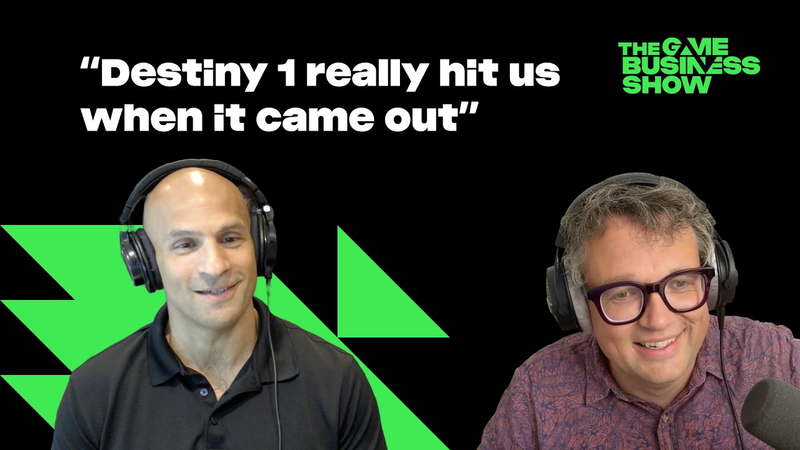
Destiny’s biggest rival Warframe has had ‘two years of massive growth’
Warframe has achieved a period of unprecedented expansion over the last two years, consistently defying internal projections that the title had reached its maturity.
- Warframe has experienced two years of massive, unexpected growth, defying internal projections that the game had reached its maturity phase.
- The studio is executing a dual-title strategy by positioning the upcoming fantasy game, Soulframe, as a parallel pillar to the science-fiction-based Warframe to capture distinct thematic audiences.
- Operational success is driven by a development philosophy of radical transparency and iterative updates, which has successfully balanced the needs of veteran players with new user onboarding.
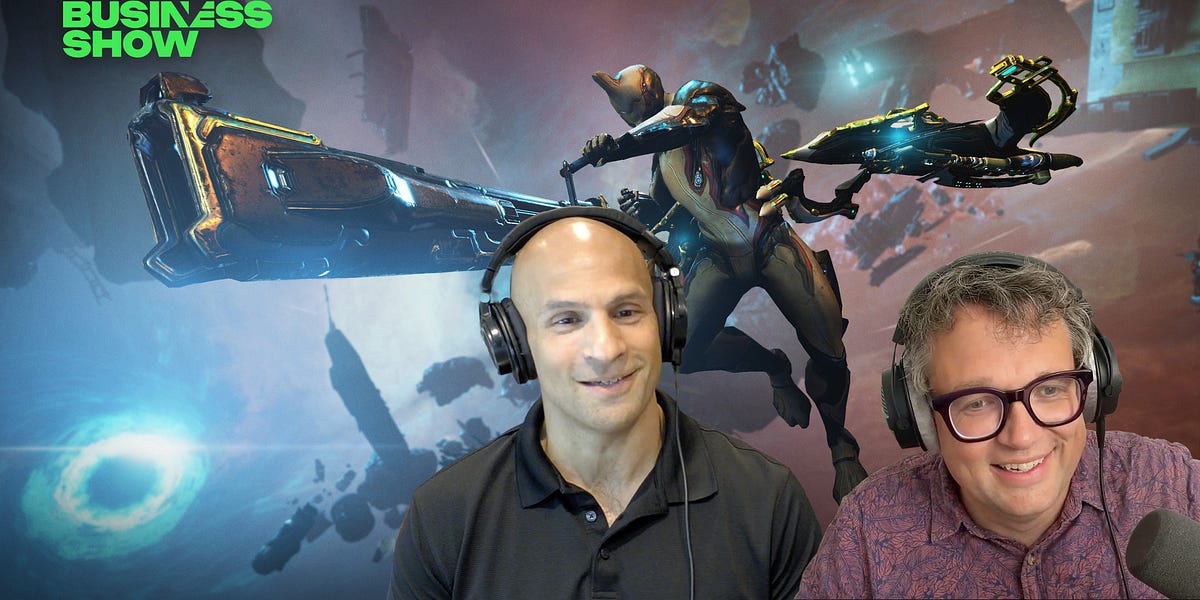
Destiny’s Biggest Rival Warframe Has Had ‘Two Years of Massive Growth’
Warframe has entered a period of unprecedented expansion, defying industry expectations that the title had already reached its maturity.
- Warframe has experienced "massive growth" in the last two years, despite earlier internal concerns that the game had peaked.
- Digital Extremes is developing a new free-to-play fantasy RPG called Soulframe, which is described as a 'sister product' to Warframe.
- Warframe's development philosophy emphasizes 'trust-based development' with its community, incorporating feedback while maintaining creative vision.
Shooter Monthly #8: The Bungie Eulogy, Why Destiny Fell Off, and Can Marathon Save the Studio
Bungie’s trajectory serves as a definitive case study in the volatility of the live-service model, illustrating how a studio can pioneer a genre while simultaneously struggling with the sustainability of long-term engagement.
- Bungie generated between $1.5 and $2 billion in revenue by successfully blending high-fidelity gunplay with deep RPG progression.
- The decline of Destiny is attributed to the exhaustion of its ten-year narrative arc and a seasonal content model that made player progress feel temporary.
- Bungie failed to transition Destiny into a smaller, long-term maintenance phase, a strategy that successfully sustained competitors like Rainbow Six Siege.

King Dodges Xbox Cuts, Destiny Rising, and Mobile Market News: June 2026
The mobile games industry experienced a period of significant structural and operational shifts in June 2026, characterized by platform policy changes, studio restructuring, and ongoing debates regarding developer support.
- King, the Candy Crush maker, has reportedly avoided the recent Xbox layoffs, though there are concerns about future cuts.
- Google Play will allow third-party app stores starting next week, a development influenced by legal disputes between Epic and Google.
- Ustwo Games criticizes platforms (Apple and Google) for failing to adequately support game discoverability, despite the 30% platform fee.

King dodges Xbox cuts, Destiny Rising, Google's store fees, Ustwo slams platforms, more
The mobile games industry is currently navigating a period of significant structural adjustment, characterized by platform-level policy shifts, studio restructuring, and evolving monetization strategies.
- King has largely avoided the recent Xbox layoffs, with the studio now reporting directly to Xbox leadership due to its high monthly active player counts, though internal uncertainty remains regarding future financial performance.
- Destiny Rising appears to be in a 'death spiral' with declining revenue, dropping from $6 million in its launch month to approximately $300,000 in monthly in-app purchase revenue over the last three to four months.
- Ustwo Games has shifted its focus away from mobile platforms like Apple Arcade and Netflix, citing the inability to make their single-player titles profitable on mobile and criticizing platform holders for failing to solve game discoverability issues.

TWIG #390: Destiny Ends, Xbox's Biggest Layoff Ever, and Google Play's New Fee Chaos
The global video game industry is currently undergoing a painful period of structural realignment, characterized by the collapse of overly ambitious acquisition strategies and a pivot toward extreme fiscal conservatism.
- Sony’s $3.6 billion acquisition of Bungie has resulted in $766 million in impairment charges and the loss of over 600 jobs, highlighting the failure of the strategy to integrate independent studios into live-service operations.
- Microsoft is pivoting the Xbox division toward a 'fewer, bigger, better' strategy, prioritizing high-performing blockbuster franchises over niche titles to satisfy investor demands for immediate financial sustainability.
- The Xbox Series X has seen its pricing rise to $800, a move that effectively cedes competitive advantage to the PlayStation 5 as Microsoft shifts toward a digital-first, high-margin model.
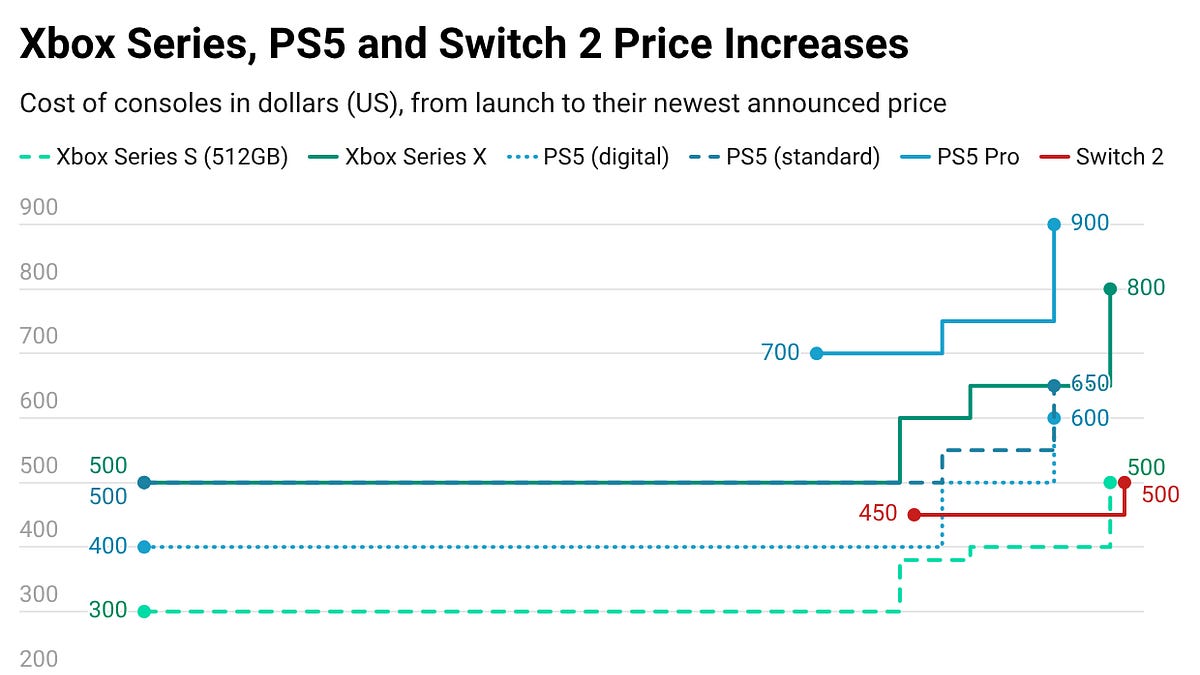
It's Xbox's Turn (Again), as Console Prices Keep Going Up
Microsoft’s latest price hike for the Xbox Series S and X, effective August 1, marks the third adjustment in just over a year.
- Microsoft announced a third price hike in just over a year for Xbox Series consoles, effective August 1, 2026, raising the Xbox Series S from $300 to $500 and the Xbox Series X from $500 to $800.
- This Xbox price increase follows similar actions by Sony for PlayStation 5 consoles in Spring 2026 and a "slow-motion increase" for Nintendo's Switch 2 starting September 2026, indicating a broader industry trend of rising console prices.
- Console prices, which historically decreased over a generation, have surged over the past year, with eight video game industry price hikes occurring in six months of 2025 alone.

Sony Reportedly Ended Destiny 2 Support Over Financial Losses, Not Revenge Against Bungie
Sony’s decision to terminate Destiny 2 live-service support has been framed as a financial calculation rather than an act of retaliation against Bungie.
- Sony terminated live-service support for Destiny 2 primarily due to persistent financial losses and high maintenance costs rather than internal retaliation against Bungie.
- Executive leadership at Sony reached the decision after a formal evaluation of the title's profit-and-loss statement determined that continued investment was unsustainable.
- The decision to cut support is isolated to Destiny 2's performance and is not a punitive measure related to the failure of other Sony live-service titles like Concord.

Why Destiny Died (RIP 2014-2026)
The Destiny franchise, which launched in 2014, is effectively concluding its active development cycle as Bungie transitions Destiny 2 into a maintenance-only state following a final update in June 2026.
- Bungie is ending development on Destiny 2 and initiating significant layoffs following the conclusion of the franchise's long-term content roadmap.
- The development of a potential Destiny 3 has been deemed financially unviable due to the exponential rise in AAA game production budgets, which now far exceed the $500 million investment Activision originally committed to the franchise in 2010.
- Bungie’s transition from an independent studio to a Sony subsidiary in 2022 for $3.6 billion occurred during a period of zero-interest rates, but the studio has since struggled to maintain player engagement as the market for live-service games became increasingly saturated.