Game Development reports and market data
Documents
The Kine Postmortem
The development of the narrative puzzle game Kine serves as a case study in the challenges of solo game production, emphasizing the necessity of aligning mechanical design with storytelling.
- The $420,000 project required an Epic Games exclusivity deal to fund essential art and UI refinements, demonstrating the necessity of external funding for solo-developed titles.
- Attempting a simultaneous multi-platform launch on PC, Xbox, PS4, and Stadia was a strategic error that created an unsustainable logistical burden and resulted in negligible console sales.
- Integrating narrative with mechanics—such as designing puzzles to reflect specific character actions like dancing or combat—created a more cohesive experience than puzzles based on mechanical complexity alone.
Is Your Game Cross-Platform Ready?
Cross-platform development has emerged as a critical strategy for modern game studios, shifting the industry focus from platform-specific silos toward a player-centric model.
- Cross-platform development requires a unified identity system that links disparate platform accounts (e.g., Xbox Live, Steam, PlayStation) to a single, developer-owned account ID to enable seamless cross-play and social features.
- Developers should implement dedicated or relay servers rather than peer-to-peer networking to avoid NAT restriction issues when connecting PC and console players.
- To maintain a consistent experience, unify commerce by using virtual currencies (like V-Bucks or Minecoins) and managing entitlements through a secure, centralized service that validates purchases across different platform storefronts.
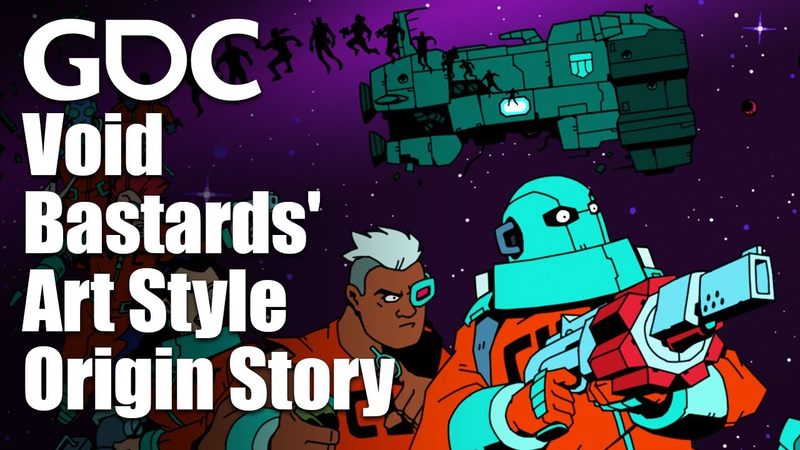
Void Bastards' Art Style Origin Story
The development of the art style for the 2019 game Void Bastards was a multi-year iterative process driven by a commitment to a cohesive comic book aesthetic.
- The development team for Void Bastards was geographically distributed across the UK, Canberra, Canada, and Scotland, necessitating early conceptual tools like a three-page comic to align the team on the game's tone and world-building.
- The game's core loop shifted from a single protagonist who accumulated genetic errors upon reincarnation to a system featuring a series of disposable prisoner characters.
- To manage production scope, the team opted for hand-designed spaceship layouts with procedural interior elements rather than fully procedural ship generation.
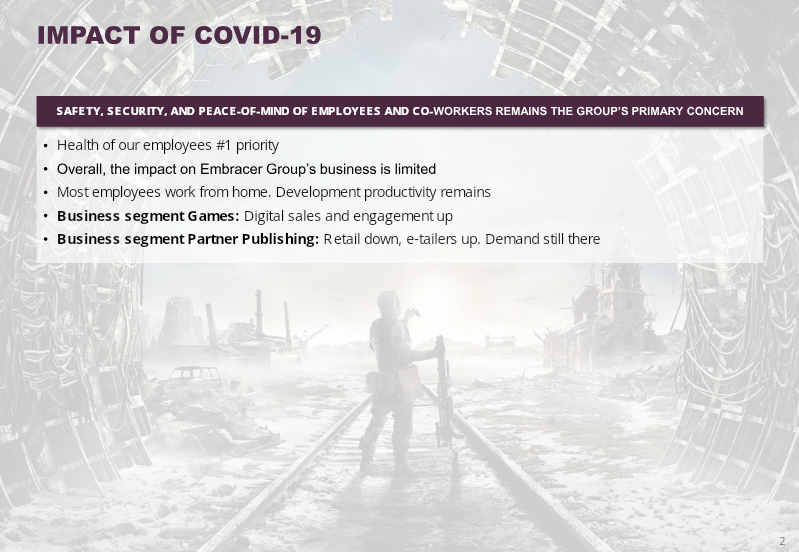
Embracer Group Investor Presentation: 6 April 2020
The Embracer Group's investor presentation from April 6, 2020, primarily addresses the company's performance during the quarter ending March 31, 2020, and the initial impact of the COVID-19 pandemic.
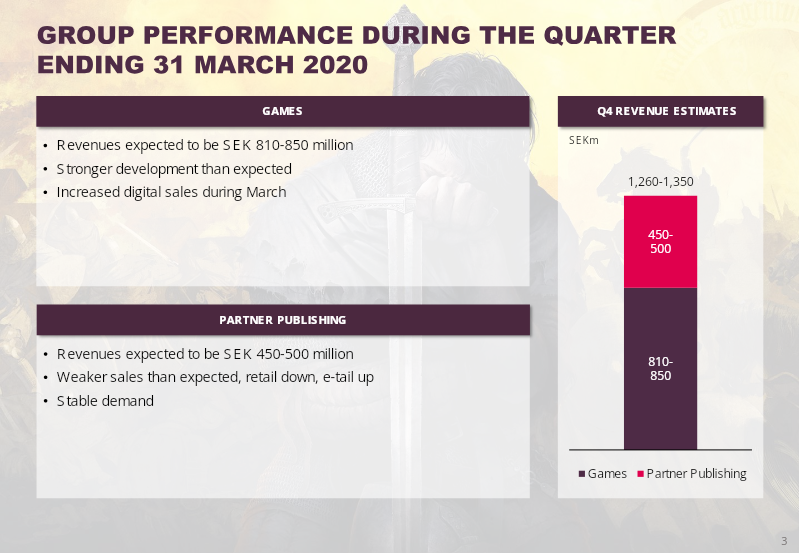
- Embracer Group projects Q1 2020 games revenue between SEK 810 million and 850 million, exceeding internal forecasts due to strong digital sales.
- Partner publishing revenue for the quarter ending March 31, 2020, is estimated at SEK 450 million to 500 million, falling slightly below expectations due to softening physical retail demand.
- The company maintains a dual-growth strategy focused on aggressive organic development and inorganic expansion through M&A, following the successful integration of Saber Interactive.
5 Reasons Why Game Development is the Best Job!
Game development is presented as a premier career path, particularly for independent creators, due to its unique combination of financial potential, low operational barriers, and creative versatility.
- Indie game development offers the potential for six-figure earnings that frequently surpass the salary caps associated with traditional corporate design or marketing roles.
- The business model requires minimal overhead, as digital production eliminates the need for physical infrastructure and limits expenses primarily to personal salary and software subscriptions.
- Developers can maximize financial returns by 'double dipping,' which involves generating simultaneous revenue streams from game sales alongside ad revenue from content creation and live-streaming.
Stress-Free Game Development: Powering Up Your Studio With DevOps
Game development studios frequently struggle with cycles of burnout and inefficient production, often relying on unsustainable heroics to manage chaotic release schedules.
- Transitioning from manual workflows to DevOps principles replaces unsustainable 'heroics' and crunch culture with standardized, automated systems that prioritize sustainable production.
- Optimizing studio output requires identifying specific bottlenecks, as increasing capacity in non-constrained areas provides no net improvement to development speed.
- Automating routine tasks—such as build creation, patch note generation, and QA checklist management—is essential for achieving continuous delivery and reducing human error.

Scumbag Randy Pitchford Keeps Borderlands 3 Bonuses | Games ReCAP
Gearbox Software, a Texas-based game developer, has faced significant internal backlash following a decision to drastically reduce royalty bonuses for employees who worked on the commercially successful title Borderlands 3.
- Gearbox Software significantly reduced royalty bonuses for Borderlands 3 employees, despite the game achieving billion-dollar status as a global brand.
- The studio historically utilizes a compensation model featuring below-average base salaries supplemented by quarterly revenue-sharing bonuses.
- Leadership attributed the reduced payouts to increased development costs and an expanded headcount, specifically citing a mid-development transition from Unreal Engine 3 to Unreal Engine 4 that necessitated restarting production work.

Reading the Rules of Baba Is You
Baba Is You functions as a radical departure from traditional puzzle design by decoupling game objects from their inherent properties.
- Baba Is You decouples game objects from inherent properties, using a logic-based system where players manipulate pushable word blocks to define the rules of the environment.
- The game’s core architecture relies on a multi-pass parsing system that scans levels for valid syntax to resolve conditional logic and translate it into actionable instructions.
- Development transitioned from a 2017 game jam prototype to a table-based format, enabling the handling of arbitrary object groupings and logical negation.
I attempt to design a game as good or better than Adventure Communist. PART 2
The pursuit of designing a high-performing idle game requires a rigorous deconstruction of established mechanics, specifically the multi-tiered production loops that define titles like Adventure Communist.
- Designing high-performing idle games requires mapping multi-tiered production loops where lower-tier resource generation serves as a strategic gate for higher-tier progression.
- Theme selection is a foundational design decision that dictates the project's art direction, budgetary requirements, and mechanical constraints.
- Success in the idle genre depends on providing clear visual feedback and a highly structured progression path to maintain player engagement through incremental rewards.
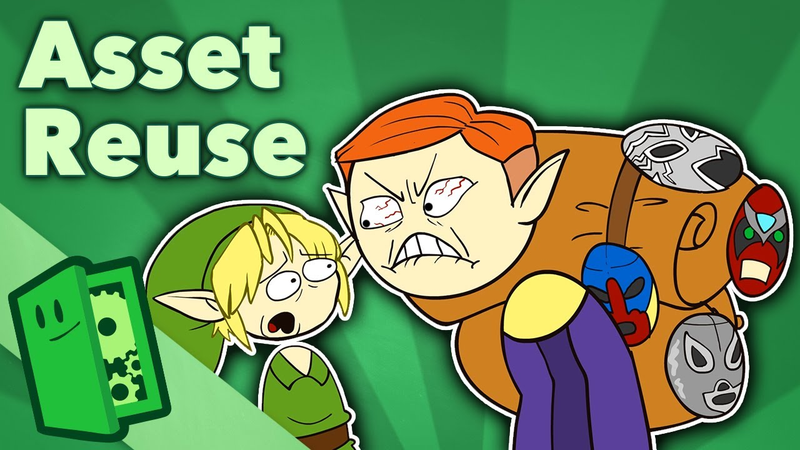
Asset Reuse - Working Smarter, Not Harder - Extra Credits
The practice of asset reuse in game development is often unfairly stigmatized as laziness or cost-cutting, when it is, in fact, a strategic design tool that allows developers to prioritize innovation and depth.
- Asset reuse is a strategic design tool that allows studios to shift finite resources away from redundant technical labor and toward core gameplay, narrative depth, and world-building.
- Reusing existing assets can enable rapid production cycles, such as the 16-month development timeline achieved for Dragon Age 2.
- Successful implementations like Fallout: New Vegas and The Legend of Zelda: Majora’s Mask demonstrate that reusing assets can facilitate superior role-playing depth and unique narrative experiences.
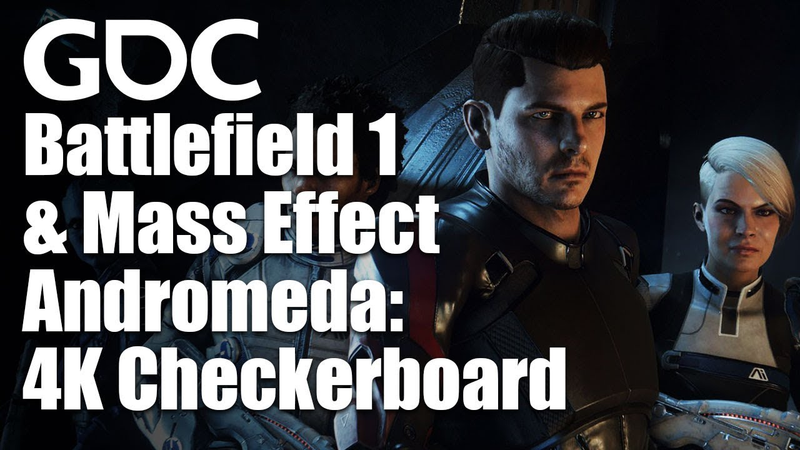
4K Checkerboard in Battlefield 1 and Mass Effect Andromeda
Achieving 4K-like visual fidelity on hardware with limited bandwidth requires sophisticated rendering techniques that balance performance budgets with image quality.
- The Frostbite engine utilizes packed checkerboard rendering to achieve 4K-like visual fidelity by shading a subset of pixels and reconstructing high-resolution frames from lower-resolution buffers.
- Implementing checkerboard rendering in Battlefield 1 reduced GPU frame costs by approximately 5.08 milliseconds, enabling stable 60Hz performance.
- To maintain visual integrity, the pipeline employs geometry-aware resolves, velocity-based reprojection, and object/primitive ID buffers to prevent color bleeding and z-fighting.

WFH Orders, Magic Leap Selling, Naughty Dog Crunches, Gamestop | Game Dev Unchained Episode 219
The global pandemic served as a catalyst for a forced, rapid transition to remote work, exposing significant infrastructure vulnerabilities within major AAA studios.
- The gaming industry is transitioning toward a service-oriented model, yet remains hindered by traditional development habits that prioritize short-term output over long-term workforce sustainability.
- Systemic crunch culture at high-profile studios like Naughty Dog persists because commercial success and critical acclaim are used to justify unsustainable labor practices.
- The rapid shift to remote work during the pandemic exposed significant infrastructure vulnerabilities in AAA studios, specifically regarding VPN security and hardware shortages.
Writers
Games and companies
Games