PC reports and market data
1,841 game industry reports, presentations and talks about pc from writers such as Thomas Brush, Game Developers Conference and Jonas Tyroller, newest from 2026. Every document has a summary and key insights with the page they come from, and 3,153 charts and tables are extracted as data.
Key figures
The global games market is projected to reach $213.9 billion in 2026, a 6.1% year-over-year increase, driven by deeper monetization of existing players rather than new user acquisition as market penetration nears saturation.
Newzoo, 2026 · Global Games Market Report: 2026, p. 7
Mobile gaming retention is in decline, with median D30 retention rates falling below 1% across a sample of over 16,000 live titles.
GameAnalytics, 2026 · 2026 Mobile & PC Gaming Benchmarks, p. 10
Embracer Group reported net sales of SEK 22,370 million with an adjusted EBIT margin of 15% for the 2024/25 fiscal year, excluding divested operations.
Embracer Group, 2026 · ESG Fact Sheet: FY 2025/26, p. 1
The Italian video game market generated 2.4 billion euros in 2025, with software sales accounting for 77 percent of total market value.
IIDEA – Italian Interactive Digital Entertainment Association, 2026 · I Videogiochi in Italia nel 2025, p. 8
The Turkish gaming market reached $1.01 billion in revenue in 2025, supported by a player base of 50 million gamers.
InvestGame, 2026 · Türkiye Game Market Report 2025, p. 151
Documents

He Quit His Job & Became The Lead Artist On Twisted Tower (w/ Felipe Caravelli) — Ep 73
The independent game development landscape is currently defined by a tension between the efficiency of automated tools and the enduring value of human-centric, handcrafted artistry.
- Prioritize a cohesive, intentional aesthetic over generic high-fidelity realism to stand out in an oversaturated market.
- Utilize modular, grid-based geometry and exaggerated art styles to maintain economic viability while ensuring consistent performance and visual depth.
- Transitioning to an independent career requires shifting from traditional employment to a freelance model, necessitating strong financial discipline and the ability to manage project-based income instability.

Blizzard’s Biggest BlizzCon in Years: Can They Deliver?
Blizzard’s recent product announcements represent a strategic pivot toward aggressive long-term content scheduling, likely intended to secure budgetary stability under Microsoft’s ownership.
- Blizzard is shifting to an aggressive, multi-year content roadmap—including a new StarCraft shooter, Diablo 5, and World of Warcraft expansions—to demonstrate operational efficiency and secure budget stability under Microsoft.
- The studio is diversifying the World of Warcraft franchise into three distinct SKUs (Retail, Classic, and Warcraft Forever) to increase average revenue per user and stabilize a subscriber base that has historically fluctuated between two and three million.
- Analysts warn that managing three simultaneous live-service MMOs creates significant operational strain and development pipeline complexity for the Irvine-based team.
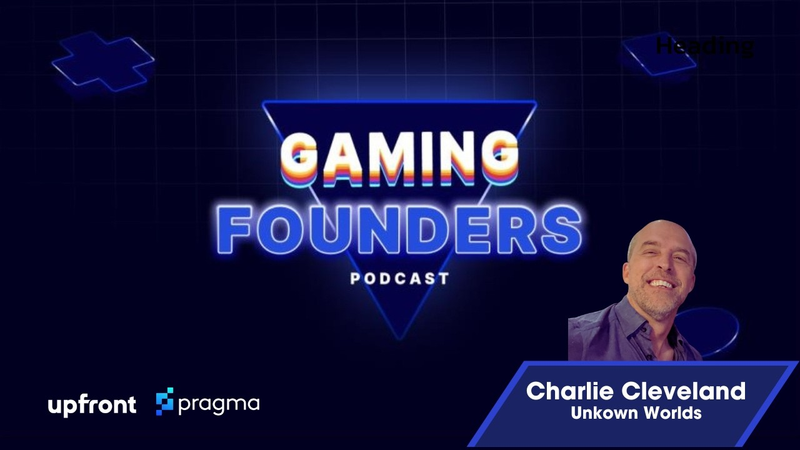
Subnautica's Rise: How Charlie Cleveland Beat the Odds in Gaming
The trajectory of Unknown Worlds Entertainment serves as a case study in the resilience required to navigate the independent game development landscape.
- Unknown Worlds Entertainment achieved independence in 2021 by executing a full buyback of the studio following the commercial success of the Subnautica franchise, which has sold over 12 million copies.
- The studio utilized a 2011 acquisition by Perfect World to secure the necessary capital to complete the development of Natural Selection 2, demonstrating the strategic use of external funding to survive financial instability.
- The transition from niche multiplayer titles to the mass-market Subnautica was driven by a commitment to open development, early crowdfunding, and the integration of player feedback into the design process.
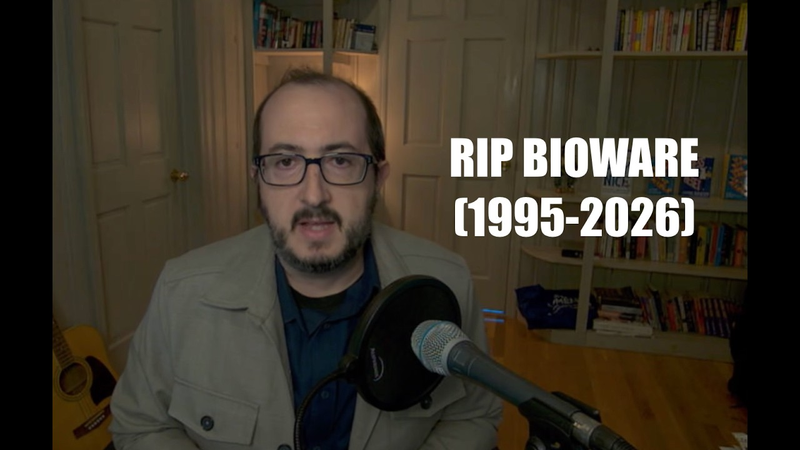
EA Shuts Down BioWare
Electronic Arts has officially shuttered the legendary game studio BioWare as part of a broader corporate reorganization and workforce reduction.
- Electronic Arts has officially closed BioWare as part of a corporate reorganization that includes 400 total job cuts, with 50 positions eliminated at the studio.
- The closure of BioWare results in the cancellation of the next entry in the Mass Effect franchise, which was in early-stage development.
- Dragon Age: The Veilguard sold approximately 1.5 million copies, failing to meet Electronic Arts' internal performance targets.

Reinstalling: Portal! | Design Club
Released in 2007 as part of The Orange Box, Portal serves as a definitive case study in minimalist game design and the power of focused mechanics.
- Portal, released in 2007 as part of The Orange Box, demonstrates that a single, innovative core mechanic can create a more cohesive and enduring experience than content-heavy, sprawling game designs.
- The game’s success relies on invisible technical systems that manage gravity and camera orientation, allowing players to navigate non-Euclidean spaces without disorientation.
- By utilizing a diegetic storytelling approach through the antagonist GLaDOS, the game provides narrative context without breaking the player's immersion or relying on traditional cutscenes.
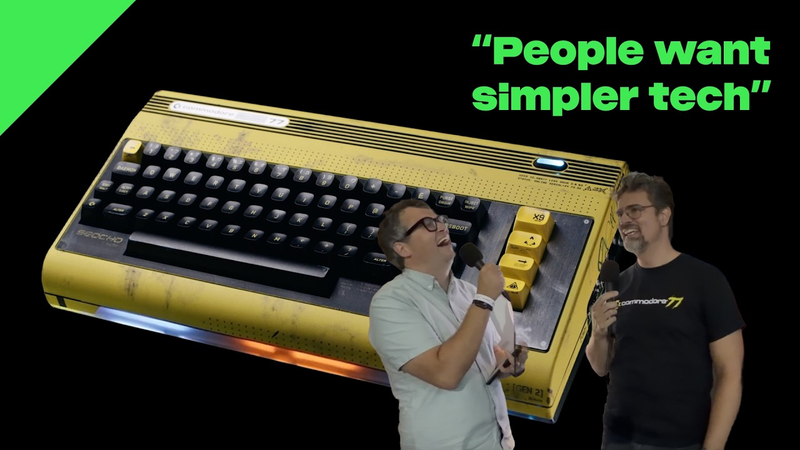
How one Star Wars actor became the CEO of Commodore
Commodore, under the leadership of CEO Christian Simpson, is executing a dual-track business strategy that blends retro-computing nostalgia with modern digital minimalism.
- Commodore has successfully pivoted from a niche hobbyist brand to a multifaceted publisher, selling over 27,000 Commodore 64 units since its relaunch.
- The 'Comeback 8020' flip phone, which promotes digital minimalism by excluding social media, achieved first-weekend sales volume equal to the first three months of Commodore 64 hardware sales.
- The company is executing a dual-track business strategy that balances retro-computing nostalgia with modern digital minimalism to capture a broader market beyond traditional gaming enthusiasts.
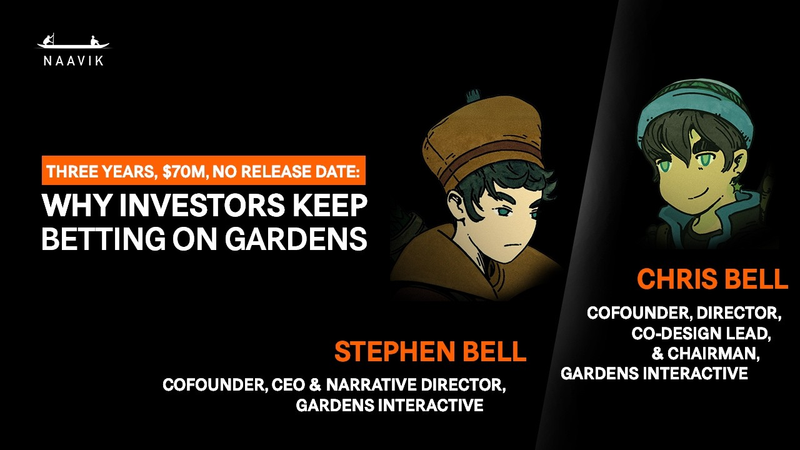
Why Investors Keep Betting on Gardens
Gardens Interactive is positioning itself at the forefront of a new wave of social-first gaming, securing $70 million in total funding, including a recent $35 million Series B round that values the studio at $190 million.
- Gardens Interactive has secured $70 million in total funding, including a $35 million Series B round that brings the studio's valuation to $190 million.
- The studio is developing a 'strandbox' game model that prioritizes emergent social interaction and player-driven world-shaping over traditional algorithmic or AI-generated content.
- Development utilizes the Unreal engine combined with a proprietary foundation that integrates procedural generation with hand-authored design to ensure visual longevity.

How Riot Went From One Game to Five Hits | Mark Sottosanti, Riot Games
Riot Games has successfully transitioned from a single-title developer into a diversified, multi-platform publisher by prioritizing long-term ecosystem health over short-term financial gains.
- Riot Games transitioned from a single-title developer to a multi-platform publisher by prioritizing long-term ecosystem health and player mastery over short-term financial gains.
- The company maintains a global operational footprint of approximately 20 regional offices to ensure cultural relevance and balanced revenue distribution across North America, Europe, China, and Korea.
- Riot avoids inorganic growth, choosing to retain strict internal stewardship over its intellectual property rather than pursuing acquisitions or third-party licensing.
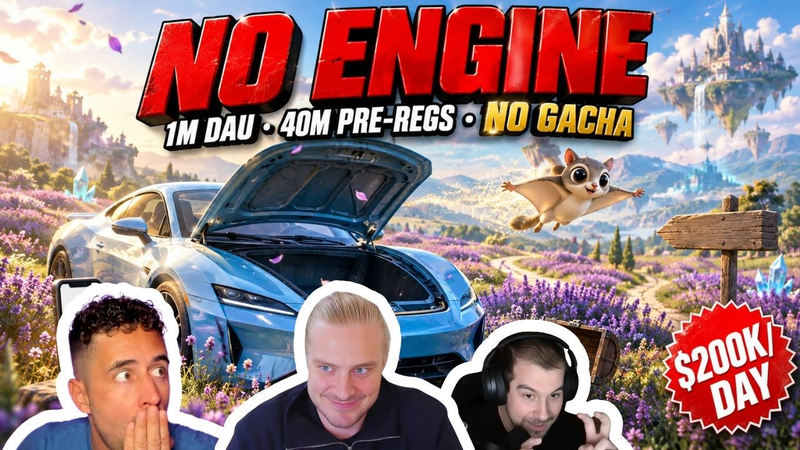
🐿️ FunPlus Made a Genshin-Pokémon-Palworld Game and Forgot the Gacha
FunPlus has entered the high-fidelity, cross-platform open-world RPG market with the launch of Aniimo, a title that synthesizes mechanics from popular creature-collection and action-combat franchises like Genshin Impact, Pokémon, and Palworld.
- FunPlus launched Aniimo, a high-fidelity open-world RPG combining mechanics from Genshin Impact, Pokémon, and Palworld, marking a strategic shift from its traditional 4X strategy focus.
- The game achieved significant initial traction with 40 million pre-registrations and over 1.5 million mobile downloads in its first month.
- Aniimo maintains a daily active user base of approximately one million players across mobile, PC, and console platforms.
How Undead Labs saved itself and State of Decay from oblivion
Undead Labs has successfully navigated a complex transition from a Microsoft-owned entity to an independent, employee-owned studio.
- Undead Labs transitioned from a Microsoft-owned entity to an independent, employee-owned studio to ensure the long-term viability of the State of Decay franchise.
- The studio implemented a workforce reduction to align operational costs with its new independent model while issuing stock options to remaining staff to foster shared ownership.
- The State of Decay franchise has reached a milestone of 25 million players, with significant growth driven by the discoverability and scale of Xbox Game Pass.

TWIG #403: The Market Only Grew 2%, Friendslop Hits the PC Charts and China Drafts Off GTA VI
The global gaming industry is currently experiencing a period of significant stagnation, with real-term market growth hovering at approximately 2% annually when adjusted for inflation.
- The global gaming industry is stagnating with only 2% annual real-term growth, driven by rising user acquisition costs and a lack of expansion beyond mature Western and Chinese markets.
- Console spending is highly consolidated, with 93% of revenue directed toward established intellectual property, creating significant barriers for new entrants.
- The PC market is a winner-take-all environment where only 1.5% of annual game releases generate more than $1 million in revenue.

The Age Of AI Copy Cats Is Upon Us. Here's What Game Devs Should Do...
The rapid proliferation of artificial intelligence in game development has created a landscape where simple, gimmick-based games are increasingly vulnerable to immediate replication.
- To protect games from being easily cloned by AI, developers must move beyond simple gimmicks and infuse projects with a unique, cohesive artistic voice, personal storytelling, and a distinct perspective.
- A game's defense against replication lies in its 'humanity,' which is achieved by limiting inspirations to a few specific, sharp influences rather than relying on the broad, average data sets used by AI models.
- Developers should prioritize building a dedicated audience, which acts as a 'lever' that ensures a player base exists even if a game's core concept is copied by competitors.