Skip to main content
Game Industry
Library
Library
Search
Ask AI
News
Connect your AI
Browse
The Catch Up
Topics
Collections
Writers
Help
Subscribe
Game Industry
Library
Library
Search
Ask AI
Saved
Library
49 reports matching your filters
All Types
Reports
Articles
Presentations
Whitepapers
Financial
Legal
Other
Search
USA
Market Analysis
Mobile
Employment
Investment
Player Demographics
Game Development
Global
Monetization
Marketing
Mergers & Acquisitions
PC
Game Publishing
Player Behavior
Console
Diversity & Inclusion
North America
Advertising
Clear
Filters
1
USA
Recently added
Newest first
Oldest first
Title A–Z
Title Z–A
Report
5 pages
East vs. West: Monetization Trends
Eastern mobile gamers demonstrate a significantly higher propensity for large transactions, with 76% of purchases exceeding $10 compared to only 42% in Western markets.
Western mobile gamers are more likely to make small-scale purchases, with 8% of spenders in the West opting for transactions under $5, contrasted with 30% in the East.
Monetization strategies in the West should prioritize value-based bundles, as these resonate more effectively with the purchasing preferences of Western players.
Market Analysis
Player Behavior
Monetization
+5
Mistplay
Report
1 pages
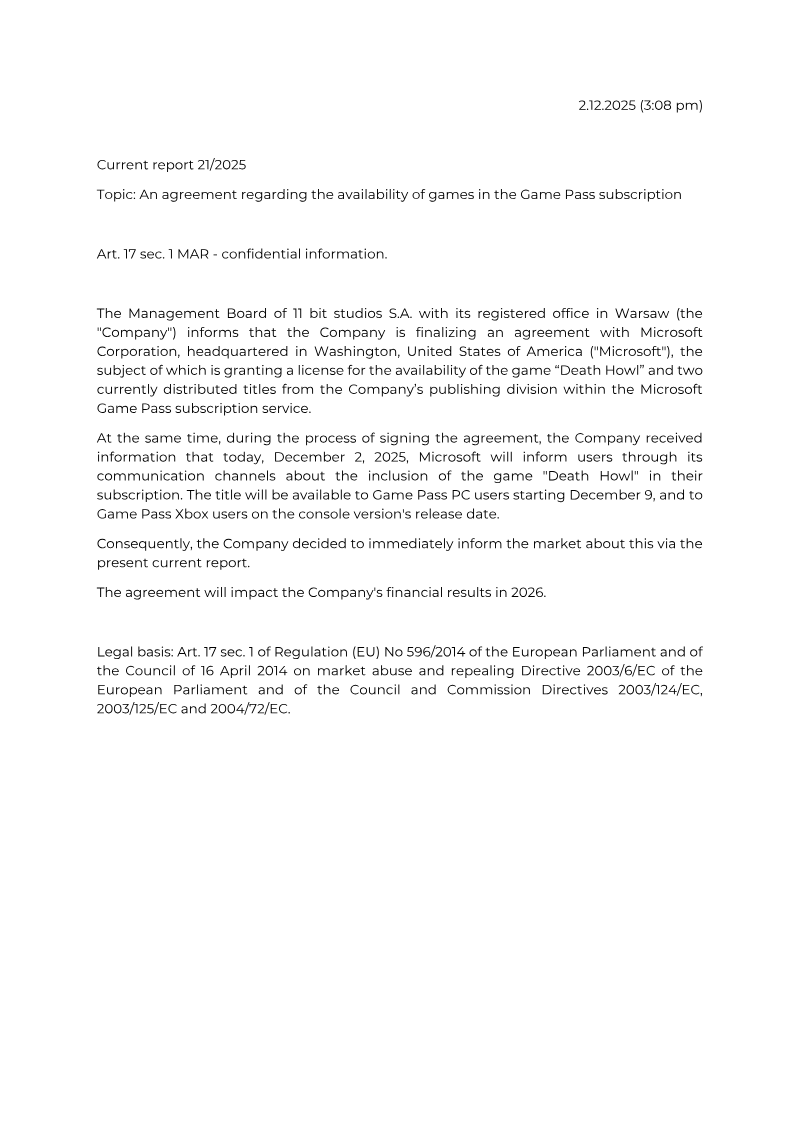
An Agreement Regarding the Availability of Games in the Game Pass Subscription
11 bit studios S.A. has finalized a licensing agreement with Microsoft to bring 'Death Howl' and two additional publishing titles to the Game Pass subscription service.
The 'Death Howl' PC version is scheduled to launch on Game Pass on December 9, 2025, with the Xbox console version to follow upon its release.
The agreement covers both PC and Xbox platforms and is expected to materially influence 11 bit studios' financial performance in the 2026 fiscal year.
Game Publishing
Monetization
Console
+2
11 bit studios
Report
1 pages
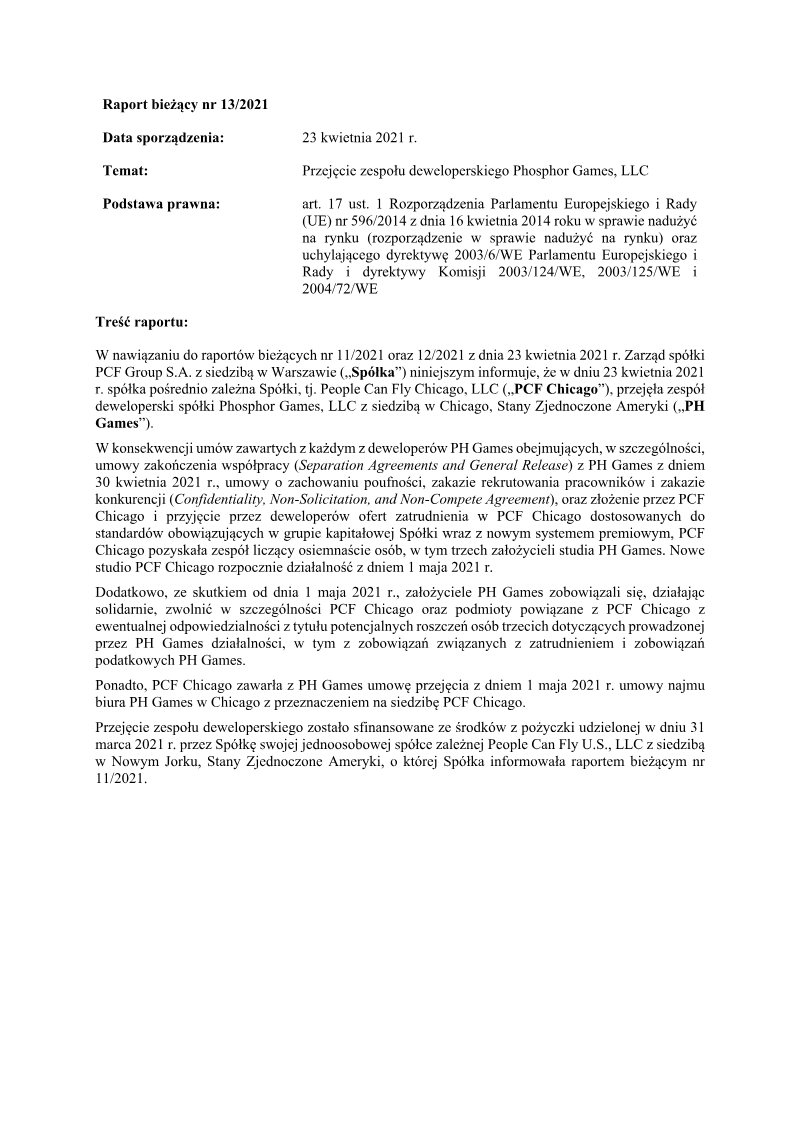
Raport Bieżący Nr 13/2021: Przejęcie Zespołu Deweloperskiego Phosphor Games, LLC
On 23 April 2021, PCF Group S.A. subsidiary PCF Chicago acquired the 18-person development team of Phosphor Games, LLC.
The new studio officially commenced operations on 1 May 2021, with three founding members of Phosphor Games joining the PCF Chicago team.
PCF Chicago assumed the lease of the existing Phosphor Games office in Chicago to serve as its new North American headquarters.
Mergers & Acquisitions
Game Development
USA
+1
PCF Group
Report
2 pages
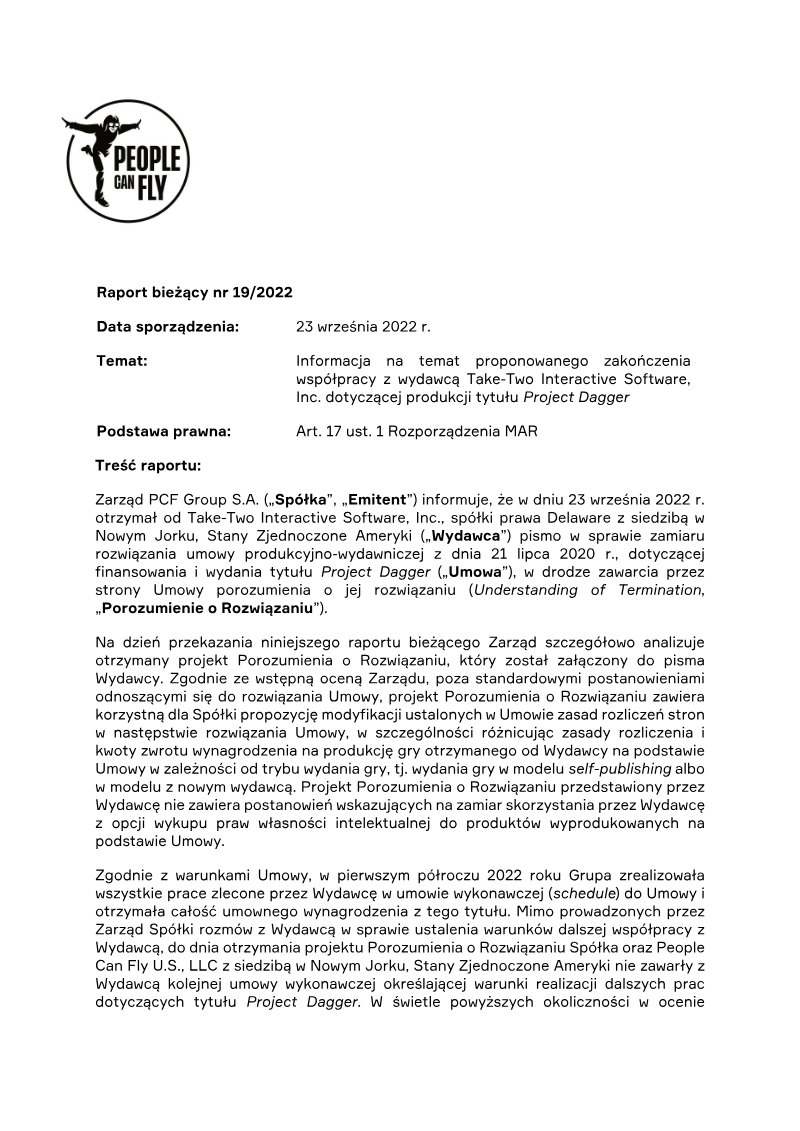
Current Report No. 19/2022: Termination of Collaboration with Take-Two Interactive Software, Inc.
Take-Two Interactive Software, Inc. notified PCF Group S.A. on 23 September 2022 of its intent to terminate the July 2020 production-publishing agreement for Project Dagger.
PCF Group retains full intellectual property rights for Project Dagger, as the proposed termination agreement contains no buy-out clause for Take-Two.
PCF Group completed all contractual work and received full remuneration for Project Dagger through the first half of 2022.
Game Development
Game Publishing
Investment
+1
PCF Group
Report
2 pages
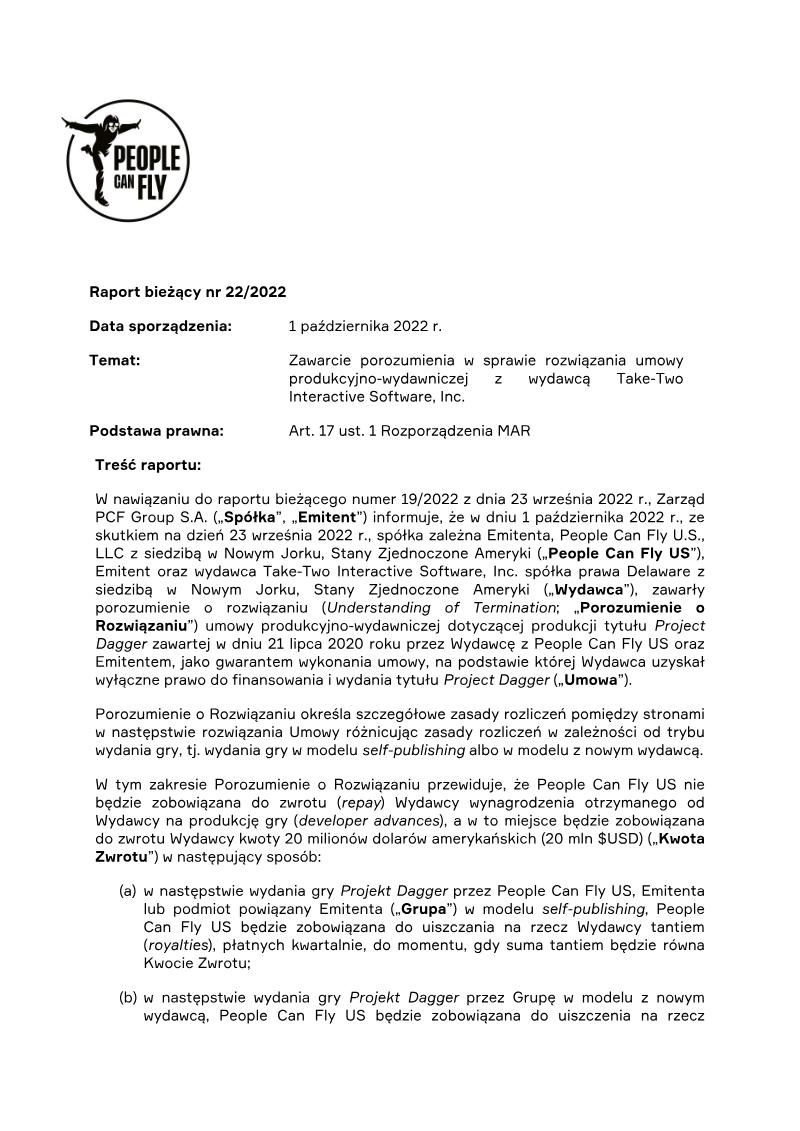
Current Report No. 22/2022: Agreement on Termination of Production and Publishing Agreement
People Can Fly U.S., LLC and Take-Two Interactive Software, Inc. terminated their 2020 production and publishing agreement for Project Dagger, effective October 1, 2022.
People Can Fly retains exclusive ownership of the Project Dagger intellectual property, as Take-Two did not exercise its option to acquire the rights and its license has expired.
If People Can Fly self-publishes Project Dagger, they must pay royalties to Take-Two on a quarterly basis until a total of $20 million is repaid.
Game Publishing
Mergers & Acquisitions
Investment
+1
PCF Group
Report
1 pages
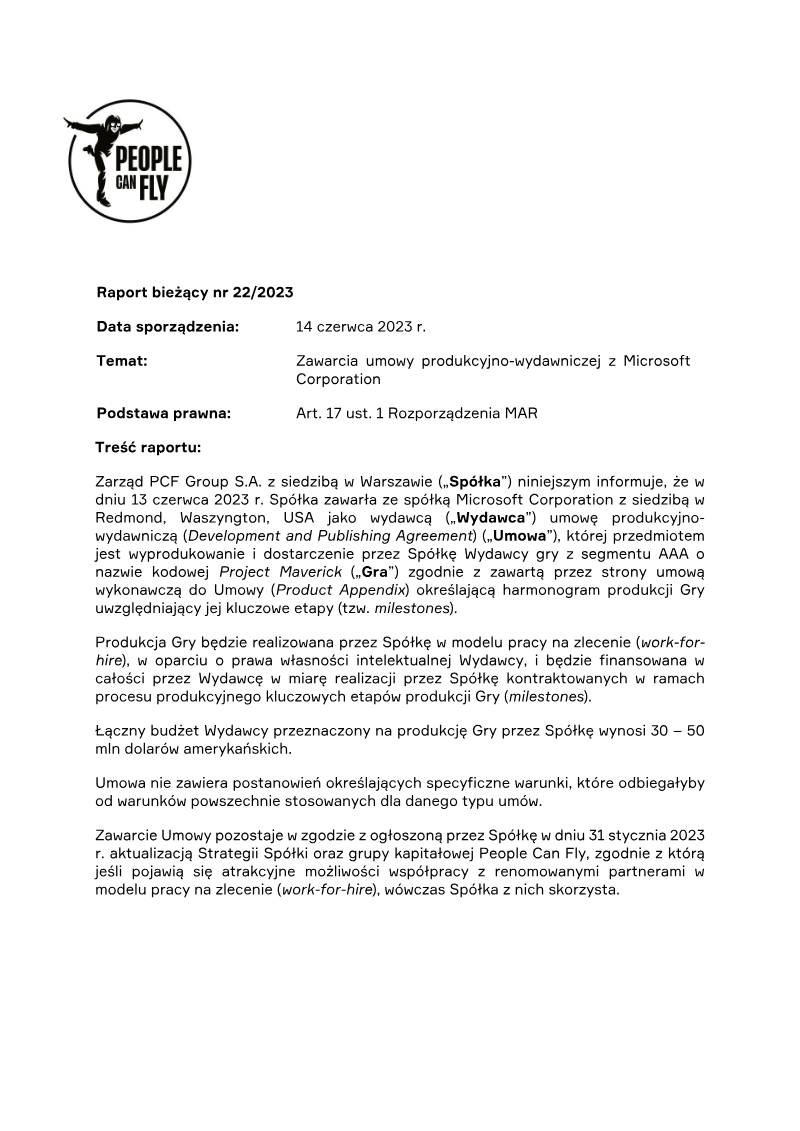
Current Report No. 22/2023: Production and Publishing Agreement with Microsoft Corporation
PCF Group S.A. signed a development and publishing agreement with Microsoft Corporation on 13 June 2023 to produce an AAA-grade title codenamed Project Maverick.
The project operates under a work-for-hire model where Microsoft retains all intellectual property rights.
Microsoft will fully fund the development with a total budget ranging from $30 million to $50 million.
Game Development
Game Publishing
Mergers & Acquisitions
+1
PCF Group
Report
1 pages
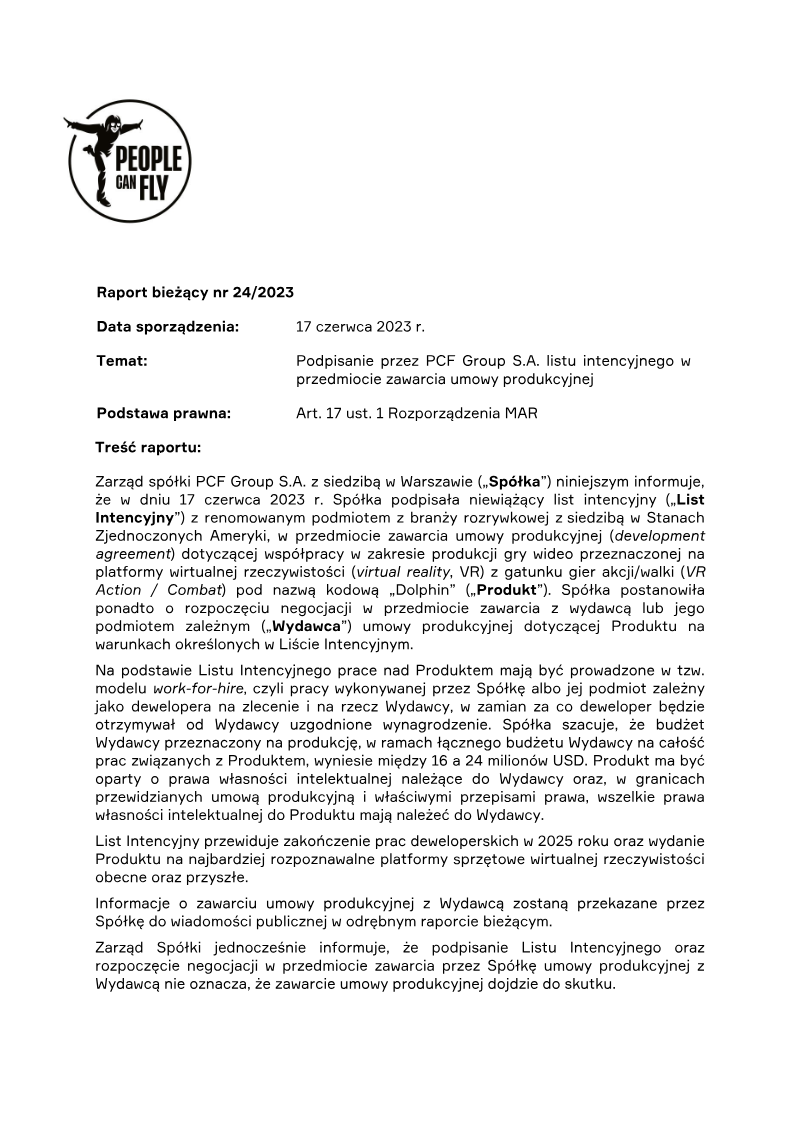
Current Report No. 24/2023: Signing of a Letter of Intent Regarding a Production Agreement
PCF Group S.A. has signed a non-binding Letter of Intent to develop a virtual-reality action/combat game codenamed “Dolphin” for a major U.S. entertainment company.
The project is structured as a work-for-hire agreement, with the publisher retaining intellectual property rights within contractual limits.
The estimated production budget for the title is between 16 million and 24 million USD.
Game Development
Mergers & Acquisitions
Investment
+4
PCF Group
Report
1 pages
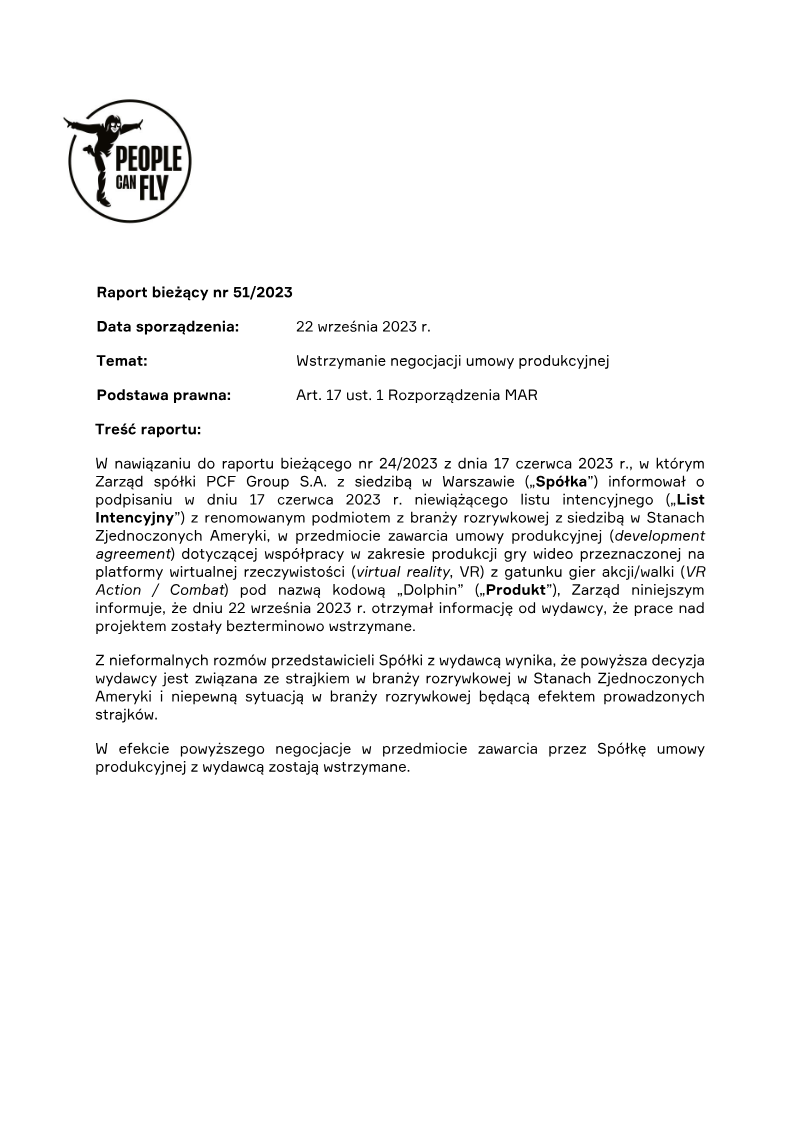
Raport Bieżący nr 51/2023: Wstrzymanie Negocjacji Umowy Produkcyjnej
PCF Group S.A. has indefinitely suspended negotiations for a production agreement regarding the virtual-reality action game code-named “Dolphin.”
The project was terminated after the U.S.-based publisher notified PCF Group on 22 September 2023 that all work on the title would be halted permanently.
The partnership originated from a non-binding letter of intent signed between the two companies on 17 June 2023.
Game Development
Mergers & Acquisitions
VR
+2
PCF Group
Report
1 pages
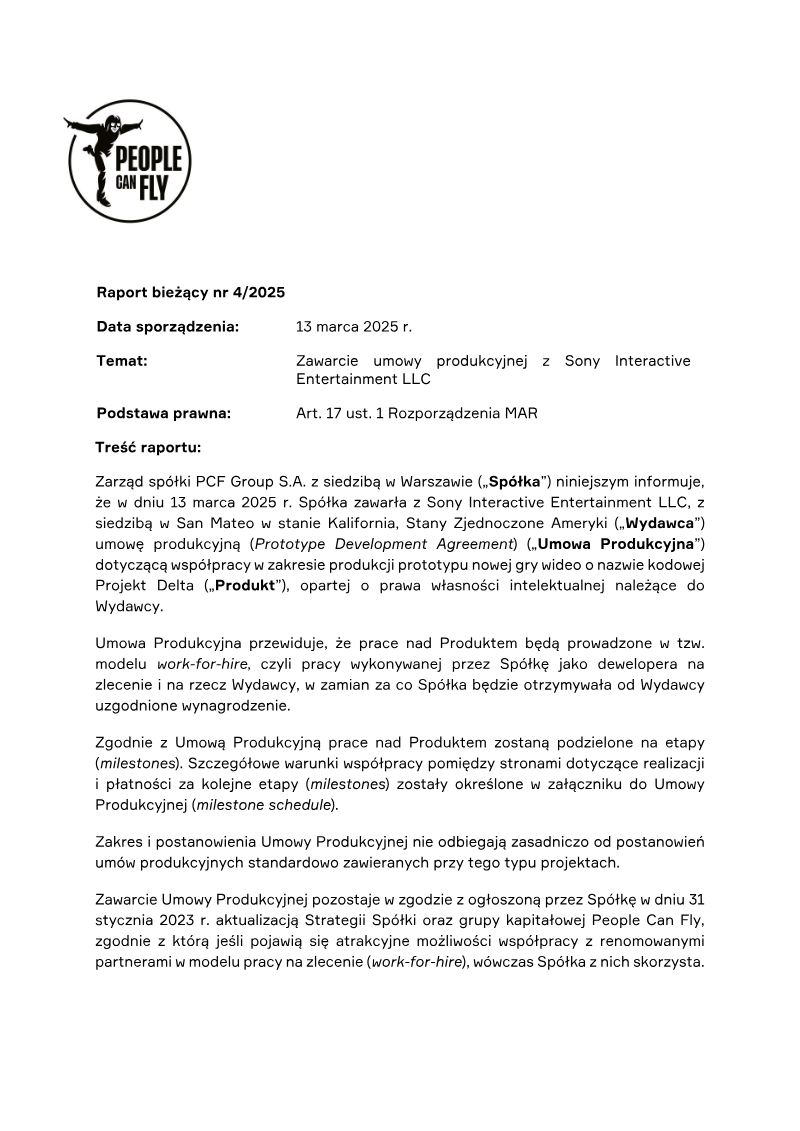
Current Report No. 4/2025: Production Agreement with Sony Interactive Entertainment LLC
PCF Group S.A. has signed a Prototype Development Agreement with Sony Interactive Entertainment LLC to create a new video game prototype codenamed Project Delta.
The project involves developing a title based on intellectual property owned by Sony, utilizing a work-for-hire business model.
Compensation and project progression are structured around a series of defined milestones and operational requirements detailed in the agreement's technical annex.
Game Development
Game Publishing
Investment
+1
PCF Group
Report
4 pages
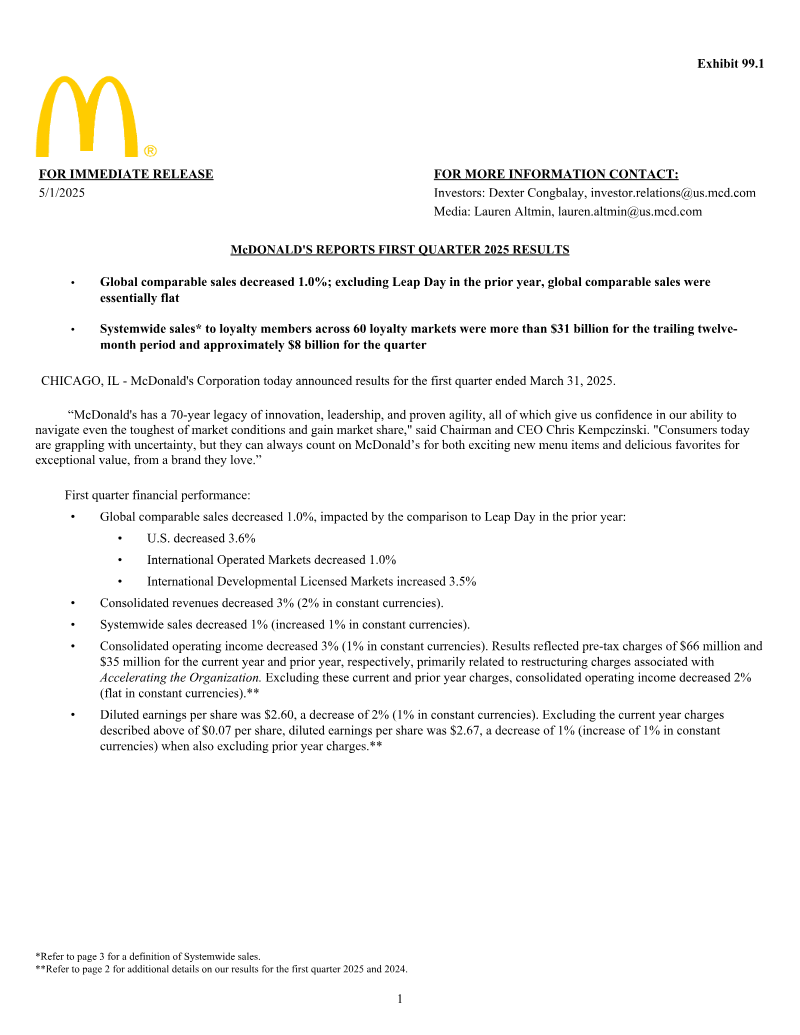
McDonald's Reports First Quarter 2025 Results
McDonald’s global comparable sales declined by 1.0% in Q1 2025, with consolidated revenues falling 3% year-over-year to $5.96 billion.
Diluted earnings per share dropped 2% to $2.60, though non-GAAP figures suggest underlying performance remained more stable when excluding restructuring charges.
The U.S. market faced a 3.6% decrease in comparable sales, primarily attributed to a reduction in total guest counts.
Market Analysis
Monetization
Global
+1
McDonald's Corporation
Report
14 pages
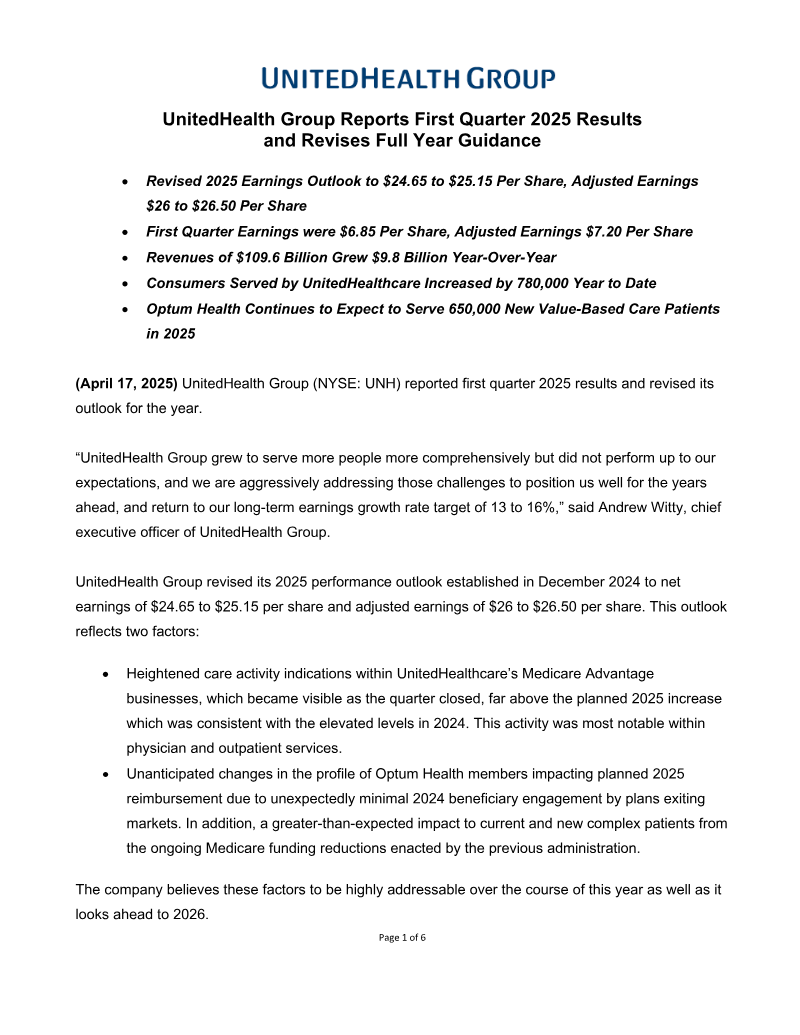
UnitedHealth Group: First Quarter 2025 Results and Revised Guidance
UnitedHealth Group has revised its 2025 full-year adjusted earnings outlook to a range of $24.65 to $25.15 per share.
First quarter 2025 revenues reached $109.6 billion, representing a year-over-year increase of $9.8 billion.
The company reported first quarter earnings of $6.85 per share, with adjusted earnings reaching $7.20 per share.
Market Analysis
Market Forecast
Investment
+2
UnitedHealth Group
Report
1 pages
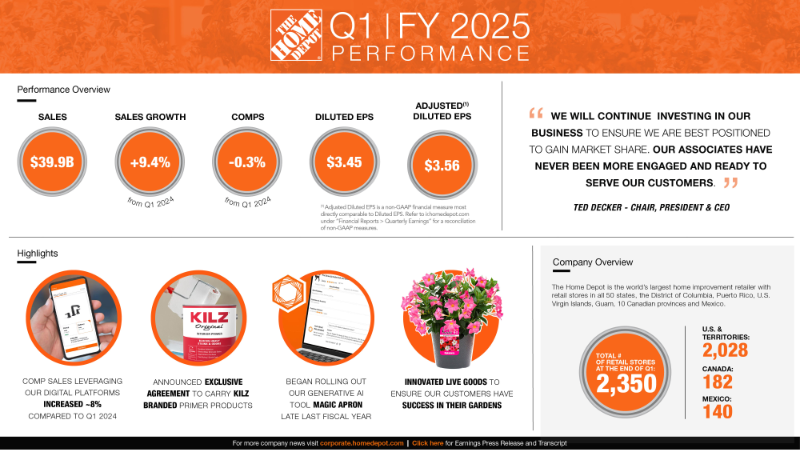
Performance Overview
The Home Depot generated $39.9 billion in total sales with a 9.4 percent increase in sales growth, despite a 0.3 percent contraction in comparable store sales.
The company reported a diluted earnings per share of $3.45, which increases to $3.56 on an adjusted basis.
Digital platforms achieved an 8 percent increase in comparable sales, supported by the deployment of generative AI tools like Magic Apron.
Market Analysis
Investment
USA
+1
The Home Depot
Report
11 pages
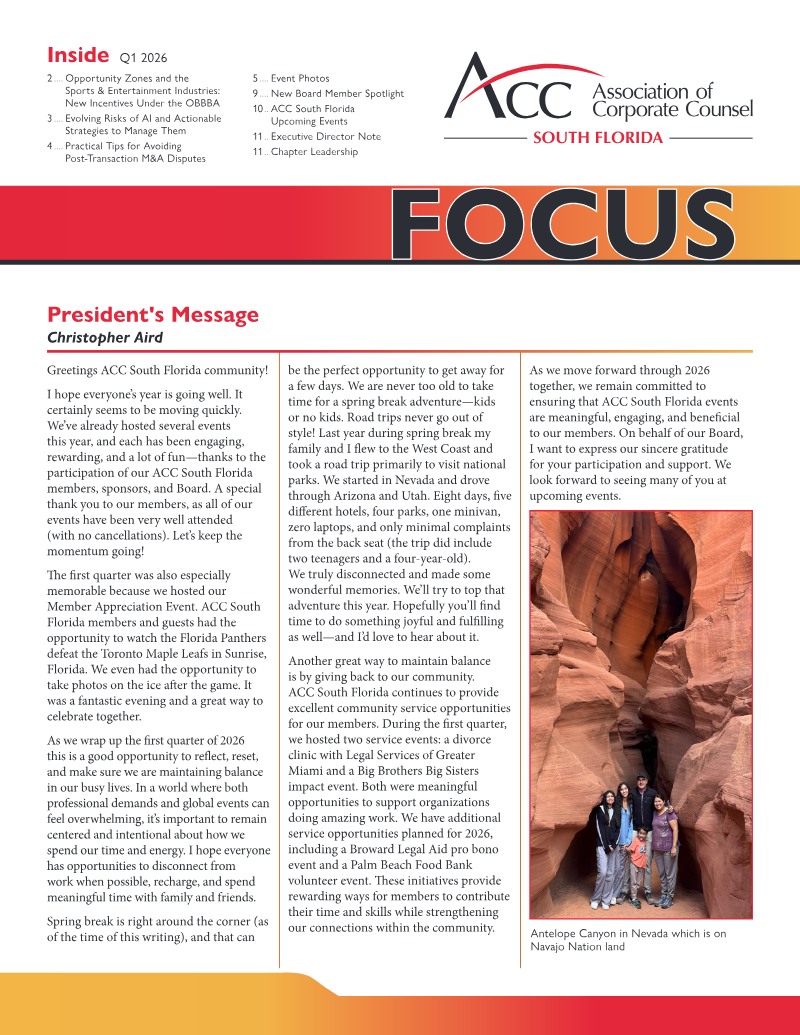
FOCUS: ACC South Florida 2026
The OBBBA has introduced new financial incentives relevant to the South Florida business landscape.
The integration of AI in the sports and entertainment industries presents evolving operational risks that require proactive management strategies.
Practical frameworks are available for mitigating legal risks associated with post-transaction M&A disputes.
AI
Mergers & Acquisitions
USA
ACC South Florida
Report
20 pages
Quarterly Outlook: Q1 2026
Q1 2026 is characterized by a significant divergence between ongoing geopolitical volatility and a period of relative stability in global rulemaking.
Companies are currently prioritizing the monitoring of geopolitical developments to assess their potential operational and strategic implications.
Market Analysis
Investment
Global
+1
KPMG
Report
66 pages
2024 Corporate Responsibility Report: Sunstone Hotel Investors, Inc
Sunstone Hotel Investors, Inc. published its 2024 Corporate Responsibility Report to outline the company's strategic approach to environmental, social, and governance initiatives.
The report serves as a formal disclosure document detailing the company's operational standards and corporate oversight practices for the 2024 fiscal year.
The documentation provides a comprehensive overview of the company's business structure and its commitment to transparency in corporate responsibility reporting.
Diversity & Inclusion
Investment
USA
Sunstone Hotel Investors
Report
21 pages
2026 US Venture Capital Outlook
AI startups currently command 65% of all venture capital, driving record-high median valuations of $838 million for Series C and D+ rounds.
The US venture capital market is projected to see a fundraising rebound to $100–$130 billion in 2026, with approximately 70% of new commitments expected to come from recycled distributions.
As of Q3 2025, the US hosted 830 active unicorns with a combined post-money valuation of $3.9 trillion, though many face significant liquidity constraints and difficulties securing follow-on funding.
Market Analysis
Market Forecast
Investment
+2
PitchBook
Jan 2026
Report
133 pages
Vorhaus Digital Strategy Study: All Findings 2025
Digital-first entertainment has become the US standard, with smart TV penetration at 63% and connected devices officially surpassing traditional broadcast media.
Gaming is now a near-universal activity with 80% of the population participating, driven by daily mobile play and a significant rise in total annual in-game spending.
Consumers are adopting 'subscription cycling' to manage costs, despite the average household maintaining 3.5 video services and younger consumers (18–34) increasing annual digital media spending by $235.
Market Analysis
Player Behavior
Mobile
+1
Vorhaus Advisors
Aug 2025
Report
49 pages
Retail Media Playbook: United States
U.S. retail media expenditures are projected to reach $130 billion by 2028, solidifying its position as the fastest-growing digital advertising channel.
Amazon remains the dominant market leader with $261 million in spend in early 2025, maintaining a strategy where 53% of total ad spend occurs on-site.
Top-tier advertisers like L’Oréal and Samsung prioritize high-intent conversion by allocating over 90% of their budgets to Amazon’s on-site display ads.
Market Analysis
Advertising
Marketing
+1
Sensor Tower
Apr 2025
Report
18 pages
2025 Game Industry Salary Report
The average annual salary for U.S. game professionals is $142,000, yet 80% of workers perceive the industry as less secure than other career paths due to widespread instability.
One-fourth of industry professionals experienced a layoff in the last two years, with nearly 50% of those affected remaining unemployed.
Significant wage disparities persist, as non-white workers earn 27% less than white peers and women earn 24% less than men.
Salary
Employment
Market Analysis
+1
Game Developers Conference
Mar 2025
Report
38 pages
The 2025 Guide to US Gaming Audiences: From Data to Personas
The US gaming audience is now gender-balanced and financially stable, with significant segments earning between $51,000 and over $250,000 in net worth.
Modern gamers prioritize immediate lifestyle quality and discretionary spending over long-term asset accumulation, frequently investing in premium groceries and convenience services.
Gaming is primarily a social and familial activity rather than a solitary pursuit, with consumer habits heavily influenced by multi-generational household dynamics.
Market Analysis
Player Demographics
Marketing
+1
Anzu & Semcasting
Jan 2025
Previous
1
2
3
Next