1 free read left. Create a free account for unlimited reading + AI research.
Create free account
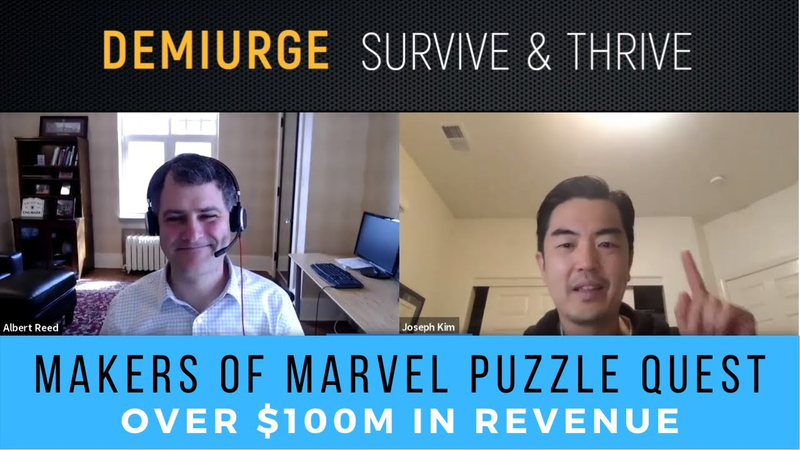
Surviving & Thriving in Games with Demiurge | Marvel Puzzle Quest ($100M+ in Revenue)
Key insights
6 takeaways- 01Demiurge Studios achieved over $100 million in revenue with Marvel Puzzle Quest by successfully localizing Japanese card-battler mechanics for Western mobile audiences.
- 02The studio’s transition from a work-for-hire provider to a proprietary developer and its subsequent acquisition by SEGA in 2016 were driven by early investment in emerging platforms and scalable live operations.
- 03Future industry success depends on the ability to blend AAA development standards with sophisticated live-service expertise across converging mobile, console, and PC platforms.
- 04Studios can preserve autonomy and navigate market shifts by avoiding risky development financing and ensuring operational efficiency during periods of growth.
- 05Long-term organizational resilience is achieved by prioritizing a talent-first recruitment philosophy and maintaining rigorous financial discipline to mitigate industry volatility.
- 06Operational agility in the current economic climate requires intentional investment in distributed work cultures and internal development tools.
Ask AI about this video
Transcript
hi everybody and welcome today we have myself Joseph Kim and the founder and current chairman of Demiurge studios based in Cambridge Massachusetts I'll read Demiurge is most famous as developer behind the hit mobile game Marvel puzzle quest welcome Alan it's great to have you on it's good to be here thanks for inviting me Joe yeah and for those in our audience not already aware Marvel puzzle quest was launched back in 2013 and has been going strong for over six years now grossing over a hundred million dollars in life of product revenue Demiurge has had a bit of a roller coaster history and al has successfully led the studio through both good and challenging times so it was recently announced that al acquired Demiurge the studio he founded back from Sega recently and so I wanted to take this rare opportunity to talk to Al about a lot of things but one the history of demure so the origin story had all started to the story behind Marvel Pogo quest and what were the keys
to success of that title three selling Demiurge to Sega and now really acquiring the studio for the biggest lessons learned over his career as an entrepreneur and as the head of a game studio v what's next for Denny urge Marvel puzzle quest and for you personally al and finally one of the things I remember from our time working together at Sega and Demi Eric's with us and I'm not even sure if you're going to remember this but once you mentioned to me the importance of just sort of hanging on and that entrepreneurship always involves being sort of on the brink of survival and in fact you seem to allude to Demiurge having situations of that nature a few times so it'd be great if we could explore that area dig into that a bit especially given the current time how do you deal with existential threats from the perspective of mindset an approach and with so many people in our audience that may be dealing with whether it's layoffs or big impacts to their business and all the other stuff going on right now it would
be great to get your thoughts on managing through these kinds of times and I know you've got a lot of great experience in that area so with all that said let's jump right in I'd really love to start the beginning in terms of the origin story so who were you and how did Demiurge begin at the very beginning so Demiurge was founded by myself and two college buddies more or less right out of right out of university at carnegie mellon we we didn't end up raising any money in ever but that's certainly not in the early days and instead bootstrap the business by I'm looking for consulting work with with other companies so we built a couple of this is in the real Arcade days a long time ago and so we built a couple of little sort of arkady games that went up on real arcade and actually ended up getting connected we
were you know being hobbyists that long ago we were building mods for unreal and actually ended up getting hooked up with epic and building some software for them and doing a bunch of documentation work for the Unreal Engine that sort of led to us establishing reputation in the business as Unreal Engine experts and we were able to build a really wonderful work for hire services business on the back of that expertise now during those early days how did you guys actually get your first projects as kind of like recent college grads very you know as college students with these types of prizes by hook or by crook I mean we we we did have some industry connections as a result of our time at CMU and so you know the early real arcade contractor actually came as a result of that and the other work you know at the time epic this was like epic was a pretty small organization and we were we were really
heavily involved in the community people that was building stuff for unreal so we got connected directly with them and they asked us to help awesome so kind of moving on to like the next it seems like the next big thing that happened for you guys was Marvel Puzzle Quest and so there are about 15 years between those two okay so so you guys were gradually building kind of do projects different project kind of building up experience expertise building out your team and then so in this case I guess 15 years later Marvel Puzzle Quest and I remember hearing kind of the story but can you can you talk to us about that story so how do my puzzle quest originally take off yeah so so shortly before Marvel Puzzle Quest and the iPhone came out us like many other Studios sort of orchestrated a strategic move to try and get to learn how to build games for
phones which was you know required a whole bunch of new skills and so we found a couple partners actually Glu Mobile and another company that has and some work with ng moko if you remember them yeah and so we built a couple of premium apps actually because this was before free-to-play and the West had really caught on and sort of figured out how to do mobile development and Marvel Puzzle Quest was a partnership between us the publisher a little outfit it's based in Japan but has an office in Los Angeles called d3 and Marvel that that came about because d3 had a really great licensing business where they would license product and the intent actually the Puzzle Quest brand goes back to the sort of nintendo dsi think there was a maybe an xbox arcade xbox one arcade like its version of Puzzle Quest and so we were actually in the very beginning
we started out building it as a premium title but but from the very very beginning I think we were much more interested in getting involved in mobile free-to-play this was puzzle and Dragons had landed in the u.s. around this time and we realized I think between that and clash of clans which is also just landing that free-to-play was the sort of obvious place or where the puck was going and so we worked with our publisher to pivot our focus away from console and PC and over to mobile and in particular mobile free-to-play and they were apprehensive but receptive to the change it turned out to be the right decision for everybody of course and began focusing on building free-to-play the the thing that made mpq work for us some of it was right place right time but actually I think more than anything what we were doing was studying the card battlers in Japan which were here they
were the feature phone games of Japan that were on smartphones here and trying to understand how they worked I think well other game developers in particular traditional game developers a console and PC world kind of looking down their noses at they didn't understand these games and they're like these are terrible they're you know I don't think they understood how they monetize I only know that they understood how much money they were making we decided to learn them and realize that their what was what happened there was there was just a cultural gap and if you broke them down you could really understand gotcha which wasn't a thing here and in the West yet and we decided to take those fundamental principles and apply them to to the this puzzle quest franchise and the Marvel franchise and it worked I remember lunch day actually we did a like really small soft launch but budget was running out so we had to go worldwide and I remember waking up he went live on Thursday and so Friday
people were playing we had no idea what the numbers were gonna be I remember waking up Saturday morning like running like Christmas morning running over to my computer pulling up the analytics dashboard which was primitive but had the important numbers and seeing our d1 retention and realizing like at that moment like oh my gosh it worked it's sort of called all hands on deck at that point and immediately went into live operations mode as quickly as possible which also wasn't a thing and people weren't doing events and live operations at the time so right and now when you mention yeah you guys were kind of working on PC and console and you guys kind of shifted to this new area in terms of iPhone and sort of mobile development but that kind of seems like a big deal was that more was that an easy decision or was was it you know how how do you think through that that kind of shift in your business there there are things that change and to be frank actually if you play mpq today you can still see this there are lessons that we
didn't learn that we we really needed to in particular in the areas of UX which I remember when we work together you you jumped up and down about correctly but actually you know fun is fun and game making his game making and so our I think our our sort of core gamer background and console background allowed us to carve out a pretty unique niche inside of the mobile game space um it was a hindrance to be clear in some cases right because UX on the console is not as important and you know very different than it is on mobile but I would say like if you look at if you're to think about how much overlap there is in the craft and art and science of game making between mobile and console I think like 70 80 percent of it is overlap and people people don't realize that that 20% is unbelievably important if the difference between success and failure on each of the platforms but but
the raw talent that you have to apply to it is not completely different on it but just in terms of like for entrepreneurs out there that are looking at their business and they see this new opportunity and in terms of that decision making or sumup process like how do you think what advice would you give for them thinking about a new potential business opportunity Oh interesting so I think as a small developer like you you're gonna be more nimble than the the big companies so like stick your nose in every little new piece of technology even if it's find a tiny little piece of work or like shave off one head to go tinker for a few months because I think you you you can try and speculate which platforms are going to take off and which ones aren't I think that's kind of a fool's game you're much better off sort of getting a little bit of expertise across the board so that when the opportunity to go big as it did with mpq hits you already had
the experience under your belt so you can move a little bit faster and sort of when you're looking for partners you can articulate your expertise on those platforms John it so you're kind of saying have a little bit of an experimental culture or so right allocate new stuff into your point the bigger guys likely won't be doing that you can move a little bit faster into those new areas absolutely yeah okay so kind of third area I wanted to talk about is so you guys launched mpg back in 2013 then you sold Demiurge to cig in 2016 and can you fill in the gaps for us and talk through maybe the motivation to like work with Sega and you know what was that timeframe like between 2013 and 2016 between mpq and Sega sure so when mpq hit a little bit unexpectedly and this was a little bit we had thankfully planned ahead I think in the we'd watched the Zynga's of the world on
Facebook who were sort of very very seriously architecting their engines for live operations that wasn't so much certainly wasn't the case in the West for mobile games we'd sort of thankfully planned a little bit ahead there in terms of the architecture of the software and the architecture of the game itself so we were we were somewhat ready but I think we immediately went into it was a scramble those those two years were all about taking this thing which had a like pretty good monetization engine and a pretty good retention engine and then desperately trying to feed the beast as quick as we could and so most of those those intervening years were spent well the beginning of those intervening years was spent just like trying to find our footing in you know it was the first game that we dated live and trying to figure that out I think you know it actually we we had in the sort of nine
months leading up to the launch an empty queue we'd had everybody at the office who was involved in product or UX or business um read the lean startup and so a lot of it was about sort of applying those principles and sort of understanding that we were not the arbiters of quality our customers were and the only way we were going to be able to deliver what they wanted to get them to stick around was by listening to them so we we had fortunately built you know analytics which was novel at the time we had we had architects the systems for live operations and we'd had this sort of MVP attitude and PQ was pretty I mean it still it's an antique now but but it was it was super rough when it first launched so we just had to you know some extent finish the game that we'd started once we got once things had stabilized we began looking at how we were going to apply that model the the match 3 RPG engine that we had
built both from a technology standpoint at a design standpoint other games and started looking to form partnerships with other publishers and Sega was interested in a more serious partnership and one thing led to another and we ended up being acquired at at the time if you had a successful mobile product and we were in the top 50 grossing like the amount of inbound interest that generated was amazing okay great and then between that time so you know after the acquisition of saying get to this point today you know I know there's been a few things that happened you kind of left to and moved and then he kind of came back and we acquired the studio can you fill us in terms of that gap yeah sure so the the beginning of the relationship with Sega was all about trying to figure out how to take this this skill set and live operations and this match-three RPG engine and apply it
to things that Sega was Sega had and its cache of intellectual property I guess right before that we'd actually we had an original game in development that we ended up launching seg require the studio we launched it six months later that was sort of NPQ but an original Mikey we very quickly learned original IP is not that this was when you weigh budgets are going through the roof and licenses were dominating the App Store and we very was just possible and so we sense that that game and began looking at how we were gonna build games you say using the Sega IP and our live ops expertise and so we collaborated on a number of things I ended up deciding to take some time outside of video games personally did a distant in automotive ecommerce a stint in reg tech of all things this is financial services regulatory technology
but it's you know Sega obviously sort of strategically making some changes in the West and began looking for a way to place the studio with another partner coronavirus happened and the other partners went away and they called me up and here we are great and so it's it's been a really interesting history that you describe but looking back on all this in terms of the history the successes and challenges what would you say are some of the biggest lessons that you learned if you were to think about let's listen the top two three lessons from your background in history with Demiurge and mpq sure well I think lessons one through five our talent is everything you know this is a this is a talent driven business who you hire and and how effectively you get those people to collaborate is all that matters it
solves every other problem I people pay that a lot of lip service I think in general because it sounds good and it's a good way to motivate your team but in games in particular I think it is absolutely true because there's no there's no room for for you know any anything that is your this business is wildly competitive and so there's there's simply no room for any like you know 85% quality or delivery you have to be able to do everything incredibly well and so I think the sort of other lesson fall out of talent one of them is you know we're to talk about talk about survival a little bit I think some of that is as an independent studio in particular an independent bootstraps to do you need to architect your deals to
be fair and sort of enable you to manage the business through times where publishers are you know looking to scuttle external development that that's incredibly important I'm trying to think of lesson so lesson one talent is everything lesson to make sure your deals are fair which it you know oftentimes developers sometimes get sort of starry-eyed about who they're gonna work with and forget that though you know they have something in value in particular if they have talent let's see lesson three well maybe I could ask you a question because one of the things that I noticed were just just what I felt was a kind of unique but very strong culture in terms of like the
love that the people at the studio had for one another meeting and just in terms of the camaraderie there so maybe could you speak to that like how did you foster that kind of sure you know such a strong sort of you know brotherhood or brother and sisterhood for sure right so some of its talent right like when you find the people that you can build teams around and and that and then the teams that get built around them you there's sort of two parts to retaining employees one is making sure you've planned for the linking times but I actually think more important than that is being passionate about the little things of culture it's really really easy I think to let little cultural problems persist and and it's like I honestly think it's sometimes like really little things like your policy whether you're gonna supply soda to the
team and carefully considering whether people are getting too much email or not whether people are attending spending too much time in meetings or not like listening it you know when when an employee expresses a desire to make your company better in some way because they think there should be fewer meetings or they think the soda machine should have dr. pepper which of course it should you have to you have to listen and respond to that and and you know you do that a few times and you end up with this incredibly strong culture with where people are invested in the success of the company it makes it very easy for the company to invest in the successes so yeah maybe we can now start talking about the future of Demiurge given that we've got the context to today so today you're now chairman of Demiurge Bart Simon is the new CEO Congrats to Bart basically I assume it's the similar role
for him as GM but what does that mean for you in terms of your role and how involved you are sure so Bart has been with Demiurge I think it's got to be coming up on a decade now and he he's been running the design department for a very long time and when I left Sega slash Demiurge he was the obvious the obvious choice to take over the reins of the studio and it is gone incredibly well and part of when you're sort of orchestrating a a corporate restructuring as this was like if it ain't broke don't fix it and Bart is like a phenomenal leader he's got a great really keen eye for games and he's the kind of operator that you really want running a services business cares about the people understands understands games understands the mechanics of how they get made my role is is going to be
helping Bart out where I can on the strategy side and on business development I'll probably do a bunch of recruiting to which which I enjoy because growing talent is everything so you we spend a lot of time on making sure you find and attract the right people but that's that's the plan right now I mean to be honest this all came together very very quickly and so we're still figuring it out I mean that's the nature of games to begin with you're always building the airplane while you're flying it Ghana and so when you decided to reacquire dem ears did you have a specific kind of new strategy in mind in terms of what you're gonna do could you talk about that yeah absolutely so I think um Demiurge is very uniquely positioned because the studio has participated in really high-end console and PC product and has operated games as
a service and understands how mobile works and I think we're trying to figure out where the puck is going right now and while there's many pucks but one of them is definitely flying towards the the convergence of business models that exist in mobile backed console and PC and some of that you see in like platform parity right nobody would it if you asked you or me four years ago whether fortnight was a good idea for mobile we both would have said no that's a terrible idea do not try to build a progression let's shooter parody with console if that's a bad idea obviously it's working and I think that's actually started to repeat itself with pub G and with Call of Duty and I think you're gonna see you're gonna see some more of that I think you're gonna see business models that are effective at optimizing that experience that exist in you know what is now a traditional mobile free-to-play start to find their way back the other
direction up into console I'm gonna see some of this happening with with destiny you need to get bigger scale which is tricky on console but Demiurge is really uniquely positioned to sort of play at the convergence of all of that because we know how to build triple-a content work with these huge brands we understand games of service and live operations so the that that's where we're going to work the the first 18 months to two years of that is to be focused on getting back to our services routes where we build a really wonderful work-for-hire business that we ran for 15 years it was super profitable and was a great way to grow a team and so over the next couple of years that's going to be our focus is finding partners who need help playing at the convergence of mobile and console yeah I think that's a great idea I have personally seen a lot of interest on free-to-play for HD and there's there does seem to be a lot of interest there so HD is that what they call it console and PC is the only thing I know so
alright great so the kind of the last section that wanted to end end on is just this topic of survival so let's talk survival and overcoming obstacles and challenges and going back can you walk us through some of the biggest challenges that you faced as an executive or entrepreneur whether it's with Demiurge as a studio or with MPT was a game but what was the challenge and how did you overcome it yeah I think that to be clear actually demiran a remarkably stable business as an independent studio for the 15 years that we were independent I think in my in my career or in demiurges lifetime the number of people we've had to let go for business reasons is in the very low double digits the the reason for that and the reason we are sort of survivors I guess as you put it is all it comes
back to talent right like if you if you have an amazing team that will always always always be in demand I don't I I think if you talk to every major publisher and every every large developer they will they that is finding success they will tell you their bottleneck is is getting really great people to work on their games so as long as you have that everything else tends to follow there were certainly lean times and there were unglamorous projects that we ended up taking so part of his like don't look down your nose at the weird little XBLA title that might turn into you know 150 million dollar mohit part of it is architecting deals that are truly fair to to both sides you know as a as a as a services provider you're the first one to get cut and so that means you need a like the very fine point pen on your you know your termination clauses there's a bunch of
there's a couple like rules of thumb there we apply we won't finance other companies development so we we expect that from the very beginning of the deal we're in the black that's that's been a hard and fast rule so we don't want to get into a situation where we work for a month hit the first milestone and it's net 30 and suddenly you've just financed your partner's development for 60 days if they go under a run into financial distress which has happened to us a couple of times on you're left with 60 days of payroll that you have to eat and that can be your that can be a big strain on a small studio so we we pay very very close attention to the financial terms of our deals and and the way the way payment flows got it so it kind of sounds like if I were to summarize some of the things that you've been talking about to survive challenging times it kind of seems like what you're saying is you have to be kind of proactive and you could be prepared so one kind of thinking in
terms of the long term you want to treat your employees right get the right talent you know build that strong culture to you want to be very cautious with respect to preparing for lean time so having like some cushion things of that nature three you know that you structure make sure that they are structured in a way so that you're not in a bad financial position or that your partner can't put you in a position where you're going to be financially at risk and finally the other thing is you know to be humble and you know some of these projects that might sound a little bit crazy may actually wind up being pretty good projects or businesses yeah absolutely I think it they're like the pithy summary is the way you survive the lean times is to perform sharply when business is great right so that's what we did okay in talking more specifically to the time we're living in now would you have some advice for some of the people out there that are facing challenging situations
whether it's due to a layoff or some kind of existential threat to their business I mean I will say I've I've had a lot of phone calls the past couple of weeks and I have yet to talk to a game developer publisher that feels their business is being challenged right now like an operating raising money seems incredibly difficult but if you if you have an existing deal like people are playing video games people are spending money in video games recessions are notoriously strong for energy and you know if you're in my place where we're trying to build a services business new console generations are really really good for work-for-hire studios because the large publishers are making R&D investments there's sort of more money flowing into our space and then you know everybody's a little bit late it's nice to be able to it's that's a fun phone call when they say oh my gosh we're a month late if we had 10 more people who
were super talented we could drop onto our team and fix our schedule that would be a dream come true and like that's wonderful as a developer to get to be the savior so that's a lot of fun and we're talking to a couple folks about that right now I was I'm going to say the so I think I I think sort of modulo kurono as we've been saying around the office the games business is is pretty strong the AI culture what I was saying about sort of attracting and retaining talent and distributed the last team I ran was a distributed team outside of games culture is a very different beast when you're not sitting in the office together and so I think it would urge companies to take remote work really really seriously read the literature about how you build strong distributed cultures there's there's a lot out there now and spend the time to do that right rather than taking this as like well
we're just going to bungle along for a few months and this too shall pass it's worth the effort now to invest in tools and technology and practices they let you have a really strong distributed culture and that will pay dividends when all this passes and you're able to recruit people or partner better with outsourcers when you're back in the office all right well thanks so much for your time in sort of in conclusion here do you have any message for our audience or sounds like business is great for you guys but is there a specific Lea that Demiurge is looking for right now yeah I'm busy business is great we are we are in the process of pivoting the studio from you know internal R&D shop to independent studio we are we do have a team that's rolling off and we're excited to try and apply that with with a partner so you've welcome to email me I'm happy to chat if you need help on your game it's just al año at Demiurge studios all right awesome thanks so much
for your time al thanks Joe is fun right right right
Summary
Demiurge Studios demonstrates that a successful transition from a work-for-hire service provider to a proprietary mobile developer requires an experimental culture and early investment in emerging platforms. The studio’s flagship title, Marvel Puzzle Quest, serves as a primary case study for this evolution, having generated over $100 million in revenue by effectively adapting Japanese card-battler mechanics for Western audiences. This achievement underscores the importance of scaling live operations to sustain long-term profitability, a strategy that ultimately facilitated the studio’s acquisition by SEGA in 2016.
Organizational resilience in the gaming sector relies heavily on a talent-first philosophy and rigorous financial discipline. By prioritizing the recruitment of high-quality personnel and maintaining protective contract terms, studios can mitigate the inherent volatility of the industry. Financial stability is further bolstered by avoiding risky development financing and ensuring that growth periods are managed with operational efficiency. These practices allow independent developers to maintain autonomy and navigate the complexities of the global market, which currently spans mobile, console, and PC segments.
Looking ahead, the convergence of gaming platforms presents significant opportunities for studios capable of blending AAA development standards with sophisticated live-service expertise. Despite current challenges in capital acquisition, the industry remains robust, particularly for firms that can support larger publishers during console transitions. Success in this environment requires an intentional investment in distributed work cultures and internal tools that foster operational agility. By balancing creative ambition with disciplined fiscal management, studios can thrive even amidst broader economic downturns and shifting market demands.