
Report23 pages
Game Analytics 100: The Retention Curve
The analysis demonstrates that player retention in mobile games can be accurately modeled with a power‑law curve, expressed either as \(r(n)=a\,b^n\) or \(r(n)=a\,n^{b}\). By fitting the curve to a limited set of cohort data—typically day‑1, day‑3, and day‑7 retention—analysts can derive the parameters \(a\) (initial retention level) and \(b\) (decay exponent). Excel’s LINEST function on logged values provides a straightforward method for estimating these coefficients, yielding representative curves such as \(r(n)=0.396\,n^{-0.472}\).
Once fitted, the curve serves multiple forecasting purposes. It predicts daily active users for any future day through a recurrence relation that incorporates the retention rate and cumulative DAU. It also enables calculation of player duration by summing \(r(n)\) over time, which feeds directly into lifetime value (LTV) estimates. For instance, with an average revenue per daily active user of \$1.00, the model projects LTV90 around 7.65 and LTV180 near 10.17, illustrating how early retention translates into long‑term monetization.
The methodology extends to benchmarking against industry standards. By comparing a studio’s day‑1, day‑7, day‑30, and day‑90 retention figures to genre‑specific percentiles provided by GameAnalytics, developers can identify performance gaps and prioritize optimization efforts. The approach is applicable across mobile game segments worldwide and covers the entire post‑install period, offering a scalable tool for forecasting, monetization planning, and competitive analysis.
- Mobile game retention follows a predictable power-law curve, modeled as r(n)=an^b, which allows analysts to forecast long-term player behavior using only day-1, day-3, and day-7 cohort data.
- Fitting retention curves enables precise lifetime value (LTV) projections; for example, an average revenue of $1.00 per daily active user results in an LTV90 of 7.65 and an LTV180 of 10.17.
- Analysts can derive the initial retention level (a) and decay exponent (b) by applying the LINEST function to logged cohort values in Excel, yielding representative curves such as r(n)=0.396n^-0.472.
- The retention model facilitates accurate daily active user (DAU) forecasting by applying a recurrence relation to the calculated retention rates and cumulative DAU figures.
- Developers can identify performance gaps by benchmarking their day-1, day-7, day-30, and day-90 retention metrics against genre-specific percentiles provided by GameAnalytics.
+2
East Side Games

Whitepaper10 pages
Your Data Tracking Plan: A Step-by-Step Guide for GameAnalytics
GameAnalytics presents a structured framework for designing and implementing data tracking within games, emphasizing the creation of a comprehensive tracking plan that aligns analytics teams with development stakeholders. The guide outlines five sequential steps: first, brainstorming core questions about player behavior and business objectives; second, translating those questions into specific events using predefined categories such as Session, Business, Resource, Progression, Error, Ads, and Impression; third, defining dimensions and attributes to contextualize events with user identifiers, device details, and custom fields; fourth, integrating the plan through GameAnalytics SDKs tailored to various platforms; and fifth, maintaining an iterative process that revisits questions and updates events as the game evolves. Key recommendations include limiting custom events to a maximum of 50 unique identifiers, adopting a Category > Sub‑Action framework for clarity, and ensuring rigorous validation to avoid duplicate or misleading data. The document stresses the importance of consistent documentation, ownership assignment, and cross‑functional collaboration to prevent redundant data collection and maintain analytical integrity. By following this step‑by‑step methodology, developers can establish a reliable data pipeline that supports accurate KPI measurement and informed decision‑making throughout the game’s lifecycle.
- Establish a structured tracking plan by aligning business objectives and player behavior questions with seven predefined event categories: Session, Business, Resource, Progression, Error, Ads, and Impression.
- Limit custom events to a maximum of 50 unique identifiers to maintain data integrity and prevent system clutter.
- Adopt a consistent Category > Sub-Action naming framework to ensure clarity and prevent redundant or misleading data collection.
- Contextualize all events by defining specific dimensions and attributes, including user identifiers, device details, and custom fields.
- Assign clear ownership and maintain rigorous validation processes to ensure the analytical pipeline remains accurate throughout the game's lifecycle.
+1
GameAnalytics

Whitepaper41 pages
What Good Are AI NPCs?: Lessons from a Large-scale Player Study
The study demonstrates that generative AI‑driven non‑player characters can deliver deeply engaging, emotionally resonant gameplay. In a 122‑hour experiment with 68 participants, the “Dead Meat” demo achieved high immersion scores—97 % UES reward and 94 % focused attention—while keeping mental demand low (NASA‑TLX scores of 64.7 for demand and 52.7 for performance). Qualitative interviews consistently cited the NPCs’ human‑like dialogue and narrative depth as key contributors to player enjoyment.
Quantitative data confirm widespread satisfaction: 96 % of players rated overall enjoyment as high, and 90 % praised the creative freedom afforded by the open‑ended design. Subscale analysis of the GUESS instrument revealed that 60 % achieved a top score for Creative Freedom, 65 % for Personal Gratification, and 80 % for Play Engrossment. Thematic coding identified freedom of expression, challenge‑driven motivation, and immersive conversation as primary drivers of satisfaction, indicating that the game successfully balances agency with sufficient guidance.
Player behavior analysis uncovered seven distinct strategic approaches—such as “Good Cop/Bad Cop” interrogation, “Rule Bender End Justifies the Means,” and “Smart Arse” manipulation—often combined within a single session. Participants responded equally to voiced and text‑based NPCs, and the 20‑minute session length encouraged replayability through role‑playing different characters. Although the brief duration limited long‑term insight, emergent strategies were viewed as a feature rather than a flaw. Future research will explore how authorial adjustments influence player responses across demographic groups, reinforcing the potential of AI NPCs to enrich narrative gameplay on a broad scale.
- Generative AI NPCs drive high player engagement, with 97% of participants reporting high immersion and 96% rating their overall enjoyment as high.
- The integration of AI NPCs maintains a balance between agency and guidance, as evidenced by 80% of players achieving top scores for play engrossment and 90% praising the creative freedom of the open-ended design.
- Cognitive load remains manageable during AI-driven interactions, with participants reporting NASA-TLX mental demand scores of 64.7 and performance scores of 52.7.
- Players adopt diverse, emergent interaction strategies, including interrogation, manipulation, and rule-bending, which suggests that AI NPCs support complex, role-playing-heavy gameplay.
- Player satisfaction is consistent across communication formats, as participants responded equally well to both voiced and text-based AI NPC interactions.
+2
University of Bristol
Presentation18 pages
Gamer Motivation Profile: Empirical Research Methodology
The Gamer Motivation Profile provides an empirical framework for understanding player behavior by categorizing gaming preferences into twelve distinct motivational factors. Developed through psychometric techniques and factor analysis, the model identifies how specific gaming desires—such as competition, immersion, or mastery—cluster together to drive player engagement. The primary thesis posits that gaming motivations exist on a spectrum, where both high and low scores serve as critical indicators of a player’s preferences, allowing for a nuanced analysis of why individuals gravitate toward specific titles or genres.
The research is underpinned by a robust dataset of over 1.25 million unique gamers worldwide, with a demographic composition of 74% male, 22% female, and 3% non-binary, and a median age of 23. The geographic scope is global, with the largest concentrations of participants in North America (33%) and Western Europe (14%). Data collection relied on a five-minute online survey, which achieved high internal and test-retest reliability. By mapping these motivations against a 50th-percentile industry norm, the model allows analysts to visualize which factors are disproportionately important for specific game audiences, effectively linking demographic data with franchise-specific engagement.
The twelve motivations are grouped into six thematic clusters: Action-Social (Destruction, Excitement, Community, Competition), Mastery-Achievement (Challenge, Strategy, Completion, Power), and Immersion-Creativity (Fantasy, Story, Discovery, Design). Each factor is defined by its behavioral anchors, providing a clear distinction between high-intensity, goal-oriented play and more relaxed, expressive, or exploratory experiences. By utilizing this standardized methodology, the research offers an actionable tool for developers and industry analysts to decode player behavior, predict engagement patterns, and better align game design with the psychological needs of diverse gaming audiences.
- The Gamer Motivation Profile categorizes player behavior into twelve distinct factors grouped into six thematic clusters: Action-Social, Mastery-Achievement, and Immersion-Creativity.
- The model is built on a global dataset of over 1.25 million unique gamers, providing a statistically significant foundation for analyzing player engagement.
- The participant demographic is 74% male, 22% female, and 3% non-binary, with a median age of 23 and a primary geographic concentration in North America (33%) and Western Europe (14%).
- Gaming motivations exist on a spectrum where both high and low scores serve as critical indicators, allowing analysts to map specific player preferences against a 50th-percentile industry norm.
- The framework uses psychometric techniques and factor analysis to link demographic data with franchise-specific engagement, enabling developers to predict player behavior and align design with psychological needs.
+2
Quantic Foundry
Report33 pages
The Future of Consumer Apps: How AI and Game Design Principles Are Reshaping Every Category
The analysis establishes that consumer applications are entering a “Game‑Design 2.0” era, driven by AI‑native personalization, real‑time feedback and progression systems that elevate engagement and monetization across education, fintech, e‑commerce, health, social media and emerging verticals. 2025 data reveal that spending on non‑gaming apps has already eclipsed gaming, with AI emerging as the primary revenue catalyst and consumer demand for instant, tailored experiences rising sharply. Founders are advised to secure durable competitive advantages by harvesting proprietary data from launch, embedding culturally resonant narratives, and deploying AI to deliver seamless, game‑like value rather than merely branding an app as “AI‑powered.”
In high‑friction sectors, AI‑augmented game mechanics transform user behavior. Fintech platforms such as StockGro employ practice portfolios, leaderboards and AI‑personalized tutorials to convert financial discipline into instant gratification. E‑commerce brands like Temu and Bins use algorithmic discovery feeds, mystery boxes and streak rewards to boost retention beyond price. Health apps leverage voice‑first AI coaches with progression loops, while social networks such as TikTok demonstrate that behavioral AI coupled with variable rewards can drive record‑setting daily engagement. These examples underscore how immersive, AI‑enhanced game design unlocks higher user engagement and monetization in traditionally low‑engagement sectors.
BITKRAFT Ventures positions itself as a top‑decile investor in consumer apps, employing equity, crypto and non‑dilutive user acquisition financing to accelerate growth. The firm projects that by 2025 non‑gaming mobile apps will surpass gaming revenue, reaching $150 B by 2030, and that AI‑driven gamification will create rapid, defensible moats. By 2035, BITKRAFT forecasts that at least five consumer non‑gaming companies could exceed $10 B in valuation, highlighting the strategic importance of AI and game design for future digital experiences.
- Non-gaming mobile app revenue is projected to reach $150 billion by 2030, with spending in this sector already surpassing traditional gaming apps as of 2025.
- AI-driven gamification is the primary catalyst for revenue and engagement, with BITKRAFT forecasting at least five non-gaming consumer companies will exceed $10 billion valuations by 2035.
- High-friction sectors are successfully using game mechanics to drive retention; for example, fintech platforms like StockGro use leaderboards and AI-personalized tutorials to convert financial discipline into instant gratification.
- E-commerce brands such as Temu and Bins are leveraging algorithmic discovery feeds, mystery boxes, and streak rewards to boost user retention beyond simple price competition.
- Behavioral AI combined with variable rewards, as demonstrated by TikTok, is the current industry standard for driving record-setting daily engagement across social platforms.
+2
BITKRAFT VenturesMar 2026

Report1 pages
Wojciech Ozimek: Profile and Expertise
Wojciech Ozimek has led one2tribe Sp. z o.o. for eleven years as CEO, overseeing organizational growth, product launches, sales and key client relationships. Under his direction the company has co‑created more than a dozen mobile and internet services, as well as several online games that collectively attract four million subscribers worldwide. Ozimek’s expertise lies in designing business‑oriented games, gamification solutions and educational titles, positioning him as a proponent of integrating gaming into everyday life. He has spoken at TEDx Kraków (2011) and Hewlett Packard/Warsaw (2012), frequently presenting at business‑gaming conferences in Poland and abroad, and co‑authored articles on gamification.
Ozimek is a senior consultant with the international Cutter Consortium, contributing to “Business‑IT Strategies” and “Enterprise Architecture” teams. He authored the report “Storming the Cathedral: Collaborating for Innovation in Mobile Markets.” Within one2tribe he has led concept development for strategic projects, including a business model for interactive TV (iTVP) and advisory work on mobile content distribution for P4/Play, Heyah/PTC Era, and Polkomtel S.A. Prior to one2tribe, he managed the e‑business competency group and later served as Director of Development at Infovide (now Infovide‑Matrix), delivering architecture concepts for major clients such as Nordea Bank Polska, Telekomunikacja Polska S.A., PTC Era, Onet.pl, PTK Centertel and Kredyt Bank S.A. His notable project Nordea Solo earned the 2001 System Informatyczny Roku award.
Ozimek’s earlier career included a role in the IT team at Telekomunikacja Polska S.A., where he implemented intranet solutions for the MikroBOK system, one of Poland’s first distributed data collection platforms. He holds a bachelor’s degree in Mathematics, Computer Science and Mechanics from the University of Warsaw.
In recent years he has served on the boards of Flow Combine Sp. z o.o., SIP Consulting Sp. z o.o., and temporarily on the board of Flow Combine, a studio that published its sole title through 11 Bit Studios S.A. No records of insolvency, fraud convictions or court‑ordered prohibitions exist for Ozimek, and he has not held executive roles in companies undergoing bankruptcy or competing with 11 Bit Studios.
- Wojciech Ozimek has served as CEO of one2tribe for 11 years, overseeing the development of online games and services that have reached four million subscribers globally.
- His professional focus centers on gamification and business-oriented game design, supported by his role as a senior consultant for the Cutter Consortium’s Business-IT Strategies and Enterprise Architecture teams.
- Prior to one2tribe, Ozimek held leadership roles at Infovide, where he directed development and architecture for major clients including Nordea Bank Polska, Telekomunikacja Polska S.A., and Onet.pl.
- He led strategic advisory projects for telecommunications firms such as P4/Play, Heyah/PTC Era, and Polkomtel S.A., and developed business models for interactive TV (iTVP).
- His technical background includes a bachelor’s degree in Mathematics, Computer Science, and Mechanics from the University of Warsaw and early experience implementing distributed data collection platforms like MikroBOK.
+1
11 bit studios
Report45 pages
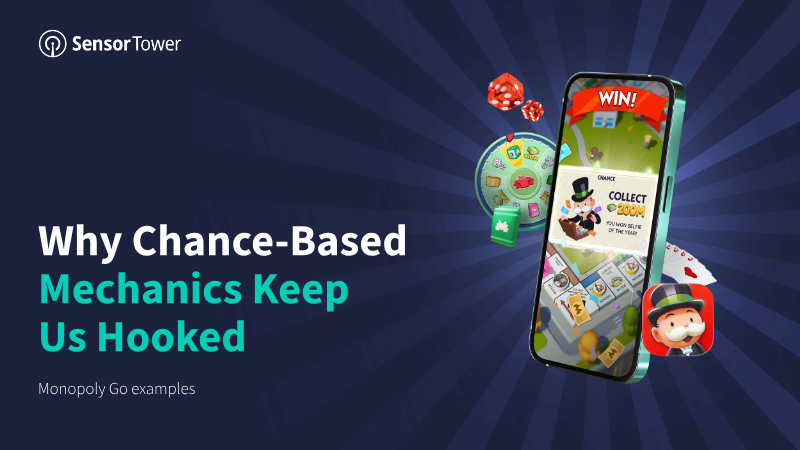
Why Chance-Based Mechanics Keep Us Hooked
Chance-based mechanics drive player engagement by prioritizing the psychological thrill of anticipation over the actual value of rewards. This engagement is rooted in the release of dopamine during the period of uncertainty, where the wait for a result creates more neurological stimulation than the prize itself. By utilizing unpredictable reward schedules and the "near-miss" effect, developers foster a persistent belief that a significant win is imminent. This strategy is exemplified by the commercial success of Monopoly GO!, which generates between $100 million and $125 million in monthly revenue through a "saw-tooth" gameplay loop that oscillates between resource depletion and sudden, event-driven recovery.
The effectiveness of these systems relies on a "pressure and release" cycle designed to maintain emotional tension without causing player burnout. High-volatility mechanics, such as digital wheels and randomized heists, are tuned to prioritize emotional impact over mathematical fairness. For instance, probabilities are often manipulated to limit low-tier prizes—sometimes to as little as 13%—while visually emphasizing jackpots to maximize excitement. Even traditionally negative outcomes are reframed as positive opportunities; in certain high-performing titles, escape rates from penalty mechanics like "Jail" are set as high as 80% to ensure the player remains within the rewarding flow of the game.
Ultimately, long-term retention is achieved through the careful management of sensory-rich animations and gacha-style collection systems that create frequent "emotional spikes." By blending live events with boosters that temporarily alter the odds, developers create a dynamic environment where the player feels a constant sense of progression. This sophisticated orchestration of risk, hope, and visual feedback ensures that the psychological journey toward a potential reward remains compelling enough to sustain high levels of monetization and daily active usage across the mobile gaming landscape.
- Monopoly GO! generates $100 million to $125 million in monthly revenue by utilizing a 'saw-tooth' gameplay loop that alternates between resource depletion and sudden, event-driven recovery.
- Player engagement is driven by the dopamine release associated with the anticipation of rewards rather than the intrinsic value of the prizes themselves.
- Developers manipulate game probabilities to prioritize emotional impact over mathematical fairness, such as limiting low-tier prize outcomes to as little as 13%.
- Penalty mechanics are often tuned to ensure player retention, with some titles setting escape rates from negative states like 'Jail' as high as 80%.
- High-volatility mechanics, including digital wheels and randomized heists, are paired with sensory-rich animations to create frequent 'emotional spikes' that sustain daily active usage.
+1
Sensor TowerJan 2026
Report16 pages
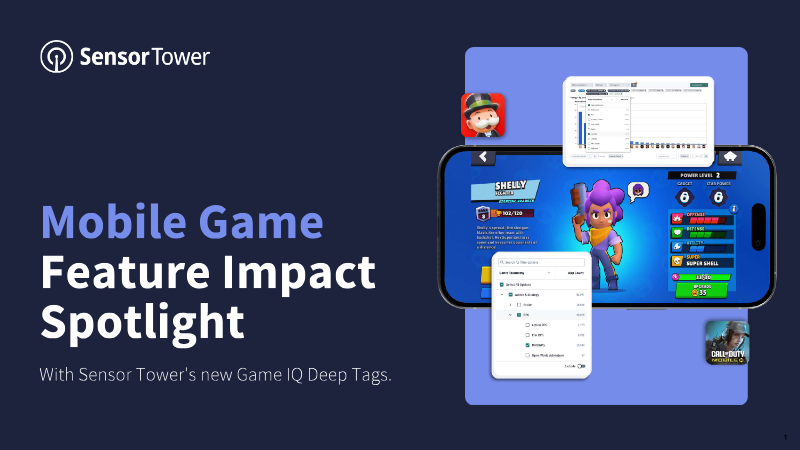
Mobile Game Feature Impact Spotlight
Sensor Tower introduces Game IQ Deep Tags, a taxonomy of 70 specialized markers designed to analyze the impact of specific mobile game features on market performance. These tags are categorized into gameplay, monetization, engagement, and social elements, providing developers with a framework to benchmark competitor roadmaps and identify high-value feature sets. The analysis covers the top 1,000 mobile games globally from Q2 2024 through Q1 2025, a segment representing 16 billion downloads and $67 billion in consumer spend.
The findings reveal that feature density does not always correlate with market dominance. In the casual puzzle genre, titans like Royal Match and Candy Crush Saga utilize fewer luxury features, such as voice acting or cinematic cutscenes, compared to competitors like Gardenscapes, suggesting that core gameplay often outweighs feature volume. Conversely, in the mid-core RPG and strategy sectors, comprehensive monetization and engagement systems are standard. For instance, Age of Empires Mobile demonstrates high revenue per download by utilizing nearly all available monetization tags, while top RPGs leverage IP collaborations and recurring task systems to maximize player retention and session length.
The research identifies significant growth opportunities in the hybridcasual segment, where features like in-app purchase (IAP) bundles remain underutilized despite correlating with a $1.77 increase in lifetime revenue per download. Additionally, portfolio analysis of top publishers like Tencent, Scopely, and King shows a universal prioritization of login systems to track player data, while specific mechanics like "monetized retries" remain niche to casual puzzle specialists. Ultimately, the data suggests that strategic feature implementation, rather than exhaustive adoption, is the primary driver of commercial success across different mobile gaming verticals.
- Strategic feature selection, rather than exhaustive feature adoption, is the primary driver of commercial success across the top 1,000 mobile games globally.
- In the hybridcasual segment, implementing in-app purchase (IAP) bundles correlates with a $1.77 increase in lifetime revenue per download.
- Casual puzzle leaders like Royal Match and Candy Crush Saga maintain market dominance with lower feature density, proving that core gameplay often outweighs the addition of luxury elements like cinematic cutscenes.
- Mid-core strategy titles, such as Age of Empires Mobile, maximize revenue per download by utilizing a comprehensive suite of monetization tags.
- Top publishers including Tencent, Scopely, and King universally prioritize login systems to track player data, while mechanics like 'monetized retries' remain niche to the casual puzzle genre.
+1
Sensor TowerJun 2025

Report32 pages
Hybrid Casual Games Playbook
Hybridcasual games blend the instant‑on‑tap simplicity of hyper‑casual titles with deeper progression systems that encourage sustained engagement. The playbook outlines the genre’s rise, noting a 3 % download growth in 2022 to 5 billion downloads—up from 4.9 billion in 2021—while hyper‑casual downloads fell 15 %. Revenue has nearly doubled over two years, with ads contributing about 50 % of total earnings and in‑app purchases accounting for the remainder. Session lengths average 372 seconds, a 160‑second increase over hyper‑casual games, and retention rates at day 30 reach 54 % versus 42 % for hyper‑casual titles, with day 60 retention at 9 % versus 1 %.
The document surveys sub‑genres such as Arcade Idle, Tower Defense, and Interactive Story, citing successful titles like Aquarium Land, City Defense!, and Fight for America. It highlights how hybrid mechanics—drawing towers, RPG‑style upgrades, or automated idle workers—boost lifetime value by 17–35 % in some cases. Methodology relies on aggregate download and revenue data from 2020‑2022, coupled with in‑house analytics tracking session length, retention, and monetization funnels.
Best‑practice guidance centers on marketability, economy tuning, A/B testing, and post‑launch optimization. Case studies of Zombie Defense illustrate how adding narrative layers, social features, and tiered in‑app purchase options can lift LTV to $2+ on day 7. The playbook concludes that sustained success in Hybridcasual hinges on balancing accessibility with meta‑depth, maximizing IAP revenue, and continuously refining content based on player segmentation.
- Hybrid-casual games are outperforming hyper-casual titles, with 5 billion downloads in 2022 (a 3% increase) compared to a 15% decline in hyper-casual downloads.
- Hybrid-casual games achieve significantly higher retention, with day-30 retention at 54% (vs. 42% for hyper-casual) and day-60 retention at 9% (vs. 1%).
- Revenue is split evenly between ads and in-app purchases, with session lengths averaging 372 seconds, which is 160 seconds longer than hyper-casual benchmarks.
- Integrating hybrid mechanics like RPG-style upgrades and automated idle systems can increase player lifetime value by 17–35%.
- Successful titles such as Zombie Defense demonstrate that adding narrative layers and tiered in-app purchase options can drive day-7 lifetime value to over $2.
+1
Sensor TowerJan 2025
Report88 pages
Genre and Great Games: Understanding Audiences and Designing Better Mobile Games
The study demonstrates that genre is the primary factor influencing mobile game adoption, with puzzle and matching titles dominating in North America and East Asia, while card‑casino games lead elsewhere. Within these markets, strategy players—comprising 12–26 % of the player base—exhibit high retention when titles incorporate live events, achievements, and daily rewards. Their spending patterns favor direct purchases over random loot boxes, especially in Japan, and they tolerate rewarded ads only when infrequent and longer. Strategy games also deliver the highest lifetime value, largely through aggressive use of battle passes (present in 92 % of top titles) and character or gear upgrades.
Role‑playing games attract players motivated by accomplishment, collection, and social interaction; churn is driven by repetitive gameplay and aggressive monetization. Successful RPGs mitigate this through frequent live events, multiple leveling paths, robust guild systems, and a balanced mix of loot boxes and bulk‑discount options. Monetization sensitivity varies regionally: U.S. players accept rewarded videos when they provide tangible benefits, whereas Korean and Japanese audiences are more tolerant of longer, character‑centric ads.
Puzzle players skew female (≈70 %) and older (≈60 % aged 35+), favoring short solo sessions for stress relief. Retention gaps stem from boredom and slow progress; top performers address this with live events, diverse level goals, and event currencies. While community engagement is low overall, a majority welcome developer communication and leaderboard features. Hyper‑casual audiences similarly value frequent updates, social cues, and ad‑friendly monetization that avoids pay‑to‑win perceptions.
Across all genres, the analysis identifies key mechanics—battle passes, VIP tiers, guilds, live‑event currencies, and ladder systems—that create recurring revenue streams and community retention. Combining season‑based progression with social collaboration and limited‑time rewards maximizes player lifetime value and monetization potential.
- Strategy games deliver the highest lifetime value in mobile gaming, driven by battle passes—which are present in 92% of top-performing titles—and character or gear upgrades.
- Strategy players, who make up 12–26% of the mobile base, prefer direct purchases over loot boxes and exhibit high retention when games feature live events, achievements, and daily rewards.
- Puzzle games, which dominate North American and East Asian markets, attract a demographic that is approximately 70% female and 60% aged 35 or older, favoring short sessions for stress relief.
- RPG player churn is primarily driven by repetitive gameplay and aggressive monetization, which successful titles mitigate through multiple leveling paths, guild systems, and a mix of loot boxes and bulk-discount options.
- Monetization sensitivity varies by region: U.S. players prefer rewarded videos with tangible benefits, while Japanese and Korean audiences show higher tolerance for longer, character-centric advertisements.
+1
Facebook GamingJan 2025
Report87 pages
Understanding Audiences and Designing Better Mobile Games
The analysis establishes that genre is the primary driver of mobile‑game discovery, influencing 49 % of players across nine major markets and outweighing recommendations and advertising. Within this framework, strategy titles deliver the highest lifetime value and revenue per install, a result of dense monetisation layers such as consumable boosts, speed‑ups, loot‑box bundles and limited‑time offers. Player motivations and churn factors differ markedly by genre and region: Japanese action‑RPG/MMORPG users play chiefly for stress relief (47 %) and item collection (37 %), while boredom, repetitiveness and aggressive monetisation trigger attrition, mirroring the experience of over a third of Korean RPG players who abandon games due to pushy in‑app purchases.
Puzzle gamers are predominantly female (≈ 70 %) and older (≈ 60 % aged 35 +), favor short solo sessions, and seek stress relief and time‑killing. A pronounced mismatch exists between their expectations—learning, accomplishment and unique experiences—and current offerings, with only 17‑32 % feeling satisfied, leading to churn driven by boredom, slow progress and intrusive ads. Successful titles mitigate this through frequent live events, special‑event currencies and diverse level‑goal designs, while modest social engagement (20‑30 %) still influences retention. Notably, more than 80 % of U.S. puzzle players and roughly 68 % of Japanese players would return after a 30‑day hiatus if informed of new content, and 30‑36 % cite such updates as a decisive factor. Hyper‑casual audiences in the United States, United Kingdom and South Korea also demonstrate high receptivity to developer communication, exceeding 80 %.
A comprehensive catalogue of core gameplay and monetisation mechanics—battle‑passes, consumable boosts, crafting, limited‑time bundles, VIP tiers, loot‑boxes
- Genre is the primary driver of mobile-game discovery for 49% of players across nine major markets, outweighing both advertising and recommendations.
- Strategy games generate the highest lifetime value and revenue per install due to dense monetization layers including loot-box bundles, consumable boosts, and limited-time offers.
- Puzzle games, which attract a demographic that is approximately 70% female and 60% aged 35+, suffer from high churn because only 17–32% of players feel satisfied with current offerings.
- Aggressive monetization is a primary driver of attrition, causing over one-third of Korean RPG players to abandon games due to pushy in-app purchases.
- Over 80% of U.S. puzzle and hyper-casual players, as well as 68% of Japanese puzzle players, are willing to return to a game after a 30-day hiatus if notified of new content.
+1
NewzooJan 2025

Report4 pages
Top Game Creators Academy: Tokyo Game Show 2025 Exhibition
Top Game Creators Academy (TGCA) is being introduced to the public for the first time at the Tokyo Game Show 2025, where it will occupy Hall 10’s organizer’s corner. The initiative, run by the Computer Entertainment Association in partnership with the Agency for Cultural Affairs and the Japan Arts & Culture Promotion Agency, aims to accelerate the development of next‑generation game creators by pairing them with active industry advisors and providing exposure through domestic and international events. The exhibition showcases ten emerging developers, each presenting a work‑in‑progress title ranging from an online cooperative 3D jump‑action (IN HARNESS) to a 2D puzzle platformer (Out of Skull), a collaborative “game‑making relay” (カラクリリレー!), a first‑person horror action (Ghost in the brain), a formula‑driven shooter (CYBER JANITOR), a rhythm‑action experience (OVER BEATS MYSELF), an exploratory RPG (Recover from Ruin), a 2D stealth‑action novel (Near The Sun), and a competitive typing‑board hybrid (NyctoType). All projects remain under development and may evolve before final release.
The program, launched in April 2025, is structured as a two‑year pipeline in which creators receive ongoing mentorship and are encouraged to gather visitor impressions as direct feedback for iterative improvement. Although no quantitative metrics are provided, the breadth of genres and innovative mechanics underscores TGCA’s commitment to diversifying Japan’s game development talent pool and facilitating global market entry. The announcement concludes with a call for attendees to submit their reactions, positioning audience interaction as a core component of the creators’ growth trajectory.
- The Computer Entertainment Association, in partnership with the Agency for Cultural Affairs and the Japan Arts & Culture Promotion Agency, launched the Top Game Creators Academy (TGCA) in April 2025 to accelerate the development of next-generation talent.
- The TGCA program utilizes a two-year pipeline structure that pairs emerging developers with active industry advisors to facilitate professional growth and global market entry.
- Ten emerging developers are debuting work-in-progress titles at the Tokyo Game Show 2025 in Hall 10, representing diverse genres including 3D action, 2D puzzle platformers, horror, and rhythm-action.
- Audience interaction is a core component of the program, with creators actively soliciting visitor feedback at the Tokyo Game Show to drive iterative improvements for their projects.
- The initiative aims to diversify Japan’s game development talent pool by providing creators with exposure through both domestic and international industry events.
+3
CESA – Computer Entertainment Supplier's AssociationJan 2025
Report119 pages
Video Games in European Schools: Results from the Games in Schools 2023-2024 Research Project
Executive Summary – “Video Games in European Schools” (Based on the 2023‑2024 “Games in Schools” research project and the 25‑section document you provided)
| What we know | Key figures | Implications | |------------------|----------------|------------------| | Teacher attitudes & usage | • 1 474 teachers surveyed in 26 EU countries <br>• 63 % want more training <br>• Only 36 % currently use games; of those, 54 % use them regularly | There is strong demand for professional development, but adoption is still limited. | | Perceived benefits | • Boosts motivation, engagement, and inclusive learning <br>• Improves visuospatial cognition, attention, problem‑solving, creativity, collaborative skills, psychological capital (self‑efficacy, hope, resilience) <br>• Particularly helpful for low‑performing, special‑needs, and female students who play heavily | Games can be a lever for equity and 21st‑century competencies, but the impact varies by design and context. | | Barriers | • Difficulty finding age‑appropriate, curriculum‑aligned titles <br>• Limited teacher expertise & time <br>• Insufficient hardware, licences, and broadband <br>• Parental concerns (screen‑time, data‑privacy, violence) <br>• Lack of clear pedagogical frameworks & assessment tools | Overcoming these obstacles requires coordinated policy, funding, and teacher‑support structures. | | Enablers & best‑practice examples | • Belgium (Flemish) – “Education meets Games” events, strong focus‑group outcomes <br>• Italy – IVIPRO EDU, Maker Camp (Minecraft), Lega Scolastica esports league <br>• Poland – Free national rollout of This War of Mine with teacher guide <br>• Luxembourg – Dedicated “Digital Science” subject, Play Seriously handbook <br>• Sweden – Gamecamp programme (97 % transition to higher‑education pathways) | Nationally coordinated programmes that combine funding, teacher training, and curated game libraries are the most successful. | | Market context | • European video‑game market > €25 bn annually, 115 000 employees <br>• 53 % of Europeans play; ~50 % are women <br>• Industry bodies (Video Games Europe) and EU programmes (Horizon Europe, Creative Europe) are already positioning games as tools for education, inclusion, and wellbeing | A large, growing industry is ready to partner with schools, but alignment on educational goals is still needed. | | Research gaps
- While 53% of Europeans play video games and the industry exceeds €25 billion in annual revenue, only 36% of surveyed teachers currently use games in the classroom, with 63% explicitly requesting more professional training.
- Teachers who do integrate games report significant improvements in student motivation, problem-solving, and psychological capital, noting particular efficacy for special-needs, low-performing, and female students.
- The primary barriers to adoption include a lack of curriculum-aligned titles, insufficient hardware and broadband infrastructure, and parental concerns regarding screen time and data privacy.
- Successful national initiatives, such as Poland's rollout of 'This War of Mine' and Sweden's 'Gamecamp' program, demonstrate that coordinated government funding and curated game libraries are essential for effective classroom integration.
- Only 54% of the teachers who currently use games do so on a regular basis, highlighting a significant gap between initial adoption and sustained pedagogical implementation.
+1
European SchoolnetNov 2024

Report39 pages
Art Direction in Game Remakes: An Analysis of 7 Case Studies
The pursuit of a successful game remake requires a delicate equilibrium between honoring the original creative spirit and meeting the heightened technical expectations of modern audiences. Analysis of high-profile titles released through 2024, including Metroid Prime Remastered and Resident Evil 4, indicates that critical and fan reception serves as the primary metric for quality, often superseding raw financial performance. Developers find the most success when they rebuild visual assets from scratch, leveraging contemporary lighting and 3D environments to recreate the atmospheric immersion that original technical constraints once limited.
Modernization strategies vary based on the age and mechanical relevance of the source material. While some titles benefit from subtle control refinements, others require a total overhaul of core systems to remain viable. Capcom’s approach to the Resident Evil series exemplifies this by replacing dated tank controls and fixed cameras with fluid 3D movement and strategic lighting. Similarly, Square Enix transitioned the static backgrounds and turn-based combat of Final Fantasy VII into expansive environments and action-oriented hybrid systems. These shifts demonstrate that adhering to the "pillars of experience" is more vital than preserving obsolete functional elements.
Ultimately, the most effective remakes prioritize the recreation of a specific feeling or "spirit" over mere resolution increases. While visual fidelity must be modernized to maintain immersion, gameplay adjustments should be handled selectively to avoid alienating the core fanbase. Industry leaders like Nintendo and specialized external development partners emphasize that leveraging modern hardware to amplify a game's original intent is the most reliable path to critical acclaim. By focusing on atmospheric depth and evolved control schemes, developers can ensure that classic titles resonate with both nostalgic players and new audiences within the current AAA landscape.
- Successful remakes prioritize the recreation of a game's original 'spirit' and atmospheric intent over simple increases in visual resolution.
- Critical and fan reception serves as the primary metric for quality in modern remakes, often outweighing raw financial performance.
- Developers achieve the highest success by rebuilding visual assets from scratch to leverage contemporary lighting and 3D environments, overcoming the technical constraints of original releases.
- Modernization strategies must distinguish between preserving 'pillars of experience' and replacing obsolete functional elements, such as Capcom’s transition from fixed cameras to fluid 3D movement in Resident Evil 4.
- Square Enix’s approach to Final Fantasy VII demonstrates that transitioning from static backgrounds and turn-based combat to expansive, action-oriented systems can effectively modernize legacy titles.
+1
Room 8 GroupJan 2024

Whitepaper127 pages
Guide to Game Literacy: Improving Understanding of Games
The guide establishes game literacy as the capacity to comprehend, critique, and responsibly engage with video games, extending traditional media‑literacy to encompass rules, interactive systems, cultural influence, and self‑control. It argues that cultivating this competency is essential for healthy digital participation and for linking gaming to broader STEAM learning and career pathways.
Empirical evidence from a 2023 Korean survey shows that 86 % of adolescents play video games, with 71 % classified as general users, 12 % as adaptive, and 3 % as problematic. Parental awareness markedly differentiates groups—78.5 % of adaptive gamers report informed parents versus 60.2 % among problematic gamers—underscoring the need for literacy programs targeting youths, parents, teachers, and administrators. The curriculum is organized around four pillars: understanding games and culture, education‑facilitating games, game ethics, and game careers, and is delivered through age‑specific, spiral‑learning modules from early childhood through high school, complemented by specialized teacher training.
A coordinated ecosystem involving schools, families, policymakers, developers, researchers, and sponsors is presented as vital for fostering “good gamers.” Internationally, the framework draws on initiatives such as Finland’s Assembly festival, Germany’s Schau Hin, the UK’s BFI/Futurelab programs, and North American platforms, while highlighting Korea’s G‑School teacher‑training system and the “Good Gamer” rating‑compliance program. Comparative analysis of rating bodies—from Europe’s PEGI and Germany’s USK to the ESRB, CERO, IGRS, and Singapore’s classifications—demonstrates a universal aim to shield minors through age‑tiered content limits.
Economic context is provided by the United Kingdom, the world’s fifth‑largest gaming market, which generated roughly £4 billion in 2022 and is projected to reach £10 billion by 2030, with the gamer population expanding from 33.4 million in 2019 to an estimated 38.5 million by 2025. Together, these findings support the thesis that comprehensive, multi‑stakeholder game‑literacy education is a prerequisite for a sustainable, ethically aware, and economically vibrant gaming culture worldwide.
- Parental involvement is a critical determinant of healthy gaming habits, as 78.5% of adaptive gamers have informed parents compared to only 60.2% of those classified as problematic.
- The UK gaming market is projected to grow from £4 billion in 2022 to £10 billion by 2030, with the national gamer population expected to reach 38.5 million by 2025.
- A 2023 Korean survey indicates that 86% of adolescents play video games, with the user base segmented into 71% general users, 12% adaptive users, and 3% problematic users.
- Effective game literacy requires a multi-stakeholder ecosystem involving schools, families, policymakers, and developers to promote ethical engagement and link gaming to STEAM career pathways.
- Global efforts to protect minors rely on a standardized approach to age-tiered content regulation, utilizing systems such as PEGI (Europe), USK (Germany), ESRB (North America), CERO (Japan), and IGRS (China).
K-GAMES – Korea Association of Game IndustryJan 2024

Report64 pages
Videojuegos en el Aula: Guía para un Aprendizaje Adecuado
The guide argues that video games, when deliberately selected and scaffolded, can become powerful learning tools across primary, secondary and vocational settings. By positioning games along a continuum from free play to structured, teacher‑guided activities, educators can align specific game mechanics—joy, meaning, immersion, challenge and agency—with curricular objectives, thereby fostering both cognitive and affective outcomes.
Empirical evidence shows that the $180 billion global games market, with more than three billion active players (over half of Europeans aged 6‑64 and 70 % of those 6‑24), can support cooperative, discovery‑based and project‑based learning. Systematic reviews and studies such as Parker & Thomsen 2019 link core game characteristics to measurable gains in attention, memory, problem‑solving, literacy and even clinical assessment for ADHD. Narrative‑driven titles (e.g., Florence, Mutazione) are already classified as literary texts in Scotland and Poland, while language‑learning apps and exergames extend benefits to vocabulary, pronunciation and physical health. Multiplayer and emotionally charged games are shown to develop empathy, self‑regulation and ethical reasoning, with data from a Flemish suicide‑prevention project confirming social‑emotional growth.
Practical integration strategies emphasize alignment with national curricula, use of in‑game metrics for assessment, and gamification elements such as digital badges and leaderboards. Open‑world and historically themed games (Minecraft, Assassin’s Creed Discovery Tour, Age of Empires) serve as contextual nodes for interdisciplinary projects, while creation platforms—from Scratch Jr to RPG Maker—enable progressive skill development in coding, storytelling and design. The guide also highlights industry disparities (71 % male developers, low representation of women and Black creators) and urges inclusive curricula to broaden participation.
Health considerations note the WHO’s classification of gaming disorder in ICD‑11, but research indicates problematic use remains a minority, often driven by micro‑transaction models. Recommendations include reliance on PEGI age ratings and parental
- Video games are effective pedagogical tools that improve cognitive functions like memory and problem-solving, with studies such as Parker & Thomsen (2019) linking game mechanics to measurable gains in literacy and clinical ADHD assessment.
- The global games market now encompasses over three billion active players, including 70% of Europeans aged 6–24, providing a massive, accessible platform for cooperative and project-based learning.
- Educational integration is most successful when educators use a continuum from free play to structured activities, utilizing titles like Minecraft and Assassin’s Creed Discovery Tour to support interdisciplinary curricula.
- Games are increasingly recognized as legitimate academic texts and social-emotional tools, with narrative titles like Florence and Mutazione used as literature in Scotland and Poland, and multiplayer games shown to foster empathy and ethical reasoning.
- Creation platforms such as Scratch Jr and RPG Maker allow students to develop technical skills in coding and design, while gamification elements like digital badges provide new methods for tracking student progress.
+1
European SchoolnetAug 2023
Report32 pages
Hybridcasual Games Playbook (2023)
Hybridcasual gaming represents a strategic evolution in the mobile industry, bridging the gap between the accessibility of hypercasual titles and the sophisticated progression systems of casual games. The primary thesis of this analysis is that by blending simple, intuitive mechanics with deeper metagame layers—such as narrative progression, resource management, and social features—developers can significantly increase user retention, session length, and lifetime value (LTV). This shift addresses the declining interest in traditional hypercasual games, which saw a 15% decrease in downloads between 2021 and 2022, while hybridcasual titles experienced continued growth, reaching 5 billion downloads in 2022.
Key performance data highlights the superiority of the hybridcasual model in maintaining player interest. Top-tier hybridcasual games demonstrate average session lengths of 372 seconds, exceeding hypercasual benchmarks by 160 seconds. Furthermore, retention rates are substantially higher, with hybridcasual titles achieving 54% Day 1 retention and 9% Day 60 retention, compared to significantly lower figures for hypercasual counterparts. Revenue models have also matured; while advertisements remain a core component, they are increasingly optional and rewarded, allowing in-app purchases (IAPs) to account for a growing share of total revenue. Successful implementation of IAP strategies, such as secondary currencies and exclusive content packs, has been shown to increase IAP revenue by as much as 35% in specific case studies.
The industry scope covers global mobile gaming, with a focus on subgenres including arcade idle, tower defense, and simulation. Methodologically, the findings rely on comparative performance metrics from 2022, internal product strategy analysis, and specific case studies of titles like Zombie Defense and Aquarium Land. The analysis concludes that long-term success in this segment requires a rigorous, data-driven approach to post-launch optimization, including A/B testing of game economies, audience segmentation, and the continuous integration of new content to sustain player engagement.
- Hybridcasual games reached 5 billion downloads in 2022, contrasting with a 15% decline in traditional hypercasual downloads between 2021 and 2022.
- Hybridcasual titles achieve a 54% Day 1 retention rate and a 9% Day 60 retention rate, significantly outperforming traditional hypercasual benchmarks.
- Average session lengths for top-tier hybridcasual games reach 372 seconds, which is 160 seconds longer than hypercasual industry benchmarks.
- Integrating in-app purchase strategies like secondary currencies and exclusive content packs can increase IAP revenue by up to 35%.
- The hybridcasual model shifts revenue dependency away from mandatory advertisements toward optional, rewarded ad formats and increased in-app purchases.
+4
Sensor TowerJan 2023

Report14 pages
Videojuegos en el aula
Spanish educators are progressively integrating video games into classroom practice, positioning interactive media as legitimate learning tools rather than mere entertainment. The manual demonstrates that, when combined with teacher training, games can stimulate creativity, empathy and digital competence, providing an engaging complement or alternative to traditional textbooks. Initiatives such as AEVI’s “The Good Gamer,” the nationwide rollout of Minecraft Education Edition, and locally developed titles—including EduZland, BetterWorld, Planet Rescuers, Koral and Endling—are now employed in more than a thousand schools to address subjects ranging from mathematics and language to civic values, environmental stewardship and mental‑health awareness.
A thriving ecosystem of Spanish‑origin serious games supports this pedagogical shift. Projects like Teacher+, Diana frente al espejo, Academons, Villi Adventures, 200 y +, Bailando un Tesoro, Poky Drivers, JUNIOR Esports, Futuros Talentos, Nintendo ESNE, EVAD Kids and Minecraft Education target a broad spectrum of curricular content—science, language, history, health and safety—and promote transversal values such as equality, anti‑bullying, teamwork and sustainability. The breadth of offerings illustrates a coordinated effort to embed game‑based learning across primary and secondary education.
The landscape is reinforced by a wide coalition of Spanish game developers, publishers and academic programs, including major studios such as Riot Games, Ubisoft and Take‑Two Interactive, alongside numerous university‑based game schools. This cross‑sector network is linked to the broader European context through the Interactive Software Federation of Europe, which represents trade associations from eighteen European nations and leading global companies. Together, these actors create a robust, responsible and economically vibrant environment for video‑game education and production throughout Spain and the wider European market.
- Video games are being integrated into over 1,000 Spanish schools as legitimate pedagogical tools to teach subjects ranging from mathematics and language to civic values and mental health.
- The Spanish educational ecosystem utilizes a diverse portfolio of serious games, including Minecraft Education Edition, EduZland, BetterWorld, Planet Rescuers, Koral, Endling, and Teacher+.
- Game-based learning in Spain is supported by a broad coalition of major global publishers, including Riot Games, Ubisoft, and Take-Two Interactive, alongside specialized university-based game schools.
- Educational initiatives such as AEVI’s 'The Good Gamer' and various locally developed titles are being used to foster transversal skills like empathy, creativity, digital competence, and teamwork.
- The Spanish sector is aligned with the broader European market through the Interactive Software Federation of Europe, which coordinates trade associations across eighteen nations to support responsible game production.
AEVIJan 2023

Report33 pages
The Future of NPCs
This analysis explores the evolving role of non-playable characters (NPCs) in the video game industry, arguing that while graphical and narrative technologies have advanced, NPC interactivity has remained stagnant. The central thesis posits that integrating advanced AI—specifically large language models and machine learning—is essential for maintaining player immersion and driving commercial growth. By moving away from static dialogue trees toward dynamic, situational awareness, developers can address long-standing player frustrations regarding repetitive behaviors and scripted limitations.
Key findings indicate a significant market demand for sophisticated AI integration. Data shows that 84% of gamers view NPCs as vital to their experience, yet 52% are frustrated by repetitive dialogue. The transition to advanced AI NPCs appears to offer a clear financial incentive: 81% of players expressed a willingness to pay more for games featuring intelligent characters, and 79% stated they would be more likely to purchase a title with such features. Furthermore, 88% of respondents believe advanced AI would improve overall gameplay and immersion, suggesting that these technologies could increase player retention and session length.
The scope of the research focuses on 1,002 U.S.-based gamers aged 16 to 50 who play at least five to eight hours per week across PC, console, mobile, and VR platforms. Methodology involved a 20-minute survey conducted by Bryter Research, which included a demonstration of generative AI NPC capabilities to gauge participant reactions. The findings suggest that while role-playing and sandbox genres stand to benefit most, there is a near-unanimous consensus (99%) among surveyed gamers that advanced AI NPCs represent a positive value add for the industry.
- 99% of gamers view the integration of advanced AI into NPCs as a positive value add for the industry.
- 81% of players are willing to pay more for games that feature intelligent, AI-driven characters.
- 79% of gamers report an increased likelihood to purchase titles that incorporate advanced AI NPC capabilities.
- 52% of players express frustration with current NPC limitations, specifically citing repetitive dialogue as a primary pain point.
- 88% of players believe that advanced AI integration would directly improve overall gameplay and immersion, potentially boosting retention and session length.
+1
Inworld AIJan 2023
Report14 pages
Games Can Be Good for the Mind: State of Mobile Games – Cognitive and Psychological Benefits
This empirical report by Skillprint examines the cognitive and psychological benefits of mobile gaming, challenging the narrative that gaming is primarily detrimental to mental health. Based on a large-scale study of nearly 500 U.S. participants and 28 individual game impact studies, the research explores the intersection of the Big 5 personality traits, player motivations, and the emotional shifts experienced after gameplay. The methodology utilizes the Big 5 Inventory to assess traits such as Conscientiousness and Emotionality, while measuring mood changes across categories like focus, creativity, and determination using Cohen’s d effect sizes.
The findings indicate that mobile games can significantly enhance specific mental states, often outperforming traditional psychological interventions like guided meditation or journaling. For instance, rhythm and puzzle games such as Sound Sky and Colorize showed large effect sizes for improving focus and creativity. The data also reveals that personality traits moderate these benefits; more emotional players tend to prefer word and idle games for relaxation, while open-minded individuals seek immersion and inspiration. Younger players are notably more driven by challenge and focus-oriented gameplay.
The report concludes that game developers should prioritize personalization to appeal to diverse personality profiles, such as offering adjustable difficulty levels to satisfy both high-conscientiousness and high-emotionality players. It suggests that health professionals consider mobile games as supplemental tools for treating mood and attention disorders. Ultimately, the research advocates for a nuanced understanding of gaming as a customizable resource for psychological well-being, where specific genres and mechanics—such as timed challenges for focus or sandbox environments for creativity—can be matched to individual user needs.
- Mobile games can significantly enhance specific mental states, with some titles demonstrating larger effect sizes for improving focus and creativity than traditional interventions like guided meditation or journaling.
- Rhythm and puzzle games, specifically Sound Sky and Colorize, produced large effect sizes for improving player focus and creativity.
- The study, based on nearly 500 U.S. participants and 28 individual impact studies, confirms that personality traits—measured via the Big 5 Inventory—directly moderate the psychological benefits a player receives from gaming.
- Player motivations vary by personality and age: more emotional players prefer word and idle games for relaxation, while younger players are primarily driven by challenge and focus-oriented mechanics.
- Developers should implement personalization features, such as adjustable difficulty levels, to cater to the distinct psychological needs of high-conscientiousness and high-emotionality personality profiles.
+1
SkillprintJan 2022