Global reports and market data
Documents

Advanced Entrepreneurship: Avoiding Total Studio Disaster
Independent game studios achieve long-term sustainability by reconciling creative vision with rigorous business acumen.
- Achieve long-term studio sustainability by treating business development with the same intentionality and structured methodology as game design.
- Replace reactive, hope-based strategies with lean startup frameworks that utilize market research and audience analysis to validate project viability.
- Implement a scaffolding strategy where each game project serves as a foundation for future technological and intellectual growth rather than a standalone effort.
Games You Might Not Have Tried: Horror - Find New Games for Halloween - Extra Credits
This analysis highlights a curated selection of horror-themed video games, focusing on titles that offer unique narrative experiences, innovative mechanics, or distinct atmospheres despite occasional lack of polish.
- The horror genre thrives on innovative mechanics and atmosphere over technical polish, as evidenced by titles like Prey, which uses a mimic mechanic to force constant environmental distrust.
- Games can effectively utilize specific historical and cultural settings to ground horror, such as Detention’s use of 1960s Taiwan to build its narrative foundation.
- Experimental design choices, such as the top-down perspective in Darkwood, can create intense feelings of claustrophobia and player disempowerment.

Ice Age Adventures: UX Diagnosis for a Live-Ops Game
The presentation outlines a UX-driven diagnostic and redesign process for the live-ops game Ice Age Adventures.
- Streamlining the event interface from three drill-down menus to a single view, combined with proactive launch triggers, increased event participation from 20% to 80%.
- The UX redesign resulted in a 300% increase in total event participation for Ice Age Adventures, a mobile title with 5 million daily active users.
- Heuristic diagnosis identified that excessive cognitive load and poor discoverability were the primary drivers behind stagnant event engagement.
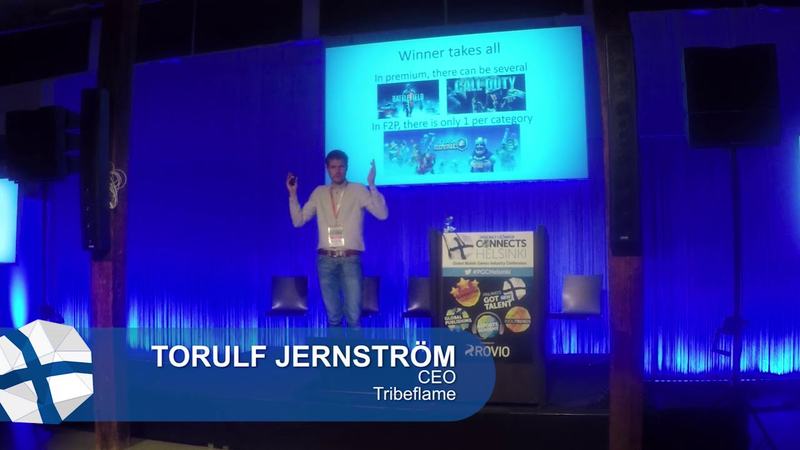
Where is the mobile games market going next?
The mobile gaming industry is transitioning from a period of rapid, creative chaos into a phase of long-term stability characterized by market consolidation and the dominance of established brands.
- The mobile gaming market is transitioning into a mature, winner-takes-all landscape where established incumbents with high player investment are increasingly difficult for new entrants to displace.
- Strategic success is shifting toward brand equity and established intellectual property, mirroring the film industry's reliance on sequels and franchises to mitigate the financial risks of original development.
- Market monetization is bifurcated between high-volume, ad-based games and high-grossing titles that rely on in-app purchases and continuous content updates to drive lifetime value.
Kalen Chock on Being Successful as a Freelance Artist - Episode 2 | Game Dev Unchained Archive
Professional success in the game industry is fundamentally rooted in authentic interpersonal connections and genuine passion rather than transactional networking.
- Prioritize building organic, long-term friendships over transactional networking, as genuine interpersonal connections are more effective for securing stable career opportunities than cold-messaging.
- Diversify income streams to mitigate the inherent instability of freelance work and prevent over-reliance on a single client, which protects against career-ending points of failure.
- View pro bono projects as a strategic 'professional scrimmage' for beginners to build portfolios, while ensuring such work is a calculated investment in personal growth rather than a permanent practice.
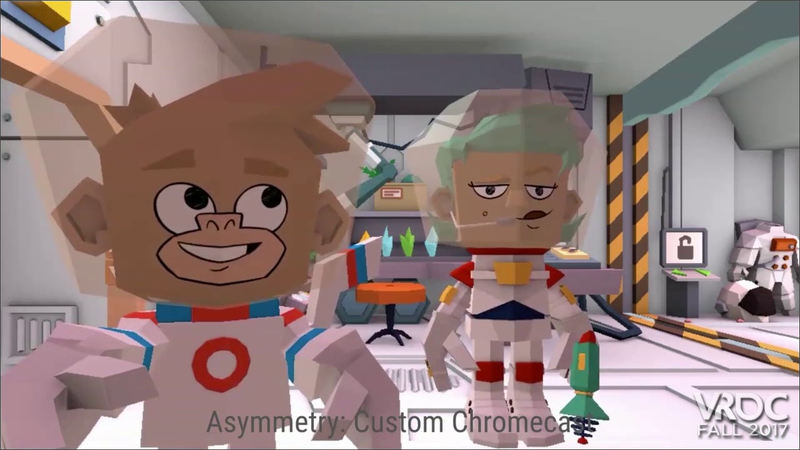
Building VR Communities: Asymmetry, Asynchrony, and Abuse
The current landscape of virtual reality necessitates a strategic shift toward cross-platform accessibility to overcome hardware-based audience limitations.
- Developers should integrate asymmetric and asynchronous design—such as interactive spectator modes and 2D device support—to overcome hardware-based audience limitations and expand the potential user base.
- Safety features must be treated as foundational design requirements rather than afterthoughts to mitigate harassment that manifests through auditory, gestural, and bodily forms in embodied spaces.
- Effective user-agency tools for safety include personal space bubbles, invisibility toggles, and gesture-based blocking, which prevent aggressors from receiving negative attention.
Adding Life to your Level
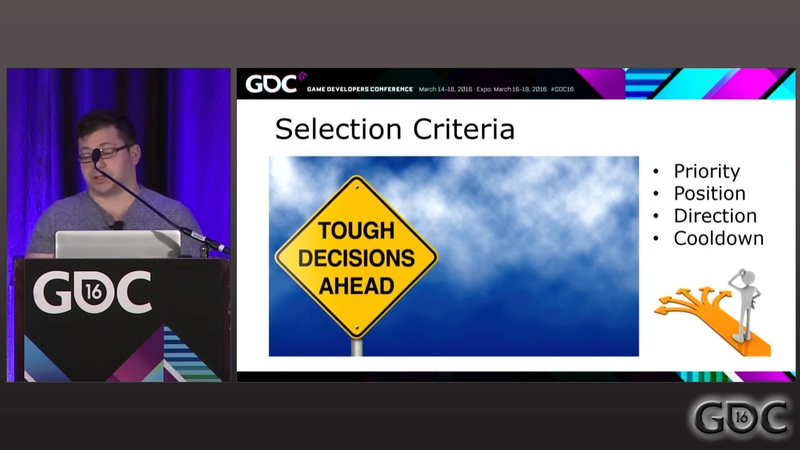
Creating a believable, living game world requires a fundamental shift from rigid, scripted AI behaviors toward systemic, opportunistic interactions.
- Shift AI design from rigid, scripted sequences to systemic, opportunistic interactions where characters engage dynamically with smart objects in the environment.
- Categorize character behaviors into distinct, centralized layers—such as locomotion, idle states, and combat—to ensure logical consistency across all AI actions.
- Enhance the illusion of human presence through rule-based mechanics like gaze tracking, look-at markers, and context-aware idle fidgeting.
Awesome Video Game Data 2017
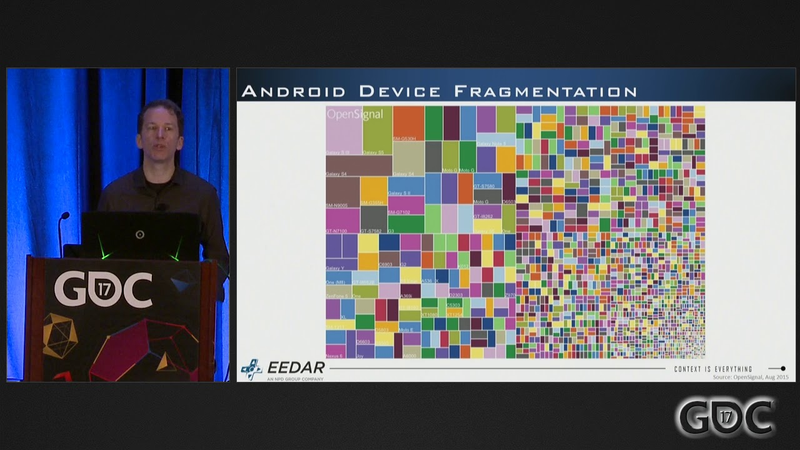
The video game industry in 2017 is defined by a maturing hardware market and a shift toward a core-focused portfolio.
- The U.S. gaming industry generated $23.5 billion in 2017, with mobile gaming accounting for approximately one-third of that total revenue.
- Console sales for the PlayStation 4 and Xbox One outperformed previous hardware generations by 34 percent, demonstrating strong demand for high-fidelity gaming.
- Market success is highly concentrated, as the top 2 to 10 percent of titles capture the vast majority of industry revenue.
Mind Your Step: Avoiding 3 Common Pitfalls in AI Development
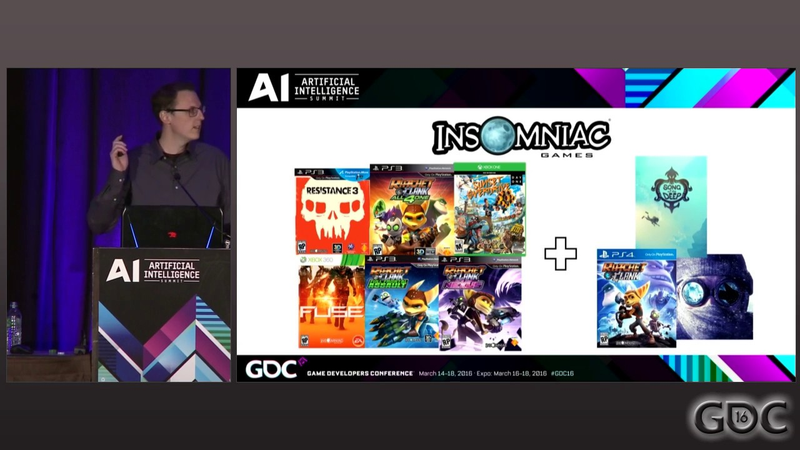
Effective artificial intelligence in gaming relies on prioritizing bespoke, interaction-focused mechanics over generic, reusable code.
- Prioritize bespoke, interaction-focused AI behaviors over generic, reusable code to ensure gameplay moments remain contextually nuanced and memorable.
- Align AI character roles with specific archetypes—such as the Teacher, VIP, or Soldier—to manage player expectations and prevent frustration or disengagement.
- Avoid over-automating support tasks like ammunition replenishment or infinite revives, as these systems can diminish the player's sense of accomplishment.

One More Level - The Arbitrary Endpoint Trap - Extra Credits
The arbitrary endpoint trap describes a psychological phenomenon where players continue gaming sessions past the point of enjoyment to reach self-imposed, non-essential goals.
- The 'arbitrary endpoint trap' occurs when players continue gaming past the point of enjoyment to complete non-essential, self-imposed goals, leading to fatigue and diminished returns.
- Game designers, particularly in mobile and free-to-play sectors, intentionally exploit the human compulsion to complete tasks by using extrinsic motivators like progress bars and near-completion achievements.
- Developers use overlapping goals and the sunk cost fallacy to extend play sessions, aiming to convert initial engagement into long-term habit formation and player retention.

Where it all starts: Episode 1
The modern game development landscape is undergoing a fundamental shift, moving away from traditional, high-cost academic degrees toward specialized, accessible online learning.
- The game industry is shifting away from traditional academic degrees toward specialized, accessible online learning due to a misalignment between formal education and practical technical requirements.
- Career sustainability is threatened by high burnout rates, frequent layoffs, and a systemic industry preference for hiring junior talent over retaining experienced staff.
- The 'magic management math' approach—attempting to increase productivity by simply adding more personnel to AAA projects—is failing, leading to rigid, repetitive roles and stunted professional growth.
The good and the bad of influencer marketing
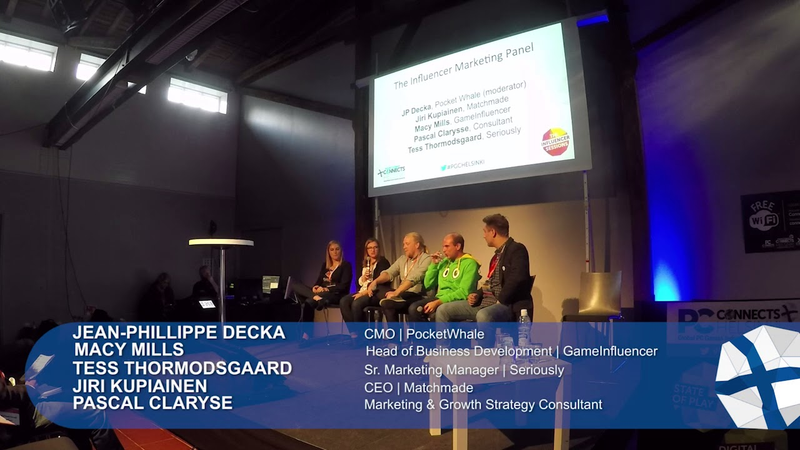
Influencer marketing serves as a critical bridge between game developers and audiences, leveraging the unique trust and long-form engagement inherent in creator-led content.
- Effective influencer campaigns require a dedicated testing budget between €20,000 and €100,000 to achieve statistical significance, as single-video tests are insufficient for performance evaluation.
- Developers should prioritize deep engagement metrics and audience alignment over vanity metrics like raw subscriber counts, which often lead to inflated costs and poor conversion rates.
- Marketing success is driven by integrating brand messaging into a creator’s natural storytelling style rather than relying on transactional, generic gameplay sponsorships.
Writers
Games and companies
Games