Global reports and market data
Documents



Source Code and Formal Analysis: A Reading of Passage
Source code analysis functions as a rigorous, underutilized methodology within game studies, offering a path to interpretative depth that bypasses the limitations of authorial intent.
- Source code analysis provides a rigorous methodology for game studies by treating the software architecture as a primary text, bypassing the limitations of authorial intent.
- By analyzing hardcoded variables, logic, and procedural rules, researchers can identify objective evidence of a game's symbolic metaphors and ideological structures.
- The study of 'Passage' demonstrates that internal variable naming conventions and movement mechanics reveal design philosophies not always apparent through gameplay alone.


Focus, Sensitivity, Judgement, Action: Four Lenses for Designing Morally Engaging Games
Designing morally engaging games requires a departure from traditional binary morality meters, which often reduce complex ethical dilemmas to simplistic, reward-driven mechanics.
- Designers should replace binary morality meters with integrated systems that require consistent ethical reflection and personal accountability.
- Moral engagement is most effective when ethical dilemmas are scaffolded and revisited rather than presented as isolated, scripted choices.
- Games like Papers, Please and The Walking Dead demonstrate that imposing survival pressures and bureaucratic constraints forces players to move beyond reflexive decision-making.

No-one Plays Alone
Game design functions most effectively when viewed through the lens of player practices, which are the learned, interconnected habits and cultural lineages that define how individuals interact with digital environments.
- Game design must prioritize the alignment of mechanical systems with narrative contexts to ensure congruence and prevent aesthetic flaws like rupture, inelegance, and perplexity.
- Successful development relies on the recognition that all play is inherently social, mediated by existing community networks and the cultural habits of the player base.
- Commercial success is driven by the strategic iteration of familiar player practices rather than radical, isolated innovation.
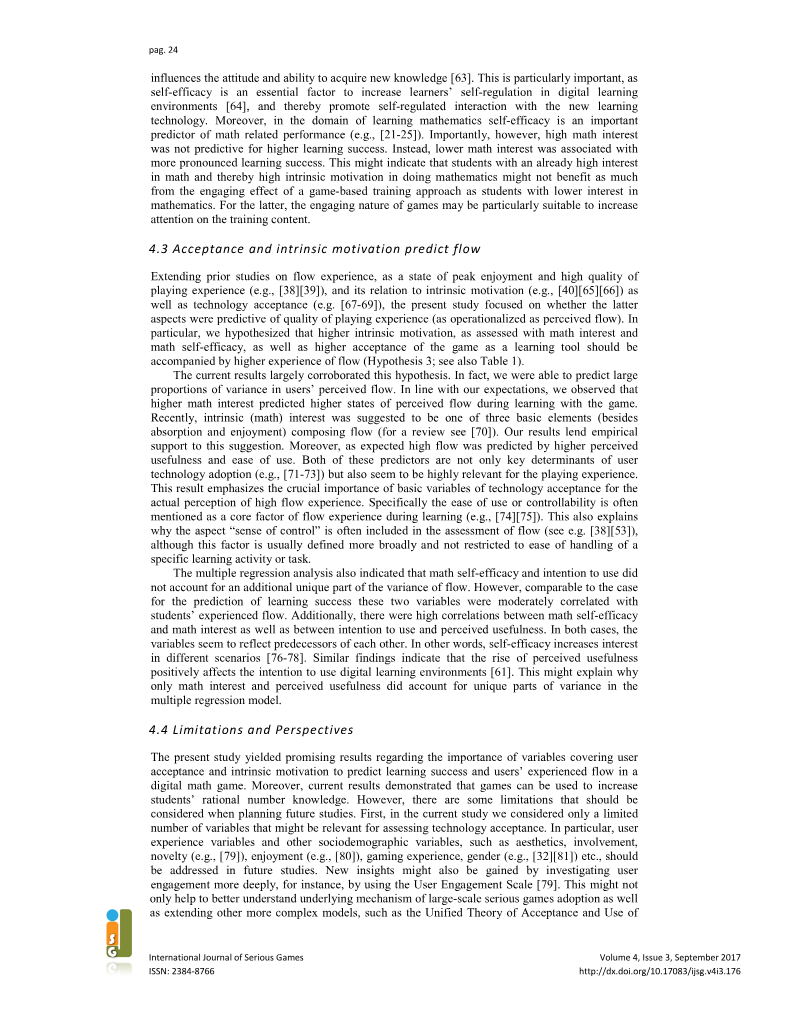

Acceptance of Game-Based Learning and Intrinsic Motivation as Predictors for Learning Success and Flow Experience
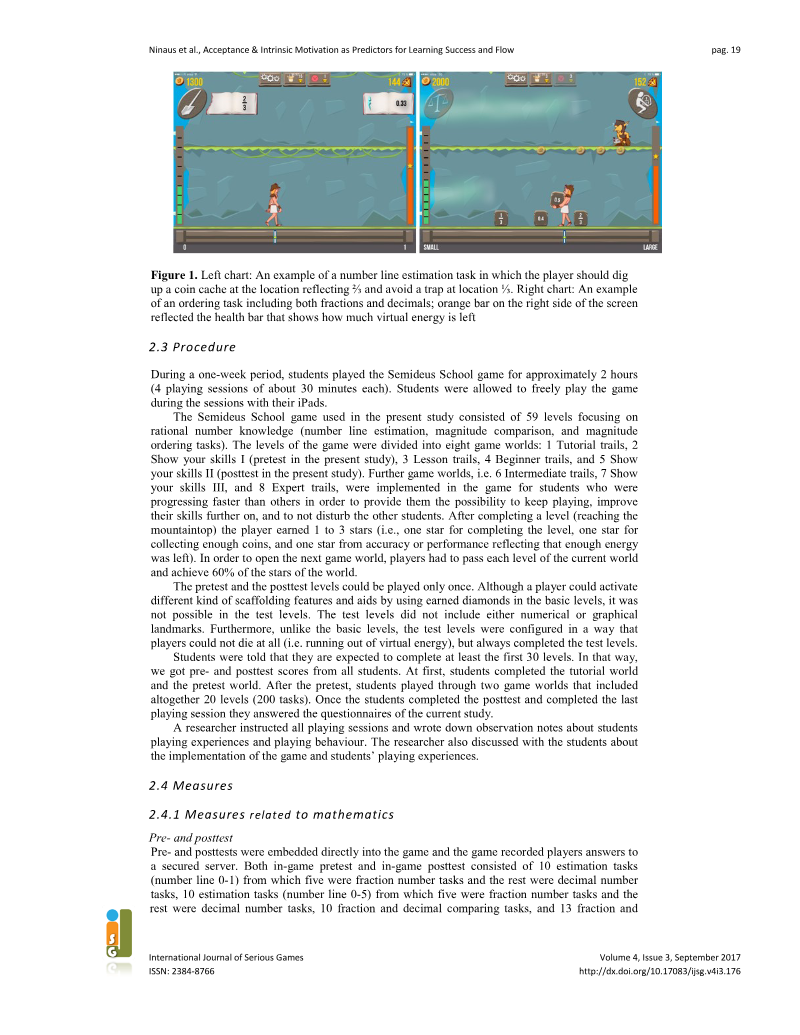
Game-based learning serves as a potent pedagogical tool for improving rational number proficiency among sixth-grade students.
- A multiple regression analysis of the Semideus game-based training explained 61% of the variation in student learning success, with an adjusted R² of 0.47 indicating a medium-sized effect.
- Students' learning success in rational number tasks is significantly predicted by their intrinsic motivation (math interest and self-efficacy) and their acceptance of the game as a learning tool.
- Perceived flow experience during gameplay is directly influenced by a player's math interest and their perception of the game's usefulness and ease of use.

PAX WEST 2017 Extra Credits Panel
The game industry faces a persistent tension between the desire to replicate the fluid, human-led social dynamics of tabletop role-playing games and the current technological limitations that restrict such interactive storytelling.
- Game design should prioritize active player interaction over passive consumption, as demonstrated by the environmental storytelling in the Soulsborne series and the psychological depth of titles like Hellblade and Observer.
- Aspiring developers should prioritize team cohesion, communication, and early prototyping over individual technical skills to mitigate the risk of excessive crunch and project failure.
- Long-term career sustainability in the volatile game industry requires building robust support networks and balancing artistic ambition with the pragmatic realities of a fluctuating labor market.
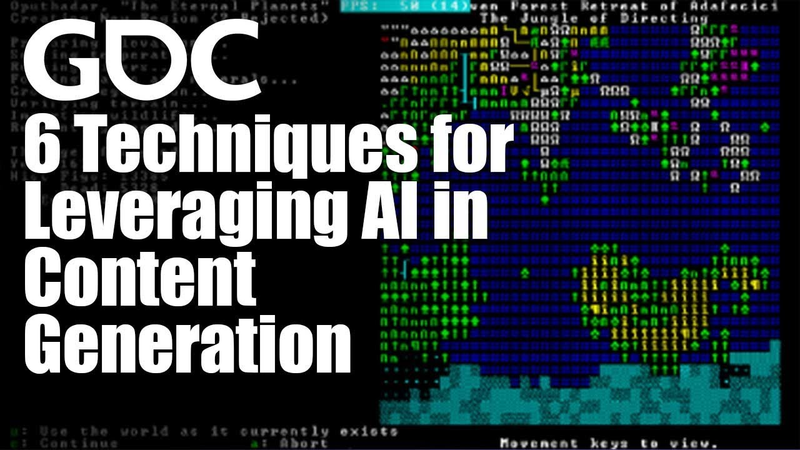
6 Techniques for Leveraging AI in Content Generation
Procedural generation and artificial intelligence serve as powerful tools for scaling game content while deepening narrative immersion.
- Developers should employ a hybrid design approach that balances high-level manual control over critical choke points and map layouts with automated generation for room-specific content.
- To ensure player readability of complex AI systems, designers must prioritize overt behavioral cues and dynamic character evolution to make subtle agent traits interpretable during gameplay.
- Systematizing world objects into shared data structures allows AI agents to reference and propagate information, creating a more cohesive and reactive environment.
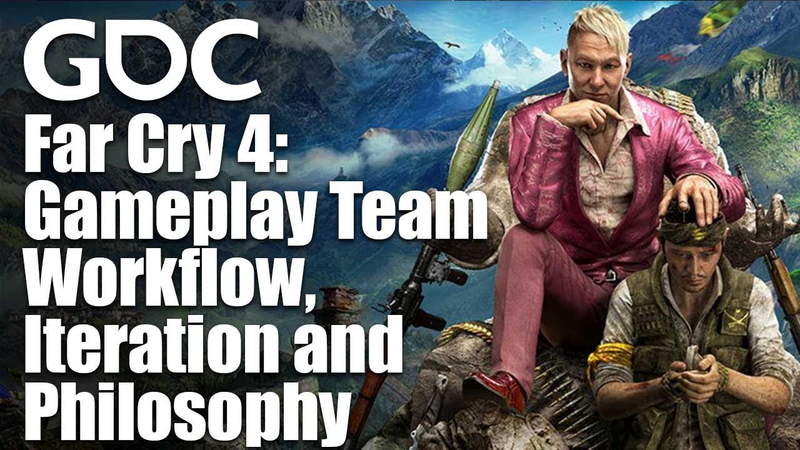
Far Cry 4: Gameplay Team Workflow, Iteration and Philosophy
The development of Far Cry 4 centered on a cross-functional, autonomous team structure designed to prioritize systemic gameplay and player agency over mere visual fidelity.
- The development team utilized a cross-functional, autonomous structure that embedded programmers, animators, designers, and testers into single units to prioritize systemic gameplay and player agency over visual fidelity.
- Development was managed across six global locations by treating remote studios as integrated partners rather than traditional outsourcing vendors, utilizing dedicated co-dev teams to manage communication and ownership boundaries.
- The project employed a rigorous de-risking strategy that evaluated the return on investment for every mechanic, resulting in the elimination of features that lacked depth or introduced excessive technical debt.

How (and When) to Not Give up on Your Game
The primary objective of this strategy is to sustain independent game development by leveraging platform-specific funding to iteratively build, refine, and release games.
- Developers can sustain independent projects by securing upfront funding from niche or hardware-focused platforms, typically ranging from $20,000 to $30,000 per deal.
- This iterative development model allows studios to retain 100% ownership of their intellectual property while using platform-specific revenue to fund ongoing polish and bug fixes.
- The strategy relies on treating a game as a living project, porting a high-quality core prototype across multiple platforms to build expertise and capital before a wider commercial launch.

John Carmack on The Issues and Rewards of Bleeding Edge Engine Development
The evolution of computing power has brought graphical fidelity to the threshold of cinematic realism, shifting the industry’s primary challenge from rendering to the advancement of complex physics simulations and artificial intelligence.
- The primary challenge in game development has shifted from graphical rendering to the implementation of complex physics simulations and artificial intelligence.
- Studios are trapped in a 'mainframe-like' cycle where ballooning team sizes and legacy production pipelines stifle innovation and agility.
- To combat rising development costs and multi-year project inefficiencies, studios must prioritize strategic asset reuse, standardized workflows, and smaller, iterative releases.
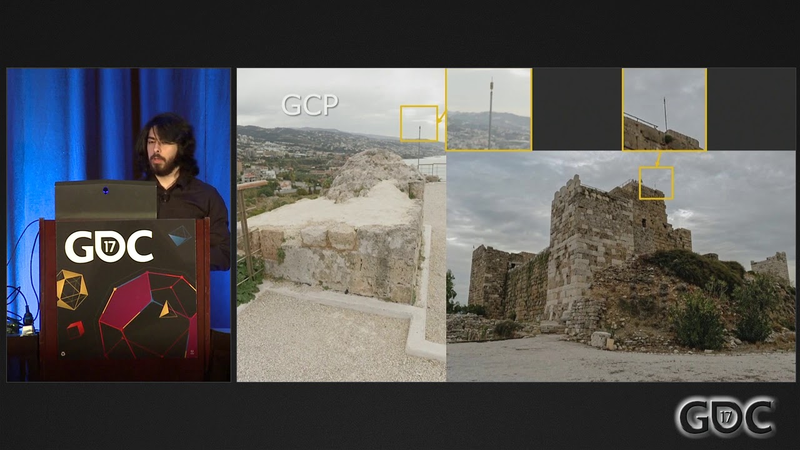
Porting a Real Life Castle into Your Game When You're Broke
This presentation outlines a cost-effective methodology for indie developers to perform high-quality 3D photogrammetry of large-scale historical structures, such as castles, without significant capital investment.
- Large-scale photogrammetry of historical structures can be achieved using consumer-grade hardware like standard DSLRs or high-end smartphones instead of professional-grade equipment.
- To minimize errors from shifting light or environmental obstacles, complex structures should be broken down into manageable individual components rather than captured in a single continuous loop.
- Ground control points are essential for accurately aligning disparate sections of a model, especially when aerial drone access is unavailable.

So, You Want to Be a Game Professor?
Transitioning from the game industry to higher education requires a nuanced understanding of the distinct structural and cultural demands of academia.
- Securing a permanent, tenure-track position in academia typically requires an advanced graduate degree, as formal accreditation standards often discourage institutions from hiring based on industry experience alone.
- Academic roles are defined by a tripartite mandate that requires balancing classroom instruction with the production of peer-reviewed research, grant acquisition, and institutional administrative service.
- Industry professionals looking to transition should build a portfolio of thought leadership through conference presentations, creative exhibitions, and collaborations on university-led research initiatives.

Grassroots Growth: How Game Communities Built an eSport Scene from the Ground up
Esports scenes emerge primarily from grassroots, enthusiast-led communities that employ a DIY ethos to transform standard game titles into competitive ecosystems.
- Game developers should view esports as a co-creative process rather than a top-down product, as foundational titles like Counter-Strike and Dota originated from community modding rather than internal studio development.
- Grassroots communities perform essential 'transformative work' by building the infrastructure for esports, such as early broadcasting services like Team SportsCast Network and Radio ITG, which established the standards for modern media production.
- The 'serious leisure' model, exemplified by volunteer-driven events like DreamHack, demonstrates that enthusiast communities are willing to invest significant time and resources to overcome technical barriers and professionalize competitive scenes.
Writers
Games and companies
Games