Presentation9 pages
Gamer Motivation Model: Reference Sheets and Details
The Gamer Motivation Model provides a comprehensive framework for understanding player behavior by categorizing gaming preferences into twelve distinct motivations. Developed through psychometric factor analysis of data from over two million global participants, the model identifies how specific psychological drivers cluster together to influence game selection and engagement. By linking demographic data with preferred game titles and franchises, the research offers a data-driven approach to analyzing audience segments and predicting player retention.
The model organizes these twelve motivations into six related pairs, which are further grouped into three high-level clusters: Action-Social, Mastery-Achievement, and Immersion-Creativity. Action-Social focuses on immediate, adrenaline-fueled experiences and interpersonal interaction. Mastery-Achievement emphasizes long-term, goal-oriented gameplay characterized by strategic planning and cumulative progression. Immersion-Creativity centers on expansive, expressive play, curiosity, and the exploration of narrative or design-based boundaries. These clusters are conceptually described as bright, tall, and wide, respectively, to illustrate their distinct psychological orientations.
Each motivation is treated as a spectrum rather than a binary preference, acknowledging that gamers possess varying degrees of interest across all categories. By defining the anchors at both ends of these spectrums, the model allows for nuanced profiling of player types. For instance, the model distinguishes between players who prioritize social collaboration versus those who prefer independent, non-adversarial environments, or those who seek skill-based challenges versus those who prefer spontaneous, low-cognitive-load gameplay. This empirical approach provides actionable insights for developers and analysts to map specific game mechanics to the underlying psychological needs of diverse player demographics, facilitating a deeper understanding of the global gaming landscape.
- The Gamer Motivation Model categorizes player behavior into twelve distinct motivations derived from psychometric factor analysis of over two million global participants.
- Motivations are organized into three high-level clusters: Action-Social (immediate, interpersonal), Mastery-Achievement (goal-oriented, progression), and Immersion-Creativity (narrative, expressive).
- Player preferences are measured as spectrums rather than binary choices, allowing for nuanced profiling of how individuals balance competing psychological drivers.
- The framework maps specific game mechanics to underlying psychological needs, enabling developers to predict player retention and engagement based on target audience segments.
- By linking demographic data with preferred game titles, the model provides a data-driven methodology for analyzing global gaming audiences and their specific engagement patterns.
+1
Quantic Foundry
Report29 pages
Gaming Report 2026: Choose Your Player
The leadership team of Bain & Company's Global Gaming Sector practice prepared this report, with special direction from Anders Christofferson, partner and Global Gaming Sector lead, and Brandon Rogers, Media practice manager. The authors would like to thank Danielle Schwenker, Aman Sharma, Gunjan Dawar, Shray Arora, Rohan Doomra, Shagun Jain, and Christoffer Karlsmose for their contributions to this work.
- The gaming market has shifted from a supply-constrained environment to one of infinite choice, where success now requires deep engagement with specific player segments rather than broad, unfocused appeal.
- Focused games—those designed for a specific, identifiable audience—achieved an 83% commercial success rate, significantly outperforming the 50% success rate of unfocused titles.
- Player preferences are highly fragmented, with no single experience type (such as story-driven, sandbox, or multiplayer) capturing more than 26% of the market, and two-thirds of gamers preferring to stick to familiar franchises or existing habits.
- Nearly half of all gamers now purchase content directly from developer web stores at least once a year, and 75% of top-grossing mobile games currently operate their own direct-to-consumer storefronts, up from just 12% in 2019.
- Studios should adopt AI-driven, real-time personalization—specifically contextual bandit algorithms—to optimize individual player experiences, as the highest-spending segment of the market accounts for approximately 75% of total gaming revenue.
+2
Bain & Company
Report23 pages
Essential Facts About the U.S. Video Game Industry: 2026
The 2026 Essential Facts About the U.S. Video Game Industry report provides a comprehensive analysis of the American gaming landscape, illustrating that video games have become a primary form of entertainment across all demographics. With 212.3 million Americans playing at least one hour per week, the industry now reaches 67% of the population. The average player is 37 years old, and the gender distribution is nearly equal, reflecting a broad, inclusive shift in gaming culture that spans from Generation Alpha to the Silent Generation.
The findings highlight that gameplay is increasingly social and integrated into family life. Approximately 75% of parents play video games, with 81% of those parents engaging in the activity alongside their children. Beyond entertainment, players report significant personal benefits, including stress relief, mental stimulation, and the development of skills such as problem-solving and teamwork. Social connectivity is a core driver, as 70% of players interact with others, and many report that gaming helps them maintain relationships or build new communities.
Economically, the industry remains a robust driver of the U.S. economy, with consumer spending on content, hardware, and accessories reaching significant levels in 2025. Players generally view games as a high-value entertainment investment compared to other media. The report also underscores the importance of safety and oversight, noting that 84% of parents check ESRB ratings when acquiring games for their children, and 79% utilize parental controls.
The data is derived from a 2026 survey conducted by YouGov, which utilized a sample of 13,545 respondents, including both gamers and non-gamers. The methodology employed weighting to ensure the results are representative of the U.S. population across age, gender, ethnicity, and geographic regions, providing a reliable snapshot of current player attitudes, behaviors, and industry trends.
- The U.S. video game industry reaches 212.3 million Americans, representing 67% of the total population.
- The average American gamer is 37 years old, with a gender distribution that is nearly equal across all generations.
- Gaming is a primary social activity, with 70% of players interacting with others and 81% of gaming parents playing alongside their children.
- Parents maintain high levels of oversight, with 84% checking ESRB ratings and 79% utilizing parental controls for their children.
- Players report significant personal benefits from gaming, specifically citing stress relief, mental stimulation, and the development of teamwork and problem-solving skills.
+1
Entertainment Software Association
Whitepaper23 pages
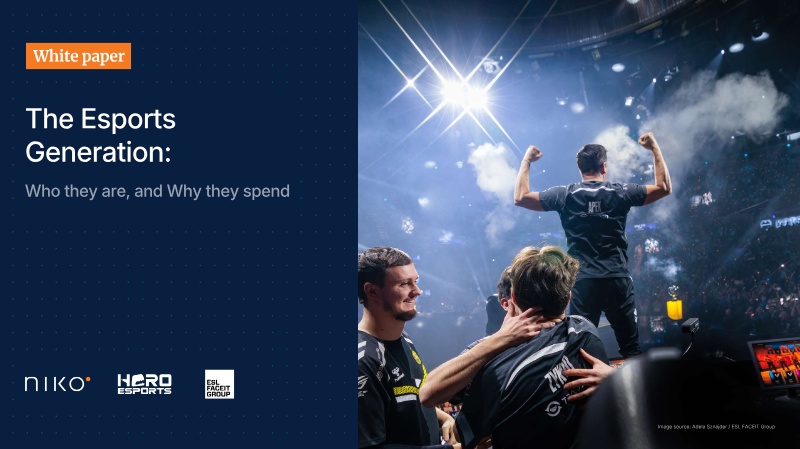
The Esports Generation: Who They Are, and Why They Spend
The global esports industry has matured into a significant economic force, reaching an estimated 640 million fans and generating $3 billion in annual revenue by 2026. This ecosystem functions as a primary cultural touchpoint for Generation Z, a digitally native demographic that views competitive gaming with the same level of emotional investment and community identity traditionally reserved for professional sports. Because this audience is currently in a formative stage of brand loyalty, the industry represents a critical environment for companies seeking to establish long-term relationships with high-value consumers.
Engagement within this space is driven less by the games themselves and more by social connectivity, the influence of professional players, and high-quality production standards. Fans demonstrate a high propensity for commercial activity, with over 76 percent having made esports-related purchases within the past year. This demographic is particularly receptive to brand integration, as 85 percent of fans actively notice esports branding, and nearly three-quarters report that these sponsorships directly influence their purchasing decisions. The effectiveness of this channel extends across diverse sectors, including electronics, fashion, and food and beverage, proving that esports serves as a highly efficient gateway for cross-industry marketing.
Ultimately, the esports landscape offers a unique opportunity for brands to leverage the intersection of gaming, music, and streaming to capture a highly engaged audience. By prioritizing authentic engagement strategies that respect the publisher-driven nature of the ecosystem, brands can successfully convert digital interest into tangible loyalty. As these fans continue to prioritize in-game spending and subscription-based services, the industry remains a proven, high-value environment for sustained commercial growth and brand association on a global scale.
- Gen Z esports fans represent a massive, high-value demographic of 400 million potential global viewers, with 76.3% of fans having made an esports-related purchase in the past year.
- The esports industry generates $3 billion in annual revenue, driven by a global audience of 640 million and high engagement from a cohort that is largely employed and well-educated.
- Esports fans are highly receptive to brand partnerships, with 47.1% of fans stating that brand collaborations with teams or athletes positively influence their purchase behavior.
- Digital items like skins and cosmetics are the most popular esports-related purchase (50%), followed by physical merchandise (40.9%) and branded peripherals (33%).
- YouTube (81.8%) and TikTok (56.6%) are the primary international broadcast platforms for esports, while China relies on domestic giants like Bilibili (48.1%) and Douyu (36.2%).
+2
Niko PartnersJul 2026
Report13 pages
Farming Sims: Cultivating Long-term Engagement
Farming simulation games have established themselves as a dominant and enduring genre within the global mobile gaming market. By analyzing data from a survey of 1,000 US mobile gamers aged 18 to 55, it is evident that these titles possess significant staying power, with 60% of mobile gamers having played at least one of the top ten farming sims. The genre’s success transcends casual demographics, attracting a broad audience that includes players of complex genres like RPGs, shooters, and strategy games, as well as those who primarily play on PC and consoles.
The core appeal of farming sims lies in their ability to satisfy fundamental human motivations defined by Self-Determination Theory: autonomy, competence, and relatedness. Unlike many other genres, farming sims excel at providing players with a sense of control through farm layout planning, a feeling of mastery via task completion and progression, and social connection through cooperative play and community interaction. These psychological drivers, combined with the "work-as-play" trend, foster long-term engagement through daily rituals, creative expression, and the evolution of virtual spaces.
To maintain this momentum, developers must navigate a saturated market by prioritizing consistent live-ops, community-driven content, and user-generated features. While the genre offers high accessibility and flexible session lengths, it faces challenges regarding content cadence and the risk of undermining the low-pressure experience through aggressive monetization. Ultimately, the longevity of farming sims serves as a blueprint for other genres, demonstrating that combining low-stress gameplay with deep, meaningful progression and social mechanics is a highly effective strategy for cultivating a dedicated, long-term player base.
- Farming simulation games maintain high long-term engagement by satisfying core human motivations defined by Self-Determination Theory: autonomy, competence, and relatedness.
- The genre appeals to a broad demographic, with 60% of mobile gamers having played a top farming title, including 73% of RPG players and 65% of console gamers.
- Farming sims demonstrate exceptional longevity, as evidenced by titles like Township, Hay Day, and FarmVille 2, which were released in 2012 and continue to command massive player bases with over 100 million to 500 million downloads each.
- Players prioritize building, experimentation, and daily rituals, with 36% of farming sim players citing 'building and evolving my farm' as a top motivation compared to only 7% in other genres.
- The 'work-as-play' trend is expanding beyond traditional farming, with job-based simulators like Truck Simulator and My Supermarket Simulator achieving over 100 million downloads each.
+3
BryterJul 2026
Report49 pages
Essential Facts about Video Games in Italy: 2025
In 2025, roughly 14.2 million Italians—about a third of the population aged six to seventy‑five—engage in video gaming, with a pronounced male bias and a concentration of players under 35. The industry’s total revenue remains steady at €2.4 billion, of which game sales account for 77 percent (€1.8 bn). Gaming time has risen to nearly eight hours per week, driven primarily by smart‑device play (22 percent reach, €929 m revenue) and console gaming (13 percent reach, €643 m). App‑based games now represent more than half of the market, dominated by freemium monetisation; only one percent of app revenue comes from upfront purchases.
Revenue distribution varies by platform. Smart‑device earnings are almost entirely from in‑app purchases (ARPU €84), while console sales lean heavily on digital downloads—65 percent of new game revenue comes from full‑game downloads (€502 m) and 21 percent from DLC (ARPU €99). PC revenue is largely driven by DLC (43 percent) and full‑game downloads (98 percent of console sales). Subscription services are pivotal: console ecosystem subscriptions contribute 59 percent of total gaming‑subscription revenue (€153 m), with mobile and single‑game franchises accounting for 6 percent and 35 percent respectively.
Player demographics reveal that smart devices attract a younger, male‑skewed audience (31 percent of 6–17‑year-olds), whereas console and PC gaming remain niche but heavily male‑skewed, concentrated among teens. Casual and sports titles dominate sales across all platforms, with subscription services such as PlayStation Plus and Xbox Game Pass driving a significant share of paid play. Engagement patterns show males spending the most hours on consoles (average seven hours per week), while PC gaming remains steady across age groups. Approximately one‑quarter of players follow gaming news on YouTube or vlogs, and 20 percent rely on social media or family discussions for information. The data derive from a nationally representative online survey of 3,000 respondents, weighted against an offline omnibus sample and calibrated to industry sales figures.
- The Italian video game market generated €2.4 billion in 2025, with game sales accounting for 77 percent (€1.8 billion) of total revenue.
- App-based gaming dominates the market, representing over half of total revenue with a freemium model where only one percent of earnings come from upfront purchases.
- Smart devices are the primary revenue driver at €929 million, while console gaming accounts for €643 million, supported by an average of eight hours of gameplay per week across the population.
- Console revenue is heavily reliant on digital distribution, with 65 percent of new game sales coming from full-game downloads and 21 percent from DLC.
- Console ecosystem subscriptions are the primary driver of the subscription market, contributing 59 percent (€153 million) of total subscription revenue.
+4
IIDEA – Italian Interactive Digital Entertainment Association
Report34 pages
2026 Mobile & PC Gaming Benchmarks
The global gaming landscape in 2026 is defined by a widening performance gap between a small elite of top-tier titles and the broader market. Data derived from over 16,000 live mobile games indicates that retention metrics, including D1, D7, and D30, are in a state of decline. With median D30 retention falling below 1%, the industry has become increasingly unforgiving, necessitating a strategic shift toward immediate, high-quality onboarding and the refinement of core gameplay loops to mitigate rising churn rates.
Mobile gaming engagement remains characterized by high-frequency, habitual daily play, yet the industry suffers from a stagnation in innovation and an over-reliance on monetization at the expense of genuine engagement. Success in this segment requires developers to move beyond generic feature sets and instead prioritize behavioral loops that foster long-term habit formation. Conversely, the PC gaming sector operates on a different paradigm, where success is measured by depth, session length, and content longevity. On this platform, retention and engagement metrics serve as indicators of long-term player commitment and the intrinsic value of immersive, long-form experiences rather than simple return frequency.
To navigate these challenges, studios are increasingly turning to advanced data-driven infrastructure to optimize player experiences. By leveraging real-time insights and sophisticated market intelligence, developers can better align their growth strategies with evolving player behaviors. Ultimately, the ability to sustain a competitive advantage in both mobile and PC markets depends on a rigorous focus on content quality and the implementation of robust, data-informed engagement strategies that cater to the specific demands of each platform.
- Mobile gaming retention is in decline, with median D30 retention rates falling below 1% across a sample of over 16,000 live titles.
- The gaming market is experiencing a widening performance gap where a small elite of top-tier titles increasingly dominates the broader landscape.
- Mobile success now requires a strategic pivot toward immediate, high-quality onboarding and core gameplay loops to counter rising churn rates.
- Mobile engagement is currently stagnant due to an over-reliance on monetization, necessitating a shift toward behavioral loops that foster long-term habit formation.
- PC gaming success is defined by long-form, immersive experiences where metrics like session length and content longevity are the primary indicators of value.
+3
GameAnalyticsJun 2026
Report14 pages
Europe and Esports: High Engagement and Even Higher Potential (2020)
The study demonstrates that Europe’s esports audience reached 92 million viewers by the end of 2020, up 7.4 % from 2019, with 33 million classified as “Esports Enthusiasts” and the remaining 59 million as occasional viewers. Revenue projections for the global market hit €973.9 million in 2020 and are expected to rise to €1.6 billion by 2023, with European figures mirroring this upward trend. The research surveyed 10 175 participants aged 18‑45 across ten Western and Northern European countries, using invitation‑only questionnaires administered over one month (29 May–28 June 2020). Respondents were nationally representative of esports viewers in each country.
Key findings reveal that engagement is highest among 21‑25‑year‑olds, with Finland showing the strongest enthusiast proportion (52 % of 18‑20‑year‑olds) versus only 21 % in the UK. COVID‑19 lockdowns increased viewership in markets with stricter restrictions, such as France and Spain, where 62 % of respondents expected continued higher viewership post‑lockdown. Women constitute 32 % of the audience, largely as occasional viewers; however, 60 % of respondents believe female participation is growing. Female spenders are slightly lower than male counterparts (46 % vs 38 %) but show a higher propensity for physical merchandise, whereas men favor digital items like skins and premium passes.
The report also highlights cross‑sport fandom: 64 % of viewers own a favorite sports team, with football and tennis being the most common. Rocket League enjoys significant popularity, especially in the UK (34 % of enthusiasts). Overall, 58 % of enthusiasts spend on esports products, with Spain leading at 62 %. These insights underscore a rapidly expanding, monetizable European esports ecosystem that offers substantial opportunities for brands across both traditional and digital channels.
- Europe's esports audience reached 92 million viewers in 2020, a 7.4% increase from 2019, consisting of 33 million enthusiasts and 59 million occasional viewers.
- Global esports revenue is projected to grow from €973.9 million in 2020 to €1.6 billion by 2023, with European market trends mirroring this expansion.
- Engagement is highest among 21–25-year-olds, with Finland reporting the highest enthusiast proportion at 52% for the 18–20 age bracket, compared to 21% in the UK.
- COVID-19 lockdowns significantly boosted viewership in countries like France and Spain, with 62% of respondents in these regions expecting sustained higher engagement post-lockdown.
- Women represent 32% of the total audience and show a higher propensity for physical merchandise spending, while men favor digital items such as skins and premium passes.
+2
PayPal

Report42 pages
For the Game: Data Fusion Sheds a New Light on Players
Gaming is projected to reach 3.5 billion players and generate over US$225 billion in revenue by 2025, establishing the medium as a mass‑scale platform with extensive brand opportunities. Dentsu’s data‑fusion approach merges a 420,000‑respondent consumer panel with GWI gaming insights across 21 markets to create high‑fidelity gamer portraits that link lifestyle, media habits and in‑game behaviors. This methodology enables brands to segment audiences by motivation rather than device or genre, a strategy shown to produce the most authentic and attention‑driven brand experiences.
Key demographic insights reveal that 57 % of gamers are female, with gaming serving as a tool for identity reinvention and social bonding. Shooters dominate play preferences (63 %), while sports and puzzle/strategy titles attract 16 %. Device usage is nearly evenly split among console, handheld, and a growing smartphone/tablet share. Community engagement is strong: 40 % of U.S. gamers play to belong, and 63 % rely on friends for game information, with platforms such as Discord, Reddit, and Twitch amplifying fandoms.
Commercially, 71 % of gamers consume gaming content across multiple devices and 55 % of esports fans welcome sponsorships, underscoring high engagement. Brands that add genuine value—through exclusive rewards, immersive metaverse experiences, or AR scavenger hunts—achieve near‑perfect ad completion rates (96 %) and significant click‑throughs. Successful activations require clear brand rules, diversity inclusion, strategic partnerships with publishers or esports teams, and a focus on authentic integration rather than intrusive advertising. The analysis spans 22 global markets, including Australia, Brazil, Canada, China and the United States, offering a comprehensive framework for brands to identify entry points and growth opportunities within the evolving gaming ecosystem.
- The global gaming market is projected to reach 3.5 billion players and generate over US$225 billion in revenue by 2025.
- Brands that integrate value-add experiences like exclusive rewards or AR scavenger hunts achieve a 96% ad completion rate.
- Gamer demographics show that 57% of players are female, with 40% of U.S. gamers citing social belonging as a primary motivation for play.
- Shooters remain the dominant genre at 63% of play preferences, while sports and puzzle/strategy titles account for 16%.
- Consumer engagement is high, with 71% of gamers using multiple devices and 55% of esports fans expressing openness to brand sponsorships.
+3
InvestGame
Report31 pages
The 2025 Benchmark Report: Roblox Platform Trends
The report establishes that Roblox’s player base is sharply divided between casual users who spend only a few minutes per session and core players who log in multiple times daily, often exceeding 30‑minute sessions. Across 2023‑2025, titles that sustain longer playtimes achieve double‑digit retention rates and significantly higher monetization; the top 5 % of games generate over $20 per day from a single player. In contrast, games with median sessions under six minutes exhibit negligible Day‑1 retention (≈6 %) and ARPPU below $1, indicating that brief curiosity rarely translates into repeat play or meaningful spend.
Cross‑device usage remains high, with nearly 40 % of players alternating between PC and mobile. Daily session frequency has risen by roughly one third among the most active users, while median session length has fallen from 36 to 26 minutes. These dynamics underscore the importance of seamless PC‑mobile experiences and micro‑sessions that incorporate strong re‑entry hooks to capture the growing multi‑session behavior.
Platform discovery mechanisms reward repeat spending and long‑term engagement. Games that maintain 7‑day spend per user climb recommendation rankings, while low‑engagement titles (0–3 min) suffer from poor retention (<5 % Day 1, <2 % Day 7) and modest ARPPU (<$1). Conversely, higher‑engagement games achieve Day‑30 retention above 1 % at the upper percentiles and ARPPU exceeding $6, with average transaction values reaching $3–$4. These findings demonstrate that sustained engagement directly fuels higher per‑payer revenue and larger purchase sizes.
The overarching thesis is that success on Roblox follows a systematic progression rather than chance. Developers must align their game’s current stage with benchmark metrics, prioritizing clear early hooks, repeat‑play incentives, and engagement‑driven spend such as quests, streaks, or battle passes. Leveraging analytics tools like GameAnalytics to track custom events and player behavior enables studios to refine strategies, move from fragile prototypes toward million‑player hits, and capitalize on the platform’s reward structure for long‑term growth.
- Games with median session lengths under six minutes suffer from negligible Day-1 retention of approximately 6% and ARPPU below $1, while top-tier titles achieve ARPPU exceeding $6 with average transaction values of $3–$4.
- The top 5% of Roblox games generate over $20 per day from a single player, demonstrating that sustained engagement is the primary driver of high-value monetization.
- Platform discovery algorithms prioritize games with consistent 7-day spend and high engagement, causing low-engagement titles to fall below 5% Day-1 and 2% Day-7 retention.
- While median session lengths have decreased from 36 to 26 minutes between 2023 and 2025, daily session frequency among the most active users has increased by roughly one-third.
- Nearly 40% of the player base alternates between PC and mobile, necessitating seamless cross-device experiences to support the growing trend of multi-session play.
+3
InvestGame
Report23 pages
Swipe Before Type: India's Interactive Media Consumer Survey 2024–2025
The survey, covering September 2024 to September 2025, examines India’s interactive media landscape across video, audio, social, gaming and emerging AI‑driven content. It finds that 46 % of consumers are women, with two‑thirds residing outside metro areas and 80 % using more than 1 GB of mobile data daily. Video consumption averages six hours weekly, driven by exclusivity and celebrity presence; OTT platforms dominate paid content, yet microdramas and anime are gaining wallet share. Audio listeners favor podcasts over music, with 60 % willing to pay for audio apps, especially during commuting and chores. Social media usage averages 10 hours weekly, skewing male and non‑metro, with participative platforms (astrology, dating) rising. Gaming remains mobile‑first but 30 % use PCs and 22 % consoles; casual and midcore titles command the most time (8 hours/week) and spend, with UPI accounting for 90 % of in‑app purchases. Monetization patterns show a preference for monthly subscriptions over annual plans, and a shift away from RMG/fantasy genres. Across price points, games capture 70 % of wallet share above INR 1,000, while video and social command 30 % each at INR 200‑500. AI adoption is higher in metros, with over half of users open to AI content but skeptical about AI companions. The study draws on a mixed‑method survey of 3,000+ respondents nationwide, integrating usage logs and payment data to map consumption, willingness to pay, and emerging trend trajectories.
- Gaming dominates high-value consumer spending, capturing 70% of wallet share for transactions exceeding INR 1,000, while video and social media command 30% each at the INR 200–500 price point.
- Mobile-first gaming remains the primary format, but 30% of users now engage via PC and 22% via consoles, with casual and midcore titles driving 8 hours of weekly engagement.
- UPI is the near-universal payment method for digital content, accounting for 90% of all in-app purchases.
- India’s interactive media audience is increasingly decentralized and gender-balanced, with 46% women and two-thirds of the total user base residing outside of metro areas.
- Monetization preferences are shifting toward monthly subscription models, with a notable decline in consumer interest for Real Money Gaming (RMG) and fantasy genres.
+2
Lumikai

Report30 pages
Gaming in Africa 2024
Gaming in Africa 2024 reveals a market that is overwhelmingly mobile‑centric, with 92 % of respondents playing on phones and 81 % using smartphones. Android dominates, accounting for 92 % of downloads from Google Play, while iOS remains a minority. The region’s gamers are highly engaged: 78 % played in the previous day and a third spend three or more hours per session. Puzzle games lead at 40 %, followed by sports and football at 36 %; female players show a particular affinity for puzzles, twice the rate of male gamers. Motivations cluster around entertainment (73 %) and relaxation (64 %), with social interaction and competition also significant drivers.
The market is poised for rapid expansion, fueled by a youthful population and high smartphone penetration. In Kenya, mobile‑first economics and widespread mobile money usage create a fertile environment for in‑game purchases. Across the four surveyed countries, 63 % of players have made microtransactions, using credit cards, mobile money, Google Pay or airtime; Kenya’s mobile‑money share exceeds 60 %. Spending patterns show that roughly one‑third of gamers spend $5–10 per month, while 26 % spend less than $2. Barriers include a preference for free titles (47 %) and limited disposable income (44 %). Demand for culturally relevant content is strong, yet 56 % of respondents report no awareness of African‑made games.
Support for locally produced titles remains uneven. In Nigeria and South Africa, only 42 %–46 % of respondents care about a game’s origin, with enjoyment as the primary purchase driver for approximately 70 %. Interest in black protagonists is moderate at 38 % overall, dropping to 28 % in Egypt and 33 % in South Africa. These findings underscore a mobile‑driven, youth‑led market with growing appetite for local content but still constrained by payment preferences and awareness gaps.
- The African gaming market is overwhelmingly mobile-centric, with 92% of users playing on phones and Android devices accounting for 92% of all downloads.
- Monetization is driven by microtransactions, utilized by 63% of players, with Kenya serving as a key market where mobile money accounts for over 60% of payment methods.
- Player engagement is high, as 78% of respondents played within the last day and one-third of gamers spend three or more hours per session.
- Puzzle games are the most popular genre at 40%, followed by sports and football at 36%, with female gamers showing a preference for puzzles at twice the rate of male gamers.
- Spending is modest but consistent, with roughly one-third of gamers spending $5–10 monthly, though 47% of players prioritize free-to-play titles due to limited disposable income.
+2
GeoPoll

Report23 pages
Game Analytics 100: The Retention Curve
The analysis demonstrates that player retention in mobile games can be accurately modeled with a power‑law curve, expressed either as \(r(n)=a\,b^n\) or \(r(n)=a\,n^{b}\). By fitting the curve to a limited set of cohort data—typically day‑1, day‑3, and day‑7 retention—analysts can derive the parameters \(a\) (initial retention level) and \(b\) (decay exponent). Excel’s LINEST function on logged values provides a straightforward method for estimating these coefficients, yielding representative curves such as \(r(n)=0.396\,n^{-0.472}\).
Once fitted, the curve serves multiple forecasting purposes. It predicts daily active users for any future day through a recurrence relation that incorporates the retention rate and cumulative DAU. It also enables calculation of player duration by summing \(r(n)\) over time, which feeds directly into lifetime value (LTV) estimates. For instance, with an average revenue per daily active user of \$1.00, the model projects LTV90 around 7.65 and LTV180 near 10.17, illustrating how early retention translates into long‑term monetization.
The methodology extends to benchmarking against industry standards. By comparing a studio’s day‑1, day‑7, day‑30, and day‑90 retention figures to genre‑specific percentiles provided by GameAnalytics, developers can identify performance gaps and prioritize optimization efforts. The approach is applicable across mobile game segments worldwide and covers the entire post‑install period, offering a scalable tool for forecasting, monetization planning, and competitive analysis.
- Mobile game retention follows a predictable power-law curve, modeled as r(n)=an^b, which allows analysts to forecast long-term player behavior using only day-1, day-3, and day-7 cohort data.
- Fitting retention curves enables precise lifetime value (LTV) projections; for example, an average revenue of $1.00 per daily active user results in an LTV90 of 7.65 and an LTV180 of 10.17.
- Analysts can derive the initial retention level (a) and decay exponent (b) by applying the LINEST function to logged cohort values in Excel, yielding representative curves such as r(n)=0.396n^-0.472.
- The retention model facilitates accurate daily active user (DAU) forecasting by applying a recurrence relation to the calculated retention rates and cumulative DAU figures.
- Developers can identify performance gaps by benchmarking their day-1, day-7, day-30, and day-90 retention metrics against genre-specific percentiles provided by GameAnalytics.
+2
East Side Games
Report5 pages
East vs. West: Monetization Trends
The study examines how mobile gaming spending patterns differ between Eastern and Western markets, focusing on frequency of purchases, average spend per transaction, and motivational drivers. Findings reveal that Eastern gamers purchase in‑app items more often than Western players; 35 % of East spend frequently versus 36 % in the West, with a higher proportion of occasional and rare spenders in the West. When it comes to transaction size, Eastern users tend to pay more per purchase: 76 % spend over $10 compared with only 42 % of Western users, while a smaller share of East spend under $5 (30 %) versus 8 % in the West. Motivational analysis shows that Western gamers prioritize value and bundles, whereas Eastern players are more attracted to exclusivity, limited‑time items, new offers, and character acquisition. The research covers key markets in Asia—Korea and Japan—and Western regions including the United States, United Kingdom, and broader Europe. Data were collected through a survey of mobile gamers across these regions, with sample sizes sufficient to compare spending behaviors and motivations. The report concludes that monetization strategies should be tailored regionally: value‑based bundles may resonate better in the West, while exclusive content and limited editions could drive higher spend in Eastern markets.
- Eastern mobile gamers demonstrate a significantly higher propensity for large transactions, with 76% of purchases exceeding $10 compared to only 42% in Western markets.
- Western mobile gamers are more likely to make small-scale purchases, with 8% of spenders in the West opting for transactions under $5, contrasted with 30% in the East.
- Monetization strategies in the West should prioritize value-based bundles, as these resonate more effectively with the purchasing preferences of Western players.
- Eastern markets, specifically Korea and Japan, show a stronger consumer preference for exclusivity, limited-time offers, and character acquisition.
- Purchase frequency remains relatively balanced across regions, with 35% of Eastern gamers and 36% of Western gamers identified as frequent spenders.
+5
Mistplay

Whitepaper41 pages
What Good Are AI NPCs?: Lessons from a Large-scale Player Study
The study demonstrates that generative AI‑driven non‑player characters can deliver deeply engaging, emotionally resonant gameplay. In a 122‑hour experiment with 68 participants, the “Dead Meat” demo achieved high immersion scores—97 % UES reward and 94 % focused attention—while keeping mental demand low (NASA‑TLX scores of 64.7 for demand and 52.7 for performance). Qualitative interviews consistently cited the NPCs’ human‑like dialogue and narrative depth as key contributors to player enjoyment.
Quantitative data confirm widespread satisfaction: 96 % of players rated overall enjoyment as high, and 90 % praised the creative freedom afforded by the open‑ended design. Subscale analysis of the GUESS instrument revealed that 60 % achieved a top score for Creative Freedom, 65 % for Personal Gratification, and 80 % for Play Engrossment. Thematic coding identified freedom of expression, challenge‑driven motivation, and immersive conversation as primary drivers of satisfaction, indicating that the game successfully balances agency with sufficient guidance.
Player behavior analysis uncovered seven distinct strategic approaches—such as “Good Cop/Bad Cop” interrogation, “Rule Bender End Justifies the Means,” and “Smart Arse” manipulation—often combined within a single session. Participants responded equally to voiced and text‑based NPCs, and the 20‑minute session length encouraged replayability through role‑playing different characters. Although the brief duration limited long‑term insight, emergent strategies were viewed as a feature rather than a flaw. Future research will explore how authorial adjustments influence player responses across demographic groups, reinforcing the potential of AI NPCs to enrich narrative gameplay on a broad scale.
- Generative AI NPCs drive high player engagement, with 97% of participants reporting high immersion and 96% rating their overall enjoyment as high.
- The integration of AI NPCs maintains a balance between agency and guidance, as evidenced by 80% of players achieving top scores for play engrossment and 90% praising the creative freedom of the open-ended design.
- Cognitive load remains manageable during AI-driven interactions, with participants reporting NASA-TLX mental demand scores of 64.7 and performance scores of 52.7.
- Players adopt diverse, emergent interaction strategies, including interrogation, manipulation, and rule-bending, which suggests that AI NPCs support complex, role-playing-heavy gameplay.
- Player satisfaction is consistent across communication formats, as participants responded equally well to both voiced and text-based AI NPC interactions.
+2
University of Bristol
Report22 pages
The 2026 State of Web Gaming Report: A Study of Developer and Gamer Perceptions
The study demonstrates that web gaming has evolved from a niche, low‑quality outlet into a central discovery and revenue engine for the industry. Across 2,000 gamers and 400 developers surveyed in 2026, data reveal that 62 % of players discover new titles via the web and 53 % spend more than $50 monthly on games, underscoring a highly engaged, high‑spending audience. Ninety percent of players find games online, yet only 53 % of studios plan to port mobile titles to browsers within a year, highlighting a perception gap between consumer enthusiasm and developer adoption.
Web games thrive in an attention‑saturated media environment because they are short, low‑friction, and can be updated instantly to capture cultural moments. More than half of players listen to music or watch shows while gaming, and 38 % use social media simultaneously, positioning web games as a complementary entertainment layer. Developers cite discoverability (46 %) and gateway potential to other platforms (44 %) as key strengths, while rapid iteration and zero‑install access drive engagement and revenue. Monetisation maturity remains a barrier, yet the medium’s ability to reach players at the top of the purchase funnel is clear.
The data also show that web gaming no longer represents a low‑quality channel; 92 % of players rate HTML5 titles as high quality, and 37 % play multiple times a day. Web platforms drive discovery for 62 % of players, and high‑spending consumers are increasingly found online. Consequently, developers who omit web distribution risk missing a growing, engaged, and monetisable audience that now sits at the forefront of the purchase funnel.
- Web gaming is a significant discovery channel: 62% of web gamers have downloaded or purchased a game after discovering it on the web, and 53% of developers see it as a means to reach new players.
- Web gamers are highly engaged and valuable: 37% play multiple times per day, 86% play at least a few times a week, and 53% spend over $50 on gaming purchases monthly.
- Developers are increasingly embracing web gaming, with 27% planning to port mobile games to browsers in the next 12 months, and 56% agreeing it's a growing channel.
- There's a disconnect between some developer perceptions and reality: 32% of developers believe web gaming is a 'low-quality channel' despite 92% of consumers rating HTML5 web games as 'quite' or 'very' high quality.
- Web gaming offers low-friction access and high convenience, with 71% of respondents reporting stable or increasing web gaming time relative to social media, and 58% playing because games are free.
+1
PokiJun 2026

Report63 pages
Why Players Play: The Psychology Behind Mobile Games
Mobile game development relies on the strategic alignment of product features with fundamental human psychological drivers to maximize player retention and monetization. By integrating core motivations such as mastery, curiosity, and social connection with defensive psychological triggers like loss aversion and the fear of missing out, developers create highly sticky ecosystems. The primary thesis posits that long-term success in the mobile sector is not merely a product of gameplay quality, but the result of a deliberate, evidence-based architecture that increases the perceived cost of player attrition.
The industry utilizes a sophisticated framework known as the Motivation Wheel to categorize game events and align them with specific business objectives, such as increasing average revenue per user or extending session duration. This approach sequences positive reinforcement—such as visible progress and reward systems—with negative motivators that compel action. By layering these mechanics, developers effectively transform natural session exit points into persistent hooks. Features like battle passes, streaks, and time-limited events leverage the sunk cost fallacy, shifting the player’s primary motivation from intrinsic enjoyment to a defensive necessity to protect accumulated progress.
This analytical approach to game design is prevalent across the global mobile gaming market, focusing on the intersection of behavioral psychology and product management. By systematically engineering these psychological deficits, developers ensure that engagement remains high even after the initial novelty of a game fades. Ultimately, the integration of these mechanics serves to minimize guesswork in product planning, allowing studios to foster deep, long-term player investment through the calculated application of urgency, social pressure, and the psychological weight of digital achievement.
- Social connection is the most effective retention mechanic because it creates a switching cost that prevents players from moving to competitors, as they cannot transfer their clan or community identity.
- Win streaks are the most powerful ARPU-driving mechanic because they simultaneously leverage progress, near-miss tension, loss aversion, urgency, and social pressure.
- Visible progress is essential for casual games; players require concrete proxies like progress maps, star counts, or numerical growth to feel a sense of competence and reward.
- Retention can be extended at natural session 'exit points' by using time-limited boosters or curiosity-driven teasers to convert a sense of completion into a new hook.
- Urgency and FOMO are most effective when the time-limited window is restricted to 5–20% of the total event duration, forcing players to choose between missing out or playing harder.
+3
Sensor TowerMay 2026
Report33 pages
State of the LATAM Games Industry 2026
Latin America has solidified its position as a formidable force in the global gaming landscape, transitioning from a peripheral source of cost-effective labor to a sophisticated hub of creative innovation and live service expertise. Driven by massive, mobile-first player populations in Brazil and Mexico, the region is increasingly defined by high levels of community engagement and a thriving esports culture. While economic challenges such as currency volatility and limited infrastructure persist, the industry is successfully pivoting toward sustainable, long-term business models that prioritize authentic, socially integrated experiences over traditional, short-term monetization strategies.
The regional ecosystem is characterized by a strategic shift toward self-publishing and advanced Live Ops, supported by a deep pool of engineering talent that is increasingly utilizing artificial intelligence to enhance production efficiency. Although major hubs like Brazil and Mexico anchor the market, smaller nations such as Argentina and Ecuador are gaining international visibility through indie innovation and strategic global partnerships. This evolution reflects a broader maturation of the industry, where developers are moving beyond simple localization to address the specific technological and cultural nuances of individual domestic markets.
Success within this territory requires a departure from standardized global frameworks in favor of localized strategies that account for unique payment preferences and regional economic constraints. Despite systemic hurdles regarding access to specialized venture capital and user acquisition, the region offers significant growth potential for developers who commit to long-term engagement. By fostering trust and prioritizing accessibility, the Latin American gaming sector is effectively countering the stagnation currently impacting global mobile markets, establishing itself as a vital, influential player in the international creative economy.
- Brazil and Mexico serve as the region's primary anchors, with Brazil driving engagement across all platforms and Mexico acting as a commercial gateway for global publishers.
- Mexico's gaming industry generated $1.27 billion in revenue in 2024, with mobile and tablet devices accounting for 72% of all gaming activity.
- Brazil hosts a robust ecosystem of over 1,000 developers, while indie game creation in Mexico grew by 30% year-over-year in 2023.
- Successful regional studios like Chile-based TinyBytes have achieved significant scale, with over 100 million downloads and $40 million in lifetime gross revenue from titles like Massive Warfare.
- Growth in the LATAM market is frequently driven by localized payment methods, such as PIX in Brazil and OXXO in Mexico, which are essential for reducing friction in price-sensitive, mobile-first economies.
+3
GamesBeatMay 2026

Report39 pages
Bilan du Marché Français: 2025
The French video game market demonstrated significant resilience in 2025, generating €5.856 billion in total revenue, a 2.9% increase over the previous year. This performance marks the second-highest in the industry’s history, solidifying its position as a cornerstone of the national cultural economy. Growth was primarily fueled by a rebound in console hardware sales and a record-breaking 11% surge in the mobile sector, which reached €1.792 billion. The market maintains a balanced ecosystem, with consoles commanding a 44% share, followed by mobile at 31% and PC gaming at 26%.
Software remains the primary revenue driver, accounting for over two-thirds of the total market. While physical game sales faced a double-digit decline, this was effectively mitigated by the expansion of digital content, including microtransactions and downloadable content. Electronic Arts emerged as the leading publisher across console and PC platforms, while the mobile landscape remains almost entirely dominated by free-to-play models, which now represent 94% of mobile revenue.
The industry’s reach expanded to 40.2 million players, characterized by a maturing demographic where adults comprise 88% of the base. High engagement levels persist, with 76% of players gaming on a weekly basis and a growing trend toward cross-platform usage. Alongside this growth, there is a heightened emphasis on responsible gaming. Parental involvement has reached new heights, with 67% of parents actively monitoring gaming habits through PEGI classifications and standardized parental control tools. This commitment to safety, supported by organizations like the SELL and events such as Paris Games Week, ensures that the industry continues to thrive as a mature, socially responsible, and culturally significant sector within France.
- The French video game market reached €5.856 billion in 2025, a 2.9% year-over-year increase and the second-highest revenue in the industry's history.
- Mobile gaming experienced an 11% surge to reach €1.792 billion, with free-to-play models accounting for 94% of that sector's total revenue.
- Market share is distributed across consoles (44%), mobile (31%), and PC (26%), with software sales—driven by digital content and microtransactions—comprising over two-thirds of total revenue.
- The player base has expanded to 40.2 million people, 88% of whom are adults, with 76% of all players engaging with games on a weekly basis.
- Physical game sales suffered a double-digit decline in 2025, necessitating a shift toward digital distribution and downloadable content strategies.
+3
SELL – Syndicat des Éditeurs de Logiciels de Loisirs
Report2 pages
Game no Yakusoku Communication Book
The evolution of gaming from localized, offline experiences to global, interconnected online environments necessitates a modern approach to parental guidance and family communication. The primary purpose of this guide is to bridge the generational gap between parents and children by providing a framework for establishing mutually agreed-upon rules for safe and responsible gaming. It emphasizes that while the technology and accessibility of games have shifted from television-bound consoles to ubiquitous mobile and cross-platform devices, the fundamental need for trust and clear boundaries remains constant.
The analysis highlights significant shifts in the gaming landscape, noting that modern play is no longer restricted by age, geography, or hardware limitations. Because online environments allow for real-time interaction with diverse global participants, the risks and social dynamics have become more complex. To address this, the guide advocates for a collaborative rule-setting process that prioritizes the child’s developmental stage and specific gaming context. Effective agreements should be flexible, evolving alongside the child’s maturity, and should be rooted in open dialogue rather than rigid, top-down restrictions that may fail to account for the realities of online events or social gaming commitments.
Furthermore, the guide underscores the importance of digital literacy for parents, encouraging them to familiarize themselves with common gaming terminology and technical concepts such as in-app purchases, server stability, and online etiquette. By understanding these elements, parents can provide more informed advice regarding security, privacy, and behavior. Ultimately, the document concludes that gaming rules should function as a shared commitment to safety and mutual respect, ensuring that the gaming experience remains a positive and secure activity for children as they navigate increasingly sophisticated digital worlds.
- Modern gaming requires a shift from rigid, top-down restrictions to a collaborative rule-setting process that evolves alongside a child’s developmental maturity.
- The transition from localized, offline play to global, interconnected online environments has increased the complexity of social dynamics and safety risks for children.
- Effective family gaming agreements must be flexible enough to account for the realities of real-time online events and social gaming commitments.
- Parents should prioritize digital literacy by familiarizing themselves with technical concepts such as in-app purchases, server stability, and online etiquette to provide informed guidance.
- Establishing trust and clear boundaries remains the fundamental requirement for safe gaming, regardless of whether the platform is a console or a mobile device.
+1
CESA – Computer Entertainment Supplier's Association