1 free read left. Create a free account for unlimited reading + AI research.
Create free account
Where is the mobile games market going next?
Key insights
7 takeaways- 01Market monetization is bifurcated between high-volume, ad-based games and high-grossing titles that rely on in-app purchases and continuous content updates to drive lifetime value.
- 02Regional player behavior remains distinct: Western mobile gaming serves a demographic separate from console/PC users with short play sessions, while the Chinese market features significant overlap between mobile and PC player bases.
- 03The Chinese mobile market is heavily influenced by ports and adaptations of existing PC titles, contrasting with the Western focus on mobile-native experiences.
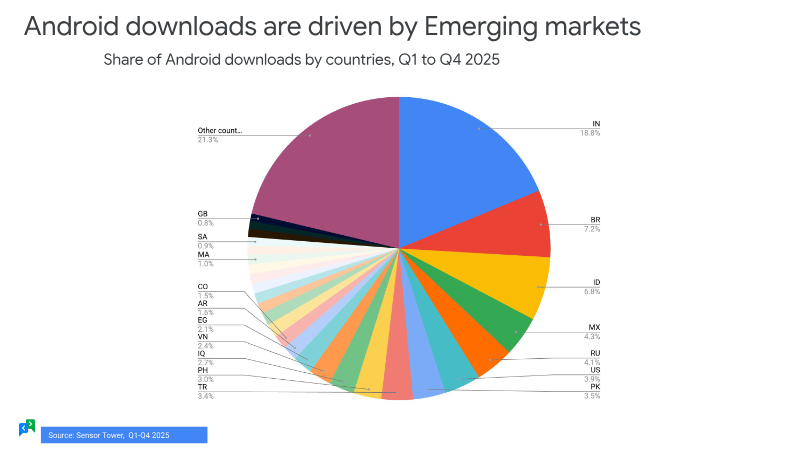
- 04India is identified as the primary emerging growth frontier for the industry, fueled by rapid increases in data consumption and widespread mobile-first adoption.
- 05Strategic success is shifting toward brand equity and established intellectual property, mirroring the film industry's reliance on sequels and franchises to mitigate the financial risks of original development.
- 06The mobile gaming market is transitioning into a mature, winner-takes-all landscape where established incumbents with high player investment are increasingly difficult for new entrants to displace.
- 07The industry is consolidating toward a smaller number of large publishers who utilize deep-rooted brands to maintain dominance in a highly competitive global environment.
Ask AI about this video
Transcript
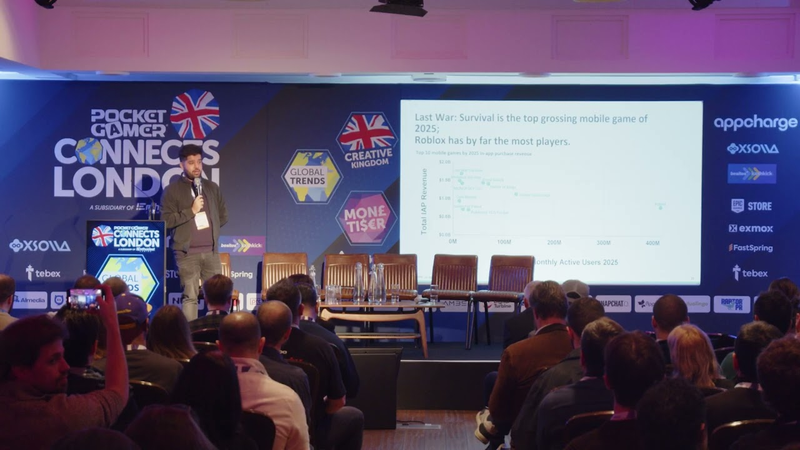
[Music] [Music] okay welcome to the global publishing track and I'm pleased to get the first speech here I've been looking into into trends of the market and I want to share with you a bit about where I think this whole thing is going next and actually I if you were here for the Finland's Got Talent session a lot of the things they were talking about there will be in this presentation shortly about myself totally on stream i'm CEO co-founder of tribe flame our claim to
fame was or has been this Benji bananas game we recently this summer crossed 100 million downloads for that and we've also sold the company to to a larger a larger game company this summer but enough about that so let's see we had earlier on we had villain from Rovio talking a bit about how large the the game business the the mobile games business is and how they they are building based on on their Angry Birds brand that is still going very very strong you see from from Nitra was talking about drawing parallels to music business Petre from seriously was all about brand building loss happening was was about working with large companies with
established brands and and sort of next games also was about working with brands and I believe this is really at the core of where we are are now and where we are going next so you've heard about music business let's go to movies it's another one of the established longer longer-term businesses that we can compare with in the movies business there are the six big ones and if you have a look at them a paramount and universal were founded in 1910 Warner Brothers Walt Disney and Columbia in the 1920s and when the Century Fox in the 1930s and those are still the big ones now one of the core arguments here now is that when we have a new medium born we first enter
into this fun creative chaos period where a lot of things are happening very very quickly people are trying to figure out how it all works then some of these early big brands are born in our industry I have put us an X as examples there the Angry Birds candy crush saga clash of clans it's a few years now since those were established they are still going strong even though they are seven to five years old we are at the start of a pretty long and comparatively stable period in our business it's my argument here a bit similar to what villain was talking about about earlier on mobile is by now the largest gaming market of them all where the bright blue
guy is there you see on revenue we have more than half the market own users on players we have more than two-thirds of the mobile yet mobile as a as a business in the West and this is restriction and I'm gonna keep making in the West Mobile is not really taken seriously yet and I don't expect it to be for a while if you see mainstream press like here the verge is talking about the 28 games that they want to play this holiday season which include one mobile game and that's from the premium side one of those sold for $5.99 good game I'm sure but business-wise they're really not part of either the revenue or or or the Mau they're so a bit about upcoming trends that are hyped
but I don't wouldn't claim it are the the next big thing in our our market now this is gonna ruffle some feathers in in the next room here a RvR I'm sorry but for our business this is not the big next big thing they are is really mostly like a gimmick but at this point we can split it out in in what you have the goggles which basically has 0 installed base for for gaming use your goggles now and for next few years and then we have the AR where you draw on top of what the camera is seeing and you know that you remember that as the feature of Pokemon go that you turned off pretty quickly if you were playing Pokemon go VR PlayStation this this summer said that they had sold a million of their their
devices oculus and vive are combined likely below a million still and the mobile VR has sold more but is probably not used that much at least I own a couple of them I never ever use them so from this we can pretty quickly figure out what is the combined daily active users of VR it's likely at less than a even a small mobile game so if not this another thing that that is coming up and I believe more in but this is a ways off it's still self-driving cars you can see even back in sixties they knew that self-driving cars were coming and of course people want to play games in them once they come so this one is a bit further on but it will
open up a massive new new opportunity for us because there will be wealthy people bored sitting alone in their cars mostly mostly not actually for people but just one person and that's coming but let's look a bit more detail on on the the trends in in the mobile core market first off we need to split out the top downloads from the top grossing these are very very different markets on the top download side you have these super approachable games you are looking at getting as much downloads as possible you want to make money mainly through ads you are targeting teens as customers because they are still the ones putting
the most time into this which means that you're doing like reaction games approachable games a lot of fiddling reaction stuff and you're getting them up by cross promotion or frankly luck on the other side we have the these OAP driven games they are like everlasting games you have content for years and years and years customers are usually in the West again adults which means that reaction times shouldn't be very important and these are more like engineered solutions you are trying to build a game where lifetime value is larger than cost of install so you can you can run like market engineering and build yourself without the lock or cross-promotion thingy I had monetization is a bit less talked about still than I ap monetization
according to figures from app Annie it's almost at half the market it's still often the IP driven games that then use part of their money to advertise in the ad driven games and then there might be a trickle-down effect that one a driven game uses part of their money to advertise in another a driven game so it like shows up multiple times but all as a complete sum it's just about half the market the top grossing I'm sure most of you guys know this by now but the the overall of what the top grossing had had in common they should be everlasting there should be thousands of hours of gameplay in there you shouldn't ever run out of gameplay they should have a very very high limit for for for spending thousands of dollars social features
we've already heard this morning about the importance of player versus player and community building the more social features you can jam in there really the better and we've also heard a lot about event-driven gameplay how it really really helps improve your your retention and monetization of the players now one difference that we have in our world compared to the traditional like console game worlds if I have an experience that ends a movie or a console game and I like a certain genre I can consume several of them I played this game and then I play that other game if on the other hand I have a free-to-play game that I've been grinding for months and years for my progress and to build up a
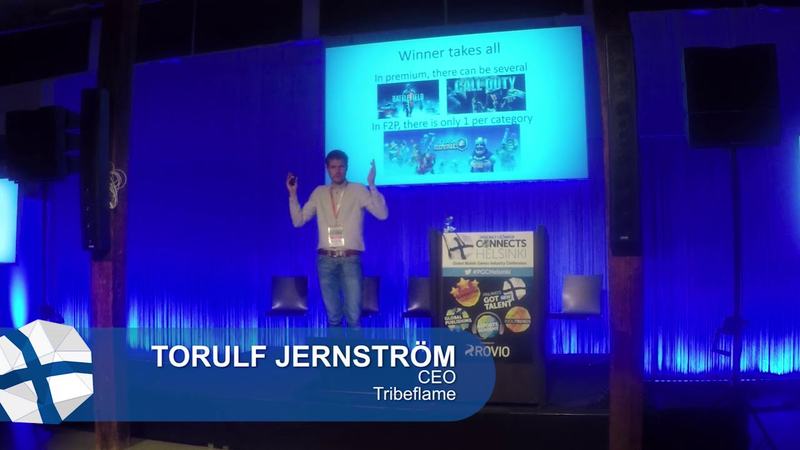
certain position I am NOT going to transfer over very easily to grind months and in a second one which leads to a situation where really if one game has a category it owns that one and so far we haven't seen really real like anyone else doing life Royale or anyone else doing Pokemon go as examples now we have to design the game for the payers and this has some some consequences people want to pay for things they like people like things that they are good at therefore the payers have to be good at the games and that means we will have a
split between different markets because the paying customers seem to be different in where in the West we already heard from the other guys we have grown-ups with credit cards or customers in the east in China there seems to be a lot more of these stereotypical young male adult gamers on mobile so if you think about it you have 20 minutes to play something how are you going to spend it if you have that much uninterrupted time you're quite likely to be at home if you are a core gamer in the West you will have a game console or a high-end PC at home and you're going to be playing on that one well that's not necessarily true in Asia so as you can see here is some data on on premium PC games and premium console games and they're really a European North American phenomenon as
you can see the rest of the world don't really care about these genres so the players that we can we can see on these the players that do not have game consoles at home we have Asian PC banks over there like the culture is you go to an internet cafe and you sit there to play League of Legends and you have over here some casino gamers he'll an older demographic in the West and this effects gameplay for instance if we have a look at section lengths I like this Nick level saying come for a minute and stay for an hour we can look at the length of a game session if we should split out the minimum length and the
maximum length and if we look at the West the American market there are only five games that demand a play section longer than five minutes and three of them are casino games because as you remember those guys do not have game consoles at home so it's convenient for them to play on on the mobile even if they want a longer session in the West this is how you make money a Wall Street trader and oil Sheikh got into a fight who won you guys did you want the money of those guys while in the East in China here we have at least the top PC games and just about all of them have mobile conversions this isn't what we are seeing in the West so
60% of the top 10 grossing games in China or ports of PC games so we have either the same or different customers on PC and on mobile and this 60% doesn't even count actually honor of kings which is made by 10 cent who owns League of Legends and is very very heavily influenced by them and there number one so we see the split and to rub it in a bit more the top lists are going to be split depending on on on region the top 100 grossing games in China have only six non Chinese games on there two of them are supercell games and as you know supercell is majority owned by by ten cents so I don't know even even they might count as having a home home field advantage and then we have to play
Rick's games hearthstone and NBA game by DNA there are more on the the top downloads list there are 30 there that aren't aren't made in China India is likely to be a next big thing you can see how they have on the left there how the Google Play downloads are now more than in the USA pop right how data prices are coming down really really quickly like having in a year and as a result data consumption has gone up by a factor of nine times in a year so this is a market that's really breaking right now to sum up we have regional we have west have different customers for mobile and PC games China has the same customers for mobile and PC games which also makes it a bit difficult to get in there and India is likely going for mobile first branding that the guys were
talking so much about earlier this this day we see the long-term value of brands when you look at the top grossing movie of the last 17 years 16 of them were sequels or based on some best-selling book usually both avatar was the one that wasn't 15 of the last 17 years the top grossing premium PC game was a sequel if you look at Nintendo launching the switch you have Mario Zelda Sony these are the first games that they are bringing on there and I thought the Namco Museum was was actually rather ironic already so what does this mean for publishing there is likely to be fewer publishers we are moving towards
this big six like the movie industry they the number of serious publishers are going down but also it's getting more and more expensive to build a serious attempt at the top grossing mobile game which means that the the supply of games is also going down I think we will end up at this point we have markets that are pretty regional we have very very long-term brands there are quite quite few publishers that rule the market and I think like console games and movies it will end up where the publishers are funding development from a much earlier stage than than currently in in the mobile games we had are going to have an interesting tug-of-war between on the one hand we
have the winner-takes-all market that I told you about in in free-to-play and on the other hand the value of the brands so how do we we can both need to be creative because we cannot copy and creativity is a high risk brand extensions are likely the result of this like you have seen with clash clash of clans going to clash royale and candy crush saga candy crush soda saga track candy candy crush what's the third one anyway that is it I am out of time one question quick if you if you have it thank you [Applause] [Music]
[Music]
Summary
The mobile gaming industry is transitioning from a period of rapid, creative chaos into a phase of long-term stability characterized by market consolidation and the dominance of established brands. This evolution mirrors the historical trajectory of the film industry, where a small number of major studios eventually secured market control. As the mobile sector matures, the industry is increasingly defined by a winner-takes-all dynamic, where individual games effectively own specific categories, making it difficult for new entrants to displace incumbents that have already secured significant player investment and progress.
Market analysis reveals a stark divide between top-downloaded games, which rely on ad-based monetization and broad appeal, and top-grossing games, which utilize in-app purchases and require everlasting content to sustain high lifetime value. Regional differences are profound: in Western markets, mobile gaming often serves a different demographic than console or PC gaming, whereas in China, the top-grossing mobile titles are frequently ports or adaptations of PC games. Furthermore, the Western market is characterized by short, convenient play sessions, while the Chinese market exhibits a high degree of overlap between mobile and PC player bases.
Strategic success in this environment increasingly depends on brand equity and long-term development funding. Data indicates that the most successful entertainment products—whether movies or premium PC games—are predominantly sequels or established intellectual properties. Consequently, mobile publishers are moving toward a model of early-stage funding and brand extensions, such as iterative sequels, to mitigate the high risks associated with original creative development. Emerging markets, particularly India, represent the next major growth frontier, driven by rapidly increasing data consumption and mobile-first adoption. Ultimately, the industry is trending toward fewer, larger publishers who leverage deep-rooted brands to maintain dominance in a highly competitive, regionalized global landscape.












Comments