Deconstructor of Fun
Media44 documents
Leading mobile gaming analysis publication by Michail Katkoff. Publishes weekly deep deconstructions of mobile games, market trends, and monetization analysis.
Documents

Article
Mark Pincus: Why Your Favourite Ideas Are Almost Always Wrong
This analysis explores the leadership philosophy of Zynga founder Mark Pincus, focusing on his approach to product management, organizational culture, and the inherent risks of founder-led companies. The central thesis posits that successful product development requires an uncompromising, authoritative leadership style that prioritizes execution over consensus, investor relations, or traditional corporate culture. Pincus argues that founders must act as "democratic dictators" who foster open debate before a decision is made, followed by absolute, unified commitment to execution.
Key findings emphasize that while a founder’s instincts regarding market needs are often accurate, their specific product ideas are frequently flawed. To mitigate this, Pincus advocates for a "Proven, Better, New" framework, which encourages teams to iterate on established mechanics while reserving limited resources for innovation. Furthermore, the analysis highlights the necessity of maintaining focus on product development rather than catering to investors, asserting that time spent managing external stakeholders is a misallocation of a company’s most valuable resources.
The scope of these insights spans three decades of experience in the mobile and social gaming industry, specifically reflecting on the growth and operational challenges faced by Zynga. The methodology relies on qualitative data derived from a long-form interview and the principles outlined in Pincus’s book, Life at the Speed of Play. The findings conclude that the "force" of a founder’s personality is a non-negotiable element of high-growth startups. Ultimately, the analysis suggests that success does not change a founder’s nature but rather grants them the autonomy to operate without the constraints of traditional corporate governance, allowing them to pursue their vision at full volume.
- Founders should operate as 'democratic dictators' who encourage passionate debate before a decision, but demand total commitment and loyalty to the chosen path once the CEO makes a final call.
- To avoid the 'B-plus' trap of having the right instinct but the wrong idea, founders should allocate 80% of their time observing successful mechanics in the wild and only 20% on their own original concepts.
- Culture is not a set of abstract values, but rather the specific actions and incentives required to ensure teams execute effectively when the founder is not in the room.
- Founders should prioritize product execution over investor relations, as time spent managing investors is a misallocation of the company's scarcest resource.
- In 2012, Zynga had a handshake deal to acquire Supercell for $400 million, but the board blocked the move; Supercell generated $500 million in net profit the following year.
Deconstructor of FunSept 2026
Article
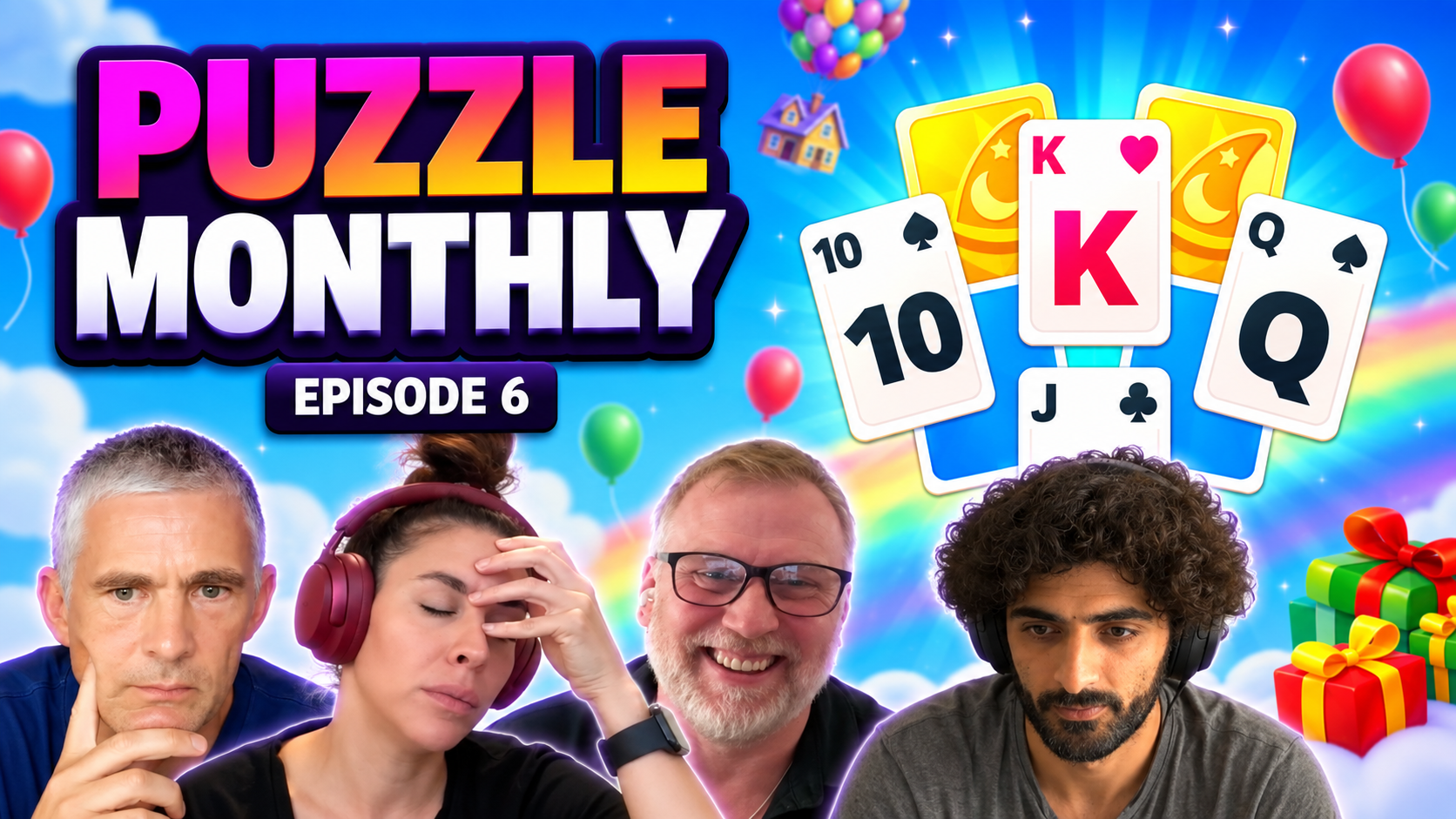
Disney Solitaire's Big Win and Playtika's Earn-Out Trap
Playtika faces a significant financial paradox where the success of its latest title, Disney Solitaire, has exacerbated the company's underlying fiscal instability. While the game generated $142 million in the second quarter of 2026, the acquisition of its developer, SuperPlay, for $700 million plus a substantial earn-out of up to $1.25 billion, has placed immense pressure on Playtika’s liquidity. Despite the game's strong performance, Playtika reported a $206 million GAAP loss for the year, as cash reserves dropped from $820 million to $438 million within six months.
The core of this issue lies in a heavy debt burden inherited from a 2016 leveraged buyout. With $2.41 billion in debt due for refinancing between 2028 and 2029, and annual servicing costs reaching approximately $200 million, the company struggles to maintain profitability. The success of Disney Solitaire—which utilizes a refined economy and high-tempo live operations—has made the studio an attractive acquisition target for entities like Tencent, valued between $1 billion and $1.5 billion.
Ultimately, the company’s ownership faces a strategic dilemma: retain the high-performing SuperPlay studio at the cost of draining cash reserves needed for debt obligations, or divest the asset to stabilize the balance sheet. The situation highlights the long-term consequences of aggressive debt-loading, as the company is now forced to consider selling its primary growth engine to address structural financial liabilities.
- Playtika faces a critical financial strain due to $2.41 billion in debt, with significant refinancing obligations due in 2028 and 2029 against a market capitalization of under $1 billion.
- The acquisition of studio SuperPlay for $700 million plus an earn-out of up to $1.25 billion has created a 'trap' where the success of their hit game, Disney Solitaire, is causing GAAP losses and rapid cash depletion.
- Disney Solitaire generated $142 million in Q2 2026, yet Playtika’s cash reserves dropped from $820 million to $438 million in six months as the company struggles to balance debt servicing costs of approximately $200 million annually.
- SuperPlay is reportedly a $1–1.5 billion acquisition target for Tencent, presenting Playtika’s owners with a dilemma: sell their only major growth engine to fix the balance sheet or continue funding earn-outs that drain liquidity.
- Disney Solitaire’s success is attributed to a more player-friendly economy than previous genre leaders, utilizing a slower difficulty ramp and a high-tempo live ops schedule that features nearly 60% more event instances than Playtika’s Grand Harvest.
+2
Deconstructor of FunSept 2026
Article
From Zero Offers To Record Revenue
The mobile gaming studio FunCraft serves as a case study for the risks of premature exit strategies and the benefits of operational focus. After a failed 2025 sale process that yielded zero offers due to unrealistic price expectations and poor execution, the company shifted its internal culture from pursuing an exit to prioritizing sustainable growth and profitability. This pivot successfully transformed the business, which now operates on a $50 million annual revenue run rate with a lean team of fifteen employees.
The failed sale process highlighted critical errors in corporate strategy, specifically the dangers of broad buyer outreach and the negative impact of being perceived as a founder who has priced their company out of the market. The resulting rejection created a period of professional and emotional strain, but it ultimately forced the leadership to abandon speculative marketing campaigns in favor of rigorous, data-driven performance metrics. FunCraft currently utilizes a proprietary AI-powered engine to maintain a high-velocity development cycle, launching sixteen games annually while maintaining strict return-on-ad-spend criteria from the first install.
The company’s current success is built on a model of high-efficiency ad monetization, with 80% of revenue derived from advertising and a global ad ARPDAU of $0.60. While the business model relies heavily on consistent user acquisition, the studio has demonstrated significant resilience by growing 50% year-over-year in a challenging market. The primary takeaway for industry operators is that the most effective way to increase a company’s long-term value is to focus on operational discipline and profitability rather than attempting to engineer an exit. By prioritizing sustainable compounding over valuation-focused decision-making, the studio has successfully transitioned from a struggling startup to a profitable, scaling entity.
- After a failed 2025 sales process that resulted in zero offers, FunCraft pivoted to focus on sustainable growth and is now on a $50 million annual run rate with 50% year-over-year growth.
- FunCraft operates with a lean team of fifteen people, generating over $3 million in revenue per head while maintaining profitability.
- The company’s revenue mix is 80% advertising-driven, with a global ad ARPDAU of $0.60, and 20% from in-app purchases.
- FunCraft employs a rigorous 'kill criteria' for game development, requiring immediate ROAS from the first purchased install and utilizing a rapid, lean testing process for new titles.
- Failed sale processes carry significant hidden costs, including the 'on ice' status of the company with potential buyers and the severe emotional toll on founders who view the business as an extension of themselves.
+1
Deconstructor of FunSept 2026

Article
Just Dessert vs. Gossip Harbor: Who Merged It Better?
The mobile gaming industry has seen the Merge 2 genre ascend to become the second highest-grossing category within casual gaming, characterized by consistent year-over-year growth. This analysis examines the competitive landscape of the genre by comparing the market leader, Gossip Harbor, with a notable new entrant, Just Desserts, developed by Century Games. The core thesis posits that the genre’s success relies on a highly effective loop connecting board-based item merging with narrative-driven meta-progression, creating a "sticky" experience that leverages psychological triggers like the "one more merge" effect.
The analysis highlights that the core gameplay loop is anchored by an energy-based economy, where energy regeneration serves as a primary retention mechanism. Monetization is driven by a "slippery slope" approach, where small, recurring purchases of energy and producer cooldown skips are normalized into the player's daily routine. Both titles utilize similar mechanics, including locked tiles for board exploration, rave review features for rewarding abundance, and sophisticated live operations such as seasonal passes and card-collecting events to maintain long-term engagement.
The study concludes that while Gossip Harbor currently dominates the market, Just Desserts represents a significant evolution in the genre by adopting and refining established industry standards. The success of these games is attributed to their ability to blend tactical board management with emotional narrative hooks, effectively turning simple mechanics into a scalable and highly profitable business model. As major casual gaming franchises increasingly integrate merge mechanics into their own live operations, the genre’s influence continues to expand, signaling a broader industry shift toward these optimized, habit-forming gameplay loops.
- Merge 2 games utilize a core loop where players spend Energy (1 tap per 1 Energy) to generate items from Producers, which are then merged to fulfill orders that drive narrative progression.
- Energy economy is designed for a 3-hour and 20-minute full recharge cycle, with a 100-unit cap that creates a recurring return loop for players.
- Monetization in the genre relies on the 'foot-in-the-door' effect, using small, frequent gem purchases to lower psychological barriers and build habitual spending routines.
- Narrative integration is a primary retention driver, where characters requesting orders on the board provide emotional motivation for the player's gameplay actions.
- Producers serve as the central engagement mechanic, where upgrading them through merges fosters a sense of tactical mastery and utilizes the sunk-cost effect to increase player investment.
+3
Deconstructor of FunSept 2026
Article
Why None of Us Saw Cyberpunk Coming Apart
The analysis examines the catastrophic 2020 launch of Cyberpunk 2077, identifying the primary cause as a failure of organizational visibility rather than external investor pressure. Through a discussion with CD PROJEKT RED’s joint CEO, Michal Nowakowski, the narrative clarifies that the shift to remote work during the pandemic fragmented the development process. Because the studio relied on a waterfall pipeline that required physical proximity for senior oversight, the transition to remote work left teams working in silos, preventing anyone from identifying critical integration failures before the product reached the market.
Key findings highlight that the studio’s reliance on pattern matching—specifically comparing the project to the launch of The Witcher 3—led to a gross underestimation of technical debt. The company’s subsequent recovery was not a result of a strategic pivot, but rather a commitment to fixing a fundamentally sound game design that retained significant market demand. This recovery was funded by the 13 million units sold at launch, demonstrating that tenacity is only a viable business strategy when a project possesses underlying commercial value.
The analysis also explores the risks of the studio’s current expansion into transmedia and multi-franchise development. While the success of the Edgerunners series proved the value of maintaining creative control, the studio now faces the challenge of building a new intellectual property, Project Hadar, from scratch. This represents a significant shift from their previous success, which relied on adapting existing, established worlds. Ultimately, the studio’s long-term viability depends on its ability to manage a larger portfolio of projects without losing the institutional discipline and refusal to feel safe that have defined its culture.
- The disastrous launch of Cyberpunk 2077 was primarily caused by a failure of integration and visibility during remote work, rather than investor pressure or crunch, as the studio's waterfall pipeline relied on physical proximity to manage complex open-world development.
- CD PROJEKT RED successfully rehabilitated Cyberpunk 2077 by committing to four years of patches and a major expansion, ultimately selling over 30 million copies and proving that a botched launch is salvageable only if there is genuine market demand for the core product.
- The studio's transmedia strategy distinguishes between 'windfall' projects like Netflix’s The Witcher, where they lacked creative control and suffered brand damage from poor quality, and 'strategic' projects like Edgerunners, which they fully financed and controlled to drive game sales.
- To prevent future integration failures, the studio has shifted to binary milestone gating—where 90% completion is treated as a failure—and now mandates development across all platforms simultaneously rather than scaling down from PC.
- The Polish game development ecosystem thrived largely due to a unique domestic public market that allowed studios to capitalize projects without Western publisher interference, though this funding route is now largely closed to new entrants.
+3
Deconstructor of FunSept 2026
Article
Questions Istanbul Founders Stopped Asking
The Turkish mobile gaming ecosystem has achieved significant global success by adhering to a proven, repeatable model, yet it now faces a critical juncture regarding future innovation. The industry’s trajectory was largely defined by the influence of Sidar Şahin and the success of Peak Games, which established a blueprint for casual puzzle games that continues to dominate the market. This ecosystem is characterized by a high degree of imitation, where successful mechanics are rapidly replicated by a concentrated pool of world-class talent, creating a competitive environment that functions as a "knife fight" for resources and market share.
Government policy has played a pivotal role in sustaining this model, with extensive incentive schemes that subsidize user acquisition, platform commissions, and operational costs. These subsidies effectively lower the barrier to entry and reduce the risk of experimentation, encouraging studios to focus on proven, high-performing genres. However, this reliance on established formulas has led to a narrow focus on casual mobile titles, raising questions about whether the country’s top-tier talent is being optimally allocated compared to emerging global sectors like robotics or artificial intelligence.
Analysis suggests that while the current system is highly efficient at generating returns, it may be stifling broader creative ambition. Investors and industry observers note that the obsession with short-term payback windows often obscures the long-term value of user cohorts. Moving forward, the sustainability of the Turkish gaming sector depends on whether founders can transition from replicating existing successes to pioneering new categories. While the current "proof of concept" has successfully put Istanbul on the global map, the next phase of growth likely requires a departure from the singular focus on puzzle games toward more diverse and innovative technological ventures.
- The Turkish gaming ecosystem is heavily reinforced by government incentives that subsidize up to 70% of overseas user acquisition, 50% of platform commission costs, and significant portions of cloud, analytics, and headcount expenses.
- The success of the Turkish gaming sector is largely attributed to the 'proof of concept' established by Sidar Şahin and Peak Games, which was acquired by Zynga for $1.8 billion in 2020.
- Turkish studios predominantly focus on casual puzzle games because the local talent pool, capital availability, and incentive structures are optimized for that specific, proven business model.
- Optimizing for short-term payback windows is a survival-oriented strategy that often leads to under-spending on high-value users; successful scaling requires securing non-dilutive UA financing to support long-term cohort value.
- Mobile game scaling is now fundamentally dependent on the AppLovin ecosystem, where the algorithm prioritizes clean execution and originality over traditional first-mover advantages.
+1
Deconstructor of FunSept 2026
Article
Mattel Wants Studios to Pitch the Uncomfortable
Mattel’s digital strategy centers on a shift toward high-risk, high-reward creative partnerships, moving away from the industry-standard preference for safe, predictable licensed titles. The primary thesis is that successful licensing deals require studios to pitch concepts that challenge the brand’s status quo, provided those concepts are backed by polished execution and a clear understanding of specific audience segments. Currently, only a small fraction of the company's fifty-plus active development partners are effectively pushing these creative boundaries.
Key findings indicate that Mattel prioritizes "uncomfortable" pitches that demonstrate cultural relevance, citing the success of the Barbie film as a benchmark for creative risk-taking. The company emphasizes that intellectual property does not replace the need for a strong core gameplay loop; rather, it serves to lower user acquisition costs and improve conversion. Furthermore, Mattel has evolved its operational model to include self-publishing, acquisitions, and streamlined approval processes, such as the Roblox License Manager, which allows for faster creative velocity by setting guardrails rather than requiring per-asset sign-offs.
The scope of these insights covers the global mobile and digital gaming industry as of August 2026. The analysis is derived from expert interviews with Mattel’s leadership, specifically focusing on the company's portfolio of over eight hundred brands, including Hot Wheels, Barbie, and Uno. The findings suggest that studios often miscalculate by focusing on demographics rather than LTV curves and by failing to identify whether they are targeting specific cohorts, such as casual players versus adult collectors. Ultimately, the most significant opportunities for studios lie in leveraging dormant intellectual property, which offers lower entry barriers and greater creative flexibility compared to marquee franchises.
- Mattel is actively seeking high-risk, 'uncomfortable' creative pitches for its portfolio of over 800 brands, moving away from safe, predictable licensed titles.
- The company views intellectual property as a tool to lower user acquisition costs and improve conversion, provided it is supported by a strong core gameplay loop.
- Mattel has streamlined its operational model by implementing tools like the Roblox License Manager, which replaces per-asset sign-offs with pre-set guardrails to increase creative velocity.
- Studios frequently miscalculate by prioritizing broad demographics over LTV curves and failing to distinguish between specific cohorts like casual players and adult collectors.
- The greatest opportunities for development partners lie in leveraging Mattel's dormant intellectual property, which offers lower entry barriers and greater creative flexibility than marquee franchises.
+1
Deconstructor of Fun

Article
Retention in an AI Companion Game Deconstructed
AI companion games often struggle to maintain long-term engagement, typically falling short of industry benchmarks that hover around 26% for Day 1 retention and 11–13% for Day 7 retention. The core thesis of this analysis is that successful retention in the AI companion category is driven by shifting the relationship’s focus from conversation to user-led ownership and shared activity. By prioritizing mechanics that foster a sense of responsibility and history, developers can achieve significantly higher engagement, as evidenced by the mobile game Bside, which reports 60% Day 1 and 25% Day 7 retention rates.
Data indicates that conversation is frequently overvalued as a primary engagement driver. In the case of Bside, nearly half of all monthly active users never engage with the chat feature, yet they remain highly active. Instead, these users prioritize "adventure days" and other interactive tasks, which correlate with higher 7-day return rates compared to chat-heavy sessions. This suggests that while a small, dedicated cohort of "ritualists" may rely on conversation, the broader player base prefers to engage with their AI companions through shared experiences and character development.
Four key mechanics underpin this retention strategy: deep character authorship, which creates a sense of loss aversion; persistent "living" features, such as automated feeds that update while the user is away; goal-oriented adventures that provide narrative stakes; and creative tools like vlogs that integrate the companion into the user's real-world environment. Ultimately, the most effective AI companion products treat conversation as a secondary feature rather than the product's foundation. By focusing on building a persistent, authored asset that evolves through shared history, developers can create a more sustainable and engaging user experience.
- The AI companion app Bside achieved a 60% D1 and 25% D7 retention rate, significantly outperforming industry benchmarks of 26% D1 and 11–13% D7.
- Approximately 41% to 49% of monthly active users never engage with the chat feature, proving that conversation is not the primary driver of long-term retention.
- Players who engage in shared activities, such as adventures and story-writing, show a 5.4 percentage point higher 7-day return rate compared to those who primarily use the chat function.
- Retention is driven by 'presence' mechanics, such as automated character feeds that update while the user is away, which create a check-in impulse more effectively than push notifications.
- Deep character customization during onboarding acts as a loss-aversion mechanism, as players are less likely to abandon a character they have personally authored and invested in.
+3
Deconstructor of Fun
Article
6 Brutal Lessons From the First 100 Days as CEO
The primary objective of this analysis is to distill the leadership strategies of two prominent gaming industry executives, Jon Bellamy of Jagex and Alexis Bonte of Stillfront, during their initial 100 days as CEOs. The central thesis posits that the first 100 days serve as a critical, time-bound window for decisive transformation rather than a period of passive discovery. Effective leadership in this phase requires pre-formulated strategic plans, a willingness to subtract rather than add, and the courage to execute deep organizational restructuring immediately.
Key findings emphasize that successful CEOs enter their roles with a clear, pre-existing vision. Rather than launching new initiatives, both executives focused on streamlining operations: Jagex divested non-core studios to focus exclusively on RuneScape, while Stillfront reduced its portfolio from 75 games to seven core franchises. The analysis highlights that decisive, large-scale personnel changes are more effective than incremental adjustments, framing the organization as a professional sports team where performance is paramount. Furthermore, the executives noted that while deep industry knowledge is a significant asset, it must be leveraged to make difficult, often unpopular, decisions regarding culture and personnel.
The scope of this insight covers the global gaming sector, specifically focusing on the transition of leadership at major entities in 2025. The methodology relies on qualitative, first-hand accounts and interviews conducted by industry experts, serving as a comparative study of executive management styles. The findings conclude that the primary challenge for a new CEO is the psychological transition from a functional expert to a strategic leader who manages sentiment and stakeholder expectations. Ultimately, the first 100 days represent the only period where an organization expects and permits radical change, making it the most cost-effective time to align the company with a new strategic direction.
- The first 100 days of a CEO's tenure should be used for visible execution of a pre-formulated plan rather than data discovery, as the window for change closes rapidly.
- Effective leadership in the first 100 days requires subtraction over addition; for example, Jagex CEO Jon Bellamy divested two studios and focused exclusively on RuneScape, leading to growth four to five times faster than in any of the previous ten years.
- Stillfront CEO Alexis Bonte reduced the company's portfolio from 75 games across 21 studios down to seven core franchises to improve strategic focus.
- When restructuring teams, leaders should execute one deep, decisive cut rather than multiple smaller ones to avoid long-term morale degradation.
- CEOs must maintain a single, consistent narrative for both the board and internal teams, as managing conflicting stories is unsustainable and indicates strategic misalignment.
Deconstructor of Fun

Article
WEBTOON Is Bigger Than Monopoly Go: Inside a New Game Marketing Channel
WEBTOON serves as an underutilized, high-potential marketing channel for the gaming industry, offering access to a massive, highly engaged audience that overlaps significantly with gaming demographics. With 156.9 million monthly global readers, 69% of whom are gamers, the platform provides a unique opportunity for publishers to reach players across mobile, PC, and console. In Tier 1 Western markets, the platform’s mobile app reach exceeds that of major entertainment services and popular mobile games, positioning it as a viable alternative to saturated user acquisition channels.
The platform’s audience is predominantly Gen Z, with 90% of users under the age of 34, and exhibits a diverse interest in gaming genres ranging from shooters and battle royale to open-world and simulation titles. Campaigns executed on the platform, such as those for Visions of Mana and Dragon Quest VII Reimagined, demonstrate that branded content—including epilogues and mini-adventures—can outperform traditional media benchmarks in impressions and click-through rates. These collaborations benefit from the authentic enthusiasm of creators who are often fans of the games they promote, allowing for creative assets that resonate more effectively than standard advertisements.
Beyond brand awareness, the platform offers performance-based marketing solutions. The "Coin Quest" feature drives bottom-of-funnel conversions, such as verified Steam wishlist additions, at a scale of approximately 10,000 per week. By providing both upper-funnel brand storytelling and lower-funnel performance metrics, the platform offers a comprehensive suite for game marketers. With campaign execution timelines ranging from 1.5 to 5 months, it provides a faster and more integrated alternative to traditional marketing efforts, making it a strategic consideration for studios seeking to reach new, relevant audiences.
- WEBTOON reaches 156.9 million global monthly readers, 69% of whom are gamers, providing a massive, untapped audience for game marketing across mobile, PC, and console.
- In Tier 1 Western markets as of July 2026, the WEBTOON mobile app reached 21.2 million readers, outperforming platforms like Paramount+, Candy Crush, and Monopoly Go! in reach.
- The platform offers a performance-based 'Coin Quest' product that generates approximately 10,000 verified Steam wishlist adds per week, with a low cancellation rate of under 10%.
- Branded campaigns on the platform, such as those run by Square Enix for 'Visions of Mana' and 'Dragon Quest VII Reimagined,' have demonstrated high engagement, with one campaign achieving a 124% page view lift and click-through rates 184% above benchmarks.
- Campaign execution is faster than typical industry standards, with branded epilogues requiring only 1 to 1.5 months and more complex branded webtoons taking 3 to 4 months to produce.
+2
Deconstructor of FunAug 2026
Article
The Man Behind Most Gaming Deals
The gaming industry’s merger and acquisition landscape is defined by long-term relationship building rather than purely transactional interactions. Affan Butt, co-founder of the investment bank Aream & Co., emphasizes that successful deals are often the result of years of cultivation, where trust and rapport are established well before a formal sale process begins. Since its inception in 2019, Aream & Co. has advised on over 110 gaming transactions totaling $40 billion, representing more than half of all sell-side deals exceeding $100 million in the sector over the last five years.
The methodology for navigating these deals centers on rigorous preparation and psychological management. Founders are cautioned against viewing inbound interest from corporate development teams as automatic validation, as these inquiries are often routine. Furthermore, the current market environment features a shrinking pool of acquirers due to geopolitical constraints and the consolidation of previous buyers. Consequently, aggressive bidding wars can backfire, damaging a founder’s reputation and trust within a tight-knit industry. Maintaining transparency and avoiding sudden shifts in performance projections during due diligence are critical to preventing deal collapse.
Strategic advice for founders includes the judicious use of secondary share sales to provide liquidity without sacrificing long-term commitment, a practice that varies in cultural acceptance across different geographic regions. While earnouts can serve as effective alignment tools, they frequently become traps when poorly structured or when founders lose control over the variables—such as launch costs or engine changes—that dictate their payouts. Ultimately, the most significant risk for founders is not a failed deal, but a missed opportunity, necessitating a proactive approach to understanding the evolving buyer landscape, which now includes sovereign wealth funds, private equity, and specialized strategic investors.
- Affan Butt’s firm, Aream & Co., has facilitated over 110 transactions totaling $40 billion in value over seven years, representing more than half of all gaming sell-side deals exceeding $100 million in the last five years.
- Successful M&A outcomes are often rooted in long-term relationship building that begins years before a formal deal process, rather than transactional outreach.
- The gaming M&A landscape has consolidated significantly, with many former major buyers acquired themselves, leaving a limited pool of acquirers that primarily consists of large public strategics like Savvy, private strategics like Tencent, and private equity firms.
- Founders frequently jeopardize deals during due diligence by failing to maintain consistent performance projections or by attempting to run aggressive, public bidding wars that erode trust with potential buyers.
- Earnout structures often fail due to poor alignment, such as EBITDA-based targets in final years that discourage founders from investing in new title launches due to the associated costs.
+2
Deconstructor of FunAug 2026
Article
The Man Who Advises on Gaming’s Biggest Deals
The provided text examines the strategic landscape of gaming mergers and acquisitions through the perspective of Affan Butt, co-founder of the investment bank Aream & Co. The primary thesis emphasizes that successful M&A outcomes are rooted in long-term relationship building rather than purely transactional interactions. By positioning itself as a founder-centric advisor, the firm has facilitated over 110 transactions totaling $40 billion in value over a seven-year period, representing more than half of all sell-side gaming deals exceeding $100 million during the last five years.
Key findings highlight that the formal M&A process, typically spanning six months, is merely the final stage of a much longer engagement. Preparation is identified as the critical factor in deal success, as demonstrated by instances where poor communication or shifting projections during due diligence led to failed negotiations. Furthermore, the analysis notes a significant contraction in the buyer universe, driven by geopolitical constraints and the consolidation of previous acquirers. This environment makes the role of an advisor essential for navigating complex legal machinery, such as earnouts and liability caps, which often overwhelm founders during the final stages of a sale.
The scope of this analysis covers the global gaming industry, with specific observations on regional differences in secondary share sales, where Turkish founders may view such moves as a lack of commitment, while Israeli founders often treat them as standard practice. The methodology relies on expert insights derived from years of direct participation in high-stakes negotiations and a deep understanding of the psychological and structural pressures facing studio founders. Ultimately, the analysis concludes that while the current market for exits is challenging, the most resilient studios are those built with a long-term vision rather than those optimized solely for a quick acquisition.
- Aream & Co, founded by Affan Butt and Kartik Prabhakara in 2019, has managed over 110 transactions totaling $40 billion in value, representing more than half of all gaming M&A deals exceeding $100 million over the last five years.
- Successful M&A outcomes are rooted in long-term relationship building that begins years before a formal sale process, as evidenced by early-stage advisory work with companies like Supercell and Peak.
- Founders often jeopardize deals by failing to prepare for the 'boring' legal and financial documentation, such as escrows and indemnities, which are typically negotiated during the final stages of maximum fatigue.
- The gaming M&A landscape has consolidated significantly, with many traditional buyers acquired themselves, leaving a market dominated by public strategics like Savvy, large private entities like Tencent, and private equity firms.
- Earnout structures frequently fail due to poor alignment, such as measuring founders on EBITDA in final years when post-acquisition operational changes—like new game launches—are controlled by the buyer.
+1
Deconstructor of Fun