Report29 pages
Esports Trends Report 2025
The 2025 Esports Trends Report provides a comprehensive analysis of the global esports landscape, focusing on viewership patterns, platform consolidation, and the evolving role of creator-led content. Tracking nearly 2,000 events across 78 titles, the data reveals a total of 2.7 billion hours watched. The industry remains highly concentrated, with League of Legends and Counter-Strike alone accounting for nearly 45% of total viewership. While Twitch and YouTube Gaming dominate the market with a combined 84.1% share, the report highlights the increasing significance of mobile esports, which, despite lower total hours watched, achieves higher average viewership per tournament than non-mobile counterparts.
A primary finding is the shift toward decentralized viewership, as co-streaming now accounts for 51.2% of all esports hours watched. This trend underscores the importance of linguistic accessibility and the influence of high-profile creators in driving engagement. Furthermore, the report identifies a growing synergy between brands and competitive gaming; tournaments headlined by brands generated 29.2% of total hours watched. Endemic brands like BLAST and StarLadder continue to lead in volume, but non-endemic entities, particularly in the betting sector, are increasingly capturing market share, suggesting significant untapped potential for diverse industries to engage with gaming audiences.
Methodologically, the analysis relies on granular, real-time tracking of Premier, Major, and Minor tournaments, excluding non-esports gaming content such as speedruns or showcases. By utilizing advanced metrics—including chat sentiment analysis, logo recognition, and match-by-match breakdowns—the report demonstrates how organizers and publishers can now achieve deeper insights into fan behavior. The findings conclude that the esports ecosystem is moving toward a more sophisticated, data-driven model where creator partnerships and regional league structures, particularly in Southeast Asia and South Korea, serve as the primary engines for sustained growth and audience retention.
- Co-streaming has become the dominant viewership model, accounting for 51.2% of all esports hours watched and highlighting the critical role of creator-led content.
- The esports market remains highly concentrated, with League of Legends and Counter-Strike generating nearly 45% of the total 2.7 billion hours watched across 2,000 tracked events.
- Twitch and YouTube Gaming maintain a combined 84.1% market share of total viewership, though mobile esports tournaments are achieving higher average viewership per event than non-mobile titles.
- Brand-headlined tournaments now generate 29.2% of total hours watched, with non-endemic companies in the betting sector increasingly capturing market share.
- Future industry growth is increasingly dependent on data-driven fan engagement strategies and regional league structures, specifically within Southeast Asia and South Korea.
+1
Stream Hatchet
Report37 pages
Report of the German Games Industry: 2026
The German video games market solidified its status as Europe’s largest in 2025, achieving a total revenue of 9.4 billion euros. This four percent growth was primarily fueled by a 12 percent surge in hardware sales and the milestone achievement of online gaming services exceeding one billion euros in revenue. Despite these gains, the sector faces a complex transition, marked by a 13 percent decline in one-off game purchases and a slight three percent contraction in the workforce, even as the total number of industry companies grew to 956.
Domestic production remains a critical area for development, as local companies currently capture only 5.50 euros of every 100 euros spent within the German market. To address this, the industry is leveraging increased federal funding, which is set to reach 125 million euros annually by 2026, alongside new tax-based incentive proposals and infrastructure projects like the House of Games Berlin. These initiatives aim to provide the long-term planning certainty required to improve international competitiveness and foster a more robust ecosystem for developers, publishers, and academic institutions.
Beyond economic metrics, the industry is undergoing significant professionalization and cultural integration. Regulatory frameworks, such as the USK’s expanded youth protection measures, and the formal recognition of esports clubs as charitable organizations reflect a maturing sector. With the average gamer age now at 38.2 years and major events like gamescom maintaining record attendance, Germany continues to serve as a central global hub for innovation. Industry associations are further driving progress through standardized diversity initiatives and environmental sustainability programs, ensuring that the sector remains aligned with modern social and economic expectations.
- The German video games market reached 9.4 billion euros in 2025, a four percent increase driven by a 12 percent surge in hardware sales and over one billion euros in online gaming service revenue.
- Domestic production remains low, with local companies capturing only 5.50 euros of every 100 euros spent in the German market.
- Federal funding for the industry is set to reach 125 million euros annually by 2026, supplemented by proposed tax incentives and infrastructure projects like the House of Games Berlin to boost competitiveness.
- The industry faces a structural shift characterized by a 13 percent decline in one-off game purchases and a three percent contraction in the workforce, despite the total number of companies rising to 956.
- The German gaming demographic is maturing, with the average gamer age now at 38.2 years.
+1
game – Verband der deutschen Games-Branche e. V.
Report41 pages
Annual Report of the German Games Industry 2024
The German games industry reached a total revenue of 9.97 billion euros in 2023, marking a 6 percent increase driven largely by hardware sales, mobile gaming, and in-game purchases. Despite this financial expansion and a 52 percent growth in the number of development and publishing companies since 2020, the sector faces a period of cooling optimism. A challenging international economic climate, coupled with the unpredictability of federal funding, has slowed the pace of new company formations and employment growth. While Germany maintains its position as the largest games market in Europe, domestic developers are increasingly disadvantaged by a reliance on fixed-budget funding models that lack the stability of the tax credit systems utilized by international competitors.
To secure long-term competitiveness, the industry is advocating for a transition to a hybrid, tax-based funding model. Strategic priorities for 2024 include the cultivation of a specialized workforce, the integration of gaming into educational frameworks, and the expansion of digital infrastructure. These efforts are complemented by a strong commitment to social and environmental responsibility. A significant majority of companies have adopted sustainability measures, such as transitioning to green energy, while industry-led initiatives continue to promote diversity, combat toxicity, and provide professional support for esports athletes through structured talent development programs.
The industry’s cultural and economic influence remains anchored by the global success of gamescom, which continues to expand its international footprint through satellite events in Singapore and Brazil. Furthermore, the sector is prioritizing rigorous youth protection standards and the promotion of games as essential cultural and educational tools. By balancing these community-focused initiatives with a push for more consistent federal policy, the German games industry aims to solidify its status as a premier global hub for development, innovation, and esports, ensuring both economic resilience and social sustainability in an evolving digital landscape.
- The German games industry generated 9.97 billion euros in revenue in 2023, representing a 6 percent year-over-year increase driven by hardware, mobile gaming, and in-game purchases.
- While the number of development and publishing companies has grown by 52 percent since 2020, the sector is experiencing a slowdown in new company formations and employment growth due to economic instability and unpredictable federal funding.
- Industry stakeholders are advocating for a shift from fixed-budget funding to a hybrid, tax-based model to remain competitive against international rivals who benefit from more stable tax credit systems.
- Germany remains the largest games market in Europe, with its global influence bolstered by the international expansion of the gamescom event into markets like Singapore and Brazil.
- Strategic priorities for 2024 include workforce development, the integration of gaming into educational frameworks, and the improvement of digital infrastructure.
+1
game – Verband der deutschen Games-Branche e. V.

Report98 pages
La Industria del Videojuego en España: Anuario 2025
The Spanish video game industry in 2025 stands as a vital cultural and technological pillar, characterized by a maturing ecosystem that balances robust consumer engagement with complex economic and regulatory challenges. With a player base of 22.8 million individuals—spanning demographics up to 75 years of age—the sector generated 2.293 billion euros in revenue. While this represents a 3.2% decline compared to the previous year, largely attributed to a contraction in digital content spending, the market remains dominated by digital sales, which account for 61.9% of total revenue. Mobile devices lead platform preference with 18 million users, followed by consoles and PC, with an average weekly playtime of over eight hours.
Strategic growth is currently driven by international expansion, the integration of specialized academic training, and a focus on niche-oriented development. Initiatives such as the DEVIUM platform and collaborations between global publishers and local studios underscore a commitment to professionalizing the workforce and bridging the gap between emerging talent and industry requirements. Furthermore, the sector is actively navigating the ethical and legal implications of generative artificial intelligence, emphasizing the necessity of human-in-the-loop protocols to protect intellectual property and maintain the long-term capital value of creative assets.
Beyond economic metrics, the industry is prioritizing social responsibility and digital literacy. Through programs like The Good Gamer and PlayEquall, stakeholders are promoting inclusive gaming environments, accessibility, and the integration of video games into educational frameworks. As the sector faces an increasingly stringent European regulatory landscape regarding monetization and child protection, it continues to advocate for institutional support modeled after successful international frameworks, such as those in the United Kingdom and South Korea. By leveraging standardized data analytics and fostering public-private partnerships, the Spanish industry aims to solidify its position as a strategic, sustainable, and innovative contributor to the national economy.
- The Spanish video game industry generated 2.293 billion euros in 2025, a 3.2% year-over-year decline driven by a contraction in digital content spending.
- Digital sales remain the primary revenue driver, accounting for 61.9% of total market income.
- The sector serves a player base of 22.8 million people, with mobile devices being the most popular platform, reaching 18 million users.
- Average weekly playtime across the Spanish market exceeds eight hours, with a demographic reach extending up to 75 years of age.
- Industry stakeholders are prioritizing the implementation of human-in-the-loop protocols for generative AI to protect intellectual property and creative asset value.
+1
AEVI
Whitepaper23 pages
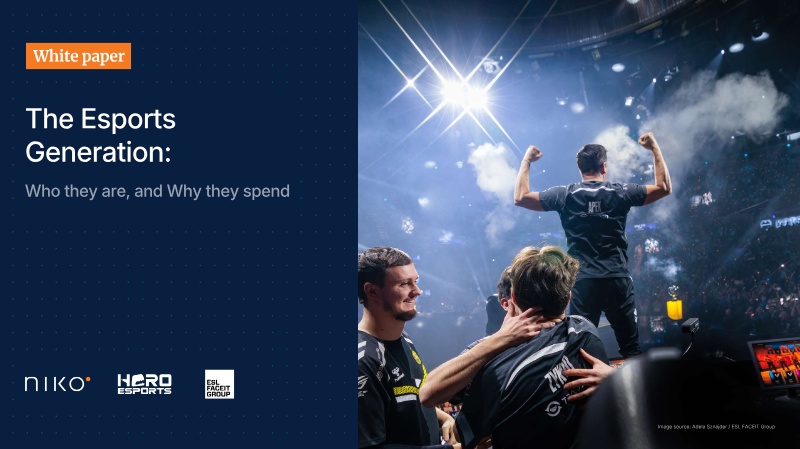
The Esports Generation: Who They Are, and Why They Spend
The global esports industry has matured into a significant economic force, reaching an estimated 640 million fans and generating $3 billion in annual revenue by 2026. This ecosystem functions as a primary cultural touchpoint for Generation Z, a digitally native demographic that views competitive gaming with the same level of emotional investment and community identity traditionally reserved for professional sports. Because this audience is currently in a formative stage of brand loyalty, the industry represents a critical environment for companies seeking to establish long-term relationships with high-value consumers.
Engagement within this space is driven less by the games themselves and more by social connectivity, the influence of professional players, and high-quality production standards. Fans demonstrate a high propensity for commercial activity, with over 76 percent having made esports-related purchases within the past year. This demographic is particularly receptive to brand integration, as 85 percent of fans actively notice esports branding, and nearly three-quarters report that these sponsorships directly influence their purchasing decisions. The effectiveness of this channel extends across diverse sectors, including electronics, fashion, and food and beverage, proving that esports serves as a highly efficient gateway for cross-industry marketing.
Ultimately, the esports landscape offers a unique opportunity for brands to leverage the intersection of gaming, music, and streaming to capture a highly engaged audience. By prioritizing authentic engagement strategies that respect the publisher-driven nature of the ecosystem, brands can successfully convert digital interest into tangible loyalty. As these fans continue to prioritize in-game spending and subscription-based services, the industry remains a proven, high-value environment for sustained commercial growth and brand association on a global scale.
- Gen Z esports fans represent a massive, high-value demographic of 400 million potential global viewers, with 76.3% of fans having made an esports-related purchase in the past year.
- The esports industry generates $3 billion in annual revenue, driven by a global audience of 640 million and high engagement from a cohort that is largely employed and well-educated.
- Esports fans are highly receptive to brand partnerships, with 47.1% of fans stating that brand collaborations with teams or athletes positively influence their purchase behavior.
- Digital items like skins and cosmetics are the most popular esports-related purchase (50%), followed by physical merchandise (40.9%) and branded peripherals (33%).
- YouTube (81.8%) and TikTok (56.6%) are the primary international broadcast platforms for esports, while China relies on domestic giants like Bilibili (48.1%) and Douyu (36.2%).
+2
Niko PartnersJul 2026
Report14 pages
Europe and Esports: High Engagement and Even Higher Potential (2020)
The study demonstrates that Europe’s esports audience reached 92 million viewers by the end of 2020, up 7.4 % from 2019, with 33 million classified as “Esports Enthusiasts” and the remaining 59 million as occasional viewers. Revenue projections for the global market hit €973.9 million in 2020 and are expected to rise to €1.6 billion by 2023, with European figures mirroring this upward trend. The research surveyed 10 175 participants aged 18‑45 across ten Western and Northern European countries, using invitation‑only questionnaires administered over one month (29 May–28 June 2020). Respondents were nationally representative of esports viewers in each country.
Key findings reveal that engagement is highest among 21‑25‑year‑olds, with Finland showing the strongest enthusiast proportion (52 % of 18‑20‑year‑olds) versus only 21 % in the UK. COVID‑19 lockdowns increased viewership in markets with stricter restrictions, such as France and Spain, where 62 % of respondents expected continued higher viewership post‑lockdown. Women constitute 32 % of the audience, largely as occasional viewers; however, 60 % of respondents believe female participation is growing. Female spenders are slightly lower than male counterparts (46 % vs 38 %) but show a higher propensity for physical merchandise, whereas men favor digital items like skins and premium passes.
The report also highlights cross‑sport fandom: 64 % of viewers own a favorite sports team, with football and tennis being the most common. Rocket League enjoys significant popularity, especially in the UK (34 % of enthusiasts). Overall, 58 % of enthusiasts spend on esports products, with Spain leading at 62 %. These insights underscore a rapidly expanding, monetizable European esports ecosystem that offers substantial opportunities for brands across both traditional and digital channels.
- Europe's esports audience reached 92 million viewers in 2020, a 7.4% increase from 2019, consisting of 33 million enthusiasts and 59 million occasional viewers.
- Global esports revenue is projected to grow from €973.9 million in 2020 to €1.6 billion by 2023, with European market trends mirroring this expansion.
- Engagement is highest among 21–25-year-olds, with Finland reporting the highest enthusiast proportion at 52% for the 18–20 age bracket, compared to 21% in the UK.
- COVID-19 lockdowns significantly boosted viewership in countries like France and Spain, with 62% of respondents in these regions expecting sustained higher engagement post-lockdown.
- Women represent 32% of the total audience and show a higher propensity for physical merchandise spending, while men favor digital items such as skins and premium passes.
+2
PayPal
Report36 pages
Asia Pacific Market Report 2025: Creating Opportunities for Video Games in Asia
Asia’s gaming landscape in 2025 is dominated by a triad of regional strengths that together shape the global market. Japan remains the cultural nucleus, with iconic franchises such as Pokémon, Final Fantasy and Monster Hunter generating $215 billion in worldwide influence and $178.8 million in IP revenue, while mobile titles like Fate/Grand Order expand overseas earnings. The country’s mature domestic market and brand prestige are offset by regulatory limits on gacha mechanics, sparse esports sponsorships, and a need to align with global live‑service standards. Success will depend on leveraging storytelling prowess and anime‑gaming synergies rather than chasing fleeting trends.
South Korea contributes a high‑speed, 5G‑driven esports ecosystem and hybrid free‑to‑play models that set industry benchmarks for competitive play and monetization. Southeast Asia, meanwhile, is the fastest‑growing mobile‑centric market, with a $14.8 billion industry powered by 680 million under‑30 residents and high mobile engagement. Monetization is shifting from ad‑heavy hypercasuals to midcore RPGs and MOBAs, supported by local payment systems such as GCash and GoPay. Esports in the region is projected to generate $350–380 million, underscoring its economic significance.
Developers face significant entry barriers across the APAC region, including localization challenges, fragmented regulations, and diverse payment ecosystems. End‑to‑end solutions that integrate local payments, provide compliance support, and enable flexible distribution are essential. Embedding community‑driven monetization—through affiliate revenue shares, in‑game branded content, and live‑stream partnerships—offers a sustainable path to growth. The overarching thesis is that deep cultural insight, sharp localization, and adaptability to mobile‑first dynamics are the keys to unlocking opportunities in Asia’s rapidly evolving gaming market.
- Southeast Asia is the region's fastest-growing mobile-centric market, currently valued at $14.8 billion and driven by a demographic of 680 million residents under the age of 30.
- Japan remains a global cultural powerhouse, with iconic franchises generating $215 billion in worldwide influence and $178.8 million in IP-specific revenue.
- Esports in Southeast Asia is a significant economic driver, with projected revenue between $350 million and $380 million.
- Market entry in the APAC region requires integrated solutions for fragmented regulations, diverse payment ecosystems like GCash and GoPay, and complex localization challenges.
- Monetization strategies in Southeast Asia are shifting away from hypercasual ad-heavy models toward midcore RPGs and MOBAs.
+2
GamesBeat
Report52 pages
Middle East & Africa Gaming Review 2025
The Middle East and Africa gaming landscape is poised for rapid expansion, with market value projected to rise from US $7.4 billion in 2024 to over US $19.4 billion by 2033, reflecting an 11 % CAGR driven largely by mobile-first adoption and a vibrant startup ecosystem. Key hubs—Saudi Arabia, UAE, Turkey, Israel, and emerging African markets—are attracting substantial investment, hosting record‑setting esports events such as Saudi Arabia’s $70 million World Cup, and positioning the region as a growing share of the global gaming economy. Mobile dominance, government‑backed visions, and esports infrastructure are reshaping competitive dynamics across the region.
Funding flows reveal a highly concentrated investment landscape dominated by global players and regional leaders. Israel leads with nearly US $1 billion raised across 146 startups, followed by Turkey’s $961 million and Nigeria’s $371 million. The UAE lags behind but is rapidly scaling, with Dubai Vision 2033 earmarking $1 billion for talent and tech to achieve a $200 billion GDP contribution by 2033. Turkey’s “unicorn factory” status is underscored by Peak Games’ $1.8 billion acquisition and Dream Games’ record $2.6 billion raise, while Saudi Arabia’s Vision 2030 funding fuels a burgeoning local ecosystem that could produce future unicorns.
Digital payment adoption and Web3 innovation are accelerating growth, particularly in the UAE where blockchain publishing and VR/Metaverse platforms such as Fenix Games and True Gamers are attracting capital. In Africa, mobile-first adoption has driven revenue to $1.8 billion in 2024, with Egypt, South Africa and Nigeria dominating startup activity. The continent’s youthful demographics and entrepreneurial momentum position it as a dynamic frontier, with African studios like Sea Monster gaining traction through capital, mentorship and infrastructure support.
Legacy hardware sales remain a key revenue driver, with story‑rich single‑player titles and console sales generating multi‑billion dollar revenues. However, the rise of subscription models, microtransactions and expansion packs is reshaping monetisation strategies across all segments. Overall, the Middle East and Africa are emerging as a mobile‑first, VC‑backed powerhouse with significant potential for global influence in gaming and esports.
- The Middle East and Africa gaming market is projected to grow from $7.4 billion in 2024 to over $19.4 billion by 2033, representing an 11% CAGR driven by mobile-first adoption.
- Investment is highly concentrated, with Israel leading at nearly $1 billion raised across 146 startups, followed by Turkey at $961 million and Nigeria at $371 million.
- Turkey has established itself as a 'unicorn factory' through major deals, including Peak Games’ $1.8 billion acquisition and Dream Games’ $2.6 billion capital raise.
- The UAE is aggressively scaling its gaming sector via the Dubai Vision 2033 initiative, which earmarks $1 billion for talent and technology to boost GDP contribution.
- Africa’s gaming revenue reached $1.8 billion in 2024, with Egypt, South Africa, and Nigeria serving as the primary hubs for startup activity and entrepreneurial momentum.
+3
Lucidity Insights
Report15 pages
Vietnam Domestic Gaming Industry Report: 2025
The Vietnamese mobile gaming market represents a significant growth sector in Southeast Asia, reaching a valuation of approximately $825 million in 2025. With an estimated 54 to 58.5 million mobile gamers and a year-on-year revenue growth rate of 9.16%, the market is characterized by high engagement, with users averaging 2.5 hours of daily gameplay. The industry is supported by a robust digital infrastructure, serving 79.8 million internet users, and is projected to exceed $1 billion in annual revenue by 2030.
Market performance is dominated by specific genres, with MMORPGs leading at 23.12% of total revenue, followed by team battle and 4X strategy games. Payment ecosystems are heavily localized, with e-wallets, bank transfers, and domestic card schemes—primarily through the NAPAS network—accounting for the vast majority of transactions. This preference for local financial infrastructure necessitates strategic partnerships for international entities seeking to enter the region.
Regulatory compliance remains the most critical barrier to entry for foreign developers. Under Decree No. 147/2024/ND-CP, all game distribution requires a formal license, and foreign companies must operate through a local legal entity or a licensed domestic publisher. Mandatory requirements include strict KYC identity verification, a 180-minute daily playtime limit for minors, and the physical hosting of server systems within Vietnam. Furthermore, upcoming advertising regulations effective in 2026 will mandate shorter, user-friendly ad formats, prompting a shift toward rewarded ads and enhanced in-app purchase strategies. To navigate these complexities, stakeholders are increasingly relying on local advisory and publishing ecosystems to manage licensing, legal documentation, and market-specific operational requirements.
- The Vietnamese mobile gaming market reached $825 million in 2025, growing 9.16% year-on-year with 54 million mobile gamers and 4.9 billion annual downloads.
- Foreign developers cannot publish directly and must partner with a local entity or establish a local office to comply with Decree No. 147/2024/ND-CP, which mandates local server hosting and 100% player KYC via mobile numbers.
- MMORPGs are the dominant revenue driver at 23.12% of the market, followed by Team Battle (17.05%) and 4X Battle (15.05%) genres.
- Payment infrastructure is heavily localized, with 86% of transactions utilizing local schemes and 31% of users preferring e-wallets, while card payments account for 27%.
- New advertising regulations effective February 15, 2026, will restrict ad formats by requiring one-tap close buttons and capping skip-wait times at 5 seconds, forcing a shift toward rewarded ads and IAP-focused monetization.
+1
Ocean Entertainment GroupMay 2026
Report33 pages
State of the LATAM Games Industry 2026
Latin America has solidified its position as a formidable force in the global gaming landscape, transitioning from a peripheral source of cost-effective labor to a sophisticated hub of creative innovation and live service expertise. Driven by massive, mobile-first player populations in Brazil and Mexico, the region is increasingly defined by high levels of community engagement and a thriving esports culture. While economic challenges such as currency volatility and limited infrastructure persist, the industry is successfully pivoting toward sustainable, long-term business models that prioritize authentic, socially integrated experiences over traditional, short-term monetization strategies.
The regional ecosystem is characterized by a strategic shift toward self-publishing and advanced Live Ops, supported by a deep pool of engineering talent that is increasingly utilizing artificial intelligence to enhance production efficiency. Although major hubs like Brazil and Mexico anchor the market, smaller nations such as Argentina and Ecuador are gaining international visibility through indie innovation and strategic global partnerships. This evolution reflects a broader maturation of the industry, where developers are moving beyond simple localization to address the specific technological and cultural nuances of individual domestic markets.
Success within this territory requires a departure from standardized global frameworks in favor of localized strategies that account for unique payment preferences and regional economic constraints. Despite systemic hurdles regarding access to specialized venture capital and user acquisition, the region offers significant growth potential for developers who commit to long-term engagement. By fostering trust and prioritizing accessibility, the Latin American gaming sector is effectively countering the stagnation currently impacting global mobile markets, establishing itself as a vital, influential player in the international creative economy.
- Brazil and Mexico serve as the region's primary anchors, with Brazil driving engagement across all platforms and Mexico acting as a commercial gateway for global publishers.
- Mexico's gaming industry generated $1.27 billion in revenue in 2024, with mobile and tablet devices accounting for 72% of all gaming activity.
- Brazil hosts a robust ecosystem of over 1,000 developers, while indie game creation in Mexico grew by 30% year-over-year in 2023.
- Successful regional studios like Chile-based TinyBytes have achieved significant scale, with over 100 million downloads and $40 million in lifetime gross revenue from titles like Massive Warfare.
- Growth in the LATAM market is frequently driven by localized payment methods, such as PIX in Brazil and OXXO in Mexico, which are essential for reducing friction in price-sensitive, mobile-first economies.
+3
GamesBeatMay 2026

Report48 pages
2016 Corporate Responsibility Report
Modern Times Group (MTG) navigated a pivotal digital transformation in 2016 by embedding corporate responsibility into its core business strategy. The organization focused on four primary pillars: media responsibility, social impact, business ethics, and environmental stewardship. By aligning its operational evolution with these values, the company secured recognition in the Dow Jones Sustainability Indices and established a framework for long-term growth. This strategic shift prioritized the integration of ethical standards into digital entertainment services, ensuring that the company’s transition remained consistent with its commitment to regulatory compliance and stakeholder accountability.
Operational performance throughout 2016 reflected a dual focus on internal culture and external resilience. The company successfully reduced its total carbon emissions by 7% and increased its reliance on renewable energy to 16.6%. Simultaneously, MTG bolstered its cybersecurity and anti-corruption frameworks, achieving an 81% completion rate for mandatory information security training and maintaining a record of zero confirmed corruption incidents. Governance was further strengthened through the Corporate Responsibility Advisory Group, which oversaw the implementation of rigorous data protection measures and preparations for upcoming regulatory shifts like GDPR.
Human capital management and social engagement remained central to the company’s mission, despite a workforce reduction to 3,805 employees. MTG actively pursued gender parity in leadership through the "Women Up" initiative, aiming for a 50/50 management split by 2020. Furthermore, the company leveraged extensive consumer research and partnerships, such as "Reach for Change," to ensure content alignment with viewer preferences and broader social impact. While the company acknowledged limitations in HR data granularity, its disclosures adhered to the GRI G4 Core level guidelines, confirming a transparent and disciplined approach to corporate governance across its international operations.
- MTG integrated corporate responsibility into its core business strategy in 2016, earning recognition in the Dow Jones Sustainability Indices while preparing for GDPR compliance.
- The company reduced total carbon emissions by 7% and increased its reliance on renewable energy to 16.6% during the 2016 fiscal year.
- MTG maintained a record of zero confirmed corruption incidents and achieved an 81% completion rate for mandatory information security training.
- The 'Women Up' initiative was launched to achieve gender parity in leadership positions by 2020, despite a total workforce reduction to 3,805 employees.
- Governance was strengthened through the establishment of the Corporate Responsibility Advisory Group, which oversaw the implementation of rigorous data protection measures.
+1
Modern Times Group
Report66 pages
2019 Corporate Responsibility Report
Following its 2019 corporate spinoff, MTG established a comprehensive environmental, social, and governance framework to align its operations with the unique risks and opportunities inherent in the global gaming and esports sectors. The primary objective of this strategy is to foster long-term profitability and sustainable entertainment by prioritizing ethical conduct, the protection of minors, and the mitigation of industry-specific hazards. By implementing a revised Code of Conduct, which achieved a 94% adoption rate among employees and contractors, the company has successfully reinforced its commitment to anti-corruption, privacy compliance, and standardized governance across its international operations.
Social responsibility efforts center on improving diversity and inclusion within a historically male-dominated industry, where women currently comprise 22% of the workforce. To address these disparities and combat toxicity, MTG utilizes targeted recruitment, mentorship programs, and strategic partnerships with organizations like AnyKey and UNICEF. Furthermore, the company maintains a rigorous focus on event safety, employing standardized security protocols and risk assessments at its global tournaments and festivals. These initiatives are complemented by community-focused programs, including support for computer science education and hospital-based gaming initiatives for children.
Environmental stewardship remains a critical operational challenge, as 95% of the company’s 27,390-tonne carbon footprint is attributed to travel associated with global esports events. In response, MTG has established a new carbon emissions baseline and implemented digital tracking tools to monitor environmental impact more effectively. While the spinoff of the Nordic Entertainment Group complicates year-over-year comparisons, the company is actively transitioning toward sustainable event practices, including the use of eco-certified venues. Moving forward, MTG intends to refine its supply chain oversight and continue its commitment to transparent, GRI-compliant reporting to ensure the ongoing integrity of its corporate responsibility initiatives.
- MTG’s 2019 carbon footprint totaled 27,390 tonnes, with 95% of emissions directly attributed to travel associated with global esports events.
- The company achieved a 94% adoption rate for its revised Code of Conduct among employees and contractors to standardize anti-corruption and privacy compliance.
- Women currently represent 22% of MTG’s workforce, prompting the company to implement targeted recruitment and partnerships with organizations like AnyKey and UNICEF to address gender disparity.
- MTG has established a new carbon emissions baseline and is transitioning to eco-certified venues to mitigate the environmental impact of its international tournament operations.
- The company maintains rigorous safety protocols and risk assessments for all global tournaments and festivals as part of its core social responsibility framework.
Modern Times Group
Report62 pages
Annual Report 2024: Savvy Games Group
Savvy Games Group has established itself as a premier global force in interactive entertainment, currently ranking eighth worldwide by net revenue. The organization serves as the primary vehicle for Saudi Arabia’s National Gaming and Esports Strategy, which seeks to generate $13.3 billion in GDP contribution and create 39,000 jobs by 2030. By integrating publishing, development, and esports community building, the group effectively navigates the challenges of a saturated global market, positioning the Kingdom as a central hub for the international gaming industry.
The company’s operational success is underpinned by a robust capital deployment strategy, with over $12 billion invested across nine major acquisitions since 2021. Under the leadership of CEO Brian Ward, the group has scaled to nearly 4,000 employees across 22 countries, supported by a governance structure that includes specialized committees for investment, risk, and executive oversight. This organizational framework ensures that the group maintains strategic alignment while pursuing aggressive growth in both domestic and international markets.
Key business units, specifically Scopely and the ESL FACEIT Group, have delivered record-breaking financial results and solidified the company’s market dominance. The ESL FACEIT Group currently commands a 40% share of the global esports market, engaging over 225 million users through high-profile events like the inaugural Esports World Cup. Simultaneously, internal development efforts through Steer Studios and strategic partnerships with firms like Niantic and Xsolla continue to diversify the portfolio. These collective efforts demonstrate a commitment to scaling interactive entertainment through high-engagement competitive platforms and localized talent development, ensuring long-term sustainability within the global gaming ecosystem.
- Savvy Games Group ranks as the eighth-largest global gaming company by net revenue and serves as the primary vehicle for Saudi Arabia’s goal to contribute $13.3 billion to GDP and create 39,000 jobs by 2030.
- The organization has deployed over $12 billion in capital across nine major acquisitions since 2021 to scale its operations to nearly 4,000 employees across 22 countries.
- The ESL FACEIT Group holds a 40% share of the global esports market and engages more than 225 million users through platforms like the Esports World Cup.
- Business units Scopely and ESL FACEIT Group are the primary drivers of the company's record-breaking financial performance and current market dominance.
- The group is diversifying its portfolio through internal development at Steer Studios and strategic partnerships with firms including Niantic and Xsolla.
+2
Savvy Games Group

Report121 pages
African Video Game Report 2026
The report establishes that Africa’s video‑game industry has entered a phase of rapid maturation, driven largely by mobile play in urban centres such as South Africa, Nigeria and Kenya. Mobile accounts for roughly 90 % of the $1.8 billion market in 2024, with a 10 % year‑over‑year rise in players to 349 million. PC and console remain niche but critical for studio visibility, with Steam dominating distribution (≈70 % of PC use) and local platforms like Gara and Jiwe capturing the remainder. Funding for studios is overwhelmingly sourced from international incubators and grants—Pro Helvetia, the French Agence Française de Développement, the British Council’s Ignite Culture and Digital Lab Africa—yet local infrastructure gaps (low internet penetration, limited payment systems, unreliable electricity) continue to constrain broader market development.
Key findings show that the fastest‑growing economies—Eritrea, Niger, Egypt, Ethiopia, Nigeria and South Africa—host studios such as Maliyo Games, Kayfc and Legends of Orisha that are producing mobile‑first IP while experimenting with higher‑production PC/console titles. Female representation and gender inclusivity are addressed through programmes like Pro Helvetia’s “She Got Game”, yet overall skill development remains uneven, with many studios still operating at the indie level and lacking robust business training.
The esports sector mirrors this mobile dominance, with titles like PUBG Mobile and Free Fire generating substantial prize pools and viewership across hubs such as Morocco, Egypt and Kenya. However, talent development is concentrated in a handful of urban centres, leaving Francophone and non‑English speaking regions underrepresented.
The analysis concludes that sustainable growth hinges on three pillars: deeper, studio‑level talent development; reliable data infrastructure for market intelligence; and evolved payment systems that reduce friction. Strengthening African‑European partnerships, expanding local incubation pathways, and ensuring annual data updates are essential to unlock the continent’s commercial potential while preserving African leadership in game creation.
- Africa’s video game market reached $1.8 billion in 2024, with mobile gaming accounting for 90% of the market and a player base that grew 10% year-over-year to 349 million.
- Market growth is concentrated in urban hubs across South Africa, Nigeria, Kenya, Egypt, Ethiopia, Niger, and Eritrea, where studios like Maliyo Games and Kayfc are prioritizing mobile-first IP.
- Studio funding is heavily reliant on international grants and incubators, including Pro Helvetia, the Agence Française de Développement, and the British Council’s Ignite Culture.
- PC and console gaming remain niche, with Steam capturing approximately 70% of PC distribution, while local platforms like Gara and Jiwe serve the remaining market share.
- Esports viewership and prize pools are dominated by mobile titles such as PUBG Mobile and Free Fire, though talent development remains geographically limited to a few major urban centers.
SpielFabriqueApr 2026
Report127 pages
Annual Report & Accounts 2014: Sweden
CEO’s Review 1 Directors’ Report 11 The MTG Share 32 Corporate Governance Report 36 Board of Directors 46 Executive Management 49 Consolidated Financial Statements 54 Parent Company Financial Statements 59 Notes to the Accounts 64 Audit Report 119 Definitions 121 Glossary 12...
- MTG's net sales increased to SEK 15,746 million in 2014 from SEK 14,073 million in 2013, while total net income remained relatively stable at SEK 1,172 million in 2014 compared to SEK 1,168 million in 2013.
- The company's average number of employees grew significantly from 3,361 in 2013 to 4,059 in 2014, with a notable increase in Sweden (from 1,022 to 1,273 employees) and the UK (from 373 to 402 employees).
- MTG faces potential adverse impacts on its business from ongoing legal uncertainties regarding additional rights clearance for satellite TV transmissions and investigations into exclusive broadcasting rights for pay-TV services.
- The share capital of MTG consists of Class A, Class B, and Class C shares, with Class A shares carrying ten voting rights, and Class B and C shares carrying one voting right each; Class C shares do not entitle holders to dividends.
- The gender distribution among senior executives in 2014 showed 71% men and 29% women for the Group, and for the Parent Company, the Board of Directors was 71% men and 29% women, while other senior executives were 67% men and 33% women.
+2
Modern Times Group
Report103 pages
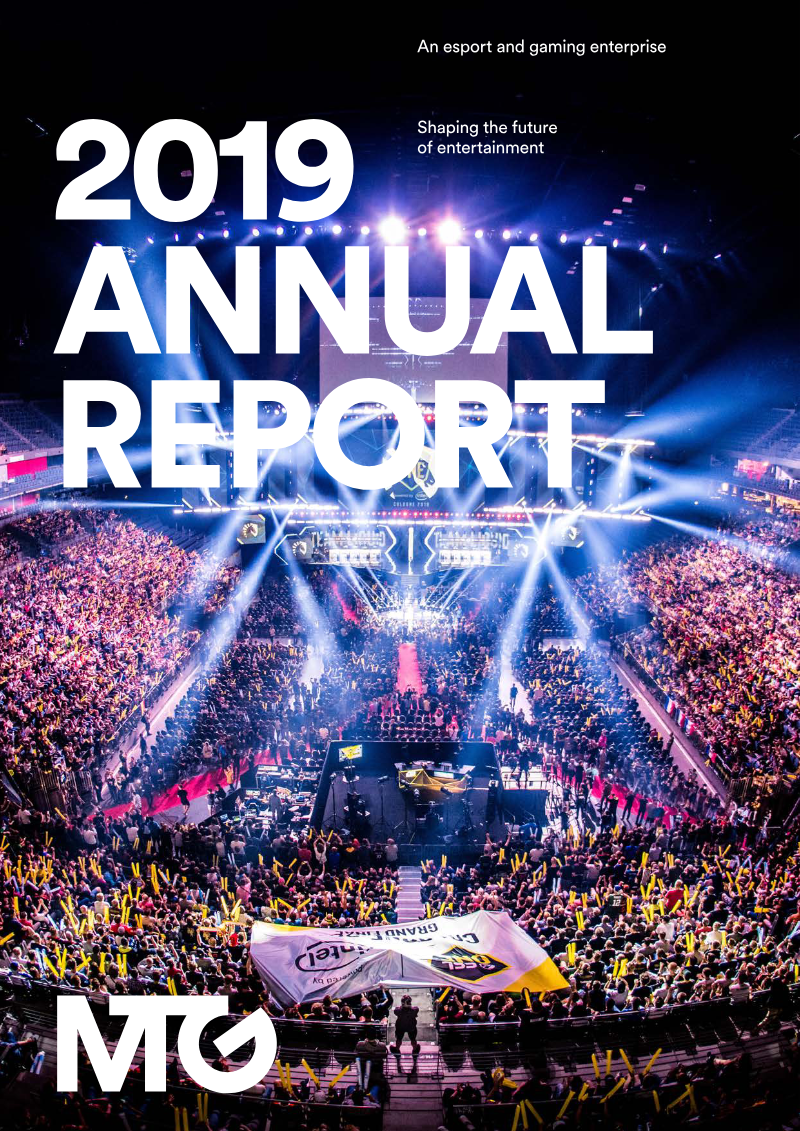
Annual Report 2019: Shaping the Future of Entertainment
Corporate responsibility and sustainability priorities are covered in MTG’s Annual Corporate Responsibility Report, published 19 S EGMENTAL PERFORMANCE 31 Other Group Information 34 Financial Policies and Risk Management 36 Governance and Responsibilities 41 Internal Control Report 101 ALTERNATIVE PERFORMANCE It’s impossible to reflect on 2019 without first commenting on the split of MTG into two companies in March – Nordic Enter- tainment and new MTG.
- MTG's 2019 strategy focused on profitable growth in esports and gaming, driven by the ESL Pro Tour launch, Kongregate's revised strategy, and Innogames' mobile revenue optimization.
- MTG divested Nova Broadcasting Group in Bulgaria for EUR 185 million (SEK 1,917 million) in January 2019 and Zoomin in October 2019, to focus on its core esports and gaming verticals.
- MTG announced annual savings, redundancy costs, and impairment charges in 2019 as part of a strategic review and evaluation of its gaming portfolio.
- MTG's esports vertical, comprising ESL and DreamHack, saw external sales of SEK 1,712 million in 2019, up from SEK 1,515 million in 2018, but reported an EBIT loss of SEK -430 million.
- The gaming vertical generated SEK 2,531 million in external sales in 2019, an increase from SEK 2,296 million in 2018, with an EBIT of SEK 269 million.
+1
Modern Times Group
Report25 pages
Let’s Play! 2024: The Esports Market in Southeast Asia
The report examines the esports market across Southeast Asia (SEA) for 2024, drawing on a summer‑2024 consumer survey of 14,250 respondents representing the region’s online population aged 16–65. The study focuses on audience reach, engagement maturity, demographic composition, consumption habits, and monetisation challenges. SEA emerges as the world’s most extensive esports market, with a 75 % overall reach but only 32 % of viewers engaging regularly; about half of those regular viewers watch more than seven hours per week. Mobile gaming dominates, accounting for roughly 55 % of esports consumption and driving the shift toward digital-first viewing platforms such as YouTube Gaming, Facebook Gaming, and local streaming services. Gender distribution shows 43 % female viewership, slightly higher than in traditional sports, while the audience is markedly younger—81 % of viewers are Millennials or Gen Z. Compared to traditional sports, esports has a comparable male share but a younger demographic profile and higher urban concentration.
Country‑level snapshots reveal Vietnam, Malaysia, and the Philippines as leaders in regular viewership (over 70 % of aware audiences), whereas Singapore lags behind. The report highlights a significant drop‑off from sporadic to regular viewership, underscoring the need for brands and tournament organisers to build stronger brand equity and leverage influencers. Engagement data indicate that esports audiences are highly willing to pay for free‑time activities, yet they also maintain many hobbies, presenting both opportunity and competition for attention. Overall, the findings suggest that SEA’s esports ecosystem is maturing into a mainstream entertainment sector, offering substantial growth potential for advertisers, publishers, and league operators willing to invest in mobile‑centric, data‑driven engagement strategies.
- Southeast Asia is the world's largest esports market by reach at 75%, though regular viewership remains limited to 32% of the total audience.
- Mobile gaming drives 55% of all esports consumption in the region, fueling a shift toward digital-first platforms like YouTube Gaming, Facebook Gaming, and local streaming services.
- The audience is predominantly young, with 81% of viewers belonging to the Millennial or Gen Z generations, and features a 43% female viewership share.
- Vietnam, Malaysia, and the Philippines lead the region with regular viewership rates exceeding 70% among those aware of esports, while Singapore shows lower engagement levels.
- Approximately half of all regular viewers consume more than seven hours of esports content per week.
+2
DeloitteFeb 2026
Report88 pages
Gaming and Esports in Vietnam: A New Arena for Brands
Vietnam’s gaming and esports landscape has evolved into a high‑growth, culturally resonant channel for brands targeting the country’s youthful, tech‑savvy population. With one‑third of the populace engaged in esports and an adult gamer rate of 85 %—the highest globally—the market is driven by widespread smartphone penetration, robust 4G coverage, and a demographic where roughly 70 % are under 25. Mobile titles dominate, particularly MOBAs and FPS games, while PC gaming remains significant; casual players account for nearly half of the audience.
Consumer behavior shows intense engagement: gamers spend 1–3 hours per session, seek entertainment (85.9 %), stress relief (74.7 %), and social interaction (46.5 %). Streaming platforms such as YouTube Gaming and Facebook Gaming lead, with Twitch lagging behind. Brands that sponsor mobile esports events or partner with key opinion leaders (KOLs) can tap into this high‑interaction environment, especially as 51 % of gamers trust KOL recommendations and 42 % purchase endorsed products.
Investment trends confirm the sector’s appeal. Global esports spend reached $844 million in 2021, with 9.9 % allocated to Vietnam. In‑game advertising that offers prizes (49 %) and video content (40 %) yields the strongest purchase intent, particularly for electronics, tech, and gaming accessories. Best practices emphasize customized creative assets, reward‑based incentives, and authentic collaborations—examples include Adidas “Time In” with Ninja, Dashing’s team sponsorship, and Mastercard’s League of Legends partnership—demonstrating higher recall than traditional sports ads.
Practical engagement strategies recommend experiential pop‑ups, in‑game placements, and co‑creation with publishers (e.g., Louis Vuitton’s LVxLOL) to deliver authentic touchpoints. Cause‑based campaigns resonate with Gen Z’s social consciousness, while treating esports as a “co‑business” encourages integrated, audience‑centric messaging. Overall, Vietnam’s rapidly expanding mobile and PC gaming ecosystem offers brands a fertile arena for digital fluidity, agile research, influencer partnerships, and localized media strategies to capture high‑growth engagement.
- Vietnam has the world's highest adult gamer rate at 85%, with a demographic where 70% of the population is under 25 and one-third of citizens are engaged in esports.
- Mobile gaming dominates the market, supported by high smartphone penetration and 4G coverage, with gamers typically spending 1–3 hours per session.
- Influencer marketing is highly effective, as 51% of gamers trust key opinion leader (KOL) recommendations and 42% report purchasing products endorsed by them.
- In-game advertising featuring prizes (49%) and video content (40%) generates the strongest purchase intent, particularly for electronics, tech, and gaming accessories.
- Vietnam captured 9.9% of the $844 million global esports spend in 2021, signaling significant market appeal for international investment.
+3
Decision LabFeb 2026
Report45 pages
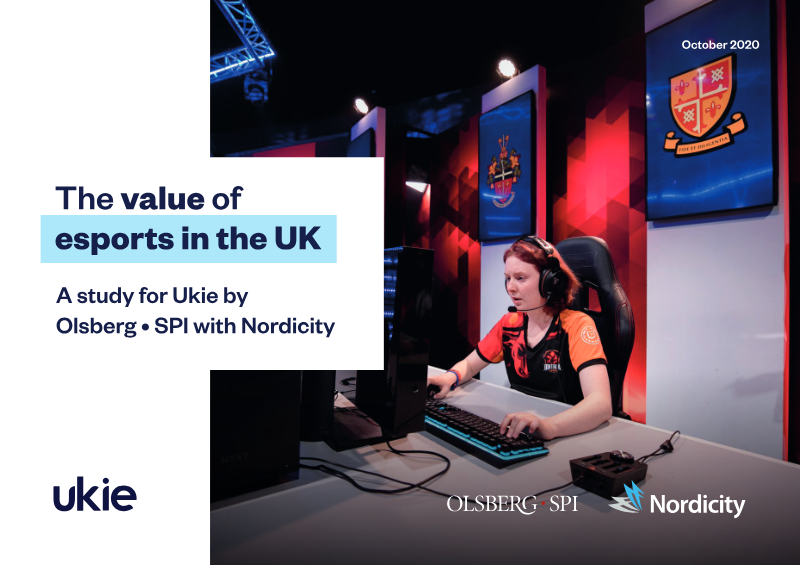
The Value of Esports in the UK
The study demonstrates that the United Kingdom’s esports industry has experienced robust growth, expanding at an average annual rate of 8.5 % between 2016 and 2019. In 2019 alone, the sector generated approximately £60 million in revenue—about eight per cent of global esports earnings—and contributed £111.5 million to the national Gross Value Added, supporting more than 1,200 full‑time equivalent jobs. These figures underscore the sector’s role as a significant driver of the UK digital creative economy.
Key drivers identified include the proliferation of professional teams, high‑profile tournaments hosted by organisations such as ESL, Gfinity and Epic.LAN, and the rise of streaming platforms that have broadened audience reach. Dedicated venues like Belong Gaming Arenas further stimulate grassroots participation and local economic activity. Modelling of direct, indirect and induced effects reveals a total impact of roughly 216 FTEs and £19.5 million in GVA, while spill‑over benefits from event tourism—estimated at £234 k per 1,000 visitors and nearly five FTEs—highlight additional value for host communities.
The analysis projects that hosting a major global esports event could add 238 full‑time equivalents and £12 million in GVA to the UK economy, signalling substantial upside potential. The findings point to opportunities for further investment, clearer regulatory frameworks and strategic positioning to attract international events, thereby consolidating esports as a pivotal growth sector within the United Kingdom’s broader digital economy.
- In 2019, the UK esports industry generated £60 million in revenue and contributed £111.5 million to the national Gross Value Added (GVA), supporting over 1,200 full-time equivalent (FTE) jobs.
- The sector experienced robust growth between 2016 and 2019, expanding at an average annual rate of 8.5%.
- Hosting a single major global esports event is projected to add £12 million in GVA and 238 FTE jobs to the UK economy.
- Event tourism provides significant spill-over benefits, estimated at £234,000 in economic value and nearly five FTEs per 1,000 visitors.
- Key industry drivers include professional tournament organizers such as ESL, Gfinity, and Epic.LAN, alongside the expansion of streaming platforms and physical infrastructure like Belong Gaming Arenas.
UkieDec 2025

Report46 pages
Esports 2023: Challenges and Opportunities in the UK
The report argues that the United Kingdom’s esports sector has evolved from a fragmented niche into a rapidly professionalised ecosystem, yet it still requires coordinated investment and policy to sustain growth. Key findings show an audience of roughly 55 million adults, with 82.7 % aged 18‑34 and a male dominance of 83 %. While shooters such as Call of Duty, CS:GO and Fortnite command the largest viewership, only 3.8 % of gamers follow competitive play, revealing a small “iceberg” of engaged fans. This gap highlights opportunities for talent development and global brand expansion, especially as the UK lags behind U.S. and Asian markets in producing top‑tier professionals.
Economic data underscore the sector’s momentum: gross value added reaches £111 million and sponsorship revenue exceeds $1.38 billion, with UK events and teams capturing a $1.5 billion share of the global market. Major brands—Intel, Red Bull, Saudi PIF—and tournament operators such as ESL, FACEIT and Gfinity are driving investment, while infrastructure projects by XLHQ, Royal Ravens and Cloud9 create dedicated studios and community hubs. Educational initiatives, including a BTEC programme with Pearson and university leagues like NUEL, demonstrate that esports can boost computing engagement and skill development among 10 000 pupils.
Despite these gains, challenges persist. Mainstream media coverage remains limited, and government support is uneven, constraining broader recognition of esports as a legitimate sport. Diversity and inclusion remain under‑addressed, with female participation at 17 % and a need for stronger links between education, industry and policy to create sustainable career pathways. Emerging monetisation models—Web3, NFTs, metaverse experiences—offer new revenue streams but require regulatory clarity and infrastructure investment. Coordinated action across stakeholders is essential to unlock the UK’s full economic and cultural potential in esports.
- The UK esports sector generates £111 million in gross value added, with UK-based teams and events capturing a $1.5 billion share of the global market.
- While the UK has a potential audience of 55 million adults, only 3.8% of gamers follow competitive play, indicating a significant opportunity for fan base expansion.
- The demographic profile of the UK esports audience is highly concentrated, with 82.7% aged 18–34 and 83% male, highlighting a need for improved diversity and inclusion efforts.
- Major investment is being driven by global brands like Intel, Red Bull, and the Saudi PIF, alongside infrastructure developments from organizations such as XLHQ, Royal Ravens, and Cloud9.
- Educational initiatives, including a Pearson BTEC programme and the NUEL university league, are currently engaging 10,000 pupils in computing and skill development.
+1
British EsportsDec 2025