Report72 pages
Appendix J: Apple's and Google's Privacy Changes
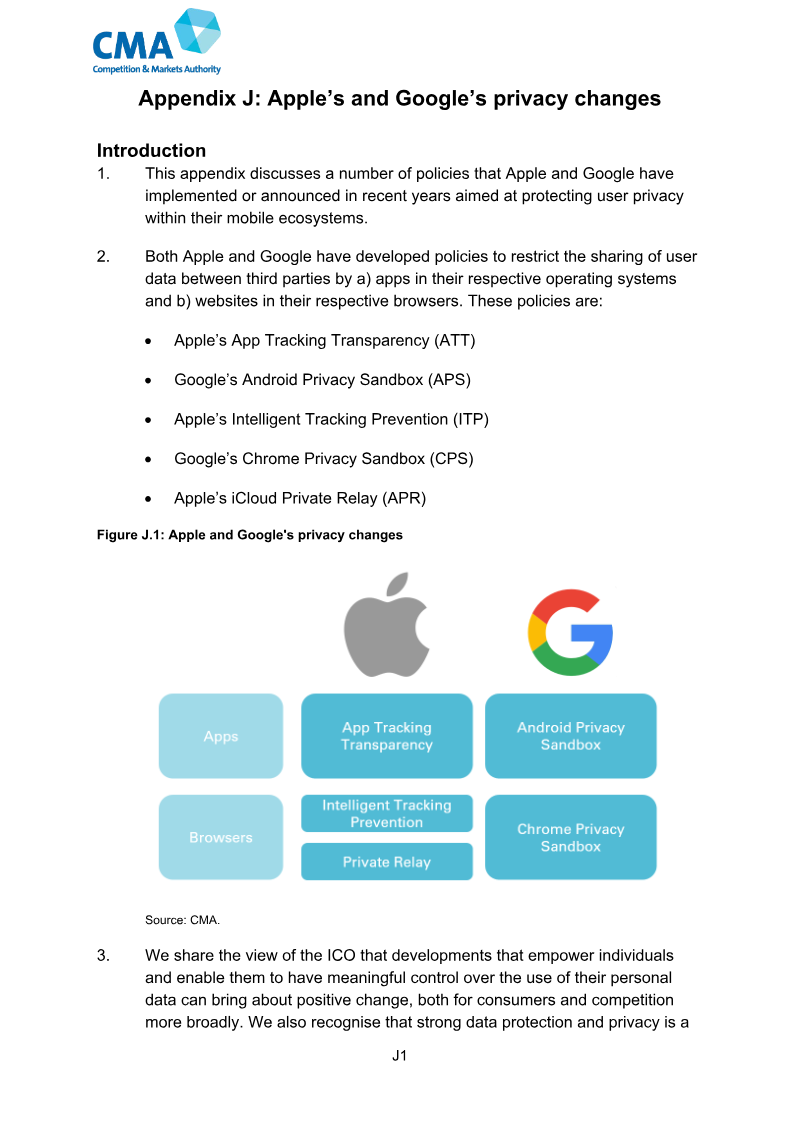
The mobile advertising ecosystem is undergoing a fundamental transformation as Apple and Google implement restrictive privacy frameworks, including App Tracking Transparency, the Privacy Sandbox, and Intelligent Tracking Prevention. While these initiatives provide tangible benefits by enhancing user control over personal data and limiting cross-app tracking, they simultaneously disrupt the technical infrastructure required for third-party ad targeting and attribution. By restricting access to device-level identifiers like IDFA and AdID, these policies have significantly increased costs for developers and reduced the efficacy of digital marketing, forcing a widespread shift in advertising budgets and monetization strategies across the global mobile industry.
A central concern is that these privacy-centric design choices create competitive imbalances that favor the platforms' own advertising services. Evidence suggests that Apple’s choice architecture—specifically the framing and placement of consent prompts—may leverage behavioral biases to discourage data sharing, while its proprietary attribution tools, such as SKAdNetwork, offer inferior data granularity compared to the insights available to Apple Search Ads. This asymmetry effectively creates a barrier to entry for third-party competitors, potentially consolidating market power within Apple and Google’s ecosystems. Developers report that these constraints not only hinder campaign optimization but also force a reliance on commission-based models that further entrench the platforms' dominance.
Ultimately, the transition toward privacy-first frameworks presents a complex trade-off between individual user protection and market competition. While the policies align with broader regulatory goals regarding data privacy, their implementation risks distorting the digital advertising landscape. The ongoing shift necessitates careful oversight to ensure that privacy-enhancing technologies do not serve as a pretext for self-preferencing or the suppression of competition, as the long-term viability of the app economy depends on maintaining a fair and transparent environment for all participants.
- Apple and Google’s privacy frameworks—including App Tracking Transparency, Privacy Sandbox, and Intelligent Tracking Prevention—have fundamentally disrupted the technical infrastructure for third-party ad targeting and attribution.
- The restriction of device-level identifiers like IDFA and AdID has increased costs for developers while simultaneously reducing the efficacy of digital marketing campaigns.
- Apple’s proprietary attribution tools, such as SKAdNetwork, provide lower data granularity than the insights available through Apple Search Ads, creating a competitive disadvantage for third-party advertisers.
- The framing and placement of consent prompts by Apple may leverage behavioral biases to discourage data sharing, effectively creating barriers to entry for competitors.
- These privacy-centric policies risk consolidating market power within Apple and Google by forcing developers to rely on the platforms' own advertising services and commission-based monetization models.
+2
CompetitionAug 2026

Whitepaper24 pages
A Deep Dive into Deep Links: The All-in-One Handbook for Mobile App Marketers, Developers, and Product Managers
Deep linking serves as a foundational strategy for mobile growth, functioning as a critical mechanism to bridge the gap between web and app environments. By directing users to specific in-app content rather than generic landing pages, this approach effectively minimizes friction throughout the user funnel. The primary thesis posits that a robust, standardized linking infrastructure is essential for modern mobile marketing, as it directly correlates with higher activation, improved retention rates, and more precise attribution across diverse digital touchpoints.
The current landscape of mobile marketing faces significant technical fragmentation, exacerbated by the recent deprecation of legacy services like Google’s Firebase Dynamic Links. To address these challenges, centralized solutions such as Adjust’s TrueLink provide a scalable framework for managing direct, deferred, and contextual links. These tools enable automated link generation and sophisticated cross-platform routing, ensuring that user journeys remain uninterrupted whether they originate on mobile, desktop, or connected television environments. By standardizing these interactions, organizations can maintain consistent performance and data integrity across the entire ecosystem.
These strategies are particularly impactful within high-growth verticals such as e-commerce, gaming, and finance, where the quality of the initial user experience dictates long-term engagement. Data indicates that implementing comprehensive linking platforms not only streamlines the transition for brands migrating from deprecated services but also enhances the granular measurement capabilities required for data-driven decision-making. Ultimately, the integration of a unified linking architecture is a prerequisite for scaling app growth, as it transforms fragmented traffic sources into cohesive, high-converting user experiences that support sustained business objectives.
- Deep linking significantly improves app performance, with CleverTap data showing that users attributed to deep links achieve 81% higher activation rates, 2.5x higher retention rates, and 2x higher conversion rates compared to those using standard links.
- Deep linking technology functions by routing users directly to specific in-app content or screens upon clicking an ad or link, utilizing standards such as Apple Universal Links, Android App Links, and URI schemes.
- Deferred deep linking drives user acquisition by directing individuals who have not yet installed the app to the appropriate app store landing page, thereby reducing friction in the installation process.
- Modern deep linking solutions like Adjust's TrueLink provide comprehensive management features, including branded short links, localized landing pages in 11 languages, and automated UTM tag translation for unified campaign measurement.
- Deep linking supports diverse marketing use cases across verticals, such as enabling level-specific gaming campaigns, offline-to-app transitions via QR codes, and personalized re-engagement through push notifications.
+2
Adjust

Report9 pages
Ramadan App Trends Decoded: Benchmarks and Insights for 2026
This analysis examines mobile app performance trends during the 2025 Ramadan season to provide strategic benchmarks for 2026. By tracking installs, session counts, and session lengths across seven key verticals—including e-commerce, finance, gaming, and social—the findings highlight how shifting consumer routines during the fasting period and Eid al-Fitr create distinct opportunities for user acquisition and engagement. The scope covers global data with a specific focus on the METAP region, encompassing 22 countries such as Saudi Arabia, Indonesia, Pakistan, and the UAE.
Data indicates that Ramadan acts as a significant driver of mobile activity, with average daily installs in the METAP region rising 11% during the month compared to the preceding two weeks. Session counts also saw a 6% increase during the period. Engagement patterns varied by vertical; gaming and social apps emerged as primary drivers of session growth, while e-commerce experienced significant spikes in specific markets like Pakistan and the UAE. Notably, session lengths for gaming apps remained the longest across all regions, averaging 35.6 minutes during Ramadan.
The analysis emphasizes that Ramadan should be treated as a phased growth cycle rather than a single peak. While overall install growth reached 10% during Ramadan and climbed to 13% in the post-Eid period, performance varied significantly by country and category. The findings suggest that marketers should avoid uniform regional strategies, instead utilizing country-level benchmarks to guide budget allocation. Success during this season requires sustained, conversion-focused activity that extends through Eid al-Fitr, alongside a focus on high-intent engagement windows, particularly during late-night hours, to maximize user retention and long-term loyalty.
- Ramadan drives a 11% increase in average daily installs and a 6% rise in session counts across the METAP region compared to the two weeks prior.
- Gaming apps maintain the highest engagement levels during the season, with average session lengths reaching 35.6 minutes.
- The Ramadan growth cycle extends beyond the fasting period, with overall install growth climbing from 10% during Ramadan to 13% in the post-Eid period.
- Marketers should avoid uniform regional strategies, as performance metrics for categories like e-commerce vary significantly by specific markets such as Pakistan and the UAE.
- To maximize long-term loyalty, campaigns should prioritize conversion-focused activity during late-night hours and maintain engagement through the Eid al-Fitr period.
+2
Adjust

Report35 pages
The Gaming App Insights Report: 2026 Edition
The mobile gaming industry is undergoing a fundamental strategic transition, moving away from a reliance on high-volume user acquisition toward a model centered on long-term retention and high-value player engagement. This shift is driven by a challenging economic environment characterized by a 33% increase in global cost-per-click and a 30% rise in cost-per-install throughout 2025. To mitigate these rising expenses, studios are consolidating their marketing efforts, reducing the average number of advertising partners per application to focus on high-performing channels that promise superior return on investment.
Technological innovation serves as a primary lever for this transformation, with generative artificial intelligence and machine learning now integral to creative production and audience targeting. These tools allow developers to optimize ad performance and refine engagement tactics in an era where data privacy remains a critical factor. Notably, App Tracking Transparency opt-in rates on iOS reached 39% in early 2026, providing studios with more reliable data to fuel their direct-to-consumer strategies. This data-driven approach is increasingly vital as the industry seeks to balance the dominance of hyper-casual titles, which still account for 29.1% of installs, with the superior session-to-install ratios found in action and puzzle genres.
The global landscape reflects a maturing market where session lengths and day-1 retention rates remain stable despite the broader cost pressures. While hyper-casual games maintain the largest share of installs, the industry is clearly pivoting toward hybrid monetization and cross-platform experiences to sustain growth. By prioritizing long-term progression over rapid acquisition, developers are successfully navigating a period of rising costs, ensuring that engagement remains robust even as the industry shifts toward more sustainable, value-based growth models.
- Global gaming app CPC rose 33% from $0.03 to $0.04 between 2024 and 2025, while global CPM increased 20% from $3.63 to $4.34.
- Hyper-casual games maintained the largest market share of installs at 29.1% in 2025, while action games dominated session share at 17.1%.
- Strategy games saw the most significant increase in session length, growing 18% to 37.51 minutes, and experienced a 133% surge in CPC from $0.03 to $0.07.
- Over 90% of game developers now utilize AI to automate and streamline core production tasks, including playtesting, localization, and game balancing.
- North America recorded the highest regional CPC at $0.12 in 2025, representing a 71% increase, with the U.S. market specifically rising 86% to $0.13.
+3
Adjust

Report41 pages
Mobile App Trends 2026: Japan Edition
The Japanese mobile application market maintains a robust, iOS-dominant trajectory, characterized by a 4% year-over-year increase in total installs during the first half of 2026. This growth is underpinned by a maturing digital ecosystem where mobile integration has become deeply embedded in daily life. Legislative shifts, specifically the Mobile Software Competition Act, are actively reshaping the landscape by incentivizing developers to diversify their distribution and payment strategies, thereby fostering a more competitive and sustainable environment for long-term growth.
Financial and gaming sectors serve as the primary catalysts for this expansion. Stock trading applications have experienced a 90% surge in installs, bolstered by the participation of younger investors and the influence of tax-advantaged programs like NISA. Simultaneously, gaming engagement has intensified, highlighted by a 113% increase in card game sessions. These sectors are not only attracting new users but are also achieving higher retention rates and longer session durations, indicating that users are increasingly comfortable managing complex financial and recreational activities through mobile interfaces.
The entertainment sector continues to evolve through cross-media synergy, particularly between anime, manga, and short-form content. While OTT streaming services recorded a 15% revenue increase in 2025 and maintain high engagement levels with average session lengths exceeding 36 minutes, the digital manga industry is pivoting toward low-friction content models to better capture younger demographics. Based on aggregated data from January 2024 through May 2026, these trends suggest that success in the Japanese market now requires a strategic focus on high-frequency engagement and the ability to adapt to shifting regulatory and consumer preferences.
- The Japanese mobile market saw a 4% year-over-year increase in total installs during the first half of 2026, maintaining a robust, iOS-dominant trajectory.
- Stock trading applications surged by 90% in installs, driven by younger investors and the influence of tax-advantaged programs like NISA.
- Gaming engagement has intensified significantly, evidenced by a 113% increase in card game sessions and improved user retention rates.
- The Mobile Software Competition Act is actively forcing developers to diversify their distribution and payment strategies to comply with a more competitive regulatory landscape.
- OTT streaming services achieved a 15% revenue increase in 2025, with average user session lengths now exceeding 36 minutes.
+2
Adjust

Report21 pages
Mobile App Trends: Vietnam 2026
The mobile app market in Vietnam is experiencing significant expansion, driven by a digitally native population, high smartphone penetration of 84%, and near-universal 4G coverage. As of 2025, the country ranked 11th globally for app downloads, totaling 2.88 billion. The primary objective for marketers in this region is to navigate increasingly complex regulatory environments and sophisticated user behaviors to convert high engagement into sustainable revenue. This analysis utilizes aggregated, anonymized data from apps tracked by Adjust between January 2024 and March 2026 to benchmark performance across the gaming, finance, and entertainment sectors.
Gaming remains the most dominant vertical, with 1.29 billion downloads in 2025. Vietnamese studios are increasingly pivoting toward hybrid-casual and midcore titles to improve monetization, resulting in a 15% year-over-year increase in session growth during Q1 2026, which significantly outperformed global and APAC benchmarks. Finance apps are also seeing accelerated growth, with mobile payment volumes rising 34.4% in early 2026. This sector is consolidating around dominant super apps, though stricter biometric and identification regulations have raised the barrier to entry. Meanwhile, the entertainment sector is characterized by a surge in short-form drama content, which saw a 271% year-over-year increase in downloads by late 2025.
Despite strong growth in installs and session frequency, retention remains a challenge. Gaming retention in Vietnam trails global averages, and finance app session lengths have slightly decreased as users shift toward more efficient, embedded financial services. Success in the Vietnamese market now depends on balancing aggressive user acquisition with high-quality, stable digital experiences that align with local habits. Marketers are encouraged to leverage precise data measurement to navigate a non-linear user journey and comply with evolving local regulations, such as the 2024 Decree 147.
- Vietnam's mobile market is a top-tier global player, ranking 11th worldwide with 2.88 billion app downloads in 2025 and an 84% smartphone penetration rate.
- Gaming is the leading vertical with 1.29 billion downloads in 2025, while a shift toward hybrid-casual and midcore titles drove a 15% year-over-year increase in session growth during Q1 2026.
- The entertainment sector is experiencing rapid expansion, highlighted by a 271% year-over-year surge in short-form drama content downloads by late 2025.
- Finance apps are consolidating around super apps with a 34.4% rise in mobile payment volumes in early 2026, though growth is tempered by stricter biometric and identification regulations.
- Retention remains a critical challenge, as gaming retention in Vietnam currently trails global averages and finance app session lengths are declining due to a shift toward embedded services.
+2
Adjust
Report25 pages
Mobile App Trends: LATAM
The Latin American mobile app market is experiencing robust growth, driven by a highly mobile-first population and rapid economic digitalization. With smartphone penetration projected to reach 93% by 2030, the region’s app development sector is forecast to reach $56.1 billion by 2034. This growth is particularly pronounced in the finance and e-commerce sectors, where the adoption of super apps, buy-now-pay-later models, and real-time payment systems like Brazil’s Pix have fundamentally altered consumer behavior.
Data collected between January 2024 and March 2026 indicates that user engagement remains high, with regional App Tracking Transparency (ATT) opt-in rates reaching 49% in Q1 2026, significantly outpacing the global average of 38%. Brazil leads the region in opt-in rates at 54%. Overall app performance in the region showed consistent year-over-year gains, with Q1 2026 seeing notable spikes in session activity, particularly in Peru and Chile. Finance apps, in particular, saw a 34% year-over-year increase in sessions during Q1 2026, while e-commerce apps benefited from strong seasonal shopping events that drove significant install and session volume.
Methodologically, the analysis utilizes aggregated, anonymized data from a subset of 5,000 top-performing apps alongside a broader dataset tracked by Adjust across 45 to 250 countries. While the region shows strong growth, the report emphasizes that success is not uniform across countries. Marketers are encouraged to move beyond last-click attribution models, instead adopting cross-platform, cross-device measurement and deep-linking strategies to navigate non-linear user journeys. By focusing on personalized, data-driven engagement, developers can better optimize retention and maximize lifetime value in this complex, high-growth mobile ecosystem.
- The Latin American mobile app market is projected to reach a valuation of $56.1 billion by 2034, supported by a smartphone penetration rate expected to hit 93% by 2030.
- User privacy opt-in rates in the region reached 49% in Q1 2026, significantly outperforming the 38% global average, with Brazil leading at 54%.
- Finance apps experienced a 34% year-over-year increase in session activity during Q1 2026, driven by the adoption of super apps and real-time payment systems like Brazil’s Pix.
- E-commerce and finance sectors are the primary drivers of regional growth, bolstered by the integration of buy-now-pay-later models and seasonal shopping events.
- Peru and Chile exhibited notable spikes in mobile session activity during Q1 2026, highlighting that market growth and performance are not uniform across the region.
+2
Adjust

Report23 pages
Vietnam Game Industry Monthly Report: May 2026
The Vietnam Game Industry Monthly Report for May 2026 provides a comprehensive analysis of the mobile gaming landscape, highlighting a shift in market dynamics from pure volume-based acquisition to a focus on operational depth and regulatory compliance. The report synthesizes quantitative data from AppMagic with internal insights to evaluate performance across various subgenres, emphasizing that while overall market demand remains stable, success is increasingly contingent upon localized content, strong community management, and adherence to evolving government policies.
Market data for May 2026 indicates a recovery in total mobile game downloads, which rose to 121 million, a 3.98% increase over April. However, this growth was uneven; midcore segments experienced a 4.69% decline in downloads, underscoring a reliance on consistent launch pipelines and recognizable themes. Conversely, total in-app purchase (IAP) revenue grew by 3.13% month-over-month, with midcore revenue rising by 4.44%. This revenue expansion was driven primarily by long-lifecycle titles in genres such as Battle Royale, MOBA, and Sim Sports, which leverage established communities and recurring live-ops rather than relying solely on new user acquisition.
The report identifies cultural familiarity as a critical driver for success, noting that titles featuring wuxia, xianxia, or established IP consistently outperform generic Western fantasy products. Furthermore, the industry is undergoing a structural transition toward greater professionalization. Vietnam is increasingly positioning itself as a regional hub for esports, evidenced by the formalization of tournament calendars and hosting of major international events. Simultaneously, the introduction of Decree 174/2026/NĐ-CP, effective July 2026, mandates stricter compliance regarding account verification and data management. These regulatory requirements necessitate that publishers integrate operational and legal safeguards directly into their product design, favoring those who partner with experienced local entities capable of navigating the increasingly complex Vietnamese market environment.
- Vietnam's mobile IAP revenue grew by 3.13% MoM in May 2026, driven by strong monetization in long-lifecycle genres like Battle Royale, MOBA, and Sim Sports rather than new user acquisition.
- Midcore total revenue reached its highest level between January and May 2026, rising 4.44% MoM as established titles like Free Fire MAX, Liên Quân Mobile, and Roblox VN leveraged recurring Live-Ops and event-based spending.
- New game success in Vietnam is increasingly dependent on cultural fit, with titles featuring wuxia/xianxia settings, football fandom, or nostalgic IP—such as Giang Hồ Kỳ Ngộ and Total Football VNG—outperforming generic Western fantasy products.
- Effective July 1, 2026, Decree 174/2026/NĐ-CP mandates that all online games must verify player accounts using Vietnamese mobile phone numbers, with non-compliance risking fines of up to 60 million VND (approx. $2.3K).
- While MMORPG, Team Battle, and 4X Battle remain among the largest revenue pools, these segments saw revenue declines of 8.91%, 13.39%, and 6.87% respectively in May due to weaker Live-Ops intensity.
+2
GamotaJun 2026
Report16 pages
Rewarded UA Handbook: 2026
Rewarded user acquisition (UA) has evolved into a foundational component of the mobile marketing mix, serving as a critical solution to the industry’s ongoing challenges of rising acquisition costs and high user churn. As the global mobile gaming market matures and user growth plateaus, rewarded UA provides a mechanism to drive long-term engagement and retention by incentivizing users to reach specific in-game milestones. The practice is now standard, with 93% of surveyed developers across 10 tier-1 markets currently utilizing rewarded channels, and 61% planning to increase their budget allocations in 2026.
The methodology behind this analysis involved an online survey of 912 mobile game developers conducted between December 2025 and January 2026, supplemented by performance data from over 1,200 advertisers on the Freecash platform. Findings indicate that successful campaigns are no longer treated as experimental, with 31% of studios classifying rewarded UA as an always-on, core channel. High-performing studios typically allocate between 11% and 50% of their total UA budget to these efforts, often managing a portfolio of four or more channels to optimize reach and performance.
Strategic implementation requires a shift toward long-term event architecture. Data shows that campaigns optimizing for multiple, layered events—such as daily streaks, VIP tiers, and repeat purchases—consistently outperform single-event models. By extending reward structures to 90 or 180 days, developers can significantly improve retention and return on ad spend (ROAS). Furthermore, the industry is increasingly adopting automated bidding technologies, such as dynamic ROAS-based bidding, to replace fixed cost-per-install models. While gaming remains the primary sector, the model is rapidly expanding into non-gaming verticals like fintech and e-commerce, where gamification features are being leveraged to drive similar habit-forming behaviors and sustainable user value.
- Rewarded UA is now a core marketing channel, with 61% of surveyed studios planning to increase their budget in 2026 and 65% of studios allocating between 11% and 50% of their total UA spend to the channel.
- Extending reward structures beyond traditional short-term windows is critical for retention; for example, Candivore increased their Match Masters reward structure from 50 to 90 days, resulting in a 50% increase in D60 retention and a 70% uplift in D90 ROAS.
- Campaigns that layer multiple event types outperform single-event campaigns, with IAP/hybrid games utilizing an average of 3.25 distinct event types per campaign to drive long-term engagement.
- Automation is a primary industry focus, as evidenced by Almedia’s MaxROAS system, which has delivered up to a 35% ROAS uplift and a 100% increase in spending for participating advertisers since December 2025.
- Rewarded UA is increasingly viewed as a go-to-market strategy, with 93% of studios launching rewarded campaigns within the first year of their game's lifecycle and 46% implementing them within the first three months of global launch.
+3
AlmediaJun 2026

Report7 pages
Public Mobile Gaming Publishers: Resilience & Adaptation in a Shifting Landscape
The analysis examines the post‑IDFA mobile gaming landscape, focusing on revenue dynamics, user acquisition spending, profitability trends, and market valuation shifts across key publishers. Data reveal that annual reported revenue growth has slowed markedly, with many companies experiencing negative organic revenue and overall declines in 2023‑24. User acquisition expenses have surged, reaching peaks of $40 million for some firms, yet returns from these campaigns have weakened, driving higher operating expenses and compressing EBITDA margins. Consequently, publishers are pivoting from aggressive scaling toward profitability, reflected in tighter cost controls and a renewed emphasis on player retention and lifetime value.
Daily active user metrics illustrate the broader market contraction, with average DAU figures falling across the sector. Valuation impacts are stark: aggregate market capitalisation for major publishers has fallen by more than 50 % since January 2022, and most stocks remain below their pre‑IDFA peaks. An exception is MTG, whose disciplined mergers and acquisitions strategy and operational efficiency yielded 9 % organic growth in Q4 2024, translating into a 50 %+ share price increase and outperforming the S&P 500.
The study covers global mobile gaming publishers over a 2022‑2025 timeframe, drawing on quarterly financial statements and market data. Methodology includes analysis of reported revenue, user acquisition spend, EBITDA adjustments for capitalised development costs, and market cap changes. The findings underscore a sector in transition, where resilience hinges on profitability focus, retention strategies, and disciplined capital allocation.
- Aggregate market capitalization for major mobile gaming publishers has plummeted by more than 50% since January 2022, with most stocks remaining below pre-IDFA valuation peaks.
- User acquisition costs have surged to as high as $40 million per firm, while diminishing returns on these campaigns have compressed EBITDA margins and forced a shift toward cost control.
- MTG outperformed the broader market with a 50%+ share price increase and 9% organic growth in Q4 2024, driven by disciplined M&A and operational efficiency.
- Annual revenue growth across the sector has slowed significantly, with many publishers reporting negative organic revenue and overall declines throughout 2023 and 2024.
- The mobile gaming sector is experiencing a broad contraction in engagement, evidenced by a decline in average daily active user (DAU) metrics across the industry.
+3
InvestGame
Report28 pages
Mobile Gaming by Genre: Hypercasual
The hypercasual segment continues to dominate mobile gaming revenue, with the top 100 titles achieving 5.48 billion downloads and $345 million in in‑app purchase (IAP) revenue during the first half of 2025—double the figures from 2024 and the highest ever recorded for this genre. Leading publishers such as AZUR GAMES, Supersonic Studios, and Voodoo have secured billions of lifetime downloads and are increasingly adopting hybrid monetization models that blend advertising with growing IAP streams. This shift signals a clear trend toward revenue diversification while maintaining the ultra‑light, rapid‑development ethos that characterizes hypercasual games.
Projected revenue for 2025 is expected to reach $690 million across the top 100 titles, a doubling of the H1 figure and an increase from $403 million in 2024. The analysis attributes this surge to the genre’s evolution toward hybrid‑casual, where light meta‑progression and deeper monetization extend player engagement beyond the typical 30–60 second sessions. Key performance indicators remain ultra‑low cost per install (CPI), high Day‑1 retention around 40 %, and creative‑driven user acquisition. Hybrid titles aim to lift Day‑7 retention into the teens, thereby boosting lifetime value (LTV).
Case studies of Mob Control, Color Block Jam, and Pizza Ready illustrate successful pivots to hybrid‑casual models. Each title combined strong user experience design, staged monetization (ads plus IAPs), and data‑driven acquisition strategies. Tactics such as adaptive market positioning, psychological ad hooks like the Zeigarnik effect, and seamless ad integration into gameplay produced multi‑million installs, daily revenues exceeding $250 k, and sustained top‑chart performance. These examples underscore that balancing simplicity with depth, timing releases to genre trends, and iterating creatives regionally are critical for scaling hybrid‑casual titles.
- Hypercasual revenue for the top 100 titles is projected to reach $690 million in 2025, a significant increase from $403 million in 2024.
- H1 2025 performance for the top 100 hypercasual titles hit record highs of 5.48 billion downloads and $345 million in IAP revenue, doubling the figures from the same period in 2024.
- Leading publishers like AZUR GAMES, Supersonic Studios, and Voodoo are shifting toward hybrid-casual models that blend traditional advertising with deeper IAP monetization to extend player engagement.
- Hybrid-casual titles aim to improve Day-7 retention into the teens and increase lifetime value by incorporating light meta-progression into the standard 30–60 second hypercasual session.
- Successful titles like Mob Control, Color Block Jam, and Pizza Ready have demonstrated that hybrid-casual models can generate daily revenues exceeding $250,000.
+5
Gamesforum

Report23 pages
Mobile Gaming by Genre: Midcore
The analysis demonstrates that midcore mobile games—those offering depth while remaining accessible on handheld devices—are experiencing a post‑pandemic rebound, with Q1 2025 downloads and revenue surpassing 2024 levels. Five‑year data (2020‑2024) reveal a temporary decline during the pandemic, followed by a steady uptick in 2024 and forecasts that growth will continue into 2025. The primary thesis is that monetization success in this segment hinges on data‑driven ad integration and player‑centric design.
Key findings show that midcore titles command higher eCPMs than casual games, yet player retention and in‑app purchase (IAP) conversion rates are sensitive to ad placement. A phased, A/B‑tested approach—beginning with limited rewarded videos and expanding based on performance metrics such as retention, playtime, and IAP conversions—maximizes revenue while preserving engagement. Case studies illustrate tangible benefits: Bytro Labs’ rewarded video strategy lifted average revenue per daily active user (ARPDAU) by 32.9 %, increased Day‑3 retention on iOS by 6.1 %, and achieved eCPMs of 23 (iOS) and 25 (Android). These results confirm that well‑timed ads can rival or complement IAP revenue when aligned with player incentives.
The scope covers the global midcore mobile market, focusing on 2025 performance and projecting trends through 2026. It emphasizes long‑term player value, streamlined gameplay, social hooks, and frequent content updates as critical success factors. The conclusions underscore that responsive development cycles, continuous data analysis, and fair live‑service practices are essential for sustaining growth in the competitive midcore landscape.
- Midcore mobile gaming is experiencing a post-pandemic rebound, with Q1 2025 revenue and download figures exceeding 2024 levels.
- Strategic rewarded video integration can significantly boost performance, as evidenced by Bytro Labs increasing ARPDAU by 32.9% and Day-3 iOS retention by 6.1%.
- Midcore titles achieve higher eCPMs than casual games, with Bytro Labs reaching eCPMs of 23 on iOS and 25 on Android through optimized ad placement.
- Monetization success in the midcore segment requires a phased, A/B-tested approach to ad integration to protect retention and in-app purchase conversion rates.
- Long-term growth in the midcore landscape depends on responsive development cycles, frequent content updates, and the implementation of social hooks.
+5
InvestGame

Report11 pages
Enabling Growth: Cohort User Acquisition Financing
Mobile gaming has rebounded from the downturn of 2022‑23, with a projected compound annual growth rate of 5.0% from 2020 to 2025, driven largely by a 16.2% rise in in‑app advertising and the continued popularity of casual puzzle titles. The sector’s resilience is underpinned by AI‑powered ad tech, rewarded advertising platforms, multiplatform releases that bypass app‑store fees, and strategic IP licensing collaborations. Despite this growth, venture capital remains cautious; VC deployments in mobile studios have plateaued while high‑profile exits such as King, Zynga, and Playtika illustrate that capital is still scarce. Mature studios reinvest roughly one‑third of revenue into user acquisition (UA), yet only a minority secure the $30 million+ funding needed to sustain such spend, and smaller studios often allocate 70% or more of net revenue to marketing.
PvX Partners’ cohort‑based UA financing addresses this gap by providing credit secured against future cohort revenues. The model offers up to 80% of monthly customer acquisition costs, recovers 80% of net revenues until repayment, and imposes a modest interest rate tied to Net Return on Ad Spend (ROAS). Case studies show that studios receiving this financing can increase monthly spend by 16–38% while boosting cash balances, achieving accelerated growth and faster exits—examples include Playtika’s acquisition of a $2 billion‑valued studio within 35 months.
Overall, the analysis suggests that cohort‑based UA financing can unlock scalable growth for mobile studios that lack traditional VC backing, potentially expanding the market’s total UA spend from $143 billion to an additional $3.2 billion by 2027, while maintaining equity and IP control for founders.
- Mobile gaming is projected to grow at a 5.0% CAGR from 2020 to 2025, supported by a 16.2% increase in in-app advertising and AI-driven ad tech.
- Cohort-based UA financing allows studios to fund up to 80% of monthly acquisition costs by leveraging future revenues, providing an alternative to scarce venture capital.
- Studios utilizing cohort-based financing have demonstrated the ability to increase monthly marketing spend by 16–38% while maintaining founder control over equity and IP.
- While mature studios typically reinvest one-third of revenue into UA, many struggle to secure the $30 million+ in funding required to sustain competitive growth.
- Cohort-based financing models have the potential to add $3.2 billion to the global UA market by 2027, helping studios scale without traditional VC backing.
+4
HPvX Partners
Report29 pages
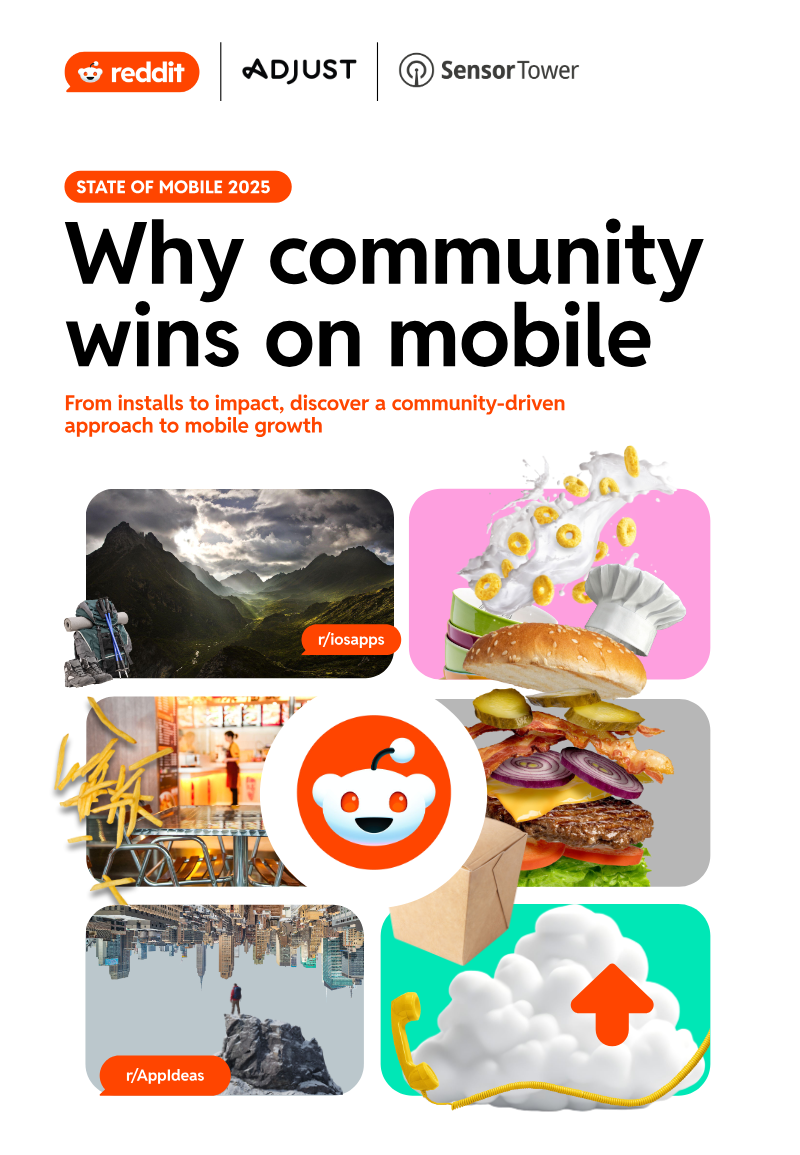
State of Mobile 2025: Why Community Wins on Mobile
The State of Mobile 2025 report examines the current mobile ecosystem, emphasizing how community engagement—particularly on Reddit—drives sustained app growth. The analysis draws from data provided by Adjust, Sensor Tower, and Reddit’s own measurement tools, covering iOS and Google Play users worldwide during 2024. Key market metrics show that mobile app usage reached 4.2 trillion hours, with in‑app purchase revenue hitting $150 billion—a 13% year‑over‑year increase. Downloads have stabilized at roughly 135–140 billion annually, while average revenue per user rose to $285,000. Four major growth drivers are identified: generative AI apps (17 billion downloads in 2024, up from 5 billion in 2019), non‑game spend (in‑app purchase revenue outside gaming climbed $14 billion, a 25% YoY jump), mobile gaming (IAP revenue grew 4% to $81 billion, with strategy and puzzle genres leading), and cryptocurrency apps (session counts up 37% YoY, driven by Bitcoin price recovery).
The report’s core thesis is that Reddit users exhibit higher engagement and monetization than users acquired through other social or digital channels. Adjust data on 150 million Reddit installs show that Reddit‑driven users spend 55% more time in-app on Day 1, rising to 103% by Day 30, and achieve 12–15% higher retention rates across North America, EMEA, and APAC. Day‑1 spend rates are 41% higher than other social platforms and 159% higher than digital media, underscoring the community’s influence on lifetime value.
Methodologically, the study aggregates anonymous, event‑level data from Adjust, comparing key metrics—time spent, retention, and spend—across Reddit, other social platforms (Facebook, Twitter, TikTok, Snapchat, Pinterest), and broader digital media. The findings suggest that authentic, community‑driven conversations on Reddit not only accelerate download decisions but also foster deeper, more profitable user relationships. The report concludes with actionable best practices for brands to leverage Reddit’s conversational ecosystem, improve onboarding, and measure non‑monetary interactions to maximize long‑term LTV.
- Reddit-acquired users demonstrate significantly higher lifetime value, with 41% higher Day-1 spend than other social platforms and 159% higher than digital media.
- Reddit users exhibit superior long-term retention and engagement, spending 55% more time in-app on Day 1 and 103% more by Day 30 compared to other channels.
- Global mobile in-app purchase revenue reached $150 billion in 2024, representing a 13% year-over-year increase, while total usage hit 4.2 trillion hours.
- Generative AI apps experienced massive growth in 2024, reaching 17 billion downloads compared to 5 billion in 2019.
- Non-gaming in-app purchase revenue grew by $14 billion, a 25% year-over-year increase, while mobile gaming revenue grew 4% to $81 billion.
+2
Reddit
Report32 pages
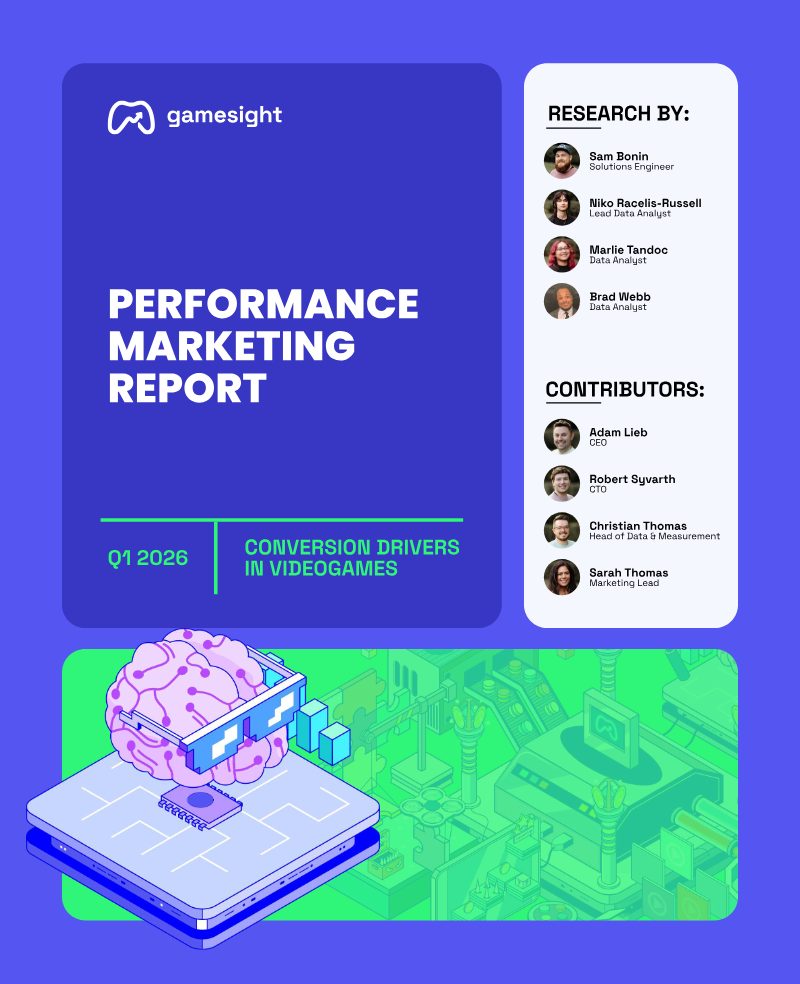
Conversion Drivers in Videogames: Q1 2026
Marketing strategy and community sentiment serve as the primary determinants of conversion performance in the global video game industry as of early 2026. While pricing models like free-to-play and premium structures influence baseline metrics, the efficacy of acquisition campaigns depends more heavily on the alignment between marketing channels and specific player decision-making behaviors. Traditional last-click attribution models frequently undervalue high-funnel awareness efforts, necessitating a shift toward incrementality testing and extended retargeting windows to accurately capture the impact of early-stage engagement.
Player decision cycles vary significantly across industry segments, dictated largely by the social and cooperative dynamics inherent in different genres. Multiplayer and massively multiplayer online titles require longer conversion windows due to the complexity of social coordination, whereas single-player experiences benefit from strategies that emphasize urgency and individual-driven processes. Consequently, marketing efforts for multiplayer games should prioritize social proof and sustained community engagement, while single-player titles gain more traction through direct, time-sensitive calls to action.
Game quality and public perception act as critical multipliers for conversion, particularly within the premium sector. High Steam review scores, specifically those reaching the highest sentiment tiers, can nearly triple conversion rates for premium titles, whereas free-to-play conversion remains largely indifferent to such metrics. Because premium games involve extended evaluation periods, marketers must maintain consistent community-focused sentiment management to protect long-term conversion potential. By tailoring acquisition strategies to these distinct genre-based behaviors and moving beyond simplistic attribution, publishers can better optimize campaign performance and maximize player acquisition efficiency.
- Marketing execution is the primary driver of performance, with conversion rates for F2P games varying by 371x across different ad networks, dwarfing the 35% baseline advantage F2P titles hold over Premium games.
- Last-click attribution models undervalue upper-funnel awareness channels like YouTube, as 50% of the most popular demand-generating ad networks are not effectively captured by last-click metrics.
- Premium games priced above $40 require nearly twice the conversion window of mid-tier titles, and players take 27% longer to convert on Premium titles (141 hours) compared to F2P titles (111 hours).
- Steam review scores significantly impact Premium game performance, where moving from a 'Mixed' to 'Very Positive' rating can nearly triple conversion rates, whereas review scores show no measurable impact on F2P conversion.
- Multiplayer games exhibit longer decision cycles, taking 2.5x longer to convert than single-player titles, with MMO players requiring a median of 49.5 hours to convert compared to 21 hours for shooter players.
+3
GamesightMay 2026
Report57 pages
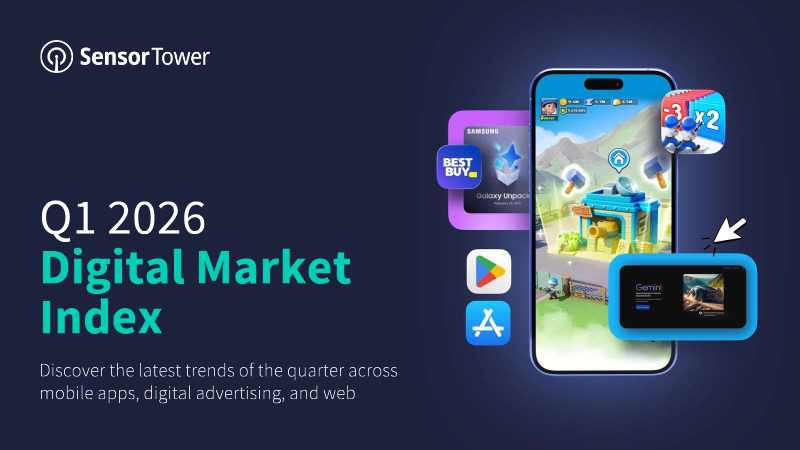
Digital Market Index: Q1 2026
The global digital economy experienced a significant structural transition during the first quarter of 2026, characterized by a pivot away from traditional mobile gaming toward generative artificial intelligence and short-form entertainment. While global in-app purchase revenue climbed 9.3% to $43.5 billion, this growth was primarily fueled by non-gaming sectors. Mobile gaming faced a notable contraction, with downloads falling 12% year-over-year, even as puzzle titles maintained their status as a primary revenue anchor. Conversely, the generative AI sector surged by 174%, signaling a shift in consumer engagement as users increasingly migrate from web-based interfaces to dedicated mobile applications.
Geographically, the market landscape is bifurcating between mature and emerging economies. The United States market exhibited signs of cooling, recording its lowest revenue growth rate at 3.5%, while India and Indonesia emerged as primary drivers of download volume. Despite the slowdown in U.S. consumer spending, the digital advertising sector remained resilient, growing 15% to $48 billion. This expansion was heavily supported by a 31% increase in software-related ad spend, as advertisers aggressively reallocated budgets from linear television toward targeted digital channels and retail media networks.
Retail media continues to evolve beyond the dominance of Amazon, with platforms like Walmart and Target capturing significant share by leveraging offsite social channels. This trend is particularly pronounced in essential categories such as personal care and food and beverages. As the industry matures, the competitive landscape for generative AI has also become more distributed, with market share spreading across multiple platforms like Gemini and Claude. These findings reflect a broader trend of digital consolidation, where mobile-first engagement and AI-driven utility define the current trajectory of the global digital marketplace.
- Global in-app purchase (IAP) revenue reached $43.5 billion in Q1 2026, marking 9% year-over-year growth and the 13th consecutive quarter of positive performance.
- US digital ad spend grew 15% year-over-year to $48 billion in Q1 2026, with Reddit emerging as the fastest-growing channel at 89% year-over-year growth.
- US mobile IAP revenue growth slowed to an all-time low of 3% year-over-year, recording two consecutive quarters of decline from its $15.1 billion peak.
- Generative AI advertising spend in the US surged to over $430 million in Q1 2026, more than triple the amount spent in Q1 2025, contributing to a 31% year-over-year increase in software ad spend.
- Retail media ad impressions in the US declined 3% year-over-year to 156 billion, driven by a 14% drop in Amazon impressions, even as Amazon maintained over 88 billion impressions and 4x the scale of Walmart.
+3
Sensor TowerMay 2026

Report7 pages
The Essential UA Financing Guide: 2026
The guide outlines a non‑dilutive financing model designed to fund mobile studios’ user acquisition (UA) campaigns by leveraging cohort performance data. It argues that the global UA spend reached $78 billion in 2025, rising 13% year‑on‑year, and that studios typically allocate 50–70 % of revenue to paid UA while financing through equity. The proposed solution offers capital without equity dilution, with repayment tied directly to user revenue and a lock‑step mechanism that scales cash flow alongside UA spend. The repayment schedule follows the cohort’s return on ad spend (ROAS) curve, beginning when ROAS reaches 100 %.
Eligibility criteria focus on predictability rather than speed of payback. Studios must demonstrate at least six months of clean ROAS curves, a history of trending toward transaction data, and an average monthly payback around $100 k attributable to predictable cohorts. The financing partner evaluates whether recent cohorts mirror historically profitable ones, using a benchmark tool that compares a studio’s cohort against over 5,000 mobile app cohorts. Key metrics include cohort margin of safety, tail risk, payer retention, volatility, and scalability.
The methodology involves sharing cohort data from platforms such as Appsflyer, Adjust, GCP, or Snowflake. Underwriters then size a facility, allowing studios to draw up to 80 % of their monthly UA spend per cohort. Repayment proceeds once the ROAS curve reaches breakeven, with downside shared if cohorts underperform. The guide targets mobile studios worldwide operating in 2026, offering a structured pathway to unlock growth capital while preserving equity.
- Global mobile user acquisition (UA) spend reached $78 billion in 2025, representing a 13% year-on-year increase.
- Studios can access non-dilutive financing to cover up to 80% of monthly UA spend per cohort, avoiding equity dilution while scaling growth.
- Repayment is tied directly to cohort performance, with the schedule beginning only once the return on ad spend (ROAS) reaches the 100% breakeven point.
- Eligibility requires a minimum of six months of clean ROAS data and an average monthly payback of $100,000 from predictable cohorts.
- Underwriters evaluate studio eligibility by benchmarking cohort data against a database of over 5,000 mobile app cohorts, focusing on metrics like margin of safety, volatility, and payer retention.
+3
InvestGameApr 2026

Report33 pages
2026 Global Non‑Gaming App Trends Report
The report argues that non‑gaming mobile applications are experiencing accelerated growth driven by AI integration, short‑form content, and intensified user acquisition competition. Key findings show that Android dominates download volume—particularly in Utilities (79 % of installs) and Life Services (58 %)—while iOS generates a higher share of revenue, especially in Finance & Business (56 % of iOS revenue) and Life Services (57 %). In 2025, AI‑focused apps such as ChatGPT (+1,340 %) and Perplexity (+3,613 %) achieved the highest year‑over‑year download growth, and Short Drama titles like Kuku TV (+45 % k) and RapidTV (+498 %) recorded explosive revenue increases, with AI Social apps (e.g., Character AI +918 %) also driving significant monetization.
User acquisition activity expanded across all major categories, with Life Services (+42 %) and Finance & Business (+43.5 %) leading the rise in app counts. Smart bidding adoption surged, with Target ROAS spend increasing by 50 % and Target CPE spending up 57 %, particularly in Utilities and Entertainment. Cost‑per‑install (CPI) analysis revealed that E‑Commerce on Android commands a 3× premium, while Finance & Business on iOS reaches 4.6×, underscoring high competition for transactional users.
Monetization patterns shift toward in‑app advertising (IAA), dominating across Education, Utilities, and Entertainment. Video formats—rewarded and interstitial—outperform banner ads by 128–165× eCPM, with North America delivering the highest rewarded video eCPMs (up to 11.8× in Short Drama). The report covers global markets excluding Mainland China from January to December 2025, drawing on anonymized data from Mintegral and Insightrackr across 100+ key app categories.
- AI-focused applications experienced massive 2025 growth, led by Perplexity (+3,613%), ChatGPT (+1,340%), and Character AI (+918%).
- Short Drama apps like RapidTV (+498%) and Kuku TV (+45k%) are driving explosive revenue, with North American rewarded video eCPMs for this category reaching up to 11.8x.
- Android leads in global download volume, particularly in Utilities (79%) and Life Services (58%), while iOS captures the majority of revenue in Finance & Business (56%) and Life Services (57%).
- User acquisition competition is intensifying, evidenced by a 50% increase in Target ROAS spending and a 57% rise in Target CPE spending, particularly within Utilities and Entertainment.
- Cost-per-install (CPI) premiums remain high for transactional users, reaching 3x for E-Commerce on Android and 4.6x for Finance & Business on iOS.
MintegralApr 2026
Report2 pages
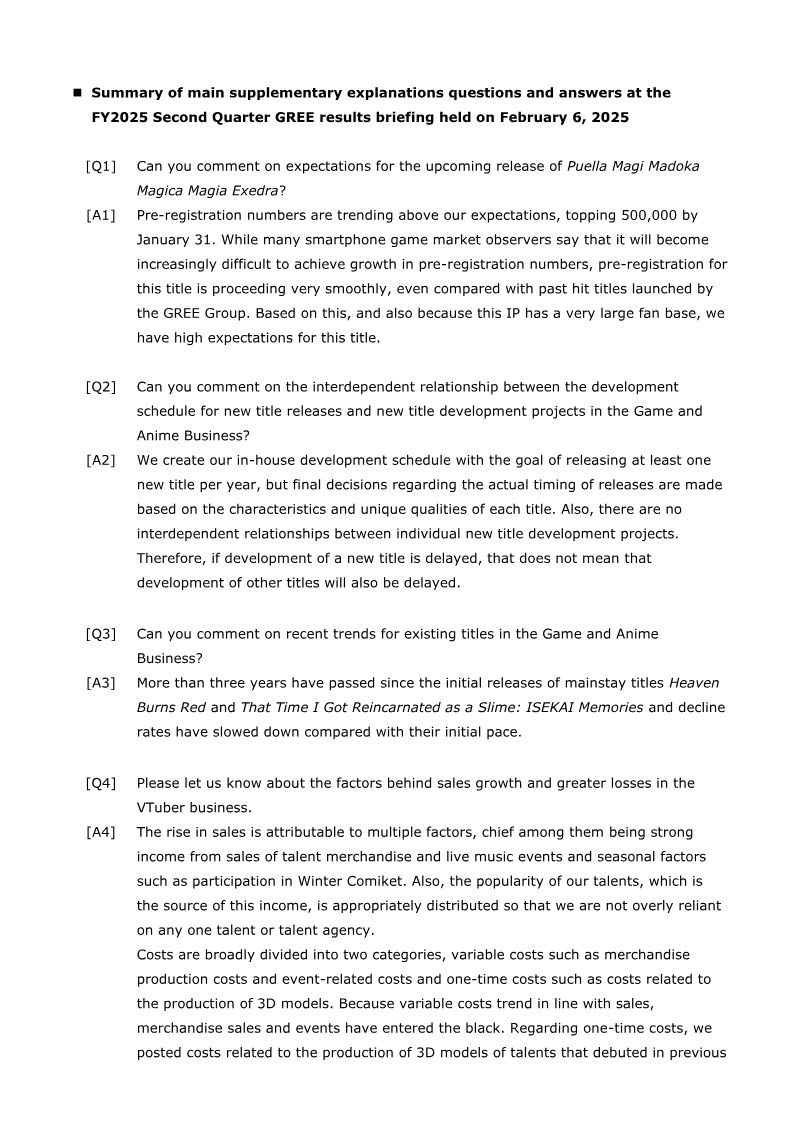
Summary of Main Supplementary Explanations Questions and Answers: FY2025 Second Quarter GREE Results Briefing
The briefing outlines GREE’s performance and strategic outlook for FY2025 Q2, focusing on game releases, existing title dynamics, and the VTuber business. Pre‑registration for “Puella Magi Madoka Magica Magia Exedra” surpassed 500,000 by January 31, exceeding expectations and reinforcing confidence in the IP’s strong fan base. The company maintains an annual release cadence for new titles, but schedules are determined independently per project; delays in one title do not cascade to others. Existing flagship games such as Heaven Burns Red and That Time I Got Reincarnated as a Slime: ISEKAI Memories have experienced a deceleration in decline rates after three years, indicating sustained player engagement.
In the VTuber segment, sales growth is driven by talent merchandise, live music events, and seasonal participation in Winter Comiket. Revenue has turned profitable as variable costs align with sales, while one‑time expenses—primarily 3D model production for new and returning talents—have increased quarterly, contributing to larger losses. Management anticipates that expanding the talent roster will stabilize one‑time costs and enhance profitability.
Looking ahead, GREE projects monthly profitability in FY2026 with annual VTuber sales near ¥3.0 billion, followed by accelerated growth targets. The briefing underscores a balanced approach to new title development, sustained performance of legacy games, and a focused strategy for scaling the VTuber business while managing cost structures.
- GREE targets monthly profitability for its VTuber segment in FY2026, with annual sales projected to reach approximately ¥3.0 billion.
- Pre-registration for the upcoming title 'Puella Magi Madoka Magica Magia Exedra' exceeded 500,000 by January 31, signaling strong market interest.
- Flagship games 'Heaven Burns Red' and 'That Time I Got Reincarnated as a Slime: ISEKAI Memories' have stabilized, showing a deceleration in decline rates after three years of operation.
- The VTuber business is currently experiencing increased quarterly losses due to one-time 3D model production expenses, though variable costs have successfully aligned with sales.
- GREE maintains an independent release schedule for new games, ensuring that project-specific delays do not impact the broader annual release cadence.
+2
GREE

Report10 pages
Q4 2025 Investor Presentation
The Q4 2025 investor presentation details a period of record financial performance for the company, characterized by significant revenue growth and successful strategic integration. The primary thesis centers on the company’s transformative year, highlighted by the successful consolidation of Plarium and a shift toward a midcore gaming focus. For the fourth quarter of 2025, the company achieved net sales of SEK 3,123 million, representing an 8% organic growth rate and a 108% increase in constant currency year-over-year. Adjusted EBITDA reached SEK 717 million, maintaining a 23% margin, while unlevered free cash flow totaled SEK 878 million with a 66% conversion rate.
The scope of the report covers the global gaming operations of the company throughout the 2025 fiscal year, with specific emphasis on the fourth quarter. Key operational findings indicate that user acquisition (UA) spending rose to 38% of revenue in Q4, a 98% year-over-year increase in constant currency, largely driven by the integration of Plarium and the scaling of casual and racing franchises. Revenue streams showed a notable shift, with direct-to-consumer contributions rising 600 basis points to 32% of the total. Franchise performance was bolstered by strong results in the racing and word game segments, which saw year-over-year growth of 43% and 28%, respectively.
Methodologically, the financial data is presented on a reported basis, with constant currency adjustments applied to isolate organic growth trends. The report incorporates full-year 2025 figures and highlights the impact of the Plarium acquisition, which was integrated into the group starting in February 2025. Looking ahead, the company concludes the period with a stable leverage ratio and a new organizational structure, positioning itself for continued midcore expansion and the potential public offering of its PlaySimple division.
- The company achieved Q4 2025 net sales of SEK 3,123 million, marking 8% organic growth and a 108% year-over-year increase in constant currency.
- Adjusted EBITDA for Q4 2025 reached SEK 717 million with a 23% margin, supported by an unlevered free cash flow of SEK 878 million.
- User acquisition spending surged to 38% of revenue in Q4, representing a 98% year-over-year increase driven by the integration of Plarium and scaling of casual and racing franchises.
- Direct-to-consumer revenue contributions grew by 600 basis points to reach 32% of total Q4 revenue.
- Key franchise segments showed strong momentum, with racing games growing 43% and word games growing 28% year-over-year.
+5
Modern Times Group