North America reports and market data
Documents
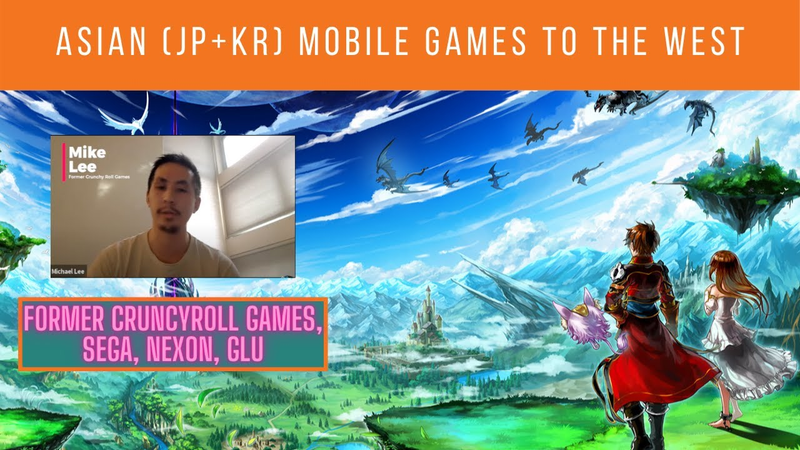
How Do Asian Game Pubs (JP + KR) Bring Games to the West? | Mike Lee (Crunchyroll, SEGA, Nexon, Glu)
Japanese and Korean game publishers face distinct strategic hurdles when expanding into Western markets, often characterized by a tension between domestic design philosophies and global consumer expectations.
- Japanese and Korean publishers often treat the West as a secondary market for incremental revenue, leaving them vulnerable to Chinese developers who prioritize aggressive, global-first strategies.
- Successful Western market entry for Asian studios frequently relies on combining high-fidelity RPG mechanics with established anime or Western intellectual properties, as demonstrated by companies like Netmarble.
- Asian publishers face significant financial risk due to high licensing costs and the difficulty of adapting games designed for isolated domestic markets to Western consumer expectations.


Rapport Annuel 2020 de l’ALD
Canada’s video-game sector continued to function as a high-growth engine in 2020, supporting roughly 48 000 full-time-equivalent positions, of which 27 700 are direct industry jobs, and generating about C$4.5 billion in GDP.
- Canada’s video game sector generated approximately C$4.5 billion in GDP and supported 48,000 full-time-equivalent positions in 2020.
- The number of development studios in Canada grew by 16 percent in 2020, reaching a total of approximately 700 studios.
- The industry maintained employment levels throughout the COVID-19 pandemic by implementing remote-work guides and targeted outreach campaigns.

In the Valley of Gods Canceled?! | Games ReCAP
The development of In the Valley of Gods, the highly anticipated project from the former Campo Santo team, has been officially placed on indefinite hold following the studio's acquisition by Valve.
- The development of Campo Santo’s 'In the Valley of Gods' has been placed on indefinite hold following the studio's acquisition by Valve.
- Former Campo Santo staff have been reassigned to internal Valve projects, including 'Half-Life: Alyx', 'Dota Underlords', and Steam platform development.
- The project's original creative momentum has been dismantled due to the departure of key personnel, including contract writers who held significant institutional knowledge.

GDC Plays Afterparty with game director Adam Hines
Afterparty explores the intersection of comedy and adventure through the journey of two friends navigating Hell to outdrink Satan.
- Night School Studio's Afterparty development process relied on an 1,800-page script, with game director Adam Hines writing 80% to 90% of the content.
- The studio employs a rigorous iterative workflow, conducting two to three rounds of rewrites after initial implementation to ensure gameplay mechanics and dialogue timing function correctly.
- Afterparty incorporates a drinking mechanic that serves as a puzzle-solving system, allowing players to manipulate character personality types to overcome obstacles like bypassing bouncers.
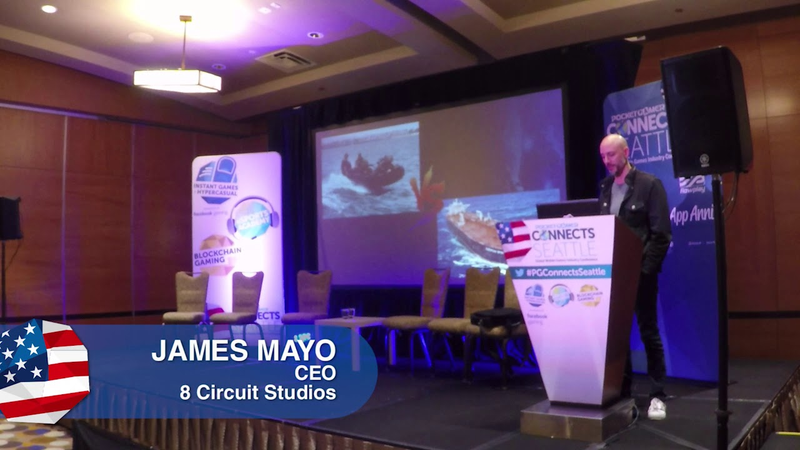
Lessons from triple-A game development applied to blockchain games
The integration of triple-A development methodologies into the blockchain gaming sector offers a strategic framework for smaller, agile studios to navigate the complexities of emerging technology.
- Keep core game logic within the game engine to ensure performance, using the blockchain exclusively as a specialized ledger for digital assets to avoid high latency and transaction costs.
- Adopt an 'open kitchen' community-first development model to replace traditional secretive marketing, allowing for cost-effective, continuous market research and playtesting.
- Prioritize rapid prototyping to identify the core engagement 'hook' early, enabling teams to 'fail fast' and validate technical architecture before scaling.
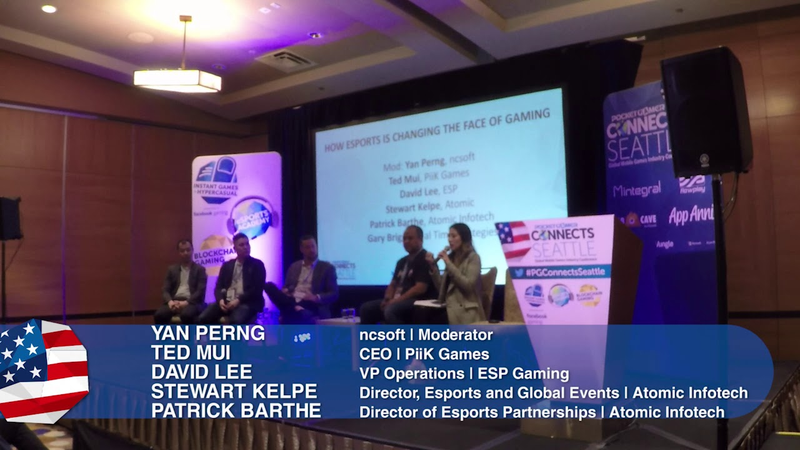
How esports is changing the face of gaming
Esports is fundamentally reshaping the gaming industry by transitioning from a player-centric model to a spectator-driven ecosystem that mirrors the structure of traditional professional sports.
- The gaming industry is shifting from a player-centric model to a spectator-driven ecosystem that mirrors traditional professional sports to generate self-sustaining revenue.
- Publishers are increasingly integrating competitive features, such as spectator modes and fair balancing, during early development to drive user acquisition and long-term retention.
- The sector is attracting mainstream corporate sponsorship, allowing publishers to move beyond internal funding and leverage gaming as a primary marketing engine.
The future of gaming and global trends
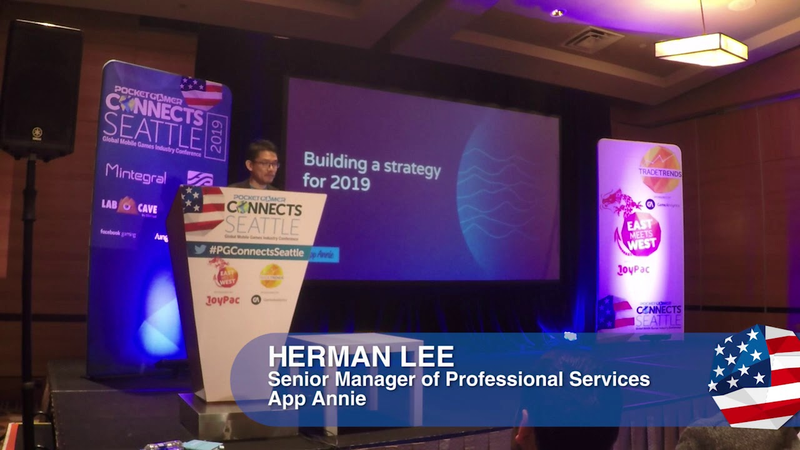
The mobile gaming industry continues to demonstrate significant global expansion, with mobile revenue consistently outpacing console and PC platforms.
- Mobile gaming is the industry's dominant platform, with revenue projected to exceed 60 percent of total global gaming spend by the end of 2019.
- The market is bifurcated into emerging regions like India and Brazil, which drive high download volumes, and mature markets like the U.S., Japan, and China, which generate the bulk of revenue despite slowing download growth.
- Developers are shifting toward diversified revenue models, increasingly supplementing traditional in-app purchases with subscription-based monetization and ad-revenue strategies.
Games industry consolidation and acquisition strategies
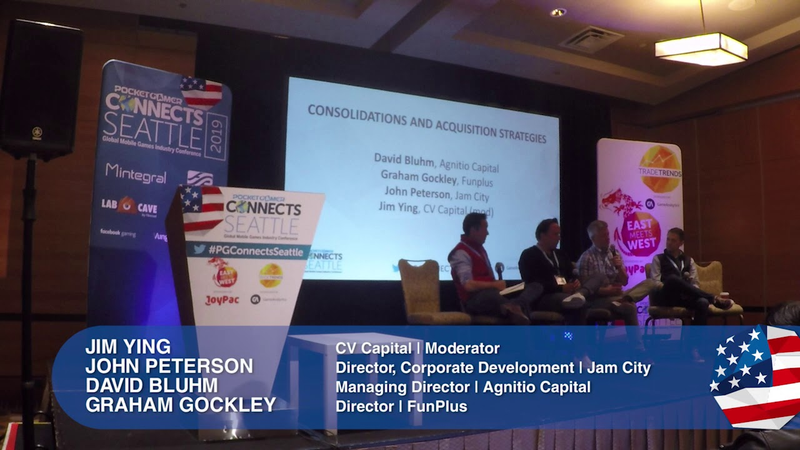
Strategic acquisitions in the global games industry are primarily driven by the necessity for portfolio diversification, the acquisition of high-value intellectual property, and the requirement to scale commercial success effectively.
- Acquisition valuations in the gaming industry typically hover around 10x EBITDA, though final figures fluctuate based on growth trajectory, IP uniqueness, and strategic synergies.
- Acquirers prioritize studios that demonstrate strong performance metrics, specifically targeting those currently in or nearing the soft-launch phase.
- Successful integration depends on cultural alignment and the retention of founding teams, as buyers increasingly aim to preserve creative environments rather than simply absorbing assets.
Future opportunities for games developers
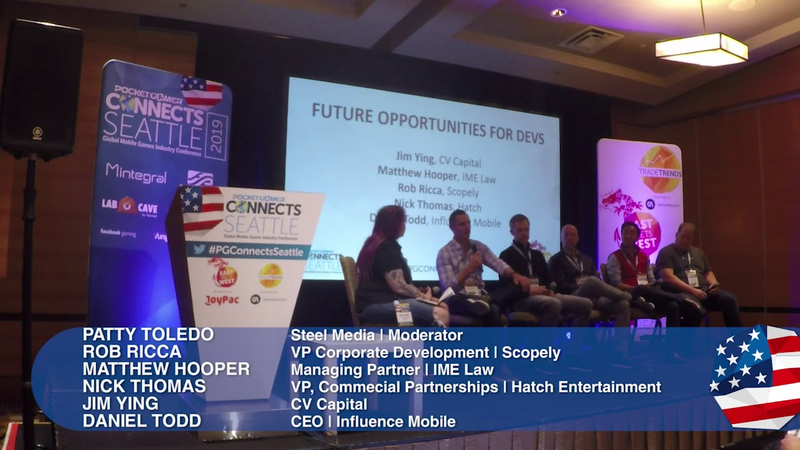
The gaming industry is currently undergoing a strategic shift as developers navigate market saturation and the diminishing returns of traditional mobile free-to-play models.
- Studios must shift from traditional mobile free-to-play models toward deep, community-driven social experiences to counter market saturation and diminishing returns.
- Developers can reduce high mobile marketing costs by targeting niche audiences and utilizing subscription-based streaming services that provide built-in platform support.
- Foundational business operations require securing clear intellectual property ownership and establishing long-term alignment with publishing partners regarding LiveOps and revenue transparency.
80% data, 20% luck – How to make profitable games in 2019
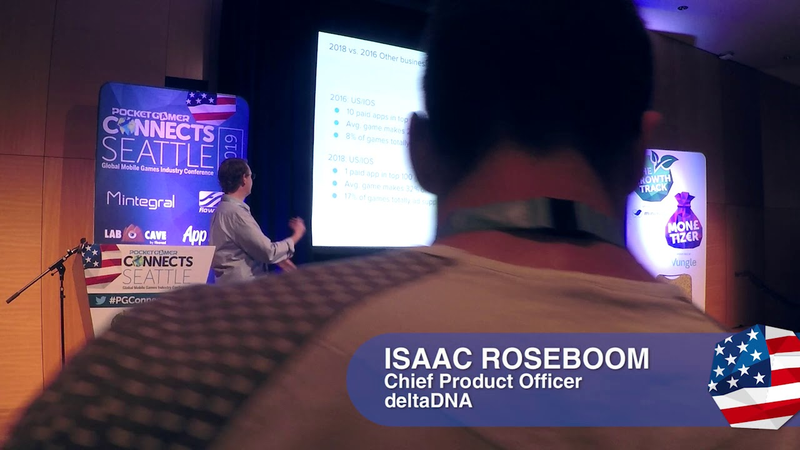
The mobile gaming industry has transitioned from a hit-driven, scattergun marketing approach to a data-centric model focused on sustainable growth and long-term player engagement.
- Mobile gaming has shifted from a 'boom-bust' launch model to a sustainable growth strategy, resulting in a 64% survival rate for games launched in 2018 compared to only 40% in 2016.
- Successful publishers now delay paid user acquisition (UA) until months after launch, allowing them to gather data on player segments to ensure marketing spend targets high-value users.
- Engagement is now prioritized over aggressive monetization, as evidenced by the fact that while total US App Store revenue grew 30% between 2016 and 2018, the number of players remained relatively static.
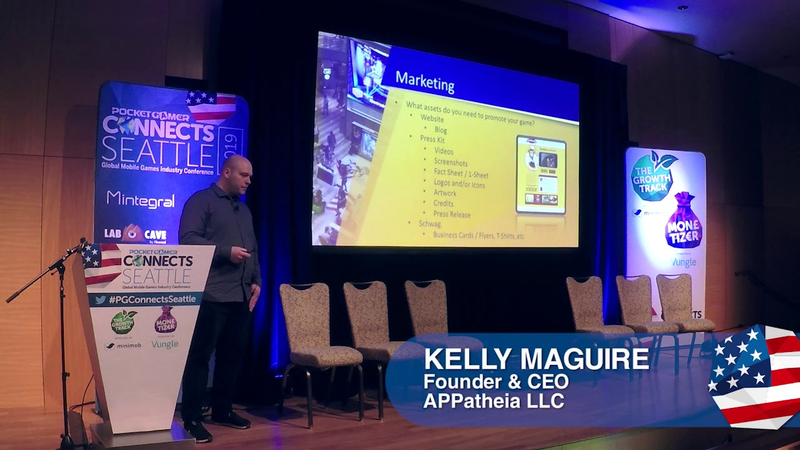
Marketing and business on a budget for indie developers
Indie game development requires a shift in perspective from viewing a project as a creative passion to treating it as a commercial product.
- Indie developers must treat marketing and monetization with the same level of rigor and resource allocation as the actual game development to succeed in a competitive market.
- Marketing strategy should focus on identifying a unique selling proposition and communicating it through concise, digestible content tailored to short attention spans.
- Paid acquisition should leverage sophisticated targeting on platforms like Facebook, Instagram, and Google, while utilizing cost-per-install networks and micro-influencers for scalable growth on limited budgets.
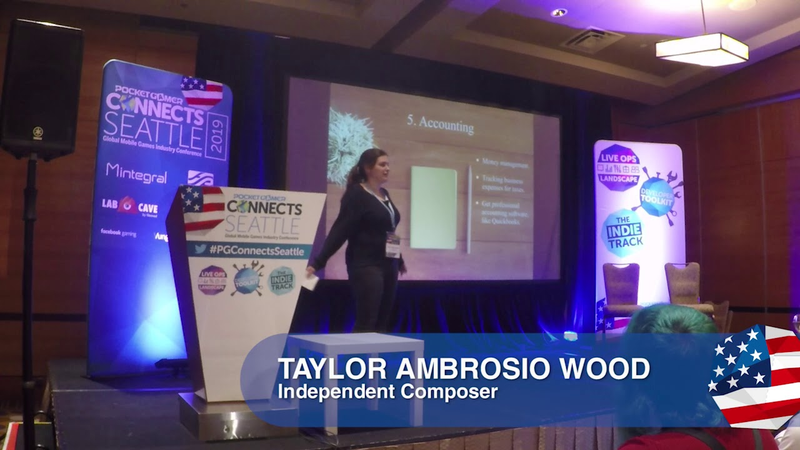
10 must-know business tips for games industry freelancers
This presentation outlines ten essential business strategies for freelancers in the games industry, emphasizing the necessity of treating creative work as a professional business entity.
- Treat freelance work as a formal business entity rather than a creative hobby to ensure long-term financial stability and professional standards.
- Utilize dedicated software for accounting, invoicing, and task management to automate administrative burdens and maintain professional operations.
- Mandate detailed contracts for every project to explicitly define payment terms, intellectual property rights, and specific limits on revision requests.