North America reports and market data
Documents

Embracer Group Acquires Dark Horse: Presentation
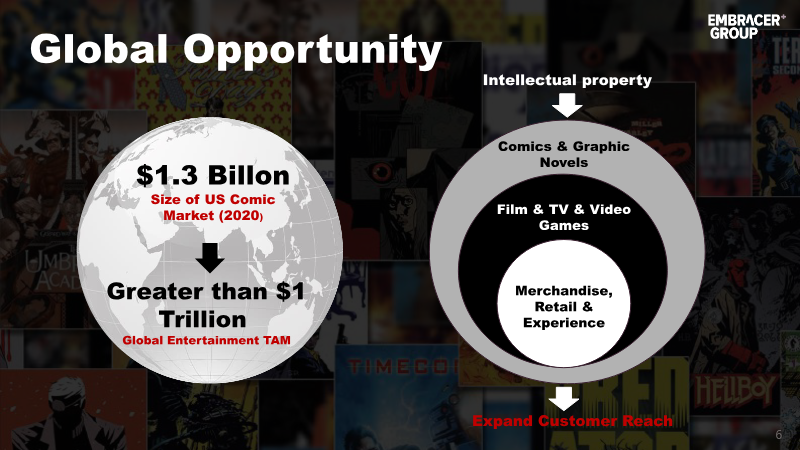
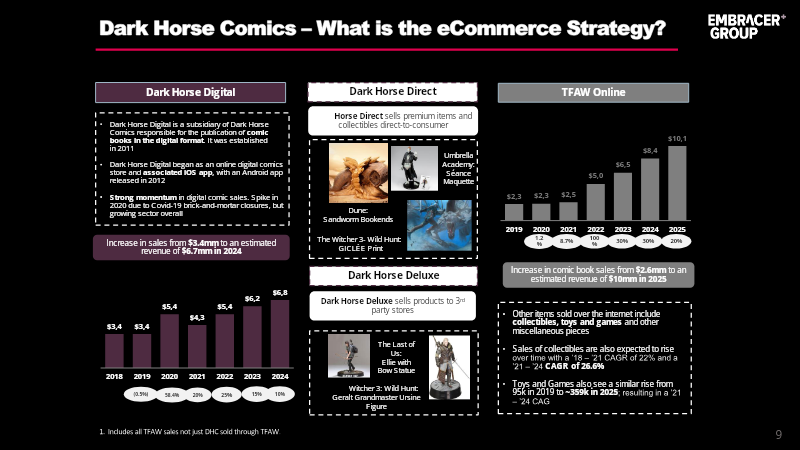
Embracer Group’s acquisition of Dark Horse serves as a strategic expansion into transmedia, integrating a major comic book publisher and production house into its existing portfolio.
- Embracer Group is acquiring Dark Horse to integrate its transmedia capabilities, including a library of over 600 titles and a network of 2,000 creative professionals, into its gaming portfolio.
- Dark Horse will become Embracer’s tenth operative group, with the transaction expected to close by January 2022 and no planned restructuring.
- Dark Horse reported 2021 net sales of SEK 900 million and an operational EBIT of SEK 130 million, with projections to reach up to SEK 200 million in operational EBIT by the 2023/2024 fiscal year.

How to Brand a New Game Studio with Joe Nickolls, President of Timbre Games
Establishing a new game studio in the competitive Vancouver market requires a strategic shift toward human-centric employer branding.
- Prioritizing a values-driven, human-centric culture over traditional corporate prestige allows new studios to differentiate themselves and attract high-quality talent in competitive markets like Vancouver.
- Timbre Games achieved a workforce composition that is 67% women by removing exclusionary, jargon-heavy language from recruitment processes and prioritizing transparent communication.
- Operational success is driven by the philosophy that internal culture directly dictates creative output, ensuring team cohesion translates into high-quality player-facing game design.

Designing the Bustling Soundscape of New York City in 'Marvel's Spider-Man'
The creation of a believable, non-fatiguing soundscape for Marvel’s Spider-Man relies on a sophisticated hybrid architecture that balances dense environmental immersion with strict technical performance constraints.
- The soundscape utilizes a hybrid architecture that blends static 2D ambient beds with dynamic 3D point-source emitters to balance environmental density with technical performance.
- Audio clarity during high-intensity gameplay is maintained through global state management and side-chaining, which automatically ducks background noise during combat and cinematics.
- Technical art tools were used to automate the generation of reverb and delay volumes across 8,300 individual buildings, eliminating the need for manual asset placement.

Ni No Kuni Cross Worlds to $100M in 11 Days | Talk with Junde Yu GM Gaming at App Annie
Ni No Kuni: Cross Worlds achieved significant commercial success upon its initial release in select Asian markets, generating $100 million in gross revenue within just 11 days.
- Ni No Kuni: Cross Worlds generated $100 million in gross revenue within 11 days of its initial launch in Japan, South Korea, Taiwan, and a few other Asian markets.
- The game combines kingdom-building mechanics with an action MMORPG structure, featuring a meta-narrative where the player character is a beta tester trapped inside a virtual reality game.
- High production values linked to the established Ni No Kuni IP allow for premium pricing on gacha items, as players are already familiar with the characters, voice acting, and storylines.
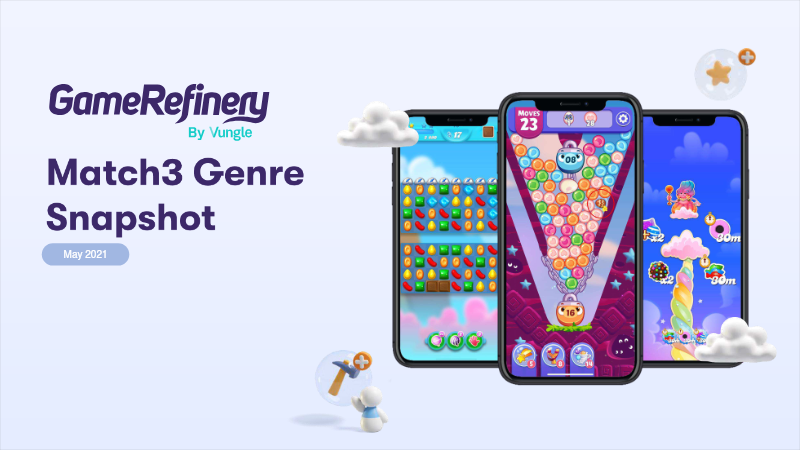
Match3 Genre Snapshot: US iOS (May 2021)
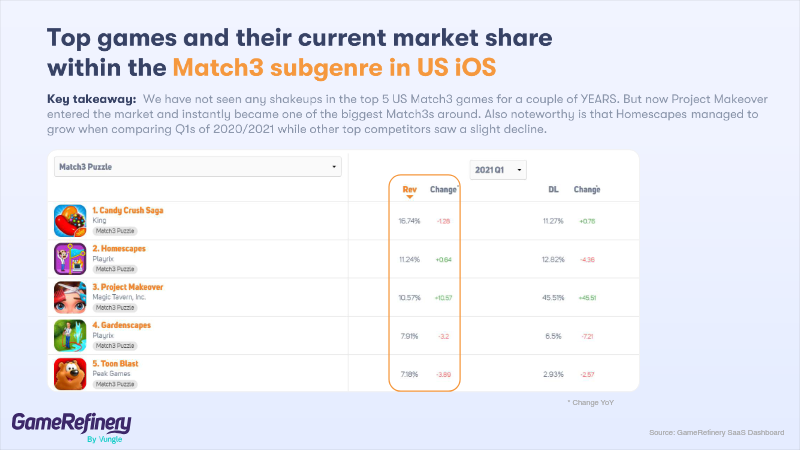
The Match3 subgenre remains the most lucrative segment within the US iOS mobile gaming market, accounting for approximately 16% of total regional revenue.
- As of May 2021, the Match3 subgenre accounts for approximately 16% of total US iOS mobile gaming revenue.
- No new Match3 titles entering the top 500 grossing rankings over the last 18 months utilize standard swapping mechanics, indicating a shift toward gameplay diversification.
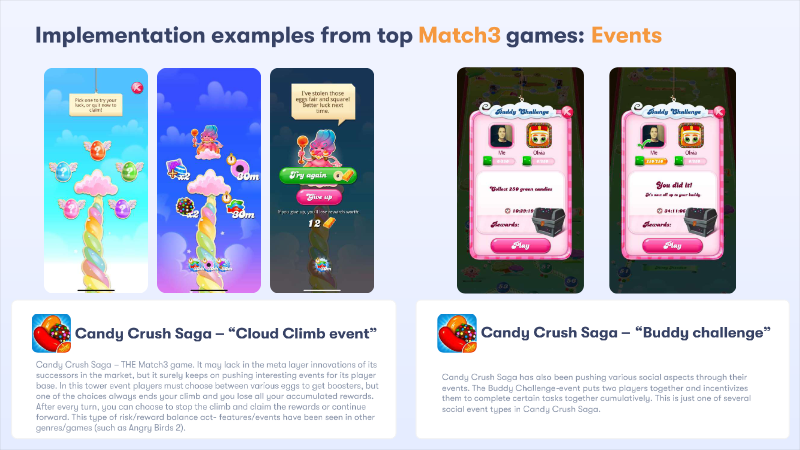
- Modern Match3 success is increasingly driven by meta-layers, specifically decoration and customization features seen in titles like Royal Match and Project Makeover.
Special: The Texas Winter Storm Episode - GDC Podcast
The 2021 Texas winter storm serves as a critical case study on the fragility of modern infrastructure and the necessity of individual and community-level resilience.
- The 2021 Texas winter storm demonstrated that prioritizing systemic efficiency over redundancy creates critical vulnerabilities in essential infrastructure like power, water, and heating.
- Infrastructure systems must be designed to handle unprecedented environmental stressors, as complex networks are inherently prone to cascading failures when capacity is exceeded.
- Community-led mutual aid and resource sharing proved more reliable than centralized systems during the total utility collapse, serving as a vital survival mechanism.

AMA: Brian Horton, Creative Director on Insomniac Games’ Marvel’s Spider-Man: Miles Morales
Marvel’s Spider-Man: Miles Morales serves as a focused character study that establishes Miles as a distinct hero through unique bioelectric powers and a narrative deeply rooted in the protection of his Harlem community.
- Insomniac Games utilized a focused, intimate narrative scope to establish Miles Morales as a distinct hero while maintaining high production quality during the logistical constraints of the global pandemic.
- The development team differentiated Miles from Peter Parker by creating unique combat styles and traversal animations, supported by specialized motion capture techniques.
- Authenticity in the Harlem setting was achieved through direct collaboration with local residents and story consultants, alongside the integration of American Sign Language via professional ASL actors.
Balancing Community and Business: Walking the Tightrope of Needs
Effective community management in the mobile free-to-play sector requires balancing the often-conflicting needs of players and business stakeholders.
- Community managers should transition from reactive buffers to proactive product partners by aligning player feedback with business KPIs like revenue, engagement, and retention.
- Vocal community members often represent less than one percent of the total active, spending player base, meaning they are not always representative of the broader audience.
- Threats to quit are poor predictors of actual churn, as 65 percent of users who threatened to leave remained active in the game.
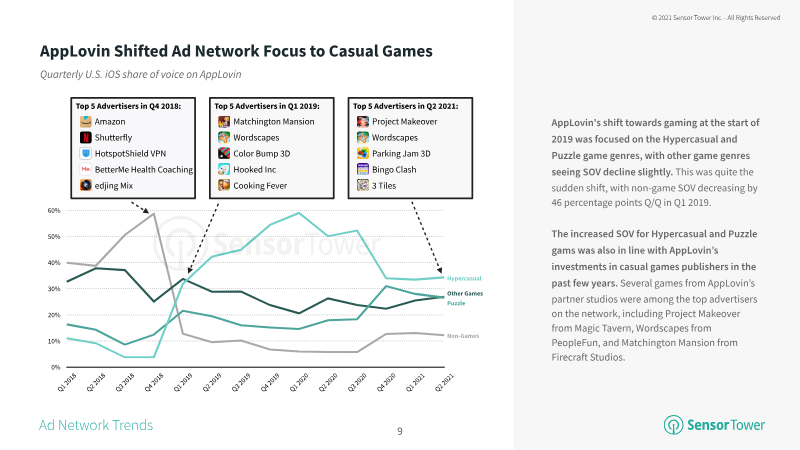
The State of Mobile Game Advertising 2021
The report examines U.S. mobile game advertising in 2021, focusing on ad network share of voice (SOV), creative formats, genre-specific trends, and demographic alignment.
- Gaming-centric networks including Chartboost, Unity, Adcolony, ironSource, and Vungle maintained over 90% share of voice (SOV) for mobile game advertising on iOS and Android throughout 2021.
- AppLovin and MoPub aggressively pivoted toward hypercasual publishers, increasing their game SOV to approximately 90% on iOS and 80% on Android by early 2021.
- AdMob increased its focus on Google Play titles, raising its game SOV from 60% to 80% by Q2 2021.


The State of Mobile Gaming: An Analysis of Mobile Gaming Market Trends and Top Titles in the U.S., Europe, and Asia
The analysis demonstrates that the mobile-gaming market expanded dramatically during the COVID-19 pandemic, with global quarterly revenue reaching $33 billion in Q2 2020 and downloads climbing 39% to 16 billion.
- The mobile gaming market is bifurcated between mature markets like the U.S., Japan, and China, which generate the bulk of global revenue, and emerging regions like India and Brazil, which drive the majority of download volume.
- Hyper-casual games are the fastest-growing segment, surging from 757 million installs in Q1 2018 to over 3.4 billion in Q1 2021, representing more than 30% of all mobile downloads.
- Freemium models are the industry standard, accounting for 99% of App Store revenue, while subscription models remain a minority, utilized by only 29% of top U.S. games.


Rapport Annuel 2021
The 2021 annual review underscores the emergence of video-games as a pivotal social and economic force within Canada, where roughly 61% of the population—about 23 million people—engage in regular play.
- The Canadian video game industry successfully lobbied to be excluded from the revised Canadian Broadcasting Act, avoiding tens of millions of dollars in potential royalties and regulatory burdens.
- Approximately 23 million Canadians—61% of the population—are regular gamers, with 58% of adults and 80% of adolescents increasing their playtime during the pandemic.
- The industry maintained operational continuity during 2021 as 30,000 employees transitioned to remote work without disrupting the majority of scheduled game releases.
The Modern Mobile Gamer: 2021 Gen Z Edition
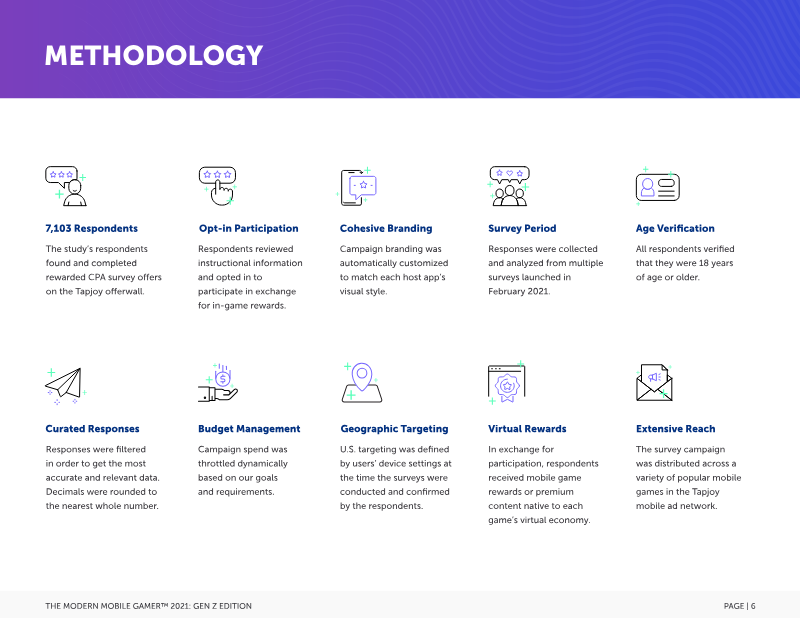
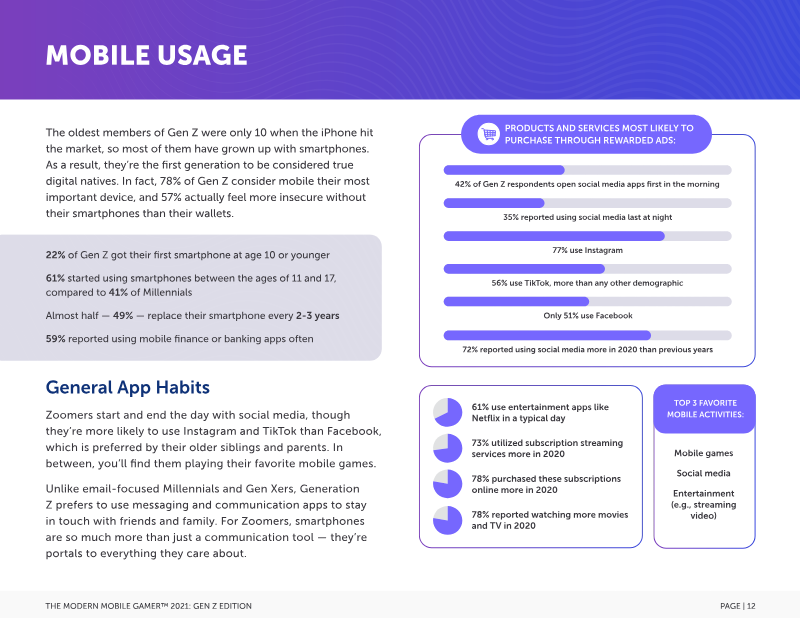
This analysis examines the mobile behaviors, gaming habits, and advertising preferences of Generation Z, defined as individuals born in 1997 or later.
- Mobile is the dominant gaming platform for Gen Z, with 86% of the demographic using smartphones for gaming compared to only 42% who use consoles.
- Rewarded advertising is the most effective engagement strategy for this group, with 54% preferring rewarded ads and 53% engaging with them, significantly outperforming Instagram (38%) and TikTok (23%).
- The COVID-19 pandemic significantly accelerated mobile gaming adoption, with 71% of Gen Z respondents reporting increased mobile gameplay during 2020.