Employment reports and market data
680 game industry reports, presentations and talks about employment from writers such as Game Developers Conference, Game Dev Unchained and PocketGamer.biz, newest from 2026. Every document has a summary and key insights with the page they come from, and 3,507 charts and tables are extracted as data.
Key figures
The New Zealand game development workforce is currently composed of 59% male, 24% female, and 4% non-binary employees, with a high concentration of senior and lead-level roles.
New Zealand Game Developers Association, 2026 · Game Development Workforce Report: New Zealand 2026, p. 4
By 2025, Cyprus's video game industry became a critical global hub, comprising over 400 companies and 4,300 employees, contributing approximately €1.15 billion directly to the national GDP.
Cyprus Game Makers Association, 2026 · Cyprus Video Game Industry Report 2025, p. 23
While 70% of the 1,610 surveyed professionals view their specific employer favorably, only 38% believe the UK games industry as a whole is a positive place to work.
Ukie, 2026 · UK Games Industry Workforce Demographic Survey: Executive Summary, p. 8
Between 69% and 84% of industry professionals are actively considering new employment due to widespread job insecurity and inadequate compensation.
InvestGame, 2026 · Games and Immersive: Salary & Satisfaction 2026 Report, p. 20
The industry faces high labor volatility, with 28% of professionals reporting recent redundancies and 68% to 83% of the workforce actively seeking new employment.
Skillsearch, 2026 · Games & Interactive Salary & Satisfaction Survey: 2024/25, p. 9
Documents

He Quit His Job & Became The Lead Artist On Twisted Tower (w/ Felipe Caravelli) — Ep 73
The independent game development landscape is currently defined by a tension between the efficiency of automated tools and the enduring value of human-centric, handcrafted artistry.
- Prioritize a cohesive, intentional aesthetic over generic high-fidelity realism to stand out in an oversaturated market.
- Utilize modular, grid-based geometry and exaggerated art styles to maintain economic viability while ensuring consistent performance and visual depth.
- Transitioning to an independent career requires shifting from traditional employment to a freelance model, necessitating strong financial discipline and the ability to manage project-based income instability.
Apple app review woes, EA job cuts, Supercell, Monopoly Go and more
The mobile gaming industry is currently navigating significant operational shifts, ranging from platform-level bottlenecks to major corporate restructuring.
- Apple’s App Store review times have extended from 24–48 hours to several weeks due to a surge in AI-generated submissions, disrupting developer roadmaps while Google Play remains unaffected.
- Scopely emerged as the top-earning U.S. publisher in Q3 with $507 million in revenue, bolstered by Monopoly Go, which generated $41 million in Q3 licensing earnings for Hasbro.
- Electronic Arts is cutting 400 jobs, representing 3% of its global workforce, as part of a restructuring plan following its transition to private ownership.
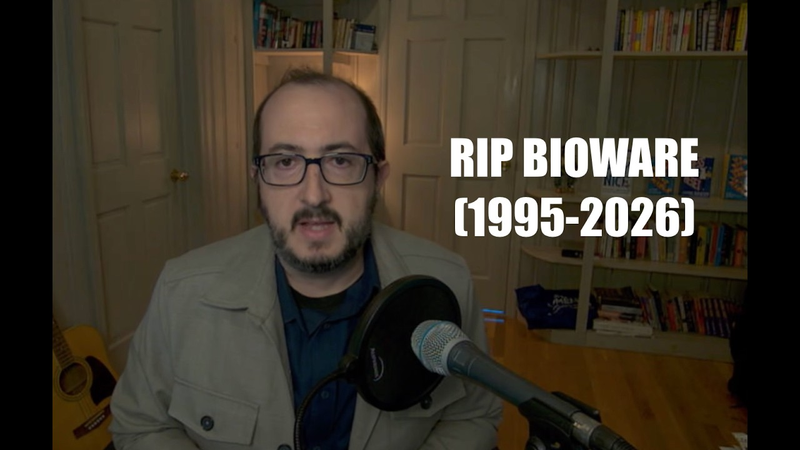
EA Shuts Down BioWare
Electronic Arts has officially shuttered the legendary game studio BioWare as part of a broader corporate reorganization and workforce reduction.
- Electronic Arts has officially closed BioWare as part of a corporate reorganization that includes 400 total job cuts, with 50 positions eliminated at the studio.
- The closure of BioWare results in the cancellation of the next entry in the Mass Effect franchise, which was in early-stage development.
- Dragon Age: The Veilguard sold approximately 1.5 million copies, failing to meet Electronic Arts' internal performance targets.
The Hidden Way Video Game Companies Exploit Workers
The video game industry frequently utilizes a tiered employment structure that creates a significant divide between full-time staff and agency-hired contractors.
- Video game companies frequently use external agencies to hire 'contractors' who perform the same full-time, long-term roles as permanent staff but are denied equivalent benefits, paid time off, and company perks.
- The use of agency workers allows companies to bypass significant employment costs, including expensive healthcare premiums and mandatory severance packages during layoffs.
- When major companies like Xbox announce large-scale layoffs, the figures often exclude agency workers, meaning the actual number of people losing their jobs is significantly higher than reported.
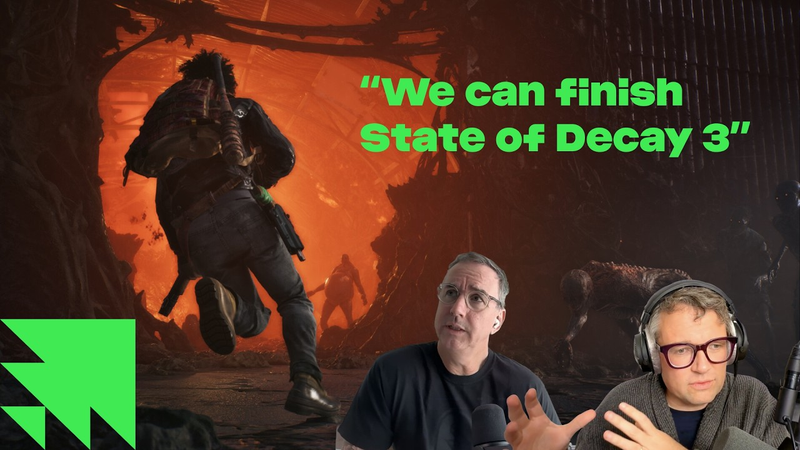
How Undead Labs saved itself and State of Decay from oblivion
Undead Labs has successfully navigated a complex transition from a Microsoft-owned entity to an independent, employee-owned studio.
- Undead Labs transitioned from a Microsoft-owned entity to an independent, employee-owned studio to ensure the long-term viability of the State of Decay franchise.
- The studio implemented a workforce reduction to align operational costs with its new independent model while issuing stock options to remaining staff to foster shared ownership.
- The State of Decay franchise has reached a milestone of 25 million players, with significant growth driven by the discoverability and scale of Xbox Game Pass.
Why Great Hires Fail at Startups | Garry Hill, Makers Fund
Startup recruitment failure frequently stems from excessive hiring speed and an over-reliance on narrow technical requirements.
- Startup hiring failure is primarily driven by excessive speed and an over-reliance on pedigree from major tech firms, which often masks a lack of the grit and adaptability required for early-stage environments.
- Founders must replace informal hiring with structured, multi-step interview processes that prioritize 'culture add' and T-shaped talent over candidates who simply mirror the existing team.
- When evaluating high-profile candidates, recruiters must distinguish between an individual's actual contributions and the support provided by the established corporate infrastructure of their previous employers.
Games media crisis deepens, Bloober hunts weird horror titles, and New York Games Week launches
The games media landscape is currently undergoing a period of profound instability, marked by widespread layoffs and a fundamental shift in audience acquisition as AI-driven search algorithms disrupt traditional traffic models.
- The games media sector is facing significant instability due to layoffs and AI-driven search algorithms disrupting traditional traffic models, leading to a shift toward niche publications and podcasts.
- Bloober Team is launching the 'Broken Mirror Games' label, led by Tymon Smektała, to expand into a global horror platform by managing two first-party and five second-party titles.
- New York Games Week is debuting as a decentralized event model that utilizes existing city infrastructure and coordinates with New York Comic-Con to replace traditional, rigid trade show formats.
Game Development Workforce Report: New Zealand 2026
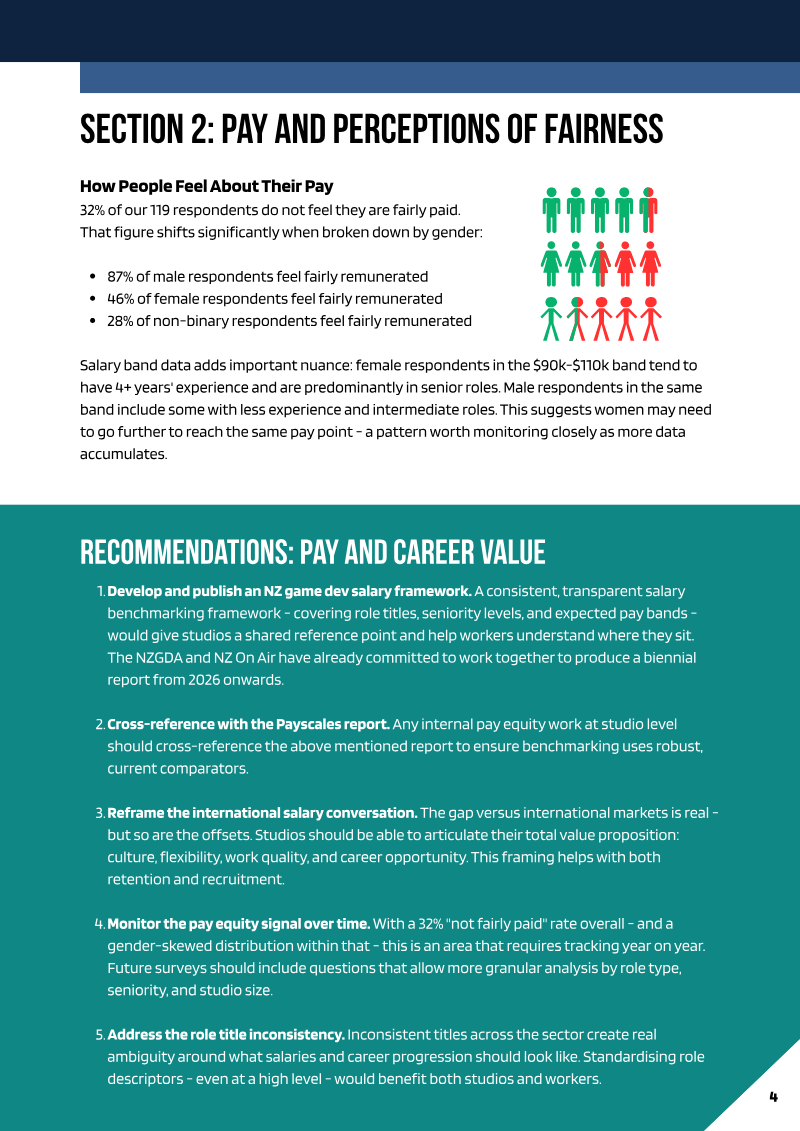
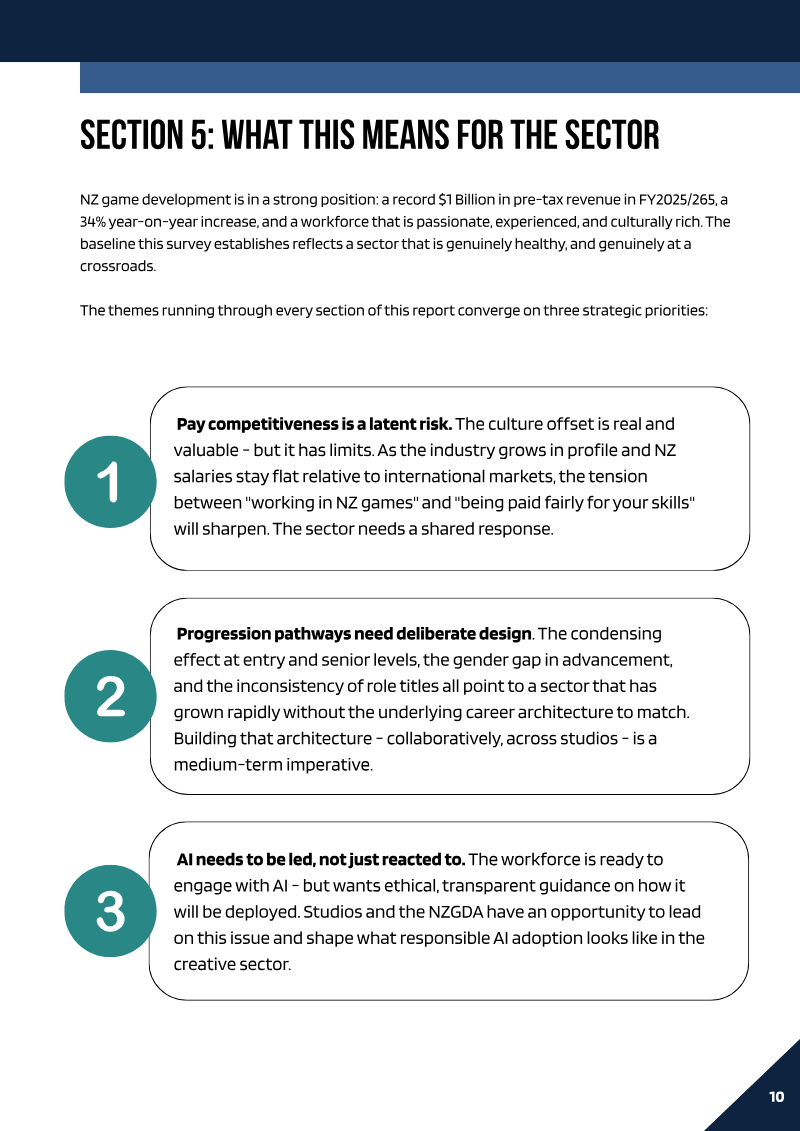
The 2026 New Zealand Game Development Workforce Report provides a comprehensive baseline analysis of the nation’s gaming sector, focusing on workforce demographics, compensation, workplace culture, and the impact of artificial intelligence.
- 32% of industry professionals report dissatisfaction with their remuneration, highlighting a critical need for standardized salary frameworks and transparent industry-wide benchmarks.
- While 60% of workers recognize the utility of AI in technical tasks, 55% express discomfort with its integration due to concerns regarding job security, creative quality, and the erosion of junior-level skill development.
- The New Zealand game development workforce is currently composed of 59% male, 24% female, and 4% non-binary employees, with a high concentration of senior and lead-level roles.
Xbox Layoffs, Halo To Activision, Destiny's Back (And More)
The gaming industry is currently navigating a period of significant structural shifts, characterized by ongoing corporate restructuring, long-term project planning, and strategic pivots for major franchises.
- Microsoft is laying off approximately 300 additional employees as part of an ongoing restructuring, with the company reporting it is now 75% through its planned reset.
- Halo development is being moved to Activision, with a small team remaining at Halo Studios to support existing games and the community, while Playground Games and Turn 10 are merging.
- Bungie has reversed its stance on the future of the Destiny franchise, announcing that Destiny 2 will unvault previous campaigns, destinations, and raids to remain a foundational part of the studio's future.

S07, E34: What if everything turns out alright?
The central thesis of this analysis is that despite widespread predictions of a catastrophic labor market collapse driven by artificial intelligence, the United States economy has remained resilient and near full employment nearly four years after the public release of ChatGPT.
- Despite widespread fears of a jobs famine, the US economy remains at full employment with a 4.1% unemployment rate as of September 2026, nearly four years after the launch of ChatGPT.
- The Economist estimates that AI has created approximately 1 million new jobs in the United States, significantly outpacing the roughly 200,000 layoffs attributed to AI since mid-2023.
- OpenAI's ChatGPT reached 1 billion weekly active users by August 31, 2026, representing roughly 12% of the global population and indicating that AI adoption is already widespread rather than in its infancy.

That EA-Scopely supergroup, Reform's mobile game, King strikes, Mattel, Roblox, Mizuguchi, more
The mobile games industry is currently navigating significant shifts in corporate consolidation, regulatory pressure, and platform evolution.
- Bloomberg reports that Saudi Arabia’s Public Investment Fund is considering a merger of its gaming assets, including Savvy Games Group, EA, Scopely, and Moonton, to create a unified gaming supergroup.
- King faces potential strikes at its Stockholm and Malmo offices on September 25th following a year-long dispute over a collective bargaining agreement that the company rejected in June.
- Roblox announced new technology allowing creators to export games as standalone native titles for mobile, PC, and console, alongside a new 'Roblox Wallet' for daily real-currency creator payouts.
TWIG #400: Is the Game Industry Actually Crashing, OpenAI's Astra and 8 Years of Hot Takes
The global gaming industry is currently undergoing a structural market correction rather than a catastrophic collapse.
- The gaming industry is undergoing a structural market correction rather than a collapse, with employment levels remaining stable at approximately 750,000 workers since 2022.
- The sector remains fundamentally robust, supported by a global player base exceeding 4 billion and a 16% compound annual growth rate in mobile advertising.
- Indie game revenue has increased sixfold over the past decade, highlighting a significant shift in market distribution alongside AAA development budgets that now range from $250 million to $400 million.