USA reports and market data
316 game industry reports, presentations and talks about usa from writers such as PocketGamer.biz, Extra Credits and Game Dev Unchained, newest from 2026. Every document has a summary and key insights with the page they come from, and 2,519 charts and tables are extracted as data.
Key figures
Grand Theft Auto 6 is projected to achieve the strongest pre-order campaign in industry history, with estimated global sales between $3.3 billion and $5.2 billion by the end of its launch week.
Newzoo, 2026 · GTA 6's First Week: The Strongest Pre-order Campaign on Record, p. 1
The company reported net sales of SEK 22,370 million for the 2024/25 fiscal year, with PC and console games accounting for 47% of total revenue and an adjusted EBIT margin of 15%.
Embracer Group, 2026 · Sustainability at Embracer Group: FY 2025/26 ESG Fact Sheet, p. 1
AI startups currently command 65% of all venture capital, driving record-high median valuations of $838 million for Series C and D+ rounds.
PitchBook, 2026 · 2026 US Venture Capital Outlook, p. 10
Digital-first entertainment has become the US standard, with smart TV penetration at 63% and connected devices officially surpassing traditional broadcast media.
Vorhaus Advisors, 2025 · Vorhaus Digital Strategy Study: All Findings 2025, p. 6
The casual mobile gaming market grew by 3.6% in revenue and 6% in downloads during H1 2025, with legacy titles dominating as only 11% of top-grossing games were released within the last two years.
AppMagic, 2025 · Casual LiveOps Report: H1 2025, p. 9
Documents

EA Shuts Down BioWare
Electronic Arts has officially shuttered the legendary game studio BioWare as part of a broader corporate reorganization and workforce reduction.
- Electronic Arts has officially closed BioWare as part of a corporate reorganization that includes 400 total job cuts, with 50 positions eliminated at the studio.
- The closure of BioWare results in the cancellation of the next entry in the Mass Effect franchise, which was in early-stage development.
- Dragon Age: The Veilguard sold approximately 1.5 million copies, failing to meet Electronic Arts' internal performance targets.

⏳ Torture Sort is REAL: Jam Bus SandFall makes $80K/Day and is slow as hell!
The "torture sort" puzzle genre has emerged as a highly lucrative segment of the mobile gaming market, with leading titles like Jam Bus SandFall generating between $80,000 and $100,000 in daily in-app purchase revenue.
- The 'Sort' game category is generating approximately $120M per month in combined IAP and ad revenue, representing roughly half the market size of the merge genre and continuing to grow.
- Jam Bus SandFall is generating $80K per day in IAP revenue with a trajectory toward $100K, reflecting a 1,300% growth in downloads over a single month.
- Monetization for Jam Bus SandFall is heavily skewed toward IAP, with ad revenue contributing only $7K per day (12–16% of total revenue) via five rewarded placements.
Epic Games Goes All In On AI For Disney Shooter
Epic Games has initiated a significant strategic pivot, transitioning its upcoming collaborative project with Disney—an extraction shooter featuring Marvel and Star Wars intellectual property—into an AI-first production.
- Epic Games has delayed its upcoming Disney-licensed extraction shooter and mandated an 'AI-first' production strategy, requiring staff to replace handwritten code and traditional art workflows with generative AI tools.
- CEO Tim Sweeney is aggressively positioning Epic Games as a leader in the AI transition, viewing the technology as essential for the company's survival and future competitiveness in game development.
- The project, which features Marvel and Star Wars intellectual property, has faced multiple delays and internal development challenges, including shifting priorities and inconsistent decision-making.
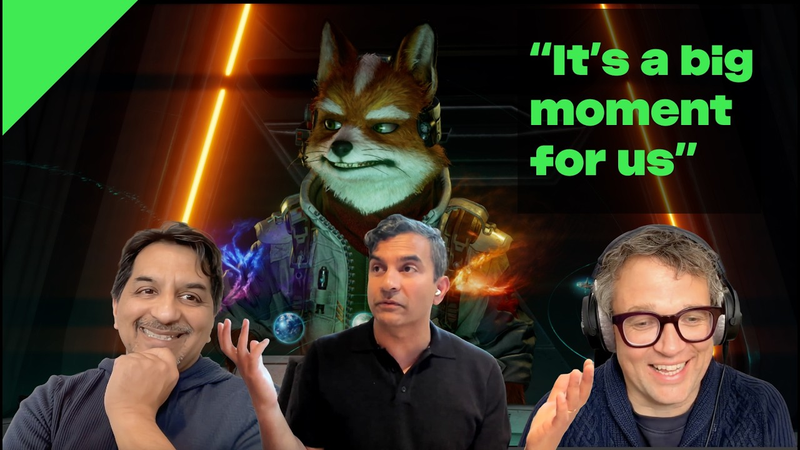
Star Fox developer Velan: How to survive as a North American game studio
Operating within the high-cost North American game development landscape requires a strategic shift away from the traditional, multi-year development cycles that often stifle innovation.
- Studios should adopt a lean, agile development model that prioritizes rapid prototyping and tight feedback loops to avoid the financial risks of multi-year, large-scale projects.
- Financial stability is best achieved by balancing a portfolio of stable, partner-funded AA-scope projects with smaller, self-funded original intellectual properties.
- Operational efficiency relies on maintaining a compact core team of highly skilled talent for creative direction while utilizing strategic outsourcing to manage production scaling.
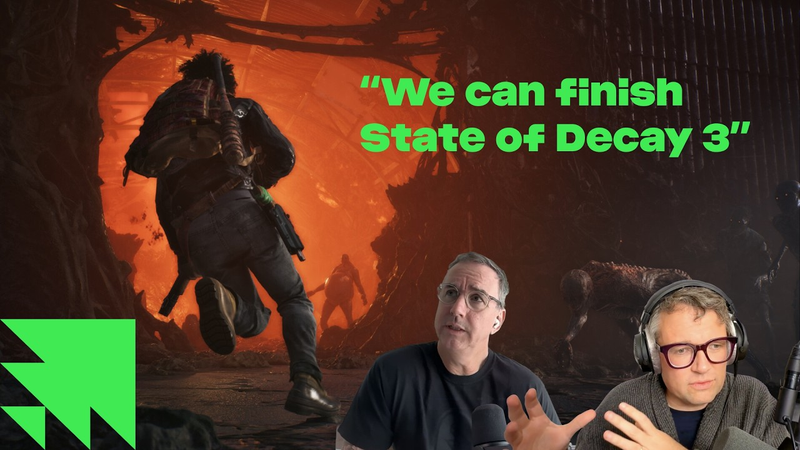
How Undead Labs saved itself and State of Decay from oblivion
Undead Labs has successfully navigated a complex transition from a Microsoft-owned entity to an independent, employee-owned studio.
- Undead Labs transitioned from a Microsoft-owned entity to an independent, employee-owned studio to ensure the long-term viability of the State of Decay franchise.
- The studio implemented a workforce reduction to align operational costs with its new independent model while issuing stock options to remaining staff to foster shared ownership.
- The State of Decay franchise has reached a milestone of 25 million players, with significant growth driven by the discoverability and scale of Xbox Game Pass.

S07, E34: What if everything turns out alright?
The central thesis of this analysis is that despite widespread predictions of a catastrophic labor market collapse driven by artificial intelligence, the United States economy has remained resilient and near full employment nearly four years after the public release of ChatGPT.
- Despite widespread fears of a jobs famine, the US economy remains at full employment with a 4.1% unemployment rate as of September 2026, nearly four years after the launch of ChatGPT.
- The Economist estimates that AI has created approximately 1 million new jobs in the United States, significantly outpacing the roughly 200,000 layoffs attributed to AI since mid-2023.
- OpenAI's ChatGPT reached 1 billion weekly active users by August 31, 2026, representing roughly 12% of the global population and indicating that AI adoption is already widespread rather than in its infancy.

Inside NYT Games: Why They Don't Play by the Same Rules
The New York Times Games division operates under a distinct philosophy that prioritizes long-term brand integrity and subscriber value over the aggressive monetization tactics common in the mobile gaming industry.
- The New York Times Games division rejects standard mobile industry monetization tactics like gacha systems and battle passes in favor of a subscription-based model that prioritizes long-term brand integrity.
- The development team utilizes a democratic, open-pitch greenlight system that allows any employee to contribute ideas, which led to the creation of successful titles like Connections.
- The division mandates a 60-day content buffer for new prototypes, using Canada as a primary testing market to analyze retention metrics before committing to a full-scale release.

How Double Fine Survived The Xbox Bloodbath
Double Fine Productions, the San Francisco-based studio led by Tim Schafer, has returned to independence following a seven-year tenure under Microsoft’s Xbox division.
- After seven years under the Xbox umbrella, Double Fine has returned to independence following a shift in Microsoft's corporate strategy under Sarah Bond, which prioritized higher profit margins over the studio's niche, quirky output.
- The transition to independence involved a grueling negotiation process in June 2026, resulting in Double Fine securing ownership of its intellectual property and necessary runway capital, though the studio was forced to lay off 23 employees.
- Double Fine is pivoting to a 'Double Fine Action Labs' model, focusing on smaller, experimental titles and rapid prototyping to mitigate the financial risks associated with high-budget game development.

🗯️ "Playable Anime" With No Anime: How OOC Makes $100K/Day on Pure AI Text
The rise of AI-driven interactive narrative platforms, exemplified by applications like OOC, marks a significant evolution in mobile entertainment by modernizing the classic multi-user dungeon experience.
- AI-driven interactive narrative platforms like OOC are generating between $100,000 and $500,000 in daily revenue by replacing scripted choice trees with generative large language models.
- These platforms utilize a token-based economy to incentivize frequent user engagement and consistent in-app purchases, driving high retention despite a minimalist, text-heavy interface.
- Developers scale user acquisition through 'creative churning,' a strategy involving the upload of thousands of near-identical ad variations to exploit algorithmic preferences for impressions.
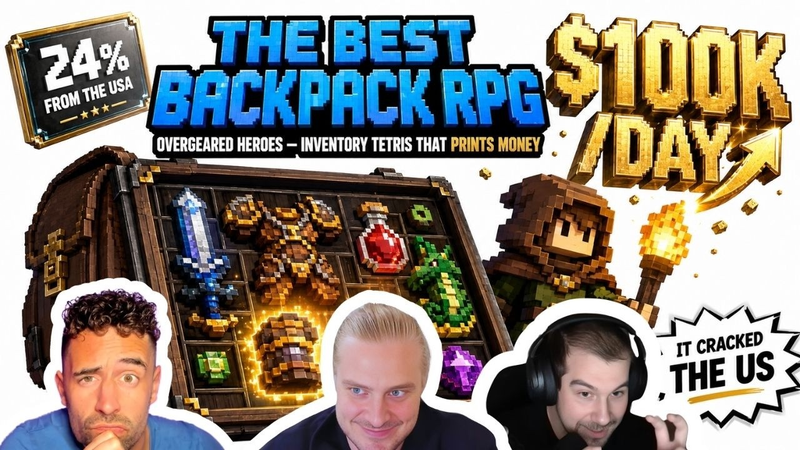
🎒 Overgeared Hero Breakdown: An Asian RPG That Actually Cracked the US market
Overgeared Hero represents a significant shift in the mobile RPG landscape by successfully bridging the gap between Asian-developed mid-core mechanics and the competitive United States market.
- Overgeared Hero generates approximately $100,000 in daily revenue, with the United States accounting for 24 percent of total earnings.
- The game achieves global market success by blending a traditional idle gacha chassis with an inventory-management roguelite core.
- Monetization is driven by a refined strategy of 12 rewarded ad placements rather than aggressive interstitial advertising, catering to a hardcore, strategy-focused audience.

TWIG #397: Roblox’s Congressional Crisis, Apple’s EU Overhaul & Netflix Games’ Down to One Studio
Roblox currently faces a critical juncture as it navigates intense congressional scrutiny regarding child safety and systemic exploitation.
- Roblox faces significant operational and valuation risks due to intense congressional scrutiny over child safety, compounded by slowing viral growth and declining daily active user metrics.
- Apple’s revised EU fee structure replaces per-install charges with a flat commission on alternative distribution, a change that disproportionately benefits large-scale operators while disadvantaging smaller developers.
- The gaming industry is experiencing a structural correction from a period of over-valuation, leaving small-to-mid-sized public entities vulnerable due to their inability to achieve the scale required for a hit-driven economy.

🚨📢 BREAKING NEWS: Rotate Labs Raise + Rival App Store Returns + Gaming Revenue Drops 4.5%?!
The mobile gaming industry is currently defined by a geographic shift in talent and funding, the emergence of alternative app distribution models, and a nuanced interpretation of revenue performance.
- Global mobile gaming revenue's reported 4.5% year-over-year decline in Q2 is misleading, as it fails to account for $9 billion to $12 billion in direct-to-consumer (D2C) revenue occurring outside traditional app store tracking.
- Uncaptured D2C revenue currently represents 15% to 20% of total industry earnings, suggesting the market is more robust than traditional metrics indicate.
- Aptoide has become the first rival app store to return to the US Google Play ecosystem, signaling a shift toward competition and alternatives to the standard 30% commission model.