1 free read left. Create a free account for unlimited reading + AI research.
Create free account
Future opportunities for games developers
Key insights
6 takeaways- 01Foundational business operations require securing clear intellectual property ownership and establishing long-term alignment with publishing partners regarding LiveOps and revenue transparency.
- 02Monetization and marketing expertise must be integrated early in the development cycle to balance creative vision with the high-growth requirements of venture capital.
- 03Developers can reduce high mobile marketing costs by targeting niche audiences and utilizing subscription-based streaming services that provide built-in platform support.
- 04Studios must shift from traditional mobile free-to-play models toward deep, community-driven social experiences to counter market saturation and diminishing returns.
- 05Studios must proactively address a more stringent regulatory environment, specifically concerning data privacy, user-generated content, and evolving restrictions on loot boxes.
- 06Long-term viability depends on building well-rounded teams capable of managing both creative development and the complex legal landscapes associated with global scaling.
Ask AI about this video
Transcript
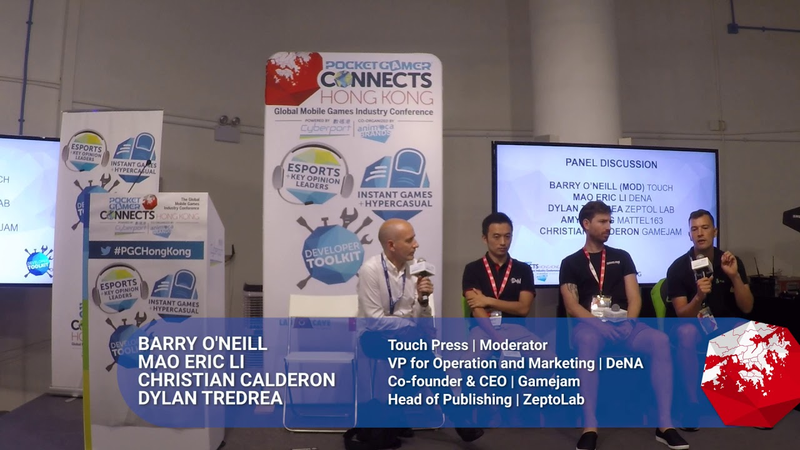
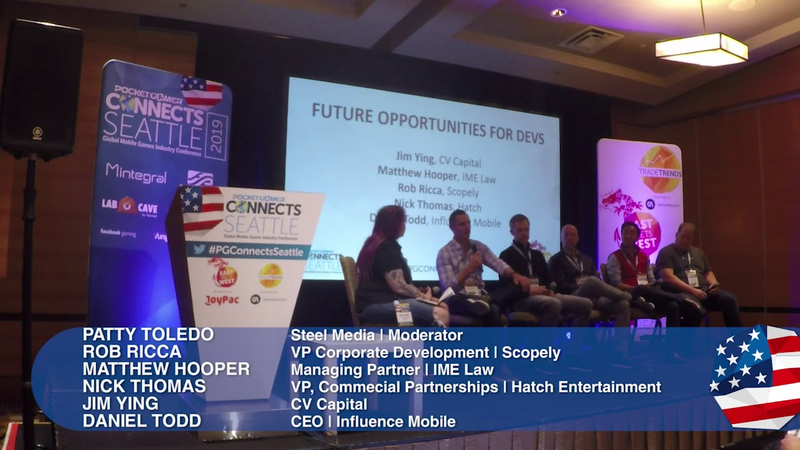
before we start if you could please introduce yourselves talk a little bit about what you do Mike this is working great hey Rob Raqqah VP of corporate development at scopa Lee I've been there for about a year before that I was at Glu Mobile for four years doing business development and corporate development so really focused on mergers and acquisitions and investments and other game developers a Matt Hooper a managing partner of IME law we represent game developers and I guess immersive media developers our clients have done about 16 billion dollars in global sales seven Guinness World Records for sales so we do a lot of deal flow in that space and
hopefully can help you all to see some red flags before they arise my name is Nick Thomas and the VP of commercial partnerships at hatch hatch is a mobile game streaming platform we're a subsidiary of Rovio and we're launching the world's first 5g game streaming service so it's really exciting time and glad to be here Jim yang I'm with CP capital we're an investment bank headquartered in Shanghai we focus on working with companies are looking to raise late-stage capital and M&A particularly from Asia daniel todd CEO of influence mobile we operate 200 sports rewards apps primarily focus about around engaging female sports fans and getting them to play games like scope ly and jam city and a lot of other games by associating with their ideal of sports and and building behaviors in those games so as you can see we have a very diverse panel so I hope that we can actually cover a lot of ground here we're gonna be talking about future
opportunities for devs and my first question well I'm not actually gonna ask you directly personally feel free to Jim jumping in every question you feel that you have something to add in but I would like to ask but the mamaia market being so saturated at a moment and a lot of indie developers having difficulty reaching the users the way they were supposed to do with the legislation being also challenging and in the integration all the time do you believe there are creative solutions that the developers can explore in market I started hard I guess I can start but you know leave it to the lawyer and the marketing expert over there to really dig in and and provide the big answers but yeah I mean I think we're seeing it all the time that developers are finding new and creative ways to break through
the market and I think a lot of it is about being very purposeful and finding that niche I mean you know developer like play Rick's you know five years ago I think we were sitting at glue saying oh wow you know Kings got this candy crush like no one's gonna be able to break in there on mastery and then Playworks comes out and innovates and you know has this whole invested and something totally new and different that the players loved and they're able to kind of break through and I think also through kind of you know we're seeing like with influence or marketing or you know company like seriously buying a radio you know radio advertisement and doing you know new innovative things that allow them to kind of break through and get out of this kind of performance marketing cycle that we're seeing but yeah definitely let Daniel and some of these experts talk more about it I mean what we've been seeing is better integration between app developers and the publishers it used to be that you just gave money to Google and hope that the people that played your game would
play but I think what we've seen with a lot of rewarded activities whether true warded video is just better integration start to lead to better returns for app developers and so the more creative that they can be the more willing they are to test they ultimately get higher returns and from a legislation perspective it seems like every time a great new invention or new way of monetization comes about immediately government's want to legislate to kind of dampen it and so obviously from a privacy perspective you've seen things come up like gdpr which is creating issues internationally just on may 8th or may 9th a Republican from West Virginia I think as a senator or no it was a house something like someone in Congress brought out a bill trying to regulate microtransactions and loot boxes and that kind of thing now they're trying to target it more towards children but they're using an analogous law that
really called Coppa that they're that they're kind of trying to potentially tie it to but then they're not broadening upon it so we'll see what happens but yeah the legislation issues it's just good to get out ahead of them be aware of them and then you know esa i know is doing a lot of work to try to counteract some of those things well i think that we always had legislation problems i think that the only the biggest problem is that the game developers were just focused in developing while the publishers were focused on the mark and then nowadays there is a better communication between them both developers and publishers need to be aware of the changes in the market all the time so very good so what are the new platforms developers should be researching in developing I think a really interesting one is if anything things have swung too far to the mobile side of things so console PC gaming used to be big you look at the absolute numbers it still is a growing market but
things have swung so much towards mobile because people see the growth of that market they see the well the top-grossing games are making but there's always been that consumer base that doesn't want to play the more hardcore more visually intensive games there's still millions of consoles out there and then with announcement of Google stadia with Amazon getting into gaming more seriously Microsoft Sony they have their streaming platforms I think that's an area that is less tap right now and for companies that are looking to start up and jump into an area I think there's more upside there yeah I would just add to that and it's actually what hatch is really focused on as well is bringing new distribution channels and a new revenue opportunity for developers I agree with Jim I think there's been so much focus on the kind of free-to-play mobile space that the sort of traditional PC can a premium development angle has been sort of you
know that is weaned a lot of these platforms are starting to merge those two worlds so what hatch is doing as an example is a it's a mobile first platform but we're focused on premium content and that content doesn't actually have to be mobile it can be PC or switch type of games that are then you know sort of adapted for touch input and then distributed through a mobile first channel so you can monetize more broadly and you don't have to think in these narrow sort of you know PC versus for you to play mobile there's now a middle ground that's emerged which i think is a really greenfield opportunity I mean I would I think things are moving more cross-platform and I think you know mobile probably will continue to be grow and be the the majority of revenue and interactive entertainment but I do think there's a lot of room for new mobile games to cross over to PC and console and vice versa obviously we're seeing it with things like fortnight but I think you know given free-to-play is the kind
of dominant monetization model out there and it's just making making so much more money per customer than kind of other forms of monetization I think we are going to see the free-to-play kind of move in more on the PC and console side and you know continue to maybe grow revenues more on those platforms and developers that want to work with publishers how how should this the the deal the TIBCO deal between publisher and developer how should they look like and and should what should developers be looking for if they want to work with publishers okay I mean one of the biggest issues is who owns the IP right that's a big question if you wind up creating a franchise based game or any game that has legs to it who owns the IP who's responsible for live ops to the extent that there's live ops going on whose cost is that at and and subsequent productions you know what rights are there with respect to subsequent reductions prequel
sequels you know it's the extent that exists if we're with console stuff I mean there's there's a number of things the economics what's the royalty structure look like we're seeing more and more now developers pushing for where publishers have rights with respect to release state and and kind of controls in that in that regard developers pushing to have some sort of a timeline where if a game isn't released after gold master delivery for some period of time that there's some sort of a kicker that they receive automatically so it just depends I guess in part on leverage but there there are a number of terms definitions like they talk about the Devils in the details you're getting definitions of revenue and and costs and expenses like that's where you really get into it right is it a third-party expense is it reasonable is it out of pocket because otherwise next thing you know your game could do 50 million dollars and guess what the publisher had sixty million dollars in expenses so it just it just depends on you know there's just a number of factors like that the interesting factors might be great to work with the
publisher might be your worst mistake depending on how you do the deal right that's right yeah I my my take on that is that publishers have gotten a bit lazy and they're very used to just doing things in a very comfortable single sort of focused manner and you know I'd like to see publishers being more proactive around some of these new business opportunities for their clients who are the developers that they represent going out and looking at something like Apple arcade and thinking well what does this mean for my client how could we do something that's special meaningful for this direct relationship rather than just sort of applying a formula to every single product that comes to the door I don't think that works for everyone so they need to be more customized for each of their clients and maybe it's to see how developer publisher relations have changed even over the last couple of years so I started in gaming at Xbox and there was a very traditional developer publisher relationship where the developer would build the game they'd literally hand off you know the code to the publisher and the publisher would
run with it and they would have the retailer relationships they would have the ability to make the boxes and the seat and the DVDs whereas now it's much more blended and if anything the developer has to stay engaged long term along with the publisher and it is very hard to and aligned interests because you know outside of funding increasingly there's a lot of things that developers can just do themselves especially on the PC you know mobile side of things yeah I think add add to Jim's point I mean the LiveOps angle it's very different than what we're seeing in the past and you need to build these relationships for that long term and have partners that want to be in this I think scope ly when their first successful games was a mini golf match up and I think the the publisher made a bunch of money on launch and after the first couple months was like alright great you know I'm moving on now and hopefully quickly learn learn the lesson and know the relationship with our development
partners has evolved over time we don't even think of ourselves as a publisher anymore were more of a co development shop where we've got you know a bunch of people in this Cokely side working on the game alongside our development partner and have you know arrangements where we're looking at the long term the benefit for both parties so it's a different mindset these days I would one of the questions yes is how do you identify the good publisher that was they definitely look at the publishers track record right so there are companies out there like scope lis who have worked successfully with external developers and their games have been successful and the games have been live for many many years whereas there are publishers out there who are saying that they're publishing games but then you ask them what games that they actually successfully publish to the top grossing charts and earning less really they can call those out there to be pretty suspect from the investment point of view what are the issues that the developers should keep in mind to attract the right investment and also to
avoid pitfalls when working with investors keep in mind is from the investor or the publisher standpoint what is it that they want to get out of it right so most VCS when they're investing in developers they want that 10 times 20 times 100 times exit so they're not looking for a developer that's coming in and saying all right we're gonna build a low risk platform that's gonna generate some cash flow they want the homerun because within their investments within their portfolio they're making a bunch of bets to hedge their own risk but they want each individual bet to be a grand slam and so if your business doesn't have the opportunity to be a grand slam and that's not how you're pitching it chances are you're not gonna get investment from that source and then also from a due diligence perspective I've seen several deals fall apart because developers just didn't do things that they wouldn't think to do cuz they
all got together as friends and made a game and the game was great and then they made another one right but they never got an employment agreement in place right really never got a confidential information and invention assignment agreement in place like some of the basic fundamentals that allow the the company to actually own the IP that is the backbone of its library or the backbone of the extent that had a patent or something along those lines you know and any any of that ownership they just don't do it so I'd say another thing to do is don't be penny wise pound foolish go out and get somebody up front to at least make sure you the basic basic agreements in place so I would also say be very thoughtful about the business plan I think I see a lot of developers that are early-stage and neither kind of all over the place or don't have like a clear plan in place and I think you know if you can show that you've been very thoughtful and thought it through and you know can clearly articulate what you're trying to do with your company it makes a huge difference and kind of stick to what you're passionate about
and you'll find that niche find that area where you're saying I'm this is how I'm going to differentiate and you know make it clear to the investor how you're gonna achieve that that makes a lot I have seen companies that they just want the money so they don't understand what does he mean having an investor in your board of directors or a seller your IP for an investor without knowing what's gonna happen afterwards they just want the money to do the next game with nothing so that's all of they're very good advice so we want to jump for platforms what are the platforms that were markets and platforms that we believe are gonna do that are gonna be the big things for a future where should developers be looking for that they are not doing now well I'll start that but I'm actually mostly interested in what the others think because I'm I'm drinking the kool-aid on this topic I really think the free-to-play world is is tired I
mean I know there's still a lot of opportunity there for you to play will always exist and I'm sure be a very meaningful revenue stream for those who know how to tap into it the right way I think there's this neglected new paradigm that that's coming to market with streaming through subscription different distribution channels this kind of cross distribution around PC to mobile and vice versa to me that seems wide open and for the first time the technology's there and the you know the content tools like unity that make it so easy to distribute or you know compile for different formats it seems like everything is finally aligning around this idea of these new platform opportunities but it's also very new and so you know for someone like Jim I'm personally interested in how they see that opportunity with the risk versus the obvious sort of you know trend of
where everything is heading right now to about something that you mentioned before like one is where do we think a lot of the majority of the future revenue will come from and a lot of it's definitely on mobile it is a growing market I think one way to think about it from a developer standpoint and also how investors might be looking at it is who already the leaders in that space how likely are they to continue succeeding and if you're starting a new studio or a new team our new product how likely are you to catch up to them or what is your competitive event versus the folks are already there so if you look at something like mobile gaming where there's you know 5 10 15 dominant players globally where they're sinking millions into development millions into marketing and they have an experienced team what are the chances that you're gonna be able to catch up to those folks I whereas there are other platforms out there you know Snoddy are ones that where people have swung too far away from console PC where it is you know if you do have the right experience so there's
a lot of folks who you know worked on console games but then they swung over to the mobile side of things but it is very hard to build one of those teams from scratch and to build the complexity of that type of game I think there's a lot of opportunity there and with the streaming platforms out there although streaming platforms the reason why you need to stream is because the game is going to be technically challenging difficult to play on a mobile device and so those types of games I think there's gonna be opportunity there and from a free-to-play perspective I'm still I'm bullish on long term free-to-play I think there is there are always going to be segments of people who don't want to play those types of games but I think if you look at the top grossing charts either PC or mobile at this point is proven that that's where a lot of the upside is but historically it's been the mobile side of things where that's really really picked up there are still some developers in some markets that are
a little reluctant on P so a lot of the console players they've had walled gardens around their audience bases and they're only now just starting to really accept free-to-play but all of those are essentially Wells like anyone who can put out four or five $600 for a console they're going to be willing to spend it's just a matter of are they comfortable yet with a free-to-play but I think someone everyone will get their yeah I mean just to kind of further on Jim's points like I think free-to-play I think we're still early stages I mean I think this is just a growing I think more and more users are converting on the free-to-play like you can you can see that it's becoming you know something more mainstream than it ever was before I mean I think if you look at the entertainment industry itself Gaming is now bigger than every other piece of entertainment like books movies streaming services gaming itself is
bigger than all of those combined and I mean that's al in large part due to free-to-play and the creating these kind of customized interactive experiences for people um that's the reason behind it right like it like sure Netflix everyone's paying the same amount every month right everyone's paying their 1099 around I think they maybe just raised through eleven ninety-nine a month whereas you know gaming if you really love a game and that game is being customized for your individual experience you're gonna be willing to pay a lot more for that customized experience and I think you're just gonna see more and more of that going forward kudos because I realized that I asked about the platform twice and you swing it beautifully thank you for that sorry the day is catching up on me so from a marketing point of view if an indie developer wants to work on marketing they don't have the money that King Soopers how other companies have where should they be looking at where can they get their chunk of the market I
think that's where I would jump in I think there's a lot of a lot of people who a lot of smaller publishers I mean obviously a majority the money is being spent with Google and Facebook who obviously care that small developers have an ROI but they don't have tools necessary to monitor that so I think if you're a small developer you obviously want to test on Facebook and Google but look around for places that are looking out for your best interest we focus on you know seven-day retention rates monetization rates Roe as for our game developers so your actual spending dollars that you're spending to certain publishers are going towards the things that you care about the most not just getting somebody to install and so often times I think it's when you're small you just think I'm just gonna go spend on Facebook until I've run out of money but I think you really have to look around and find that aligned interests between the publisher who's caring and finding the right audience that you're looking for and then there are certainly ways to do revenue share deals and profit sharing and those types of things that will make both sides money just one
other comment on that I think one sort of interesting opportunity is back to these new platforms they will do the marketing for you so if you can bring your game into a platform like Apple arcade they're going to promote your game to drive interest in their platform the same is true with hatch you bring the game to hatch and we actually do the marketing and user acquisition on the platform level for you on your to your benefit and now your your game is part of a portfolio so you don't monetize all of that traffic but you don't spend any money on it and you benefit from the kind of collective marketing effort that the platform is engaged in that's an easy way to get basically free marketing is to sort of follow behind the wake of these larger platforms that are pushing these initiatives it's kind of like being the first influences are on YouTube when YouTube started because you had less competition and you were there you were always featured in the beginning which is not what happens nowadays right yeah I mean if you're
gonna try to compete in the you know the the traditional free-to-play mobile space fighting for eyeballs is just I mean it's an ugly it's an ugly battle unless you're you know scoped Lee or you've got an established brand and established you know pipeline with a war chest to invest in user acquisition if you're small and you're coming up you don't have that kind of money you don't have those resources so you can either go and try to solicit investment to be able to buy that traffic or you can think more creatively or and how do you tie yourself to other you know some platforms or other emerging plays where you're a part of that story and benefit from that marketing how what is the that how will the community play on the future of indie developer we have seen that influencers became quite important for the market and and I imagined that you have the the live ops and all the community events how important it is to keep community engaged how do you think
this is gonna happen in the future and also I'm gonna pull the lawyer on that as well legally how do you think there was a content created by community is gonna play a role when for the developers in the future so you have two questions okay I'll start at the boring legal part so it is it's complex because typically when end-users are playing a game they're playing it's subject to a license agreement and typically that license agreement provides that the company that created the game owns all the content including you as the end users contributions to the content so it's it's but their complexities of that right because you have a grant or an O either an assignment of those rights or you have a license of those rights back to the company to use it perpetually irrevocably etc they're they're become issues though when you're dealing with microtransactions when you're dealing with cryptocurrency obviously now becoming very heavy heavily regulated and when you're
dealing with privacy and and information sharing on your network between different end-users I don't want to go into the weeds on that because literally everyone will fall asleep but but basically you know there there are through license agreements you can get around a lot of stuff but you still have to be aware of the underlying regulations now to the fun stuff yes I think community is becoming a bigger and bigger part of gaming and you know every successful game now has some social elements to it that's goal blaming everything releasing releasing at this point has real-time player versus player competition and we had some girl door games like Chelsea dice with buddies have an asynchronous player versus player but now you know we're moving to real-time PvP like our star chart game you know you've got thousands of users in that game at the same time hundreds of thousands in the game at the same time in a massive open universe that you can explore everyone's joining guilds or alliances in the game and kind of strategizing real-time and
that game chatting in the game chatting off the game and the rights of discord you can see like wouldn't impact that's had on on the gaming community at this point I mean you can go on discord any time of day now and chat with your your Star Trek Alliance members from around the world and strategize on what you can do in the game it just creates so much more depth and content to the game than you could ever create on your own or create through kind of BOTS or you know entity type competition within a game I think we've seen certainly benefits but you also have some risks in terms of you know moderating what's being created and you have the risk of somebody posting something or doing something in Flamm to the other people within the network and so we've found that you know sometimes you might instead of giving a free text communication you let people communicate through preset phrases or emoticons and that reduces your risk and so you know I think there's a trade-off on both sides it's certainly worth doing and doing well but you know there are
there are some downsides if you just let anybody communicate if it we've all probably read comments on various websites we understand how that rolls so to finish I wanna go what do you think it's gonna be the biggest challenges for developers in the future and if you could give a cautionary advice for the developers what would it be and then I want everyone I'm not gonna let you off the hook I can start on that when I guess you know being in a man a guy I think industry consolidation is one of the biggest kind of challenges out there right now I mean it's becoming a it's been echo throughout this panel today like how how tough it is to publish a game how expensive it is you know doing the marketing user acquisition if you look at on the mobile gaming side like the top 10 games I mean the average age of them is close to 10 years old at this point so it's becoming really hard to kind of break in and break through so I think that's you know big risk to
developers but you know there's also if you do something special and you know you're you're quick and nimble and canady eight and and build you know really fun gameplay that that resonates with users you know there's a good chance you're gonna get noticed by the the big players and have a you know a chance at a big exit this really is not my area so I'll just I think the biggest risk I see in what I do is developers not being properly prepared for success I think that they they oftentimes jump into it create a game they love to do and they don't have any of the framework in place to eventually be able to exit or be able to you know have a viable company in the future I personally I of players and join games where they're developing their own content within the game that's what I thought your question was a very good one and and I think that as players have more opportunities to do that you'll see even bigger abroad or more incredible
networks of games being created so I I would say the biggest risk is what what platform do you pick moving forward you had the where you gonna spend your time and money because if you if you pick free-to-play mobile you know you're preparing for a certain level of a fight in order to monetize and get eyeballs in traffic but with a fairly known outcome if you can make that work versus one of these emerging platforms which is unproven so maybe less sort of upfront costs but uncertain ROI and so how do you make that decision which path do you go down to me I think that's a difficult question to answer if you're a developer right now in terms of opportunities I actually think that these new platforms do provide a lot of opportunity the tail and the long term growth is totally unknown but short term these platforms are looking they're hungry they're
looking for content they're looking for special relationships I think apples a great example of what they're doing by investing into their Studios to create games specific for the arcade that's a really interesting opportunity if you're a young developer and to me I think that's the sort of green field right now one of the exciting things about gaming digital entertainment is it it's a core part of the economy it's gonna continue to grow as a developer or a founder it's figuring out what is that niche what is the opportunity that you can jump into and the way you have a competitive advantage versus all the other folks and definitely mirror Nick where when you have big platforms like Facebook Amazon Google and they're saying that they're going to get much more behind it than they have been historically they're gonna be dumping money into the ecosystem and so you know finding out some way to catch their eye and help have them fun part of your development or have them market part of what you're doing but at the same time somewhat
hedging your bets are you that completely reliant on them there's a you know in gaming there's it's constantly evolving it's constantly moving that's part of what makes it more exciting than working in chemicals or real estate or something so if I think it's keeping a pulse on what those changes are and figuring out based off of your team or some your expertise where you can kind of carve out your well I build on that I think you know building games is a very entrepreneurial process and I think the best entrepreneurial ventures I've seen has a well-rounded group of people and I think a lot of times you you can get people who have the idea for a game and they don't have any real experience or concept around monetization or marketing and if they build that game without first consulting with some people that have a clue of what they're doing in terms of growth that's probably not the best place to start and so I think as a game developer if I was starting at ground zero I try to find somebody who's
done a good job at monetization and marketing and get a lot of feedback from them before I dumped a lot of money in a game that may or may not work even if I built it perfectly and it was the most fun game in the world it still might not be able to compete against everything else whereas if you built something in my experience that makes money you generally can fund more of those things and so if you know how you're gonna market it and monetize it from the begin with ICANN that can frame your development structure going into it and you know I think the biggest risk would be people not doing anything I mean sounds scary listening to a lot of this stuff up here but you know I think games are going to continue to get bigger and bigger and bigger so I hope everybody starts building more games do you guys have any questions I know you're tired at this point but she has a question here at the front so I was just wondering it's probably more of a liquid question but so what sort of games are becoming more international and more countries are sort of consuming the same content what kind of issues did we get
into with laws around the countries like I know the Netherlands passed one recently on loot boxes China has a bunch of laws about censorship so how do we kind of as future going into games how do we adapt around that how do you handle that from a publishing perspective with localization I'm just curious about that do you do you have a specific way that Scully deals with that yeah I mean we have a legal team that's kind of keeping up to date on all the regulations and you know if we have to take down a skew in a certain region we take it down I mean historically we have not been in China at all I mean that's something we definitely would like to change but you can see I think 10 cent announced today or yesterday that they're taking down pub G in China right now and replacing it with you know game a different game that promotes maybe national identity in China and so the regulatory environment right now it's just you know it's tough in certain places and and so you've got
to kind of try and navigate around it and get the best legal advice you can and that's the biggest issue is we usually serve as like an outside general counsel to a lot of developers because of the fact that we wind up having to call on people in the UK and Europe and Asia who are very familiar with the local laws and ordinances and regulations because unfortunately we just it's impossible to keep up with every single thing that pops up around the world GDP are in particular has created significant issues for a lot of publishers in in Europe and so yeah it's a great question the answer is I would say just get your fundamentals in place first as a game developer just making sure you own your IP so that people aren't worried about that and you have a corporate form and then from there as you expand out you can look at the different areas you're gonna expand into and also in your agreement with your publisher to some extent if it's a work-for-hire the publisher is gonna wind up being responsible for a lot of that if you're maintaining ownership of your IP then you can put in certain reps and warranties that each side is responsible for kind of keeping an eye
on the different legal you know the little laws within the different areas where you localize the game the territories any other questions it's the end of the day people start getting tired all right so thank you very much guys give a big hand don't move stay there we're gonna finish eating because I was standing up the whole day let's finish sitting so we're finishing the day today I would like before you go just think one more once more Dipak for sponsoring this track and I wanted to to thank mean to grow for pay a penny lab cave and there we go vengo Microsoft Azure play fab Facebook instant gaming game analytics a thinking a joy pack mini mob generate more power
Dell DNA were pure and Leia Inc for sponsoring and thank you guys again for taking the time to come here and talk to them I hope you guys had a great day don't forget we have the party tonight you're all gonna be there right so it's a great but as you see I don't wait for the answer because I'm gonna drag them there later go Jim knows that I will drag you there and you have the opportunity to meet them in a one-on-one and have a drink and talk a little bit more thank you very much and if you can please play the video thank you guys thank you
Summary
The gaming industry is currently undergoing a strategic shift as developers navigate market saturation and the diminishing returns of traditional mobile free-to-play models. To achieve sustainable growth, studios must move beyond conventional user acquisition strategies and prioritize the development of deep, community-driven social experiences. By focusing on niche audiences and leveraging emerging platforms—such as subscription-based streaming services—developers can bypass the high costs associated with traditional mobile marketing while benefiting from built-in platform support.
Success in this evolving landscape requires a rigorous approach to foundational business operations. Developers are increasingly urged to secure clear intellectual property ownership and establish long-term alignment with publishing partners regarding LiveOps and revenue transparency. Integrating monetization and marketing expertise early in the development cycle is essential for balancing creative vision with the high-growth expectations of venture capital. Furthermore, as games scale to global audiences, founders must proactively address the complexities of an increasingly stringent regulatory environment, specifically regarding data privacy, user-generated content, and evolving restrictions on monetization mechanics like loot boxes.
Ultimately, the path to long-term viability involves a strategic trade-off between the predictability of established markets and the high-growth potential of new distribution channels. By building well-rounded teams capable of navigating both creative development and complex legal landscapes, developers can mitigate financial risks and foster enduring player engagement. Prioritizing transparent business agreements and specialized legal counsel remains critical for studios aiming to thrive amidst the industry’s ongoing transition toward more diverse and regulated monetization models.