
The Game Business
Games industry business news and analysis by Christopher Dring (ex-GamesIndustry.biz).
Documents
Where now for Mass Effect? Plus, Ken Kutaragi’s console fears and the rise of Poki
The gaming industry is currently navigating a period of profound structural transition, marked by the consolidation of major publishers and the emergence of alternative distribution models.
- Major publishers like Electronic Arts are pivoting toward live-service titles like EA Sports FC and Apex Legends, leading to studio closures such as BioWare and the cancellation of the Mass Effect franchise.
- Web-based gaming platform Poki has reached 100 million monthly users by utilizing an ad-supported, low-friction browser model that bypasses traditional mobile app store fatigue.
- Industry veteran Ken Kutaragi has expressed concerns regarding the long-term viability of high-end hardware, suggesting a shift toward lightweight, network-based systems that prioritize accessibility over raw processing power.

How one Star Wars actor became the CEO of Commodore
Commodore, under the leadership of CEO Christian Simpson, is executing a dual-track business strategy that blends retro-computing nostalgia with modern digital minimalism.
- Commodore has successfully pivoted from a niche hobbyist brand to a multifaceted publisher, selling over 27,000 Commodore 64 units since its relaunch.
- The 'Comeback 8020' flip phone, which promotes digital minimalism by excluding social media, achieved first-weekend sales volume equal to the first three months of Commodore 64 hardware sales.
- The company is executing a dual-track business strategy that balances retro-computing nostalgia with modern digital minimalism to capture a broader market beyond traditional gaming enthusiasts.
Fixing Call of Duty: Inside Activision’s Modern Warfare 4 comeback plan
Activision is fundamentally restructuring its approach to the Call of Duty franchise in response to declining player engagement and a 50 percent drop in European launch sales for recent titles.
- Activision is restructuring the Call of Duty franchise to address declining player engagement and a 50 percent drop in European launch sales for recent titles.
- The strategy for Modern Warfare 4 prioritizes long-term brand health over immediate sales by shifting to a grounded, cinematic experience and reintroducing popular modes like DMZ.
- The U.S. gaming hardware market has reached its lowest August sales levels since 2013, with all major console manufacturers reporting double-digit declines.

Star Fox developer Velan: How to survive as a North American game studio
Operating within the high-cost North American game development landscape requires a strategic shift away from the traditional, multi-year development cycles that often stifle innovation.
- Studios should adopt a lean, agile development model that prioritizes rapid prototyping and tight feedback loops to avoid the financial risks of multi-year, large-scale projects.
- Financial stability is best achieved by balancing a portfolio of stable, partner-funded AA-scope projects with smaller, self-funded original intellectual properties.
- Operational efficiency relies on maintaining a compact core team of highly skilled talent for creative direction while utilizing strategic outsourcing to manage production scaling.
September Market Analysis: PS5 Sales and Industry Consolidation
The September 2026 market analysis examines the performance of the video game industry, focusing on console sales, physical media trends, and the long-term implications of corporate consolidation.
- Industry analyst Joost van Dreunen projects that the top ten game publishers will control two-thirds of total industry revenue by 2030, up from over 50% currently.
- Physical retail remains significant for PS5 titles, with Marvel’s Wolverine seeing 35% of global sales in boxed form and 51% in Europe, despite Sony’s plan to phase out discs by January 2028.
- New independent IP outperformed in September, with the tactical shooter Wardogs reaching over three million sales and the RPG The Blood of the Dawnwalker selling nearly two million copies.
35% of Marvel's Wolverine sales were physical, as Zelda reveal boosts Switch 2
The global gaming industry is currently navigating a complex transition characterized by market consolidation, shifting distribution models, and an evolving demographic landscape.
- The top ten gaming companies are projected to control two-thirds of all publishing revenue by 2030, reflecting a trend of significant market consolidation.
- Physical media remains resilient despite digital-first trends, with 35% of Marvel's Wolverine sales occurring through physical channels, driven by collector demand for major intellectual property.
- Platform holders such as Apple and Steam maintain dominant control over discovery and monetization, creating substantial barriers for independent and mid-market developers.
How Undead Labs Saved Itself and State of Decay from Oblivion
Undead Labs, the developer behind the State of Decay franchise, recently transitioned from an Xbox-owned studio to an independent entity following a management-led buyout.
- Undead Labs transitioned to an independent studio through a management-led buyout from Microsoft, facilitated by the creation of an acquisition vehicle called Full Measure.
- Following the acquisition, the studio implemented significant staff layoffs to establish a durable cost structure necessary for independent operations.
- State of Decay 3 remains in development and is scheduled for release in 2027, with the studio maintaining its commitment to launch the title day-one on Xbox Game Pass.
How Undead Labs saved itself and State of Decay from oblivion
Undead Labs has successfully navigated a complex transition from a Microsoft-owned entity to an independent, employee-owned studio.
- Undead Labs transitioned from a Microsoft-owned entity to an independent, employee-owned studio to ensure the long-term viability of the State of Decay franchise.
- The studio implemented a workforce reduction to align operational costs with its new independent model while issuing stock options to remaining staff to foster shared ownership.
- The State of Decay franchise has reached a milestone of 25 million players, with significant growth driven by the discoverability and scale of Xbox Game Pass.
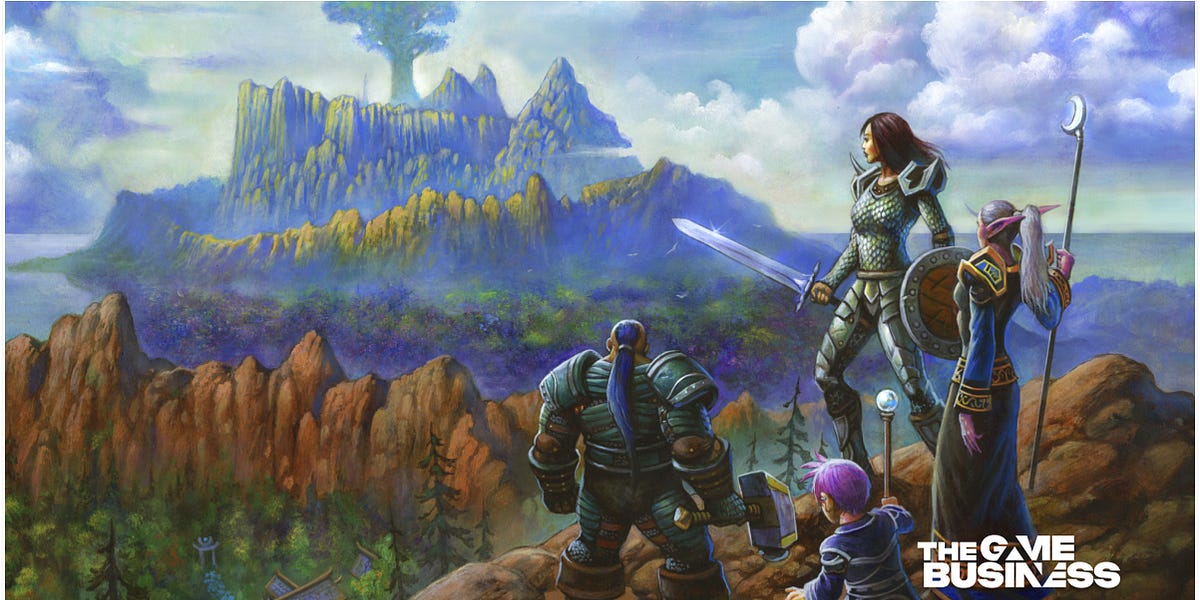
Here's The Dring: The Return of MMOs
The resurgence of the Massively Multiplayer Online (MMO) genre serves as the primary subject of this analysis, which questions whether the current renewed interest in these titles is driven solely by nostalgia or by more fundamental shifts in the gaming landscape.
- The MMORPG genre is experiencing a notable resurgence in market relevance, challenging recent industry focus on console-based blockbuster releases.
- Established titles including World of Warcraft, RuneScape, and Aion are at the center of this renewed interest in the MMO space.
- The current market activity marks a shift from the mid-2000s era, when the industry saw a wave of failed attempts to replicate the success of World of Warcraft.
Games Media Crisis Deepens, Bloober Hunts Weird Horror Titles, and New York Games Week Soft Launches
The video game industry is currently navigating a period of significant structural instability, characterized by widespread media layoffs and evolving event strategies.
- The games media industry is facing severe contraction, with recent layoffs at Future (Gamesradar/Techradar), Metro, and Popverse following earlier cuts at IGN and Restart, driven by declining search traffic and the rise of AI.
- Bloober Team is expanding its horror portfolio through its 'Broken Mirror' label, which currently has five projects in development, including the licensed title 'Saw: Genesis' and the Switch 2 exclusive 'Onyx: The Dark Grip'.
- New York Games Week is soft-launching on October 4, 2026, as a decentralized event series intended to test a new industry gathering model before a full-scale rollout in 2027.

Games media crisis deepens, Bloober hunts weird horror titles, and New York Games Week launches
The games media landscape is currently undergoing a period of profound instability, marked by widespread layoffs and a fundamental shift in audience acquisition as AI-driven search algorithms disrupt traditional traffic models.
- The games media sector is facing significant instability due to layoffs and AI-driven search algorithms disrupting traditional traffic models, leading to a shift toward niche publications and podcasts.
- Bloober Team is launching the 'Broken Mirror Games' label, led by Tymon Smektała, to expand into a global horror platform by managing two first-party and five second-party titles.
- New York Games Week is debuting as a decentralized event model that utilizes existing city infrastructure and coordinates with New York Comic-Con to replace traditional, rigid trade show formats.

As a Battlefield Studio, Is Criterion Games Really Still Criterion?
This analysis examines the evolution of Criterion Games, a prominent UK-based developer historically recognized for its work on the Burnout and Need for Speed franchises.
- Criterion Games has transitioned from a lead developer of racing titles like Burnout and Need for Speed to a primary support studio for the Battlefield franchise, specifically contributing to Battlefield 6 alongside DICE, Motive, and Ripple Effect.
- The studio underwent a significant leadership change in 2022, following the release of Need for Speed: Heat, which saw the departure of five key executives including Steve Cuss and Matt Webster.
- Criterion leadership maintains that the studio retains creative autonomy and is not merely a support entity, operating under a 'one team, one game' model that coordinates development across four international studios.