These Social Win Streak events were first introduced in Royal Match in March 2023 as part of the Lava Quest, but they’ve now begun to creep into several other games.
Source: Mobile Game Market Review: November 2023Both new additions follow the same standard template laid out by Royal Match back in June 2023
Source: Mobile Game Market Review: November 2023Blizzard’s tactical battler Warcraft Rumble launched worldwide in early November at Blizzcon, with an initial spike pushing it to a grossing rank of 12 and DL 1 in the US.
Source: Mobile Game Market Review: November 2023- I want Watermelon, DL 46
Source: Mobile Game Market Review: November 2023- Watermelon 3D: Fun Merge, DL 158
Source: Mobile Game Market Review: November 2023- Watermelon Game: Monkey Land, (not in sustained DL ranks, but did once hit DL 200)
Source: Mobile Game Market Review: November 2023Players were limited to five spins a day but automatically unlocked the grand prize after 20 tries if they weren’t otherwise successful.
Source: Mobile Game Market Review: November 2023- Fruit Merge - Watermelon Game, DL 166
Source: Mobile Game Market Review: November 2023The image displays a line graph with the title "Revenue and EBITDA Growth"
The image displays a slide from a presentation
The figure illustrates the distribution of various types of financial institutions in Canada and their respective market shares
The image displays a map of the United States with different colors representing the percentage of employees who work for each studio location
A bar graph showing the percentage of people who play games in their leisure time
The seniority levels of the employees in the company are displayed on a pie chart
Bushiroad Inc. announces the return of its global event series, Bushiroad EXPO 2026, expanding to 20 regions worldwide. The inaugural 2026 venues are Taipei, Bangkok, and Chicago, each slated to host exhibitions, stage events, trading card game (TCG) demo sessions, and merchandise sales. The expansion follows the successful 2024 and 2025 editions, indicating a strategic push to broaden international reach and fan engagement. The event will showcase Bushiroad’s diverse portfolio, including trading card games, console titles, music releases, stage performances, anime content, and related merchandise. While specific schedules and featured contents remain to be announced, the press release highlights a commitment to delivering a varied and immersive experience across multiple markets. The initiative reflects Bushiroad’s intent to strengthen its global presence, leveraging the popularity of its intellectual properties and community-driven events. The announcement is directed at fans and partners, underscoring gratitude for ongoing support and inviting participation in the expanded expo series.
The briefing clarifies GREE’s strategic focus and financial outlook for the second quarter of FY2022. The company announces that “Heaven Burns Red” will launch on February 10, noting strong pre‑registration figures and fan enthusiasm. For the “REALITY” platform, GREE reports accelerated promotional efforts that have boosted North American sales per user; future plans emphasize continued marketing and feature development to position REALITY as a daily communication service. In the Investment and Incubation Business, unrealized gains on listed shares have fallen due to broader market declines, yet the firm maintains sizable gains and expects long‑term profitability despite short‑term exit timing effects. Capital strategy is highlighted through a substantial share repurchase program aimed at sustaining an ROE above 10 % and maintaining listing status in the Tokyo Stock Exchange’s prime section, even as share‑outstanding ratios approach regulatory thresholds. The “Money held in trust” line item is explained as short‑term, low‑risk investments treated similarly to cash. Finally, the company projects third‑quarter operating income for its Internet and Entertainment segment between ¥1.5 billion and just under ¥2.0 billion, driven by contributions from new titles. Overall, the presentation outlines GREE’s product rollout plans, market expansion tactics, investment portfolio resilience, capital allocation priorities, and near‑term earnings expectations within the broader context of a recovering market environment.
The report announces that on 1 May 2023, People Can Fly Canada Inc. (PCF Canada), a subsidiary of PCF Group S.A., entered into an intent‑to‑borrow agreement with the Bank of Montreal and PCF Group as guarantor. The agreement outlines two revolving credit facilities: a demand facility up to 1 200 000 CAD for working‑capital and general corporate purposes, and a second facility of 8 000 000 CAD earmarked for tax‑relief financing in Canada. PCF Canada committed to provide customary collateral, while PCF Group pledged an unsecured guarantee of 9 200 000 CAD to secure the obligations. The parties agreed to negotiate definitive credit documentation by 30 May 2023, with completion expected around that date. The report clarifies that signing the letter of intent and initiating negotiations does not guarantee final execution of the credit agreements. The disclosure is limited to the Canadian subsidiary and its financing arrangements, covering a single fiscal year’s transaction. No survey or external data sources are cited; the information derives solely from internal corporate communications and regulatory filing requirements under Article 17(1) of MAR.
People Can Fly Canada Inc., a subsidiary of PCF Group S.A. headquartered in Warsaw, entered into a financing agreement with the Bank of Montreal on 24 May 2023. The contract provides two revolving credit facilities: a $1,200,000 line for general corporate and working‑capital needs, and an $8,000,000 line to fund Canadian tax incentives. Both lines are renewable annually and repayable on demand. Interest rates combine a negotiated margin with the Canadian Prime Rate, and standard market‑based fees apply. The agreement requires customary suspension conditions, including submission of legal opinions, registration extracts and other documentation to the bank. Security for the loans is structured under Canadian law and includes a parent‑company guarantee, a first‑ranking general security agreement covering all movable assets of PCF Canada, a first‑ranking mortgage valued at $11,040,000 on the same movable assets, subordination of corporate loans from the parent entity, and designation of the bank as an additional insured under PCF Canada’s insurance policies. On the same day, PCF Group issued a $9,200,000 unsecured guarantee to the bank covering the loan obligations and associated securities. The agreement obliges PCF Canada to provide financial statements and other material information, imposes restrictions on changes in core business activities or additional borrowing, and grants the bank rights to terminate or suspend financing upon breach. The arrangement is confined to Canada, covers corporate finance and tax‑incentive funding, and reflects standard practices for revolving credit facilities in the Canadian market.
PCF Group S.A. has formally increased the financial guarantee provided to the Bank of Montreal to support the operations of its Canadian subsidiary, People Can Fly Canada Inc. This adjustment, finalized on November 15, 2024, raises the unsecured guarantee from 9.2 million Canadian dollars to 13.154 million Canadian dollars. The action serves to align the company’s credit support with an expanded revolving credit facility intended to pre-finance future tax credits within the Canadian market. The underlying credit facility, which functions as a demand revolving facility, has been increased from 8 million to 11.954 million Canadian dollars. This expansion necessitates a corresponding adjustment to the collateral structure previously established in May 2023. Consequently, the first-ranking hypothec over the movable property of People Can Fly Canada Inc. has been raised from 11.04 million to 15.7848 million Canadian dollars. These modifications ensure that the security interests held by the bank remain commensurate with the increased credit exposure. The scope of these financial adjustments is limited to the Canadian operations of the PCF Group and the specific credit arrangements with the Bank of Montreal. All other material terms and conditions governing the original financing agreement remain unchanged, maintaining the existing framework for the company’s debt obligations and security protocols. This strategic increase in liquidity support reflects the company's ongoing efforts to manage cash flow effectively through the utilization of regional tax incentive programs.
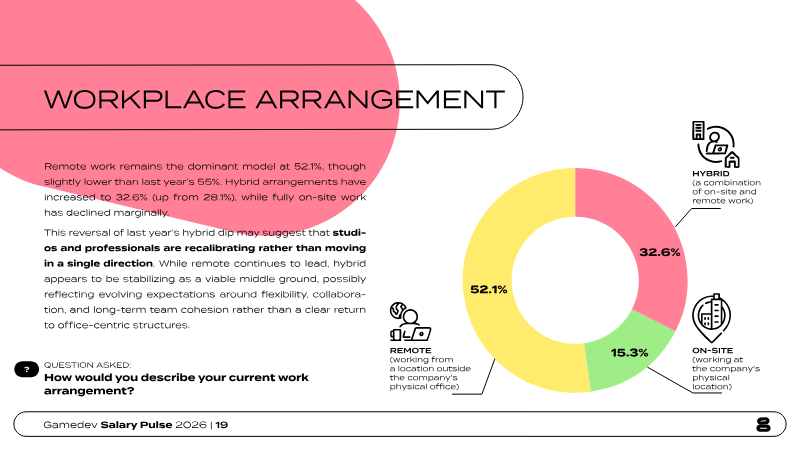
The game development industry is currently navigating a period of profound structural instability, characterized by widespread workforce reductions and a pervasive sense of professional anxiety. Despite the rapid integration of artificial intelligence, the primary driver of current career displacement remains studio restructuring rather than technological replacement. While the majority of the workforce remains employed in hybrid or remote roles, a significant portion of professionals are actively reassessing their career trajectories. This climate of cautious realism is reflected in market sentiment, where nearly 40 percent of industry participants anticipate further decline, leading to increased emotional fatigue and a shift in priorities toward time-based benefits, such as the four-day workweek, over traditional office perks. Geographically, the industry maintains a clear hierarchy in compensation, with North America consistently commanding the highest salary tiers across all seniority levels. In contrast, Central and Eastern Europe continue to function as the most cost-effective hubs for talent acquisition. This regional disparity underscores a broader trend of geographic diversification, as studios balance the need for specialized expertise with the economic realities of global operations. Although the workforce remains mobile, the prevalence of remote work has effectively anchored many professionals, creating a distinct divide where on-site employees demonstrate a significantly higher propensity for international relocation compared to their remote counterparts. The current landscape is defined by a maturing workforce dominated by mid-to-senior level professionals, accompanied by a concerning decline in new entrants. This demographic shift, coupled with the ongoing volatility in employment, has necessitated more flexible recruitment strategies. Studios are increasingly moving away from traditional hiring models, favoring diverse solutions that range from subscription-based flat-fee packages to comprehensive recruitment process outsourcing. As the industry continues to evolve, these data-driven benchmarks serve as a critical framework for both studios and professionals attempting to navigate the complexities of global compensation and shifting labor market dynamics.
Andrew Peller Limited, Canada’s largest publicly traded wine producer, maintains a robust market position through a diversified portfolio of approximately 50 brands ranging from ultra-premium to value segments. The company operates across Canada with a significant asset base exceeding $500 million, encompassing over 600 acres of owned estates and vineyards in Ontario and British Columbia, alongside modern production facilities. With a history spanning 46 years of dividend payments, the organization focuses on sustained long-term value creation through operational efficiency, brand innovation, and the strategic monetization of non-core assets. Financial performance for the first quarter of fiscal year 2026 demonstrates positive momentum, with EBITA reaching $16.1 million, a 25.4% increase compared to the same period in the previous year. This growth was supported by a 400-basis-point expansion in margins, bringing the quarterly margin to 42.4% on $99.2 million in sales. These results follow a strong fiscal year 2025, which saw annual revenue of $389.6 million and a 25% year-over-year increase in EBITA. The company’s strategic priorities include achieving above-category revenue growth, further margin expansion, and reducing debt levels to a target range of 2.5x to 3.0x. The company leverages a national distribution network of over 11,000 points, including liquor boards, hospitality venues, and retail channels. Key growth drivers involve continued investment in premiumization, the expansion of "better-for-you" and craft beverage alcohol categories, and the development of wine-focused economic clusters. By integrating estate winery experiences—such as the highly visited Peller Estates and Trius—with a broad retail presence, the company aims to capitalize on the economic development potential of Canada’s primary wine regions while maintaining a disciplined approach to capital allocation and debt reduction.
TD Bank Group Reports First Quarter 2026 Results Earnings News Release • Three months ended January 31, 2026 This quarterly Earnings News Release (ENR) should be read in conjunction with the Bank’s unaudited first quarter 2026 Report to Shareholders for the three months ended January 31, 2026, prepared in accordance with International Financial Reporting Standards (IFRS) as issued by the International Accounting Standards Board (IASB), which is available on our website at http://www.td.com/inves...
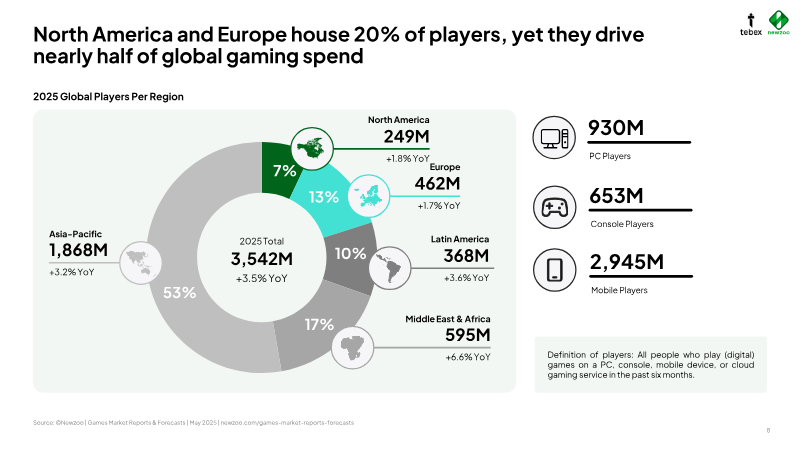
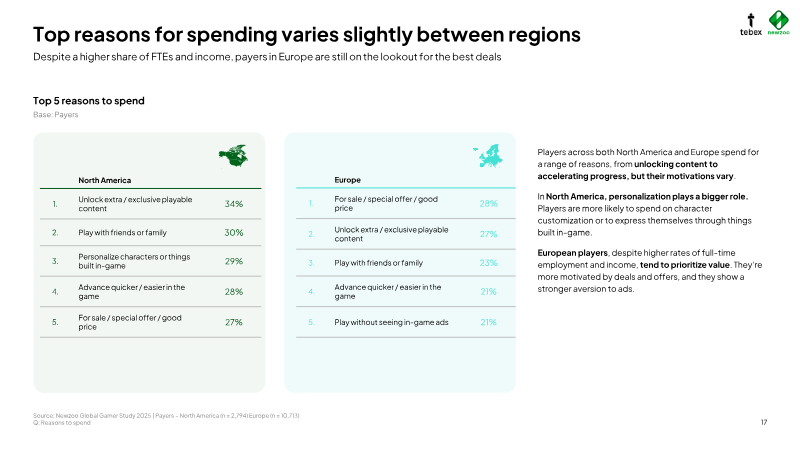
Unlocking Games Revenue: Player Behavior and Payment Trends in the West examines the evolving monetization landscape across North America and Europe. Produced through a partnership between Newzoo and Tebex, the analysis combines market intelligence with transaction data from over $1 billion in processed payments. The primary thesis suggests that as payer growth in mature Western markets plateaus—with a projected Compound Annual Growth Rate (CAGR) through 2027 of only 1.1% in North America and 3.1% in Europe—industry success depends on maximizing value from existing players through diversified payment methods and localized monetization strategies. The scope of the research focuses on PC, console, and mobile platforms in 2024 and 2025. Findings indicate that while North America and Europe house only 20% of the global player base, they account for 46% of total gaming spend. North America leads the world in average annual spend per payer at $324.90, compared to $125.40 in Europe. Regional motivations for spending differ significantly; North American players prioritize personalization and character customization, whereas European players are more value-conscious, citing sales, special offers, and the removal of advertisements as primary drivers for transactions. A critical finding involves the impact of alternative payment methods on Average Transaction Value (ATV). While traditional cards and digital wallets dominate total volume, emerging methods like Buy Now, Pay Later (BNPL) and cryptocurrency yield significantly higher ATVs. In North America, BNPL transactions average $85.00 compared to $52.20 for cards. Furthermore, the data shows that players using both traditional and alternative methods do not decrease their transaction frequency, suggesting that offering diverse payment options directly unlocks higher spending tiers. The analysis concludes that studios must reduce friction in payment flows and embrace unbundled, web-based storefronts to maintain loyalty and revenue in a maturing market.
The mobile gaming landscape in 2024 is defined by a shift toward a more discerning consumer base, as economic headwinds prompt 32% of all spenders and 41% of high-value spenders to plan for reduced in-game expenditures. While gameplay progression and relaxation remain the primary motivators for engagement, publishers face increasing pressure to justify costs. Retention and monetization now depend heavily on the first month of play, during which 79% of spenders make their initial purchase. However, player churn is rising due to perceived imbalances in game mechanics, lack of progression value, and aggressive pricing structures that alienate low-to-mid-value segments. To combat these challenges, the industry is pivoting toward value-driven incentives and personalized engagement strategies. Loyalty programs have emerged as a critical tool for sustainability, with 79% of spenders actively engaging with rewards and 60% of high-value players indicating a higher likelihood of spending when redeemable rewards are offered. While social recommendations and paid advertisements remain the primary drivers for game discovery and initial installs, they rarely influence long-term spending. Instead, financial commitment is triggered by tailored in-app deals and limited-time promotions that align with specific gameplay milestones. Strategic growth in the current market requires a move toward diversified revenue streams and direct-to-consumer models. Implementing web shops can increase revenue by up to 25% by bypassing traditional app store fees and offering more flexible pricing. Although RPG and Strategy genres continue to dominate high-value spending through deep progression systems, success across all segments now requires a focus on lifetime value through frequent, lower-cost purchase options and transparent, fair-play mechanics. By prioritizing loyalty-driven in-app purchase strategies, publishers can maintain stability despite a more cautious spending environment.
Canada’s video‑game industry is portrayed as a mature, high‑value sector that now consists of 821 firms employing roughly 34,000 full‑time workers and delivering a $5.1 billion economic impact. While the overall number of companies has contracted by 9 % since 2021, the decline is confined to micro‑studios of two to four staff; larger studios with 51 or more employees have remained stable or expanded, underscoring a concentration of activity in more sizable operations. In the 2023‑24 fiscal year the sector generated a $356 million operating surplus, representing a 7 % margin, and direct labour income rose 21 % to $3.5 billion, with indirect and induced effects adding another $600 million. Flexible work arrangements dominate, especially in firms with 100+ employees, where 83 % of staff follow hybrid schedules. Larger studios report longer time‑to‑market—about five months more—while smaller studios move faster, and nearly half of all companies are employing generative AI primarily for ideation. Funding access hampers small firms, talent shortages constrain the very largest, and market discoverability is a universal obstacle. A refined economic‑impact model introduces finer size categories and a custom induced‑impact multiplier based on Canada’s marginal propensity to consume and import. Applying this methodology retroactively to 2021 data raises total full‑time‑equivalent employment to 35,250 (a 9 % increase) and labour‑income to C$3.88 billion (up 6 %), while total GDP contribution adjusts downward to C$5.5 billion, reflecting more precise accounting of indirect and induced effects. The analysis covers the national landscape, focusing on the period from 2021 through 2024 and encompassing firms of all sizes within the video‑game development and publishing ecosystem.
The 2024 annual review presents a comprehensive assessment of Canada’s video‑game sector, emphasizing its expanding regulatory influence, economic contribution and strategic diversification. Central to the analysis is the successful negotiation of two key exemptions—removal of the industry from the Streaming Act levy and exclusion from the Online Harms Act—demonstrating the sector’s growing political clout. The accession of major global publishers, notably Epic Games, Roblox and Tencent, further amplifies the association’s reach and underscores Canada’s emergence as a hub for gaming innovation and talent. A worldwide survey of 13 000 players across twelve nations reveals that 74 % of Canadian gamers prioritize fun, while 43 % cite mental stimulation and 28 % value exploration, highlighting a multifaceted consumer motivation profile that informs product development and marketing strategies. High‑impact initiatives such as exclusive Unreal Engine‑driven studio tours in Montreal, the second Geneva Day of the Global Video Game Coalition securing United Nations‑level recognition, and the Ottawa “Jeux vidéo sur la Colline” summit collectively reinforced the sector’s cultural, social and economic significance, quantified at a $5.5 billion contribution to national GDP. Financially, the Canadian Entertainment Software Association achieved its first full pre‑pandemic budget while operating virtually, generating cost efficiencies that funded supplemental programs including “Le pouvoir du jeu” and an overhaul of parental‑control video resources. Membership growth, driven by the inclusion of Roblox and Epic Games, propelled revenues beyond forecasts and validated the association’s diversification strategy. Looking ahead, the organization intends to retain its virtual‑first operating model and continue advocacy for regulatory, economic and security policies that sustain industry expansion, while deepening diversity, equity and inclusion efforts through partnerships such as QueerTech and a cross‑industry equity working group. The report thus positions Canada’s interactive entertainment ecosystem as a resilient, globally connected, and policy‑savvy contributor to the broader digital economy.