1 free read left. Create a free account for unlimited reading + AI research.
Create free account
Marketing and business on a budget for indie developers
Key insights
7 takeaways- 01Marketing strategy should focus on identifying a unique selling proposition and communicating it through concise, digestible content tailored to short attention spans.
- 02Paid acquisition should leverage sophisticated targeting on platforms like Facebook, Instagram, and Google, while utilizing cost-per-install networks and micro-influencers for scalable growth on limited budgets.
- 03Organic growth requires building long-term, value-based relationships with influencers and the press, supported by comprehensive press kits and cross-promotion with other studios.
- 04Monetization should be integrated into game design using a mix of in-app purchases and non-intrusive rewarded video advertisements.
- 05Developers must utilize live operations and analytics to segment users and make data-driven decisions that optimize revenue from both paying and non-paying players.
- 06Indie developers must treat marketing and monetization with the same level of rigor and resource allocation as the actual game development to succeed in a competitive market.
- 07Long-term commercial viability requires a commitment to constant testing, the ability to pivot based on performance data, and sustained operational effort after the game is finished.
Ask AI about this video
Transcript
okay great so I'm gonna talk to you about as discuss marketing a monetization for games we're gonna focus on what the options are available to you when you do or don't have a budget and what to consider beyond just simply making the game itself so as we go in making games it's more about just having a great idea making a fun game ultimately if you're looking to make a career or do something beyond just simply having a hobby we have to make what's called a successful game successful games requires much energy and effort to go into the marketing and the monetization of the game as building the game itself simply having a great product especially in this environment isn't going to be enough to allow you to do this long term or beyond just a hobby it's really what does that look like so you have a great idea that you think people love you think they'll play it that's a fantastic start you have a plan
to build the game you may have a team in place you may have a game design doc strategy to get the game built but really what do you need to look at beyond that really the question we're ants asking here with marketing is how are you actually going to get players we simply don't operate an environment of if you build it they will come that's several years beyond where the matter is maturation of the of the ecosystem is so then the question becomes can you launch your game without a budget the reality is in this game time and age you probably cannot pull that off a budget is going to be required to some degree beyond just the game building itself so then we talk about if you do have a budget if you're considering the budget really what is that minimum viable budget what is the the lowest amount that you can get to that you can realistically put together for yourself and really how much do you need to really get that initial traction if you're not going to go with a publisher or a partnership what can you put together yourself and if you don't
have a budget if you have a minimum of budget you can't really hit that that minimum viable what can you do organically to give yourself a better chance to set yourself up or do even if you do have a budget how can you make that that budget stretch as far as it possibly can you know knowing that you have to maximize that if you've cobbled it together yourself so really in order to look at the organic side of things you have to understand what are the bits of information sets your game apart what are the very digestible chunks we have a very low attention span society now so you're not going to be able to tell a long story you're not gonna be able to get in front of people in an extremely meaningful way that they're gonna get give you a lot of their attention I can get 10 20 30 minutes of their attention to watch a big video so you really need to break it down into chunks think about social media post write tweets things like that how can you get a unique selling proposition of your game out in very very small chunks and then once you've identified what those things that people will pay attention to what they're gonna care about what's gonna catch people's attention then you can shift into understanding how are you actually going to deliver those pieces of information
how you're gonna get those out into the world so you can get eyeballs onto them so now we look at a couple of channels so we have paid and organic so we'll cover the paid Channel so really if you do have some of that budget if you've Kaba that together how can you maximize those dollars how can you get that out into the world first and foremost your biggest channels are gonna be your Facebook and Instagram these are very mature platforms they're very sophisticated in what they offer the target ability of the users the ability to dial in your bids understand what is and isn't working kill campaigns that aren't working launch test campaigns find out what does work is very very strong on these on these platforms so you want to take advantage of Facebook and Instagram Google is going to be very strong as well they're universal app Network if you're doing a mobile game the target ability of keywords what people are actually searching for these are called hand-raisers people that are actively in market looking for this and being able to get in front of them is a lot easier than it is to convince someone who's maybe not in the market or paying attention from there you go to networks like Twitter again Twitter is
very real-time it's very conversational if someone's talking about something if there's a keyword in place you can get in front of them right then and there so it does make it very valuable it makes it very relevant at the time so whenever you're spending money the closer to the point of interest that you can get the further that those dollars are going to go for you and so these networks off for that from there we go into cost per install networks there's plenty of them here as sponsors and things of that nature so there aren't networks that are very good about finding players finding contextual relevancy being able to connect players with games that they may be interested in and it's very controllable in the sense that you pay money based on the actual installs of your game you will need to look at the quality of those installs what happens post install in terms of getting people with lifetime value but these networks do offer a lot of that target ability in a very relevant environment with games micro influencers this is not going to be your kim kardashian's or things like that that are posting about your games you're not going to spend your millions of dollars to do that these are gonna be smaller influencers that have very tight networks couple hundred maybe a couple thousand at most tens of thousands of
followers but being able to engage with them you can spend a couple hundred dollars here and there to get some information about your game out in the world so it can be very valuable to kind of get that viral effect kind of seen some of your social activity there are networks that can be very self-serve these aren't negotiations you necessarily have to have one-on-one with anybody and then finally paid reviews and coverage so making sure that you're understanding what the PR looks like getting reviews getting other people to actually cover your game talk about your game no one really wants to be the first ones paying attention to the game for the most part if you go on and you look at a game and has zero reviews or no one's really talking about it you're not gonna get as much coverage so you want to build up that momentum and that activity around and sometimes paying to see that initially could kind of start that ball rolling so outside of paid what can we look at organically they can seed and so help support those games organically it's going to be similar from a social perspective but it's you're gonna use these networks in a different way organically with Facebook Instagram Twitter and influencers this
is conversational this is putting out those bits of information and I talked about earlier making sure that people understand what is the value became what's the unique element of it what types of players will like it why did you build it these are things that will engage people will pique people's interest and will get them to explore and look for your game if they hear hear being talked about influencers is a very interesting network you can imagine that these have a lot of sway over players but they're also being inundated by so many people who have the next great game that they really want people to talk about the problem you're gonna run into with influencers is it the first time you ever reach out to them is to ask them for a favor and say hey can you can you cover my game you have to understand they don't know you they don't know anything about your game and you're asking for a pretty big favor these people put a lot of time and energy and effort and actually developing their networks and their audiences and there's a lot of value to those so if you're simply reaching out blindly you're probably not going to get a lot of response if influencers isn't the direction you want to go you probably want to make those
relationships early on you want to offer value you want to think about hey if I can reach out to this person and offer them something that their audience would be interested in how can I support that how can I make that as easy as possible keep in mind you're not doing them a favor necessarily by telling about your game they're doing you a favor by covering it so really approaching it from that perspective I think a lot of mistakes that a lot of developers and people make is they simply reach out thinking that this person will cover my great game but you got to think about it from what they're doing for you outside of that going back to Google so this is going to be Search Results hand-raisers so if you have a website if you have any sort of abstraction is a ssin things like that you want to find the search ability as people are looking so your game genre other sorts of lists top you know if you're if you're doing a match 3 game your top match 3 games those types of content so again I'm getting in front of people that are looking for this information YouTube's a great channel sight sound and motion shows off games of a fantastic way so again this goes back to the influencers or your own YouTube channels your previews anything that can kind of show off your game and
emotion capacity will allow you to really show it off in a better way than just simply words in an article or things like that public public relations again this is gonna be reaching out to anyone who's covering writing articles industry type things you know Pocket Gamer and things like that nature I'm you want to build those relationships early on you want to see the content you want to talk about what it is that you're offering early previews early access why you've done this why you've built it differently again thinking about what you're offering to that network is gonna go a long way in this and then finally cross promotion if you can find other games other people that may be in your same scenario that maybe need opportunities to kind of see players you can build those relationships share traffic share installs things of that nature that's going to help you stretch your dollars a lot further in terms of across promotion instead of a straight cost per install so really if you're looking at marketing what are some of the things you need so again those bits of information what are people gonna latch on to you can have a
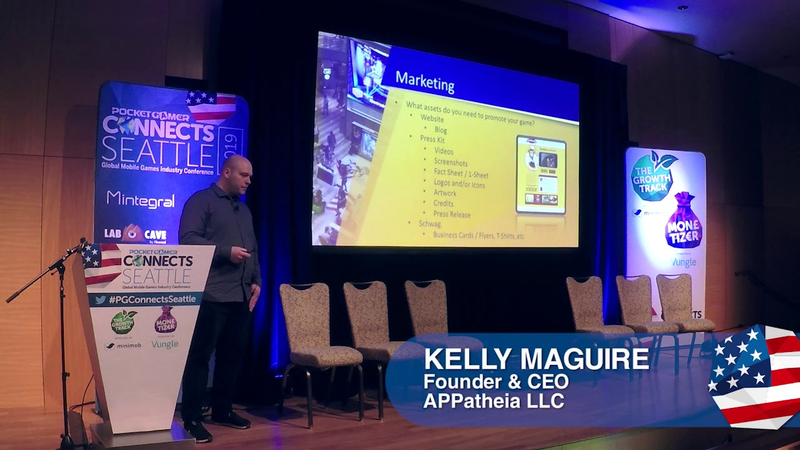
website if you have a website I can show off your game this is gonna be valuable for any sort of public relations or influencers that are going to be developing content about your game if you have a blog people can kind of follow along get invested in your story so again from a website you're not gonna get as many players on there but it's gonna offer up the ability for people to cover your game and that's going to become helpful in that you should look at what your press kit involves so what are the things that people will actually pay attention to about your games what will they cover if they do decide to give you sort of anytime on their channel what can help them cover your game a little bit easier that's gonna be videos screenshots a fact sheet what are the key bits of information logos icons artwork credits who worked on the game but even writing your own press release these are all things that make it a lot more easier to get those favors from people when you're asking for someone to cover it they don't have to research it they don't have to spend a lot of time you've done a lot of that for them so it's a lot easier to get that yes when you're asking for that favor from either the press or an influencer or anything like that and then finally if you have
the ability any kind of schwag that you have t-shirts flyers people love these things even though most of what games are in the digital space whether it's on phone or computer it still does operate in the real world particularly in the mobile environment people have these devices in their pockets so any sort of interaction they have in the real world it's easy for them to pull that phone out of their pocket download it and have that access right then in there so these things can go a long way you can also get a lot of concentration if you can give these things out at a conference an hour event or a school or a class these are 20 30 40 people that you can get coverage of your game all in one place versus having to go one at a time online so if we assume that we can get these players we can market get players to the game we actually want to make it worthwhile so we got to look at the monetization how you're actually going to extract the value of the marketing that you've done so we're gonna look at some of the efforts you could put into game that can yield some of that value so that you can either reinvest in the game or actually just simply have
success building him so from a marketing perspective and a monetization perspective we're looking at a few different things IP is going to be a little bit more relevant from a mobile perspective but these things translate in other ways as well so an in-app purchase this is getting people to make purchases in your game whether it's power-ups or boosts unlocked content versus a premium you can look at time which is forced waiting get sort of that delayed gratification with players lives and energy paywalls these are all things that have to fit into your game in a way that it doesn't disrupt the players so much that they can't play but you can offer the ability to kind of advance or to do things that they may be willing to make those micro transactions against it's all within the flow of your game if you're gonna assume that less than 5% closer to one or two percent of people will actually ever spend money inside of a game that's a whole lot of people you have to figure out another way to make money from advertising is one of the strongest ways to do that again you don't want it to be disruptive but you want to find those points in your game that it flows and it fits in a perfect world a rewarded video
and optional where you're not forcing that advertising you're actually letting the player choose their way into it that's gonna be the least disruptive it's going to cause the least attrition to your game interstitials points where it's not gonna be too disruptive you're moving between screens or between elements of your game can kind of slip in there pretty well the banners can be a little bit disruptive but on more static screens things like pause menus main menus things where it's not necessarily gonna stop in action but it's just simply going to be in the background they can fit fairly well and then as we talked about before cross promotion where can you kind of encourage other players to install and let me create that trade environment so if we assume that you've marketed the game you've got players that you've actually been able to monetize it and you've got some investment to put into your game how do you maximize that so this is where we get into live ops add ops and analytics if you've got a successful game if you've spending money on the game you really need to understand what's happening in that you need to collect your data and you need to understand how to make that data work for you to maximize the yield out of that analytics is going to be critical
understanding what our players doing in your game if you're running ad campaigns how are those ad campaigns actually yielding results where can that be maximized so you really want to find ways to customize the monetization to user groups if you have paying players you want to you want to push actual I ap to them if you have non paying players you want to understand how to segment them out and deliver the right ads at the maximum yields so that you're not leaving any money on the table in any meaningful way so player segmentation data collection this is all going to be very critical to the overall success of what we were doing so all in all really I think what we're looking at is the preparation of making sure that you're looking you're gonna work harder than you think anything you kind of plan out in terms of timelines or expectations or budgets is gonna be padded in terms of what you're gonna find out in terms of reality you're definitely going to want to be prepared to learn more than you think you need to that data is gonna be incredibly important to you understanding what your player feedback is from the game perspective
understanding what marketing and monetization things are working all of this you have to be prepared to absorb and actually pivot and do something with as you collect that information facing obstacles you never thought of this could be anything from a team member leaving to burning out money on an influencer you thought would work and didn't come out but you really need to be able to to pivot and shift on those things they're unexpected and those obstacles that get in your way if you're not prepared for that it can certainly set you back pretty heavily and then definitely questioning everything along the way so a lot of times developers will fall into the trap of just thinking they have this great game and it's definitely going to work but you constantly want to be asking yourself who is my audience what are they going to respond to what is my competition in market what am I going up against and if you're constantly asking those questions you can solve and anticipate ahead of time and it'll help you in the long run you're not blindsided by anything and then always just keeping in mind that it's very hard to stick with and finish it's a long process building the game is
the first step again you have to develop relationships you have to kind of find out how you're gonna market it how you're gonna push it and what you're gonna do to operate the game long-term so really sticking through and finishing it is a big milestone in and of itself and then understanding that everything's a learning opportunity that's both the positive and the negative if you get negative feedback that's a chance to learn and pivot and understand if something doesn't go right it's a good chance to evaluate what happened and what we can do differently about that and really as I said finishing as a milestone that most developers won't reach you're getting a lot of a lot of people that'll try a game start a game and kill a game many many times or just simply won't be able to anticipate those types of things so simply finishing is a major accomplishment in and of itself but really making sure that if you do go that extra mile you do finish you do get to that finish line that it doesn't go to waste that you do maximize that opportunity because you're not gonna have that many chances to build huge commercial successful games so really don't want to let that slip through your fingers there's everything that I have wanna
cover a few questions this always this moment always reminds me of my favorite quote from Mythbusters failure is always an option yes that's not a bad thing by the way and like you said thing is the learning process the other favorite quote have is there's only one thing worse than making games and that's not making games the comedy I'm not here for any questions I know the point I think I want to try and ask you more about is it seems to me what you're trying to get across is it's identifying the lowest hanging fruit and exploiting that to the maximum effect for the long term and I think you know what I think's interesting is that it's very rare to hear people talking on it as the service part of the process because quite often we hear people talking about their projects in some circles but you're talking about this being not about the release but about what happens next yeah and yeah do you think people understand that I mean are we still struggling to communicate it I think it
is an area where there there's a little bit of struggle in terms of the way that the the app environment or the game environment works is it's very momentum based right so I think where people fail to realize is that and it gets talked about a lot where it's very much a curve and so as much as you can concentrate as high as you can raise that initial platform it's really going to give you a lot more momentum as you sort of trail down on that curve in that concentration of budget when you don't have unlimited resources is you really need to make it work for you if you're trying to do you know one thing one week and the next thing another week and try and get coverage you know a month later you're gonna get these little bursts here and there but you're never gonna get high enough to really carry you in any meaningful momentum which means your budgets is only gonna stretch so far if you're limited on resources really maximizing that Louis hanging fruit that organic boost and viral factor that you can get out of it it is gonna make those dollars go as far as possible so really strategizing around how you're spending those dollars not just kind of throwing things against the wall no that's why I
think books like the Lean Startup all Jeffrey moss crossing the chasm those two kind of I think two pivotal books that I found very useful to help my thinking with Lean Startup it's obviously looking at what it is you need to make now not necessarily what you are aiming to build later yeah I think that's kind of a key thinking but also the way Jeff remote talks about kind of the technology adoption lifecycle and the gap between the audience is there's another thing I think a lot of people don't talk about enough which is the low-hanging fruit it's not necessarily for the long term it's often for the current audience and sometimes their needs are different is it as a potential question over there I'm just gonna run over and hopefully not destroy why do we need the mic for the recording so I will be do sex understood his fitness by the way thank you I'm curious given how delicate a small budget is and given how precarious ad channels are do you subscribe to a
kind of time to win strategy you know the idea of killing your darlings or cutting and run too fast I mean it seems like everyone's got an opinion that's conflicting like how long how long do you test creative or test a channel before you move on and double down because your budget so small absolutely yeah so it's all answer from a perspective of just standard digital marketing and not necessarily just on the game stand standpoint I think it's all about reaching statistical relevance on the data you're able to collect right so you certainly can collect information that can be misleading if there's anomalies in it you know if you're running for a couple of days and you're not seeing success there simply may be a time decay you may need to be able to get a certain level of frequency in front of people before they recognize the game and will download it so if you're running an ad campaign and your average person is only senior you're at one time that may not be that they're not interested in the ad it just may need to be that they need to see two three or four times before they really will recognize or they're at a place where they're ready to make that that decision so it's all about understanding
how far your but your budget can stretch in terms of the data collection and at what point the data gives you the ability to make an actionable decision it's hard to give a rough sort of rule of thumb to always follow but that's the strategies you've got to think through is at what point have I gotten enough information in terms of the number of people I've reached how frequently I breach them to where I truly believe that they're not responding to this message versus I'm able to simply kind of kind of push through I know it's not a direct answer to the question but there is just no rule of thumb if you're spending $100 you may have a shorter timeframe you may have to make you know more committed decisions and stick to them than if you have a hundred thousand dollars so it's really just understanding at what point you really believe that that response is going to happen and when you feel comfortable kind of making those transitions but I would say that once you've reached a point where you have any relevant any reasonable expectation of the data being significant don't be afraid to act on it once you understand hey this
information looks to be information that I can actually take action on go ahead and act on it at that point yeah and if the action doesn't have the effect you predict then you've probably got good reasons to stop I will say as much as you can read your budget always be testing test as much as you possibly can don't don't assume one any one thing I don't know thank you good thank you [Applause]
Summary
Indie game development requires a shift in perspective from viewing a project as a creative passion to treating it as a commercial product. The primary thesis is that success in the current, highly competitive market is impossible without a dedicated strategy for marketing and monetization. Because the "build it and they will come" model is no longer viable, developers must treat marketing and monetization with the same level of rigor and resource allocation as the game’s actual development.
Marketing strategy should focus on maximizing limited budgets by identifying a unique selling proposition and communicating it in digestible, concise chunks suitable for short attention spans. Paid acquisition channels, such as Facebook, Instagram, and Google, offer sophisticated targeting, while cost-per-install networks and micro-influencers provide scalable options for smaller budgets. Organic growth is equally critical and requires building long-term relationships with influencers and the press by providing value rather than simply asking for favors. Developers are encouraged to create comprehensive press kits and utilize cross-promotion with other studios to extend the reach of their limited resources.
Monetization must be integrated into the game design without disrupting the player experience. Effective strategies include a mix of in-app purchases and non-intrusive advertising, such as rewarded videos. Success relies on data-driven decision-making, specifically through live operations and analytics, which allow developers to segment users and optimize revenue from both paying and non-paying players. Ultimately, the development process is a long-term commitment that requires constant testing, the ability to pivot based on data, and the resilience to treat every obstacle as a learning opportunity. Finishing a game is a significant milestone, but maximizing its commercial viability through sustained operational effort is what determines long-term success.