Mobile reports and market data
Documents
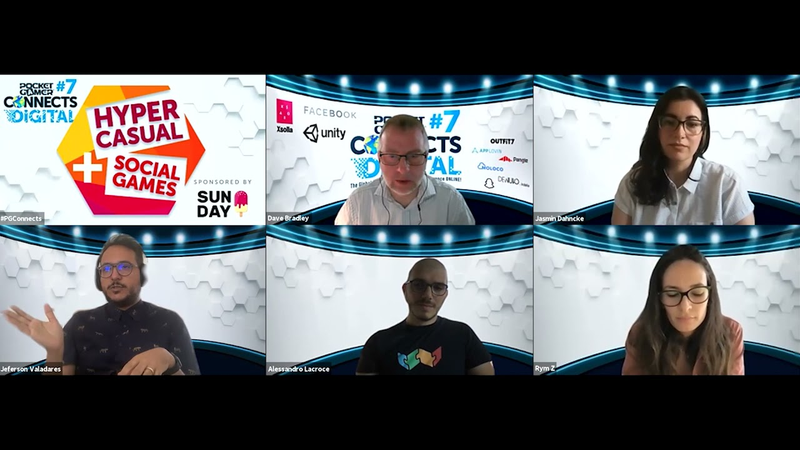
Panel: What Makes a Social Game Truly 'Social'?
Social gaming has evolved from simple platform integration into a fundamental paradigm where games function as primary virtual spaces for human connection.
- Sociality is now a core design paradigm rather than a genre, where embedding cooperative mechanics and guild structures directly improves long-term player retention.
- The COVID-19 pandemic accelerated digital-first social interaction, driving consumer spending in the sector to $1.7 billion per week by early 2021.
- Success in modern social gaming is measured by social graph metrics, specifically the frequency of friend invitations and the formation of persistent player groups.
Superstar Session: Key to Success in Post-iOS 14 Advertisements: SKAdNetwork Data Reconciliation
The implementation of Apple’s App Tracking Transparency policy has fundamentally restructured the mobile user acquisition landscape by restricting access to the Identifier for Advertisers.
- The mobile user acquisition landscape has shifted from deterministic tracking to the privacy-centric SKAdNetwork framework following Apple’s App Tracking Transparency policy, which saw opt-in rates reach only 24 percent by mid-2021.
- Developers must pivot to aggregate analysis and channel-level monitoring because SKAdNetwork introduces reporting latencies of 24 to 48 hours and masks granular data through privacy thresholds.
- Long-term user value prediction now relies on the strategic use of conversion values as a proxy within the restricted tracking windows provided by SKAdNetwork.

What Makes a Game Truly HyperSocial?
The gaming industry is increasingly shifting toward a "hyper-social" model, a trend defined by integrating real-time communication, personalized avatars, and collaborative mechanics directly into mobile gameplay.
- Integrating Bitmoji avatars into mobile games increases day-one retention by 20% and boosts ad views per active player by 60%.
- Snapchat’s platform, which reaches 500 million monthly active users, drives higher session durations by embedding real-time chat and voice features directly into HTML5 games.
- The hyper-social model prioritizes collaborative mechanics and personalized avatars to increase engagement, particularly within the competitive hyper-casual gaming genre.
Superstar Session: Making Profitable Hypercasual Hits
Achieving profitability in the hypercasual gaming sector requires a fundamental shift away from the traditional obsession with low Cost Per Install (CPI) toward a more nuanced strategy centered on the relationship between Lifetime Value (LTV) and acquisition costs.
- Profitability in hypercasual gaming is driven by the ratio between Lifetime Value (LTV) and acquisition costs, rather than a singular focus on minimizing Cost Per Install (CPI).
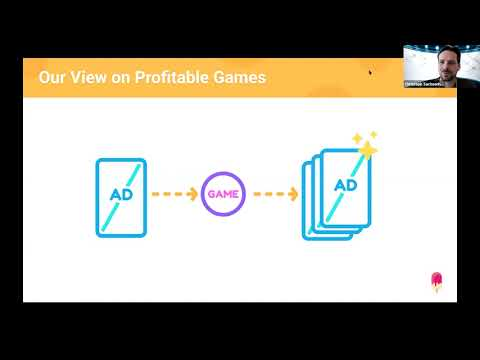
- Successful titles function as ad impression multiplication machines where the cumulative value of ad views must consistently exceed the cost of user acquisition.
- The development lifecycle consists of an initial data-gathering investment phase followed by a strategic throttling phase to ensure marketing campaigns maintain sustainable net revenue.
Panel:Customer Support for Your App's Success: How Customer Support Teams Drive App Metrics & Profit
Effective customer support serves as a primary driver for mobile application success, directly influencing store rankings, user acquisition, and long-term profitability.
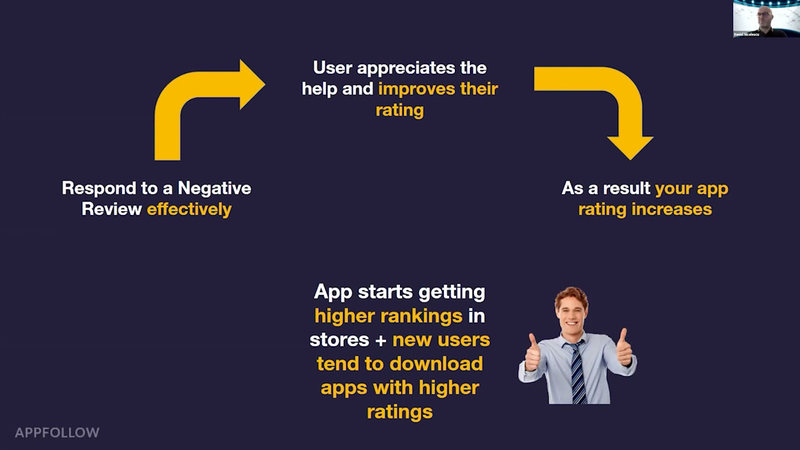
- Proactive developer responses to negative reviews can increase app ratings by an average of 0.7 to 1.6 stars.
- Active management of the user feedback loop is a primary driver for improving store rankings, user acquisition, and the likelihood of platform featuring.
- Automation tools are essential for scaling support operations, allowing teams to manage high feedback volumes across multiple languages while reducing operational costs.
How to Make Your RnD Rock!
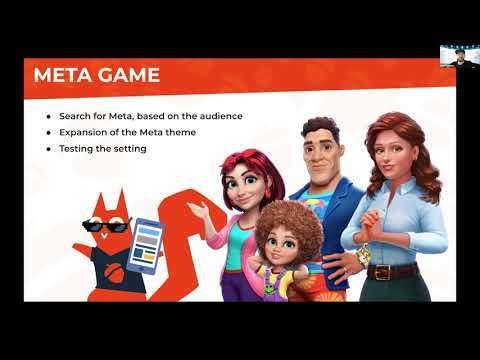
The research and development (R&D) department at Belka Games prioritizes speed, flexibility, and data-driven decision-making to scale mobile gaming products effectively.
- Belka Games utilizes a lean R&D team of approximately ten members to ensure rapid communication, high individual involvement, and the agility to pivot quickly when hypotheses fail.
- Projects are held to a strict six-month viability window, utilizing two-to-three-week development sprints to test specific features and performance metrics.
- The R&D process follows a top-down verification sequence, prioritizing core gameplay loops first, followed by retention metrics, and finally monetization.

Superstar Session: The Future is Cross Platform
The gaming industry is undergoing a significant shift as player demand for seamless, cross-platform multiplayer experiences intensifies.
- 96% of surveyed developers in 2021 identified scalable cross-platform solutions as a critical factor for the success of multiplayer games.
- The industry is transitioning toward a 'build once, deploy everywhere' model, allowing developers to manage mobile, PC, and console releases from a single codebase.
- Successes like Among Us and Genshin Impact have validated cross-play as a viable and highly demanded feature driven by player desire for social connectivity across hardware.

Panel: What Changes in Ad Monetisation Post-IDFA - The Good, the Bad & the Ugly
The removal of the Identifier for Advertisers (IDFA) and the implementation of App Tracking Transparency (ATT) have fundamentally restructured the mobile advertising ecosystem.
- The removal of IDFA and the implementation of ATT have forced a shift from granular, user-level tracking to fragmented measurement strategies, rendering traditional metrics like D7 ROAS less effective.
- Developers are pivoting to contextual intelligence and behavioral modeling, utilizing on-device data such as session depth and game category to identify high-value users without personal identifiers.
- The loss of deterministic data and effective retargeting capabilities has necessitated a move toward hybrid monetization models to maintain revenue efficacy.

Panel: Tools & Techniques for Game Economy Analysis & Optimisation
Successful game economy design requires a sophisticated balance between player progression, monetization, and content depth.
- Design game economies using a sources and sinks model to manage player time as the primary resource, ensuring progression remains rewarding while avoiding difficulty spikes that cause churn.
- Prioritize median values and high-percentile player behavior in data analysis rather than relying on simple averages, which often mask the nuances of diverse player segments.
- Implement hybrid monetization strategies, such as rewarded videos, to sustain engagement for non-paying users without compromising the experience for high-spending loyalists.
Maximising IAP Revenue With Global Pricing
Maximizing in-app purchase revenue requires a transition from static, U.S.-centric pricing models to dynamic, region-specific strategies that account for local purchasing power and demand elasticity.
- Transitioning from static, U.S.-centric pricing to region-specific models based on local purchasing power and demand elasticity can increase monthly revenue by 24% to 45% in growth markets like Indonesia, Brazil, and Europe.
- Developers should move beyond simple currency conversion by building a propensity-to-buy index that incorporates macroeconomic indicators such as GDP, device penetration, and local consumer goods pricing.
- Pricing strategies must be treated as an iterative process with monthly adjustments to account for fluid game economies, currency fluctuations, and competitive market pressures.

Superstar Session: Critical Traffic Patterns & Insights to Monetise Your Game in Japan & SEA Markets
Maximizing monetization in Japan and Southeast Asia requires a departure from standardized global strategies in favor of deep culturalization and region-specific engagement tactics.
- Success in Japan and Southeast Asia requires moving beyond basic translation to deep cultural integration, as superficial localization fails to resonate with local audiences.
- Japanese gameplay must be optimized for short, one-handed sessions to align with structured daily commuting habits.
- Southeast Asian markets show consistent mobile usage throughout the day and a higher propensity for video-based ad interactions compared to other regions.
The Future of App Monetisation: An Industry Outlook
The mobile gaming industry is currently navigating a period of significant disruption and opportunity, driven by evolving privacy regulations and shifting consumer behaviors.
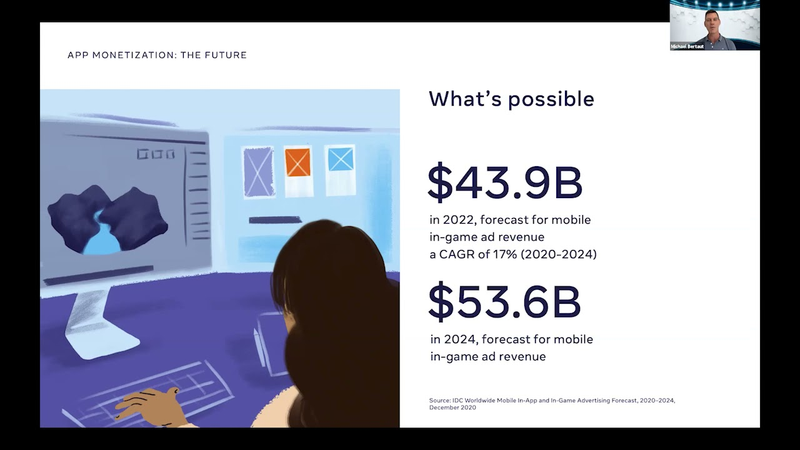
- Mobile game in-app ad revenue is projected to exceed $53 billion by 2024, with a forecasted compound annual growth rate of 17%.
- Developers are shifting toward hybrid monetization models that integrate both in-app purchases and in-app advertising to mitigate the impact of privacy regulations like Apple’s iOS 14.5.
- In-app ad revenue for games saw a 21.3% increase in 2021, significantly outpacing the growth of non-gaming applications.
Writers
Games and companies
Games