Mobile reports and market data
Documents
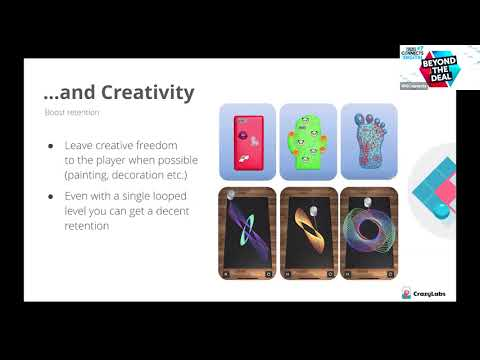
The Messy Middle - From Trend Gamification to a Profitable Hypercasual Game
The hypercasual gaming sector continues to experience significant growth, currently accounting for approximately one-third of all mobile game downloads with a 20% annual growth rate.
- The hypercasual gaming market remains a high-growth sector, expanding at nearly 20% annually and accounting for one-third of all mobile game downloads.
- Achieving profitability requires moving beyond a low-CPI prototype to optimizing engagement KPIs, which CrazyLabs defines as the 'messy middle' phase of development.
- Improving game controls to be more responsive—such as reducing physics-based friction—can significantly increase player engagement, with one case study showing a 50% increase in rounds played per day.

Superstar Session: Breathing Life Into a New IP: A Lesson in Rethinking What You (Think You) Know
The development of successful intellectual property in the gaming industry requires a transition from isolated product creation to the cultivation of a cohesive, interconnected ecosystem.
- Shift from developing standalone titles to building a cohesive, interconnected ecosystem that utilizes cross-platform integration and diverse media channels to ensure long-term user engagement.
- Integrate distribution teams into the earliest stages of the ideation process to ensure products are aligned with specific market demands rather than relying on legacy development models.
- Utilize small-scale testing as a primary mechanism for data-supported decision-making to validate concepts and mitigate financial risk before committing to full-scale production.
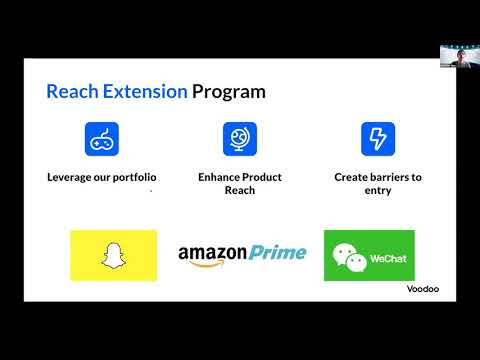
How Voodoo hit Five Billion Downloads
Voodoo, a prominent publisher in the hyper-casual gaming sector, attributes its milestone of five billion global downloads to a systematic, data-driven approach to game publishing.
- Voodoo achieved five billion global downloads by treating hyper-casual game development as an industrialized, data-driven process rather than a game of chance.
- The company utilizes a structured funnel that mandates rigorous testing and rapid prototyping to ensure only high-potential projects reach full production.
- Publishing operations are centralized to handle user acquisition, creative development, and monetization, allowing partner studios to focus exclusively on core gameplay mechanics.

Superstar Session: Publishing Isn’t ‘One Size Fits All’ - What Does Your Game Need?
Hyper-casual gaming maintains its position as a cornerstone of the mobile market, currently representing one-third of all mobile downloads and sustaining a robust 20 percent annual growth rate.
- Hyper-casual gaming accounts for one-third of all mobile downloads and is maintaining a 20 percent annual growth rate.
- The hyper-casual development cycle is high-velocity, requiring ideation to global release to occur within a four-to-eight-week window.
- Success relies on a fail-fast methodology that prioritizes rapid prototyping and iterative testing to validate concepts before scaling.
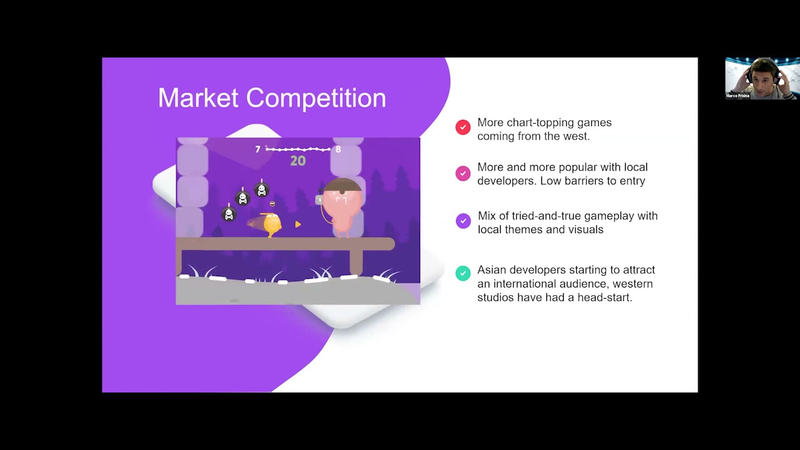
The Continued Rise of Hypercasual in the East & How to Break Your Game into the Chinese Market
China currently stands as the world’s most significant mobile gaming market, valued at $25 billion and representing a quarter of the global industry.
- China's mobile gaming market reached $29 billion in 2020, representing a 30% year-over-year growth and accounting for approximately 25% of the global mobile games market.
- Hypercasual games are the fastest-growing segment in China, leading at least 72% of total game sessions by the end of 2020.
- Foreign developers face significant legal barriers to entry, specifically the requirement for an ISBN certificate, which can take three to six months to obtain and is notably more difficult for non-domestic entities to secure.

Panel: The Truth About Ads: Is it a Disruption, a Requirement or an Opportunity for Game Makers?
Advertising in the modern gaming landscape functions as a strategic exchange mechanism rather than a mere disruption.
- Modern game advertising functions as a strategic exchange where rewarded videos and context-aware placements provide a sustainable revenue model that supports free-to-play access.
- Integrating ad experiences directly into the core game loop can improve player retention rather than acting as a disruptive force.
- Studios can mitigate financial risk by using early-stage video ads and playtests to validate core mechanics and monetization strategies before full production.
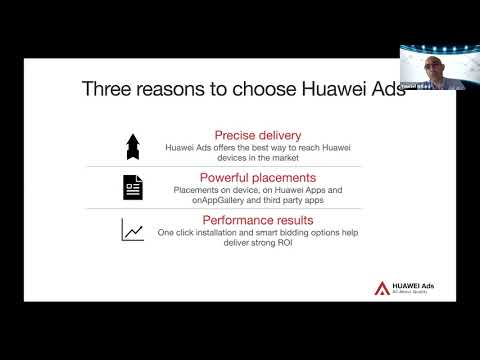
Huawei Ads - All About Quality
Huawei Ads functions as a strategic advertising ecosystem designed to bridge the gap between developers and a vast global audience of over 700 million smartphone users and 540 million monthly active users on the AppGallery.
- Huawei Ads provides access to a global audience of over 700 million smartphone users and 540 million monthly active users on the AppGallery.
- The platform utilizes a competitive 80/20 revenue-sharing model designed to incentivize developer participation and publisher monetization.
- The ecosystem is built to address industry challenges such as tightening privacy regulations, market saturation, and the transition to 5G technology.

Panel: How to Optimise Revenue & Retention for Your Games
Long-term success in the modern gaming industry requires a fundamental shift toward integrating monetization and retention strategies directly into the core design process.
- Integrate monetization and retention strategies directly into the initial game design document to prevent post-launch reworks and avoid churn-inducing imbalances.
- Prioritize non-intrusive monetization methods, such as native product placements and in-game billboards, over disruptive advertising formats to maintain player retention.
- Establish a unified analytics framework that breaks down silos between monetization tools and player behavior metrics to create a data-driven operational backbone.
iOS 15 Upcoming Changes & Impact on ASO
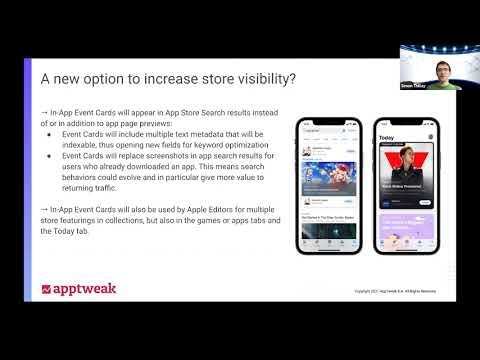
The iOS 15 update marks a fundamental evolution in App Store strategy, transitioning from a static user-centric model to a dynamic environment that empowers developers with sophisticated marketing and conversion optimization tools.
- iOS 15 introduces three major App Store Optimization (ASO) features focused on conversion: Custom Product Pages, In-App Events, and native A/B testing for store assets.
- Custom Product Pages allow developers to create unique landing pages for specific ad campaigns without requiring a new app binary submission, though all assets still require Apple's review.
- In-App Events can be targeted to specific user segments—new, active, or lapsed—and will be discoverable via the app's product page, search results, and Apple's 'Today' tab.
The Big Lie of User Acquisition: Strategies That do not Work in 2021
The mobile marketing landscape has undergone a fundamental shift following the deprecation of the Identifier for Advertisers and the implementation of Apple’s App Tracking Transparency framework.
- The deprecation of the Identifier for Advertisers (IDFA) and the implementation of Apple’s App Tracking Transparency (ATT) framework have rendered traditional, granular tracking-based user acquisition strategies ineffective.
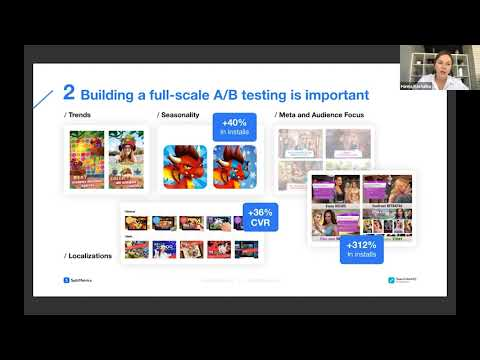
- Developers must prioritize a holistic marketing approach that integrates App Store Optimization (ASO) with paid acquisition to stimulate organic search intent and improve conversion rates.
- Rigorous A/B testing of visual assets, such as icons and screenshots, is a prerequisite for scaling paid campaigns and ensuring a positive return on advertising spend.
Levelling Up Your Mobile Gaming Strategy on Snapchat
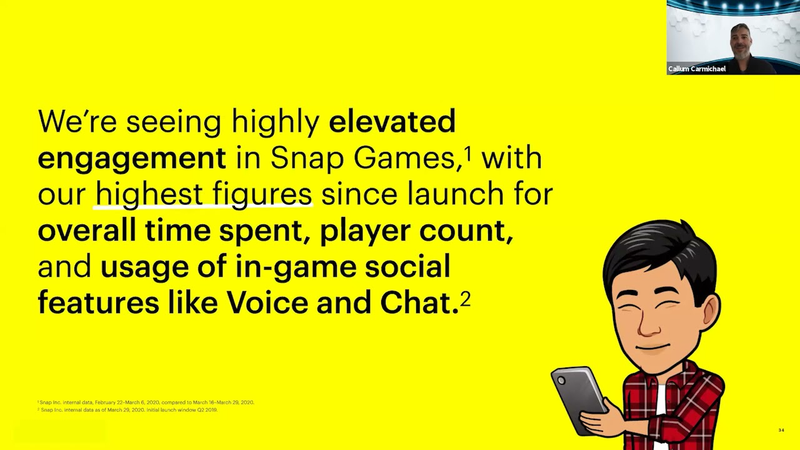
Snapchat has established itself as a robust ecosystem for mobile gaming, leveraging a massive base of 500 million monthly active users that increasingly spans beyond younger demographics to include a significant 35-plus audience.
- Snapchat provides access to a monthly active user base of 500 million, which now includes a significant demographic of users aged 35 and older.
- Developers can use the Snap Kit toolkit to integrate social features like Bitmoji avatars, leaderboards, and authentication to improve organic user retention.
- The platform supports a full-funnel user acquisition strategy through immersive, full-screen ad formats including Snap, Collection, and Story ads.
Superstar Speed Panel: Rethinking InGame Advertising
The gaming industry is undergoing a fundamental shift in monetization, moving away from intrusive, disruptive ad models toward immersive, non-interruptive integrations.
- The gaming industry is shifting from intrusive, disruptive ad models toward immersive, non-interruptive integrations to protect player retention and long-term revenue.
- Monetization strategies must be integrated during the early stages of game design rather than treated as an afterthought to ensure placements feel native to the virtual environment.
- Measurement frameworks are evolving beyond basic viewability metrics to prioritize meaningful engagement, attention, and tangible real-world impact.
Writers
Games and companies
Games