Reports matching your filters
This analysis examines the shifting dynamics of the mobile game distribution market as of Summer 2025, focusing on the transition from a duopoly dominated by Apple and Google toward a more diverse ecosystem of alternative app stores. The central thesis posits that the industry is at a critical "reset" point where developers are increasingly seeking to reclaim control over their revenue, discoverability, and platform policies. By diversifying distribution strategies, game makers aim to bypass high fees and restrictive environments that have historically stifled commercial and creative potential.
The findings are based on a survey of 304 senior-level mobile game development professionals from the United States and United Kingdom, all of whom work at companies with 250 or more employees. The research was conducted in April 2025 by Atomik Research on behalf of Aptoide. The data reveals significant industry dissatisfaction: 67% of developers are concerned about over-reliance on the two major stores, 51% cite high fees as a primary pain point, and 50% believe the dominant platforms unfairly prioritize their own services.
Despite the current dominance of the major stores—which still account for roughly 87% of revenue for the majority of respondents—there is a clear trend toward adoption of alternative platforms. Approximately 74% of developers expect alternative stores to be a standard part of their distribution mix within five years. Furthermore, 73% of respondents anticipate double-digit revenue growth from these alternative channels. Key perceived benefits include access to new user bases (42.8%), greater policy freedom (42.4%), and improved discoverability through curated content and better marketing support.
The scope of the analysis covers the global mobile gaming industry with specific emphasis on the US and UK markets. It concludes that while the Apple and Google stores remain essential for reach, the rise of alternative stores and direct-to-consumer webshops offers a necessary path for growth, risk reduction, and improved profit margins in an increasingly competitive landscape.
Global mobile app activity in Q2 2022 showed a modest 2.5 % year‑over‑year decline in total downloads, falling to 35 billion worldwide. TikTok remained the undisputed leader on both Apple’s App Store and Google Play, while Meta’s suite of apps—Instagram, WhatsApp, Messenger—dominated the top‑10 rankings globally. In the United States consumer spending shifted away from games toward non‑game categories, and Meta’s share slipped to fourth place on Google Play. Europe and Asia mirrored TikTok’s dominance, yet regional leaders varied: Google Maps surged in Europe, and VooV Meeting experienced a 47 % jump amid China’s lockdowns.
On Google Play, Asia was the most dynamic market. Instagram captured 22 % of all Meta installs and outpaced Facebook, Snapchat, and WhatsApp. India accounted for 70 % of TikTok’s downloads, while Meesho and WhatsApp Business each exceeded 30 % of their regional installs. Meta’s overall Google Play installs in Asia grew 22 % YoY, whereas competitors showed mixed performance. Worldwide, Meta pulled more than 550 million downloads on Google Play—well ahead of Google’s 320 million—and expanded its lead over the rival.
Google Play downloads totaled 7 billion in Q2 2022, a 26 % YoY increase but still 9.7 % below pre‑pandemic Q2 2019 levels. India remained the largest market with 6 billion downloads, despite a ~10 % YoY decline, while Indonesia’s 8.5 % QoQ growth to 6 billion positioned it to potentially overtake Brazil’s 7.26 billion downloads. Other markets, including the U.S. and Mexico, saw modest changes, underscoring India’s continued dominance and Indonesia’s rapid expansion.
In gaming, Miniclip’s acquisition of Sybo and the inclusion of Subway Surfers propelled it to sixth place in worldwide mobile game downloads, achieving 472 million installs and $194 million in consumer spending, with a May spike. Travel‑app downloads rebounded to over 100 million in the U.S. and 28 million in the U.K., while ticket‑app installs surged, with the top five apps exceeding 10 million U.S. downloads—an increase of more than 70 % from pre‑pandemic levels—highlighting robust growth potential in both gaming and travel/event segments as consumer activity returns to pre‑COVID norms.
Global mobile application activity in the first quarter of 2021 reached 36.6 billion downloads, representing an 8.7% year-over-year increase fueled primarily by a 15.3% surge in Google Play installs. This period was characterized by a significant shift in consumer behavior, marked by a massive spike in finance and stock trading applications alongside a notable rise in secure messaging platforms like Telegram and Signal. While the market adjusted from the initial pandemic-driven surge of the previous year, emerging regions such as India and the Philippines demonstrated robust growth, contrasting with a slight decline in App Store downloads due to shifting trends in China.
The mobile gaming sector remained heavily influenced by the hypercasual genre, which accounted for over half of the top 20 titles on Google Play. Join Clash 3D secured its position as the most downloaded game globally, while Project Makeover achieved significant success across Western markets. Furthermore, the debut of Crash Bandicoot: On the Run proved highly successful, garnering 23.6 million downloads and nearly $700,000 in consumer spending during its first week. These titles underscore the continued dominance of established publishers like Voodoo, AppLovin, and Crazy Labs, who maintained their competitive edge alongside tech giants Google and Facebook.
Regional dynamics played a critical role in shaping the quarter, as the Indian market saw a rise in domestic publishers following the ban of various Chinese apps. Short-form video platforms continued to command significant attention in Asia, maintaining their status as a primary driver of user engagement. Ultimately, the quarter reflected a maturing mobile ecosystem where hypercasual gaming and finance-oriented utilities define the current trajectory of global digital consumption, balancing the influence of major international publishers with the rapid emergence of localized market leaders.
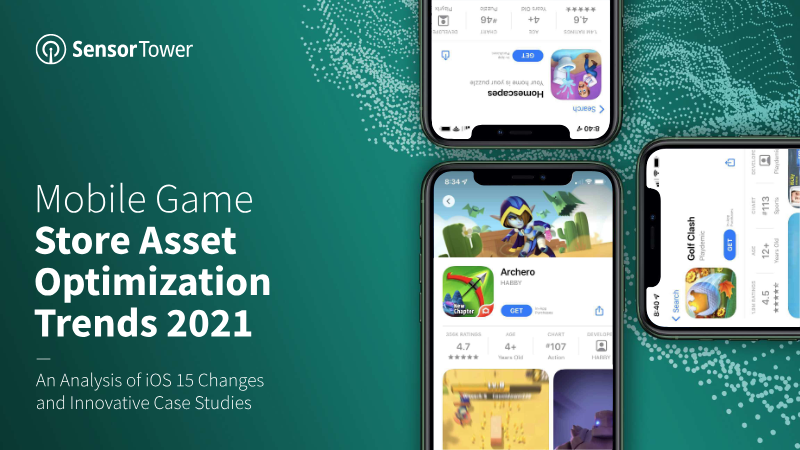
Strategic store asset optimization is a critical driver for increasing conversion rates and reducing user acquisition costs in the mobile gaming industry. Analysis of top-performing publishers reveals that the most successful entities treat app icons, screenshots, and product pages as dynamic marketing tools rather than static assets. This approach is particularly relevant following the release of iOS 15 in late 2021, which introduced Custom Product Pages and Product Page Optimization. These features allow developers to create up to 35 unique landing pages and conduct native A/B testing for up to 90 days, enabling highly targeted campaigns for specific audiences and influencers.
Data from major titles illustrates several dominant trends in asset management. Seasonal updates are a primary strategy; for instance, Golf Clash implemented 17 icon changes between 2017 and 2021 to reflect holidays like Halloween and St. Patrick’s Day. Other publishers, such as King and Garena, prioritize brand identity by integrating corporate logos across their entire portfolios to leverage existing brand equity. Furthermore, "forever franchises" like Animal Crossing: Pocket Camp use icon updates to signal anniversaries and live operations events, driving re-engagement among lapsed players.
A significant shift in the industry involves the alignment of store assets with high-performing ad creatives. Publishers like Playrix and Nexters successfully utilized "Pull the Pin" advertisements—which often differ from core gameplay—to lower costs per install. To minimize friction and improve conversion, these companies updated their App Store screenshots and icons to match the ad content. While such experimentation was historically more prevalent on Google Play due to its long-standing A/B testing tools, the new iOS 15 capabilities are expected to catalyze similar data-driven optimization strategies across the Apple ecosystem. This analysis utilizes Sensor Tower’s proprietary intelligence platforms to track these trends across global markets and major gaming segments.
This analysis examines the growth and performance of the Google Play Store over a nearly seven-year period, spanning from January 2012 to August 2018. Utilizing data from the App Annie platform, the findings track the evolution of the Android ecosystem from its early stages to a mature marketplace featuring over 2.8 million available apps. During this timeframe, the platform recorded nearly 330 billion total downloads and generated over $85 billion in consumer spend, with more than 5,000 individual apps surpassing the $1 million revenue milestone.
Geographic trends reveal a significant divide between volume and value. India leads the world in total downloads at 36.9 billion, followed closely by the United States and Brazil. However, Japan emerges as the most lucrative market, contributing $25.1 billion in consumer spend, significantly outpacing the United States and South Korea. The data highlights a shift in monetization strategies, particularly the 2017 transition toward in-app subscriptions. This change, supported by a reduction in Google’s transaction fees for long-term subscribers, resulted in a 55% growth in spend for non-gaming apps between 2016 and 2017.
The competitive landscape is dominated by major social media and gaming entities. Facebook-owned properties occupy the top four spots for all-time downloads, while LINE and Tinder lead in non-gaming consumer spend. In the gaming sector, Subway Surfers is the most downloaded title, but GungHo Online’s Puzzle & Dragons and Mixi’s Monster Strike lead in total revenue. Looking forward, the analysis projects continued aggressive growth, estimating that annual consumer spend on Google Play will reach $42 billion by 2022, a 90% increase from 2017 levels.