1 free read left. Create a free account for unlimited reading + AI research.
Create free account
Superstar Session: Making Profitable Hypercasual Hits
Key insights
6 takeaways- 01Profitability in hypercasual gaming is driven by the ratio between Lifetime Value (LTV) and acquisition costs, rather than a singular focus on minimizing Cost Per Install (CPI).
- 02A disciplined, data-driven approach requires the willingness to abandon projects that fail to meet established benchmarks to ensure resources are focused on titles with genuine scaling potential.
- 03The development lifecycle consists of an initial data-gathering investment phase followed by a strategic throttling phase to ensure marketing campaigns maintain sustainable net revenue.
- 04Developers must prioritize retention metrics and cross-network marketability over top-chart rankings to transform games into durable, profitable assets.
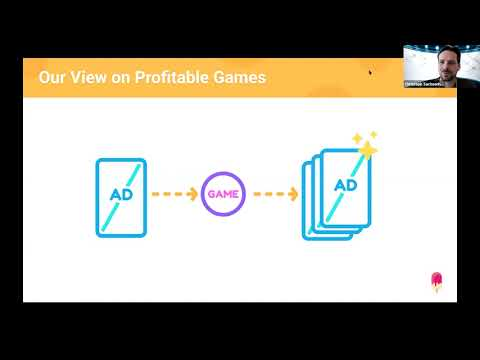
- 05Successful titles function as ad impression multiplication machines where the cumulative value of ad views must consistently exceed the cost of user acquisition.
- 06Significant revenue generation remains heavily dependent on performance within tier-one markets, even when scaling is possible in lower-tier regions.
Ask AI about this video
Transcript
i'd like to invite our first speakers to the stage please so we're very uh pleased to be joined for our first session our superstar session about making profitable hyper casual hits by our sponsor sunday so do we have christoph and blaji i believe we've uh we've got those joining us here i think i can see christoph in the window there yes hi there hi there so hi hi chris thank you i'm glad we've got um christoph uh shasta halsen and balaji then garage virgin joining us from sunday to do our first talk so uh hi folks how are you both doing oh i think you also might need to do that oh there we go you're great um so all right nice to meet you as well yeah thank you for being with us really looking forward to your talk so here's what we'll do i'll fade into the background and you guys take over um really looking forward to this talk if anyone in the audience has got
questions they can drop them into the q a box here and i'll come back at the end so you guys can just do your presentation don't worry about those i'll join you again in 20 minutes 25 minutes and we'll just uh go through those talks those questions then together okay um in the meantime over to you folks all right cool thank you very much for the intro dave you always had almost perfect pronunciation of both of our names which are definitely not easy to pronounce in their own in their own way um so yeah i i'll just go ahead and share my screen and then we get get things started so first of all i'm usually not a morning person but i have had my coffee today i had a good breakfast so great to kick things off today and start with the hyper casual track hope you enjoy it and hope you take away some drinks from it and also it's hopefully entertaining for you right hyper casual is all about being entertaining and being simple and being direct so i hope we can deliver some value
while also giving you a good time all right today i want to talk to you about making profitable hyper-casual hit games in our industry and we i mean in the end you as a developer that's is your ultimate goal right you want to run your own small company uh you want to earn money with this you want to pay your employees we as a publisher we have the same goal right it's always nice to have a game in the charts and to put that on your linkedin page but the end goal of our business here is making profits that's the gaming industry right so before we get into this we first need to go to hyper casual university so what we do in hyper casual university we dissect the life cycle of a hyper casual game so when you look at different lifecycles of hyper casual games and there are tools out there you know like app any sensor tower we use aptopia for example um then you can see the download numbers
over the whole lifetime of a game so when you look at any game from from most publishers you see something like this right so you see a curve in beginning and then suddenly it ramps up super quickly and then it drops down like this and so this is the amount of downloads that the game is getting and this is the amount of days so this 100 days 200 days 300 days this is just like a rough example it's not from a specific game but usually you will see a curve like this now it's super critical to understand what is happening here uh within the lifetime of these uh of this like almost one year and you can dissect it or slice it into different phases uh the lifetime of the game so the first phase is scaling the game up right so this is usually the face you have tested your game successfully with the publisher and now what the publisher is doing they are creating marketing campaigns user acquisition campaigns right and they're doing this on different
networks so classically you have like facebook you have tick tock now you have unity iron source app loving all of those big marketing networks right that you're buying traffic from and how these network works is usually that you create a campaign and you have a target cpi but let's say you believe your game can get a lot of traffic at a cpi of 25 cents right that's really good and what what you do now is you start the campaign with a higher bid so we start making with twice the cpi a bit but it means like you start with 50 cents why do you do this in order to get traffic on the campaign because these algorithms of all these networks they need to learn where are they getting the best traffic from where are they getting the highest volume of users from right so this is basically kicking off all the algorithms of all the different ad networks and this this usually takes a couple of weeks but in this phase and is really critical you are not earning money you are actually losing money
so you're investing in the collection of data actually for your game and this is basically a phase that you're you're in the absolute negative there right and over the lifetime of the game you need to equalize it with the money that you're earning later so the next phase that's coming then is a throttling down phase what does it mean so this is the job of the all the ua managers at your publisher that they go into those campaigns they see like which campaigns in which countries work really well from which uh sources are there buying the best traffic or the best volumes and now they are reducing uh the bits the cpi bits in the different campaigns but that means also the traffic is going down right the volume is going down but it is getting more effective now you're not overspending so much anymore so this is an area where it's usually it's a gray area so some campaigns they might already be profitable or some countries might already be profitable others are still on the way that and this usually also takes
a couple of weeks until you have adjusted all your campaigns and all your countries until they're on a good level and now basically comes an interesting phase everything that happens after that like when all the networks all the campaigns are well adjusted that's where you get actually money and that's where your lifetime value of a user is higher than the cpi bit that you're paying in all the networks okay so uh that's uh basically the lifetime value of the sorry the life cycle of the game and the green face is that but what you're most interested in right that's basically what we're aiming for as publisher at you should also a b4 as developer of course right so let's look at some examples of bad life cycles so this is data from apptopia so this is uh from from one of those uh app inside websites and what you can see here
is a download chart of some typical games that i just selected there and here you see in all of them you have this big spike in the beginning and then over the next weeks it's dropping down and then it's very quickly after a few more weeks it's fizzling out until it's completely like almost getting no more downloads at all or probably they even turned off the marketing campaigns right here you see all the same pattern everywhere big spike like this this area under the curve that's interesting run right because that's where you're losing money and only here in this area under the curve that's we're gaining money and you can see this area is of course much bigger than what we're getting out here at the end so in the end what the publisher will do is of course take this minus this and then share the profits with you right that's the business model and so you want to have this big curve here as big as possible right so we can look at some other examples of slightly better uh games so here you can see already all right there there they
have some losses in the beginning they're ramping up that's also by the way the the time where usually in the charts right so at this peak here that's where you get the the top chart positions but that's also why it's not so good for you that you're in the charts usually for a long time long time because this is actually costing actively money right so you want to throttle down and adjust and get to a profitable efficient level as quickly as possible so this already looks a lot better i think and this is for from some of the bigger publisher you see similar curves there they're all doing a great job of course there but i want to show you something a lot better than this and i want to show you the lifetime curve of our first publish hit game that's called cat escape that we launched in november this is also data from optopia because i didn't want to show you data here from our internal systems which is of course more accurate but we want to compare apples to apples right so like i showed you those uh life cycles from
from other games from appropriate now now we get that to see the same data from the same system and uh yeah what what you would you see here of course we see a scaling up phase in the beginning and then we adjust the campaigns try to be quite quick about this see what works and what not and then you see here this very stable green curve in the end when you you can already tell like this is a lot bigger the area under this curve is a lot better bigger than what you see here in the losses section in the beginning so this is a very cool situation for us because this game is really still paying the salary of 20 people and it's getting more and more profitable over time as we'll see so and and also super interesting it never got a facebook cpi uh below 30 cents so what you hear often from publishers yeah your game must be below 25 cents below 20 cents below 30 cents if they're a little bit more relaxed right but cat
escape never got a cpi below 30 cents and why we still publish it we will we will explain you later but what you can see here is that over time it's actually gaining more and more profits so not only is it still going very strong but the amount of profits that we're actually getting every month is still increasing uh month by month and uh these are real numbers now this is from our real system i know a lot of publishers often don't share their real revenue numbers in this case we can definitely do it because it's our own in-house developed game and you can see you like in in june we are almost pushing here for 1.5 billion million in profits so this is not gross revenue this is really net revenue after subtracting marketing costs so this is just a rough idea of what games we have out there good and now i give over to balagi
thanks chris yeah so we started publishing uh you know taking the learning from our internal developments and internal publishing we decided to start publishing in may and pretty much the first week we started we met uh this very young studio called regular from turkey and they came to us saying hey you know we have a game uh you know uh and it was a fairly finished game so uh upon asking they were transparent that it was rejected from the publisher and you know uh and they would like to see the chances with us uh it was when we had a first look at the game it was pretty interesting uh and then uh you know they they did share that the reason for rejection was high cpi uh so what we did was we first did our orientation test right to see the data uh pretty much we saw great promise in the game it was pretty engaging check it out uh on the play store and the app store uh and we did not change anything uh from the video so you know from the previous test right we just use it as it is
i pretty much uh zeroed in on the key metrics that we required to improve for profitability in this case it was pretty much retention um and there uh when when we started the rotation was i think 33 or a little bit less than that and uh then we got our internal game teams involved say like what can we do to improve this i think we have about like seven iterations in around like two and a half weeks and we reached this magic metric above 40 and uh we pretty much published the game in three weeks and now the game is going to be hitting profitability uh just a couple of days right so taking this uh taking these facts our learnings from our uh previous wins as well as losses that we we look beyond uh cpi uh and for us the main metric is profitability of the game and as long as the ltv is greater than uh you know the uh the acquisition cost it makes sense we don't uh it doesn't matter if it's number one or number five or number hundred uh you know this is how we look at uh
games so moving on from uh here um uh so so uh what what what do we what do we do um i wouldn't say different a lot of publishers may also do the same but what do we uh what do we do we look beyond the cpi what does it mean uh the common practice for most publishers and for us also to do the first test on facebook right because it gives a pretty good uh data results in terms of marketability tests uh because you know it is the first case uh first first gate to pass for hyper casual gates right but uh we don't take the facebook cpi value at face value uh you know say our own internal intelligence tools have the ability to extrapolate as to what we can achieve in other networks so that's that comes from uh you know us being part of the applied group which chris will talk about uh later and we look at the overall marketability on uh different networks right uh plugin is a great example it's a very uh you know tick tockable game as we call it so we we evenly did like a funny uh voiceover
internal kicked off videos so that their great presence on tick tock and each sometimes a specific game does have a specific catch in certain networks and all this we put in relation to the output this game can achieve because at the end is the profitability that matters right nothing else yeah moving on from here um yeah i think i'll take over here again right so as balaji mentioned we take a look at much more intricate details of the game so a lot of publishers they just have this cpi gate that we jump through we also have some marketability gates that you need to reach but in the end when we actually uh try to evaluate evaluate if this game is going to be successful we take a look at it at several angles right because having a good cpi a very low cpi is nice but how we look at games is basically they are impression ad impression multiplication machines right so in a very engineering term
right so uh in the end let's say you you have an ad for your game and you show it to 1 000 people right and out of those 1 000 people 100 people actually install your game that means you need to show 10 ads until one person installs a game so 10 ads on the minus side and then you can see like okay how many people are actually like how long are people playing my game and over their lifetime let's say they play the game for five days for seven days 10 minutes a day they watch around 20 ads inside of the game that means you need 10 ads to get them into the game and then you can show 20 ads to them right and as long as the number of ads that you can show to them is higher than the amount of ads that you need to get into the system you're earning money right that's our super basic super simplified way of looking at games of course in reality it's much more intricate much more sophisticated
there are a lot of different things going on and you can look at it on very different dimensions but when you when trying to keep it as simple as possible that's that's how it works and that's how we evaluate games so you might be wondering uh who are these guys and who is this wonderful company and where are they coming from so let me quickly introduce ourselves so we are sunday we are a fairly new publisher out of uh hamburg in in germany and we have been around since one and a half years years now firstly and foremost we started developing games ourselves but we recently also went to the publishing with balaji heading this up and building up the publishing team they are already having really really good successes with plaquette in the first month of his team being here and we we are a very diverse international team that means we are around over 20 people at the moment with more
than 10 nationalities although our location is based in germany english is our main company language and so what we have done basically we have gathered the best experts from all around the world so there are people working as developers and artists as user acquisition managers in bi as a game designer's game leads producers right so we are we really have everything that we need to completely push a game forward that we really believe and then to make any idea that we have work internally but also we sharing all of this with our publishing team and all the insights that we are generating inside of the team this all goes out to our publishing partners as well and how do we operate how we do this we really strongly believe in having small dedicated agile teams and this is extremely good for communication
right so when you had frustrating frustrating experiences with other publishers before this was usually because communication takes a long time right and that's usually because you have a communication hierarchy that means you know you have a request coming in or someone you want the evaluation of an idea or a game and then this goes up the hierarchy and then it trickles down again and this can take up to several days or even weeks until the decision is being made or until you get feedback on an idea we have a different approach there so all of our teams are they are self-reliant they're following their goals they're interacting with each other directly you know and there is no like upper management green light process right so we share the knowledge within all the different teams and the company and they're able to make decisions for themselves and that means here you will get feedback and decisions in in days or sometimes even in hours right that's our service that we also provide to you also super important to mention is that
we are part of the app like group and the app like group is a very big player in the app like in the in the app marketing industry so for example with a company just dice they are the european leaders in uh rewarded apps uh and over the years that they're operating they're super profitable and they've built up a very sophisticated marketing stack so we have our own bi system there and if you're wondering like hey where how where does guys able to scale their first hit game so well and get so fast into all the different details that's because we are able to use the whole tech stack from the app like group that they have built over the years and that is super adjusted to our needs and so basically we we have our very own sophisticated uh marketing tools there that we can use also for internal games but for publishing games and we share the data with our partners there then we have agile as a monetization company
that also helps us scaling a lot so it's both like it's an app network but also we can monetize with them so you're probably also seeing some parallels to some of the other big publishers out there that have their ad network in the background and then third like the new kids on the block that's us that sunday and this is all being made possible by generous funding from a very huge german media company bertelsmann so they are the owners of several tv stations and one of the big media players in europe basically and i think i'm going uh taking over to uh balaji now again thanks chris so uh so you know taking on from where chris left uh we our publishing team uh operates basically on these three values and the most important for us is developer empowerment right so being developers ourselves uh you know we have learned like what what can uh what can uh uh what can happen if
developers are given like complete uh our shared data and you know every feedback has to be backed by data and the way we work is uh you know we share our creative feedback but it's always packed with some kind of data or parallels or learnings from our internal tests and development so that the decisions right from ideation to publishing uh can happen uh together right uh in the end it's the developers call the ips owned by developer all our contracts uh you know ensure that and the whole creative freedom lies with the developer and we have seen uh this now uh i know uh you know have great results happening from this type of working in the past few weeks right uh and this is pretty clear that a studio and this the the uh the best demonstration here is uh the regular duck again who has never published a game before within like three or four weeks of working with us could could uh not only publish a game but publish a profitable hit game uh direct communication big germans i guess you know this is very uh
part of the culture but also the company what does this mean is without contracts or feedback uh there is no room for misinterpretation right and our agile and dedicated team like chris mentioned are really on top of everything and they answer the queries pretty quickly and the last of course like this whole talk us about it is sustainable profits you know for us it doesn't really matter what position the game is in as long as it's profitable and there's a good amount of revenue to be shared between the developer and the publisher it makes sense for us with this i would add this talk i guess yes thank you and there's i think some from some few more uh questions for uh if you can take it yes absolutely let me come back in here and say thank you very much guys that was great really really good introduction i don't know whether you can uh you can see me but you can probably hear me i'm gonna give you a round of applause there you go from that you have to imagine that from everyone one day we'll be back in the uh in the same room for these things again and you can uh get the applause from
people uh people live we have got a bunch of questions we've got a few minutes so we probably won't get through them all i want to thank everyone for dropping their questions in there but i'll i'll grab a few of these i'm going to um first of all i'm just going to grab um zv's question um they posted a question both in the chat window and in the q a box it's the same one so i'll grab it from here um so what is a marketable cpi in your eye uh or the maximum you will move forward with uh some question of what that's what that talks about right the the thing is like facebook will give you a cpi but that's very uh specific for trying to scale on facebook um there are a lot of different ad networks out there that also work very well outside of facebook right so that that's that's basically what we're trying to say here we don't take the facebook cpi at face value we still look at it but it's not the determining criteria there are a lot of other marketability metrics
that are more important for us so what we try to find out when we test the game on facebook is yes will it scale on facebook but when it doesn't scale on facebook will it scale on all of the other networks which behave very differently than facebook so there are other metrics that we look for uh going too much into detail would cost too much time i think so if you're super interested to talking about this we would be quite uh happy and just write us after the talk and then we can schedule a meeting that's perfect thank you of course your email is still on the screen there and i imagine that our viewers can find you in the meet to match platform or on discord or whatever as well i'm going to grab another question here personally so i found the your opening segment just talking about the life cycle of games really illuminating we've got a few questions about that one of the um the questions is what is the average life cycle length of a type of casual game i'm asking because it seems different publishers have different views on that matter it totally depends on the game of course
right every game is different there are games that quickly fizzle out after like three or four months there are games that are still going strong after two years so it's difficult to answer this um for cat escape for us for example is has a very very long uh life we were also quite surprised by this and of course positively surprised uh i think this is really an exceptional game but of course there will also be games that you know don't get much traction after three months especially when they're following certain uh fast trends right so a lot of uh games that are popping up right now are following tick tock trends social media trends so these can work for a long term but i think that they're often more short-lived because then the attention is again on a different thread interesting thank you let's um a very specific question here from from one of our attendees um from from an indie so for an indie
what is the minimum dow daily active users needed to achieve good fill rates and impressions per dow for a 100 ad monetized game and the texture they've said is that they're in a tier three or four geos like brazil india mexico argentina um so the minimum amount of daily active users to get i mean you can get a high fill rate and fill all your impressions with very few daily active users the question is like when you when you are live in just tier three countries then you you really need a lot of impressions to gain any significant profit from the game right and i mean you have to offset this with your operating cost for paying salaries right so usually the biggest profits are coming from tier one countries we are also heavily scaling in uh markets like brazil and mexico and that's where we're actually getting the most amount of impressions from but that's
not where all the the profits lie and where the biggest share of revenue lies so this is it can work on a pretty low scale but then the question is more like when you're earning 50 a day right how does this pay your living wage right that's great uh thank you so we had some that was some very specific questions this is a more general one there so uh one of our anonymous attendees has said that um they're interested in developing hyper-casual games but they only know how to develop good games they don't really know about the business side of things our publishers like sunday for instance able to help with that what advice do you have for someone in those circumstances so a developer who knows how to make gains but but doesn't necessarily get the business side of it sure definitely we can definitely help you with that so i think that the biggest thing that you need to bring to the table is the willingness to learn and to look at the development process from a different angle mostly with casual games or mid-core
games the development process is just very different or the approach to development and how you think about the games we can coach you how to get the right mindset for it but you need to be able to adapt those learnings quickly and actually uh i mean how the development process works is super well documented i think there are a lot of uh talks and documents that you can read that that can get you into the process we can tell you much more details or like go more into your unique challenges as a company but uh in general uh it's it's you have to follow the the the approach that is recommended as a back presses the uh practice there that's that's yes to just to add to that uh fun fact is most uh a lot a lot of upcoming hits or promising guilds we see is from people who have never developed games before and probably high vocational is the best way it's the best ones for them to start with
that's great that's really interesting that's really interesting so in fact actually let's talk a little bit more about some of the um about uh developers coming to to um to be published by you guys we've had a few questions on that and i think we've got a a moment before our next speaker joins us so i'm going to grab some of these so um uh so obviously these questions coming from developers i guess one of our attendees has asked uh what does your typical profit share split look like so what's your model so it's uh i mean we have it always depends on the amount of support that the developer says right some developers say hey you know we really don't want to spend the next six months worrying about our wages can you just you know fund us for the next six months then it's a different number some developers are you know we all we we can do the tests ourselves we just want you to scale the game or you want to communicate at the publishing stage obviously that's like a bigger number so yeah there is a range uh but yeah for details you can just write to uh talk to us uh like write to us at the email and we
pretty much get in touch with you within 24 hours that's perfect and in fact actually on that note then so as a um the introduction to your company that you gave at the end there was great and somebody's asked as a new publisher why did you decide to target the hyper casual market um it's uh what what attracted you to that to that sector as you know as you get into this uh well there are several strategic reasons of course that we have inside of the apple group to just have ad monetized games out there right so i mean you see a lot of those synergies with with some of the ad networks that i mentioned that also have their own publishing unit for us it's the same motivation basically right when you have your own ad network you can scale the games much more effectively that's of course on the business side on the other side it's just a very um yeah open market to get into i think like when you start the development of a casual game or mid-core game you often have to invest like six or six or more months until you first see results and see if
your game will work when you're really just starting up something new and going into a new area i think hyper casual is really perfect to quickly get results and also to quickly learn because of course you fail a lot at the beginning right most things don't work but you will quickly be able to learn what works and what doesn't work that's great and in fact actually christopher i'm going to come back to you on that point there because one of our attendees has asked a question which i think speaks to the point you just made which is what's your approach when you can tell you've got a good game or a good idea in your hands but the numbers aren't what you'd like can um can you do anything about that i guess the question that the uh that the attendee is asking is can you can you rescue a game in those circumstances can you reiterate what's your suggestion so uh i think then when the numbers don't tell you that the damn is good then maybe you should check your own mentality about like it's you we have so many ideas that we really really like and we really believe oh that's the next thing but over time you have to just learn to let it go right if you
yes you can believe in it you can continue to iterate on it uh if you really really have this gut feeling but at a certain point you uh you know you you have to uh you have to kill it right that's just the rough reality it's you cannot sustain this purely emotion based uh approach right and um yeah this is something that you learn over time it's like a muscle constraint just to add to that also depends on which numbers you say are good right i mean i do you mean like the average playtime is like 20 minutes like i'm outstanding the cpi is 10 cents but everything else is there it depends on what's good and then you see it it doesn't mean like you have to improve just one metric or two metric or do you improve everything if it's like everything like crystal yeah probably come back to it later but if it's one or two you know then there's still chance exactly that's great thank you well look i'm perfect you know we've got our next speaker here so i'm going to to wrap things up there really pleased to have you guys on round of applause from everyone you can imagine it coming
from the crowd what i will say is if anyone has follow-up questions the email is on screen there um also uh these guys uh you can find them on me to match and discord and i know that we'll be uh hearing more from sunday later i'm sure so look thank you very much and we'll we'll move on to our next speaker but really appreciate that very informative thank you thank you thank you you
Summary
Achieving profitability in the hypercasual gaming sector requires a fundamental shift away from the traditional obsession with low Cost Per Install (CPI) toward a more nuanced strategy centered on the relationship between Lifetime Value (LTV) and acquisition costs. Success is defined by the total area under the profit curve, where sustained long-term earnings eventually eclipse the initial capital deployed for user acquisition. By prioritizing retention metrics and cross-network marketability over mere top-chart rankings, developers can transform titles with higher acquisition costs into durable, profitable assets.
The operational framework for these titles relies on a two-phase lifecycle: an initial data-gathering investment period followed by a strategic throttling phase. During this second stage, marketing campaigns are rigorously optimized to ensure net revenue remains sustainable. Publishers view these games as ad impression multiplication machines, where the primary objective is to ensure that the cumulative value of ad views consistently exceeds the cost of acquiring the user. While scaling is possible in lower-tier regions, significant revenue generation remains heavily dependent on performance within tier-one markets.
Success in this high-velocity industry demands a disciplined, data-driven approach to project management. Developers must leverage agile communication and sophisticated marketing technology stacks to iterate on underperforming metrics. However, the most critical component of this process is the willingness to abandon projects that fail to meet established benchmarks. By removing emotional attachment from the development cycle and utilizing rapid feedback loops, publishers and developers can focus resources on titles with genuine scaling potential, ensuring that profit-sharing models remain viable and mutually beneficial across the industry.


















Comments