1 free read left. Create a free account for unlimited reading + AI research.
Create free account
How to Make Your RnD Rock!
Key insights
7 takeaways- 01Belka Games utilizes a lean R&D team of approximately ten members to ensure rapid communication, high individual involvement, and the agility to pivot quickly when hypotheses fail.
- 02The R&D process follows a top-down verification sequence, prioritizing core gameplay loops first, followed by retention metrics, and finally monetization.
- 03To maximize development speed, the team avoids redundant work by leveraging an extensive library of internal legacy assets and external asset stores.
- 04Data-driven decision-making, including market analysis and competitor pattern recognition, dictates all stages of development, from meta-game themes to currency systems.
- 05The 'DNA transfer' strategy facilitates a smooth transition for successful projects by gradually integrating permanent staff, such as lead developers and product managers, while the R&D team pivots to new innovations.
- 06Projects that fail to show iterative improvement are discarded to prevent resource depletion and maintain the department's focus on high-potential hypotheses.
- 07Projects are held to a strict six-month viability window, utilizing two-to-three-week development sprints to test specific features and performance metrics.
Ask AI about this video
Transcript
moving on uh we're going to move on right to our next speaker so i'd like to welcome pavel sudeikov from belka games who's going to talk about how to make your r d rock hello everyone hi uh just a second i will share my screen good afternoon i'm pleased to welcome everyone to my presentation and i will try to be as helpful and understandable as possible and as you guess guests from the title i'm going to tell you about the r d department and belka games so my name is pavel sudakov i've been heading the research and development department or simply r d at belka games for almost two years and now let me tell you a few words about my background to make it clear why belka company made a choice in my favor i've been working on games since 2008 and i started with games for social networks and then there were games
for mobile devices and a short break for ar games and now i'm working on casual mobile games again before i had a wide range of responsibilities i used to be an artist a game designer and a screenwriter but my main experience is still management from project manager to product manager a few words about belka games we currently have three projects in operation it's clockmaker solitaire cruise and funky bay and one new project has been prepared to enter the global market uh we will announce it in the in the near future uh the r d department is also working on several future products and according to a penny the company entered the top 20 publishers by revenue and we continue to grow but let's go back two years 2019 the driving force of belka is a clockmaker master game and the funky bay farming simulator is gaining momentum the company's backlog has three projects at different stages of development and
launch and in addition marketing software platform applause becomes a strategic partner of the company the company management comes to understand that the product pulling is significant scaling up besides several important conditions must be met first the development of new products shouldn't affect the development and support of ongoing projects second the development team should be compact the development must be fast and the last one product scale and should not be done by r d these points may lead to the conclusion in order to respond to market trends as quickly as possible the market advantages of the new department should be speed and flexibility before starting the development we didn't have any specific descriptions of all the processes actually i'm still not convinced that this whole bible is finalized and cannot be edited after all flexibility is one of the key usps of the department
nevertheless after going through about five products more than 50 interim releases and two successful launches we can shape some rules and i'll be happy to share them with you so r d new house i divided them into six blocks and will tell you a little about each one you can form other blocks especially for meta game and dna transfer and in conclusion but we share our experience so we will start from the speed speed was the eggless heel of new games development and belka games but let's be honest it's the weakness of many game companies as a rule only finished game can be brought onto the market but if you approach the concept of a finnish game with the paradigm of game and operation it grows like a snowball what should you implement there animation offers events maybe group events what should you do with user support i want to tell you that of course you never get a second chance to make a
first impression still we choose a different approach and i have some questions to you why look at day 30 if you don't have day 7 retention yet why implement an event if users don't play the core loop why do we need an offer system if players don't want to make a purchase so we check from the top going deeper and deeper with each iteration first the core gaming loop then step by step verification of metrics in the first launch we try to provide in-game content that will allow us to see day 3 retention but sometimes we can check only a starting funnel after checking the third day we check the 7th at this point we try to keep our day three retention and ideally increased and a little more about the previous point with each new iteration we try not only to go deeper and further but also to improve the previous indicators since we noticed problems in it we can test additional hypotheses
the development in our department occurs in the small steps it's about two or three weeks between releases we don't implement a lot a lot in one release it can be one feature or for example additional part of content this way we make our deliveries often and see the results sooner and this has a very good effect on the team first of all we check product metrics it's retention as i said and funnels like download tutorial funnel level funnel chapter and similar funnels that allow us to see the player's progress and find the points of churn and the ways to the future growth after receiving satisfactory metrics of at least day 7 retention we proceed to work with payments for us key indicators here is conversion to the first payment rpu and maybe later if it's possible a predictive payback model for you it can be another key indicators you should find out
them by yourself and a very important point bulky game games has accumulated sufficient resources i already mentioned projects that were not released for various reasons and in addition there are powerful current products clockmaker funky by soldier crews and at the moment there also a number of product that didn't leave r d departments in some reasons and thanks to this we have access to a huge database of resources for art animation sounds and of course code and we often use ready-made solutions instead of developing new ones at least at the first launches and here i want to give advice for you take a good care of your legacy the battery is structured the more universal approaches you use the easier it will be to find the solution you need but even if your company doesn't have such a databases you can always use databases of ready-made solutions for example asset markets the last thing about speed
uh we have developed a scheme to use we need six months to make decision on the product viability the count starts with writing the first length of the concept of new game and ends after at least two or three technical launches with receiving metrics on users and if you think this is fast it's worth saying that few times we did it even faster okay next block is data data-driven at belka games the data-driven approach is recorded officially in the company culture any of our decision is not a result of insight but result of data analysis the rnd department also used this approach and this could be the end of the point but i will give a few examples because it's just one slide search for the idea even the first steps are taken on the basis of data we always start with market research and i'm sure that you're guided by the same approaches i've seen a reason to tell
here more in detail the second is important cross-up analyzes games with meta were singled out with separate genres as you know it means that modern casual games despite their casualness can be quite sophisticated hybrids and now new genre is emerging meta heavy match 3 known for example for its project makeover and the answer to the question how to cross and what to cross to make it as effective as possible can be found both in the analysis of competitors and in the analysis of cross-apps search functionality can be found in third party analytical services but of course you can always use an old proven recite and rebuild another mention search for patterns here we'll give you an example from our experience of course when we started developing our solitude we researched the market and the market situation was like this and one had several
successful soldiers and the other hand many very average ones not having a lot of gaming experience in this genre we played every single we could find and noticed one interesting thing successful titles each of them use the single currency system it's when the player pays money to enter and receives the reward for winning in the same money others use the classic system with currency and lives like for example in any match 3 game we decided that this one of the keys to success and choose a single currency system for our game as well actually i can say whether this solution made the whole thing but soldier cruz entered the top three successful solitarys a few months after its release and now it's already in the top two in some markets since then we have been carefully playing the games of competitors trying to find patterns of both successful and unsuccessful solutions let's continue with metagame it's an
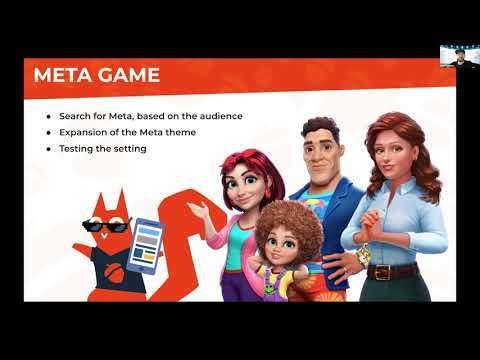
expansion of my previous point but i want to put it in the separate block because here i will talk only about our approach to choosing matter and i'll try to use examples to make it clear and not so boring search for method based on the audience again an example from soldier cross as i said before the time there were several successful solitaires on the market and as meta one used harvesting the other choose tropical island and the third wolf at the same time the audience of our game was determined to be mature and what could interest in the mature audience harvesting has already been successfully used by competitors and has vacation in hawaii and so has golf what other entertainments might interest into our mature audience a huge cruise ship popped into our heads quickly enough it may seem that this is one-size-fits-all solution and probably it is but this cliche wasn't used by competitors which means that the field was relatively free and
we occupied it and overtook many competitors then expansion of the meta theme while developing our new project i mean after solitude we really enjoyed our playing other similar games of course and determined with basic mechanics we decided to make the setting more modern to expand the potential audience let's just say that there is a feeling that the simpsons are more popular than the flintstones and with respect to competitors and the market we have modernized our characters brought them into the real world and added more intersections with modern life whether we succeeded or not we suggest you evaluate because global launch awaits us very soon and the last point here is testing the setting i'm not going to reinvent the wheel here but nevertheless if someone else doesn't use it we suggest trying it and we use it the point is to conduct tests on ad creatives before the start of development
after all there may be a few good alternative ideas that would fit the points above and how to choose the best one our type is to conduct tests before development and also this will help save resources and time later the team this point wasn't very big but very important because the team will make the future of your company so let me tell you what approach we use when we assembling the team small department this provides quick discussions rapid task assignments and easier control of all areas of development we start the development of each new idea with a team of nearly 10 members later i will clarify how we scale the team when making decisions about the game viability but at the start the team is about 10 people maximum involvement of each team member a small number of team members makes it possible at the first stages of prototyping we
expect expect that each member of the department to actively participate in the research and product solutions in fact at this stage we don't have one specific producer product hypothesis are discussed and implemented by almost all members of the department and this is my favorite one the combined person uh we invented this term as a joke uh to characterize our colleagues from r d but now we also use it when expanding the department in more details the combined person means multitasking of course each member of the department has his own specialization but even within this specialization he is user he usually generalists at bulky games we believe that every project has its own dna which is hard to find and easy to lose and the collective holder of the game's dna is the development team so then the creators of the product should keep
working on it but according to this logic me and the rest of the r d department would have to operate the solicitor cruise game it was our first game and the company's management would have to record the r d department for each new product but this is not how it works for us uh now i will explain how we carry out the transfer of the game without losing dna and keeping the key personnel of the department we see the potential we scale the team i already said that we make solutions quickly including decisions about the potential success of the product so as soon as we make a decision that the product is potentially successful we start to build up the team this happens quite early at the tech launch stage but our task is to keep the pace maintain the speed improve the quality and look to the future that's why at certain stage you people join the key personnel of r d developers first of all these are product managers and personnel of senior
and lead levels it's the future core of the product team further solutions about the scaling of team will be made by them also we form the core as soon as we can starting new project at the idea stage we recruit people who will definitely continue to work on the project if it's successful as a rule there's a lead developers lead artists and further scaling is carry out in approximately the same stages as releases each successful launch allows us increasing the team by one or two members if we need it and one of the main goals of this strategy is to transfer the project's dna to the future team in fact the dna of the future product is developed by them following the strategy the project team practically does not have members of the r d department by the time of the global launch the project dna is entirely in the hands
of the new team and the team size also allow them to support the product for the first month after the global launch it's worth mentioning that usually some members of the r d team is also in the department i mean with the game because they fall in love with a new product and want to continue working on it but we are ready for it and do not see it as a problem of course it's a bit difficult to find employees in the department due to high requirements but we do it once or maybe a few times a year also because new blood has a good effects on the body and the body is our r d department uh i want to thank you for your patience for already coming to the end of my speech there is only one more point i titled in in conclusion it included some something that i couldn't attach to other points and there is only 92 slides left so i
won't take much time just joking again sorry okay then in conclusion r d is a product and products mean features in brief it's our development priority all the products that we develop in the department of features that make up one large project the r d department the moment a feature becomes an independent project our work ends we have done our part i have a question for you again what do you do when a feature doesn't perform i think something like a couple of iteration and then recycle bin and a new feature with this attitude we do not do not take failure too high for each product there is a hypothesis is for a feature the required data for testing it as for a feature a certain number of alternatives if something goes wrong is free feature and a time for testing it as for a feature you won't be testing the same feature for a month so if you do not work if it don't don't work i
mean so we prefer to redirect our forces towards a new hypothesis how to avoid burnout i partially answered this question by the previous point we try not to get to attach to a particular problem in this case it will be easy to shut it down and switch for testing a new hypothesis but i want to mention here that for us a killed project is the basis of possible future projects and the store of material created for it and how not to do experience and even how to do experience because a project cannot be absolutely bad well it is if we don't succeed but if the product is successful the energy it gives to you is unbelievable however in no way should you ignore vacations and a healthy lifestyle and at the end of my presentation i would like to hand it over to the r d team at belka games and here are the selected quotes
there is no specific product that drives the department and its success drives and i'm much more interested in making clay than pottery and my favorite the r d team is made of sprinters who are most effective running short distances then stairs can grab the bait and that's all thank you for your patience uh it was it was cool yeah great job you have a lot of questions from the audience so with about 10 minutes left let's just dive in here um it's up to you you may want to keep your answers uh brief so that we can get through these um but let's start with uh this one so you mentioned the step-by-step approach but we also heard many times that liveops should be planned early do those approaches overlap or is it case-by-case based uh it depends you know in one game for example for solitary crews
we implement live ops when it was in r d still and for example for our second game uh i mean for the current game we didn't have any uh live ops during the r d because core loop is worked very well and all these live ops will implement by the main department great uh do failures teach developers more than the successes when it comes to data as well uh it's a it's an interesting question uh i think failure we need failures uh because it's of course it's lessons but uh you you should you should get used to to win to wins you know uh it's better when you have more successful projects than unsuccessful so are spin-offs the best way to expand successful ips uh sorry i think i didn't
hear it well they were asking are spin-offs the best way to expand successful ips [Music] i'm not sure we didn't make any any spin-offs in in belka that's okay we can move on um next question is how do you strategize your advertising for markets with different cultures and gaming habits uh i'm not sure that this is my area of uh expertise uh because we have marketing department in belka i want to say that um when we check the hypothesis and your new projects we are aiming on tier one uh countries and we are aiming on for example us yeah this is actually my expertise but i'm not gonna we don't have time to go into that right now so let's just move on to the next question uh is it easier
to keep a positive company culture when the teams are small and highly involved uh for us it's easier of course because due to high requirements to our colleagues and do the rapid tasks and as i said every every member of r d department is a producer so it's easier for us yeah but our company is very big so we can we we know how to work with all the teams uh next question for indie developers with limited resources what would be the best approach in regard to r d as i said the first of all you you should use uh asset stores that's my first advice you you don't need to take to to take much time on development if you if you can save the time you you need to save the time um how about what is the ideal uh i think the
uh meant iteration what is the ideal iteration cycle length how long is too long to kill a project uh for us it's half a year and small iterations for two or three weeks because you need to check always check what you did okay um next question solid presentation pun intended at what point do you say stop to r d projects whether due to constant failures budget constraints long development time and so on so when is the right time to just call it quits um let me think a bit tough question uh actually we we have failures in our uh in our experience and uh maybe the the first project was the toughest one for us because we love
it very much and it it was very hard to say stop in the right time and maybe we just spent a bit much time that than we need to and after this we have this you know strict rules for half a year not not more than half a year but we try to to get the results sooner if you see that every new iteration is better than the previous you want the right path and if you don't see any any what i forget the english sorry any improvements yeah i think you should stop here another question how many failures are too many is there a point where the team should completely change their approach uh i i'm not sure that there is one rule or one reside for it uh as i said previous uh when you see the improvement
on each iteration it's uh on you you're on the right path and if you see that nothing changes i think you should stop okay um great um so i i know that from my experience working with different teams with r d projects it's uh one of the hardest things that they've had to do is is the landscape that they're researching is constantly changing and so it's like it kind of sets them in this trap where they feel like the research is never going to be done so that they're because you know they're looking at a dynamic situation and i've seen teams just get caught in this cycle where it's like well no we can't stop r d because we don't have our answer yet it's like yeah but with the current conditions in the market you're you may never know the answer so totally agree with you it's a vicious circle so we are focused on production mode and on research we did our research before the production and then we tried just chicken chicken and chicken and chicken yeah yeah i mean it's what is one way to
to make sure you don't fall into that cycle to basically have basically have a really clear question you're trying to answer yeah you know the more specific the better maybe yeah so you always need to to ask yourself what why i'm doing this yeah what the result it will be well great well i think that's uh that's all the questions we had and we are just about done with our time so yeah so thank you very much thank you you
Summary
The research and development (R&D) department at Belka Games prioritizes speed, flexibility, and data-driven decision-making to scale mobile gaming products effectively. The primary thesis is that R&D should function like a lean, iterative product cycle where failure is treated as a standard part of the process rather than a setback. By maintaining a compact team of approximately ten members, the department ensures rapid communication and high individual involvement, allowing for quick pivots when hypotheses fail to meet performance metrics.
Key operational strategies include a strict six-month window to determine a project’s viability, utilizing two-to-three-week development sprints to test specific features. The team emphasizes a "top-down" verification process, starting with core gameplay loops before moving to retention metrics, and finally, monetization. To maintain speed, the department leverages a vast internal library of legacy assets—including code, art, and animation—or external asset stores to avoid redundant development. Data-driven insights, such as market analysis and competitor pattern recognition, guide every stage, from selecting meta-game themes to determining currency systems.
A critical component of this model is the "DNA transfer" strategy. As a project proves successful, the R&D team gradually integrates permanent staff, such as lead developers and product managers, to ensure the project’s core identity is preserved as it transitions to the main production team. This approach allows R&D members to remain focused on innovation and new hypotheses. Ultimately, the department views its work as a series of feature tests; if a project fails to show improvement across iterations, it is discarded to prevent burnout and resource depletion, ensuring the company remains agile in the competitive casual mobile gaming market.














Comments