
Report9 pages
The Future of Ad Monetization: Insights from Industry Leaders
The panel “The Future of Ad Monetization” presented at Gamesforum Barcelona 2026 focuses on the evolving role of advertising within mobile game economies, arguing that ads are no longer ancillary revenue but integral to core gameplay loops. Experts from PlayPack, GameBiz Consulting, and Nekki highlight that by 2025 ad monetization has become one of the most challenging systems, requiring creative integration and data‑driven adaptivity. PlayPack’s Merge Away example illustrates how hybrid models combining rewarded ads and in‑app purchases can drive profitability, yet misaligned user cohorts can cause revenue drops of up to 30 %. The discussion stresses the necessity of real‑time visibility into ad source performance and the importance of designing ad moments as optional, rewarding side quests rather than punitive blockers.
GameBiz Consulting’s specialist notes that newer formats such as App Open, audio, and immersive ads have yet to achieve widespread adoption due to user experience friction and lower eCPMs. He recommends cautious experimentation, high price floors for intrusive formats, and pairing ads with “no‑ads” purchase offers to mitigate churn. The panel also emphasizes that the future lies in contextual, segmented ad experiences—matching the player’s motivation and session flow—to transform ads from interruptions into meaningful choices.
Nekki’s head of monetization projects that the most valuable in‑game currency will shift from virtual goods to player time, advocating for adaptive ad systems that respect individual player preferences. He foresees LiveOps integration of dynamic, data‑driven ad touchpoints tied to progression events. Overall, the panel concludes that sustainable revenue will stem from a balance of data insight, empathetic design, and adaptive monetization strategies that treat ads as living components of the game ecosystem.
- Hybrid monetization models that combine rewarded ads with in-app purchases are essential for profitability, but misaligned user cohorts can result in revenue losses of up to 30%.
- Ad monetization has evolved into a core gameplay component that requires real-time visibility into source performance and data-driven adaptivity to remain effective.
- Ad moments should be designed as optional, rewarding side quests rather than punitive blockers to maintain player retention and engagement.
- Newer ad formats like App Open, audio, and immersive ads currently face limited adoption due to high user experience friction and lower eCPMs.
- To mitigate churn, developers should pair intrusive ad formats with 'no-ads' purchase offers and implement high price floors for those formats.
+2
Gamesforum
Report23 pages
Gaming the Future: How to Make an Impact With Younger Generations
Gaming has become the dominant entertainment medium for younger generations, with 80 % of under‑18s actively gaming and Gen Z allocating up to 22 % of free time to play. The study, combining first‑party data from SuperAwesome and Anzu with social listening, qualitative research, quantitative surveys, syndicated data, brand lift studies and parent‑tracking panels, covers the UK, France, Germany, the United States and global markets from 2023‑24. A sample of 30 000 children, teens and young adults (ages 4‑24) plus parent responses informs the analysis.
Key findings show that gaming captures more attention than social media for Gen Z, with 55 % of under‑18s reporting a strong affinity for branded in‑game experiences. Younger gamers are highly receptive to ads, with 75 % of Gen Z players in the UK and US saying in‑game ads improve their experience, compared to 34 % of older adults. In‑game advertising drives higher brand recall (+7 pts) and purchase intent (+9 pts) for audiences under 34, and generates a “halo effect” that boosts brand affinity by up to 86 % among under‑18s. Parents report that children influence household spending, with 86 % saying their child’s opinions matter in purchases and 82 % prioritising items for children.
The report recommends a multi‑platform, contextual approach that respects emerging data‑protection regulations and Age Appropriate Design Codes. It emphasizes early engagement before brand loyalties lock at age 16, contextual targeting over behavioural profiling, and rigorous creative vetting to avoid manipulative design. The analysis underscores gaming’s strategic importance for reaching Gen Alpha and Gen Z, offering measurable lift across awareness, consideration and purchase stages.
- Gaming has become the primary entertainment medium for younger demographics, with 80% of under-18s actively gaming and Gen Z dedicating up to 22% of their free time to play.
- In-game advertising significantly outperforms traditional metrics for younger audiences, driving an 86% boost in brand affinity among under-18s and increasing brand recall by 7 points and purchase intent by 9 points for those under 34.
- Younger gamers are notably more receptive to in-game ads than older adults, with 75% of Gen Z players in the UK and US reporting that ads improve their gaming experience compared to only 34% of older adults.
- Children exert substantial influence on household economics, as 86% of parents report that their child’s opinions impact household purchases and 82% prioritize spending on items for their children.
- Gaming captures more attention than social media among Gen Z, with 55% of under-18s expressing a strong affinity for branded in-game experiences.
+4
AnzuApr 2026

Report53 pages
Ad Monetization Without Killing Retention
Hybrid monetization can increase revenue without eroding player retention by treating advertisements as an integral part of the game’s design system. Three core ad formats—interstitials, rewarded video (RV), and banners—are positioned strategically through careful gating on level progression, playtime, or cooldown periods. Optimal triggers and placement reduce player frustration while maximizing eCPM, ensuring that monetization flows naturally with gameplay.
Rewarded video is most effective when offered during high‑stakes moments such as revives, boosters, or time‑limited rewards. Leveraging scarcity and urgency in these contexts drives conversions while preserving the core experience. Consistent visual cues, a clear distinction between coin rewards and RV value, and optional “No Ads” bundles further balance monetization with player comfort.
Selling “No Ads” bundles requires thoughtful presentation. Bundles should appear side‑by‑side with regular items, use distinct visual cues and anchoring to convey high value, and be gated behind a minimum purchase tier to protect payer retention. Segmenting ad exposure—capping impressions, applying cooldowns, and filtering out disruptive creatives—maintains a positive user experience while sustaining revenue.
Overall, the strategy blends ad formats with gameplay mechanics, employs scarcity and urgency for rewarded video, and offers high‑value “No Ads” options. This approach delivers robust monetization across diverse segments while safeguarding long‑term player engagement and retention.
- Integrate advertisements as core gameplay design elements rather than external overlays to increase revenue without negatively impacting player retention.
- Deploy rewarded video ads during high-stakes moments—such as revives, boosters, or time-limited rewards—to leverage scarcity and urgency for higher conversion rates.
- Implement strategic gating for ad triggers based on level progression, total playtime, or specific cooldown periods to minimize player frustration.
- Market 'No Ads' bundles by presenting them alongside regular items using clear visual anchoring to establish high value, while gating them behind minimum purchase tiers to protect payer retention.
- Maintain a positive user experience by segmenting ad exposure through impression caps, cooldown timers, and the filtering of disruptive creative content.
+2
Sensor TowerApr 2026

Report54 pages
FY2020 Presentation Material: October 2019 to September 2020
October 2019 to September 2020 The future information, such as earnings forecast, written in this document is based on our expectations and assumptions as of the date the forecast was made. Our actual results could differ materially from those described in this forecast because of various 1. FY2020 Full Year Results <sub>(October 2019 </sub>- September 2020) 2. FY2021 Forecast <sub>(October 2020 </sub>- September 2021) 3. Internet Advertisement Business 7.
- The company achieved record-high consolidated sales of 478.5 billion yen in FY2020, representing a 5.5% year-over-year increase, despite the impact of COVID-19.
- Net profit saw a significant increase of 289.9% in FY2020, reaching 6,608 million yen, while operating profit grew by 9.9% to 33,880 million yen.
- For FY2021, the company forecasts continued sales growth to a minimum of 500 billion yen, and a net profit forecast of 8-10 billion yen, representing a 21.1% to 51.3% increase.
- ABEMA's sales and related businesses increased by approximately 1.5x year-over-year, driven by the growth of related businesses like "ABEMA PPV ONLINE LIVE" and "WINTICKET."
- The company's dividend forecast for FY2021 is 37 yen, an 8.8% increase from FY2020's 34 yen, based on a Dividend on Equity (DOE) of 5%.
+1
CyberAgent

Report37 pages
FY2024 Presentation Material: January to March 2024
The presentation outlines CyberAgent’s FY2024 performance, emphasizing record sales and operating profit growth across its three core businesses—Internet Advertising, Media (ABEMA), and Game. Consolidated sales reached ¥215.1 billion in Q2, up 10.0% YoY, while operating profit rose to ¥21.0 billion, a 12.2% increase and the first time surpassing ¥20 billion in eight quarters. Internet Advertising sales climbed 7.1% YoY to ¥107.3 billion, with operating profit up 19.6%. The Media segment achieved a new high of ¥42.0 billion in sales, up 25.8% YoY, and turned profitable for the first time since Q2 2023; operating profit increased 0.7 billion yen. Game sales grew 8.1% YoY to ¥67.1 billion, driven by the launch of “Granblue Fantasy: Relink,” which sold one million units within eleven days, and by anniversary events for major titles; operating profit surged 19.8% YoY.
Financially, SG&A expenses increased modestly by 2.9%, while cash deposits and fixed assets grew significantly, reflecting investment in technology and talent. Net income attributable to shareholders rose 30.8% YoY to ¥10.3 billion, offset by a temporary extraordinary loss.
The company’s strategy focuses on leveraging generative AI and large‑language models (CyberAgentLM) to enhance ad creative, expand ABEMA’s sports content through partnerships with DAZN and WOWSPO, and sustain game revenue by launching new titles such as “Granblue Fantasy Versus” and “Umamusume Pretty Derby.” The overarching goal is to increase sales and profits, with FY2023 operating profit as a low point, and to position CyberAgent as a global digital media and technology leader.
- CyberAgent achieved consolidated Q2 FY2024 sales of ¥215.1 billion (up 10.0% YoY) and an operating profit of ¥21.0 billion, marking the first time profit has exceeded ¥20 billion in eight quarters.
- The Game segment grew 8.1% YoY to ¥67.1 billion in sales, bolstered by the launch of 'Granblue Fantasy: Relink'—which reached one million units sold in eleven days—and various anniversary events.
- The Media segment (ABEMA) reached a record ¥42.0 billion in sales, a 25.8% YoY increase, and achieved profitability for the first time since Q2 2023 with an operating profit of ¥0.7 billion.
- Internet Advertising sales rose 7.1% YoY to ¥107.3 billion, with operating profit significantly outpacing revenue growth at a 19.6% increase.
- Net income attributable to shareholders grew 30.8% YoY to ¥10.3 billion, despite being partially offset by a temporary extraordinary loss.
+2
CyberAgent
Report39 pages
Gaming Deep Dive: Ad Monetization 2026
Mobile gaming has structurally reorganized to treat advertising as a foundational revenue model, generating $12 billion annually across 19 global markets. As of 2026, ad-supported titles account for 84% of all game downloads, underscoring the ubiquity of this monetization strategy. The landscape is characterized by significant market consolidation, with AppLovin and AdMob controlling 65% of total ad revenue. Within this ecosystem, the puzzle genre remains the primary driver of financial performance, capturing over half of all ad earnings.
The competitive environment has evolved to include a substantial presence from non-gaming sectors, as social platforms and e-commerce entities now account for 31% to 49% of ad impressions across major genres. While advertising provides a reliable revenue floor, data confirms that pure ad-only models are increasingly insufficient for maximizing profitability. Instead, top-tier publishers are shifting toward hybrid strategies that integrate in-app purchases with ad monetization. This approach allows developers to capture value from non-spending users while simultaneously protecting the experience of high-value segments.
Success in the current market requires navigating stark geographic disparities and the rise of emerging platforms like Roblox. Hybridcasual titles have emerged as a critical growth segment, leveraging deep engagement and precise audience segmentation to outperform traditional models. Ultimately, the industry is moving toward a sophisticated equilibrium where advertising serves as a strategic tool for user retention and monetization, rather than a standalone revenue stream. Publishers that fail to adopt these nuanced, hybrid monetization frameworks risk losing ground in an increasingly consolidated and competitive global landscape.
- Ad-supported titles now represent 84% of all mobile game downloads, establishing advertising as a foundational revenue model generating $12 billion annually across 19 global markets.
- The ad monetization market is highly consolidated, with AppLovin and AdMob controlling 65% of total industry ad revenue.
- Pure ad-only monetization models are increasingly insufficient, forcing top-tier publishers to shift toward hybrid strategies that integrate in-app purchases to maximize profitability.
- The puzzle genre is the primary financial driver of the sector, accounting for more than 50% of all ad earnings.
- Non-gaming sectors, specifically social platforms and e-commerce entities, now account for 31% to 49% of ad impressions across major game genres.
+2
Sensor TowerJan 2026
Report9 pages
Q2 2025 Gaming Ad Snapshot
The snapshot presents a mid‑year overview of mobile gaming advertising activity, emphasizing the scale of creative assets, audience composition, and platform performance in the second quarter of 2025. Leveraging MarketIQ’s ad‑intelligence engine, which indexes more than three billion ads, the analysis groups campaigns by image, video, and playable formats to surface benchmark performance and creative inspiration for marketers. A core finding is the gender split of the active audience, with males accounting for roughly 61 % and females 38.5 %, while an insignificant 0.8 % remain unclassified. Google Ads dominates the network landscape, followed by Facebook Ads, reflecting the primary channels through which gaming promotions are delivered.
Creative trends highlighted include senior‑focused Mahjong titles, free‑to‑play shooters, and swipe‑based games, illustrating a diversification of themes and monetisation cues such as “No Wifi Needed” and “Get Free Robux.” Campaign metrics reveal a typical lifecycle of 13 million impressions expanding to 47 million, underscoring the rapid scaling potential of high‑performing assets. The data set draws from approximately 250 000 active campaign ads, providing a robust sample for benchmarking.
Overall, the snapshot underscores the importance of data‑driven creative optimisation in mobile gaming, recommending that advertisers exploit MarketIQ’s extensive repository to identify top‑performing formats, refine copy, and align with the prevailing gender distribution and platform preferences observed in Q2 2025.
- Google Ads and Facebook Ads remain the dominant platforms for mobile gaming promotion in Q2 2025.
- The active mobile gaming audience is composed of 61% males, 38.5% females, and 0.8% unclassified users.
- High-performing mobile gaming ad assets demonstrate rapid scaling, with impressions growing from an average of 13 million to 47 million over their lifecycle.
- The Q2 2025 analysis is based on a robust sample size of approximately 250,000 active campaign ads indexed from a total repository of over three billion ads.
- Current creative trends in mobile gaming emphasize diverse themes including senior-focused Mahjong titles, free-to-play shooters, and swipe-based mechanics.
+1
MarketIQJun 2025
Report56 pages
Mobile Gaming 2022-2024
The analysis tracks mobile‑gaming dynamics from 2022 through 2024, arguing that the sector’s financial expansion now exceeds its ability to attract new users. Revenue on Google Play rose roughly 10 % year‑on‑year in 2023‑24 while download volumes stagnated or slipped slightly, and iOS revenue grew about 12 % against an 8 % rise in downloads. Despite this divergence, the concentration of earnings among the top ten publishers has held steady, indicating that market power remains entrenched even as overall spend accelerates.
Consumer‑device preferences reveal a near‑universal reliance on smartphones, with 97 % of Brazilian gamers using mobile phones in 2024 and personal PCs ranking as the only other significant platform; console usage is negligible. Across the United States and Brazil, the primary incentives for trying a new title are free‑to‑play pricing, recognizable brands or characters, and easy access through subscription services. Gender nuances appear modest: men place greater value on non‑pay‑to‑win structures and strong single‑player experiences, whereas women are drawn to customizable avatars and peer recommendations.
Behavioral data show a pronounced tendency toward deep engagement with a single game. Approximately half of respondents in Brazil, Germany, Japan and the United States report completing one title before moving to the next, suggesting that the market favors sustained, title‑centric play rather than rapid turnover. The findings collectively underscore a maturing mobile‑gaming ecosystem where revenue growth is driven by monetisation depth and brand loyalty rather than sheer user acquisition.
- Mobile gaming revenue growth is decoupling from user acquisition, with Google Play revenue rising 10% and iOS revenue growing 12% in 2023–2024 despite stagnant or slowing download volumes.
- Market power remains highly concentrated, as the top ten publishers continue to capture the vast majority of earnings despite the overall acceleration in consumer spending.
- The mobile ecosystem is shifting toward a maturity model where revenue increases are driven by monetization depth and brand loyalty rather than the expansion of the total user base.
- Approximately 50% of gamers in major markets like the U.S., Germany, Japan, and Brazil prefer deep, sustained engagement with a single title rather than rapid game turnover.
- Consumer acquisition is primarily driven by free-to-play pricing, recognizable IP, and accessibility through subscription services.
+1
Mariusz Gasiewski (Google)Jan 2025

Report17 pages
Rewarded Returns
Rewarded Returns explores the evolution of reward-based user acquisition (UA) from its origins as a controversial incentivized traffic tactic to a sophisticated, data-driven pillar of modern mobile game marketing. The primary thesis is that technological advancements and deeper reward structures have effectively addressed legacy concerns regarding fraud and user quality, positioning rewarded UA as a high-performance alternative to traditional channels in an increasingly challenging privacy-centric landscape.
The findings are based on a late 2024 survey of 502 mobile game developers in the United States and United Kingdom, primarily representing mid-sized companies with 50 to 100 employees. While 64% of respondents characterize the current UA environment as challenging due to privacy rules and high costs, 77% have already integrated reward-based campaigns into their strategies. Among these adopters, 82% report that rewarded campaigns outperform traditional UA, and 95% believe these strategies provide a distinct competitive advantage. Furthermore, 79% of developers observe stronger long-term retention from rewarded users compared to non-rewarded sources.
The study identifies a significant shift in perception, noting that fraud concerns for rewarded UA (47%) are now nearly identical to those for traditional channels (46%). Despite these lingering concerns, 59% of current users plan to expand their rewarded UA budgets in 2025. Among non-adopters, 62% express concern about falling behind competitors, and 43% intend to adopt the strategy in the coming year.
Looking ahead, the scope of the industry is expected to expand, with 90% of experienced developers predicting that reward-based mechanisms will move beyond mobile and web into console gaming. The conclusion emphasizes that as the industry moves toward 2025, real-world rewards—particularly cash and gift cards—are becoming a fundamental discovery and engagement mechanism rather than a mere experimental tactic.
- 82% of developers using reward-based user acquisition report that these campaigns outperform traditional channels, with 79% noting stronger long-term retention from rewarded users.
- 77% of mid-sized mobile game developers in the US and UK have integrated reward-based campaigns into their strategies, with 59% planning to increase these budgets in 2025.
- Fraud concerns for rewarded user acquisition have stabilized, with 47% of developers citing risks compared to 46% for traditional UA channels.
- 95% of developers currently using rewarded strategies believe they provide a distinct competitive advantage in an environment where 64% find standard UA increasingly challenging due to privacy rules and costs.
- 43% of developers not currently using rewarded UA intend to adopt the strategy in 2025, driven by a 62% concern among non-adopters about falling behind competitors.
+1
AlmediaJan 2025
Report38 pages
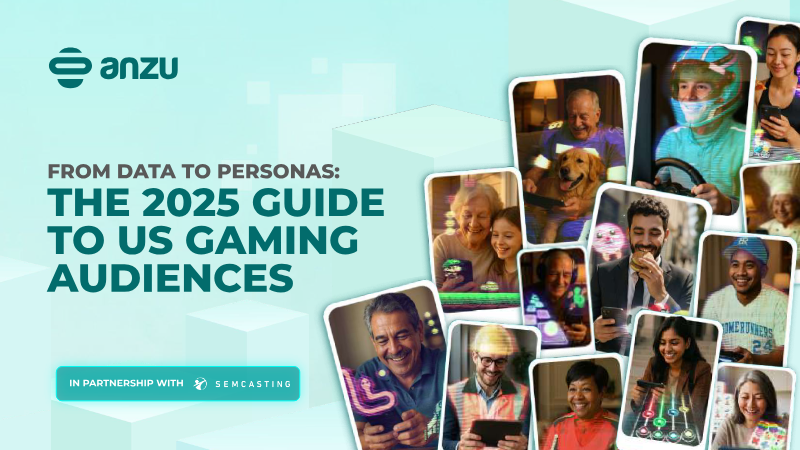
From Data to Personas: The 2025 Guide to US Gaming Audiences
The modern gaming landscape in the United States has evolved into a diverse, cross-generational ecosystem that fundamentally challenges outdated stereotypes of the solitary, young male player. Current data indicates that today’s gaming population is characterized by middle-to-high-income individuals who prioritize quality, convenience, and social connectivity. Far from being sedentary, these consumers frequently integrate digital play with active, outdoor lifestyles, sports participation, and family-oriented activities. This shift reflects a broader demographic reality where gaming serves as a primary form of entertainment across all age groups and socioeconomic backgrounds.
Consumer behavior within this segment extends well beyond the digital realm, as gamers demonstrate significant purchasing power and a strong affinity for premium brands, casual dining, and higher education. Analysis reveals a consistent tendency for these audiences to over-index on online shopping and delivery services, favoring mainstream, value-oriented brands across the retail and fitness sectors. These habits suggest that gaming is not an isolated hobby but a central component of a lifestyle defined by convenience and digital-physical integration.
Segmentation reveals distinct behavioral patterns that allow for more nuanced marketing strategies. For instance, sports-oriented gamers gravitate toward fast-food and convenience-driven brands, whereas those who favor board, puzzle, and trivia games tend to be older, more education-focused, and financially prudent. By moving past monolithic industry tropes, advertisers can leverage these granular insights to execute more precise, data-driven campaigns. Ultimately, the gaming audience represents a highly active, diverse, and economically influential consumer base that requires sophisticated engagement strategies tailored to specific lifestyle personas rather than generalized assumptions.
- The US gaming population is characterized by middle-to-high-income individuals who integrate digital play into active, outdoor, and family-oriented lifestyles rather than operating as a sedentary, isolated demographic.
- Gamers demonstrate significant purchasing power with a strong affinity for premium brands, higher education, and convenience-based services like online shopping and delivery.
- Gaming has evolved into a cross-generational, mainstream form of entertainment that transcends traditional age and socioeconomic stereotypes.
- Consumer behavior within the gaming segment is highly segmented, with sports-oriented gamers favoring fast-food and convenience brands, while puzzle and trivia gamers skew older and more financially prudent.
- Effective marketing in 2025 requires moving away from monolithic industry tropes in favor of granular, data-driven strategies tailored to specific lifestyle personas.
+2
AnzuJan 2025
Report19 pages
Mobile Gamer 2021: Gen Z Edition
The report examines Generation Z (born 1997 and later) as the newest cohort of mobile gamers, highlighting their purchasing power, digital habits, and advertising preferences. Surveying 7,103 U.S. respondents aged 18‑24 on the Tapjoy network in February 2021, it finds that 86 % of Gen Z use mobile devices for gaming, far exceeding console (42 %) and PC (38 %) usage. Nearly one‑quarter first owned a smartphone before age 10, and 49 % replace devices every two to three years. Mobile shopping dominates their retail behavior: 68 % shop on phones one to four times per week, with 60 % ordering food delivery and 57 % making retail purchases. Preferred purchase channels include branded apps, e‑commerce storefronts, rewarded offers in games, and Instagram ads.
Advertising engagement shows a strong preference for rewarded mobile game ads (61 % enjoy offerwalls) and short, creative content such as memes (50.4 %) and humor‑driven brand posts (57 % value humor). Traditional formats—banner ads, non‑skippable videos, and celebrity endorsements—are largely ineffective. Gen Z follows brands that align with their values; 52 % discover new products via social media, and 67 % follow brands for product interest. The methodology involved opt‑in participation with age verification, automatic reward distribution, and a geographically targeted U.S. sample.
Overall, the findings portray Gen Z as highly engaged mobile gamers with significant discretionary spending, a preference for value‑based advertising, and a strong inclination toward brands that reflect their social and environmental values.
- Mobile is the dominant gaming platform for Gen Z, with 86% of 18-24-year-olds playing on mobile devices compared to only 42% on consoles and 38% on PCs.
- Gen Z shows a strong preference for rewarded advertising, with 61% of respondents reporting that they enjoy offerwalls within mobile games.
- Traditional advertising formats like banner ads, non-skippable videos, and celebrity endorsements are largely ineffective with this demographic.
- Gen Z prioritizes humor and creativity in advertising, with 57% valuing humor-driven brand posts and 50.4% favoring meme-based content.
- Mobile shopping is a primary behavior for this cohort, as 68% shop on their phones one to four times per week, with 60% ordering food delivery and 57% making retail purchases.
TapjoyJan 2025

Report22 pages
Creative Analytics
The mobile advertising landscape in the third quarter of 2023 reveals a shifting environment characterized by a decline in total advertisers but a significant surge in video-centric content. Data indicates that the total number of advertisers fell to 54,900, a 7% year-over-year decrease compared to the 59,000 recorded in the third quarter of 2022. Despite this overall contraction, the gaming, entertainment, and lifestyle verticals maintained upward momentum in advertiser activity. In the United States specifically, the market saw 4.68 billion downloads and $6.5 billion in revenue, with gaming securing the top position in both metrics despite slight year-over-year market drops.
Creative strategies have pivoted heavily toward video formats, which now account for 80% of all creatives, up from 69% in the previous quarter. This growth comes at the expense of static images, while playable ads remain a niche segment at 2% of the market. Analysis of the 15.2 million total creatives shows a heavy platform bias toward Android, which hosts 68% of ad content compared to 32% on iOS. In the competitive US market, top-tier advertisers maintain a massive scale, averaging nearly 54,000 creatives across nine different ad networks.
The rise of User-Generated Content (UGC) has become a central pillar of modern mobile UA strategy. Effective creative execution now relies on organic trends, charismatic creators, and native storytelling techniques. Key findings suggest that successful UGC ads utilize "problem-solution" narratives, text overlays to accommodate sound-off viewing, and sketches that align with brand values. By leveraging creators who mirror the target audience and utilizing cliffhangers or popular music, advertisers are increasingly focusing on engagement and virality to offset the broader downward trend in the number of active market participants.
- Video-centric content now dominates the mobile advertising landscape, accounting for 80% of all creatives in Q3 2023, up from 69% in the previous quarter.
- Total mobile advertisers declined 7% year-over-year to 54,900, though the gaming, entertainment, and lifestyle verticals bucked this trend with continued growth.
- Android remains the primary platform for ad distribution, hosting 68% of the 15.2 million total creatives compared to 32% on iOS.
- In the US market, gaming remains the leading category for both downloads (4.68 billion) and revenue ($6.5 billion), despite experiencing slight year-over-year market contractions.
- Top-tier advertisers are maintaining high-volume strategies, deploying an average of 54,000 creatives across nine different ad networks.
+2
AppticaJan 2025
Report36 pages
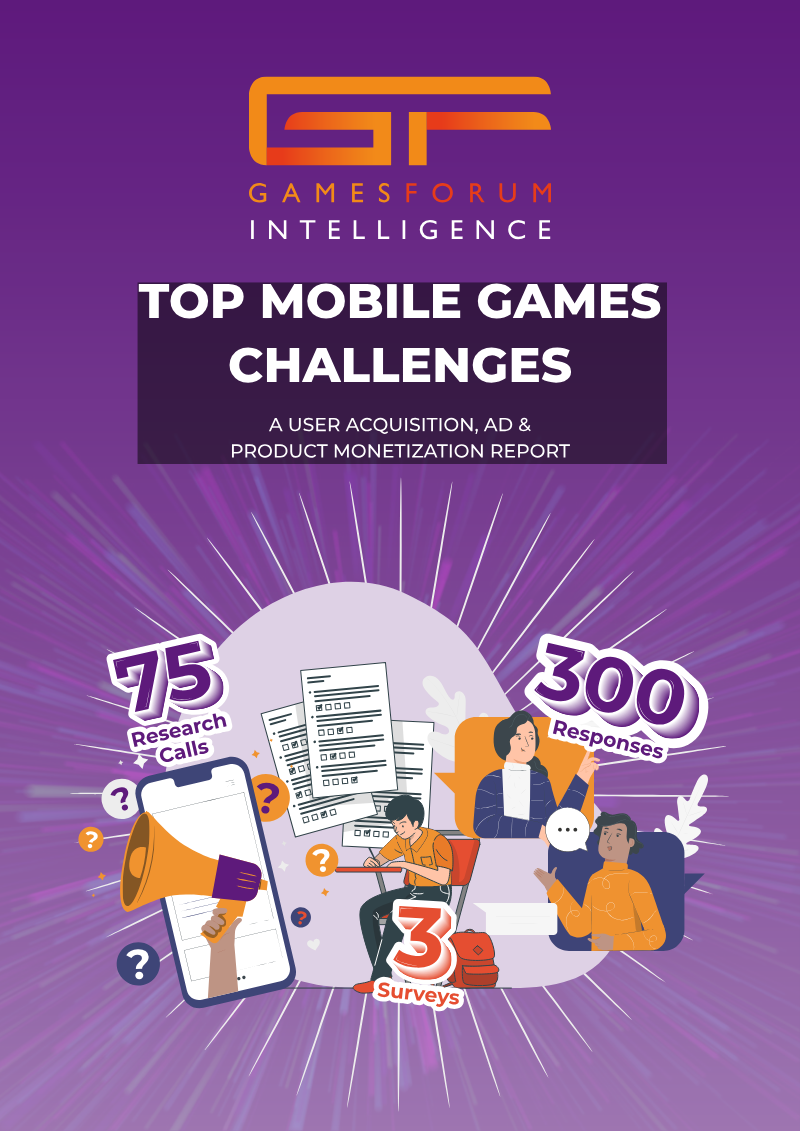
Intelligence Top Mobile Games Challenges: A User Acquisition, Ad & Product Monetization Report
The mobile gaming landscape heading into 2025 is defined by the critical difficulty of performing within an increasingly crowded market space. Approximately 41% of user acquisition managers identify market saturation and rising costs per installment as their primary obstacles, driven largely by intense competition from non-gaming entities. This environment has forced a strategic pivot away from traditional acquisition tactics toward sustainable growth rooted in long-term retention and creative iteration. Consequently, the industry is transitioning from a focus on sheer volume to a model centered on maximizing lifetime user value through sophisticated engagement strategies.
Ad monetization and product management sectors face parallel pressures, specifically regarding effective user segmentation and the declining value of electronic cost per mille (eCPM). While segmentation is the most widespread concern for monetization teams, senior executives are particularly focused on innovating new revenue streams to compensate for diminishing ad returns. In the realm of product management, LiveOps development and the accurate assessment of return on investment have emerged as the dominant priorities. Nearly 30% of product managers rank LiveOps as their most significant challenge, outweighing traditional concerns such as game economy balancing or initial prototype testing.
To navigate these hurdles, the industry is moving toward data-driven personalization and revenue diversification. Success in the maturing mobile market now requires leveraging artificial intelligence for audience segmentation and expanding monetization models to include subscriptions and alternative storefronts. By moving beyond simple acquisition hacks and focusing on robust LiveOps and incremental growth through retention, developers aim to stabilize revenue in a volatile privacy-centric environment. This shift underscores a broader industry evolution where deep audience understanding and operational agility are the primary drivers of commercial viability.
- Market saturation and rising costs per installment are the primary obstacles for 41% of user acquisition managers, driven by intense competition from non-gaming entities.
- Product managers are prioritizing LiveOps as their most significant challenge, with nearly 30% ranking it above traditional concerns like game economy balancing or prototyping.
- The industry is shifting away from high-volume acquisition toward sustainable growth models that prioritize long-term user retention and lifetime value maximization.
- Monetization teams are struggling with declining eCPM values and are under pressure from executives to innovate new revenue streams beyond traditional advertising.
- Effective user segmentation is the most widespread concern for monetization teams, necessitating the use of artificial intelligence to achieve deeper audience personalization.
+2
AppLovinJan 2025
Report37 pages
Trends Report 2025
Intrinsic in-game advertising functions as a resilient, year-round engagement channel that maintains steady session volumes even during seasonal lulls in traditional media. While PC and console platforms offer superior immersion and average session lengths of 107 minutes, mobile gaming provides twenty-five times the impression scale and greater gender diversity. Market data reveals a significant strategic opportunity in the first quarter, particularly in North America, where advertising costs drop by over 25% despite high player activity. This period offers a cost-effective window for wellness and travel brands to reach an attentive audience at a lower entry point than the highly competitive fourth quarter.
The effectiveness of this medium is driven by high viewability rates reaching nearly 100% and attention metrics that consistently outperform traditional digital formats. Although the sports genre commands the highest playtime and premium pricing, racing and simulation categories represent efficient alternatives where high engagement intersects with lower costs. Regional performance varies significantly, with European markets offering peak value in the first and third quarters, while the Asia-Pacific region follows a distinct cycle driven by second-quarter demand and localized cultural events.
Beyond visibility, these advertisements generate substantial brand lift, including a 20-point increase in recall and a 6% conversion rate for physical foot traffic. While male players currently report higher brand favorability, female audiences demonstrate stronger purchase intent, suggesting a need for more nuanced targeting strategies. Overall campaign performance remains highly efficient, with conversion costs averaging 21% below established goals. To maximize these returns, advertisers must integrate gaming into their permanent media mix, while developers should align in-game events with high-demand periods and real-world sporting calendars to optimize revenue.
- In-game advertising delivers high efficiency, with conversion costs averaging 21% below established goals and brand recall increasing by 20 points.
- North American advertising costs drop by over 25% in the first quarter, providing a cost-effective window for brands to reach highly active players.
- Mobile gaming offers twenty-five times the impression scale of PC and console platforms, while PC and console environments provide deeper immersion with average session lengths of 107 minutes.
- Racing and simulation game categories serve as cost-efficient alternatives to the premium-priced sports genre while maintaining high engagement levels.
- In-game ads achieve nearly 100% viewability, consistently outperforming traditional digital media formats in attention metrics.
+1
AnzuJan 2025
Report37 pages
The Intrinsic In-Game Advertising Key Trends Report H1 2025
Intrinsic in-game advertising (IIGA) has transitioned into a measurable, high-impact media channel that allows brands to reach premium gaming environments through buying approaches similar to traditional digital and broadcast media. The primary thesis of this analysis is that gaming offers a unique, year-round engagement opportunity that remains consistent even when traditional channels like television and social media experience seasonal dips. By integrating non-disruptive, native ads into gameplay, advertisers can achieve significant full-funnel impact, including a 20-point lift in ad recall and a 21% lower cost per acquisition (CPA) compared to standard goals.
The findings are based on aggregated internal data from 105 games and 333 direct advertisers, supplemented by third-party research from partners such as IAS, Lumen, and Comscore. The scope is global, with specific insights covering North America, Europe, LATAM, and APAC throughout the 2024 calendar year. While mobile currently offers 25 times the scale of impressions and greater audience diversity, PC and console platforms provide superior immersion, with significantly longer session lengths and higher total playtime per user.
Key data points highlight that IIGA outperforms traditional digital formats in attention, delivering 2,957 attentive seconds per thousand impressions—nearly triple the performance of Facebook Infeed. Regional trends indicate that while North America and Europe command the highest CPMs, emerging markets like APAC and LATAM offer cost-effective growth opportunities. Furthermore, genre-specific data reveals that sports and racing titles see engagement peaks tied to real-world competitions, while simulation games offer a steady, female-skewing audience. The report concludes that advertisers should move beyond seasonal buying habits to capitalize on gaming’s "always-on" nature, particularly during Q1 when CPMs are lower but engagement remains high.
- Intrinsic in-game advertising (IIGA) delivers 2,957 attentive seconds per thousand impressions, nearly triple the performance of Facebook Infeed.
- Adopting IIGA drives a 20-point lift in ad recall and a 21% lower cost per acquisition (CPA) compared to standard digital benchmarks.
- Mobile platforms provide 25 times the scale of impressions and greater audience diversity, while PC and console platforms offer superior immersion through longer session lengths.
- Advertisers can optimize budgets by shifting to an 'always-on' strategy, specifically targeting Q1 when CPMs are lower but engagement remains consistent.
- Sports and racing titles show engagement peaks aligned with real-world events, whereas simulation games provide a consistent, female-skewing audience.
+1
AnzuJan 2025
Report56 pages
Gaming: Your Marketing Cheatcode
Gaming has evolved into a horizontal cultural layer encompassing 3.4 billion global players who utilize interactive platforms to build identity and community. Despite this massive reach, the sector currently receives less than 5% of global media investment, representing a significant disconnect between consumer attention and advertising spend. The industry is increasingly defined by transmedia expansion and social connectivity, particularly among Gen Z audiences who prioritize platforms like Roblox and Discord for brand discovery and social interaction. Success in this landscape requires a strategic shift from isolated sponsorships toward full-funnel integrations that align with specific player motivations, including relaxation, achievement, and immersion.
The shift toward non-intrusive brand integration utilizes high-impact formats such as rewarded video and custom in-game partnerships to secure superior video completion rates and brand recall. Immersive strategies drive substantial consumer consideration, with 55% of players expressing interest in branded virtual items. Furthermore, custom experiences within gaming environments can yield up to 100x higher attention levels than traditional social media. Case studies involving major titles like Genshin Impact demonstrate that blending digital fandom with real-world value can result in triple-digit sales growth and heightened community engagement.
As a full-funnel engine, gaming integrations now produce measurable lifts in awareness and consideration through interactive campaigns. Data indicates that gamified loyalty programs can increase purchase rates by 12% and guest spend by 64%, while in-game commerce on platforms like Roblox generates significant revenue for developers. Looking ahead, the industry trajectory is shaped by the expansion of cloud gaming and highly anticipated hardware and software launches, such as the Nintendo Switch 2 and Grand Theft Auto VI. These developments reinforce gaming's role as a primary driver of modern media consumption and commercial conversion.
- Gaming commands 3.4 billion players globally, yet receives less than 5% of total media investment, indicating a significant misalignment between consumer attention and advertising spend.
- Custom in-game experiences can generate up to 100x higher attention levels compared to traditional social media platforms.
- Immersive brand strategies are highly effective, with 55% of players expressing interest in acquiring branded virtual items.
- Gamified loyalty programs are proven to drive commercial performance, increasing purchase rates by 12% and guest spend by 64%.
- Strategic integration in titles like Genshin Impact demonstrates that blending digital fandom with real-world value can trigger triple-digit sales growth.
+1
dentsu gamingJan 2025

Report66 pages
Insights into Global Mobile Game Marketing Trends for H1 2025
The first half of 2025 reveals a rapid shift in mobile‑game user‑acquisition toward AI‑driven creative production, with short‑form video, live‑action clips and in‑game audio ads now accounting for the majority of impressions. Generative‑AI tools and AI‑enhanced playable ads compress development cycles to under a week, allowing marketers to test multiple concepts at low cost while retaining retargeting as a core pillar of acquisition strategy.
Genre competition intensifies, especially for role‑playing games, which generate an average of 224 new creatives per advertiser each month. Casino titles expand their share by 14.5 % year‑over‑year, becoming the second‑largest spend category. Europe hosts the largest pool of advertisers—over 43 000 monthly, a rise of 10 000 from the previous year—while North America exhibits the highest creative density, with roughly 119 assets per advertiser. In casual games, AI‑generated vertical video now consumes about 40 % of media spend, underscoring the dominance of automated formats across regions.
Key operational challenges include limited reach to high‑value users, protracted creative rollout times, and declining engagement as mature audiences become ad‑fatigued. Lengthy or fragmented landing‑page experiences further erode trust, suppressing download conversion and long‑term retention.
To counter these pressures, firms are advised to institute rapid‑iteration pipelines that move concepts to live within seven days, maintain a refresh cadence of two to three creative updates per month, and prioritize concise, transparent messaging that streamlines the post‑click flow. Embracing these practices is projected to improve acquisition efficiency and sustain user interest amid an increasingly saturated global mobile‑gaming market.
- AI-driven creative production has become the industry standard, with generative tools and AI-enhanced playable ads compressing development cycles to under one week.
- Europe leads in market participation with over 43,000 monthly advertisers, while North America maintains the highest creative density at approximately 119 assets per advertiser.
- Casino games have emerged as the second-largest spending category, recording a 14.5% year-over-year increase in market share.
- Role-playing games are the most competitive segment, requiring an average of 224 new creatives per advertiser each month to maintain visibility.
- In the casual gaming sector, AI-generated vertical video now accounts for 40% of total media spend.
+2
SocialPetaDec 2024

Report74 pages
2024 Global Mobile Games Marketing Trends & Insights
The global mobile gaming industry is currently defined by extreme market concentration and a fundamental shift in monetization and marketing strategies. With the top 50 publishers generating 70% of total revenue, the sector is moving toward hybrid-casual models that blend ad-based revenue with in-app purchases to offset rising user acquisition costs. Strategic priorities for 2025 include the expansion of Direct-to-Consumer platforms to preserve margins and a resurgence in HTML5 web games. This evolution is occurring alongside a surge in marketing volume; in 2024, the industry saw over 250,000 advertisers and 46.2 million creative assets, representing a 60% year-over-year increase in advertising activity despite a declining rate of new market entrants.
Geographically, the landscape is marked by rapid growth in Southeast Asia and Latin America, while the United States remains a dominant but maturing market. High-production, cross-platform free-to-play titles, particularly from Chinese developers, are raising consumer expectations and challenging traditional premium pricing models. To navigate privacy-related data limitations, marketers are increasingly adopting creative-level attribution and generative AI for both content production and data analysis. Short-form video has become the primary driver of engagement, accounting for up to 81% of impressions in genres like Puzzle and Simulation, often utilizing AI-generated imagery and demographic-specific hooks to capture niche audiences.
Tactical trends reveal a widespread reliance on intellectual property and the integration of casual mini-game mechanics to market hardcore RPG and Strategy titles. Successful campaigns frequently leverage localized content and specialized creative formats, such as "stomp" transitions for social media or long-form puzzles to attract RPG players. This data, synthesized from over 1.6 billion ad records across 80 countries, underscores a transition toward high-volume, AI-enhanced marketing where deep user segmentation and creative variety are essential for maintaining player lifetime value in an increasingly competitive global environment.
- The top 50 publishers now control 70% of total global mobile gaming revenue, driving a market-wide shift toward hybrid-casual models that combine ad-based revenue with in-app purchases.
- Advertising activity surged by 60% year-over-year in 2024, with 250,000 advertisers deploying 46.2 million creative assets despite a decline in new market entrants.
- Short-form video has become the dominant engagement driver, accounting for up to 81% of impressions in the Puzzle and Simulation genres.
- Marketers are increasingly bypassing platform limitations by adopting creative-level attribution and leveraging generative AI for both content production and data analysis.
- Growth is accelerating in Southeast Asia and Latin America, while high-production, cross-platform free-to-play titles from Chinese developers are successfully challenging traditional premium pricing models.
+2
SocialPetaDec 2024
Report35 pages
Gaming Spotlight H1 2024
Mobile gaming solidifies its position as the leading segment of the global video‑game market, with revenue projected to reach $83 billion in 2024, reflecting a 6 percent year‑over‑year increase. In contrast, home‑console spending is expected to decline by 1 percent to $42 billion, while handheld revenues are slated to fall 2 percent to just under $2.5 billion. The upward trajectory of mobile is driven primarily by rapid expansion in emerging regions such as India and Indonesia, where user acquisition and spending are accelerating faster than in mature markets. Within mobile, fast‑growing sub‑genres—particularly simulators and multiplayer online battle arenas—accounted for $2.34 billion, representing 5.8 percent of total mobile revenue, and achieved a modest 0.4‑point rise in download share during the latest reporting period.
In the United States, monetisation patterns among mobile players continue to favour rewarded‑video advertisements. These ads recorded the highest net‑sentiment score of +20 points and were the most frequently encountered format in the third quarter of 2023. Other ad formats, including playable, native, banner/display, and standard video, lagged behind both in visibility and user sentiment, indicating a clear preference hierarchy that shapes publisher revenue strategies.
Overall, the data underscore a market increasingly centred on mobile platforms, propelled by growth in developing economies and reinforced by user‑friendly ad experiences. Console and handheld segments face modest contractions, suggesting that future investment and innovation will likely concentrate on mobile‑first titles, emerging‑region outreach, and optimisation of rewarded‑video ad ecosystems to sustain growth.
- Mobile gaming remains the dominant market segment with projected 2024 revenues of $83 billion, representing a 6 percent year-over-year increase.
- Home-console and handheld gaming segments are experiencing a decline, with projected revenues of $42 billion (down 1 percent) and $2.5 billion (down 2 percent) respectively.
- Growth in the mobile sector is primarily driven by rapid user acquisition and spending expansion in emerging markets, specifically India and Indonesia.
- Mobile simulators and multiplayer online battle arenas generated $2.34 billion in revenue, accounting for 5.8 percent of total mobile earnings and a 0.4-point increase in download share.
- Rewarded-video advertisements are the most effective monetization format in the U.S. market, achieving the highest net-sentiment score of +20 points during Q3 2023.
+2
Sensor TowerJun 2024

Report26 pages
Level Up – Harnessing the Power of Gaming Audiences
The 2024 Level Up report, a collaborative analysis by Comscore and Anzu, examines the evolving landscape of the U.S. gaming market and the expanding opportunities for brand integration. The study defines gamers as adults aged 18 to 65 who play multiple times a week, revealing that 62% of the U.S. adult population fits this criteria. A significant finding is the high level of cross-platform engagement; 77% of gamers utilize more than one device, while 40% play across all platforms, including PC, console, and mobile.
The data highlights distinct consumer behaviors based on platform preference. Console gamers demonstrate the highest willingness to pay for content, with 37% prepared to spend over $60 on a single title. In contrast, 32% of mobile-only gamers prefer free-to-play models. Genre preferences also vary by hardware, with PC players favoring first-person shooters and RPGs, while console players show a strong affinity for action-adventure and sports titles.
From an advertising perspective, the report concludes that gaming is no longer a niche silo but a mainstream medium with high receptivity to marketing. Approximately two-thirds of gamers view in-game advertisements as having a positive or neutral impact on their experience. Specifically, 34% of respondents believe product placement enhances realism, and 45% express a preference for rewarded ad formats. Case studies, such as Tommy Hilfiger’s campaign, demonstrate the efficacy of these strategies, showing a 20-point lift in brand favorability and a 23-point increase in purchase intent. The report emphasizes that the partnership between Comscore and Anzu now allows for more precise measurement of the incremental reach provided by intrinsic in-game advertising.
- Gaming is a mainstream U.S. medium, with 62% of adults aged 18–65 playing games multiple times per week.
- Cross-platform engagement is high, as 77% of gamers use more than one device and 40% play across PC, console, and mobile platforms.
- Two-thirds of gamers view in-game advertisements as having a neutral or positive impact on their experience, with 34% noting that product placement enhances realism.
- Rewarded ad formats are preferred by 45% of gamers, and campaigns like Tommy Hilfiger’s have demonstrated significant performance gains, including a 20-point lift in brand favorability and a 23-point increase in purchase intent.
- Monetization preferences are platform-dependent: 37% of console gamers are willing to spend over $60 on a single title, whereas 32% of mobile-only gamers prefer free-to-play models.
+1
ComscoreMar 2024