Game Development reports and market data
Documents

How To Make Money From Your Game In 2025 w/ Chris Zukowski — Full Time Game Dev Podcast Ep. 025
The indie game development landscape in 2025 is characterized by high saturation and increased risk, necessitating a shift toward disciplined, iterative production models.
- To gain traction on Steam, developers should aim for a baseline of 7,000 wishlists before launch to trigger the platform's algorithm effectively.
- Marketing success is not achieved through social media posts or tweets, but by securing access to established audiences through influencers and industry gatekeepers.
- Developers should prioritize building their own owned audience (like an email list) rather than relying solely on Steam wishlists, as the latter is a platform-dependent asset that could be subject to change.

Sticky, Loveable, and Loyal: How Developers Create Winning Games with Psychological Segmentation
Psychological segmentation serves as a transformative framework for modern game development, shifting the industry focus from superficial demographic targeting toward the underlying motivations and cognitive traits that drive genuine player engagement.
- Approximately 84% of games fail within their first three years, often due to a lack of market resonance and failure to achieve necessary scale.
- Psychological segmentation, which analyzes player motivations and personality traits, is a more effective strategy for driving installs and reducing churn than traditional demographic or behavioral targeting.
- Modern players increasingly prioritize 'long-term orientation,' seeking deep, enduring experiences where they can build worlds or characters over time rather than short-term entertainment.

Gaming IP in 2024: How to Create Lasting Impact on UEFN
The Unreal Editor for Fortnite (UEFN) has emerged as a transformative ecosystem for intellectual property development, effectively lowering the barriers to entry that traditionally hindered independent studios.
- UEFN functions as a high-fidelity incubator that allows studios to bypass traditional AAA development cycles by rapidly testing minimum viable products and gathering immediate player feedback.
- Successful studios are adopting open-IP strategies by encouraging community members to build with their assets, which fosters cultural relevance and creates brand moats that extend beyond the Fortnite ecosystem.
- Developers must balance platform-specific optimization, such as designing for algorithmic visibility and thumbnail-friendly aesthetics, with the creation of distinct, narrative-driven brand identities to ensure long-term loyalty.
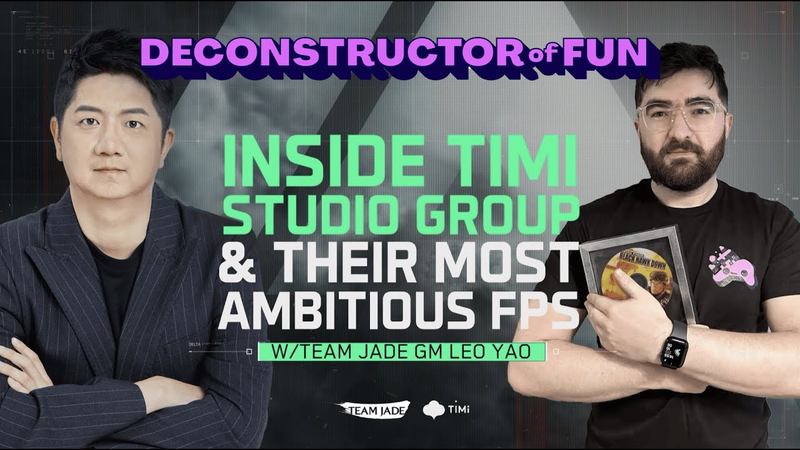
Inside Timi Studio: How Call of Duty Mobile Set the Stage for Delta Force
TiMi Studio Group’s evolution from a mobile-centric developer to a global powerhouse is defined by a strategic shift in platform priority and genre focus.
- TiMi Studio Group is shifting from a mobile-first strategy to a PC-first development model with the upcoming Delta Force title to capture Western audiences accustomed to higher production values.
- The studio has scaled its development team from under 200 people for Call of Duty: Mobile to 400 people for Delta Force to support a more rigorous content cadence.
- Delta Force utilizes Unreal Engine 4 to enable cross-progression across PC, console, and mobile while explicitly excluding cross-play to maintain competitive integrity.
How To Make Indie Games In 2025 w/ Jonathan Blow — Full Time Game Dev Podcast Ep. 024
The contemporary game development landscape faces its most precarious period since the 1980s, defined by a saturated, "red ocean" marketplace where high-quality titles struggle for visibility amidst a deluge of low-effort releases.
- The current game market is a 'red ocean' characterized by extreme saturation, where high-quality titles are frequently obscured by a high volume of low-effort releases.
- Modern game engines like Unity and Unreal have lowered barriers to entry but introduced significant technical overhead, including software bloat and performance inconsistencies.
- Developers should consider building custom engines to regain technical control and efficiency, despite the increased labor and operational demands this approach requires.

The Way We Work: Embracing Human Sustainability in Game Development
The game development industry currently faces a systemic crisis characterized by high burnout rates and a remarkably short professional shelf life for developers, typically spanning only three to seven years.
- The game industry faces a significant labor crisis, evidenced by the loss of 18,000 jobs, which has eliminated critical institutional knowledge and created a volatile environment for developers.
- Funding models, particularly those driven by private equity and venture capital, often prioritize 'pattern matching' over innovation, leading to a 'smash and grab' economy that excludes underserved audiences and underrepresented stories.
- Sustainable studio culture requires moving beyond superficial perks to deliberate, values-first hiring and inclusive practices that acknowledge how different employees experience the same workplace environment.
Does Game Marketing Even Matter In 2025? — Full Time Game Dev Podcast Ep. 023
The modern game development landscape is defined by a critical tension between creative integrity and the harsh realities of a saturated market.
- Organic reach on legacy social media platforms like X is declining, forcing developers to pivot toward YouTube funnels and influencer partnerships to secure visibility.
- Success in 2025 is increasingly driven by engineered marketing and paid influencer content rather than organic discovery.
- Developers are abandoning the high-fidelity graphics arms race in favor of minimalist, stylized art directions to differentiate products in a saturated market.
Why You Should Make Tiny Indie Games In 2025
The debate between developing small-scale versus large-scale indie games in 2025 centers on financial viability, return on investment, and audience retention.
- The 'bunch of balloons' business model minimizes financial risk by releasing multiple high-quality, small-scale titles rather than committing years to a single large-scale project.
- Small-scale games offer a more efficient return on labor and align with current market demand for bite-sized content compared to large projects that suffer from diminishing returns.
- Developers should launch minimalistic titles and only 'inflate' those that gain market traction through subsequent updates, Early Access content, or expansions.

Unfiltered Game Breakdown: Episode 1
Mobile game developers face significant challenges in retaining players during the critical first-time user experience, where friction often leads to immediate churn.
- Game success is often determined by execution rather than the core mechanic, as competitors can capture an audience by refining the delivery of a previously existing concept.
- Onboarding must be intuitive enough to retain players within the first five minutes, as users are likely to churn quickly if the game's objectives or mechanics are not immediately clear.
- Developers should prioritize cross-platform availability, as limiting a game to either iOS or Android restricts the potential player base and is considered an outdated development strategy in 2024.
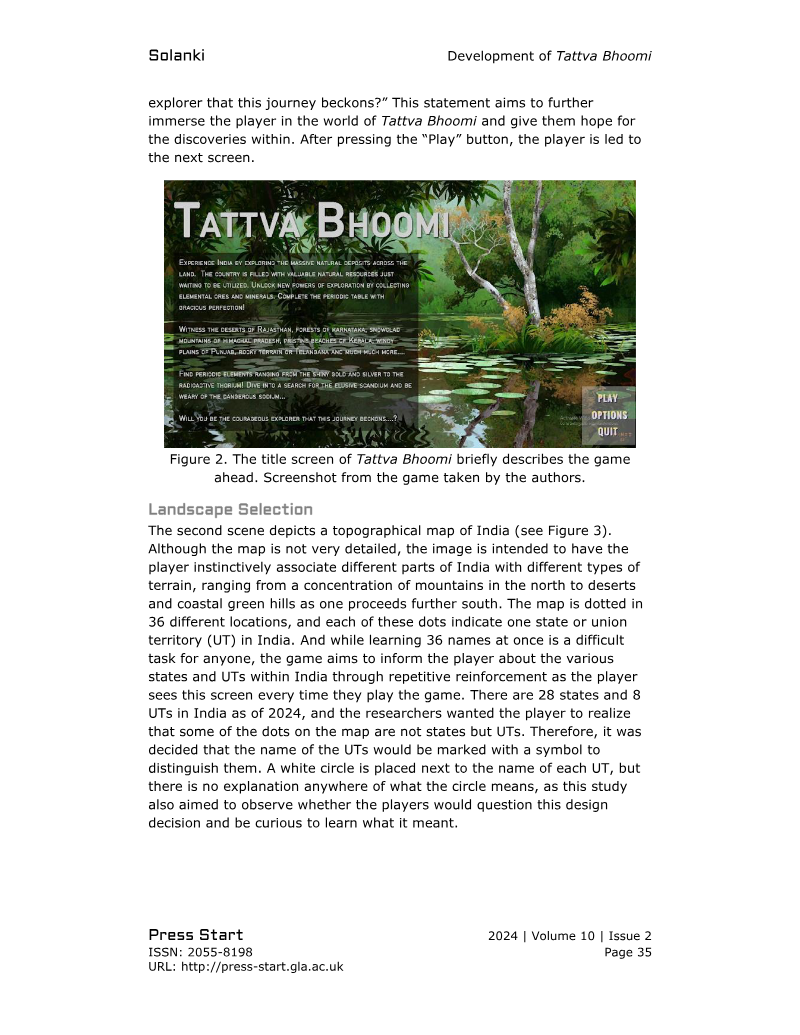


Enter the Backrooms of Tattva Bhoomi: An Educational Game for Middle School Students in India
This paper, published in Press Start (2024, Volume 10, Issue 2) by Chaitanya Solanki of Mahindra University and Deepak John Mathew of IIT Hyderabad, describes the development of Tattva Bhoomi, a first-person, approach-based game built in Unity that teaches middle school students in India the classification of chemical elements…
- A pilot study with 38 eighth-standard students found that 37 performed better in the post-test after the game-based intervention, a result the authors cite from their earlier work.
- The development team removed the timer because participants felt it pushed them to collect scrolls quickly rather than read them thoroughly.
- Scroll content was redesigned from text blocks into pictograms, which the authors state aligns with the cognitive theory of multimedia learning.

Remedy Capital Markets Day 2024: Northlight - There Are No Games Without Cutting Edge Technology
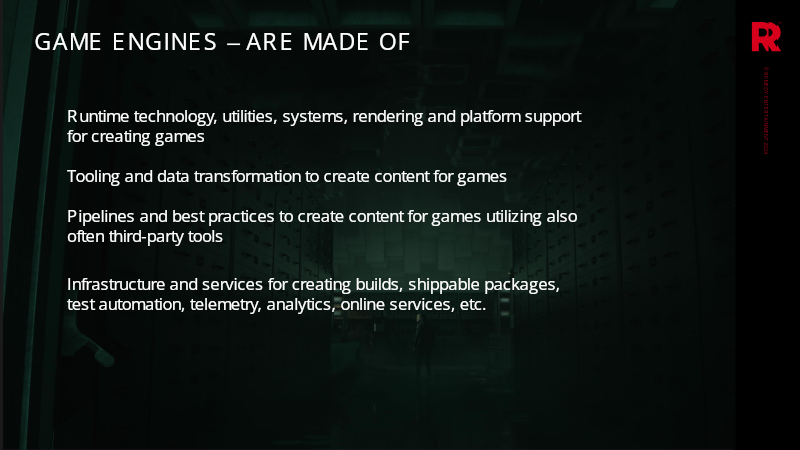
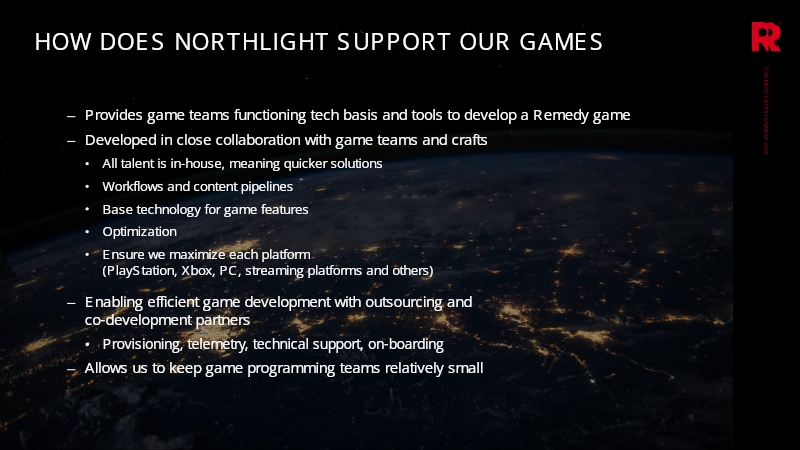
The document outlines Remedy Entertainment's proprietary Northlight engine, emphasizing its role as a core technological asset for the company's game development.
- Remedy maintains its proprietary Northlight engine to ensure total control over development workflows, team composition, and the aesthetic quality of its titles.
- The engine architecture is designed to reduce production costs by streamlining the transformation of third-party digital content into game-ready assets.
- Strategic partnerships with hardware leaders Sony and Nvidia enable the early integration of advanced rendering technologies like ray tracing and AI-driven upscaling.

Remedy Capital Markets Day 2024: Portfolio and Production
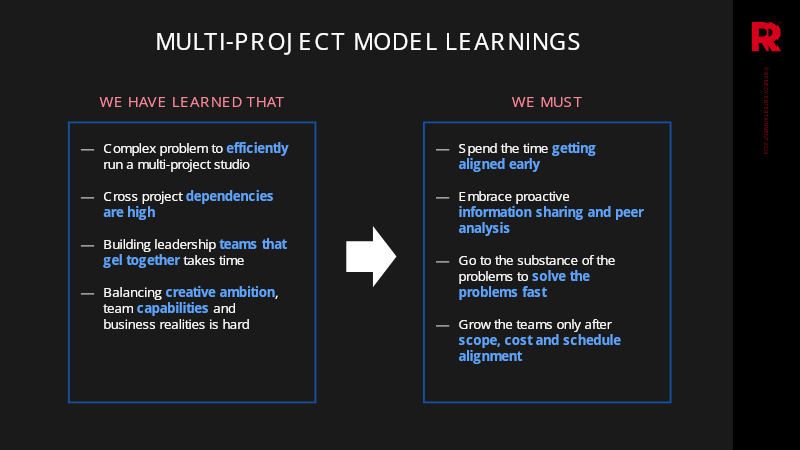
The document outlines Remedy Entertainment's strategy for managing its game portfolio and production to facilitate an efficient transition to self-publishing and achieve regular game launches.
- Remedy Entertainment is transitioning to a self-publishing model, requiring a strategic shift toward more rigorous project steering and production efficiency.
- The studio operates a multi-project model supported by 365 internal staff and over 250 external contributors, all utilizing the proprietary Northlight engine.
- A new five-phase stage-gate framework mandates strict alignment on scope, cost, and schedule before scaling team sizes to mitigate financial and creative risks.
Writers
Games and companies
Games