Transcript
The question is, should indie game developers make small games or big games? Okay, so we're going to do a little contest here and we're going to determine what you need to do for 2025. So stick around to the end because the winner is actually balloons. What? Scott Miller was responsible for Duke Nukem, Wolfenstein, and now he runs Apogee, which is a uh indie game publisher. He he gives a reason why small games are a good idea for indie game developers. Um, basically it's just about money. He just says money is less prevalent. Um, specifically what he says is he said one reason to make small games is because it's hard to raise money in today's market. Okay. So, Scott Miller gives small games one point. So, if you guys want to get funded by a publisher or you want to get funded on Kickstarter, if you've got a small game, it's actually pretty straightforward. It's not that hard to get $100,000 for your small indie game title. Okay? It's really, really hard to get paid half a million dollar plus from publishers
right now. They just don't want to take the risk. Okay, small games too, big games zero. Actually, hey, we've got a quote from Julian Ball, who is uh Flow Studio. Now, he didn't say you should make big games, but he gave me a positive for making big games. He said, "You're going to get a deep, deep knowledge of game development by working on a single project. When you work on a single project that's huge in scope, and he's worked on his game for 7 years, when you do that, you pretty much have an understanding of like everything related to game development. And for me, my big game is Twisted Tower. We've been working on this game for 2 and 1/2 years, maybe even three. At least in the first person shooter department, I fully understand how to make a first-person shooter. A lot of you right now listening, you have a big game idea. Julian did for his game Lens Island. I did for Twisted Tower. And at the end of the day, if that's your idea, if you want to make a big game and you're passionate about it
and you can't figure out a way to make it smaller, then go for it. You know, if it makes you happy and you enjoy it and you're a hobbyist and you just want to make a big game, go for it. Oh, look at this. We've got another point for small games. This is from Jason Smith, the creator of Cultic. Jason basically mentioned this sort of cultural phenomenon, this zeitgeist that's happening right now where he feels like there's just a growing appreciation for smaller games. Now, I I I was thinking about pricing actually, and it's related to what Jason said. For some reason, games have not inflated in their price based on what they used to sell them for in the '90s. You remember in the '90s, they would sell games for 60 bucks. Sometimes they would sell them for a hundred bucks. The price has stayed the same despite inflation skyrocketing. So, why is it that we're pricing our games at $60 or even $15 when in the '9s, which was $30 ago, they were 60 bucks to 100 bucks. What
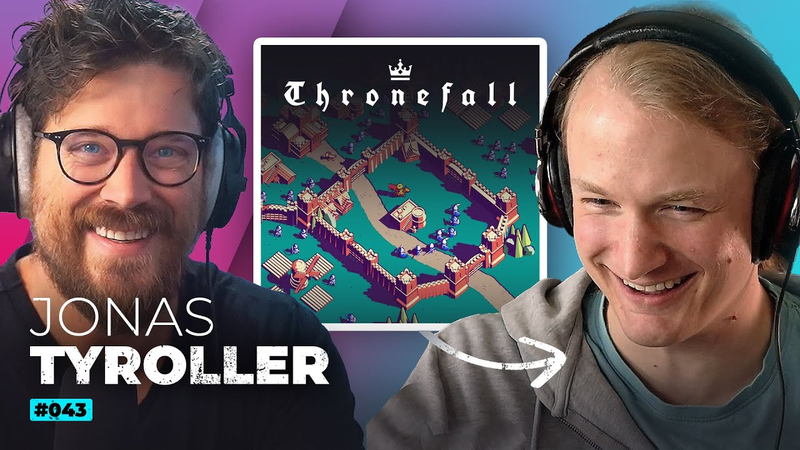
happened? There's an inverse correlation to inflation. And I think at the end of the day, it just comes down to demand. There's so many games out there. And so, in defense of small games, and related to what Jason was saying, there's a growing appetite for small games. In my mind, if we can't scale the price up and we can't increase demand, aka just have less games and a higher demand. If we can't do that, well then why don't we just make tiny games that are priced low? And this is actually related to Jonas Tyroller. What Jonas Tyroller said, essentially he said, "It's not really about small versus big. It's really about a return on your investment." What he said was, "I think the most important consideration that is not talked about enough is the real value equaling the cost of the game, aka return on your investment. If you make a game that takes four years to make instead of one
year, you need to make four times the revenue for the same hourly rate wage. Unfortunately, games very often don't get four times as good if you work for them, four times as long." Isn't that so true? I love what you just said there. there is a uh a diminishing return on your investment the longer you work on a game. It's better to wrap up a game and make 10% less than spend three more years on it and make 10% more. Okay, he he goes on to say, you need to find the scale where your game gives you the most bang for your buck. And for most games, this is actually surprisingly small. I love what he said. He he's a great example of this. He is a walking example of this because his game Thronefall, the hook of the game is that it was small and that it was minimalistic and simple. That was the whole point of the game and that was how it was marketed. So, not only was that the guiding hand of development, it was also the guiding hand of what the game actually was marketed as, a small, tight, minimalistic game. What you don't want
is you don't want a game that's was supposed to be big and then you just cut it off at its legs and you don't finish it and you just sort of launch it into the ether. Farj Studios, you want to start with small in mind. The whole plan, the whole goal is to make a small game. Otherwise, you're going to have a game that feels incomplete. So, we've got four points for small games, one point for big games. I'm going to give small games one more point. Small bite-sized content is what people love right now. Low key games got a hit like Tik Tok's quick fire and straight to the point or we're swiping left. No cap. So we can give them small bite-sized content that is part of a universe or a brand. I think that's the smartest way moving forward, at least for now. Well, this is actually something that Thomas Salah brought up in our my previous podcast with Thomas Salah. He's the creator of the Falconer. You've bought the first three books from Game of Thrones. The fourth one was unreadable.
Uh it's too long, but you're already invested and you hope the fifth one is great. So you suck it up and buy the fourth one. That is owning your audience. So that's why 10 years ago or 20 years you buy a fantasy book and there be singular a book. Oh yeah, he's got a new book and then suddenly they started doing trilogies and now every fantasy is do 12 pieces cuz that's where the money is. That's how you survive. you've owned your audience in, you know, a cycle of books. Uh I do that well with the franchise which is just a different thing. It's just uh you're a franchise because you're uh uh you know, you're a content creator. You're a cult of personality in a way. Um uh so that's your brand. My brand is is a detach for myself a little bit, but I'm sort of hybridizing. So it's part me. I'm the author, but it's the Falconer universe. His strategy for his indie game career is to build a universe. And that universe has the same feeling, has the
same lore, but the games and the genres within that universe are different. Okay? So, you can do a citybuer game or you can do a third person controller flying game. And he did both, right? He's got two totally different genres in the same universe. If I can make 10 small games over the course of let's say two years, so five five games per year. I'm just throwing out a random number here. I don't make one small game in one universe and then another small game in a totally different universe. Instead, to Thomas Salah's point, you make one small game in a universe and then you create a derivative of it and a derivative of it and a derivative of it and a derivative of it. And now you've got, let's say, 10 games in one universe. two, three of those games might be successful, very successful, but the rest of them aren't necessarily flops. Why? Because they're built on the foundation of a growing audience that
stays. So, at the end of the day, if you're going to make small games, the goal is to try and keep a nice fertile soil of a long-term audience. You don't build a fresh audience for each game. Instead, you build a universe, a brand, and you do it with small games within that universe. It's another point for small games. Okay, so I've got one more point though for the big column and why I think big games might be valuable. And this actually is going to relate to our final answer being related to balloons. It'll all make sense, I promise. I wrote down if it's a good concept, there's a ton of revenue potential being left on the table if you only make the game small. So if that small game is awesome, if it's like the coolest concept ever, let's say like Minecraft, let's say you made a Minecraft game and you're like, "Nope, I'm going to keep it small." And it's always going to stay small. You
just left a ton of revenue on the table. That one point that I just mentioned is worth a ton of points. So I'm going to say it's a tie. So, the winner is small games becoming big games. And I'm going to call this the bunch of balloons business model. Now, what exactly is this business model? It's creating games that can be inflated and scaled, but they're released as a small balloon. And if that balloon is appreciated, if players like that little balloon, all they got to do is breathe air into it and inflates. So, a great example of this is just early access games. The problem is most early access games need to be something that's open world or creative or replayable um multiplayer. Basically, it's if I interject one tiny little variable or a new enemy type or a
new weather pattern or a new collectible or pickup or weapon, when I introduce that into a new build on early access, it makes the game fresh. So, it's not small games, it's not big games, it's games that can be inflated and shrunk on command with an audience. The reason it's not called the balloon model and instead it's called the bunch of balloons model is because the idea is to build a bunch of small games and they can be inflated at different scales depending on which ones need it and which ones warrant it and others can be shrunk down. So if you make a tiny little linear game that's fine. Keep that small balloon. It's not going to bring in a ton of revenue but at least it made more money than you put in. But there's some games if they're proven and the audience loves them and it's a great concept, scale it up. Just keep scaling it up. Keep adding content and keep it fresh. The idea is to have 10 to 100 balloons that are all your style that
are even perhaps in that exact same universe. And you can scale them up, inflate them at will, depending on which one you want to work on and which one you want to update. What do you guys think about this concept? We'll see if We'll see if it works. I'm going to try it out in 2025. But I'd love your thoughts in the comments, guys. So, thanks for watching, guys. I love you. Cheers.
Auto-generated captions from YouTube — names and numbers may be misheard.
Key insights
Distilling the key insights…
Ask AI about this video
Cite this video
Citation
Generating citation…


















Comments