Game Development reports and market data
Documents

Why Do Unreal Games All Look This Way — PontyPants
The discussion centers on the growing trend of asset-flipping in the indie game industry and the resulting homogenization of visual aesthetics, particularly among games developed in Unreal Engine.
- Creating custom assets instead of using store-bought ones ensures visual cohesion and prevents the 'generic' look often associated with Unreal Engine 5 titles.
- Relying on third-party assets carries legal risks, as demonstrated by the removal of the game 'Only Up' from Steam due to copyright issues regarding asset ownership.
- Players possess a subconscious ability to distinguish between 'asset-flipped' games and those with custom, intentional design, which can negatively impact the perceived quality of a title.
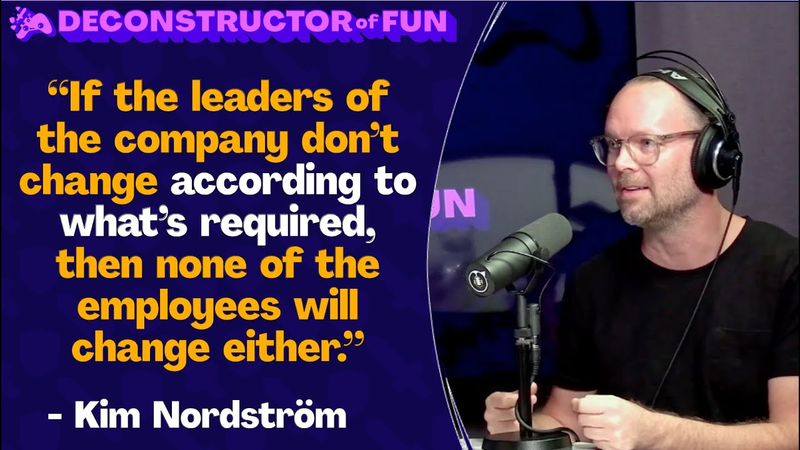
Up Down Up with Kim Nordström
Game companies navigate a predictable lifecycle consisting of startup, growth, maturity, and decline phases, each requiring distinct leadership strategies to ensure long-term viability.
- Game companies must adapt their leadership strategies to match their specific lifecycle phase—startup, growth, maturity, or decline—to avoid stagnation caused by legacy processes.
- Organizational culture is defined by the sum of consistent daily behaviors rather than static values, requiring leaders to actively model vulnerability to foster psychological safety.
- When an existing culture or leadership style fails to support a company's current phase, replacing top-level management is often a necessary step to realign with strategic goals.
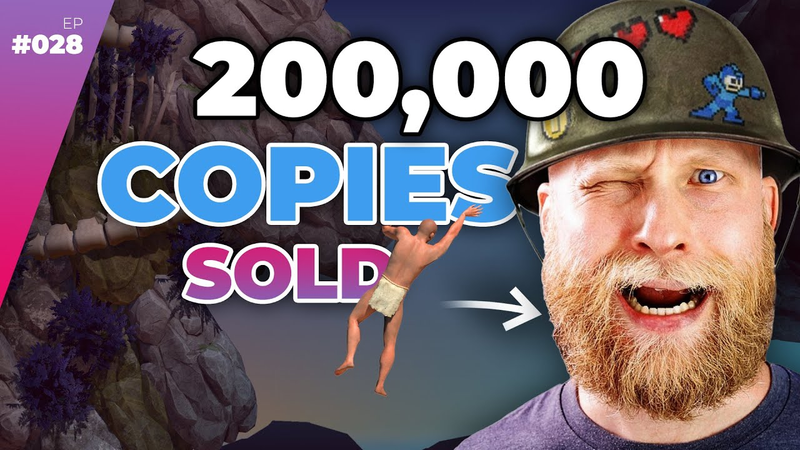
How He Sold Over 200,000 Copies Of His Game w/ PontyPants — Full Time Game Dev Podcast Ep. 028
Achieving commercial success in the independent game industry requires a strategic pivot from technical documentation toward high-impact, curiosity-driven marketing.
- Commercial success is driven by high-impact, curiosity-driven marketing that targets the general gaming public through streamer exposure rather than technical development logs that primarily attract other developers.
- Projects like 'A Difficult Game About Climbing' demonstrate that prioritizing entertainment value and narrative-focused content is essential for driving wishlists and achieving significant market penetration.
- Design should focus on refining a single, core mechanic through iterative prototyping while stripping away extraneous elements like tutorials and dense narratives to foster discovery and speedrunning potential.
Indie breakout: Stirling Rank's Rise with Ready or Not
The tactical shooter Ready or Not serves as a case study in independent game development, demonstrating how a commitment to core gameplay loops and a distinct creative vision can overcome the limitations of a small, inexperienced team.
- Void Interactive successfully launched Ready or Not into early access after five years of development by prioritizing a clear vision and community engagement over traditional crowdfunding.
- The studio utilized a supporter program and a high-quality gameplay trailer to generate initial capital and traction, with the supporter edition accounting for a significant portion of early revenue despite representing a smaller percentage of total unit sales.
- Scaling the team proved challenging; the company grew from three founders to 15 employees before compressing back down to five, highlighting the difficulty of managing rapid expansion without structured roles.
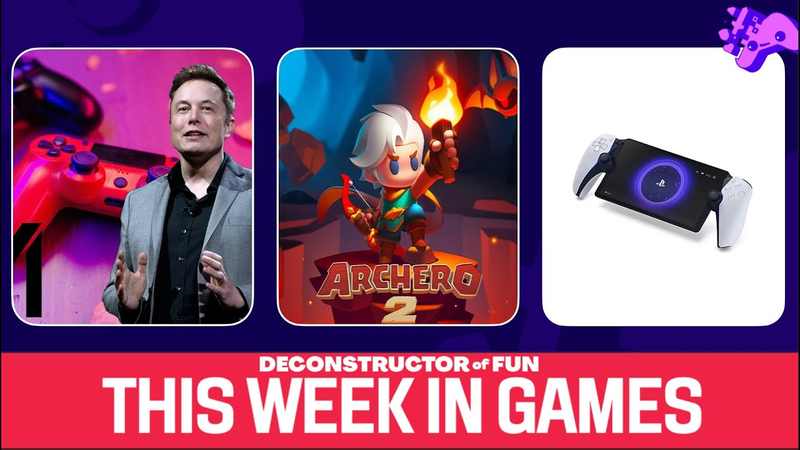
TWIG #311 Musk Enters the Game, Archero 2 Aims for the Bullseye, PlayStation Goes Portable
The gaming industry is undergoing a fundamental shift in consumer behavior, as engagement with gaming-related content now surpasses active playtime, with users averaging 8.5 hours of viewing versus 7.4 hours of playing per week.
- Consumer engagement with gaming content has overtaken active playtime, with users averaging 8.5 hours of viewing per week compared to 7.4 hours of playing.
- The live-service model is facing significant instability, evidenced by the closure of titles like XDefiant and the financial struggles of major consolidators such as Embracer Group.
- Success in the current market requires rigorous data-driven strategies, specifically focusing on hybrid-casual monetization and validating retention metrics before full-scale product launches.
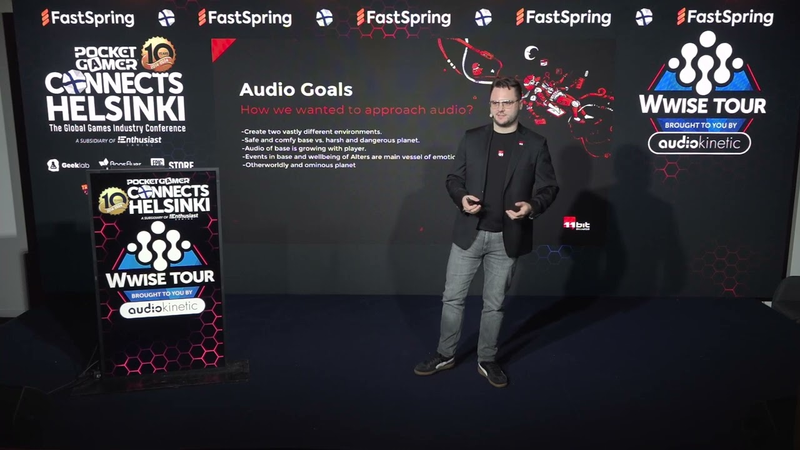
Session: From Sounds of Chilling Winter to Voices in Outer Space - Audio Behind Frostpunk 2 & …
The development of audio for narrative-driven titles like The Alters relies on maximizing efficiency through modular design and automated middleware workflows.
- To manage limited audio team resources in The Alters, 11 bit studios implemented a modular foley system where designers were provided with a library of pre-defined events, allowing them to implement sounds without requiring constant direct input from sound designers.
- The team utilized Wwise's TSV import feature to manage voiceover implementation, providing a flexible, spreadsheet-based workflow that bypassed the need for constant audio programmer support.
- Base audio in The Alters uses a grid-based system where shared reverbs are dynamically assigned to modules based on their size (ranging from 2 to 8 units plus storage) to simulate realistic room acoustics and sound bleeding.

Marketing For Indie Games | Land a Hit Game!
Success in the indie game market on Steam is primarily determined by genre selection and product design rather than traditional advertising.
- The Steam algorithm functions as a competitive system that prioritizes games showing early traction; if a game fails to generate sufficient interest during its initial 20,000 impressions, Valve will reduce its visibility in favor of better-performing titles.
- Marketing acts as a 'fuse' to ignite the Steam algorithm, which serves as the primary engine for long-term sales through passive discovery and recommendations.
- Genre selection is a critical factor for success, with data showing that horror games consistently outperform other genres on Steam, while linear platformers often face significant market resistance.

Running a Successful Live Service Game with Sergei Vasiuk
The gaming industry is undergoing a fundamental transition from traditional product-based models to games as platforms, where the developer’s primary role is to foster an ecosystem for social interaction, user-generated content, and community engagement.
- Transition from product-based models to games-as-platforms requires shifting organizational focus from launch-day revenue spikes to long-term player retention.
- Operational success depends on balancing quantitative analytics with qualitative community feedback and expert intuition to avoid analysis paralysis caused by over-reliance on A/B testing.
- Sustainable monetization should prioritize cosmetic items over pay-to-win mechanics to preserve a fair competitive environment and maintain long-term player trust.
From Casual to Complex: Trends that Shaped Gaming in 2024
The gaming industry is undergoing a fundamental transformation, moving away from traditional user acquisition strategies toward a product-centric model defined by hybrid monetization and lean, data-driven execution.
- Competitive advantage has shifted from manual marketing optimization to product-centric design, where engagement loops and monetization mechanics are integrated at the project's inception.
- Studios must transition to a hybrid gaming model that combines the accessibility of hyper-casual titles with the complex retention loops characteristic of high-production RPGs.
- Sustainable growth now requires deep organizational integration between marketing, product, and data teams to replace siloed workflows and combat rising acquisition costs.
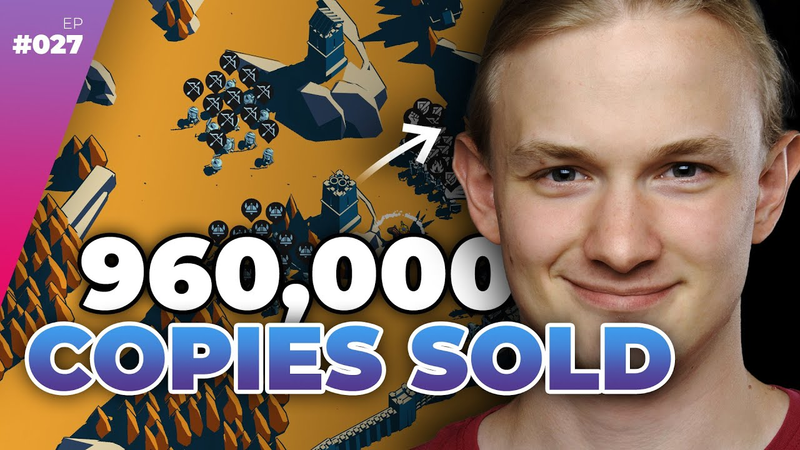
How He Sold Over 960,000 Copies Of His Games w/ @JonasTyroller — Full Time Game Dev Podcast Ep. 027
Commercial success in the independent game industry is not a product of luck but the result of a disciplined, iterative design process that treats development as an optimization puzzle.
- Commercial success is achieved through a disciplined, iterative design process that treats game development as an optimization puzzle rather than a product of luck.
- Developers should employ a rigorous search phase to test multiple prototypes, art styles, and mechanics, ensuring only high-potential concepts move into full-scale production.
- A concise two-sentence pitch should serve as the foundational filter for all design decisions to maintain focus and prevent scope creep throughout the development lifecycle.
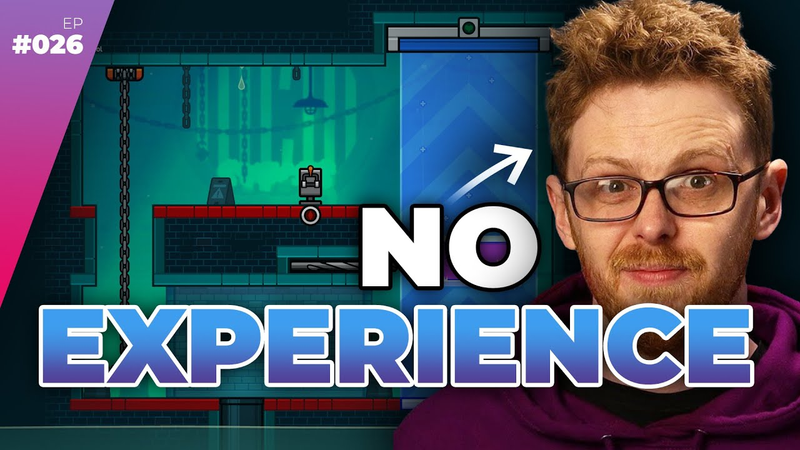
How To Make Games With No Experience w/ Mark Brown @GMTK — Full Time Game Dev Podcast Ep. 026
Transitioning from game design analysis to active development requires a fundamental shift in mindset, moving away from theoretical perfectionism toward the practical necessity of shipping projects.
- Prioritize finishing small, tightly scoped projects over theoretical perfectionism, as the act of shipping a game provides more professional growth than years of study.
- Mitigate risk in a saturated indie market by targeting specific niche communities rather than attempting large-scale titles that lack a clear, unique hook.
- Bridge the gap between internal vision and player reality through frequent, rigorous playtesting, as creators cannot objectively evaluate their own work.

TWIG #310 Can Royal Kingdom Reach the Peak? Who Wins the War of the You Giants?
The gaming industry is currently navigating a period of strategic recalibration, characterized by a shift toward iterative product development and the struggle to translate traditional intellectual property into digital success.
- Subscription models like Microsoft’s Game Pass are currently functioning as loyalty programs for existing users rather than effective engines for new market acquisition.
- Mobile developers are shifting toward iterative product development, exemplified by Royal Kingdom’s attempt to evolve the match-three genre through midcore-lite mechanics and intensified content treadmills.
- The gaming industry is facing significant operational friction, specifically regarding the difficulty of maintaining mentorship and team cohesion within hybrid work environments.
Writers
Games and companies
Games