Game Development reports and market data
Documents
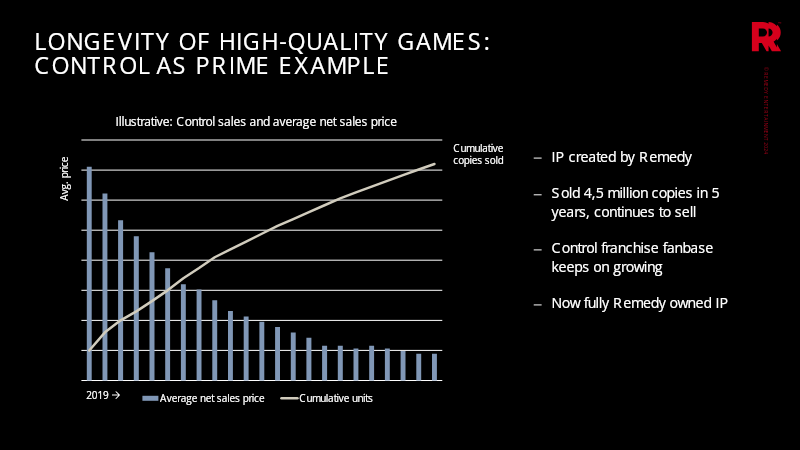


Remedy Capital Markets Day 2024: Business Logic and Value Creation
Remedy Entertainment's Capital Markets Day 2024 presentation outlines the company's strategic shift towards self-publishing to drive revenue growth and enhance profitability.
- Remedy is shifting to a self-publishing model to capture higher margins, targeting a 30% EBITDA margin by 2027.
- The company aims to double its 2024 revenue by 2027 through a portfolio of self-published titles and partner-funded projects.
- Financial modeling indicates that self-publishing creates non-linear returns, with potential ROI increasing from 75% to 250% if game sales double from 100 million to 200 million euros.



Remedy Capital Markets Day 2024
Remedy Entertainment's Capital Markets Day 2024 presentation outlines the company's strategic direction and market outlook, emphasizing its transition towards becoming a highly regarded creative studio with significant commercial success by 2030.
- Remedy is transitioning to a self-publishing model for its core intellectual properties to capture a larger share of sales and long-term financial upside.
- The company aims to transform the Control and Alan Wake franchises into multi-medium, world-class entertainment brands by 2030.
- The current development pipeline features three major projects: the multiplayer title FBC: Firebreak, the sequel Control 2, and the Max Payne 1 & 2 remake.

Independent Games Summit: A Case for Making Your Own Engine
Relying exclusively on large-scale, off-the-shelf game engines often introduces unnecessary technical bloat, rigid design constraints, and financial dependencies on third-party business policies.
- Building a custom game engine is a viable alternative to commercial engines like Unreal or Unity when the financial cost of licensing fees outweighs the time saved, or when the project requires specific design constraints that existing engines cannot solve.
- Relying on third-party engines ties a company's success to the external vendor's business decisions and platform whims, creating a dependency that can be mitigated by maintaining control over your own technical stack.
- Developers can reduce the burden of building from scratch by utilizing lightweight, open-source libraries like SDL for cross-platform OS, input, and sound management, which are proven in commercial shipping environments.
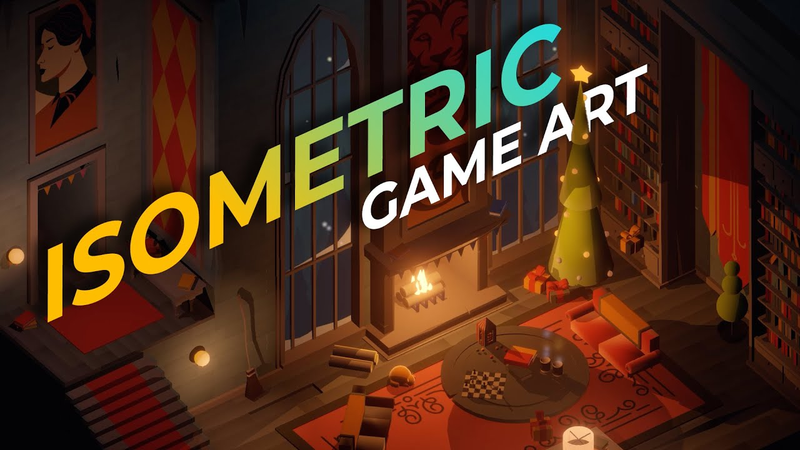
How To Create A Gorgeous Isometric Game (In 7 Minutes)
Creating high-quality isometric game art relies on a streamlined, iterative workflow that prioritizes simplistic geometry and stylized aesthetics over complex rendering techniques.
- To achieve an isometric look, set the Unity camera to orthographic mode rather than perspective to create a precious, delicate aesthetic.
- Streamline the development workflow by importing native .blend and .psd files directly into Unity instead of exporting assets as FBX or PNG files, allowing for real-time updates via simple file saves.
- Simplify complex 3D modeling by breaking objects down into basic geometric primitives like cubes, cylinders, and cones, then using the knife tool to add intentional, handmade-style cuts.

Visual Effects Summit: Lessons in Lens Flares
This presentation provides a comprehensive guide to understanding and simulating lens flares for real-time visual effects in game development.
- Lens flares have evolved from a technical art task into a core VFX requirement, necessitating a conceptual understanding of optical light interaction rather than reliance on procedural generation.
- Lens flares are categorized into two primary types: spherical lenses, which produce radial rays and circular bokeh, and anamorphic lenses, which feature horizontal streaks, oval bokeh, and a 2.39:1 aspect ratio.
- Key flare components include glare (contrast reduction), ghosts (inverted/reflected light source copies), halos (often linked to chromatic aberration), and lens dirt (simulated surface debris).

Marketing Jam Session
Successful game marketing hinges on the early integration of promotional strategy into the core development process.
- Integrate marketing strategy into the core development process early to ensure the game's mechanical and narrative pillars are inherently marketable.
- Establish a symbiotic relationship between marketing and development teams to ensure the final product maintains a cohesive and consistent identity.
- Utilize audience segmentation to tailor creative assets to specific player motivations, effectively highlighting distinct gameplay nuances for different groups.


Spelutvecklarindex 2024: Sweden
Sweden's games industry grew in 2023 despite a difficult economy, according to the third edition of Spelutvecklarindex, published by Dataspelsbranschen in November 2024.
- Sweden's video-game sector grew domestic turnover by 6.4% to 34.6 billion SEK in 2023, with total turnover reaching 90.4 billion SEK when including foreign subsidiaries.
- The industry reached a record 1,010 development firms, an 8% increase, while domestic employment grew by 8% to 9,089 staff despite a 4% decline in the overseas workforce.
- High-profile M&A activity remained significant, highlighted by Embracer’s €4.9 billion sale of Gearbox to Take-Two and EQT’s €28.7 billion acquisition of Keywords Studios.

Live from San Francisco + Special Guest Stars!
The mobile gaming industry is currently navigating a period of market correction following a phase of hypergrowth, shifting toward a mature landscape where success is increasingly defined by operational efficiency rather than sheer scale.
- The mobile gaming market has shifted from a phase of hypergrowth to a mature landscape where operational efficiency is now the primary driver of success over sheer scale.
- User acquisition has become increasingly difficult, forcing developers to rely on arbitrage and incentivized traffic models that remain vulnerable to platform policy changes by Apple and Google.
- Market dominance is currently concentrated among large-scale publishers who utilize massive marketing budgets and sophisticated live-ops expertise to maintain their position.

Comics to Games: Great Adaptations
Adapting comic book intellectual property into video games necessitates a rigorous synthesis of established fan expectations and interactive narrative design.
- Effective IP adaptation requires deep immersion in existing source material, including comics, scripts, show seasons, and fan wikis, to index key elements like powers, limitations, and locations.
- Collaboration between developers and IP holders should be an iterative discussion rather than a one-way request process, allowing for pushback and creative negotiation to find new opportunities.
- When adapting established characters like Spider-Man, developers must balance existing canon with the need for a unique, additive narrative that resonates with the audience's cultural understanding of the lore.
How To Make Games ALONE In 2025 — Full Time Game Dev Podcast Ep. 022
The contemporary landscape for solo game development has transitioned from an era of speculative funding toward a rigorous, meritocratic environment that demands early market validation.
- Solo developers must treat game development as a disciplined business, prioritizing data-driven market validation over creative intuition to ensure financial sustainability.
- Steam wishlists serve as the primary key performance indicator for market interest, and projects failing to meet early wishlist benchmarks should be abandoned rather than polished.
- The industry has shifted away from speculative funding and subscription service payouts, necessitating a strategy focused on building an organic audience directly on platforms like Steam.
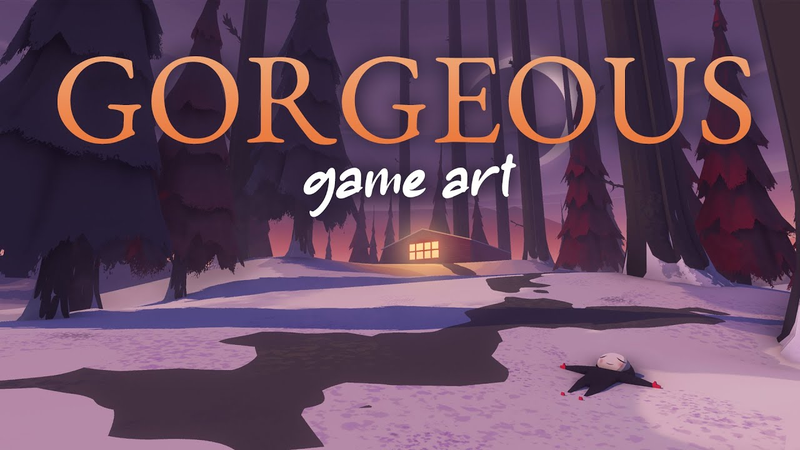
Create A BREATHTAKING 3D Level In Unity (In 6 mins)
Effective 3D environment design in Unity relies on an iterative, intuitive workflow rather than rigid pre-planning.
- Prioritize a cohesive color palette early in the design process, such as pairing low-saturation base colors with vibrant accent tones, to establish a strong visual identity before finalizing assets.
- Establish environmental scale and atmosphere by manipulating basic terrain, implementing a simple gradient Skybox, and adjusting fog settings before adding complex details.
- Use hyper-simplistic geometry modeled in Blender—such as primitives for trees and buildings—to maintain a consistent, stylized aesthetic while keeping technical overhead low.

Now Is the Time! Workers in Games Are Ready to Form Unions
The game industry currently faces a critical juncture where widespread layoffs, precarious job security, and unilateral management decisions have necessitated a shift toward collective labor organization.
- Game industry workers are increasingly pursuing unionization to transition from individual advocacy to a structured, democratic system of negotiation that secures legally binding contracts.
- Collective bargaining is being utilized to address systemic issues such as widespread layoffs, job insecurity, and unilateral management decisions regarding remote work and unpaid testing.
- Strategic organizing efforts, supported by the International Alliance of Theatrical Stage Employees (IATSE), prioritize building studio-level supermajorities to establish industry-wide labor standards.
Writers
Games and companies
Games