Transcript
Welcome to the Naavik Gaming Podcast, where it is our mission to explore the business and future of video games. We bring together the industry's brightest builders, investors, and thinkers to keep a pulse on current events, dissect emerging trends in games, share lessons learned, and have a great time. This podcast is also part of Naavik's growing ecosystem, which ranges from free and premium research to consulting and advisory services. For more information, visit www.naavik.co. This episode is brought to you by Overwolf. With over 1,500 games supported, 165,000 creators, and 38 million monthly active users, Overwolf is the guild for in-game creators. Whether you're a gamer, creator, or game studio, Overwolf is the ultimate destination for integrating UGC in games. For game studios, Overwolf
offers CurseForge for studios, a white-label solution that lets game makers and publishers easily integrate mods safely and seamlessly into their games, both existing and new, at zero cost. It's battle-tested by AAA studios and games, including Maxis with The Sims 4, Studio Wildcard with ARK, Take-Two Interactive, and others. For creators, Overwolf is the all-in-one platform that enables creators to build, distribute, and monetize in-game apps, mods, and game servers. In 2022, Overwolf paid over $160 million to in-game creators, proving that they truly value the talents and contributions of the gaming community. You can check out everything Overwolf has to offer at overwolf.com, or check out the details in the show notes. And with that, let's jump into the episode. Hello. Uh what's up, everyone, and welcome to the Naavik Gaming Podcast. I'm your host Alex and this is the interview and insight
segment. So we think of intellectual property in games and movies, we might recall some of the biggest tentpoles, Disney, Marvel, Star Wars, Warcraft, Harry Potter, Call of Duty, Mario, Pokémon and many others. Many of these IPs are created in-house and with intention. They start with a core team, a world or a story or characters. There is canon and there is not canon. Canon being what the original creator says is true about this world and off-canon being things that are not officially approved by the original creative team. These companies and artists go to great lengths to protect their IP, not only because of the business rationale, but also because of what these IPs stand for and how they meld with the rest of the world. But today in the modern gaming industry an interesting phenomena is happening as creation costs go down to zero. Concomitant with that is a restructuring of how IP gets created and where IP comes from. IP is coming from unexpectedly weird origins. Thanks Gibby Toilet or Bored Apes, which originally began as an NFT collection and has sprawled into the Yuga Labs empire which is almost impossible to describe to anyone who's
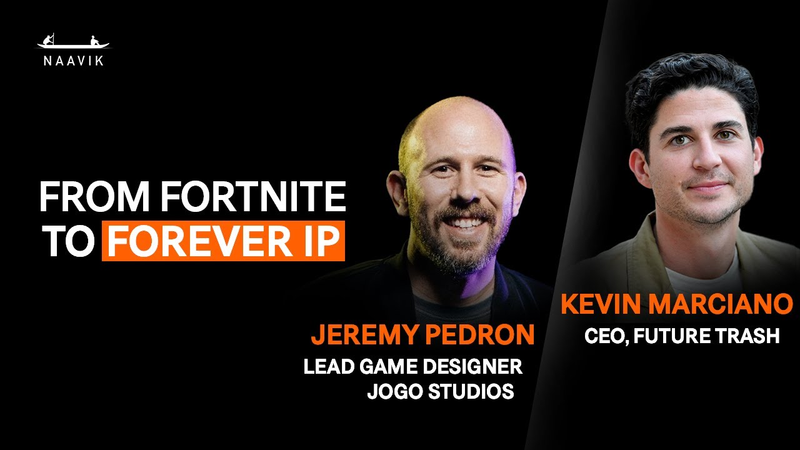
already not in the culture of it. And so today we're going to talk about modern 2024 components of building IP and whether they're different from the way that we would attack building an iconic IP in the past. Hope that after today everyone has a better idea of how IP is birthed in the modern era video games. And so I've got two guests on air who are tackling this in different ways, but both within UEFN. My first guest is Jeremy Pedron, a lead game designer at Jogo Studios. Jogo builds games inside UEFN and Fortnite Creative. They're incredibly popular super studio on UEFN and their team includes Typical Gamer and Mustard Plays and they put out some very popular maps such as Super Red versus Blue. It's my pleasure to welcome Jeremy to the pod. Hi, how we all doing? Thank you for having me. I'm really excited to be here and I'm really excited to talk about this topic in particular. Awesome. Yeah, I'm super excited to have you on. Um and audience, also if you're interested in learning more about Jogo and Fortnite Fortnite Creative Economic specifically, shout out to my homie
David Hayler who has had uh Mustard Plays on the show before. Um and that will be linked in the show notes. Um our second guest is Kevin Marciano, founder and CEO of Future Trash, a new studio that just raised 5 million seed funding led by Turn and General Catalyst. They're pursuing a slightly different approach than Jogo, but I won't spoil the fun. Um I'm going to have Kevin tell us all about it on the episode. Welcome to the pod, Kevin. Thanks so much for having me. I'm really excited to dive into a topic that we're deeply passionate about. Awesome. Yeah, it's also really good to reconnect and see your project again. Um always love the art style. We'll talk about that later as it pertains to IP. Um but really cool. All right, guys. Um So it's good to have you both on air today, and I'd love for you to tell the audience a little bit about yourselves. Specifically, um from Kevin, I'd love to hear why you founded Future Trash, um and tell me about the journey that you've been on so far. Um from Jeremy, I'd love to hear about what brought you to Jogo. Um and I would also love to know what the best thing is about being a game designer inside UEFN is and the
worst thing about being a game designer inside UEFN is. Um Kevin, how about you kick us off? Yeah, absolutely. Um I founded Future Trash alongside uh my co-founders Nate, Scott, and Seb. Uh all anchored around our this flagship IP called Fode. Um it started with a character design from Scott, uh coupled with some really cool tech built in UE5 from Nate. Uh and then uh circled around um you know, what can we do with this IP and thinking about what distribution platforms exist out there. And so, um we formed Future Trash with the intention of identifying opportunities to cultivate and incubate original IP in unconventional places. Um and that quickly brought us to user-generated content platforms, and specifically um UEFN was the best fit for us and what we were trying to accomplish. So, we're really excited to be building in the space. You know, extremely inspired by the the results and the
the impact that we've been able to make in such a short period of time and I really see this as the beginning of a very long marathon of continuing to cultivate original IP on the platform. Awesome. Jeremy? Yeah, for for me, you know, I've just been I've been a content creator inside of the ecosystem for quite a while, just consuming Fortnite content, creating YouTube videos and uh streaming all that good stuff and just a highly creative through and through. And so, uh when Fortnite was playing around with the the concept of like being able to create, you know, worlds inside of their space, I jumped into it. Originally, it started off really, really poorly though because, you know, Creative was like a space where you couldn't undo, there was no undo button. You could like destroy a piece of a building your entire project would fall to its face. And so, I was like, you know, I'm not going to jump into it just then. And then, you know, UEFN came out where they were they're trying to bridge this, you
know, Unreal the Unreal Engine and UEFN, they're trying to find this middle ground. And I was intrigued. So, I started building, started making maps and using my experience of understanding where players are in the ecosystem and trying to give them something a few steps in a direction I would want to take them. And found a lot of success. And so, kind of rode that train for a little bit, but realized I also had limitations as as a as somebody who was doing everything. And I was starting to look for a team that kind of saw the vision of UEFN and its capacity and where it could go. You know, it's in its infancy, but like where it will be in its stride a few years from now is going to be insane. And so I wanted to find a team that also saw that vision and wanted to work together to making even bigger and better things that I wouldn't be able to do by myself in a timely manner. And so, yeah, striking that balance of being able to do things quickly is where
working with Jago has been so fantastic, right? Because um we can we can divide and conquer. Uh and so being a game designer is really fun in that respect because I get to, you know, I I have a firm knowledge of where the player base is. And then I can try to inch uh them to a new place that we want UEFN to be in for, you know, the betterment of of gaming as a whole, not just as a Battle Royale. And so, that's probably my my favorite thing is that I get to kind of make that happen, push the UEFN space in a direction that I would like to see it go. And then one of the worst things is just the the reality that like uh how much time we have to to do said things. Like you could come up with a really great concept and um deliver on it too late, you know, in you in UGC things move so quickly. And so, taking old mentality of game development and trying to shove it into UGC isn't as
helpful. You can be as long-term, but they're actually we have to think in shorter windows and be a little bit quicker uh to capitalize on opportunities. So, that's the one of the the shortcomings of of game design is trying to find that balance of how much is too much and how much is too less, right? Yeah, that definitely Yeah, that makes a lot of sense. Um and definitely really different cuz in, you know, in a normal environment you'd have a lot more time to think about whether or not you should implement something. Um and so I just want to actually just before we move on to talking a little bit about Kevin, I want to want you to give an overview of what the what Fords are in general. But Jeremy, could you just give an overview of what Jo Go Studios is? It sounds like you were already a content creator and you were like, "Hey, I want to join a bigger team cuz before I was doing it all by myself." And you guys call yourself a super studio. Um but just give an overview of like what Jo Go Studios specifically does in case our audience is not familiar. Yeah, so Jo Go is just uh kind of firmly rooted inside of the UGC platform that
Fortnite's created. Uh and it's a bunch of content creators that came together to make really cool games that we wanted to make from playing the game. You play the game and you're like, "I just wish it was this way." Now we have the ability to do that. And so we've kind of put a team together. I know people use the term super studio. I like the term triple B All right. studio. Uh you know, you got triple A where it's like they spend 5 years on something. We're like triple B where it's like we're not spending 5 years, but we're, you know, spending a few months to create something that is sets ourselves apart inside of the ecosystem where you know the difference just based off of playing it. Uh so yeah, that's kind of how we got to where we are. Um and now we're just like managing a bunch of different um IPs of our own and then we're also working with incredible creators. Some we can talk about today and some we can't. Uh but we'll be able to talk about it at a later date. Okay, got it. All right, so triple B, not to be confused with triple I or double A or triple A um or A or
um I love it. It's like I love the video game industry cuz it's funny cuz people are like um think that it's like a like a bond. It's like a triple A secured bond. Um but it's just like games. It's like how we got here, we don't know. Um but uh you guys basically build your own games and then you also work with other creators to help build their IPs in your in your own studio and you guys are kind of pushing forward a lot of content really rapidly. Um think of it kind of as like mini experiences inside UEFN. Definitely. In in in in hopes that as it grows that they can be more full experiences, not just mini, right? Like I think that that assumption is part of the hardship of UEFN in its growth stage. Is that like people assume that they are going to go to these games and it's going to be a mini game. It's not going to be a real game. And I think that's where we're trying to push against that as much as possible of like, "No, you can actually spend more time in our game if you really wanted to than any of the you know, any other game
that you play." And so that shift will eventually happen. I know Kevin probably is pushing that as well. It's like we we want this to be the home of uh where you can spend all of your time. And like you can come just for it. Uh but there's a lot of limitations with that in its current state. Got it. Okay. So we understand a little bit about Jogo. Uh Kevin, explain to me the Fodes. Um what do I do with the Fodes? What are they? Um So Fodes are these adorable anthropomorphic explosive characters. I have one behind me here. And uh as a as a Fode as as a as a grenade, what do you do? You explode. So a lot of fun play patterns anchored around the destruction mechanic. Um and what's interesting for us is like, you know, we actually started as a UE5 team set out to build a competitive party game. We actually shipped a vertical slice that's available on Steam. If you request early access, it'll still let you right through. And we're still really proud of that. But we quickly learned the challenges of a self-published indie
title. Um and you know, we were trying to find you know, what our direction was going to be. Um and it was very serendipitously right like the same month that March 2023 that that vertical slice came out on Steam. We got a thousand installs. You know, UEFN had come out. GDC 2023 had happened. And we took it we actually at first saw it as an opportunity to for essentially free marketing. We're like, "Oh, like, you know, let's audit the tools. see if we can take all this all these robust assets and and characters and environments and you know, see if they we could bring them into UEFN and we could. The first game we launched was kind of a MOBA type experience, kind of a defend your base kind of thing. And we hit publish and we were on PC, console, switch, and it got played by like a few hundred thousand people. We're like, whoa, like we didn't, you know, spend a a dollar in marketing and you know, we had we we the the platform did its job and got funnel players in.
Granted like, you know, that wasn't the game that was the right fit for the audience to like continue to find success in the discovery algorithms at scale. But we saw this like, you know, the signal effect where 200,000 people had now just interacted with and engaged with Fodes, with our original characters. And then so that got the gears turning on, you know, how do we start to architect games around what the Fortnite player is expecting that also still reinforces our world, our storytelling, our mythology, our lore, our characters. And it's been really inspiring to see organic user-generated content on YouTube of, you know, kids playing our games and reviewing them and making that subliminal connection between the Fodes, you calling out the name Fodem, a made-up word that stands for fully operational annihilation devices, this kind of wacky acronym. And so from there we were just started iterating and you know, kind of building fast and breaking things and we have a super efficient pipeline to to
continue creating these games and we're getting feel like we're getting closer and closer to finding our bullseye when it comes to um a game that can find a core community at scale consistently. Awesome. Yeah, and I think that the even just the fact that the Fodes are a bit iconographical is really important Um, it will obviously inform some of our discussion later today around IP. Um, and so with those with those grounding introductions about Future Trash and Foads and what JOGO is, um, I want to dive into our first topic, which is, um, you know, what is IP to the both of you? Um, what IP is traditionally and what it kind of is today? Um, UGC is obviously kind of changing the traditional definition of IP. Um, and I want to kind of compare and contrast it to what it has been defined that is as in the past. Um, you obviously can't really necessarily build something without knowing some of the pieces to construct it to some extent. So, to both of you and maybe, um, Jeremy, you can kick us off. Um, what is your definition
of IP and how does JOGO think about building strong IP? Yeah, I mean, that's a great question. I think you can answer it in a lot of ways, honestly. Um, but I think like IP to me is is a symbol that represents something to someone. Like and, uh, like for me, you know, LEGO has always been like a an IP that has really meant something to me. Both like as a young age, you know, being very creative and and being able to build things and and, you know, like the the symbol of the brick, the symbol of the LEGO man has always been something that like is is it sticks with me. I've got LEGO stuff in my office. I'm a grown ass man, you know. Uh, but like the the reality for me in creating IPs is like to create something that is valuable to our audience, wherever they are. And so, that would depending on where we're stick staking our claim, you know? Like it would it would look different if we stuck did
that in in Roblox or if we did that in Fortnite. Um, and so, to me, I'm always thinking about how how does how do these characters, how do these symbols represent something to the people that are playing it so that it becomes a more valuable experience to them? You can strike more emotion, you can strike more, you know, uh, experience for for people to to to jump in and and want to be a part of these places. And so, if you're if you're just kind of like striking randomly, I I I think it's harder in that respect and and I think like Fortnite players are a unique breed and as the UGC platform grows, hopefully we see less combat-centric experiences that can thrive in the space. But they they kind of know what they want. They and so we we had to really ask the question of like where are Fortnite players? Where are they? And then what do we want to create? Because we we took stabs at things and it didn't work and now we're
trying to be more strategic of like where they are and where we want to take them and and just take them two steps. Don't take them five or 20 or whatever, but just take two and then slowly we'll be able to bridge our our desires of what we want for IPs with where the the player base actually is. And so striking that balance is is is it's it's it's hard. It's and it takes a lot of work and it takes a lot of like understanding your player base and I think we're all going to be learning that. Like no matter where you're at in the process, we're all going to be learning that together over over this time as as it grows. Yeah, like kind of the the tenants of IP to me are really timeless storytelling, visual language, and values. And those things coming together kind of like transcend any singular piece of content, whether it's a movie or a TV show or a game, and it really becomes more
it becomes more of a lifestyle brand, more of a an attitude and energy, and that's like the the fundamental building blocks. So for us for Foad, you know, there's an element of we always call it rebellious teen hangout from the '90s. Like that's kind of like that the vibe that we're going for and so it's like barely living room safe, but or like you know, R-rated Minions kind of something we we we joke about sometimes. And and so yeah, so what we try to do is like, you know, how do we convey that through our gaming experiences and how do we create like a network effect and we we tie those experiences together um you know, sometimes more loosely, sometimes more acutely to create like kind of like this network effect of immersive games all where when you play a Fode game you instinctively know you're like, oh, I'm in the Fode universe. And the sensibilities that we've kind of designed we feel organically kind of overlap with Fortnite's
sensibilities. So it's that's what made it really the right fit. Um but but yeah, our goals are to really be an omni-channel IP existing you know, we see UEFN as the the launchpad, but really want to create animated content. We want consumer products, whole licensing and merchandising strategy, but but all that stems from the only the only way that's successful is if people care about the characters. And this that's like what our kind of short medium long-term goals look like. Yeah, I heard like three pillars in there. I think you said it's an attitude, it's storytelling and then what was the third one? Uh storytelling, visual language and values. And values. Okay, yeah, values being kind of maybe like the the attitude. And yeah, I think that that's interesting because I think that, you know, in the more traditional format you would typically break down IP as an art style. So the visual language like you said, environments, a world, so the world lore and the world building and characters. And those things kind of stack up into
potentially what we would classify IP as. And so it's interesting to hear about your two different approaches. Um, you know, Jeremy, yours is more geared towards like, what do peo- what is people what are people going to find really meaningful to them? And then Kevin, you guys have this kind of like three-pillar strategy about um uh about that you kind of built up that's particular for the pho- the pho- universe. Um, and so we've discussed at length, you know, or through Step It's about why you guys chose to do this first in UEFN, you know, and and why not Roblox and a bunch of other things. Um, but I'm curious about what about UEFN has been additive, particularly about UEFN to building your IP um versus another platform. Uh maybe Jeremy, I'll give it back to you to start off with that. Yeah. Um, I think the the thing that's most exciting about UEFN is just well, Fortnite, I would say, as a whole,
is it's it's standing the the the test of time. Um, a lot of games, you know, will have a window uh and Fortnite has continually standed over time and it's continually innovating itself uh into to higher levels of complexity. Uh and by taking on a UGC spa- spa- space, I I feel like there the sky's the limit. And I think like what's really exciting to me as a a gamer is the work that they've done as a company to rally all these other IPs to one centralized space and allow us to play with them. Like that is unheard of in the gaming industry, right? Like we have Master Chief, Batman, you know, and Jinx from Arcane all like hanging out together. And then we get to build the worlds that they get to cohabitate. And I think like that value is absolutely additive, like
right? And and like I always use this example. As a kid, I I'm just playing with my action figures and it doesn't matter, you know, like the IPs don't matter. Like I like my Batman can fight, you know, whoever I want like GI Joe. In that in that world it makes sense to me. Um and so Fortnite's really done the same thing in trying to create a sandbox where everybody gets to play together. And I think like that value is huge because you got Nike wanting to be a part of it. Fashion, right? You've got like cars, like Porsche trying to get involved. You everybody's trying to get involved in this space. And so if you're able to kind of jump in early enough, you know, as you know, everything rises, you rise with it. And so that's kind of been our overall strategy is like seen Fortnite just never relentlessly never give up on these endeavors. Uh and and them proving themselves time and time again, it's a safer bet for our
company to be like founded in in a space like this rather than taking a shot elsewhere. Especially with our experience and understanding of it over almost a decade of of Fortnite's existence, like um to us that that's just a no-brainer. Yeah, and uh from my perspective, uh you know, when I echo Jeremy's um view, it's you know, being in a melting pot of IP is is so cool. It's a real true manifestation of like a metaverse concept, right? Uh just today we actually launched a Fo Teenage Mutant Ninja Turtles crossover map and like, you know, like pretty unprecedented that that would have would have been possible. Um so the fact that this is um you know, kind of like a yeah, a true sandbox to be able to build these experience and cohabitate with other IP is is really really exciting. Um and the other points uh to touch on just like the fidelity um and of the Unreal Engine or UEFN then what you're able to accomplish in like the look of these game experiences
with all of the the back-end infrastructure architecture, all that stuff is figured out for you. So, you can really focus on what matters most, which is the content. That was really exciting. And then the last thing, you know, it's still in its infancy, right? So, we felt like there was a strong opportunity to have first-mover advantage and and be early and still early. You know, we're, you know, a little over a year and a half into it. You know, Roblox has been around for what is it? 12, 13 years? Maybe a little more. And that market, you know, is is really saturated. I think there's still awesome opportunities over there. But for us, just factoring all those things together, we felt like UEFN was the right fit. Mhm. Yeah, so it's basically I think that the UEFN has been added if because, you know, like Jeremy, you mentioned there's basically just like this deep catalog of stuff that makes it like kind of like a kids like dream playroom where you've got like all these different IPs, this melting pot, Kevin, as you as you also astutely pointed out. And there's also
like this sense of the fact that Fortnite is a long-lived like committed community. And I think that that's also something that's very different is that, you know, games are today are being built alongside their community versus being, you know, in Lucasfilm's lab somewhere and then being distributed to the to the world. And after which the community basically fan fictions it, has all the fun they want with it, but then there's still that protective gateway of like let's not let this happen to the core Star Wars universe. And so, you know, you guys have talked a little bit about again, like, you know, how UEFN has been particularly additive to both of your studios. And I kind of maybe now want to double down into like the various approaches that you're taking. Cuz we've got like art style, we've got environments, we've got world, we've got characters, we've got community. We've got this deep roster of IP that's sitting inside the the the Fortnite universe. Um And so, Kevin, I know that we'll come to you next cuz I know that you're building a universe of foes that are very more unique that are easily identifiable. But
at Jogo, Jeremy, you guys are more oriented around build building maps. What you are what someone may mislabel as mini-games, but you know, you hope that they're no longer mini in the future. And it looks a lot like Fortnite, like 100% like Fortnite. And so, Jeremy, how am I as a user supposed to identify that I'm playing a Jogo game? Like, how am I supposed to know that? Yeah, I think like Fortnite Fortnite players are like really people that play know what a Fortnite element is and what isn't. So, like I think one thing in having both me and Kevin on this this podcast is like we've tried to create experiences that aren't necessarily identical to Fortnite, you know, but they have Fortnite-isms in it. And and I think like for us personally, I think we kind of want to be a miniature version of Epic Games in
some respects, where like we are applying similar formulas as them on a scale that's a little bit quicker, you know, and can and we can we can kind of make something faster and hopefully in a way that catches players that are playing the main experience can fall directly into our lap because there is unique similarity amongst like what they're creating and what we're creating. And so, if we can create our own little universe of things that Epic isn't creating, but we see those needs and we in the player base, if we create those things, players will come. And so, that overlap is actually kind of important to like some of our DNA, but also to like I said, it's it's small steps. It's not like massive steps of difference. And so we're we're constantly experimenting with like does our the Fortnite audience want something
drastically different? Or do they want like something that's familiar enough that is like ooh, wait, I can't get this from Epic themselves. I'm going to have to go to JOGO to to play as this character or as this legend we just created the series called Legends. And we're we're we're informing a lot of our other IPs around some of it because of the success of like people identifying with a character that we're making specifically in the world that they might you know have the background of or whatnot. And we're trying to diversify it enough to where we hopefully catch a lot of people like looking up to and being excited to be these legends. And then from there we go, okay, so they like these characters. Now what's the lore, right? Like and then we take them another step of like we start slowly feeding them in the direction that we want to take them because if we really truly didn't have Fortnite in the equation, we would just go all in on like this idea and just completely create it. But then where's the audience, right? Like to Kevin's
point is like where where where is the audience if you just throw that on Steam? You you're hopeful, you know, but you can't be expectant of that. And so in some respects you're tied to the mothership a little bit and we want to be close enough to the mothership to where players are like ooh, like this is an experience that I can't have somewhere else, but we're different enough to where you can identify ooh, I can't I don't I can't get that over there. So I have to come here to get it. And so that's kind of like how we've been Mhm. moving forward at least in the last year and a half. And if I may, I just want to give credit to JOGO for being really thoughtful and intelligent um, with uh, each game that you release like does have that twist. Adds like it like you mentioned like you you don't want to alienate anyone. You you know what the Fortnite player wants, but then you also add, you know, that innovation, that extra inch by inch we're going to get there where, um, you know, Fortnite is this robust ecosystem with tons of
different diverse gameplay and I you know, I give you a lot of credit for being a part of like, you know, or being a a leader in in in that change. So, um, big fan of the fan of the the content you guys put out, um, as well as, uh, the the the animated, uh, little spot that you put out on on Twitter and probably other platforms, but that was super cool in terms of like that world building and start and seeding that storytelling like, you know, really really impressive. Hm. Thanks, Kevin. Appreciate that. Got it. And so, I guess for for you guys it's a little bit more oriented towards narrative and characters. Those characters may look like they could just pop into Fortnite, um, cuz you're probably building off the Lyra engine and they look like they're from Fortnite, but, um, the stories and the things that you're doing with them and the experiences that people are having able to play are distinctly different in the sense that you feel that you are converting people for or converting maybe or um, adding that they have become not only Fortnite fans, but they're also Joko Studio fans, um,
because of those experiences. Okay. Absolutely. But, not only that like like we you we don't want to just grow a studio for the sake of growing a studio. We want to compete against Epic themselves one day, right? Like, we're we're not looking at like, "Ooh, let's just try to like get as much market share amongst other, you know, UGC people." We we actually want to make a better game than Epic does. Like, that's all that's what we want. Like, we want to go head-to-head with them and they want that, you know, they want UGC to to to come alive and so, our goals are much beyond, you know, like these limitations that we currently have. And we're open to uh you know, making those adjustments and making sure that we go past even Fortnite themselves, right? Like we're building things outside of the world of Fortnite. Um so so our players that like really connect with our IP can get, you know, whatever, a plushy. Like I I I got a Foed hoodie, you know, and I I was
going to wear it today, Kev, but I decided not to. But like like the gear and the stuff like when when fans are fans, they're fans, right? And so we want to we want to make sure that we are also building things that they can have in their world at home and online, right? Like both both and. Mhm. Yeah, that makes sense. I was just going to make one more comment, too. And with like uh you know, Fortnite is, you know, rapidly evolving um and more and more tools are becoming available to like, you know, build your community on the platform, right? Whether follow a creator um and it's just really cool to think and inspiring to think that like this is a new class of content creator where you can you can really build um uh a fandom, an audience, a community, people who are able to talk to each other, share ideas, um and uh and yeah, just find, you know, commonality anchored around different game experiences, whether they're, you know, really IP driven or not. Um just kind of making an observation on the
platform about the platform as a whole. Um yeah. It's like YouTube. YouTube, right? Like it like Epic is trying to be the gaming YouTube, right? Like where like you if you want to play any type of experience, you go to one place. Uh that's what they're they're hoping for, I think. That's their push here. And we'll see, you know, if that plays out, but if if they accomplish that and we have, you know, been with them on the ground floor, you can just only imagine the amount of success that you can have in this environment. Got it. Um and yeah, maybe to the question around platform, Kevin, your strategy is a little bit different. Um there is an identifiable art style that's, you know, hopefully to some extent instantly recognizable. I mean, I feel like I at least I'm able to instantly recognize a Fode. Um and we actually have a saying at my studio at Ruckus that you need to be able to identify whether or not this is a Ruckus Games game within 5 seconds of looking at the art. Um and I'm curious as to like whether or not um what what
challenges UEFN presents with visual and thematic limitations um to basically being able to do that, right? I think like one of the big powerful things about IP is the visual aspect of that IP. It looks like Star Wars. It looks like Disney. It looks like Pokémon. Um Kevin, you kind of carved out this niche here where like the Fodes themselves are instantly identifiable, but how is your team thinking about that visual challenge? Um and how are you guys kind of like building your world and your characters um to best kind of make use of what you have. Um it's a great question. Uh I think that the biggest challenge is discoverability, right? So, like right now success in UEFN can only be defined at a very, very large volume of scale. If we found a an audience of, you know, a few thousand people or something that like you can't build a business around a small core audience. Um and that's just, you know, kind of how discovery algorithms work right now.
Um for our last game that we launched, Boom City, um you know, kind of this open world boss battler concept, um there's a lot of people who really love that game and, you know, our Discord is really engaged with like hundreds of people who are, you know, waiting for new content. Um but it's simply like, you know, the the signal's not enough in the discovery to continue serving it to more and more players to allow more funnel and to reach more people. Um but you know, it has has average play time um and all these metrics. So, that's like been the the biggest challenge, and I think that's just because or it's a credit to like, you know, players' expectations. You know, right now a lot of players are are there for Fortnite and Battle Royale derivative experiences. Some people, you know, will come in and fall in love with the game. Some people will leave. And so, just like finding ways to build community off platform and bring players in, that's something we're thinking a lot about. It's a really tough nut to crack. Um but but that's been like, you know, more or less our biggest challenge is just like,
you know, our games have these huge pops and then they just slowly drift out of discovery. And so, we're just trying to like hone in on exactly like where we need to improve from a metrics perspective to allow consistent stable discovery visibility to allow more funnel of players. Mhm. And then the other difficult piece of this is, you know, there's legacy players in Fortnite. You know, there's there's players that have been that are used to, like for an example, like a pit map, right? And it's like it's just all they've known. It's just been at the top. It's always been at the top. They've liked it enough, and it kind of like has a snowball effect already happening for it. And it's really hard for anybody that's new to crack into any of that because of just the the years of support that these, you know, experiences have had. And so, I think what what you guys are doing at Fode is like is is it such a difficult task in general for everybody, but like
then not only then, but to believe in your IP enough to keep pushing is huge and will serve you guys tons of value because eventually, you know, I I'm expecting that Epic will will notice that and eventually be like, "Give me a Fode backlink," right? And then like you get immortalized and brought into the fold. and I I each of these people that have had these maps have been you know had had a little bit of epic sprinkling in there and I think like as we are trying to push the UGC to different you know in different ways epic will value those things and hopefully uh like honor the work the hard work of of doing this but there aren't very many people that that do what you guys are doing and it's a huge huge I'm so glad that you guys are in the space because you I think you guys set a great example of what it's like to build an IP inside of the game and I hope that more people that aren't these legacy people but that
are like building these studios and building these games actually take that to heart because we need more of that and less of of the legacy stuff. I appreciate that. That's really encouraging. Yeah. Um I want to kind of double down there in the art style um being differentiated and being to you know Fodes kind of like unique um unique edge, right? Um I think one of the interesting things about IP and the core parts of it is also just consistency, right? Like I show up to a Disney movie and I know what to expect. Um at Blizzard, for example, there are some pretty strict rules about what certain characters could do, could say, you know, or what they what they what where what they even wear um clothing-wise um with the intent of like protecting the world. Um and you know, I kind of see the Unreal like I mean sorry, not Unreal. Um the UEFN universe is kind of like this like cacophony of like noise and color. Um and so you know, Kevin a question for you is also like how do you keep the Fode brand intact? Let's just say that another
creator wants to riff off of Fode but like you set, you know, in the creative process at Pixar, for example, they the world builders set the rules of the world. Like Fodes talk or Fodes don't talk. Fodes have two legs, not four legs. Um and what if you see a four-legged Fode? Does that like upset everybody? Um and so how are you guys thinking about like kind of the consistency of the photo universe um, as it pertains inside UEFN where there is such flexibility and kind of like the rules of the world? It's a great question. We think about it a lot. Um, we're of the philosophy of just letting of of seeing the true power of you like UGC within UGC. Like we want to make our photo assets available to anyone so they can make their own games however they want. We actually have started to roll out a an affiliate developer program creators on the platform that we really respect and admire that we give access to all of our code, all of our assets and say like run with it. Like you know, let's we can brainstorm an idea. Um, you know, we figure out you know, economics that work for the for the both of us. We can add our like kind of our signature
touch which is you know, really comes with like UI, VFX, animation, all these like custom bells and whistles that give our experiences a lot of flavor. Um, but uh, yeah, I think we're entering in the into that area where no longer are the gatekeepers of or or even managing legacy evergreen IP or they're starting to rethink um, you know, how controlled they want to keep that. I mean, well as I mentioned earlier with Ninja Turtles you know, creating Paramount creating a robust asset pack for creators to run wild with is super cool. They set some guardrails up. Um, but ultimately um, you get more value out of um, creators um, developing crafting their own experiences so the IP can like live in the cultural zeitgeist, right? Like that's exciting. Your example at the top of the call with Skibidi Toilet a remarkable case study of UGC IP, right? Like though the numbers that that content pulls in um, dwarfs you know,
every tentpole box office movie release that comes out every weekend. Um, and not to mention a lot of that is driven by uh, or a whole other uh, uh, element of that is the UGC of skibidi toilet. I think that there's like 20 plus YouTube channels that also have 5 to 10 million or plus YouTube subscribers pulling in crazy views. So you know, we're talking in the billions and billions of minutes of watch time on a monthly basis. So I think you want to be you want to set some guardrails up. I mean obviously nothing like explicitly or crossing the line, you know, offensive things like that. But we're of the mind of like, you know, everyone should be able to to to play in the same sandbox together and you know, kind of craft their own experiences leveraging that IP. Interesting. Yeah, and I think also a lot of that folds into like okay. So you guys created this thing you create some fodes, right? You started it out that
way and then you're kind of passing it off to you know, this this community, right? And I think like community is probably a bigger part today of IP than it has ever been in the past. And so I guess maybe Jeremy I would love to hear from you as well. How are you balancing community input but yet maintaining a unique branded identity such that someone can say, yep, this is a jogo game or like, yep, this is a fode like this is a future trash game. Kind of like where is the balance there between the guardrails of how your community relates to the brand that you're building cuz in order for someone to know your brand, you obviously want it to be associated with the original creator to some extent. Yeah, and honestly I think like this piece is the reason why Jogo made the most sense to me is the community element. Typical gamer, Monster Plays, myself all have been in Fortnite for a long time and we've been cultivating these communities with these players for a very long time. We love them and we love
Fortnite, we love them, you know, Uh, and so uh, naturally it made the most sense to be on a team that was content creator minded. Uh, that could you know, could we could create an experience and then have the content to back it up and not have to rely on discover as much as um we would need to. And that kind of ultimately has helped out in a lot of our success is is because of that. I think it's being able to brand your experiences to your community. Um, and so by already having a pre-existing community, it was just about onboarding, right? Like, I'm doing this now. I was, you know, streaming. Now I'm building these experiences. Um, come check them out, you know, like we built that trust already. And so I think like when it comes to fostering that community, it's so valuable to your product. And when it comes to IPs, all we want to do is share it with them. And so we created this Legends brand and um
we have story arcs for each of our characters, but they're kind of like side quests. Like, if you play the game, you would never know. But, if you really care uh, you could find it. And so we in our Discord, we're like, "Hey guys, like here's here's some some of our, you know, ideas. Uh, what are yours?" You know, and so our community has just been like, "Well, what if you created this legend? And what if you created that?" And and then like we're riffing off of each other and it starts to be even more collaborative where we're like, "That's a great idea." And then when you put that stuff in the game, they're just just stoked. You know, like they're so happy. They're like, "That's my idea, you know?" Uh, and so yeah, I think like we have tried to be as collaborative with our community as possible. We we care a lot about them, you know, being just as involved with it as we are. We don't always take all of their advice, you know, like but we do try to shout them out uh and get them engaged and and show them the places that we do take their feedback to heart and and they you
come alive with with that type of stuff. So, super valuable to us. Keeping this as anonymous as possible, can you tell me an example of a bad idea? One that you're like, nope, our universe doesn't do that. Yeah, I mean like uh in Fortnite, darkness is is typically like less played experiences. Like if if things are like dark. Uh and so, we try like a lot of times people are like, yeah, but what if it was like you're in this pitch-black room, it's a horror like and all these different things were like great idea. Not for the brand, and that's okay. So, like we try to orient ourselves a little bit more to thumbnail friendly. Uh like what is something that's clickable? What is something that is like something that causes you to want to engage with it? We try to stay there, and sometimes our, you know, some some of the feedback we get are is just like, which you know, way out there. And we're like, uh it's just like not a part of our how we we operate our brand. Uh and so, yeah, I
think that's that's probably a really quick example I could give you. Yeah. Yeah, and but that's also Oh, go ahead, Kevin. Oh, no, I was just going to make a a comment that there's a whole podcast to be dedicated to the alchemy of the thumbnail, right? Like that's a I think that that's a whole conversation. Absolutely. Yeah. But it's interesting that that decision is actually driven by metric and game performance, rather than like the artist's truth, right? Like it's very different than being like, you know, um from you know, a a double-A game or triple-A game that's like, no, no, no, no, like this is our tone, we use this approved red and this approved green, and like all of this kind of stuff, right? Like we want the tone to feel this way, and actually like the brightness or the darkness actually like is part of like the artistic's truth of like the kind of thing that we're trying to communicate. Um but and it sounds like there that was an example of, well, we also we just know that this mode won't be performant, um and won't be clicked on, and won't be played. Uh which is a which is kind of a it it they're like slightly related but not
exactly the same which is pretty what's funny about this is like we are making the bet that if Fortnite survived 7 years, they know what they're doing, right? And so we can use them as a case study for everything that we build as as you know, there's a little bit of trust in that of like, "Okay, you guys whenever you do a thumbnail, it looks like this this this this this and this. Why would we make something that looks so different if people are coming to the game for that?" Mhm. We want us to look similar enough to where they want to come for us as well. So, yeah, I think like we we trust in Epic a lot is like we don't have a team that does like all of the amount of research that they do on why things are clicked and why things aren't, but we can trust that they do, right? And use some of that to our advantage. Yeah. I know a lot of PMs at Epic and they have the information. Uh I bet I I would agree probably follow the thumbnail the thumbnail protocol.
Um but that actually brings me to to another interesting question and we're going to move on to like, you know, where how do you take the IP out of Epic, right? Like outside UEFN. Um and so it sounds like, you know, because if you're inside UEFN, you're trying to build something that is performant to the platform. Um and I guess my question is like, you know, what if that what if UEFN stopped serving your IPs needs? Let's just say Kevin that you actually want the Fodes, they're very dark and they're very sad. And it's a very destructive dark universe and you want it to like feel more like gritty, right? Um and maybe your your content won't be performing on UEFN um or there are strict limitations imposed. What's your guys's like first strategy towards taking your IP off the platform? We have ambitions to uh create animated content, right? To YouTube shorts and and TikTok. Um you know, that's something that's important to us uh from like the kind of storytelling perspective. Um and and yeah like the the the goal of UEFN has always been
a strategy of uh incubating brand awareness to eventually get off platform and launch our own game that where we can control and you know own our own audience a bit better. Um you know there are a lot of limitations in UEFN or even you know down to just not really knowing where our players are there you know any demo information all that stuff is you know held in a black box and so that makes it really challenging as a developer to make informed decisions. So our whole what we're the the puzzle we're trying to solve now is like you know how do you create that flywheel of UEFN experiences into you know owned and operated communities whether it's on Twitter or Discord etc. Cultivate that community and eventually start thinking about what the platform what the off-platform strategy looks like whether that's in another UEC ecosystem or revisiting the Steam standalone game. Um that's a bit of a a question mark right now to see how things net out. Um but but yeah it's a
it's a big consideration and was a topic in a lot of my conversations with VCs on you know quote unquote platform risk you know at what point do uh or if Epic changes the the rules of the game at any point like you're kind of vulnerable to that. Um and I pushed back on that and said that you know a lot of people said the same thing about YouTube and you know if if there's an audience there if there's you know engaged meaningful um uh players that's that's always going to kind of be the the priority. Yeah I think like if a tool's a tool for what you're trying to do you can use it as a tool. Um I think you know UEFN right now is is a tool and it's working. Uh uh there's times where I feel like this tool is less of a tool. It's like kind of trying to build like a a barnyard in your backyard but only being able to use fruits as your like equipment. Like it's like it's going to be very difficult to do. So I like there are moments like that where it's like oh, wait a minute. Like like for example HUDs are just kind of like
really limited in UEFN and every game in the history of all time Oregon Trail included has used crazy, you know, unique HUDs that give you the ability to help inform your player and all that stuff. And I I feel like we're just using silly silly, you know, metrics for that inside of the So you So you're limited there. And now you have to rethink, okay, well, how do I communicate How How can this be a real game if, you know, we're limited with those things? And so we can only take so much of that before it's like maybe there's another way, right? Maybe there's another opportunity out there. And so we are very interested in finding our success period in the stories that we want to tell in the games we want to create. We do think that like where Fortnite is is where we want to be. But we aren't opposed to to trying out new things and learning like new platforms and taking that knowledge and then either informing what we're doing or, you know, take it off and see how it succeeds elsewhere. But like as of right now, I think like
we're we're betting on Epic because of the experience we have with them. But if if they do, you know, stop serving us, we're not just going to roll over. We're going to find new avenues in which we can succeed. Mhm. Yeah, and then then, you know, we talked a little bit about there being kind of like these like loose, you know, handed it handed over to the community. Let them run with it. Let's see what happens, right? And then that we discussed actually in our in our pre-call that, you know, Epic doesn't touch the IP that's created inside UEFN. Like you guys own it. But what steps are you taking to protect the IP from others? So so a lot of IP is basically building that moat and ownership and control, right? So like the Disney crackdown of like Mickey Mouse, no, you can't use Mickey Mouse. Um, what if, you know, someone decides to build a vote experience that is a standalone game that's just in Canada somewhere. Um, how are you guys I guess thinking
about the I, you know, treasuring that IP? Maybe specifically for you Kevin as well since it's very much more it's identifiable, right? Um, how are you protecting your IP um, and extending it? Yeah. Yeah, we uh, we take necessary precautions with trademark and copyright. You know, we file you know, protections um, you know, around our character designs, the the name vote, the the logos, things like that. All the kind of like basic um, protections you would go about with with any intellectual property. Um, and then like it's we have that protection and then it's up to us to have the discussions internally on whether or not we want to enforce it on a case-by-case basis. That's like the the the philosophy that we have. Got it. And Jeremy, are you guys doing the same thing then? Yeah, I feel like for high-level stuff, absolutely. I think like UFN is in a really interesting space with that. Right now, it's not the best I guess is what I'll say. Like it's very
common for you know, you you don't own an idea inside of, you know, UEFN, right? Like so if there's a success somewhere, there's a lot of replicants of that success. And like if we look at Only Up is an example, right? We we had an Only Up map go into Fortnite and it just blew up. And then literally every creator in the space created their own Only Up version. And they all found success, but the original had like tons of success. And so I I think like the the reality of this like space is that we all we always ask the question, well, can we make it better? Like, can we can we improve on things that maybe they didn't think about or maybe they don't they're too lazy to do. Can we can we do that? And Epic has created an ecosystem where that you can. And that's really cool for creatives. Um but it can also be really frustrating to somebody who comes up with an original concept and then like is getting ripped off because somebody's doing it better. And that ultimately is the the decision
I made, why I made the decision to not be a solo dev, but to be, you know, on a team. On a group. is because if you're doing that as a solo, you're just going to get it's unfortunate, but you're going to get steamrolled, right? And then it's a matter of time for me and Kevin until Paramount creates a formal UEFN, you know, experience with tons of devs, tons of people that are just full investing in it cuz everyone's kind of looking at UEFN like is this something we should get involved with? Yeah. but it's a matter of time when they all go, oh no, no, no, we're late to the game. We should be. And so, our team is trying to build ourselves up enough to be able to take on some people that come in that might do take our idea and make it more polished in their own brand, we got to have something to compete with. Um and so that's ultimately what led me to be on a team and why I think it's valuable. Uh but yeah, it's it's a very interesting space right now.
Yeah, I think that's actually it's it's there's a parable here in like the music industry that I'm hearing a lot of. It's like, oh well, if this is a deadmau5 track and if deadmau5 like strays too far from what is normally considered a deadmau5 track, well, then you got to like basically like relabel yourself, you know, like Eric Prydz is Eric Prydz and there's Pryda D, it's the tech house label. This way like you don't like get your audiences mixed up, but like then there's the fluidity of the creator who wants people to make something new. And I feel like to some extent, UEFN is kind of in you're in that box where like you can't make something that's outside maybe necessarily what the core Fortnite player base wants. Now, what you guys are betting on is that that changes and then you are able to do that, but then there's kind of like that there's that taste sampling of like this needs to be somewhat similar enough to something that I recognize so that I know it's Taylor Swift or I know it's you know whomever, which is pretty interesting. But guys, we're coming up on time and I wanted guys to I want to ask you guys one final question. Given that you guys are in this like UGC hyper fast moving, you know, very fluid
IP dynamic. What advice would you give to studios that are trying to build IP in a more traditional format? So someone who's at a double A studio or at a triple A studio and they're building a brand new IP. Given what you've experienced at UEFN and given that you know that they're never going to necessarily build it in the same way that you guys are. What is like the most tactical tactical piece of advice you would give? Let Jeremy go first. Yeah, I mean that's that's tough. I I think I mean we've done a lot of hiring of people that are in the triple A space that come in and jump into to UEFN and Fortnite and are just so limited to to what their previous experience was. And I think like adaptability is a is a core component to success to finding success in this platform is you have to be willing to not be frustrated and just adapt to that the reality that it it's it's in
infancy. It's such it's so early on, you know, we're like we're in alpha pre-alpha vibes. And so some people come in thinking that the tools that are very normal to them in triple A they they they feel their hands are kind of shackled a little bit and and I think that that is a reality that I watch first hand on on our team. And there's some people that just can't hang with that. They're just like, well, I'm out. Kind of like when I was when Creative first came out and I couldn't undo my like a something I did. Like I was like, I'm done. And I think there there is a lot of that right now. Um but I think if you if people are willing to adapt to uh its limited potential right now, um I think it'll pay dividends over time. So, it is it is a value a risk value, for sure, but um that's probably the the biggest thing that comes to mind that I've I actually physically seen on my team uh where people are just like, oh, well, let's just do this. And I'm like, I
can't do that. They're like, what about this? And I'm like, I not yet. It's in beta. Or well, you know, like it's just a lot of those types of conversations. And then it's what you do in that box, right? Um you might be placed in it, but it doesn't mean it can't be creative or you can't find a really fun solution to your problem cuz there is like a hundred different ways of figuring something out. And some studios I don't think are prepared for that. Mhm. Got it. Yeah. And so, from your perspective, there are some people that are struck from the AAA side. And when people come to you if they if they struggle because of the difference in the difference of in the of the approach of building something. Yeah, they're expecting Unreal, right? Like they're expecting Unreal 5. And we're like, we don't have that yet. Mhm. Yeah, but maybe said um reverse it said differently, you know, like for those, like how can what what can what should double A and like triple A studios that are building their own games on Unity or Unreal Engine 5 or anything like that um take from the UEFN system. Like what can they borrow? What can they learn um to build their IP in
the modern gaming industry better than they have in the past? Yeah, I think Kevin will have some great thoughts on this given that he's done this, but I would also just say, why not? Like it's it's it's it's there. It's a tool you you would have access to hundreds of thousands of players right at the snap of your fingers. It makes little sense to why you wouldn't want to explore that as an option. Uh because you might be thinking in one way, but I think if you just give UEFN a shot, I think you might act It might expand your perspective on it drastically uh just by experiencing, you know, a full like development cycle on the platform. But yeah, I think Kevin would probably better No, all all well put. Um and uh and yeah, that instant feedback is um incredible. We've learned to like, you know, not be hyper precious about uh things being perfect before you ship them. It's I think like you can get to MVP a lot quicker and test feedback and decide
whether it's worth reinvesting your your time and resources into. Um you know, I mean, game traditional game development super expensive, super time-consuming, and like UGC has taken that uh has kind of solved for that where um you really are able to move fast, break things, iterate. Um And uh and yeah, I would say like uh for anyone just like thinking about creating original IP in general um across any medium or vertical of entertainment, um it does require like a bit of crazy relentless commitment where there's going to so many people are going to tell you like, "Oh, that's impossible. That's impossible." And this kind of goes back to experiences I had producing CG an original CG animated series um called Miraculous Ladybug. I have a poster behind me. Um but that was a, you know, a original superhero concept that so many, you know, TV executives um you know, said that's never going to work, never going to work. And it's a huge uh original um
uh kids and family entertainment franchise now. And so like, if you feel really strongly about your world, your lore, your characters, the the the tenants we talked about earlier, like you it's not going to be easy. It's not going to go zero to one overnight. And so it it it does does require like a lot of just commitment and um and perseverance to just uh and to keep going, you know? Um and so we haven't even crossed that finish line yet. We have a long way to go. Um but we're we're very stubborn about it. Awesome. Well, guys, um we're unfortunately over time. Um I really enjoyed uh hearing about how you guys are approaching building each of your um individual IPs at JOGO and at Future Trash inside UEFN. There's clearly a lot of lessons here. I think that um the more uh brick and mortar's not the right word, but you know what I mean. Um by brick and mortar um the brick and mortar gaming world can uh can learn from. Um and it's awesome. It's been amazing to have you guys on. And I'm really excited to to look out for what you guys
continue to build on UEFN. Thank you for joining us today. If you enjoyed today's episode, whether on YouTube or your favorite podcast app, make sure to like, subscribe, comment, give a five-star review. And if you want to reach out or provide feedback, shoot us a note at [email protected] or find us on Twitter and LinkedIn. Plus, if you want to learn more about what Navic has to offer, make sure to check out our website, www.navic.co. There, you can sign up for the number one games industry newsletter, Navic Digest, or contact us to learn about our wide-ranging consulting and advisory services. Again, that is www.navic.co. Thanks for listening, and we'll catch you in the next episode.
Auto-generated captions from YouTube — names and numbers may be misheard.





















Comments