Game Development reports and market data
Documents

A Reusable Scripting Engine for Automating Cinematics and Cut-Scenes in Video Games
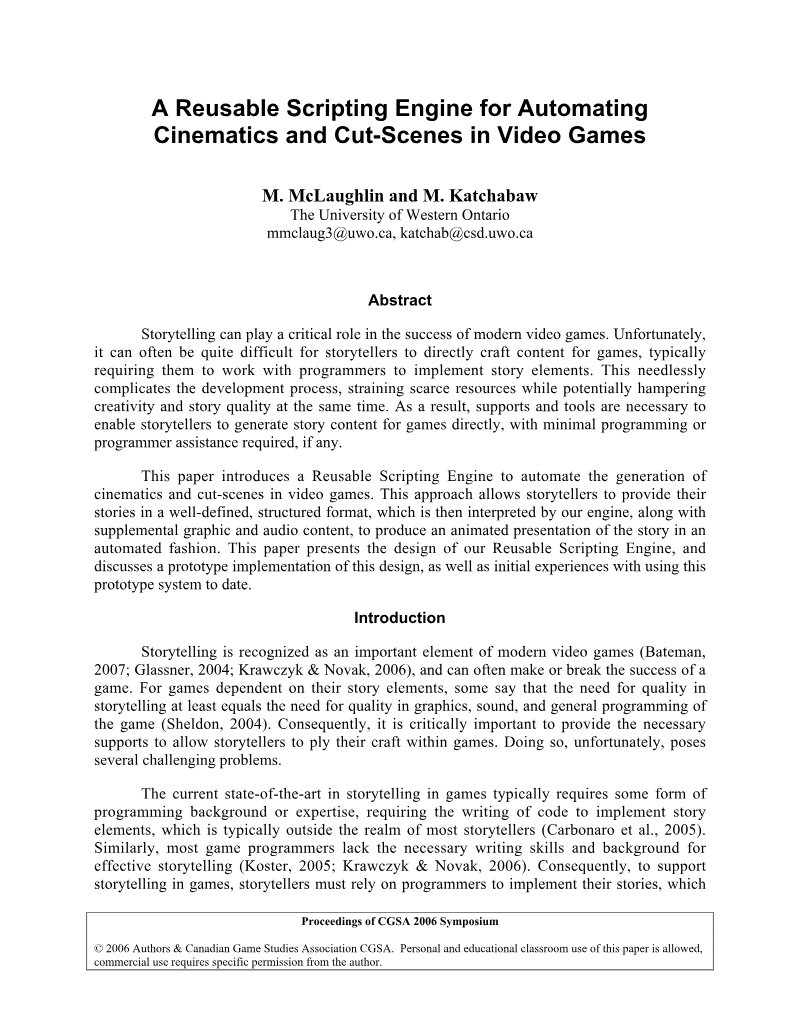
The Reusable Scripting Engine addresses the disconnect between professional storytellers and game developers by providing a tool that automates the generation of cinematics and cut-scenes.
- The engine decouples narrative creation from technical programming by using a standardized XML-based format, allowing storytellers to define dialogue and stage directions without writing game code.
- The architecture consists of three core modules: a Director for production flow, a Script Reader for XML parsing and validation, and a Stage Manager for executing visual and audio performance.
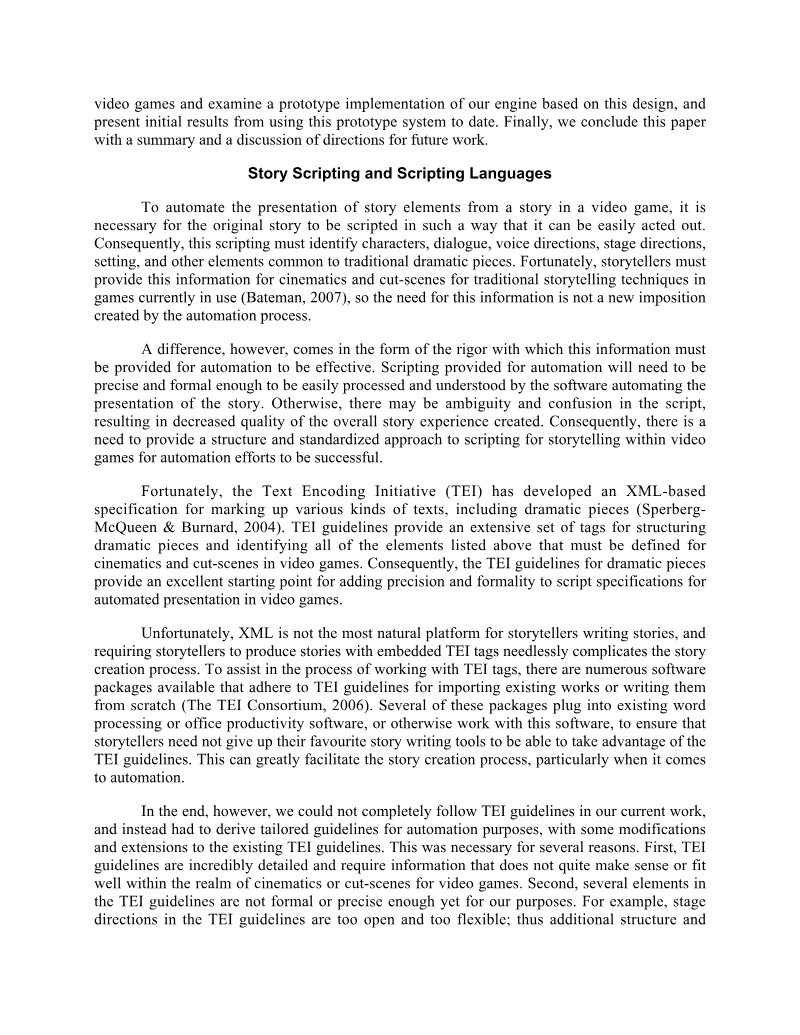
- The system utilizes a customized implementation of Text Encoding Initiative (TEI) guidelines, incorporating specific hooks for game-ready assets like 3D models and audio files.

Industry – Academia: How Can We Collaborate?
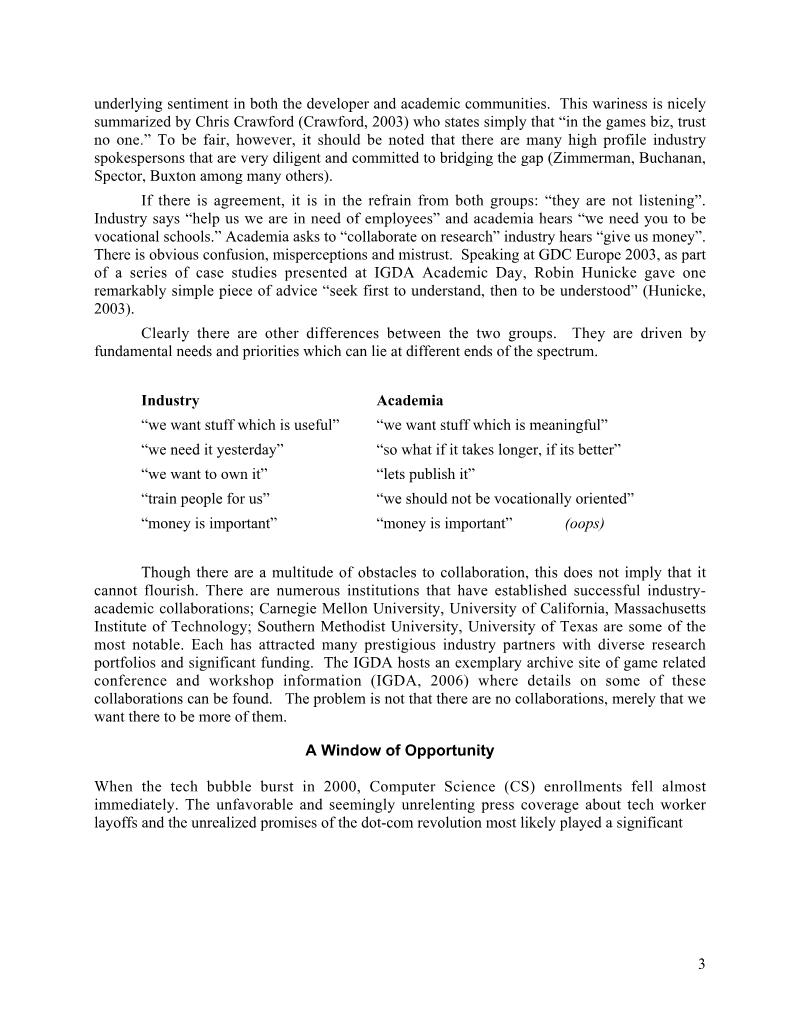
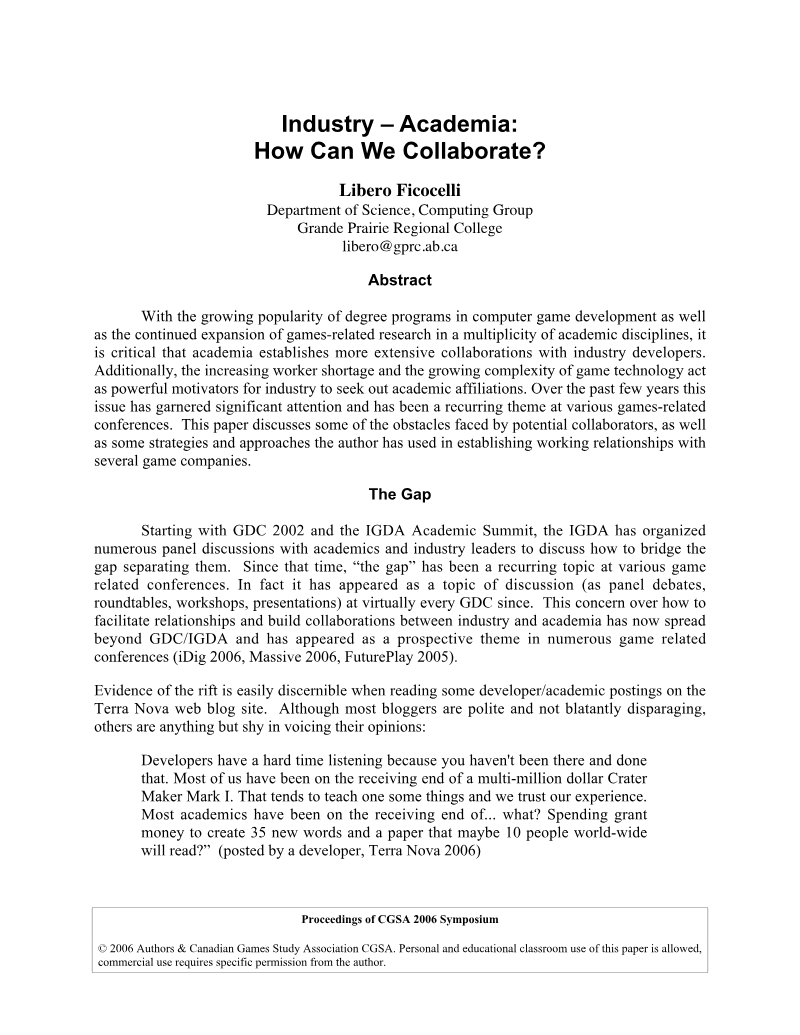
The relationship between the video game industry and academia is characterized by a significant divide, fueled by mutual misperceptions, conflicting priorities, and a lack of trust.
- The video game industry faces a critical labor shortage, while academic institutions are experiencing a decline in computer science enrollment, creating a strategic necessity for collaboration.
- Industry demand for specialized training is high, with 83% of respondents in a Texas-based technology survey explicitly calling for game-focused curricula.
- Major industry players including Ubisoft and Electronic Arts have already committed millions of dollars to university partnerships and educational initiatives to secure a talent pipeline.
The Effects of Network Loads and Latency in Multiplayer Online Games
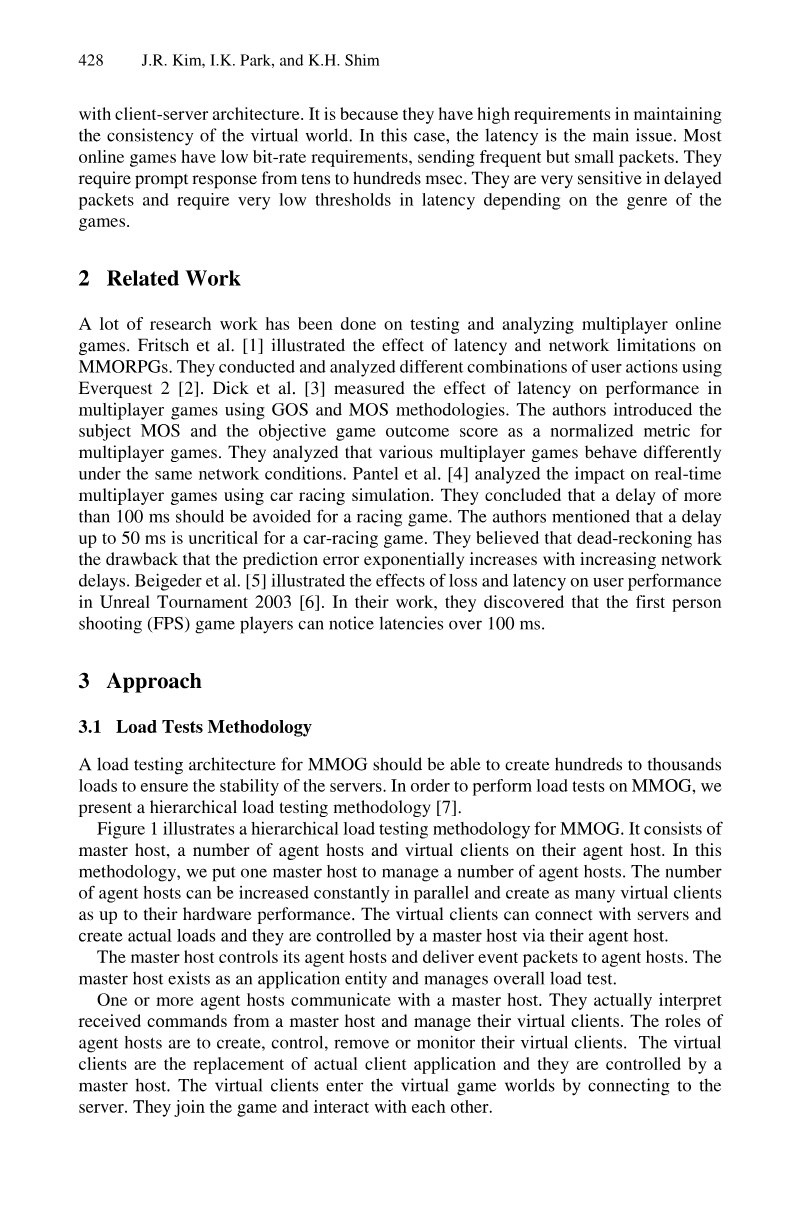
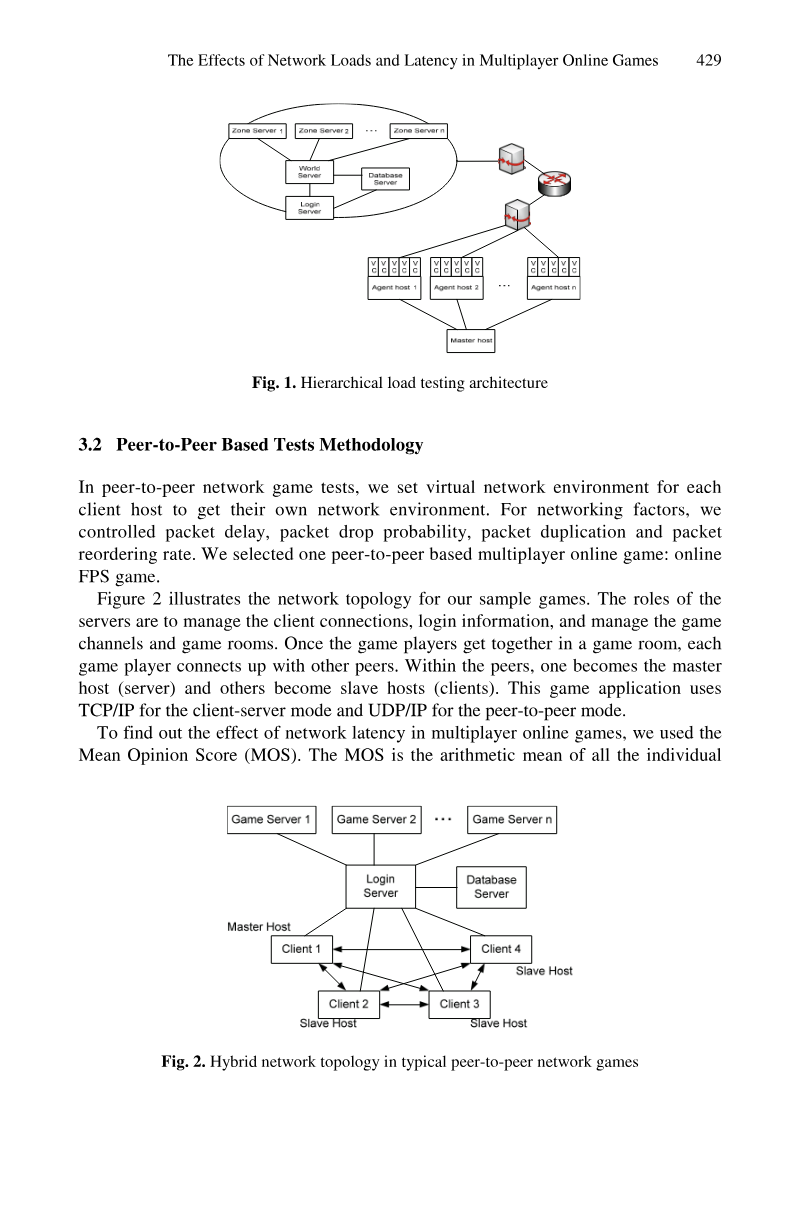
This analysis examines the impact of network loads and latency on multiplayer online games, specifically focusing on Massively Multiplayer Online Games (MMOGs) and peer-to-peer (P2P) architectures.
- In FPS games, network latency exceeding 100 ms and packet loss rates above 10% cause significant, noticeable degradation to the player experience.
- MMOG server round-trip delay increases linearly as the number of concurrent virtual clients scales from 500 to 3,000, creating substantial CPU and network resource strain.
- Packet duplication has no measurable impact on game content or user-perceived quality in multiplayer environments.

Ghost Hunter: A Handheld Augmented Reality Game System with Dynamic Environment
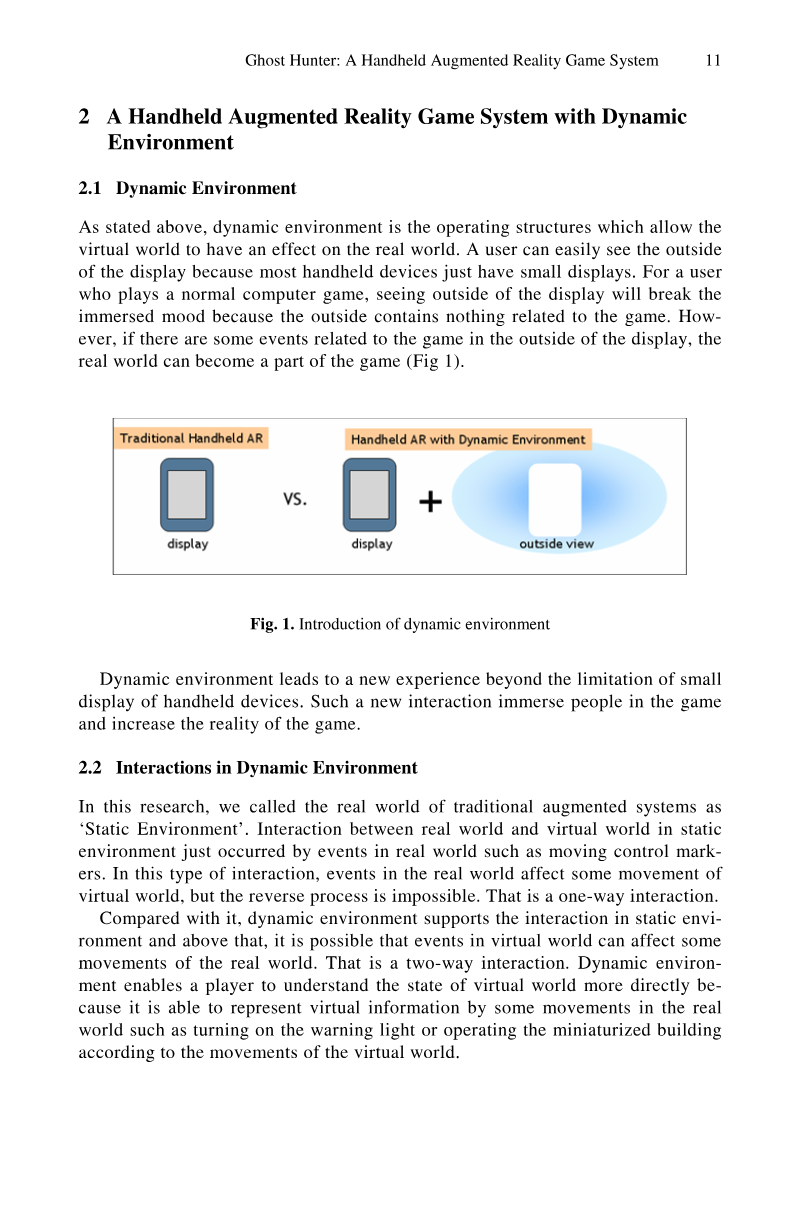
The primary objective of this research is to address the inherent lack of immersion in handheld augmented reality (AR) systems caused by the limitations of small display screens.
- The 'Ghost Hunter' system overcomes handheld AR display limitations by integrating a 160cm by 120cm physical game board that reacts to virtual events.
- Virtual-physical synchronization is achieved through motorized physical components, such as tombs with moving lids and warning lights, which provide tactile feedback when triggered by in-game ghosts.
- The system utilizes a map-editing feature that aligns physical structures with 3D CAD models to ensure precise collision detection and occlusion between the virtual and real environments.
Multi-track Scratch Player on a Multi-touch Sensing Device
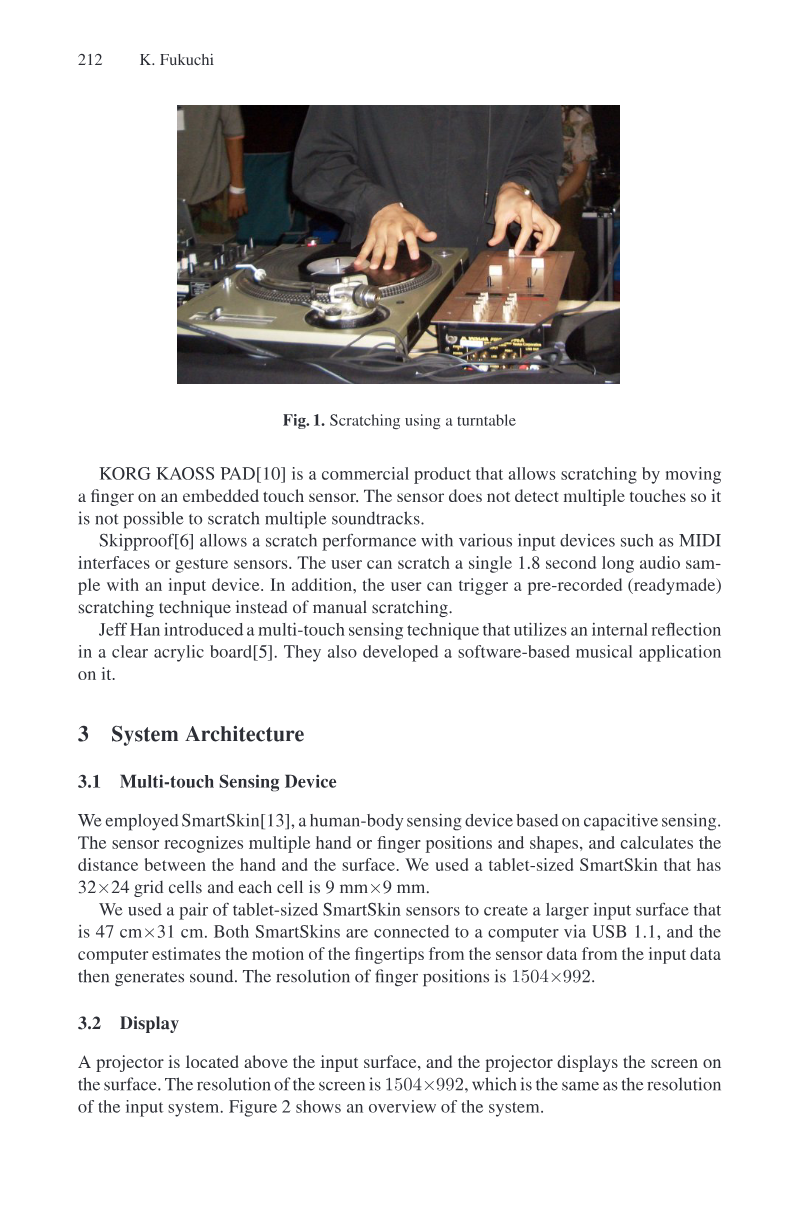
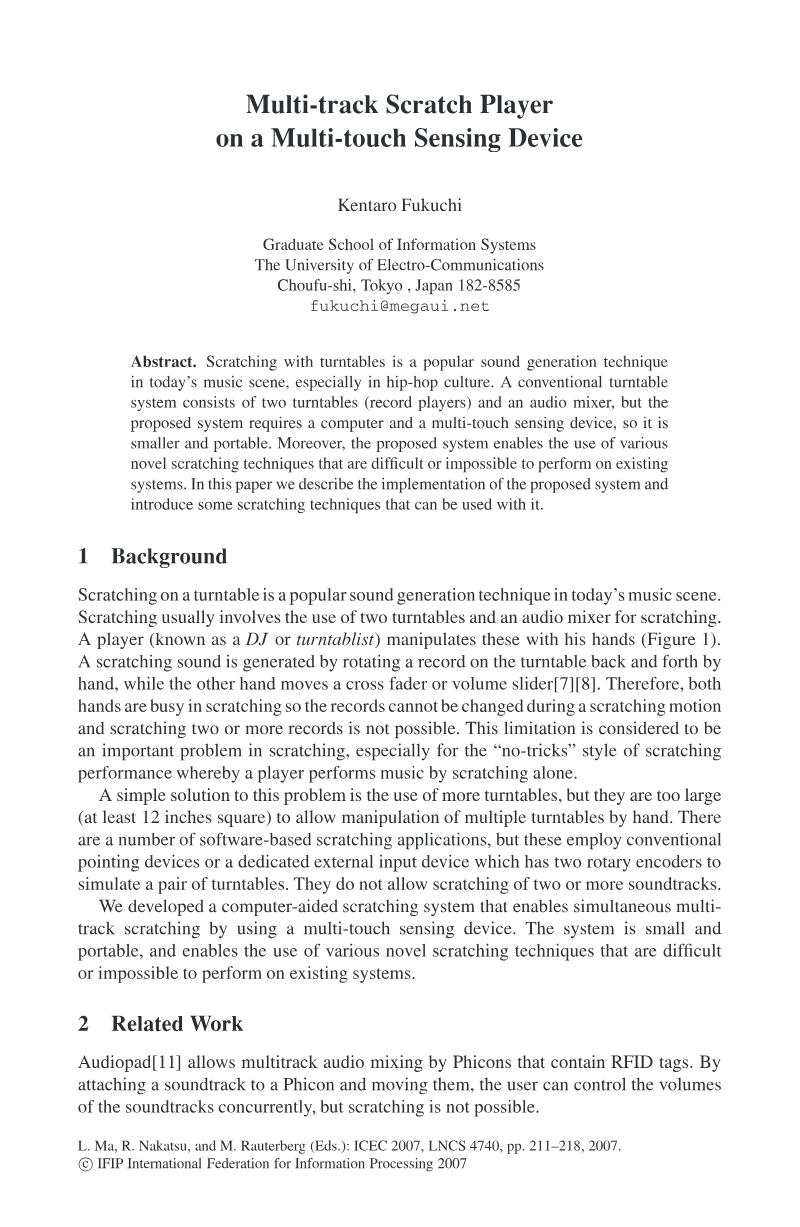
The proposed multi-track scratch player addresses the physical limitations of traditional turntable systems, which typically restrict DJs to two records and require both hands for manipulation.
- The 20 Hz scan rate of the SmartSkin sensors creates a 50-millisecond playback latency that currently renders the system unsuitable for professional musical performance.
- The system utilizes two tablet-sized capacitive sensors to provide a 47 cm by 31 cm input surface, enabling the simultaneous manipulation of up to five audio tracks.
- A cost-minimization algorithm tracks multiple fingertips across the interface to map physical motion directly to playback speed and direction, simulating vinyl record interaction.
Visiting the Floating World: Tracing a Cultural History of Games Through Japan and America
This paper establishes a framework for understanding the complex cultural and industrial relationships between Japanese and American games, critiquing the application of Orientalism in game studies.
- Consalvo argues Japanese cultural influence on the West has a longer history than recent media scholarship acknowledges, and that digital games' transnational flows and Japanese corporate power cannot be understood through simple East-West binaries.
- The paper draws parallels between art history and games, showing how Japanese art, porcelain, and fans became popular in Europe and America through mass production, dealer and collector influence, World Fairs such as the 1876 Centennial Exposition, and borrowing by Western painters like the Impressionists and John La Farge.
- Nintendo's cautious localization strategy after the 1983 crash is presented as having shaped what Western audiences came to see as acceptable games.

Real-Time Sweetspot: The Multiple Meanings of Game Company Playtests
This study examines the multifaceted role of playtesting within a Swedish game development company, focusing on a real-time strategy (RTS) game in development between March 2006 and February 2007.
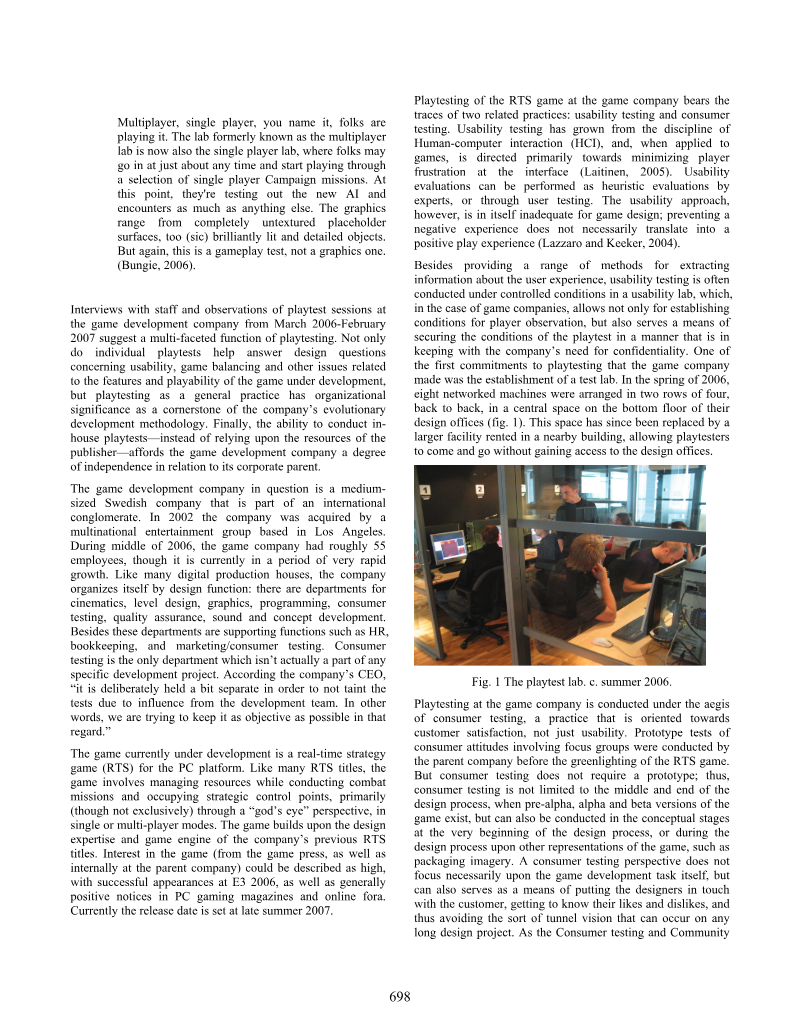
- The paper examines a single 'Sweetspot' balancing playtest conducted in March 2006 for a real-time strategy game at a medium-sized Swedish studio owned by an international entertainment conglomerate, based on interviews and observations from March 2006 to February 2007.
- Playtesting serves more than design iteration: inside the company it creates clarity in an evolutionary, biweekly build-based process, and outside it communicates project status to the publisher and parent company.
- In the Sweetspot test, eight playtesters rated four builds varying unit hit points and reinforcement tempo, and the lead designer implemented changes overnight, with the next build confirming the balancing decision.
Virtual Worlds and Fraud: Approaching Cybersecurity in Massively Multiplayer Online Games
The document examines the growing phenomenon of financial fraud within and originating from Massively Multiplayer Online Games (MMOGs), termed "virtual fraud."
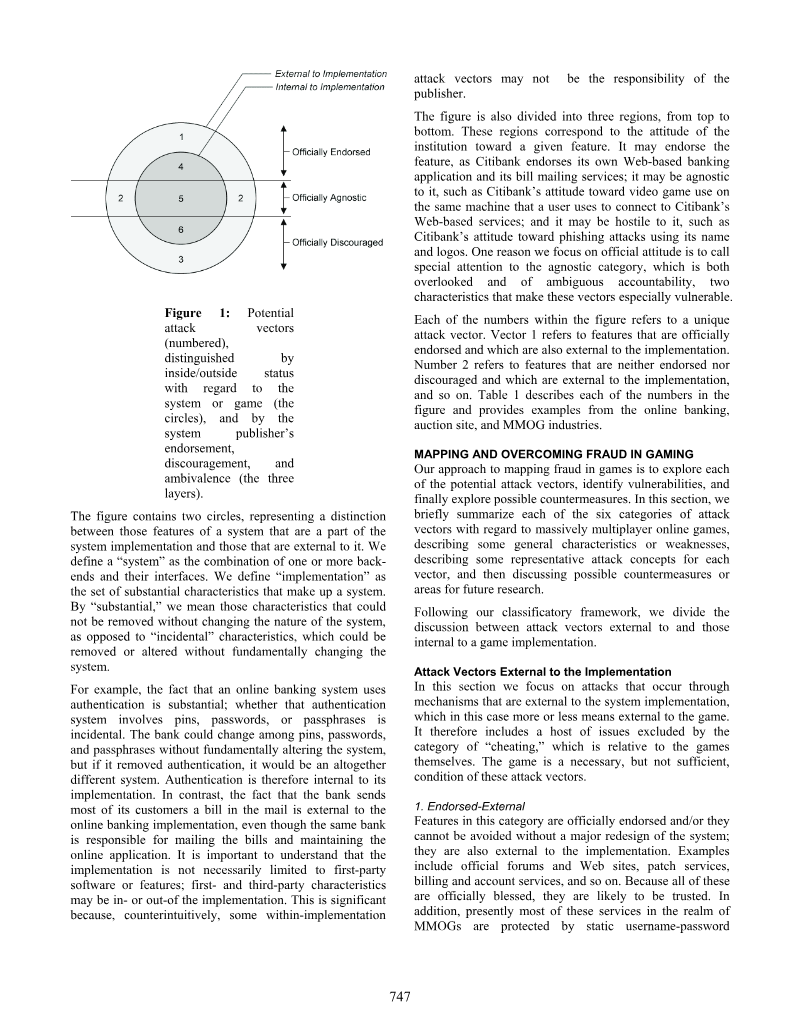
- Fraud in massively multiplayer online games is emerging as a security threat because the monetization of virtual possessions and growing product placement are pulling conventional online fraud (phishing, click-fraud, impression fraud) into game environments.
- Game scripts and modifications can serve as vehicles for malware and spam, making game content itself a potential attack channel.
- The authors argue that MMOGs are a distinct security domain, since their rule complexity and social features set them apart from earlier cheating research, which focused narrowly on cheating (taxonomies, bot detection, lag exploitation, player ranking).
The State of the Art: Western Modes of Videogame Production
The "State of the Art: Western Modes of Videogame Production" analyzes the evolution of Western videogame production, contrasting early industrial models with contemporary trends towards decentralized, participatory development.
- The study traces the producer-consumer boundary in Western videogame production from Atari's founding in 1972 through the UK home-computer boom of the early 1980s, arguing that the line between making and playing games has grown increasingly porous.
- Atari's loosely managed, Fordist-influenced production gave way to home consoles that moved play into private space, while Spectrum-era bedroom coding and cassette copying fostered a more integrated relationship between creators and players.
- Interviews with eleven industry professionals conducted in 2006 indicate that development is increasingly governed by market research, licensing arrangements, and consumer demand rather than purely creative or technical possibility, with long working hours and globally distributed teams common.
Because Players Pay: The Business Model Influence on MMOG Design
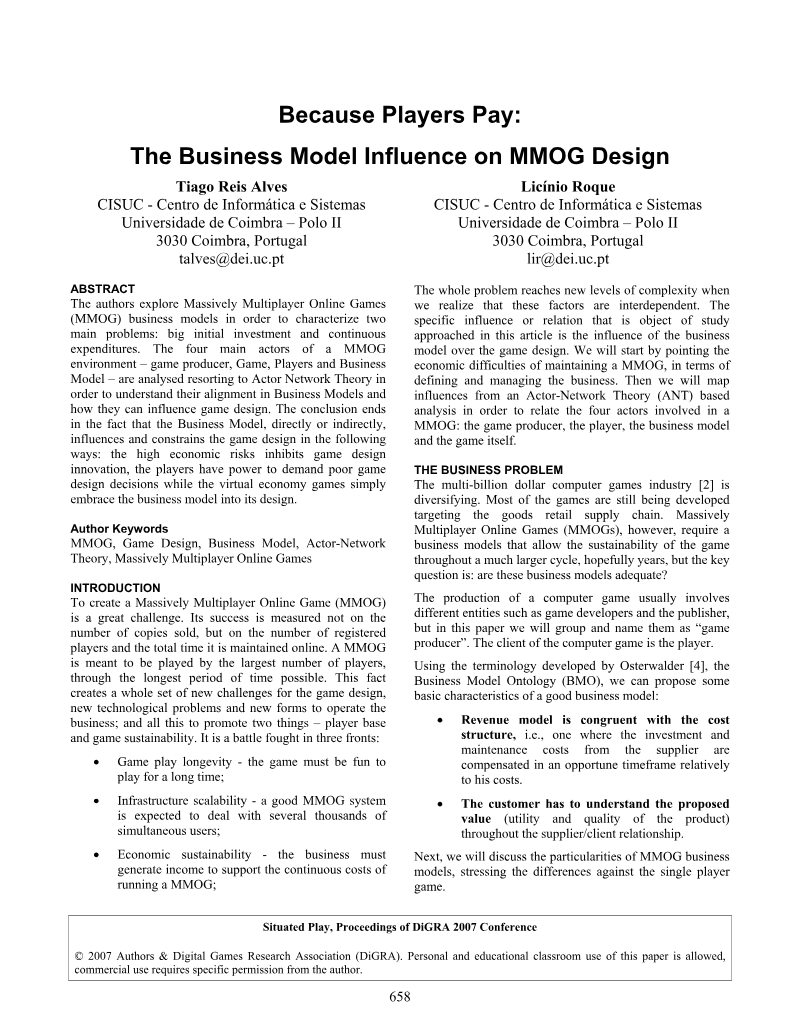
This document analyzes the profound influence of business models on the design of Massively Multiplayer Online Games (MMOGs).
- In MMOGs, the business model is not a secondary concern because large upfront investment and continuous operating costs (server infrastructure, game masters, community support) make economic structure a fundamental design constraint.
- Financial risk pushes MMOG producers toward cloning proven successful titles, which limits innovation in the genre.
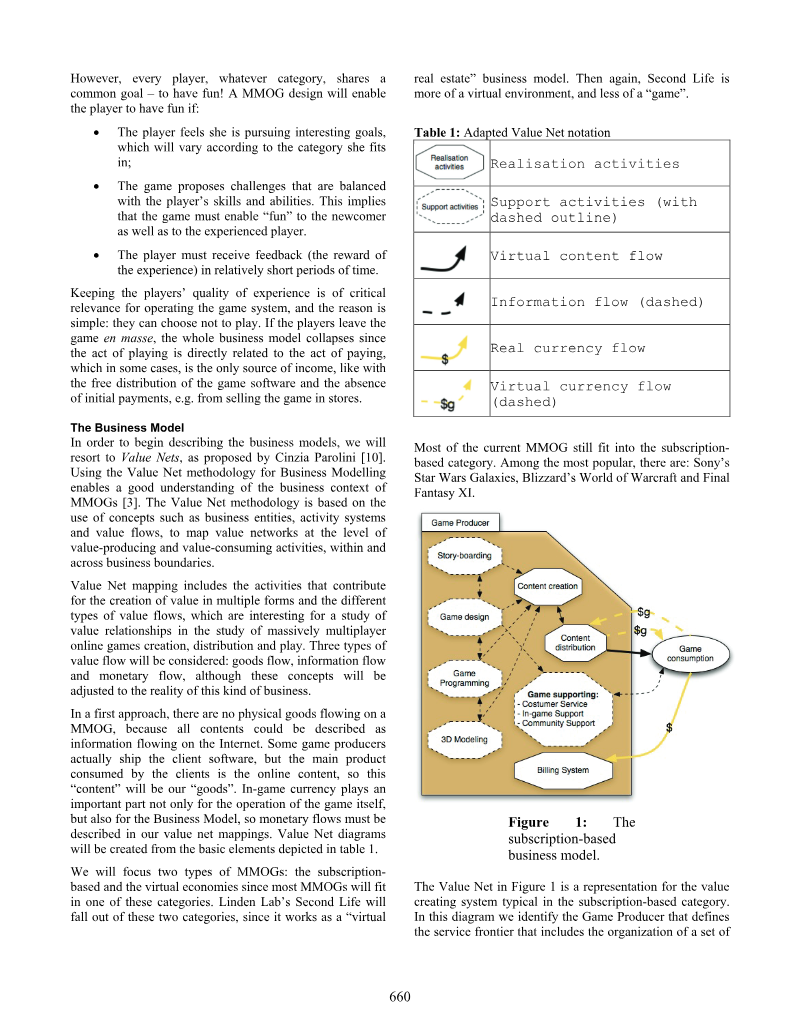
- Subscription-based MMOGs such as World of Warcraft and Star Wars Galaxies typically charge US$10 to US$15 per month, and their revenue depends on sustained player engagement, giving players considerable leverage over producers.
The Quest in a Generated World
The document, "The Quest in a Generated World," explores the integration of procedurally generated quests into procedurally generated 3D game worlds to enhance player engagement and provide context.
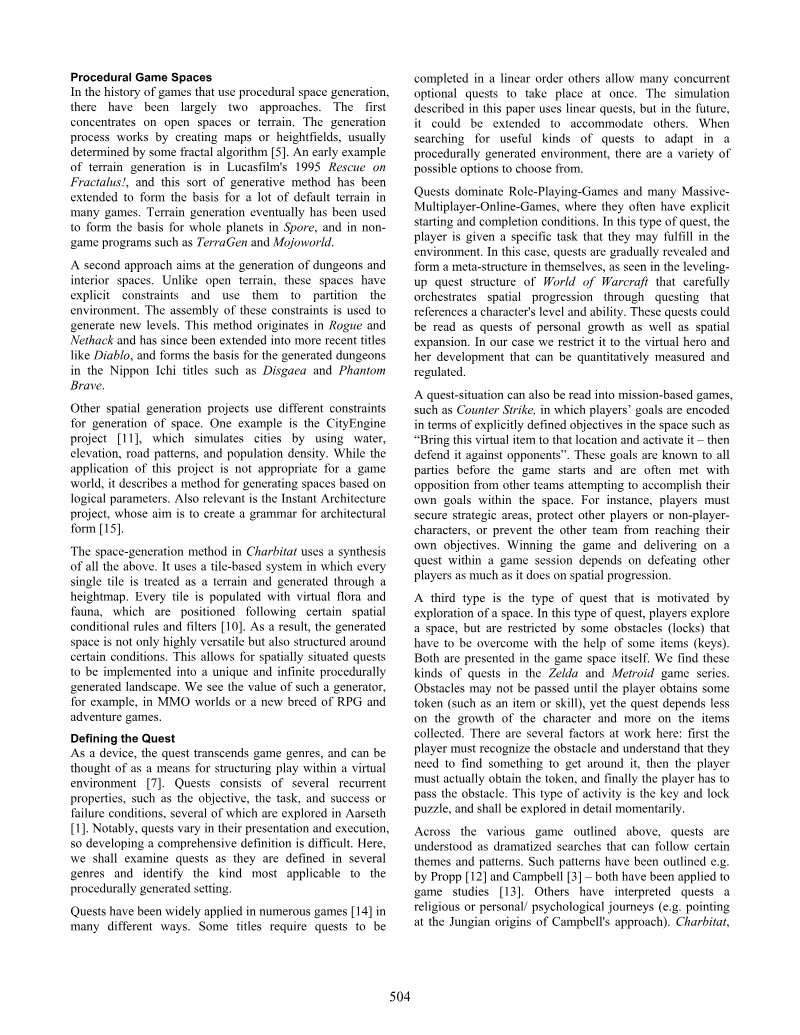
- Procedural world generation requires quest structures—defined by setting, space, challenge, and goal—to provide meaningful context and player direction.
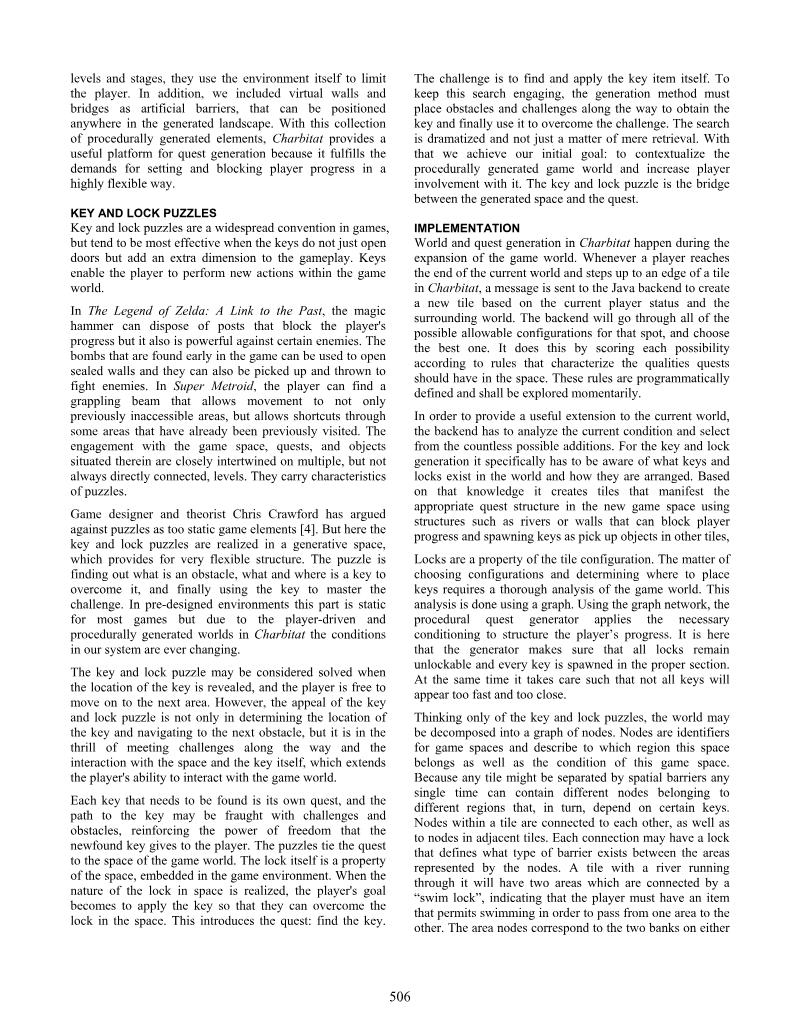
- The Charbitat prototype, built on the Unreal Tournament 2004 engine, utilizes a graph-based analysis to integrate key-and-lock puzzles into infinite, procedurally generated 3D environments.
- World generation relies on an incremental construction method that scores candidate tile configurations using approximately twelve distinct design evaluators.
Recognizing New Literacies: Teachers and Students Negotiating the Creation of Video Games in School
This research investigates the educational value and potential of video game creation in a high school setting, focusing on how teachers and students negotiate new literacies.
- Video game creation is framed as a sophisticated learning and literacy practice that schools should recognize as valuable rather than dismiss as distraction, drawing on new literacies theory that treats digital and multimodal texts as part of literacy.
- The study is an exploratory, first-year qualitative ethnography at one large high school in Western Canada, with two technology teachers using Kid's Programming Language (Grades 11-12) and Game Maker (Grades 9-10), so its findings are not generalizable.
- Data came from several weeks of classroom observation, interviews with nine students and two teachers, and stimulated-recall sessions in which students explained their reasoning while watching recordings of their own work, analyzed in NVivo.
Writers
Games and companies
Games