Loading the document
Key insights
5 slides
New possibilities
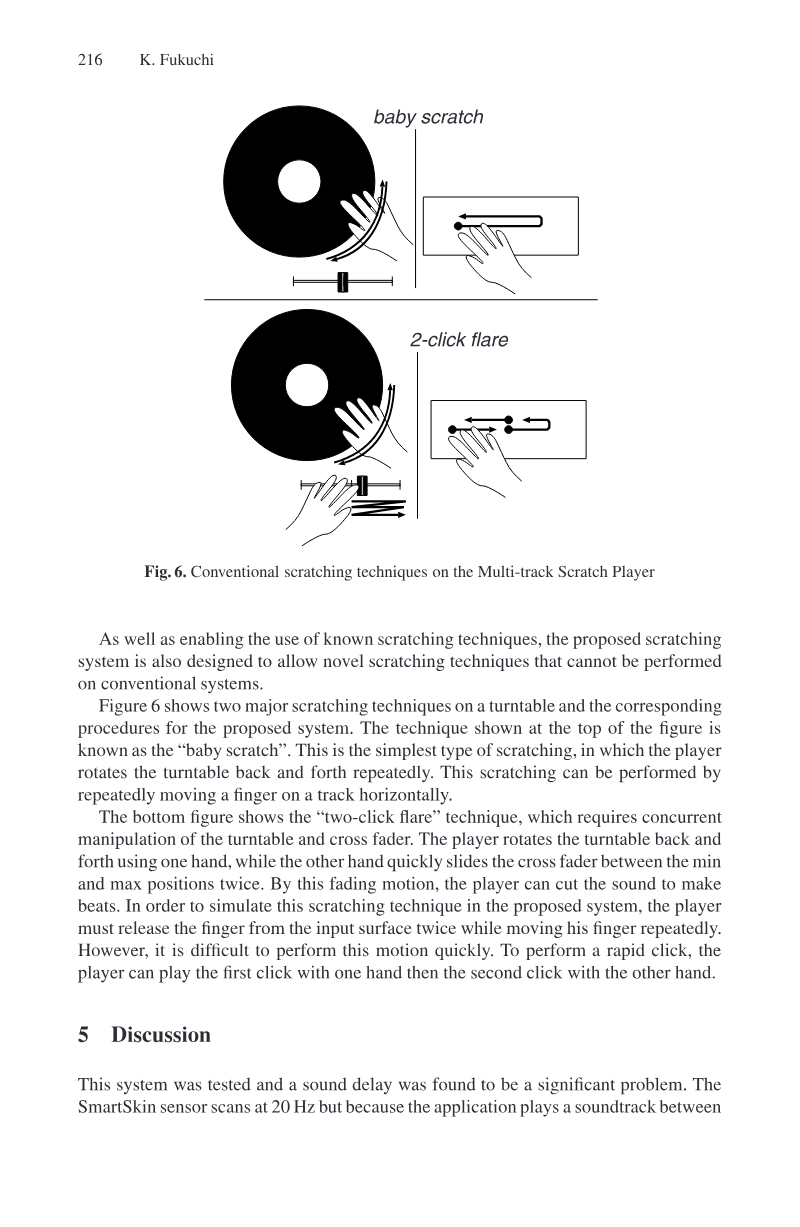
A multi-touch interface enables novel scratching techniques not possible on traditional setups.
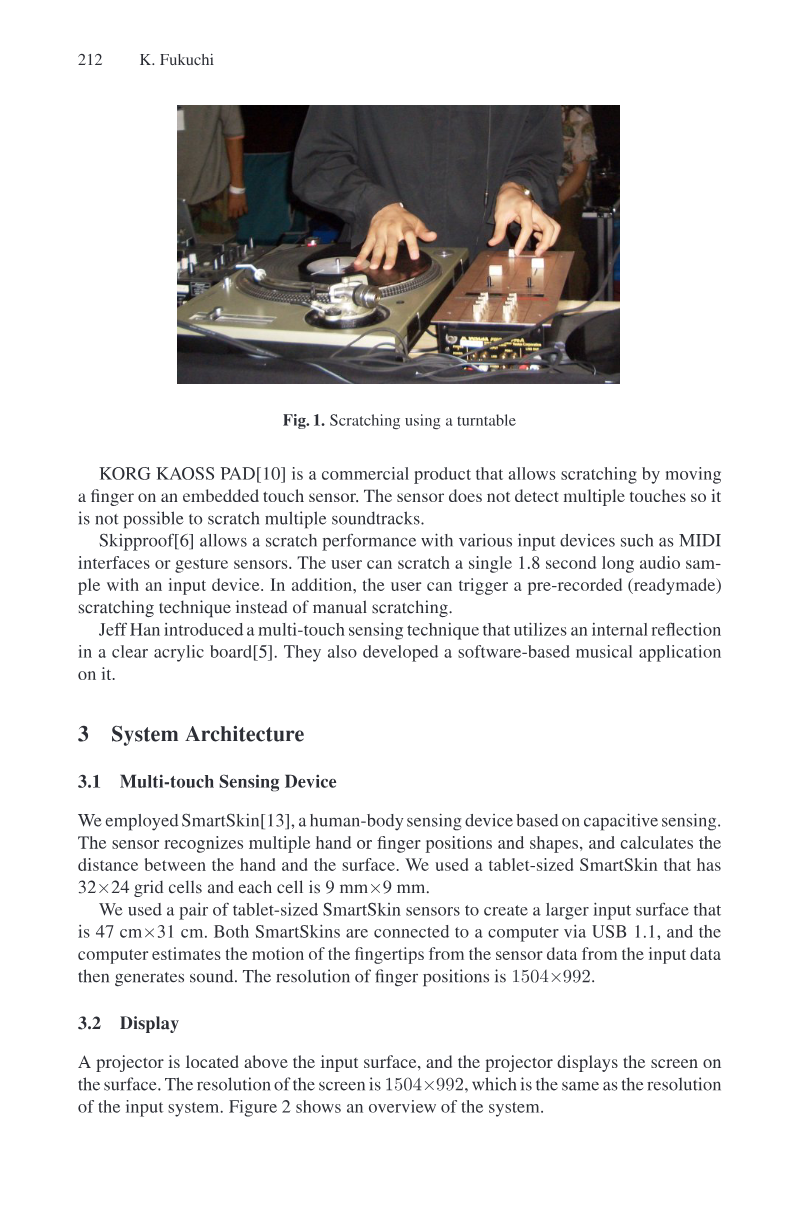
The system allows for simultaneous, multi-track scratching, which is physically impossible on conventional two-record turntable systems. It offers a more compact alternative to traditional DJ setups.
1 / 5
- 01The 20 Hz scan rate of the SmartSkin sensors creates a 50-millisecond playback latency that currently renders the system unsuitable for professional musical performance.See it on page 6
- 02The system utilizes two tablet-sized capacitive sensors to provide a 47 cm by 31 cm input surface, enabling the simultaneous manipulation of up to five audio tracks.See it on page 2
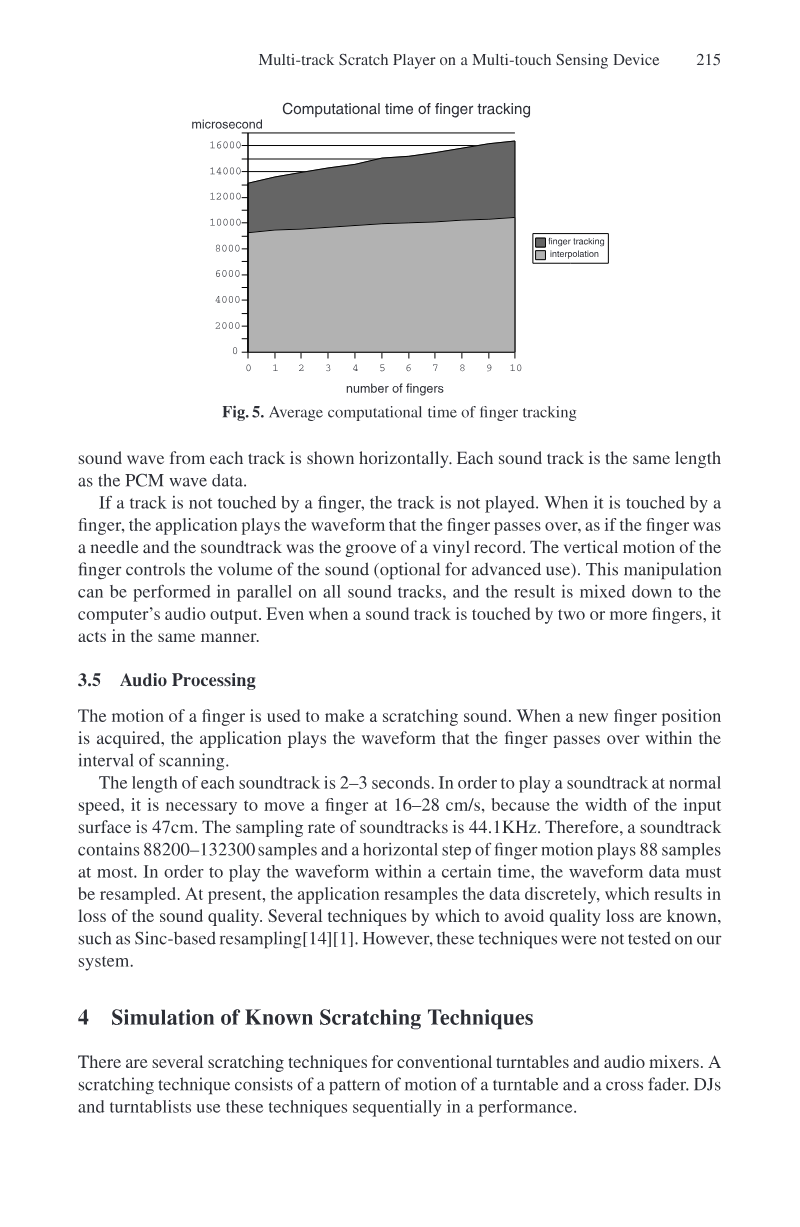
- 03A cost-minimization algorithm tracks multiple fingertips across the interface to map physical motion directly to playback speed and direction, simulating vinyl record interaction.See it on page 5
- 04The multi-touch interface allows for novel scratching techniques that are physically impossible on traditional two-record turntable setups.See it on page 1
- 05Future iterations require higher-frequency input hardware and the integration of dedicated fader widgets to replicate the tactile control of professional DJ equipment.See it on page 7
Ask AI about this report
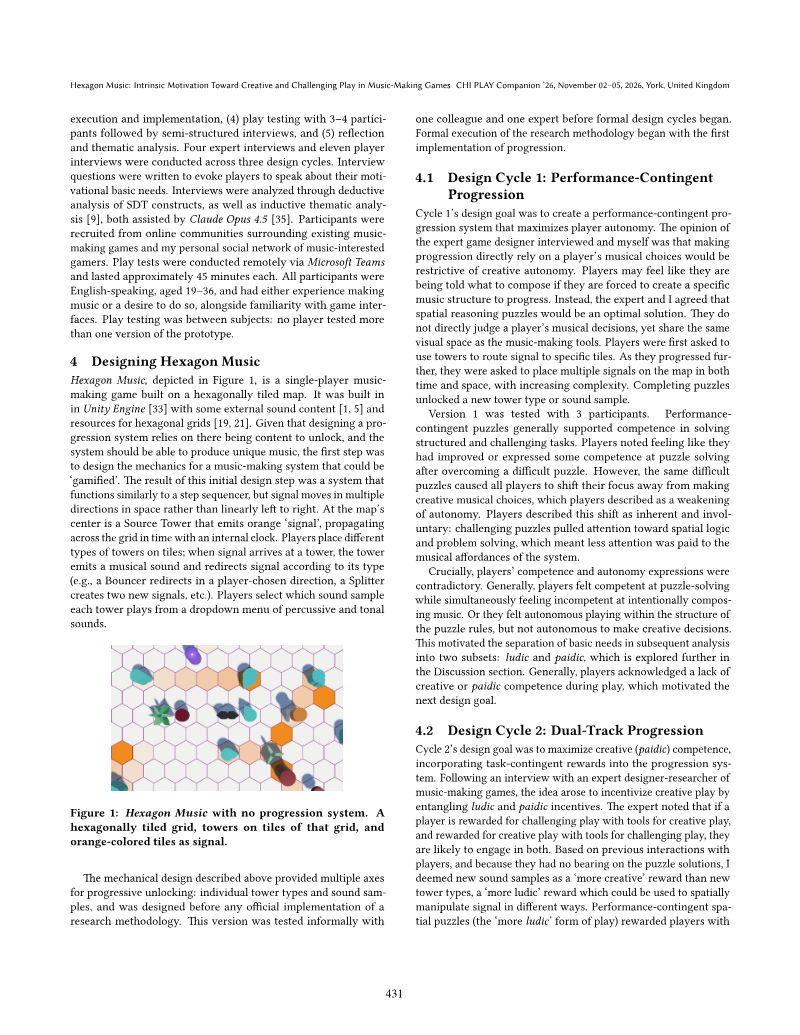
Summary
The proposed multi-track scratch player addresses the physical limitations of traditional turntable systems, which typically restrict DJs to two records and require both hands for manipulation. By utilizing a multi-touch sensing device, the system enables simultaneous, multi-track scratching in a portable, computer-aided format. The primary thesis is that a multi-touch interface allows for novel scratching techniques that are physically impossible on conventional hardware, while also providing a more compact alternative to traditional DJ setups.
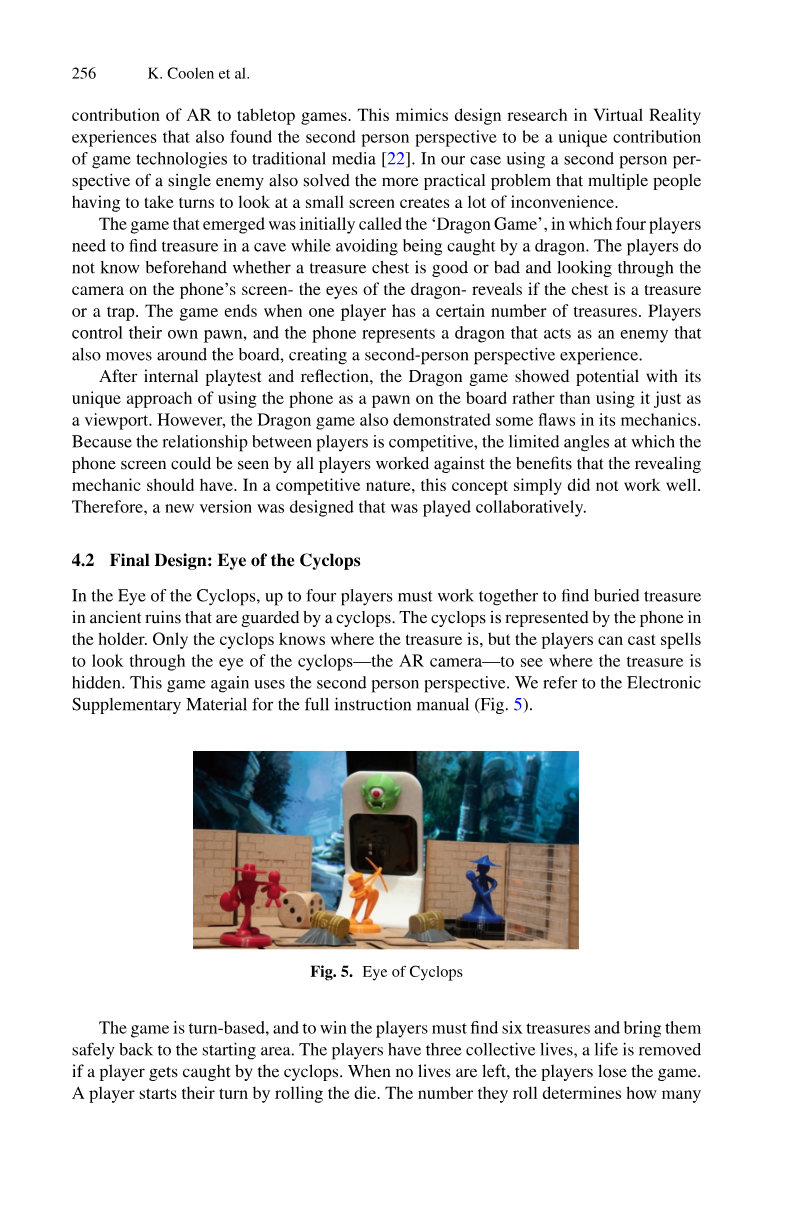
The system architecture integrates two tablet-sized SmartSkin capacitive sensors to create a 47 cm by 31 cm input surface, paired with an overhead projector for visual feedback. The software employs a cost-minimization algorithm to track multiple fingertips across the surface, allowing users to manipulate up to five soundtracks concurrently. Each track is represented as a waveform, and the system maps finger motion directly to playback speed and direction, simulating the tactile experience of a vinyl record.
Technical evaluation reveals a significant performance bottleneck: the 20 Hz scan rate of the SmartSkin sensor introduces a 50-millisecond playback latency, which is currently considered unacceptable for professional musical performance. Additionally, the system lacks the nuanced physical control of traditional turntables, such as platter drag or dedicated cross-fader hardware. While the system successfully demonstrates the feasibility of multi-track scratching and has been well-received by DJs, future iterations require higher-frequency input devices to reduce latency and the integration of dedicated fader widgets to better replicate professional scratching techniques. The research concludes that while the multi-touch approach is a viable innovation for digital music performance, hardware improvements are essential for practical, real-time application.