1 free read left. Create a free account for unlimited reading + AI research.
Create free accountWhitepaper DiGRA
1 free read left. Create a free account for unlimited reading + AI research.
Create free accountWhitepaperDiGRA
Consalvo argues that Japanese cultural influence on the West has a longer history than recent media scholarship typically acknowledges.
Mia Consalvo's paper proposes a framework for understanding the relationships among Japanese and American games, visual styles, and cultural influence, drawing on a broader cultural history of Japan and America and critically examining the application of Orientalism to digital games. The central argument is that Japanese cultural influence on the West has a longer history than recent media scholarship typically acknowledges, and that the digital games industry, with its transnational flows and Japanese corporate power, cannot be understood through simple East-West binaries. The paper traces the nineteenth-century Japonisme movement, the Japanese art collecting and exhibition practices that shaped American taste, and the "cultural odor" concept by which Japanese goods were designed to efface their origins for export.
The paper's historical analysis centers on parallels between art history and games. It documents how Japanese art, porcelain, and fans gained popularity in Europe and America through mass production, dealer and collector influence, World Fairs such as the 1876 Centennial Exposition, and borrowing by Western painters such as the Impressionists and John La Farge. Consalvo argues that Nintendo's cautious localization strategy after the 1983 crash similarly shaped what Western audiences saw as acceptable games, and that contemporary Japanese and American developers now exchange styles and techniques in a hybrid process.
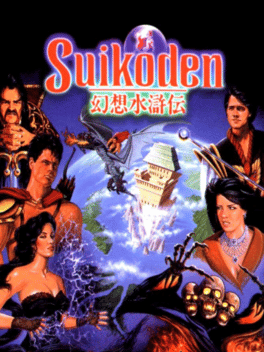
On Orientalism, the paper engages critiques by Douglas, Schwartz, and Tucker, who find imperialist or othering elements in games such as Civilization III, Suikoden III, and the Prince of Persia series. Consalvo contends these analyses apply the concept too broadly, conflating difference with othering and treating all depictions of Japan or Asia as Orientalist. She notes that the Japan-America relationship lacks the colonizer-colonized dynamic central to Said's account, and she proposes hybridity as a possible alternative theoretical entry point, though she concludes that Orientalism remains useful if carefully delineated. The paper is explicitly preliminary and focused on Japan and America, acknowledging that Europe and other Asian regions also deserve analysis.
DiGRA · 2016
Game Dev Unchained · 2025