Game Development reports and market data
Documents
fAARS: A Platform for Location-Aware Trans-reality Games
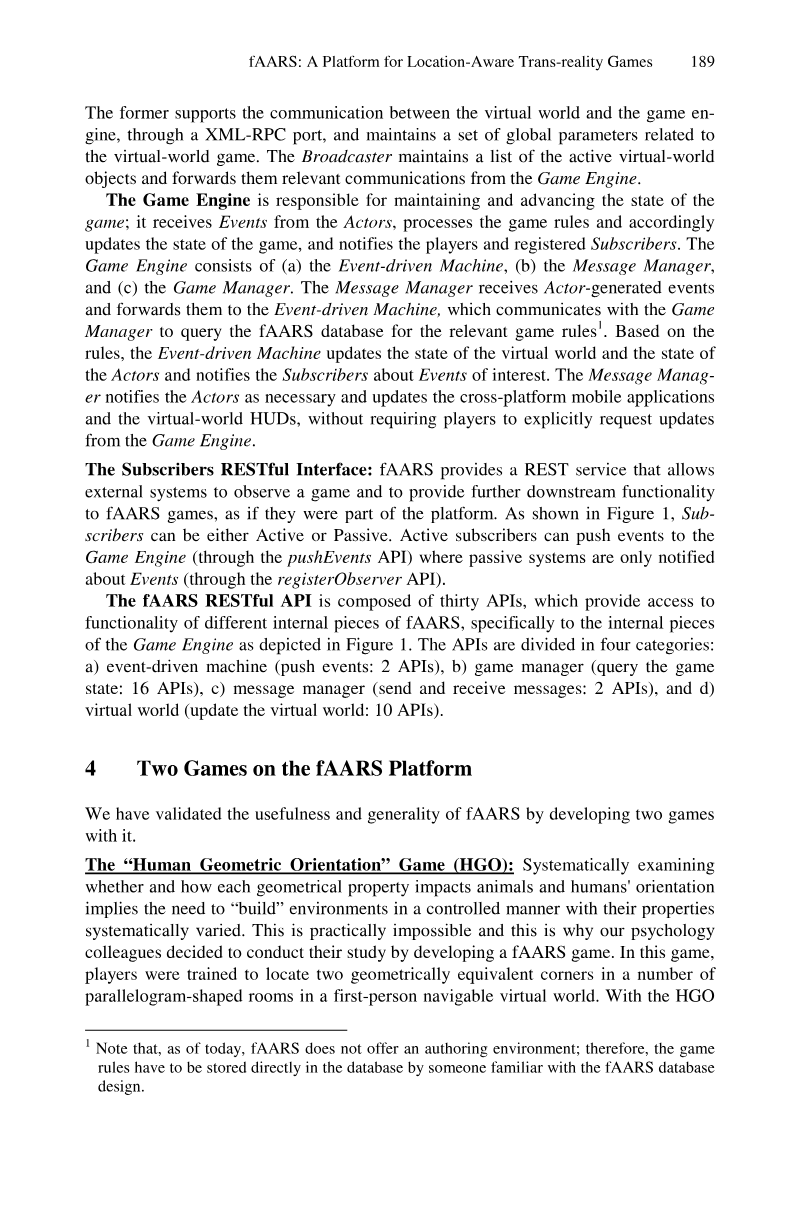
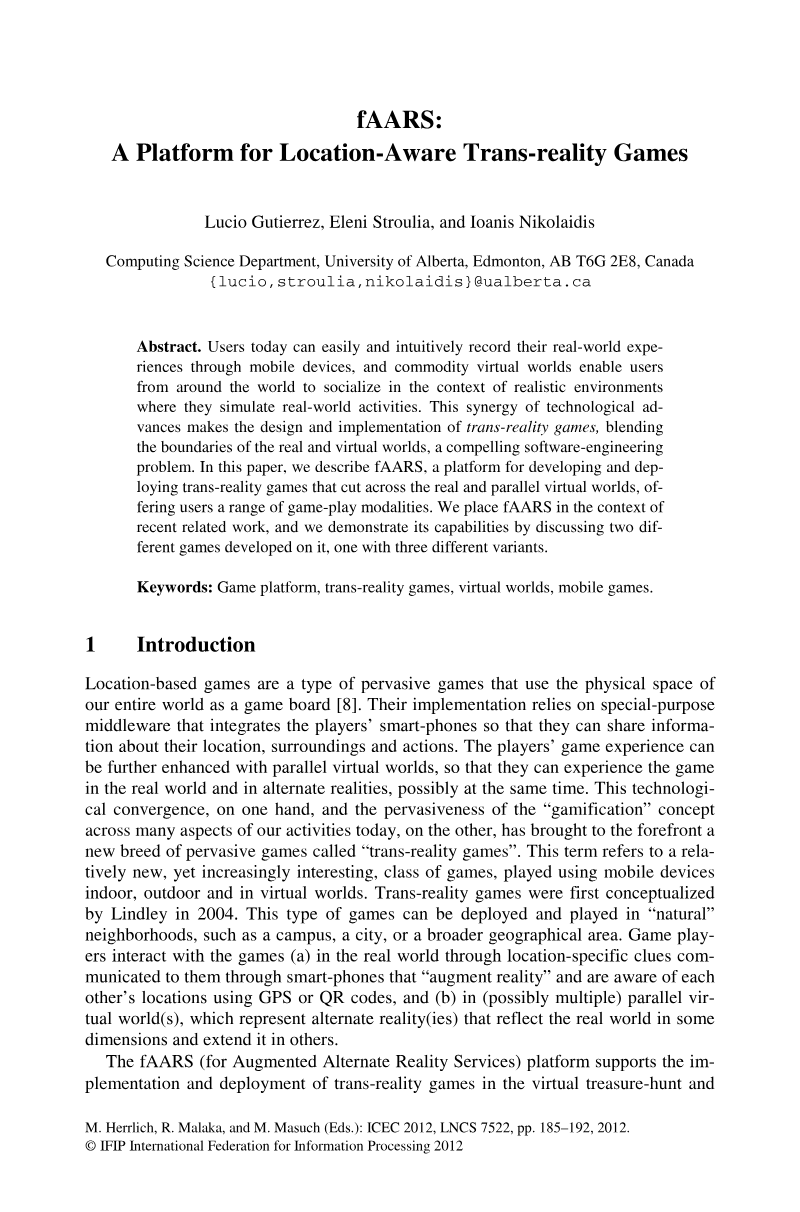
The fAARS (for Augmented Alternate Reality Services) platform is a software architecture designed to facilitate the development and deployment of trans-reality games, which blend physical-world interactions with parallel virtual environments.
- The fAARS platform provides an event-driven, service-oriented architecture designed to synchronize real-world physical activity with virtual-world simulations using OpenSim.
- The system supports three distinct gameplay modalities: Dormant (real-world only), Dreaming (virtual-world-only), and Astral-projection (a hybrid of both).
- Spatial mapping is achieved through two methods: parallel worlds that mirror real-world geography and points-of-interest mapping that synchronizes only specific locations.
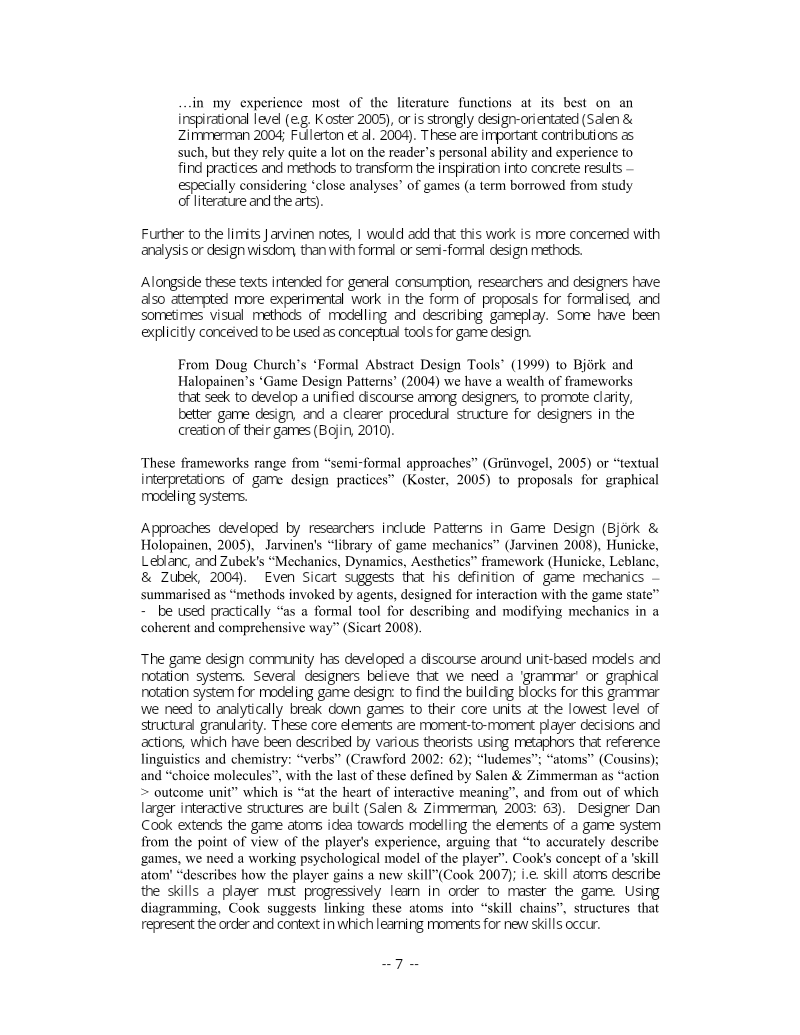
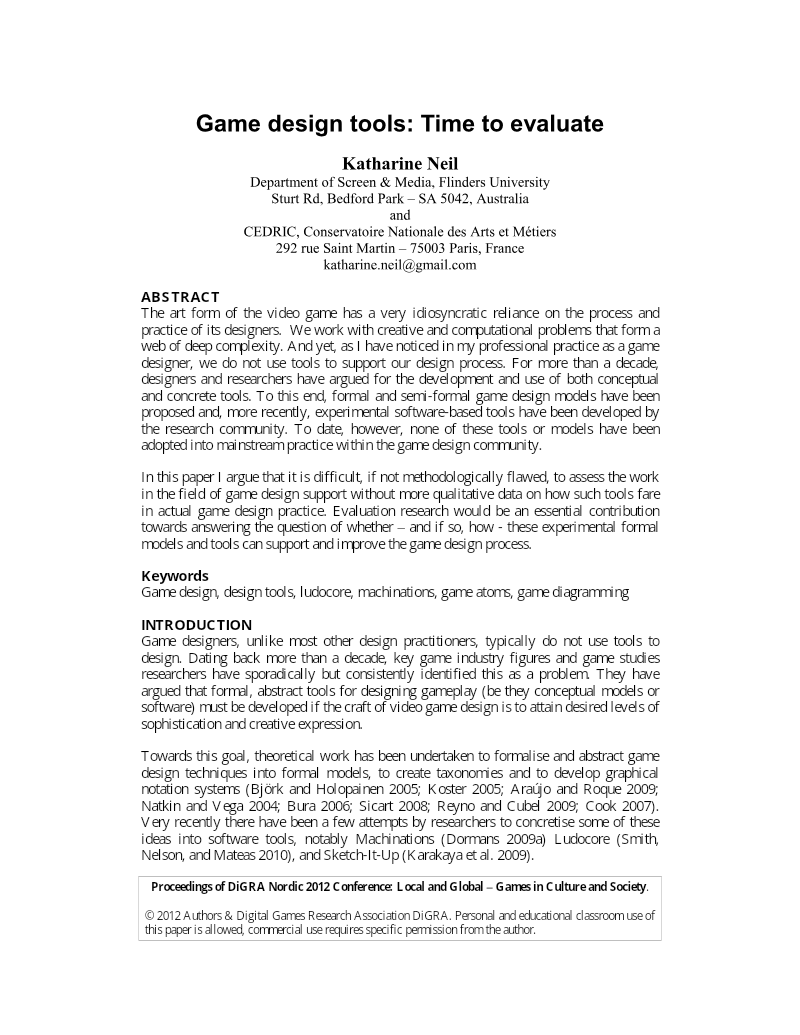
Game Design Tools: Time to Evaluate
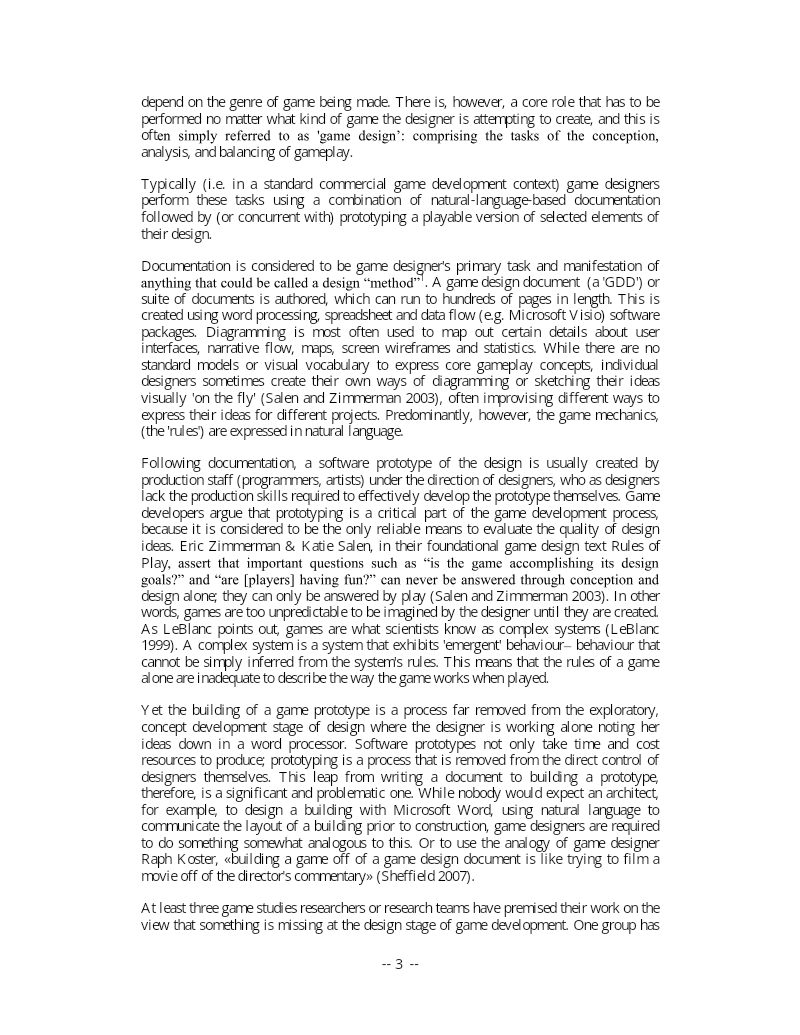
The game design industry currently operates without specialized tools tailored to the unique complexities of conceptualizing and balancing interactive systems.
- Game designers have historically relied on natural-language design documents and physical or simplified prototypes, both of which struggle to capture the systemic, emergent behavior of games.
- The central claim is that numerous formal frameworks and software tools for game design have been developed (including Machinations, Ludocore, and Sketch-It-Up), yet none have been meaningfully evaluated in practical settings.
- The field has lacked a common formal vocabulary and standardized notation for game mechanics, and critics have long pointed to reliance on anecdote and intuition as a barrier to rigor.


The Government's Response to Next Gen: Transforming the UK into the World's Leading Talent Hub for the Video Games and Visual Effects Industries
This document presents the UK Government's response to the February 2011 "Next Gen" report, an independent review of skills for the video games and visual effects (VFX) sectors conducted by Ian Livingstone and Alex Hope.
- PwC forecasts the global video games market to increase from 56bn in 2010 to 82bn in 2015.
- The number of STEM Ambassadors from the video games and VFX sectors increased to 70 following the publication of the Next Gen report.
- The ITMB degree program, which combines technical and business skills, is supported by over 60 employers and serves more than 850 students.

Game Developer Index: Sweden 2011
The "Game Developer Index: Sweden 2011" provides a comprehensive overview of the Swedish game development industry, asserting that 2011 marked its most successful year to date.
- The Swedish game industry reached a turnover of 257 million EUR in 2011, reflecting a nearly 30 percent compound annual growth rate over the previous five years.
- The workforce grew by 26 percent to 1,512 employees across 257 active companies, anchored by major players like DICE and Mojang.
- Market concentration remains high, with the five largest firms generating 60 percent of the industry's total turnover.



Högskolepoäng som XP: Synlig och osynlig kunskap inom spelutveckling hos akademi och industri
The document "Högskolepoäng som XP: Synlig och osynlig kunskap inom spelutveckling hos akademi och industri" analyzes the persistent gap between Swedish game development education and industry demands.
- The Swedish game industry suffers from a persistent misalignment between formal academic curricula and the practical, project-based skill sets required by professional studios.
- Industry stakeholders prioritize portfolio quality and the proven ability to ship products over formal degree structures, leading to the perception that academic training is secondary to workplace experience.
- A proposed solution involves conceptualizing academic credits as 'XP' to validate both formal education and informal, on-the-job knowledge through gamified, flexible assessment platforms.

The Games Sector in Ireland: An Action Plan for Growth
"The Games Sector in Ireland: An Action Plan for Growth" presents a strategic roadmap for Ireland to become a "Global Games Hub for the 21st Century," targeting 4,500 core games company jobs by 2014.
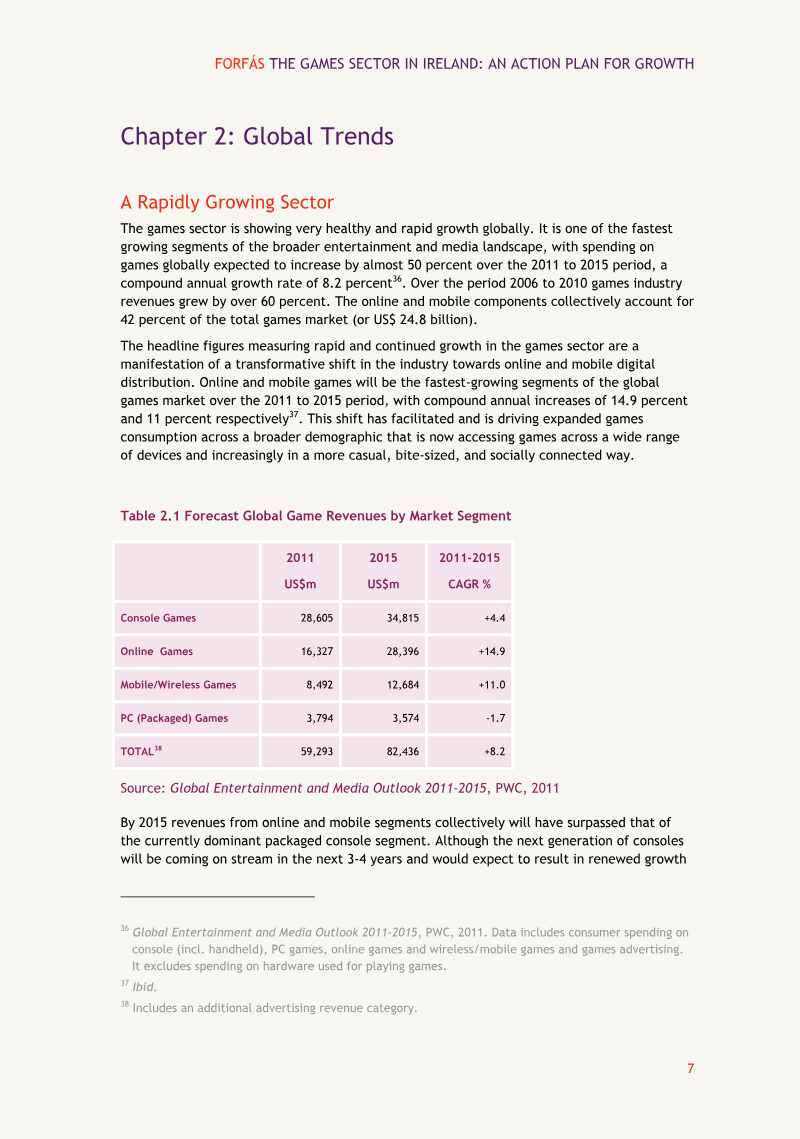
- Global games revenues are forecast to grow from US$59.3bn in 2011 to US$82.4bn by 2015, with online (14.9% CAGR) and mobile (11.0% CAGR) segments overtaking packaged console games.
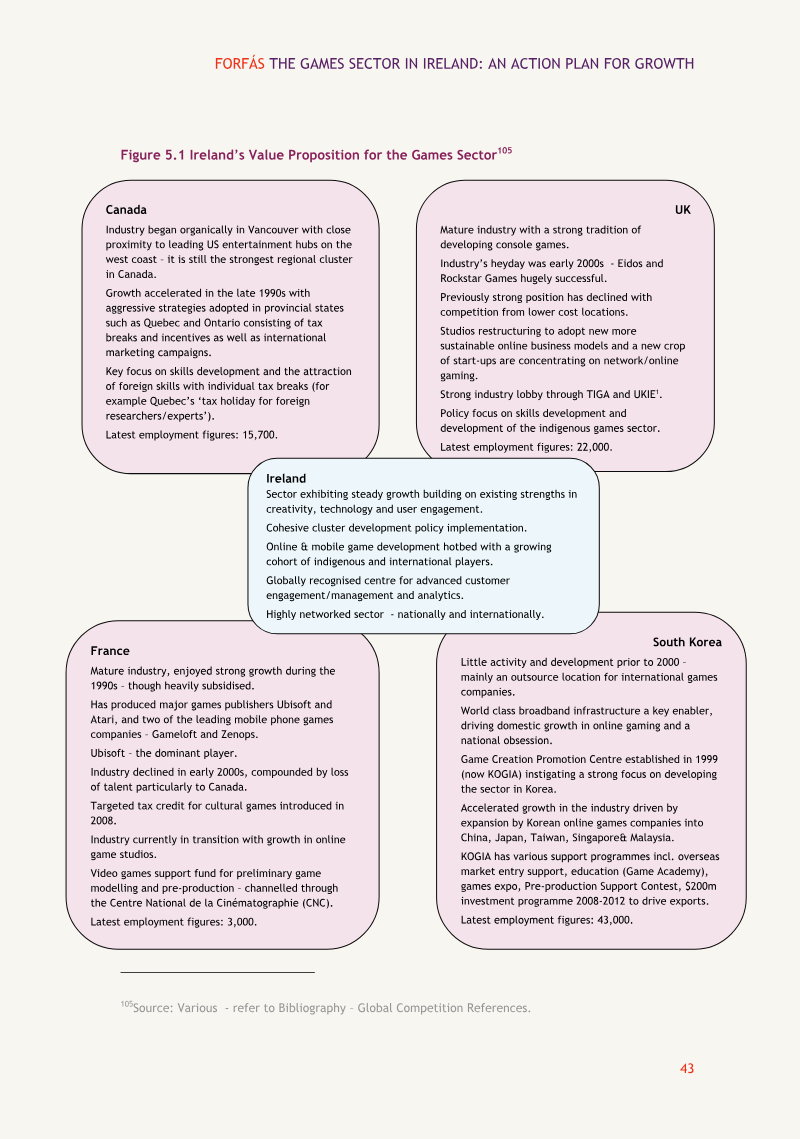
- Ireland's core games employment has grown fivefold since 2004 to just over 2,000 people in 2011, with a target of 4,500 by 2014.
- Foreign-owned firms account for roughly 90% of Ireland's games jobs, concentrated in customer support, localisation, and game servicing, while indigenous firms are mostly micro-firms focused on development.



Game Audio Curriculum Guideline
The Game Audio Curriculum Guideline, developed in 2011 by the Interactive Audio Special Interest Group (IASIG), addresses a critical need for formalized education in game audio.
- The game audio industry suffers from a persistent talent gap caused by the difficulty of bridging traditional linear media production with complex, non-linear technical implementation.
- A standardized 120-credit, four-year undergraduate curriculum framework has been proposed to provide a consistent roadmap for higher education institutions in the United States.
- The curriculum prioritizes a constructivist pedagogical approach that emphasizes core principles and adaptability over software-specific training to ensure graduates can navigate evolving technologies.
Toward a Framework for Prototyping Physical Interfaces in Multiplayer Gaming: TwinSpace Experiences
The TwinSpace framework serves as a platform for the rapid prototyping of physical interfaces in mixed-reality, multiplayer gaming.
- The TwinSpace framework enables rapid prototyping of mixed-reality multiplayer games by decoupling physical inputs from virtual game entities, allowing designers to iterate on mechanics without rebuilding core systems.
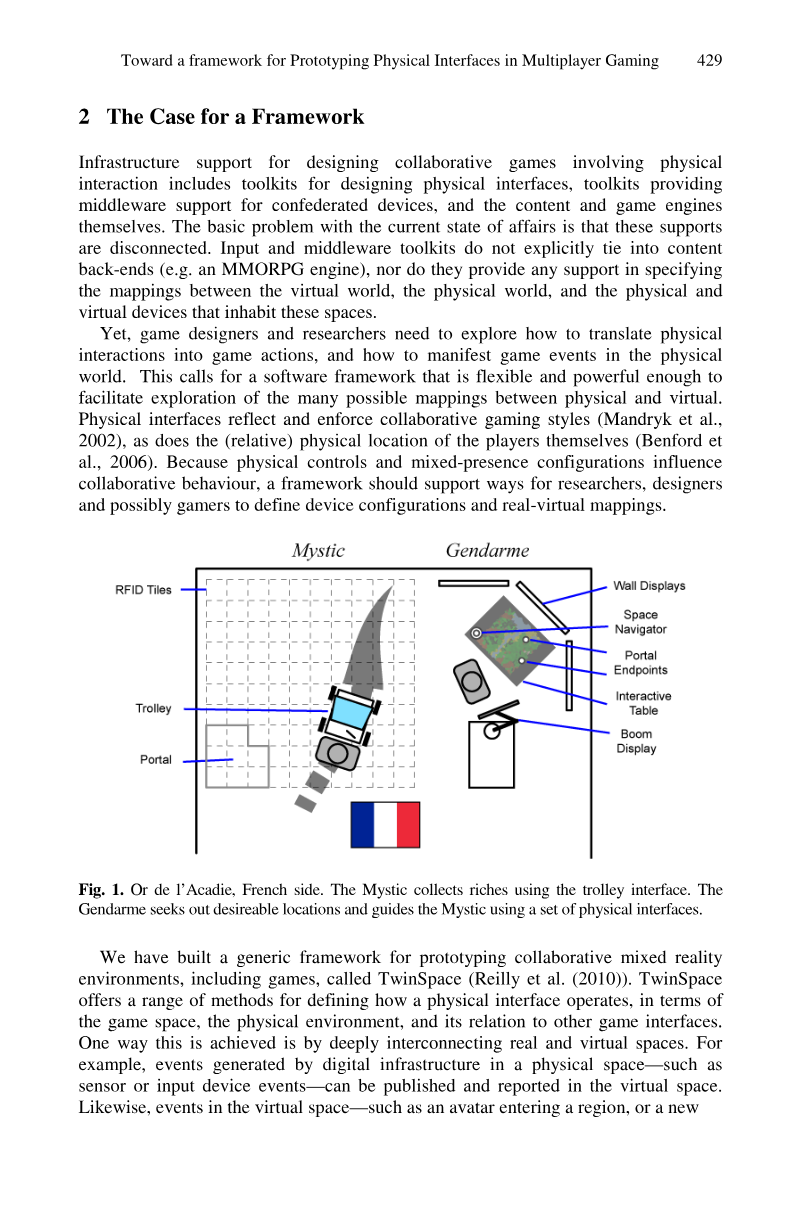
- The framework successfully integrates heterogeneous hardware, such as RFID tiles and wall displays, to facilitate asymmetric gameplay roles as demonstrated in the prototype 'Or de l'Acadie'.
- Scalability is currently limited by message latency and synchronization issues that worsen as the number of connected sensors increases.
Motion-Based Games for Parkinson’s Disease Patients
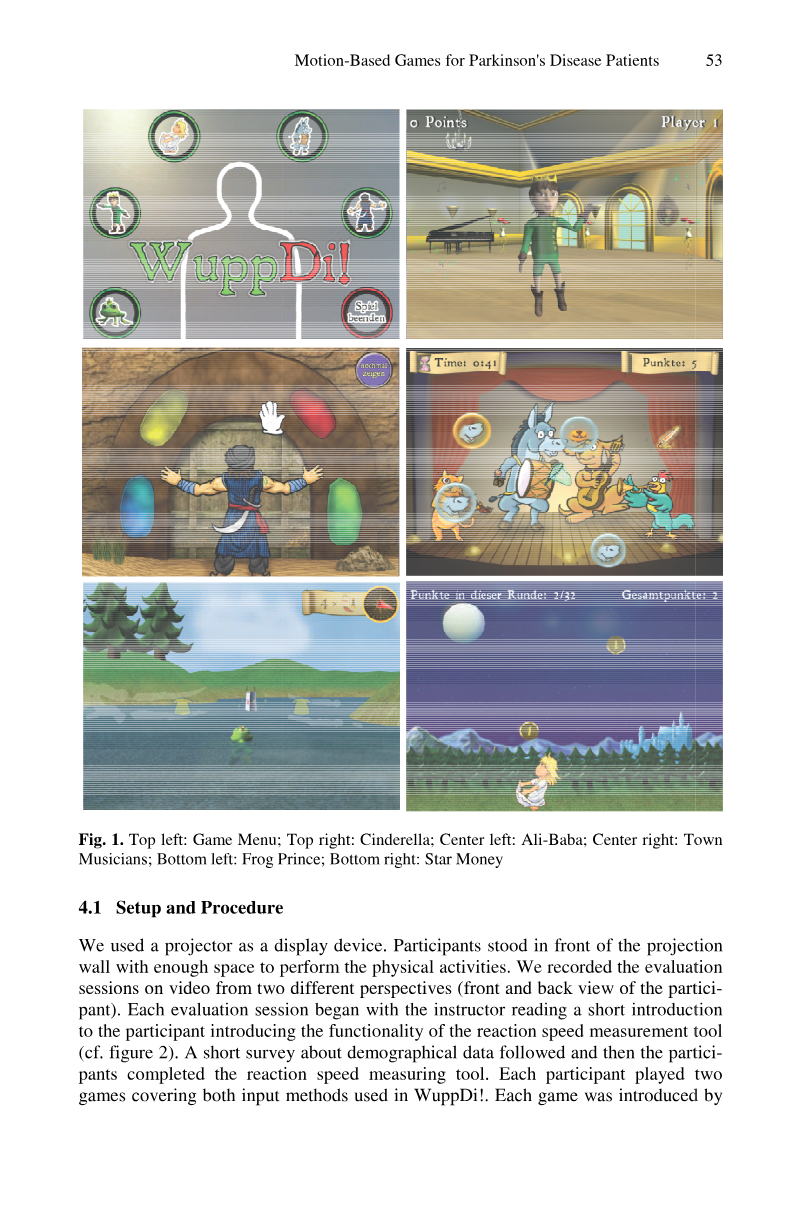
This paper, by a team from the Digital Media group at the University of Bremen with input from the Bremen regional group of the German Parkinson Association, presents WuppDi!, a collection of five motion-based games for patients with Parkinson's disease intended to support home and group exercise routines.
- Five of thirteen participants said that succeeding in the game was the main reason they had fun, and the authors tie this to their design principle of positive feedback with no loss of progress.
- Star Money was the game participants liked most in the open interview, while three of thirteen criticised the lack of a clear goal in the game.
- The system scored 63 of 100 on the System Usability Scale, and the authors describe the overall usability as rated positive.
Cheshire: A Design Framework for Alternate Reality Games
The design of Alternate Reality Games (ARGs) is frequently hindered by extreme complexity, often leading to extended development timelines or project failure.
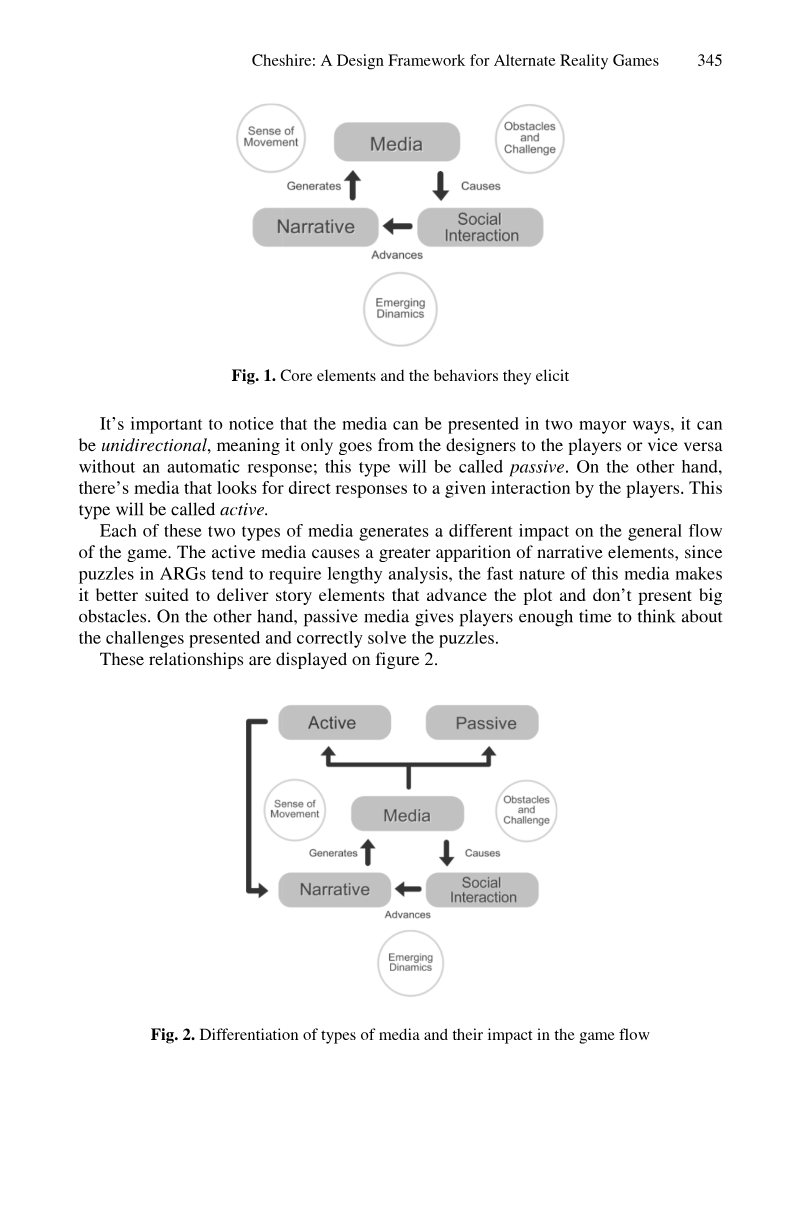
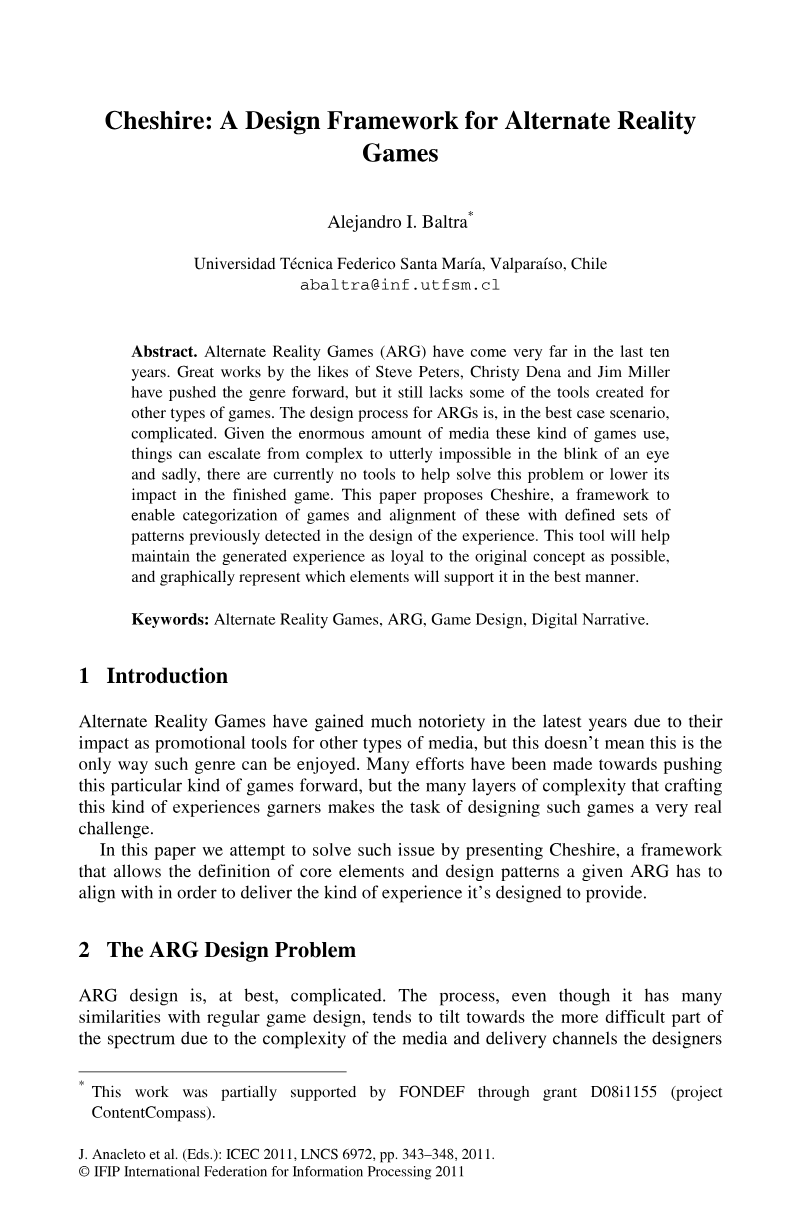
- The Cheshire framework reduces ARG development complexity by categorizing game elements into narremes, media-driven obstacles, and social dynamics to maintain creative fidelity.
- Designers can use a three-axis Cartesian model to map and balance social interaction patterns, specifically collaboration, group activities, and competition.
- Comparative testing showed that teams using the Cheshire framework achieved higher player engagement and a more complex, character-driven experience than those using traditional project management tools.
Fundamentals of Stereoscopic 3D Game Design
This analysis explores the integration of stereoscopic 3D (S3D) technology into game design, moving beyond simple visual overlays to propose fundamental mechanics that leverage depth perception.
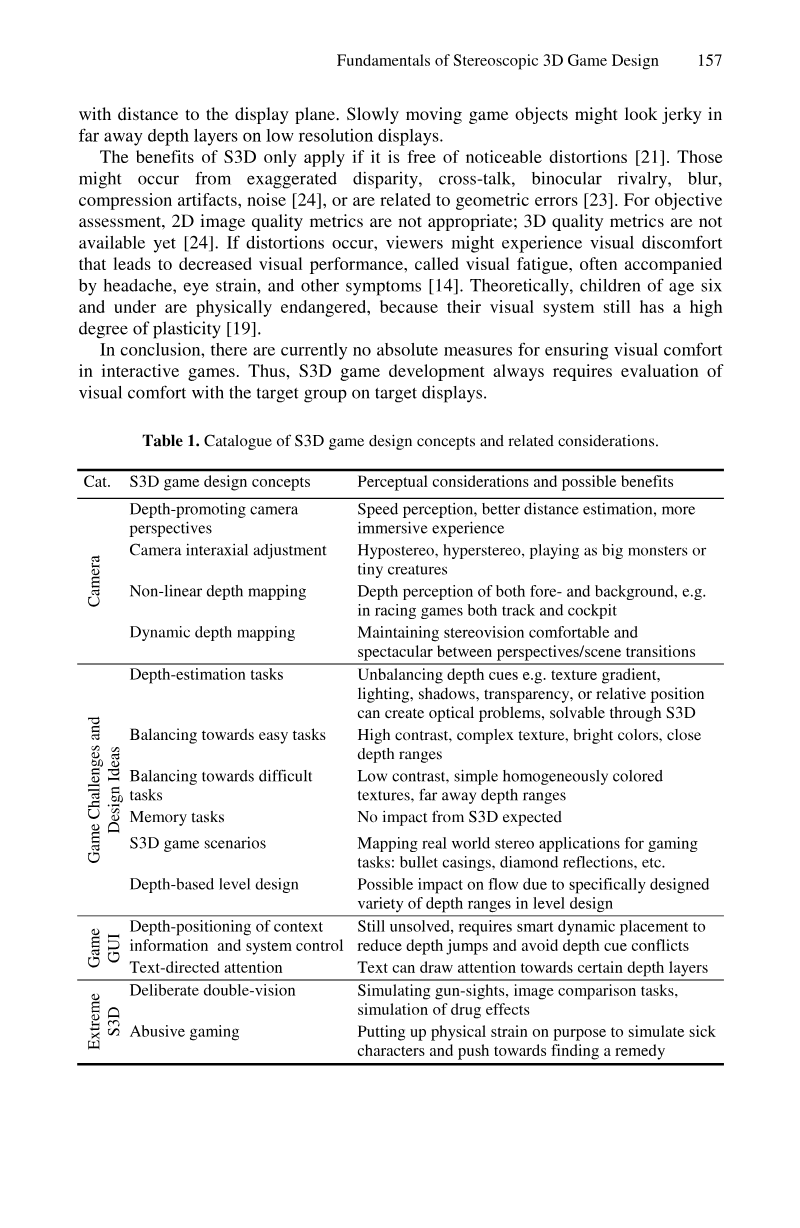
- Stereoscopic 3D (S3D) success requires moving beyond graphical conversion to implement mechanics inherently tied to depth perception, such as depth-based level design and depth-estimation gameplay.
- The primary physiological barrier to S3D adoption is the conflict between accommodation and convergence, which causes visual fatigue and discomfort in current display technologies.
- Developers can mitigate visual strain through technical implementations like dynamic depth mapping, non-linear depth scaling, and careful management of the comfortable viewing range.
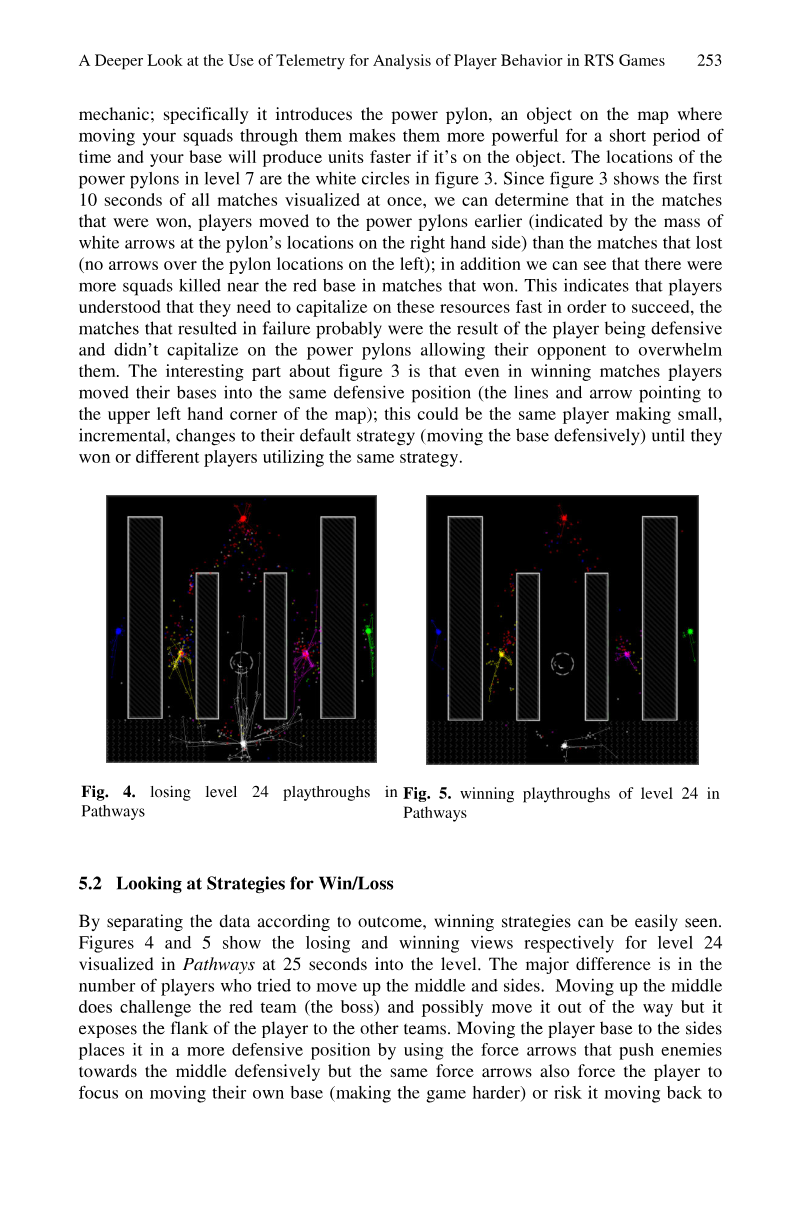
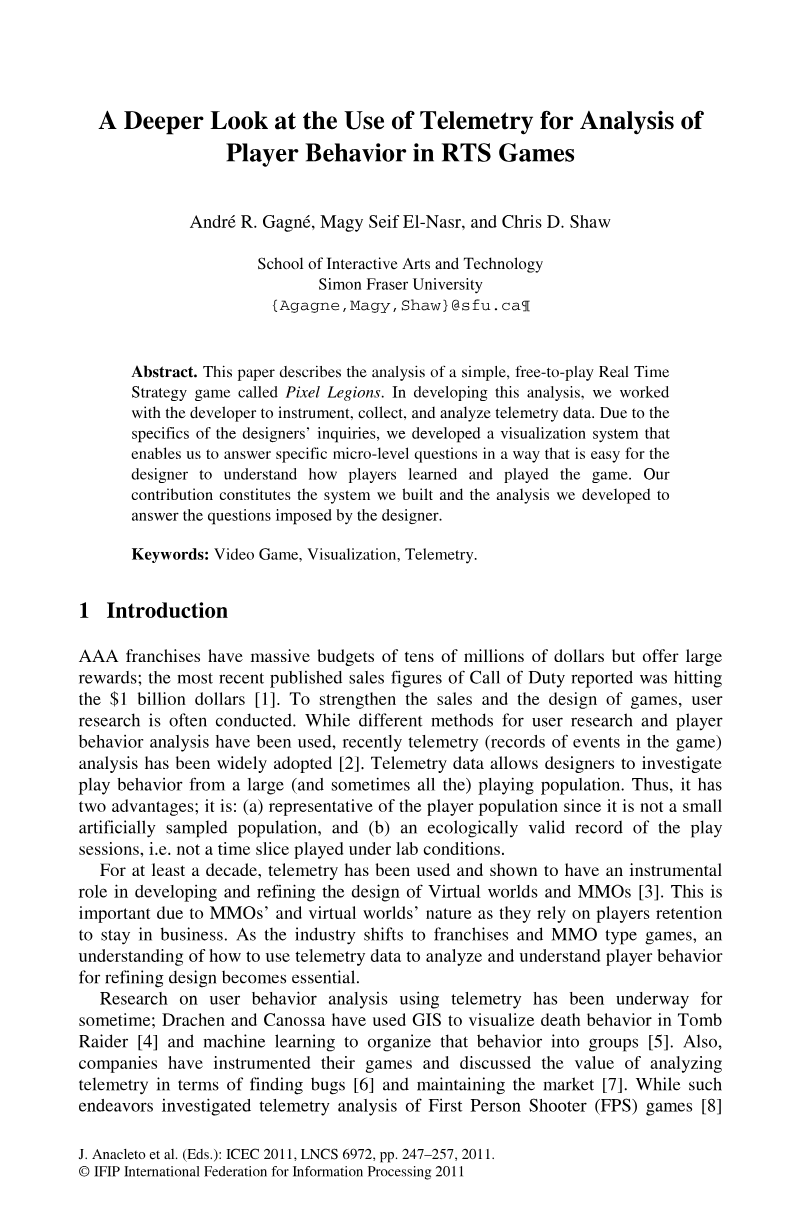
A Deeper Look at the Use of Telemetry for Analysis of Player Behavior in RTS Games
This analysis explores the application of telemetry data to understand player behavior in Real-Time Strategy (RTS) games, specifically focusing on the free-to-play title Pixel Legions.
- The Pathways visualization system addresses the limitations of generic tools by mapping RTS player movement and event data across both spatial and temporal dimensions.
- Collecting event-based telemetry at a 2% sampling rate allows designers to aggregate multiple play sessions to identify specific behaviors that correlate with winning or losing.
- Analysis of Pixel Legions revealed that successful players consistently prioritized resource-generating power pylons earlier in the game than those who failed.
Writers
Games and companies
Games