Loading the document
Key insights
4 slides
Core Architecture
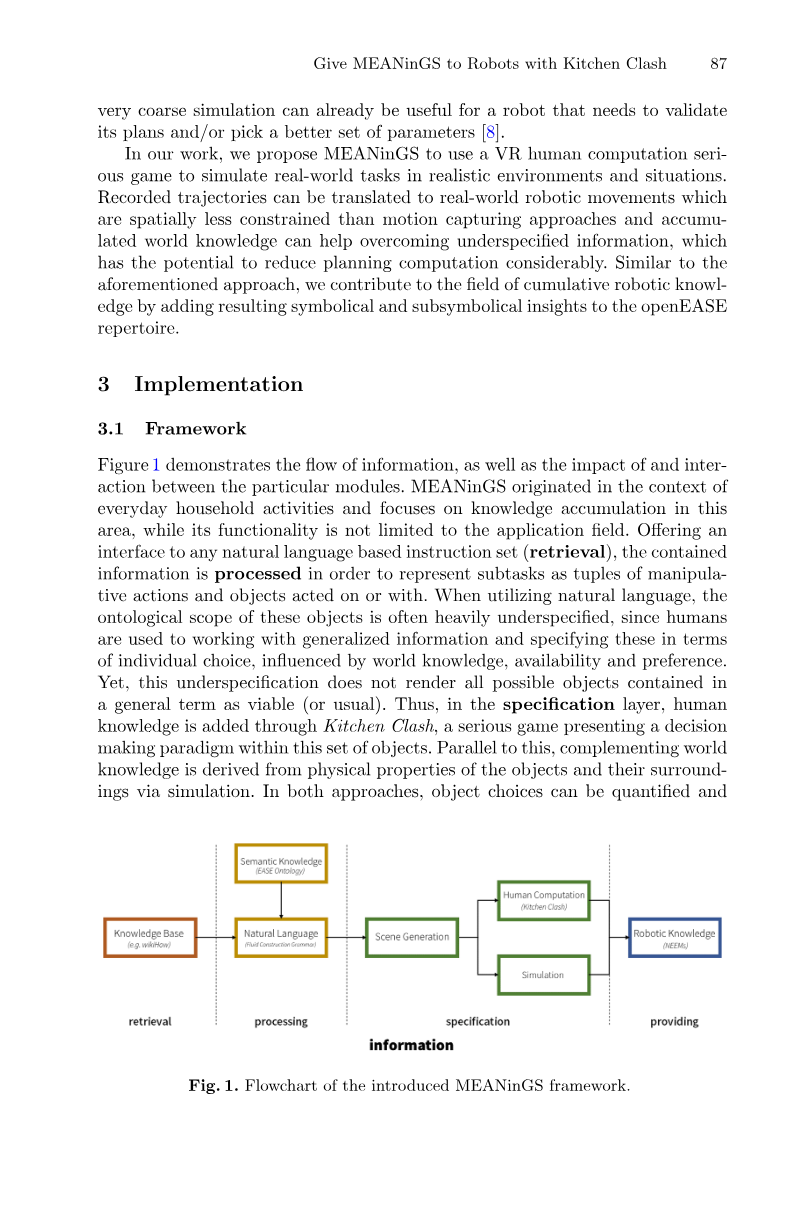
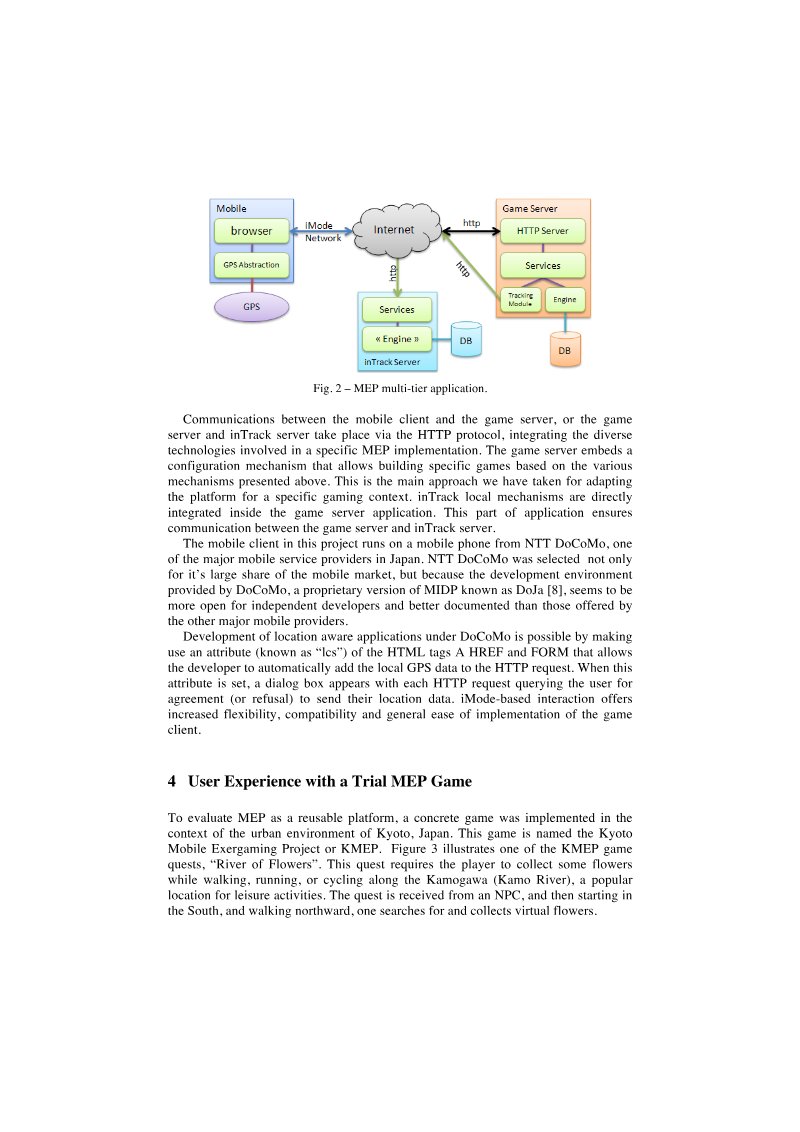
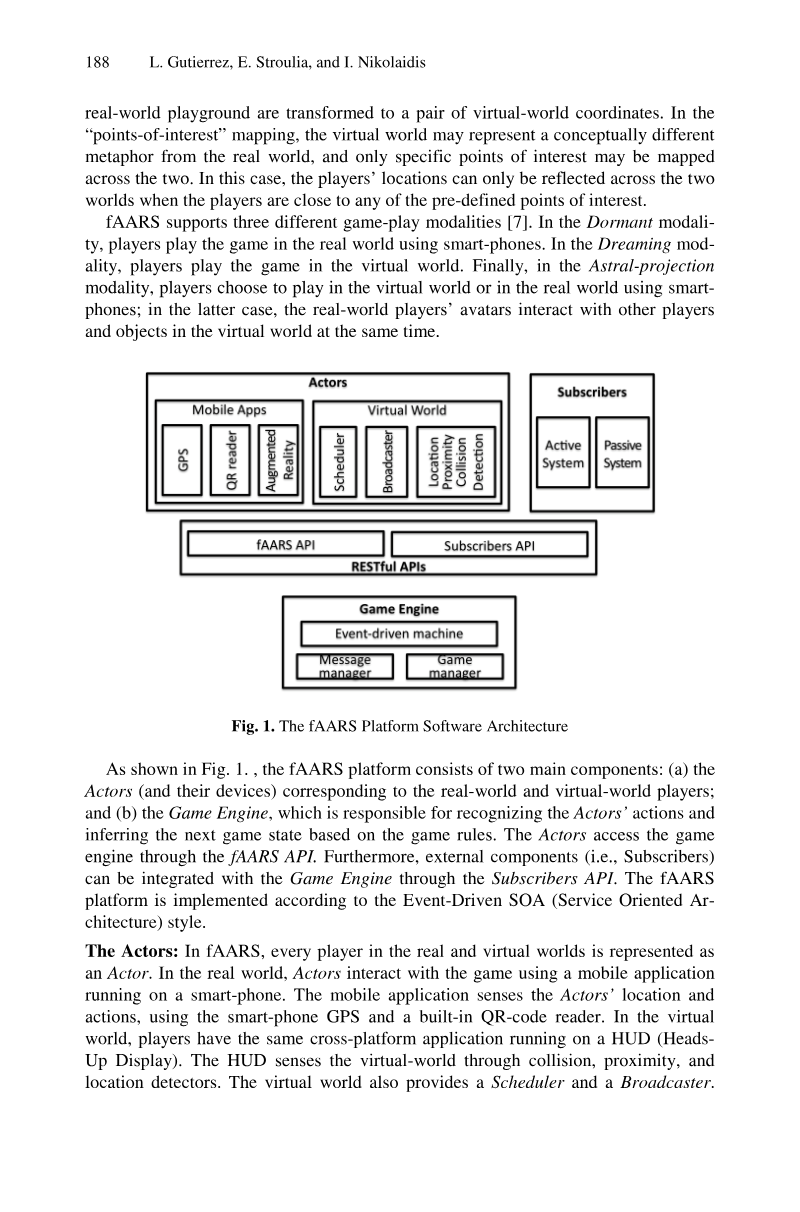
The fAARS platform uses an event-driven, service-oriented architecture for real-world and virtual synchronization.
This architecture is designed to synchronize physical activity in the real world with simulations in a virtual environment. OpenSim is utilized as the virtual-world environment.
1 / 4
- 01The fAARS platform provides an event-driven, service-oriented architecture designed to synchronize real-world physical activity with virtual-world simulations using OpenSim.See it on page 4
- 02The system supports three distinct gameplay modalities: Dormant (real-world only), Dreaming (virtual-world-only), and Astral-projection (a hybrid of both).See it on page 4
- 03Spatial mapping is achieved through two methods: parallel worlds that mirror real-world geography and points-of-interest mapping that synchronizes only specific locations.See it on page 4
- 04Communication between mobile applications, virtual-world HUDs, and the central game engine is managed via RESTful APIs.See it on page 5
- 05Validation included the 'Human Geometric Orientation' study for spatial testing and 'Outbreak: Safety First,' which used QR code scanning to trigger cross-reality state changes.See it on page 2
- 06fAARS addresses the industry gap in pervasive gaming by enabling seamless transitions between indoor, outdoor, and virtual environments that previous platforms could not support.See it on page 1
Ask AI about this report
Summary
The fAARS (for Augmented Alternate Reality Services) platform is a software architecture designed to facilitate the development and deployment of trans-reality games, which blend physical-world interactions with parallel virtual environments. By integrating mobile device location awareness with virtual-world simulation, the platform enables games that operate across indoor, outdoor, and virtual spaces. The primary thesis is that existing pervasive gaming platforms lack the necessary integration to support seamless transitions between real-world physical activity and virtual-world engagement, a gap that fAARS addresses through an event-driven, service-oriented architecture.
The platform utilizes OpenSim as its virtual-world environment and employs RESTful APIs to manage communication between mobile applications, virtual-world HUDs, and a centralized game engine. It supports three distinct game-play modalities: Dormant (real-world only), Dreaming (virtual-world only), and Astral-projection (a hybrid of both). The architecture allows for two types of spatial mapping: parallel worlds, where virtual settings mimic real-world geography, and points-of-interest mapping, where only specific locations are synchronized.
Validation of the platform was conducted through the development of two distinct applications. The first, a psychology study titled Human Geometric Orientation, utilized the Dreaming modality to test spatial orientation. The second, Outbreak: Safety First, served as an educational tool for health-science students, demonstrating the platform's ability to support complex, multi-modal game-play where real-world actions—such as scanning QR codes—directly influence virtual-world states and vice versa. By providing a flexible, event-driven framework, fAARS improves upon previous pervasive gaming platforms that were limited to single-environment play or lacked robust support for cross-reality synchronization.