Game Development reports and market data
Documents
Eliciting and Modelling Expertise for Serious Games in Project Management
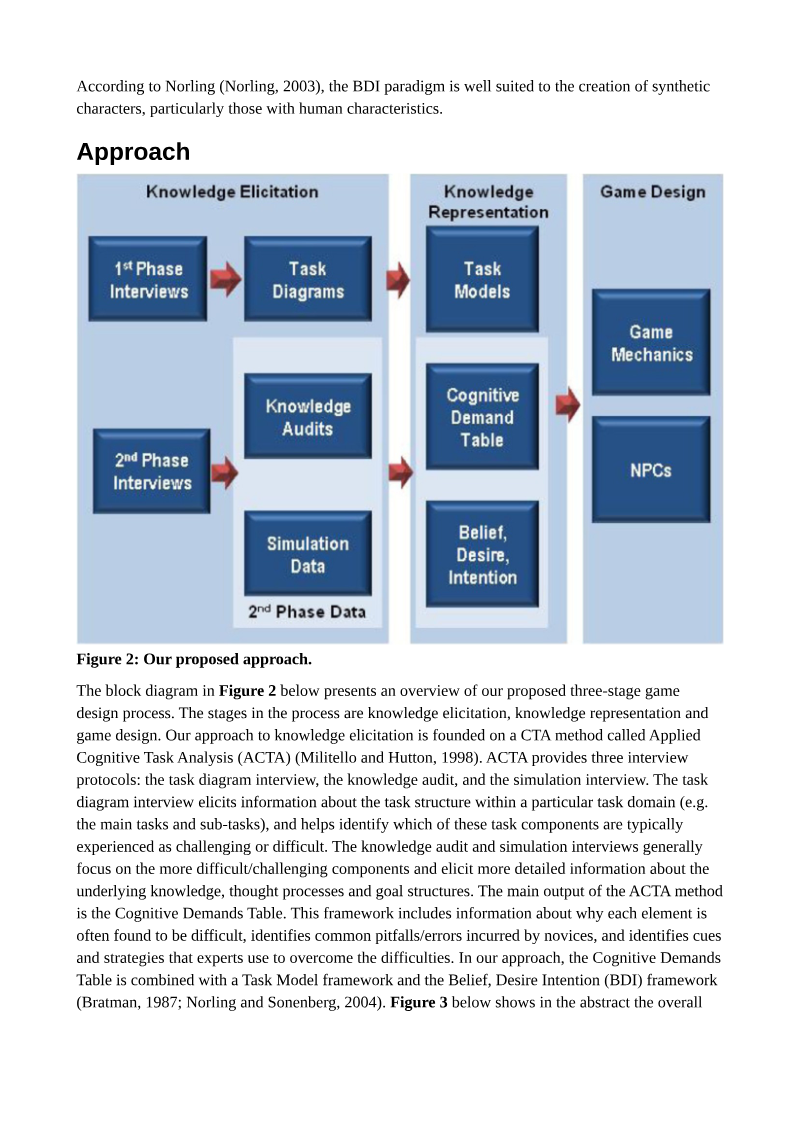
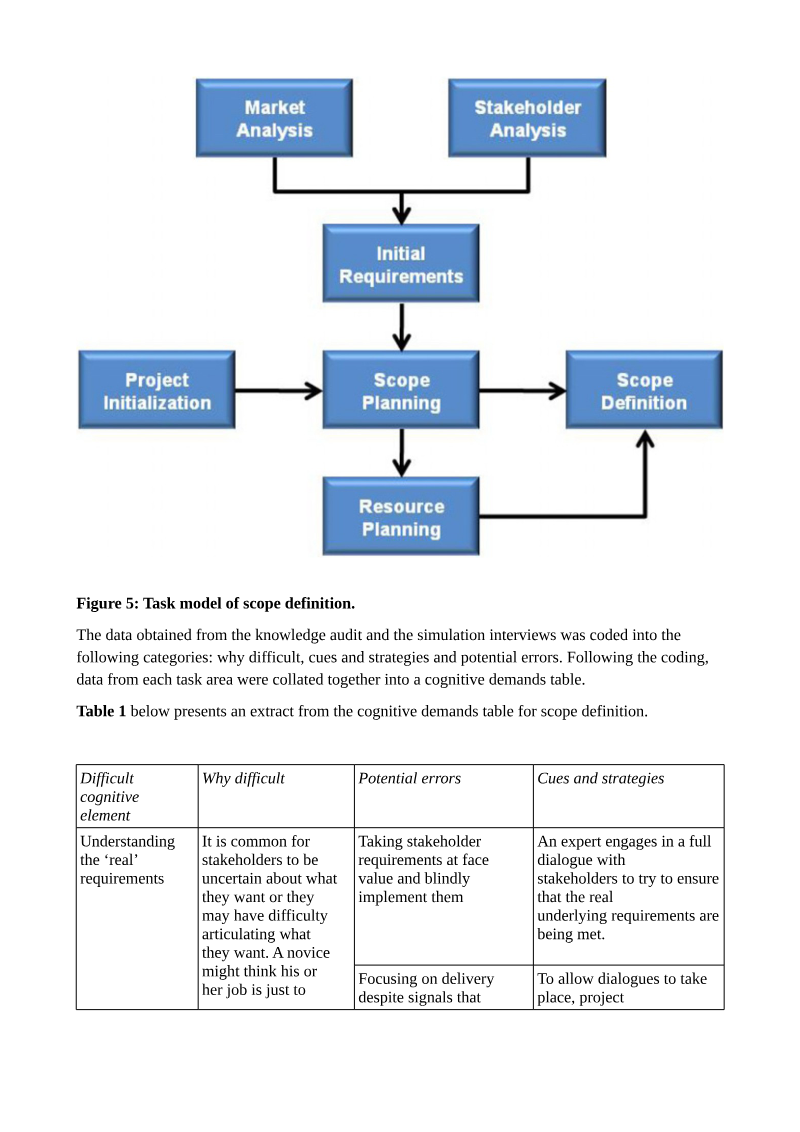
The authors, from University College London and Sintef (Norway), present a structured method for eliciting and modelling domain expertise to inform the design of serious games.
- The first interview phase covered 16 experienced project managers, and the second phase covered 10 in-depth interviews, with the task areas for the second phase chosen from those where four or more participants identified a difficult element.
- The interviews yielded more than 300 task elements distributed across project management areas, and this data was used primarily to model the task models.
- The authors report that after applying their elicitation method, the previously planned project-execution tasks were deemed cognitively non-challenging and so were not appropriate for a serious game.
Pattern Recognition: Gameplay as Negotiating Procedural Form
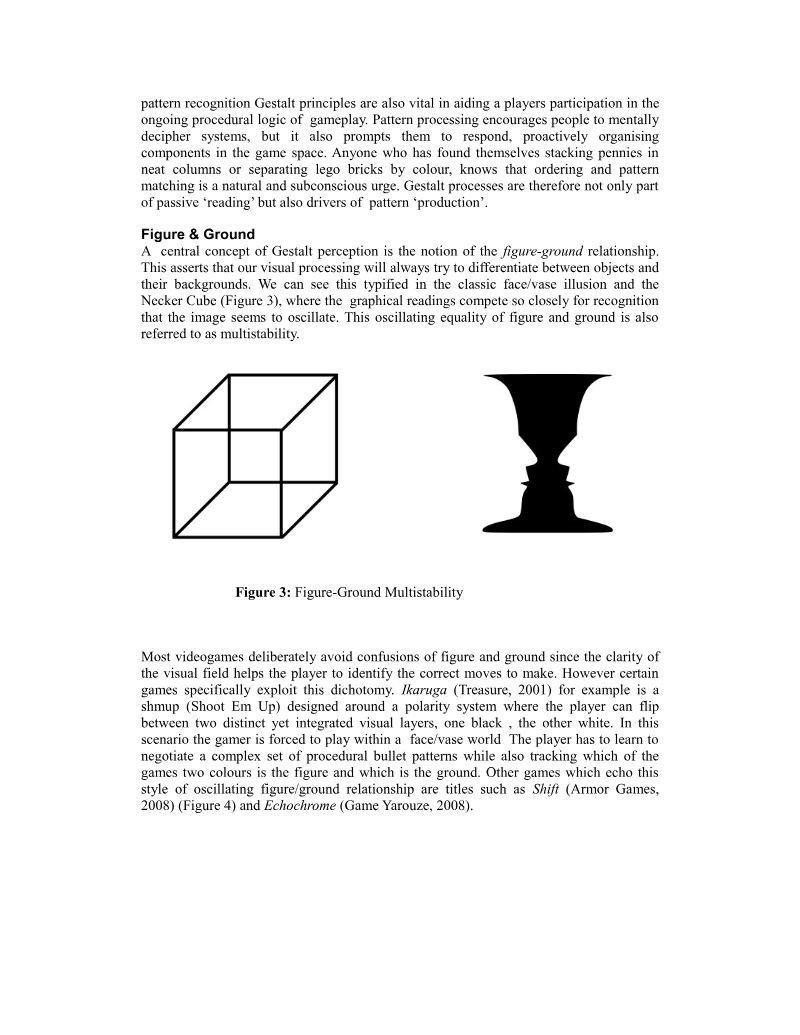
"Pattern Recognition: Gameplay as Negotiating Procedural Form" posits that gameplay fundamentally involves a player's negotiation of procedural form through pattern recognition, deeply rooted in Gestalt principles.
- The paper argues that pattern recognition, grounded in Gestalt psychology, is central to player engagement and that players actively produce patterns (not just perceive them), citing Metzger's claim that Gestalt principles govern both perception and production.
- Its most distinctive contribution is the concept of "pattern immersion," a sub-linguistic, Gestalt-based engagement developed through direct play that aligns with Csikszentmihalyi's notion of Flow, set against "narrative immersion," which relies on authored story and cultural convention.
- The author contends that designers often apply Gestalt principles as a top-down layer over predefined structures, underutilizing their capacity to generate emergent gameplay.
Collaboration and Team Composition in Applied Game Creation Processes
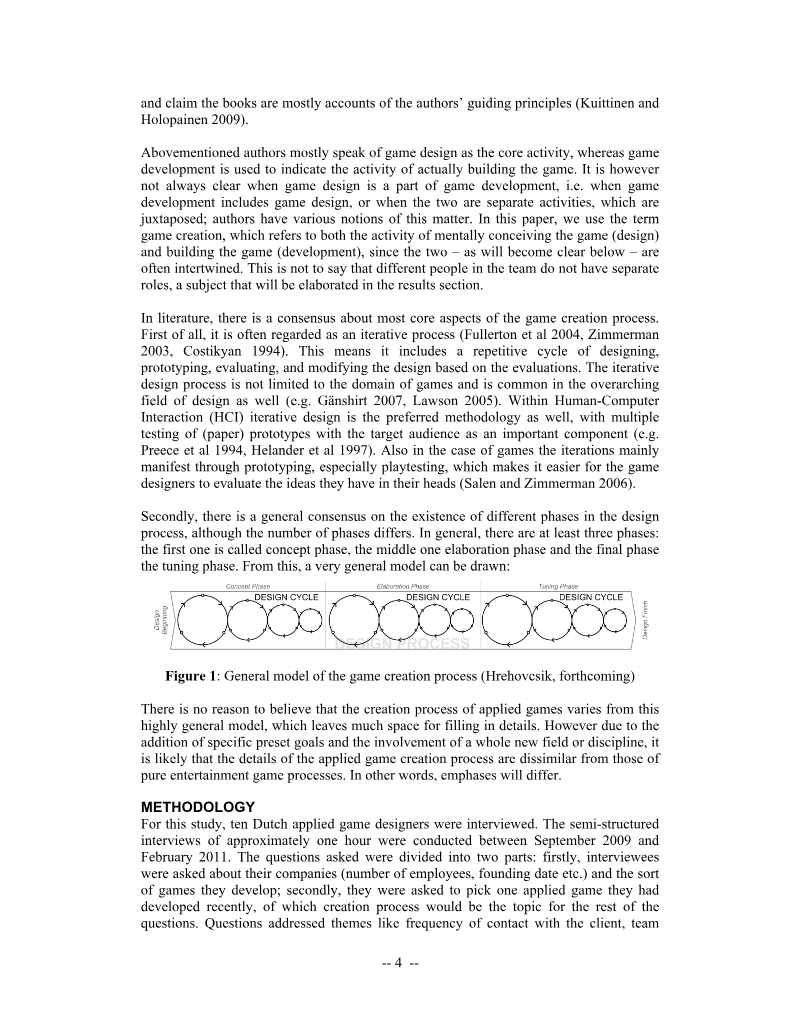
This explorative study examines collaboration and team composition within the applied game creation process, drawing insights from ten Dutch applied game designers.
- Team composition and collaboration, rather than any single design method, are the main determinants of whether applied games can balance entertainment with their out-of-game objectives.
- A subject matter expert is involved from the start in nearly all projects, usually as the client or someone working for the client, yet only half of SME-involved companies treated the expert as a full team member, reflecting unclear authority over content.
- None of the eight projects included a pedagogical or transfer expert, despite theoretical frameworks treating such expertise as central to achieving learning outcomes.
Game Prototyping: The Negotiation of an Idea
Game prototyping serves as a critical communication and negotiation tool within the game development process, facilitating the exploration and resolution of design ideas.
- Prototyping in game design is framed as a communicative and negotiative process, in which prototypes act as a "language of experience" that helps design teams resolve contested problems and build pistis (trust and consensus) among collaborators.
- The study draws on qualitative interviews with 27 respondents (16 game designers, 10 students, and one teacher) in Sweden and Poland.
- Prototypes typically isolate a single mechanic or experience to stand in for the whole game, acting as reality checks that turn vague ideas into playable form.

A Survey of Final Project Courses in Game Programs: Considerations for Teaching Capstone
Zagal and Sharp's paper examines how game programs design and deliver capstone courses, aiming to give educators and administrators a clearer picture of current practice and the considerations that should shape capstone design.
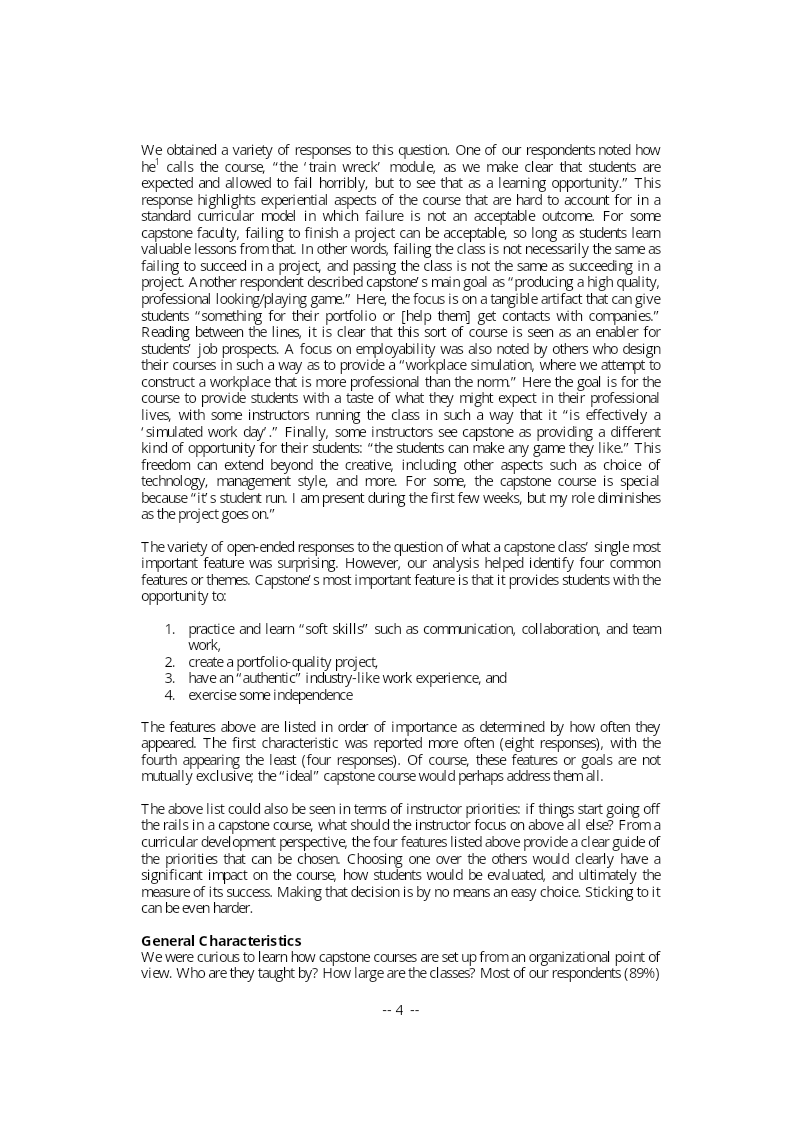
- Capstone courses in game programs are typically taught by one full-time faculty member working with about fifteen students over roughly twenty-one weeks, according to a survey of 37 self-selected game educators.
- Only about 2.5 percent of capstone projects become commercial products, revealing a considerable gap between student expectations and realistic outcomes.
- Educators most often prioritize developing students' soft skills, producing portfolio-quality projects, offering industry-like experiences, and granting student independence, while software, development kits, and game libraries are the most widely available resources.
The Poetics of Game Design: Rhetoric and the Independent Game
The document proposes a novel framework for analyzing and classifying independent games by drawing an analogy to poetic forms and rhetorical devices, rather than traditional visual aesthetics or commercial art comparisons.
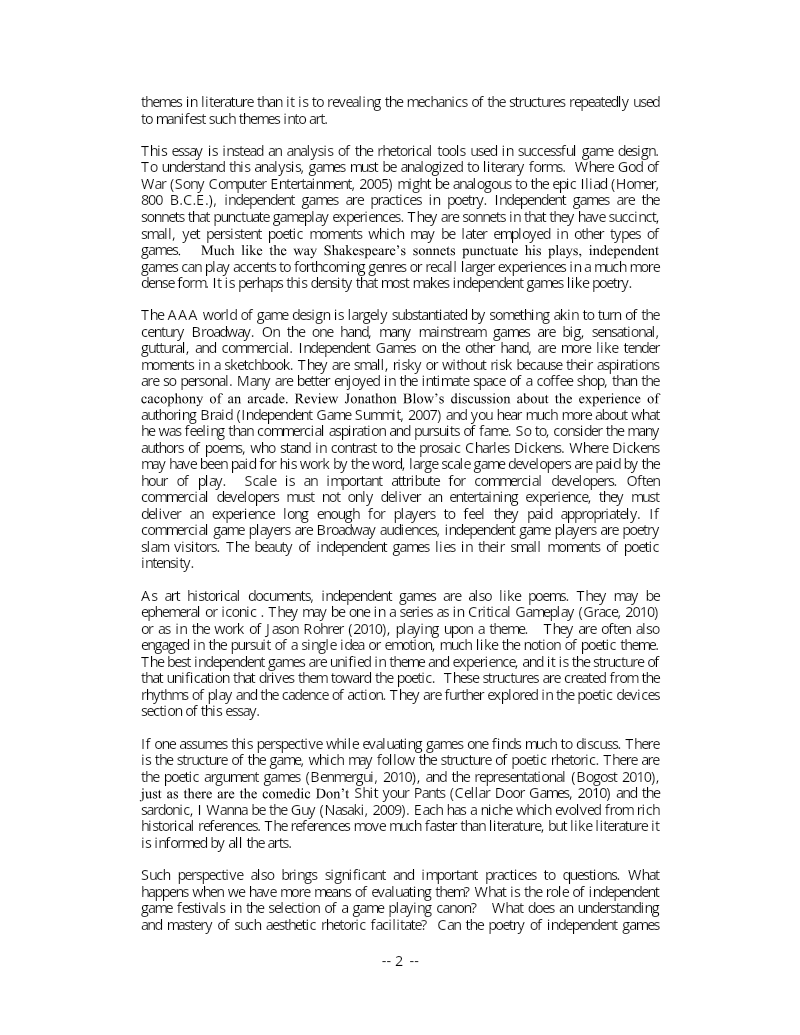
- Lindsay D. Grace's paper argues that independent games are best understood as poetry, specifically as compact, dense, thematically unified "sonnets," rather than through the lens of film or visual art.
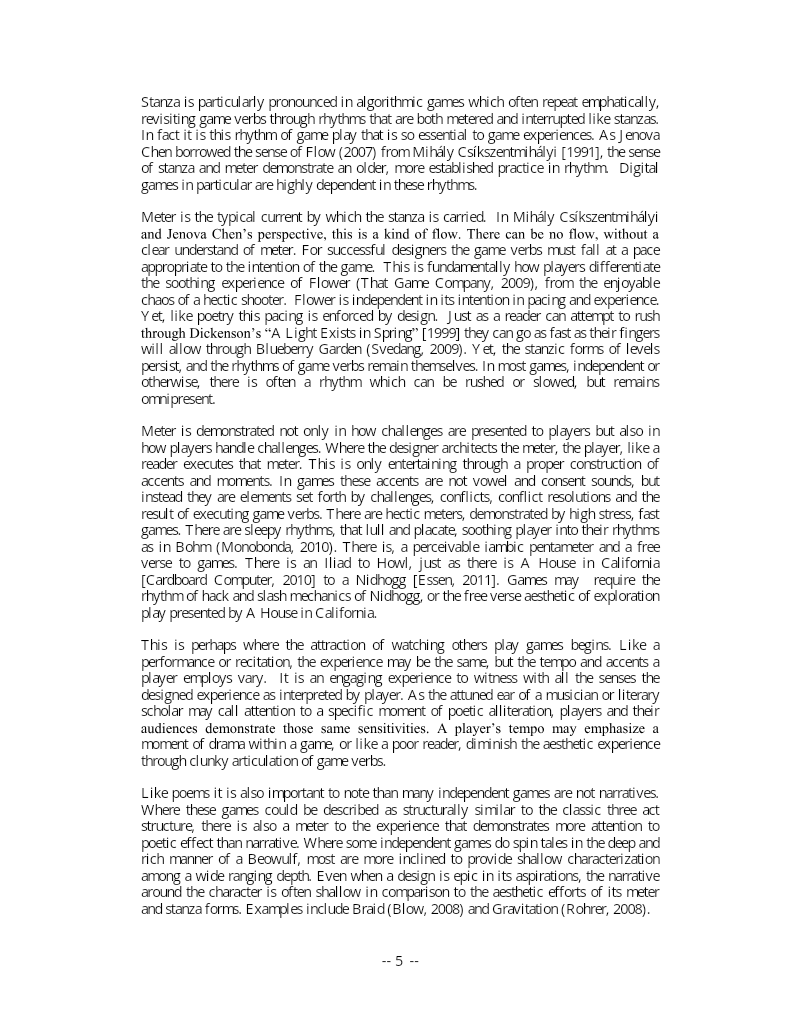
- The paper proposes classifying games by formal poetic structure, such as meter, stanza, and verb, instead of by genre or subject matter, offering a vocabulary for designers, critics, and archivists.
- The game verb is treated as the atomic unit of design, illustrated by Canabalt, where a single verb dominates, and The Unfinished Swan, which reinterprets a real-world verb.
Retro Evolved: Level Design Practice Exemplified by the Contemporary Retro Game
"Retro Evolved: Level Design Practice Exemplified by the Contemporary Retro Game" examines the level design methodologies prevalent in independent "contemporary retro games," which blend nostalgic aesthetics with modern, focused gameplay.
- The paper argues that contemporary retro games treat level design as a deliberate craft, building play experiences on established core mechanics rather than treating levels as incidental content.
- The authors propose qualities of good level design: a balance of difficulty and flow, tension between freedom and constraint, risk and reward, alignment with narrative, and effective player guidance.
- The authors argue these five practices overlap rather than compete, and identify balancing repetition with variation as the key to sustaining player flow.
Listen! Improving the Cooperation Between Game Designers and Audio Designers
The document, "Listen!
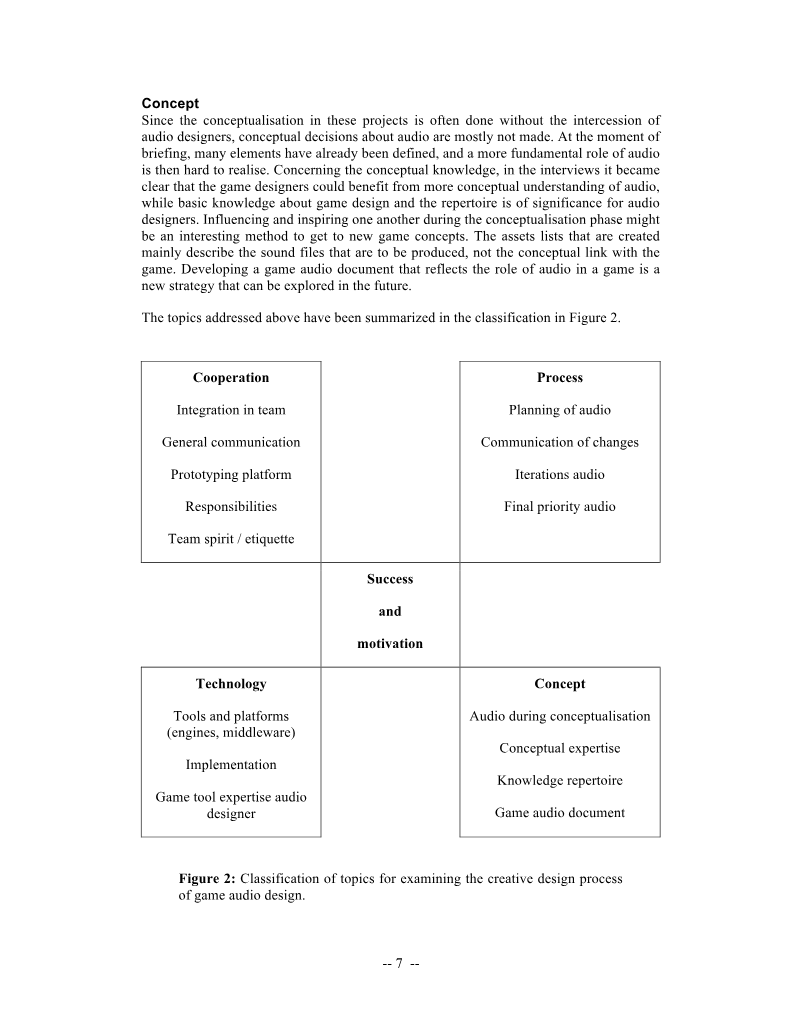
- Audio designers are frequently brought in late, lack implementation skills, and are often cut from features such as adaptive music when schedules tighten, with outsourced audio production often disrupting team cohesion.
- Communication breaks down most during crunch periods, and asynchronous channels like email are inadequate for describing sound.
- Mid-project design changes, such as shifting a game's setting, can render already-produced audio unusable, and these revisions disproportionately burden the audio workflow.

In Perpetual Beta? On the Participatory Design of Facebook Games
The document examines the concept of "sociality" in social network games, proposing a new perspective that focuses on the interaction between players and game developers, rather than solely on player-to-player interaction.
- Facebook-based games blend two forms of participatory design: direct participatory design (consulting selected community members) and silent participatory design (monitoring logged player behavior), producing a continuous process that keeps games in a "perpetual beta" state.
- Zynga implements player feedback, including metric data and forum comments, within days rather than the months or years typical of traditional online game developers, as seen in rapid rebalancing of food items, energy, and leveling.
- Farmville's monthly active users fell from over 80 million in 2010 to 30 million by August 2011, while Cityville dropped from 100 million to 76 million over a comparable period.
More Than a Craze: Photographs of New Zealand's Early Digital Games Scene
"More Than a Craze: Photographs of New Zealand's Early Digital Games Scene" describes an online exhibition of 46 photographs documenting the nascent digital games culture in New Zealand during the 1980s.
- The exhibition "More Than A Craze" by Melanie Swalwell, curated with Janet Bayly and hosted by Mahara Gallery in Waikanae, presents 46 photographs documenting New Zealand's early digital games scene of the 1980s.
- The photographs are argued to be valuable primary sources for researchers of play and interactive entertainment because they capture games, gamers, and gameplay at a moment of novelty.
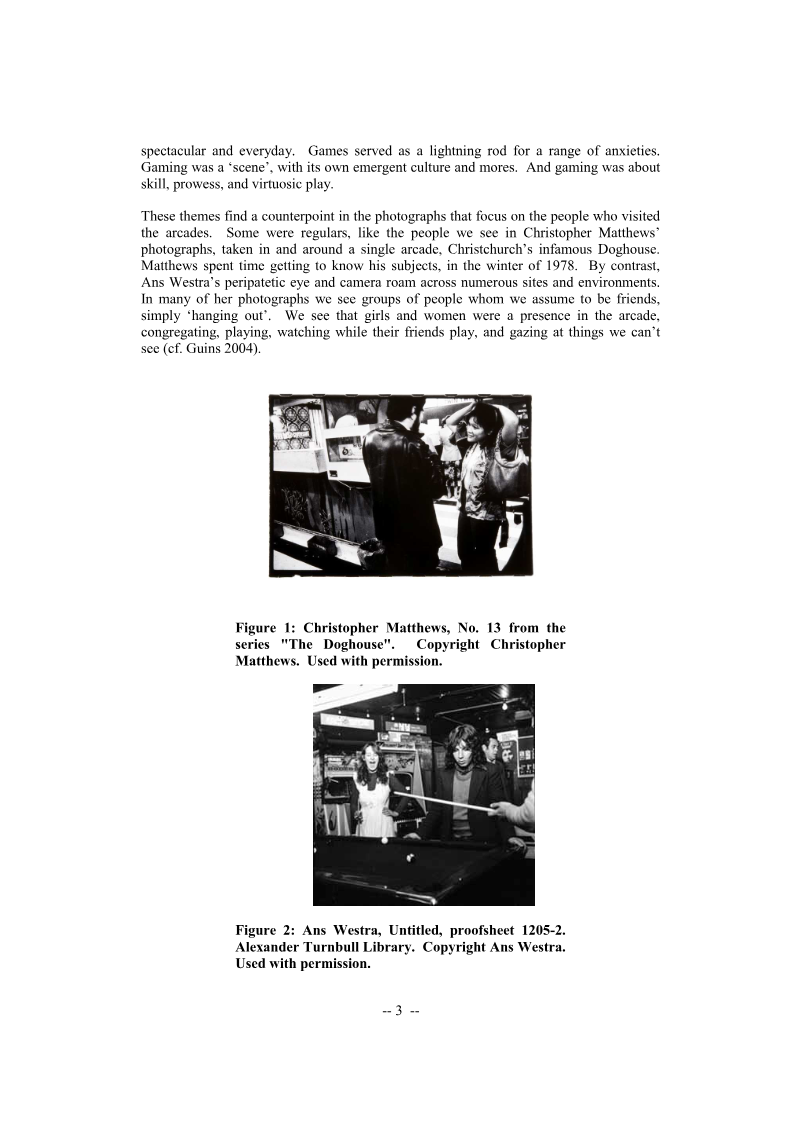
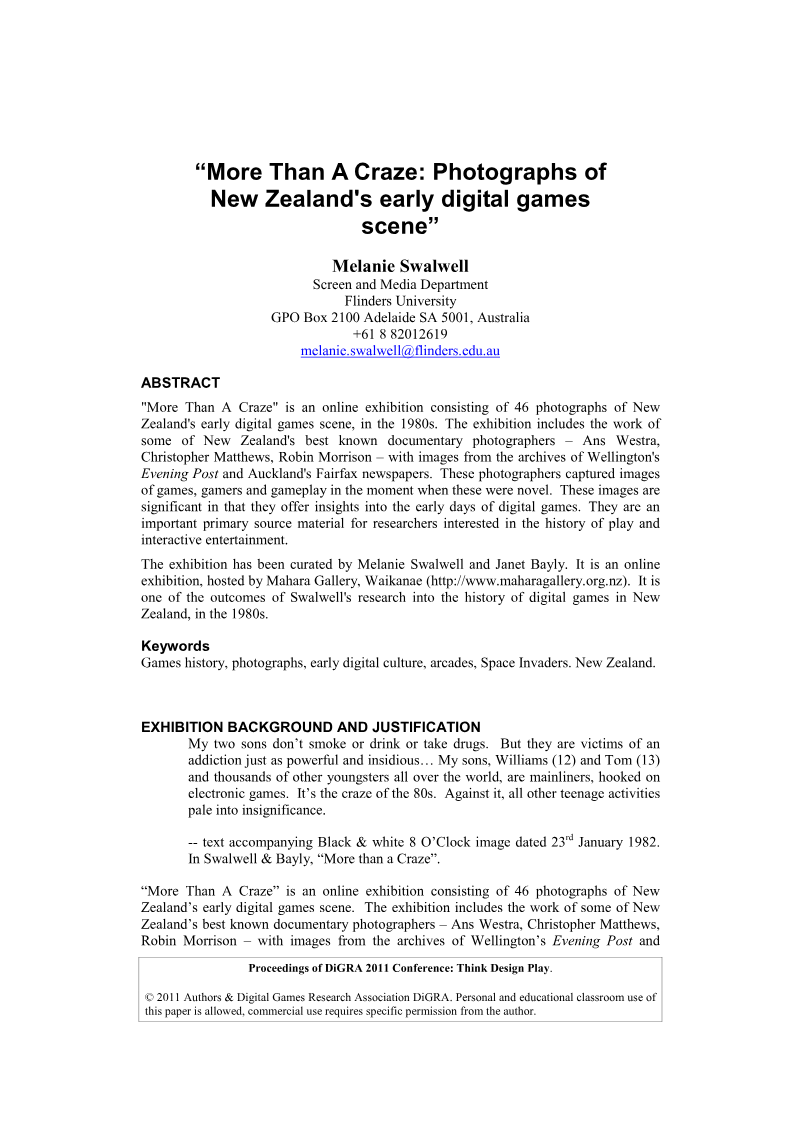
- The images draw on documentary photographers Ans Westra, Christopher Matthews, and Robin Morrison, plus archival press images from Wellington's Evening Post and Auckland's Fairfax newspapers.
Cultures of Independent Game Production: Examining the Relationship Between Community and Labour
The document examines the critical role of communities in shaping independent game production, asserting that these networks form an essential infrastructure for developers navigating a dynamic industry.
- Independent game production is framed as fundamentally collective rather than individual, with community networks functioning as an alternative infrastructure outside conventional industry structures.
- Based on 23 interviews and ethnographic fieldwork conducted in 2010, largely in the United Kingdom, the study identifies community practices such as experimentation, playtesting, skill-sharing, and moral support as central to indie development.
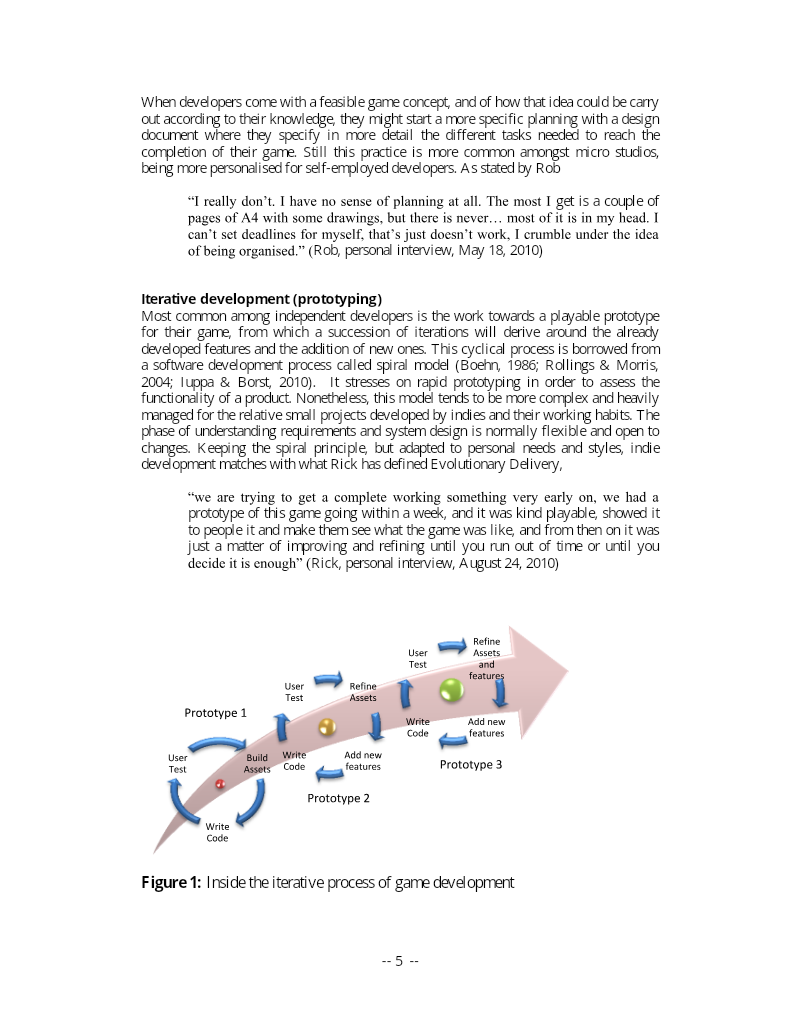
- The author proposes a two-phase, iterative model of indie production moving from experimentation to prototyping, in which community networks reduce costs and speed development through knowledge exchange, code sharing, and rapid feedback.
Serious Beats: Transdisciplinary Research Methodologies for Designing and Evaluating a Socially Integrative Serious Music-Based Online Game
The "Serious Beats" project is a transdisciplinary research initiative focused on designing and evaluating a serious music-based online social game to promote social integration among second-generation migrant youth in Vienna, aged 14-17.
- Serious Beats is a transdisciplinary project from Vienna University of Technology and the University of Vienna to design a music-based online social game that fosters intercultural friendships among Viennese teenagers aged 14 to 17, many with Turkish or Balkan migration backgrounds.
- The design foundation rests on 48 semi-structured interviews, which found a strong preference for rap and hip hop, heavy reliance on YouTube as the primary music source, and hybrid migrant and Austrian identities, with many reporting intergroup tensions over jobs and housing.
- Early music-game prototypes were judged to carry a high risk of losing both male and female audiences, prompting a shift toward a social music service built on Facebook and YouTube and integrated with real-world events in youth centers and vocational schools.
Writers
Games and companies
Games