Loading the document
1 free read left. Create a free account for unlimited reading + AI research.
Create free accountWhitepaper Simon Fraser University
1 free read left. Create a free account for unlimited reading + AI research.
Create free accountWhitepaperSimon Fraser University
Existing visualization tools are often too generic or static. They do not effectively capture the complex, temporal-spatial nature of Real-Time Strategy (RTS) gameplay.
This analysis explores the application of telemetry data to understand player behavior in Real-Time Strategy (RTS) games, specifically focusing on the free-to-play title Pixel Legions. While telemetry is widely used in the gaming industry to refine design and balance mechanics, existing visualization tools are often too generic or static to capture the complex, temporal-spatial nature of RTS gameplay. The primary objective is to demonstrate how custom telemetry collection and visualization can help designers assess whether players are following intended strategies and identify behaviors that correlate with winning or losing.
To address these challenges, the study introduces Pathways, a custom visualization system designed to map player movement and event data across both spatial and temporal dimensions. By collecting event-based telemetry—including level progression, base movement, and unit deaths—at a 2% sampling rate, the system allows for the aggregate visualization of multiple play sessions. This approach enables designers to compare winning and losing strategies side-by-side, revealing, for example, that successful players in specific levels prioritized resource-generating power pylons earlier than those who failed.
The research highlights several limitations inherent in current telemetry practices, most notably the lack of persistent player identification, which complicates the analysis of individual learning curves and external validity. Furthermore, the data is susceptible to noise from long, potentially idle sessions. Despite these constraints, the study concludes that telemetry-driven visualization is a vital tool for game production. Future iterations of the Pathways system aim to incorporate advanced filtering and selection features to better track individual player progression and learning, with ongoing efforts to apply these methodologies to more complex, large-scale RTS titles.
Simon Fraser University · 2026
University of British Columbia · 2023

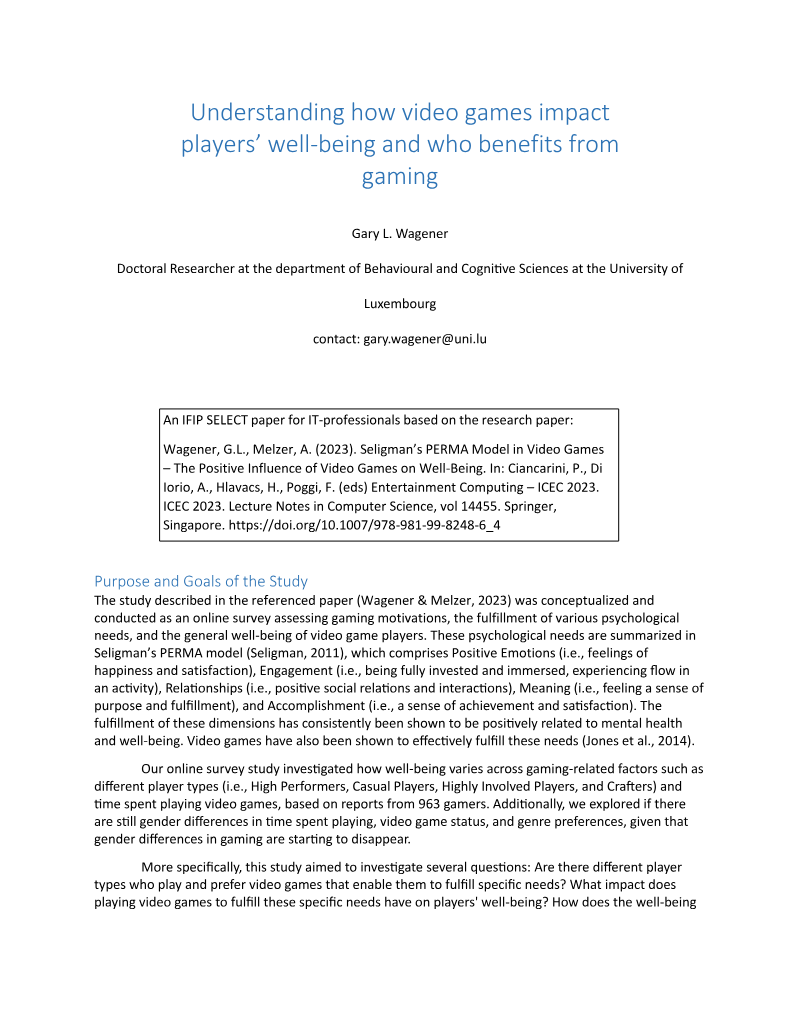
IFIP International Conference on Entertainment Computing (ICEC) · 2023
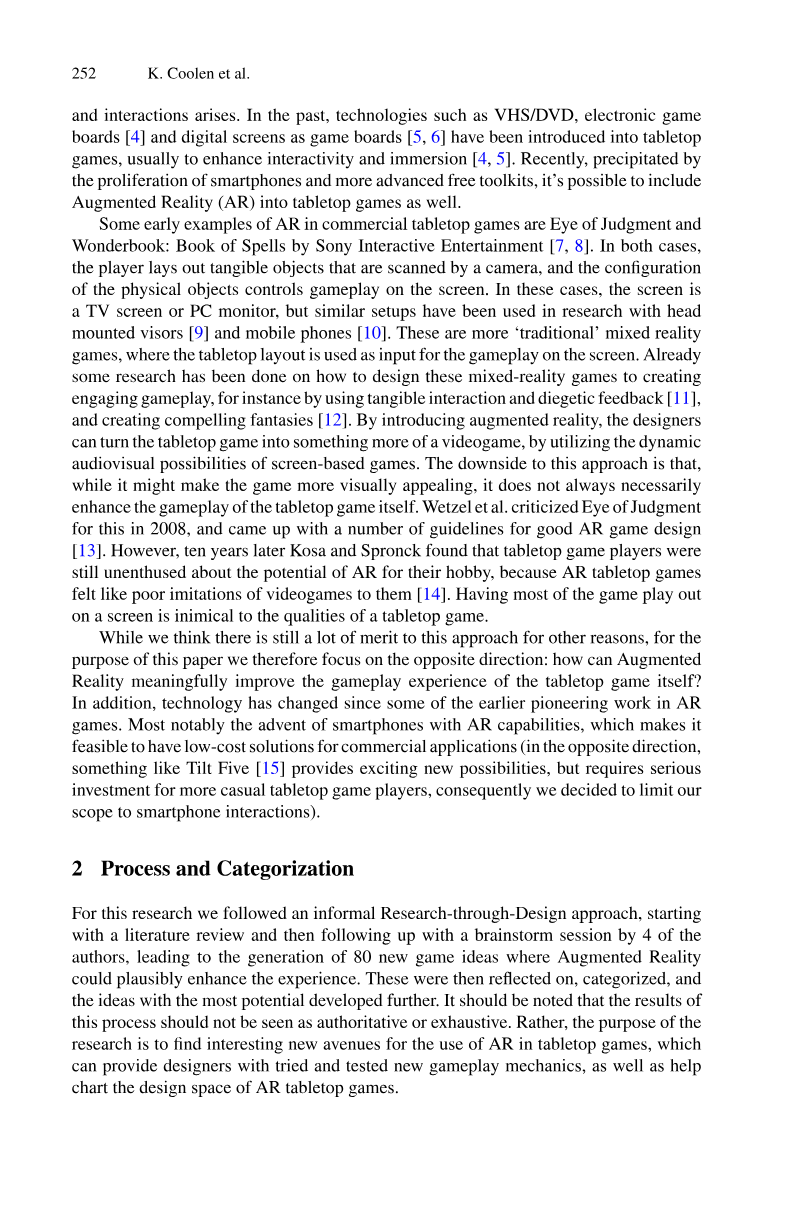
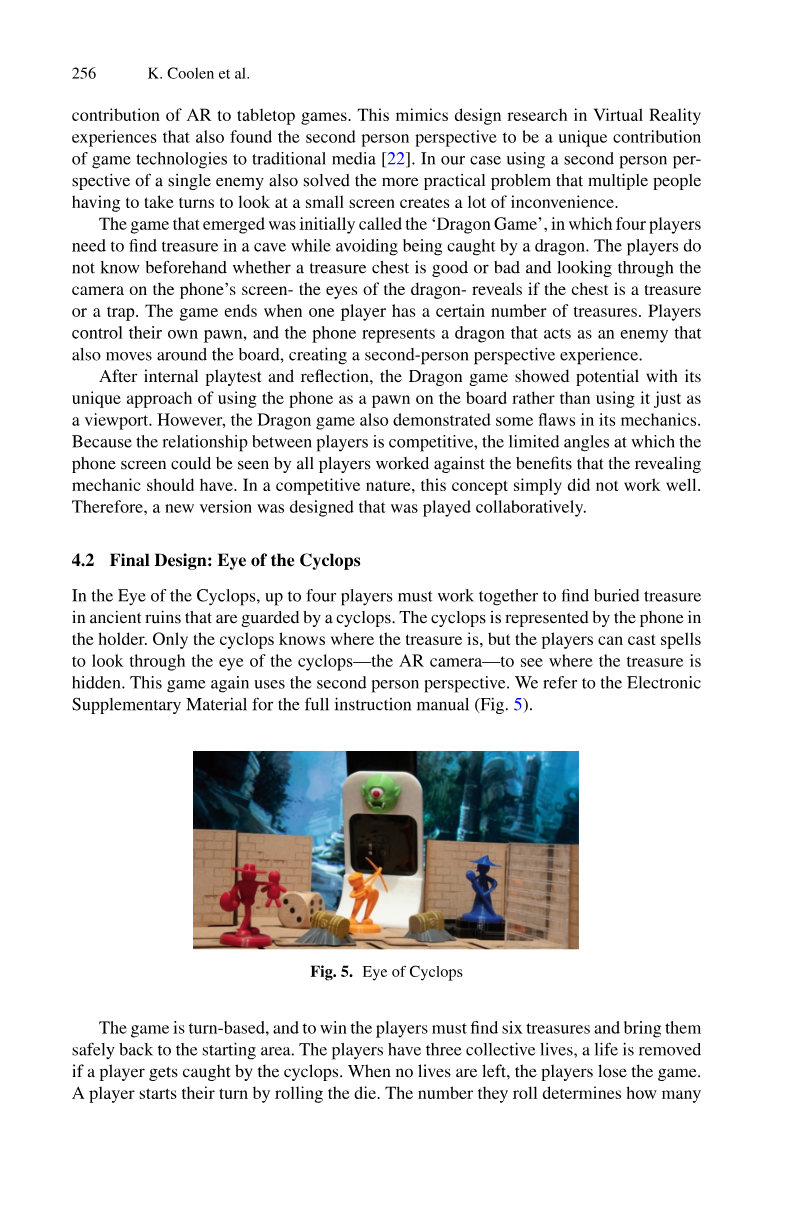
Springer · 2023
IFIP International Conference on Entertainment Computing (ICEC) · 2022
IFIP International Conference on Entertainment Computing (ICEC) · 2021
University of Glasgow · 2021
IFIP International Conference on Entertainment Computing (ICEC) · 2019
IFIP International Conference on Entertainment Computing (ICEC) · 2018
IFIP International Conference on Entertainment Computing (ICEC) · 2017
IFIP International Conference on Entertainment Computing (ICEC) · 2017
IFIP International Conference on Entertainment Computing (ICEC) · 2016