Presentation89 pages
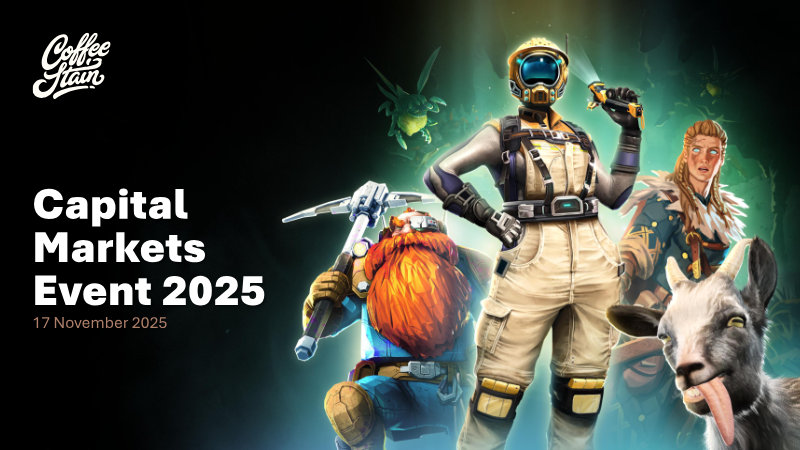
Capital Markets Event 2025: Coffee Stain Group
Capital Markets Event 2025 showcases the Coffee Stain Group’s strategy of building a portfolio around small, autonomous teams that prioritize gameplay quality and community engagement. Ninety percent of net sales derive from a handful of flagship titles—most notably Goat Simulator, Deep Rock Galactic and Satisfactory—which consistently achieve high review scores (above 96 %) and generate lifetime sales up to SEK 2 bn. The company’s partnership model, publishing and investing in niche‑focused games, sustains long‑term value through continuous content updates and a symbiotic developer‑player relationship.
The global gaming market is projected to grow at 3 % CAGR across all platforms, driven by rising consumer spend and the expansion of Steam, mobile, Game Pass and PlayStation Plus. Despite saturation and increased competition for player attention, Coffee Stain maintains a strong presence; its titles enjoy high review counts (over 500 k for Goat Simulator) and retain players through regular updates, platform expansions and community‑driven development. Innovation, creative gameplay and long‑term support are core to the firm’s approach.
Strategic collaborations reinforce this model. The partnership with Tuxedo Labs leverages the proprietary Teardown physics engine, producing a highly engaged community (10 000+ mods, 20 major updates) and peak concurrent users of 60 k for Deep Rock Galactic seasons. The studio’s headcount grew from six to 47 FTEs over five years, illustrating the scalability of open development and a “make happy decisions” culture that drives both critical acclaim (e.g., 9.5/10 reviews) and commercial success.
Coffee Stain’s Roblox title, Welcome to Bloxburg, exemplifies a successful free‑to‑play transition. With 791 k daily active users and SEK 1.35 bn in lifetime net sales, the monetization mix of currency purchases, optional unlocks and a premium subscription maintains a non‑pay‑to‑win stance while rebuilding player trust. The company’s lean cost base and strong cash generation are amplified by launch‑driven sales spikes from new content releases and strategic stakes such as its 30 % share in Iron Gate’s Valheim publishing.
Financially, the group reports a net‑sales CAGR of 34 % to SEK 1.2 bn and a cash EBIT margin of 44 %. Cash reserves reach SEK 472 m in 2025, with no external debt, providing flexibility for capital allocation and potential M&A. The lean, autonomous team model underpins low overheads, high cash conversion (≈120 %) and a focus on developing existing IPs while selectively pursuing new opportunities across platforms and partnerships.
- Coffee Stain Group maintains strong financial health with a 34% net-sales CAGR to SEK 1.2 bn, a 44% cash EBIT margin, and 120% cash conversion.
- The company holds SEK 472 m in cash reserves with zero external debt, providing significant flexibility for future M&A and capital allocation.
- Ninety percent of net sales are generated by a core portfolio of flagship titles—Goat Simulator, Deep Rock Galactic, and Satisfactory—which consistently maintain review scores above 96%.
- The Roblox title Welcome to Bloxburg has achieved 791,000 daily active users and SEK 1.35 bn in lifetime net sales following its transition to a free-to-play model.
- Strategic partnerships and investments, such as a 30% stake in Valheim publisher Iron Gate and the collaboration with Tuxedo Labs, serve as key drivers for long-term value and IP expansion.
+3
Coffee Stain Group AB
Report12 pages
The Rise and Reset of Sweden's $19B Gaming Capital Machine
The analysis demonstrates that Sweden’s gaming sector has evolved into a $19 billion capital ecosystem, with 1,100 companies and 202 firms engaging in tracked transactions since 2014. Sweden contributes roughly 20 % of Steam’s projected 2025 gross revenue, and its developers produced five of the platform’s global top‑10 bestsellers in 2024–25. Capital flows have shifted from early‑stage seed rounds to late‑stage growth and acquisition deals, reflecting a maturation of the pipeline. Private investment rebounded in 2024 after a pullback; late‑stage rounds now dominate, with Aonic’s $157 million growth round and Arrowhead’s $80 million investment illustrating investor preference for studios with proven commercial traction. Early‑stage deal counts have normalized from 2021’s peak, indicating a steady but active pipeline.
M&A activity peaked in 2021–22, with ESL’s $1.05 billion sale to Savvy marking the cycle’s apex; subsequent deals have become more selective. Three transactions—King ($5.9 billion), Mojang ($2.5 billion), and ESL ($1.05 billion)—account for 93 % of total M&A value, underscoring the premium paid by global acquirers for Sweden’s IP and engineering talent. Public market activity has shifted from equity‑fueled growth to defensive debt financing; Embracer’s $4.4 billion raised through fixed income and PIPE in 2020–22 exemplifies this trend. Capital concentration is high, with the top ten private rounds comprising over $495 million of an $811 million total.
The data, sourced from InvestGame and market‑cap records through December 2025, cover Sweden’s entire gaming industry—mobile, PC & console, VR/AR, esports, and platforms—from 2014 to the present. Methodology includes tracking VC rounds, public offerings, PIPEs, and M&A transactions across all segments. The findings illustrate a resilient ecosystem that has transitioned from early‑stage bootstrapping to mature, high‑value capital flows driven by proven studios and strategic consolidation.
- Sweden’s gaming sector has matured into a $19 billion ecosystem comprising 1,100 companies, with Swedish developers producing five of Steam’s global top-10 bestsellers in 2024–25.
- Swedish studios contribute approximately 20% of Steam’s projected 2025 gross revenue, cementing the country's status as a dominant global gaming hub.
- M&A activity is highly concentrated, with three major deals—King ($5.9 billion), Mojang ($2.5 billion), and ESL ($1.05 billion)—accounting for 93% of the total transaction value.
- Investment trends have shifted toward late-stage growth, evidenced by significant 2024 capital injections such as Aonic’s $157 million round and Arrowhead’s $80 million investment.
- Capital concentration remains high, as the top ten private funding rounds account for $495 million of the $811 million total tracked investment.
+3
InvestGame
Report88 pages
Invitation to Subscribe for Shares in Stillfront Group AB
INBJUDAN TILL TECKNING AV AKTIER I Notera att teckningsrätterna förväntas ha ett ekonomiskt värde. För att inte teckningsrätternas värde ska gå förlorat måste innehavaren antingen: • Utnyttja de erhållna teckningsrätterna och teckna nya aktier senast den 16 mars 2022, eller • Senast den 11 mars 2022 sälja de erhållna teckningsrätterna som inte avses utnyttjas för teckning av nya aktier.
- Stillfront Group AB is inviting subscriptions for shares, with subscription rights expected to have economic value. Holders must either utilize rights to subscribe for new shares by March 16, 2022, or sell them by March 11, 2022.
- Stillfront Group's proforma net sales for January 1 – December 31, 2021, were 6,536 MSEK, with an operating result of 1,008 MSEK and a period result of 374 MSEK, incorporating acquisitions like Super Free Games, Moonfrog Labs, Jawaker, and 6waves.
- The company's proforma total assets as of December 31, 2021, were 23,274 MSEK, with total equity at 11,882 MSEK.
- Stillfront Group's business model focuses on free-to-play online games, generating revenue through in-game purchases and advertising, with a strategy of continuous updates ('live-ops') to extend game lifecycles and retain users.
- Stillfront Group's shares were listed on Nasdaq First North Stockholm in December 2015, moved to First North Premier in June 2017, and have been listed on Nasdaq Stockholm since May 26, 2021.
Stillfront
Report127 pages
Annual Report & Accounts 2014: Sweden
CEO’s Review 1 Directors’ Report 11 The MTG Share 32 Corporate Governance Report 36 Board of Directors 46 Executive Management 49 Consolidated Financial Statements 54 Parent Company Financial Statements 59 Notes to the Accounts 64 Audit Report 119 Definitions 121 Glossary 12...
- MTG's net sales increased to SEK 15,746 million in 2014 from SEK 14,073 million in 2013, while total net income remained relatively stable at SEK 1,172 million in 2014 compared to SEK 1,168 million in 2013.
- The company's average number of employees grew significantly from 3,361 in 2013 to 4,059 in 2014, with a notable increase in Sweden (from 1,022 to 1,273 employees) and the UK (from 373 to 402 employees).
- MTG faces potential adverse impacts on its business from ongoing legal uncertainties regarding additional rights clearance for satellite TV transmissions and investigations into exclusive broadcasting rights for pay-TV services.
- The share capital of MTG consists of Class A, Class B, and Class C shares, with Class A shares carrying ten voting rights, and Class B and C shares carrying one voting right each; Class C shares do not entitle holders to dividends.
- The gender distribution among senior executives in 2014 showed 71% men and 29% women for the Group, and for the Parent Company, the Board of Directors was 71% men and 29% women, while other senior executives were 67% men and 33% women.
+2
Modern Times Group
Report60 pages
PowerUP: Spelbranschen – en svensk basnäring
Sweden’s video‑game sector is positioned as a culturally driven, “born‑global” industry that, despite generating more than SEK 3.5 billion in revenue and employing over 15 000 staff abroad, remains fragmented and under‑supported at the national level. The analysis maps the ecosystem of roughly 1 000 firms—87 % micro‑enterprises, 42 % with no employees, and only 1 % large companies—highlighting that 97 % of studios rely on regional clusters such as Skövde, Malmö and the northern hub, which suffer from chronic under‑financing and a lack of long‑term planning. The sector’s growth is constrained by low legitimacy, inadequate national financing mechanisms, and regulatory barriers that impede talent recruitment, especially for start‑ups and regional firms.
Key findings show a mismatch between the sector’s cultural impact—average player age 32, documented benefits for creativity, problem‑solving, STEM interest and mental health—and the absence of coordinated public‑private structures to translate these gains into economic value. Comparative data reveal Sweden’s early‑stage funding to be far below peer EU nations, while the talent pipeline is strained, with a projected need for 25 000 developers over the next decade and 40 % of the current workforce being foreign‑born. The report recommends establishing a comprehensive national game strategy, a dedicated investment fund modeled on Industrifonden, long‑term financing for regional clusters, and a Swedish games institute to de‑risk commercial projects and retain IP ownership.
To secure sustainable growth, the analysis calls for reform of innovation metrics, inclusion of game‑specific occupations in labour policy, expanded vocational and research education, and the separation of cultural and commercial funding streams. By implementing these measures, Sweden could elevate its position from the EU’s fourth‑largest producer to a leading contender alongside France and Germany by 2025.
- Sweden's video-game sector requires a national strategy and a dedicated investment fund to support an ecosystem of 1,000 firms, 87% of which are micro-enterprises.
- The industry faces a critical talent shortage with a projected need for 25,000 new developers over the next decade, while 40% of the current workforce is already foreign-born.
- Despite generating over SEK 3.5 billion in revenue and employing 15,000 staff abroad, the sector is hindered by inadequate national financing and regulatory barriers that impede start-up growth.
- 97% of studios are concentrated in regional clusters like Skövde, Malmö, and northern hubs, which currently suffer from chronic under-financing and a lack of long-term planning.
- The sector remains highly fragmented, with 42% of firms having no employees and only 1% classified as large companies.
DataspelsbranschenJan 2025
Report48 pages
Uppdaterad Statistik för de Kulturella och Kreativa Branscherna: Sverige
Sweden’s cultural and creative economy is quantified through an extensive 2023 update that records more than 140 000 firms employing roughly 250 000 people and generating over SEK 650 billion in turnover. Limited companies account for the bulk of activity (SEK 607 billion from 48 000 entities), while sole traders and other legal forms contribute SEK 16 billion and SEK 30 billion respectively. Revenue per employee averages SEK 2.6 million and intangible assets are valued at SEK 20 billion, underscoring the sector’s high productivity and knowledge intensity.
The core thesis asserts that existing SNI‑code classifications markedly under‑represent large and fast‑growing components such as digital platforms, video‑games, furniture design, and numerous craft activities, leading to distorted employment, value‑added and regional statistics. By revising the SNI list, eliminating irrelevant codes, and cross‑checking company accounts, a more accurate database—derived from roughly 73 000 active limited companies and refined to about 40 000 distinct firms—has been assembled. The transition to the 2025 SNI framework introduces five‑digit codes that improve granularity for design, illustration and literary arts, though short‑term classification gaps persist.
Turnover concentration is evident in a few dominant markets: music (SEK 11.4 billion, 12 % nominal growth), cultural events (SEK 42.3 billion), design (SEK 78.5 billion) and video‑games (SEK 34.6 billion). Data collection relied on commercial databases because Bolagsverket’s APIs cannot filter by SNI, highlighting a systemic data‑access limitation. The report recommends appointing a lead agency—suggested as Tillväxtverket—to oversee an annual analytical publication and maintain a comprehensive KKB database that integrates cultural VAT, service exports, firm size, region and activity type, ensuring reliable, comparable statistics across Sweden’s cultural and creative sectors.
- Sweden’s cultural and creative economy comprises over 140,000 firms and 250,000 employees, generating a total annual turnover exceeding SEK 650 billion.
- Limited companies drive the vast majority of sector revenue, contributing SEK 607 billion of the total turnover compared to SEK 46 billion from other legal entities.
- The sector demonstrates high productivity and knowledge intensity, with an average revenue per employee of SEK 2.6 million and intangible assets valued at SEK 20 billion.
- Key industry segments include design (SEK 78.5 billion), cultural events (SEK 42.3 billion), video games (SEK 34.6 billion), and music (SEK 11.4 billion, reflecting 12% nominal growth).
- Current SNI-code classifications significantly under-represent high-growth areas like digital platforms and video games, necessitating a transition to a more granular 2025 five-digit SNI framework.
Kreativ SektorJan 2025
Report32 pages
Association of Swedish Game Developers: 2024 Report
The 2024 overview of Sweden’s games industry presents a comprehensive assessment of the sector’s performance, challenges, and forward‑looking dynamics within the Swedish market. It argues that, despite a noticeable wave of studio closures, the industry remains resilient and is entering a phase of regeneration driven by regional clusters, targeted investment schemes, and internationally successful titles.
Analysis of the year shows that development activity is increasingly concentrated in hubs such as Skövde, where new studios have emerged and produced world‑hit games like Satisfactory, a title that secured both D.I.C.E. and Golden Joystick awards. This creative output underscores Sweden’s capacity to generate globally competitive products even as legacy firms exit the market. Growth is attributed largely to coordinated programmes—including Redeye Gaming Day, Invest in Games, and the EU‑funded CDG‑Booster mentoring cohort—that channel capital, mentorship, and market access to emerging developers.
The findings highlight a sector that, while contending with consolidation pressures, is expanding its export footprint and sustaining employment through the formation of new companies and the scaling of award‑winning projects. Investment in talent development and cluster formation emerges as a decisive factor in maintaining Sweden’s reputation as a leading European game‑development hub.
Overall, the 2024 snapshot confirms that Sweden’s games industry, spanning development, publishing, and ancillary services, continues to generate significant economic value and cultural impact, positioning itself for sustained growth in the coming years.
- Sweden’s games industry is undergoing a structural shift characterized by legacy studio closures offset by the emergence of new, high-performing development hubs.
- Regional clusters like Skövde have become primary drivers of industry output, exemplified by the commercial and critical success of the title Satisfactory.
- Industry resilience is supported by targeted support initiatives, including Redeye Gaming Day, Invest in Games, and the EU-funded CDG-Booster mentoring program.
- The sector is maintaining its international export footprint and employment levels by successfully scaling new companies and award-winning projects.
- Strategic investment in talent development and cluster-based infrastructure is identified as the core factor sustaining Sweden’s position as a leading European game-development hub.
+1
Spelplan-ASGDJan 2025
Report68 pages
Spelutvecklarindex: Sweden 2025
The analysis maps Sweden’s game‑development landscape, arguing that the sector’s rapid expansion has positioned the country as a leading European hub while simultaneously exposing new regulatory and societal challenges. Over the past twenty years the industry has multiplied from 71 firms with SEK 0.5 billion in revenue to more than 1 100 companies generating roughly SEK 37 billion—an increase of about 7 500 %—and employing 9 130 staff domestically, complemented by an additional 11 000 workers abroad. This growth underscores the sector’s escalating economic weight and its contribution to national employment.
Geographically, the ecosystem spans all Swedish counties, comprising over 300 development studios. The highest concentrations are found in Stockholm and its surrounding regions, notably Uppsala, Värmland and Örebro, where studio density exceeds twelve entries per county. Domestically, Swedish‑produced titles commanded the majority share of the Steam market in 2024, reflecting strong consumer preference for locally created content and reinforcing the sector’s market relevance.
Artificial intelligence has become a dual‑purpose tool within the industry: it is employed to generate novel game assets and to identify players exhibiting signs of radicalisation or harassment. The analysis stresses that radicalisation often migrates from in‑game interactions to external, unmoderated forums, distinguishing it from broader online hate. Consequently, it calls for coordinated, cross‑border interventions that involve regulators, academic researchers and game companies to mitigate these risks while preserving the sector’s innovative momentum.
- Sweden’s game industry has grown to over 1,100 companies generating SEK 37 billion in annual revenue, a 7,500% increase from the SEK 0.5 billion recorded twenty years ago.
- The sector currently employs 9,130 staff domestically and an additional 11,000 workers abroad.
- Swedish-produced titles held the majority market share on Steam in 2024, demonstrating strong consumer demand for local content.
- The industry ecosystem is comprised of over 300 development studios distributed across all Swedish counties, with the highest density concentrated in Stockholm, Uppsala, Värmland, and Örebro.
- Artificial intelligence is being utilized as a dual-purpose tool for both generating game assets and monitoring player behavior for signs of radicalization and harassment.
+1
DataspelsbranschenJan 2025
Report76 pages
Spelutvecklarindex 2024: Sweden
Sweden’s video‑game sector continued to expand in 2023 despite a constrained credit environment, with domestic turnover rising 6.4 % to 34.6 billion SEK and reaching 90.4 billion SEK when foreign subsidiaries are included. The number of development firms hit a record 1,010, an 8 % increase, while employment grew to 9,089 staff in the country, also an 8 % rise, although the overseas workforce fell 4 % to 15,792. Female representation improved to 23.7 % (2,150 women), yet overall profitability declined.
In 2024 the industry marked several high‑profile milestones. The Microsoft‑Activision Blizzard acquisition, valued at roughly 620 billion SEK, concluded in October 2023, and King celebrated the ten‑year anniversaries of Farm Heroes Saga and Candy Crush Soda Saga while relocating to a larger Malmö office. Mergers and acquisitions accelerated, exemplified by Embracer’s €4.9 billion sale of Gearbox to Take‑Two, Red Rover’s €212 million financing round led by Behold Ventures and Krafton, and EQT’s €28.7 billion purchase of Keywords Studios.
Inclusion efforts gained momentum, with programmes such as WINGS, Game Dev Force and King’s nine‑month mentorship supporting 27 women and non‑binary participants, and 52 studios adopting formal diversity policies. Over 300 Swedish studios were catalogued, reflecting a broadening ecosystem. The government’s 2023 cultural‑canon initiative prompted the selection of fifteen landmark digital games spanning six decades, underscoring the sector’s cultural significance.
Higher‑education institutions expanded game‑development curricula, launching new bachelor, master and specialist programmes, thereby strengthening the talent pipeline. Concurrently, research highlighted the limited relevance of traditional screen‑time guidelines for games and emphasized positive outcomes of play. Emerging risks identified include radicalisation, the legal and creative challenges posed by generative AI
- Sweden's video-game sector grew domestic turnover by 6.4% to 34.6 billion SEK in 2023, with total turnover reaching 90.4 billion SEK when including foreign subsidiaries.
- The industry reached a record 1,010 development firms, an 8% increase, while domestic employment grew by 8% to 9,089 staff despite a 4% decline in the overseas workforce.
- High-profile M&A activity remained significant, highlighted by Embracer’s €4.9 billion sale of Gearbox to Take-Two and EQT’s €28.7 billion acquisition of Keywords Studios.
- Profitability across the sector declined in 2023, even as the industry navigated a constrained credit environment.
- Diversity and inclusion initiatives gained traction, with 52 studios adopting formal policies and specific mentorship programs supporting 27 women and non-binary participants.
+1
DataspelsbranschenNov 2024

Report68 pages
Game Development and the Green Transition: Code, Climate, Creativity
Executive Summary – “Code, Climate, Creativity: Game Development and the Green Transition”
1. Rapid Industry Growth, Low Relative Carbon Footprint Turnover: €427 M (2012) → €3.1 B (2023) – a ≈ 900 % increase. Employment: > 9 000 people across 1 000+ firms; 87 % are micro‑enterprises (≤10 staff). Carbon Profile: Despite the boom, the Swedish games sector’s emissions remain modest compared with other Swedish industries. Electricity & travel: only a slight rise. Scope 3 (down‑stream) emissions dominate, mainly from the energy used while players are gaming.
Key Insight: The sector’s carbon intensity is low, but the sheer scale of downstream use means total emissions can still be significant.
2. A Dense, Emerging Climate‑Action Network Handbooks & Alliances: Nordic PlayCreateGreen guide, UN‑backed Playing for the Planet Alliance, European Sustainable Games Alliance. Industry Footprint: Global gaming ≈ 14 Mt CO₂e (≈ Sweden’s total industrial emissions). Swedish Share: 2.3 kt CO₂e (2022) – 0.015 % of national industry output. Emission Distribution: 90‑99 % of Swedish games‑sector emissions are Scope 3.
Take‑away: A well‑connected ecosystem of NGOs, academia, and industry is already mobilising around measurement, best‑practice sharing, and player engagement.
3. Scope 3 Dominance & Regulatory Pressure Average Intensity: ≈ 99 t CO₂e per MEUR of turnover → ≈ 302 kt CO₂e total for Swedish firms. Potential Reduction: Up to 90 % cut if all players switch to fossil‑free electricity. Policy Landscape: Science‑Based Targets initiative (SBTi): Requires Scope 3 reduction targets for developers. EU Corporate Sustainability Reporting Directive (CSRD): Will soon mandate detailed Scope 1‑3 disclosures.
Implication: Companies must embed Scope 3 accounting into strategy now, not later.
4. Where Scope 3 Emissions Come From Primary Sources: Production & use of consoles and PCs. Emerging Mitigation: Cloud‑gaming and thin‑client streaming can lower the energy needed for high‑performance gaming, but the net impact depends on data‑center efficiency and network load.
5. Sweden’s R&D Strength – A Launchpad for Green Tech Opportunities: Strong certification schemes and a culture of open innovation. Existing digital‑tool stack (game engines, GPUs, XR platforms,
- The Swedish games industry grew nearly 900% in turnover between 2012 and 2023, reaching €3.1 billion while maintaining a relatively low carbon footprint compared to other industrial sectors.
- Scope 3 emissions—primarily generated by energy consumption during player use—account for 90–99% of the Swedish games sector's total carbon footprint.
- Global gaming emissions are estimated at 14 Mt CO₂e annually, roughly equivalent to the total industrial emissions of Sweden.
- Regulatory pressure is mounting, as the EU Corporate Sustainability Reporting Directive (CSRD) and Science-Based Targets initiative (SBTi) will soon mandate detailed Scope 1–3 disclosures and reduction targets for developers.
- Transitioning players to fossil-free electricity could reduce the sector's total carbon impact by up to 90%.
+1
Swedish Games IndustryOct 2024
Report41 pages
Den ohållbara elektronikskatten: Så slår den mot miljön, konsumenten och ekonomin
The Swedish electronics tax functions as an ineffective and counterproductive policy instrument that fails to achieve its stated environmental objectives while imposing significant economic burdens on both consumers and domestic retailers. By basing taxation on product weight rather than actual chemical content, the system creates a disconnect between policy intent and environmental impact. This structural flaw results in a phenomenon of false substitution, where safe products are heavily taxed while potentially hazardous alternatives may qualify for deductions, ultimately failing to influence global manufacturing standards or reduce the presence of harmful substances in consumer goods.
The economic consequences of this tax are substantial, characterized by price increases of 20 to 25 percent for end-users. These costs fall regressively on households with limited financial means and discourage the adoption of circular economy practices, such as the repair and refurbishment of existing electronics. Despite a decline in overall sales volume, tax revenues surged by 44 percent between 2022 and 2024, totaling 730 million kronor. However, when accounting for the administrative costs imposed on businesses and the subsequent loss of VAT and corporate tax revenue, the net fiscal benefit to the state remains marginal, rendering the tax economically unsustainable.
Ultimately, the policy undermines the competitiveness of Swedish retailers by driving consumers toward foreign markets and less sustainable purchasing habits. Because the tax lacks a measurable positive impact on global product design or environmental health, it is widely viewed as an obstacle to genuine sustainability. Replacing this national levy with harmonized, evidence-based regulations at the European Union level is essential to foster product longevity and promote truly effective environmental stewardship within the electronics sector.
- The Swedish electronics tax is structurally flawed because it bases levies on product weight rather than actual chemical content, failing to reduce hazardous substances in consumer goods.
- The tax has caused consumer prices for electronics to rise by 20 to 25 percent, disproportionately impacting households with limited financial means.
- Tax revenues increased by 44 percent between 2022 and 2024, reaching a total of 730 million kronor.
- The net fiscal benefit to the state is marginal when accounting for the administrative burden on businesses and the resulting losses in VAT and corporate tax revenue.
- The policy undermines the competitiveness of domestic retailers by incentivizing consumers to purchase from foreign markets.
DataspelsbranschenApr 2024
Report56 pages
Paving Ways to the Games Industry: 2024
The Swedish games industry stands at a critical juncture, balancing rapid expansion with systemic structural challenges that threaten its long-term competitiveness. As of 2022, the sector encompasses 939 companies and over 8,400 employees, yet it remains heavily reliant on international labor to compensate for a persistent domestic skills gap. The primary thesis posits that sustainable growth depends on transitioning from a reliance on traditional recruitment toward a more inclusive, flexible, and collaborative ecosystem that integrates diverse talent, including newly arrived immigrants and individuals from non-traditional backgrounds.
To bridge the gap between current educational outputs and industry requirements, the sector must overcome significant bureaucratic and social barriers. While a robust network of regional incubators and innovation hubs provides a foundation for entrepreneurship, the industry is hindered by restrictive migration policies, a lack of standardized skill validation for international applicants, and insufficient senior mentorship for junior staff. Addressing these issues requires the implementation of innovative educational models, such as micro-credentials and intensive reskilling programs, which prioritize professional potential over rigid, legacy hiring requirements.
Ultimately, the industry’s future success hinges on a unified effort between public sector agencies, educational institutions, and private studios. By fostering greater awareness of game development as a viable career path and dismantling administrative hurdles, the sector can cultivate a more diverse and psychologically safe workforce. Prioritizing inclusive hiring strategies, language flexibility, and targeted outreach to underrepresented groups is not merely a social imperative but a strategic necessity to ensure that Sweden maintains its position as a global leader in game innovation and economic development.
- As of 2022, the Swedish games industry comprises 939 companies and over 8,400 employees, but it faces a critical skills gap that necessitates a heavy reliance on international labor.
- Sustainable long-term growth requires shifting from traditional recruitment models toward an inclusive ecosystem that integrates immigrants and individuals from non-traditional backgrounds.
- The industry is currently hindered by restrictive migration policies, a lack of standardized skill validation for international applicants, and a shortage of senior mentorship for junior staff.
- To align educational outputs with industry needs, the sector must adopt innovative models like micro-credentials and intensive reskilling programs that prioritize professional potential over rigid hiring requirements.
- Maintaining Sweden's position as a global leader in game innovation requires a unified strategy between public agencies, educational institutions, and private studios to dismantle administrative and social barriers.
+1
The Swedish Games IndustryJan 2024
Report56 pages
Fler vägar in i spelbranschen: 2024
The Swedish game industry faces a critical structural challenge as a persistent skills shortage threatens its long-term growth and international competitiveness. While the sector benefits from a robust domestic ecosystem of educational institutions ranging from vocational schools to universities, these traditional pathways are insufficient to meet the rising demand for talent. To sustain expansion, the industry must pivot toward more inclusive recruitment strategies that actively integrate untapped talent pools, including immigrants, professionals from adjacent sectors, and underrepresented groups.
A primary obstacle to this integration is the lack of established mechanisms for validating non-traditional skills and experience. Bureaucratic hurdles, such as complex work permit regulations and rigid migration policies, further complicate the recruitment of international experts. Simultaneously, a lack of industry awareness among public employment agencies and career counselors prevents potential candidates from recognizing game development as a viable career path. Addressing these gaps requires a multifaceted approach, including the implementation of micro-credentials to document specialized competencies, the creation of targeted bridge programs, and the development of flexible, part-time educational models that allow for concurrent employment.
Long-term success depends on deepening the collaboration between private studios, the public sector, and educational providers. By fostering inclusive leadership, promoting diverse role models, and simplifying administrative processes for new arrivals, the industry can effectively lower the barriers to entry. Ultimately, the transition toward a more open and welcoming professional culture is essential to harness the full potential of the available workforce, ensuring that the Swedish gaming sector remains a global leader by successfully bridging the divide between current labor market structures and the evolving needs of the digital economy.
- The Swedish game industry is facing a critical structural skills shortage that threatens its long-term international competitiveness and growth.
- Traditional educational pathways are insufficient to meet talent demand, necessitating a shift toward recruiting from untapped pools like immigrants, adjacent sector professionals, and underrepresented groups.
- Complex work permit regulations and rigid migration policies create significant bureaucratic barriers to hiring international experts.
- A lack of industry awareness among public employment agencies and career counselors prevents potential candidates from viewing game development as a viable career path.
- The industry must implement micro-credentials to validate non-traditional skills and develop flexible, part-time educational models that allow for concurrent employment.
+1
DataspelsbranschenJan 2024
Report76 pages
Game Developer Index: Sweden 2024
The analysis evaluates the health and trajectory of Sweden’s video‑game sector during 2023‑24, mapping its economic performance, creative output, ecosystem structure and emerging challenges. By quantifying sales, employment, investment and cultural impact, it argues that the industry remains a growth engine for the Swedish economy while confronting structural constraints that could limit future expansion.
Domestic net sales rose 6 % to SEK 34.6 billion (≈ EUR 3 billion, USD 3.2 billion) and total global revenue reached SEK 90.4 billion, a 4.5 % increase. The number of registered firms grew by 108 to 1,010, and Swedish‑owned companies expanded overseas to 218 subsidiaries in 54 countries, employing 15,792 staff abroad, of whom 29.5 % are women. Major titles such as Helldivers 2 (12 million copies in three months) and Satisfactory (6 million copies and a console launch) reinforced Sweden’s market presence, while Steam and Twitch data showed Swedish games accounting for over 700 million streamed hours in 2023 and nearly 500 million from January‑October 2024.
The ecosystem is heavily concentrated in Stockholm, home to 439 studios and 5,816 employees, with secondary hubs in Skåne‑Blekinge, Västra Götaland, Västerbotten‑Norrbotten and Östergötland. Educational provision spans bachelor, master and vocational programmes, serving roughly 700 students across multiple institutions. Inclusion initiatives have broadened participation, exemplified by a game‑developer camp for about 100 gender‑diverse teens and a network of scholarships and mentorships. Nevertheless, early‑stage capital has weakened, talent pipelines remain thin—with only 644 new hires in 2023 and rising work‑permit refusals—and public‑health screen‑time guidance remains ambiguous.
Capital flows revived in 2023‑24, highlighted by Embracer’s SEK 4.9 billion sale of Gearbox to Take‑Two and EQT’s SEK 28.7 billion acquisition of
- Sweden’s video-game sector grew to SEK 90.4 billion in total global revenue in 2023-24, a 4.5% increase, while domestic net sales rose 6% to SEK 34.6 billion.
- The industry’s footprint expanded to 1,010 registered firms, with Swedish-owned companies now operating 218 subsidiaries across 54 countries and employing 15,792 staff abroad.
- Major commercial successes like 'Helldivers 2', which sold 12 million copies in three months, and 'Satisfactory', which reached 6 million copies, drove significant market presence and over 700 million streamed hours in 2023.
- Capital activity remains robust, evidenced by major transactions including EQT’s SEK 28.7 billion acquisition and Embracer’s SEK 4.9 billion sale of Gearbox to Take-Two.
- Stockholm remains the primary industry hub with 439 studios and 5,816 employees, though the ecosystem faces structural challenges including a thin talent pipeline, with only 644 new hires in 2023, and rising work-permit refusals.
Swedish Games IndustryJan 2024
Report111 pages
Annual Universe of Positive Gaming Experiences 2024
Stillfront Group’s 2024 fiscal year marks a pivotal transition into a synergy-driven operational phase, characterized by a major geographic reorganization into Europe, North America, and MENA & APAC business areas. This strategic shift aims to drive efficiency and mitigate a 2% organic revenue decline, which resulted in total net revenues of 6,737 MSEK. The financial year was defined by a significant net loss of 7,378 MSEK, primarily driven by a 6.9 billion SEK goodwill impairment in the North American segment due to lower-than-expected growth. Despite these non-cash charges, the group maintained a resilient financial foundation, generating over 1 billion SEK in free cash flow and improving gross margins to 80% through successful direct-to-consumer initiatives.
The group’s portfolio remains focused on free-to-play franchises, with North America and Europe accounting for 71% of player bookings. To reduce dependency on third-party platforms, which still facilitate 54% of revenue, management is prioritizing its internal payment systems and the "Stillops" platform for cost optimization. A comprehensive cost-savings program is underway, targeting up to 250 MSEK in annual savings by late 2025. Leadership has also stabilized under a new CEO and a board that remains fully compliant with the Swedish Code of Corporate Governance, focusing on organic growth and franchise scaling over dividend distributions.
Sustainability and governance have been deeply integrated into the corporate strategy in preparation for the EU’s Corporate Sustainability Reporting Directive. The group achieved Science Based Targets initiative validation, reducing market-based greenhouse gas emissions by 7% and more than doubling its renewable energy share to 37%. While social metrics show a stable workforce with improved turnover rates and high data security standards, challenges remain in gender diversity at the executive level. Executive remuneration is now tied to long-term sustainability targets, including employee satisfaction and data privacy, ensuring that environmental and social governance remains central to the group’s long-term value creation.
- Stillfront Group reported a net loss of 7,378 MSEK for fiscal year 2024, largely driven by a 6.9 billion SEK goodwill impairment in its North American segment.
- Total net revenues reached 6,737 MSEK, reflecting a 2% organic revenue decline that prompted a major geographic reorganization into Europe, North America, and MENA & APAC.
- Despite the net loss, the company generated over 1 billion SEK in free cash flow and improved gross margins to 80% through direct-to-consumer initiatives.
- Management is executing a cost-savings program targeting 250 MSEK in annual savings by late 2025 while prioritizing internal payment systems to reduce reliance on third-party platforms, which currently account for 54% of revenue.
- The company is shifting focus toward organic growth and franchise scaling, with 71% of player bookings currently concentrated in North America and Europe.
+1
StillfrontJan 2024
Report68 pages
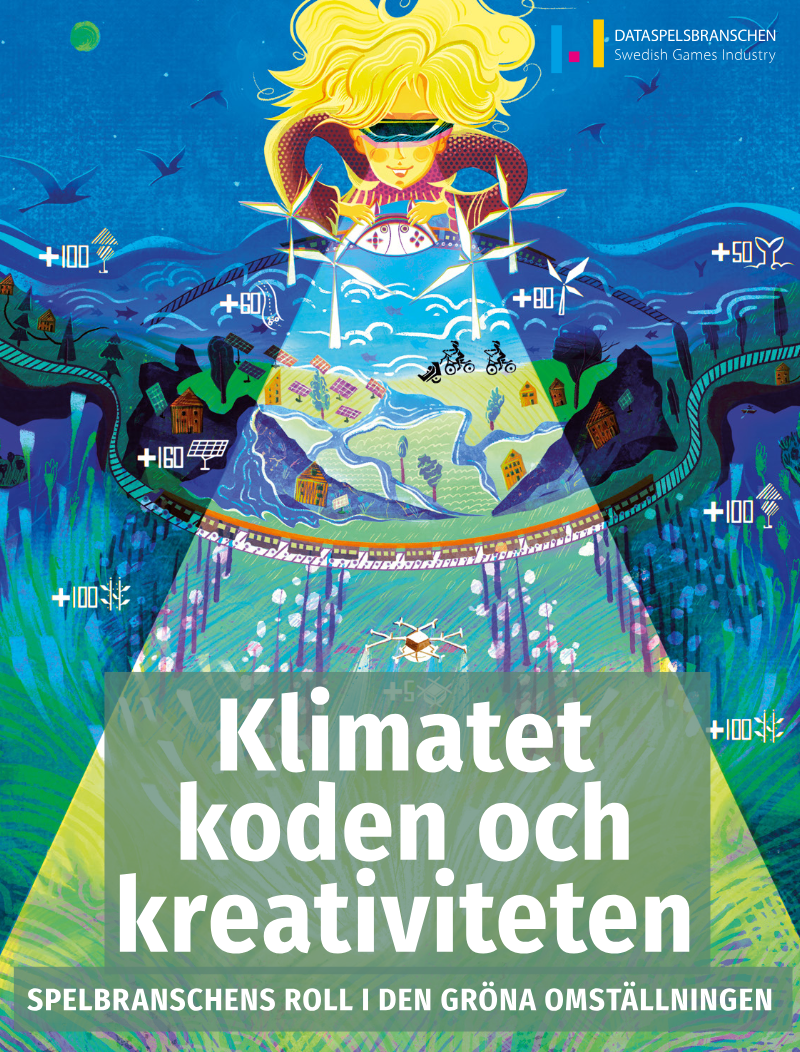
Spelbranschens roll i den gröna omställningen
Sweden’s gaming sector is positioned as a low‑impact yet high‑potential catalyst for the nation’s green transition. Compared with other Swedish industries and the global gaming market, the sector’s carbon emissions are modest, with the majority of resource use occurring during gameplay—a phase that remains difficult to quantify. By leveraging built‑in eco‑modes, energy consumption can fall by 20‑50 % per player, yet adoption is currently around two percent; making such modes the default could raise the estimated global saving to three percent.
The report highlights how core gaming technologies—game engines, GPUs, extended reality and artificial intelligence—are already being transferred to sectors such as infrastructure, mining and climate modelling, delivering measurable efficiency gains and emission reductions. Immersive tools like AR/VR, digital twins and AI are deployed in public‑sector pilots, including Sweco’s metaverse dialogue platform, Nacka’s “Greenovation Twin” and Vasakronan’s Twinfinity, to visualise climate impacts, streamline urban planning and cut travel‑related emissions. Hackathons and serious‑game prototypes further accelerate climate‑focused solutions, while gamified training and board‑game initiatives foster behavioural change and generate transport‑usage data.
Design guidance stresses that games must promote collective action and embed climate objectives into social norms, rather than focusing solely on individual behaviour. Educational programmes and events such as the 2023 Green Game Jam, which linked gameplay to snow‑leopard conservation and generated donation‑linked purchases, demonstrate the sector’s capacity to mobilise large audiences—evidenced by the UN‑backed “Peoples’ Climate Vote” reaching thirty million mobile users.
Collaboration across more than fifty studios
- Gaming eco-modes can reduce energy consumption by 20–50% per player, yet current adoption remains at approximately two percent.
- Making eco-modes the default setting across the global gaming industry could potentially reduce total energy consumption by three percent.
- Core gaming technologies—including game engines, GPUs, AI, and extended reality—are being applied to infrastructure, mining, and climate modeling to drive measurable efficiency gains.
- Public-sector projects like Sweco’s metaverse platform, Nacka’s “Greenovation Twin,” and Vasakronan’s Twinfinity utilize digital twins and AR/VR to streamline urban planning and reduce travel-related emissions.
- The UN-backed “Peoples’ Climate Vote” demonstrated the sector's mobilization potential by reaching thirty million mobile users.
DataspelsbranschenJan 2024
Report68 pages
Spelutvecklarindex 2023: Swedish Games Industry
The Swedish games industry serves as a powerhouse of global digital entertainment, characterized by rapid revenue expansion and a vast international footprint. In 2022, the sector generated 86.5 billion SEK in global revenue, marking a 47% increase largely fueled by aggressive acquisition strategies. With 392 Swedish-owned studios operating across 59 countries, the industry employs approximately 25,000 people worldwide, including 8,445 domestic staff. This reach is immense, with Swedish-developed titles accumulating nearly 7 billion downloads and engaging roughly one-quarter of the global population.
Despite this commercial success, the industry faces structural bottlenecks that threaten long-term sustainability. A persistent talent shortage remains the primary constraint on production capacity, exacerbated by challenges regarding work permits and a lack of formal financial support structures for early-stage startups compared to European peers. To mitigate these issues, studios are increasingly leveraging productivity-enhancing technologies like generative AI, standardized game engines, and collaborative regional ecosystems that bridge the gap between specialized education and professional development.
Social and operational evolution remains a core priority for the sector. Efforts to improve gender diversity are yielding tangible results, with women accounting for nearly half of all new hires in 2022, bringing female representation to 23.4% of the workforce. Simultaneously, the industry is pivoting toward broader sustainability goals, focusing on reducing environmental footprints and fostering healthy, inclusive workplace cultures. As the sector navigates the complexities of hybrid work environments and the integration of emerging technologies, it continues to function as a vital catalyst for innovation, driving value that extends well beyond the boundaries of traditional game development.
- The Swedish games industry generated 86.5 billion SEK in global revenue in 2022, representing a 47% year-over-year increase driven largely by acquisition strategies.
- Swedish-owned studios now number 392 across 59 countries, employing 25,000 people globally with 8,445 staff based domestically.
- Swedish-developed titles have reached a massive scale, accumulating nearly 7 billion downloads and engaging approximately 25% of the global population.
- Gender diversity is improving, with women accounting for nearly 50% of all new hires in 2022, raising total female workforce representation to 23.4%.
- A persistent talent shortage and difficulties with work permits remain the primary constraints on production capacity, compounded by a lack of early-stage financial support compared to other European markets.
+2
DataspelsbranschenOct 2023
Report55 pages
PowerUP Games Industry: A Report on the Swedish Games Industry
The Swedish games industry stands as a globally dominant economic and cultural force, generating €5.8 billion in total revenue as of 2021. Despite its immense success—evidenced by the fact that one in four people worldwide has interacted with a Swedish-made title—the sector operates without the cohesive national strategic support afforded to traditional industries. The primary thesis posits that while regional clusters and private investment have fueled historical growth, the industry now faces systemic bottlenecks that threaten its long-term competitiveness and sustainability.
The most critical barrier to continued expansion is a severe talent deficit, where the demand for specialized labor significantly outpaces the output of domestic educational institutions. This shortage is compounded by administrative hurdles in international recruitment, a lack of industry-aligned educational classifications, and insufficient public funding for early-stage prototypes. Furthermore, the industry’s role as a catalyst for cross-sector technological innovation—particularly in healthcare, manufacturing, and simulation—remains under-leveraged due to outdated public support models that fail to recognize the unique service-driven nature of digital game development.
To secure its future, the industry requires a unified national strategy that bridges the gap between regional hubs and central government policy. Essential interventions include reforming labor migration regulations, increasing investment in specialized research schools, and establishing dedicated funding mechanisms for small, early-stage enterprises. By integrating the games sector into Sweden’s broader public infrastructure and fostering deeper collaboration between academia and industry, the nation can mitigate current growth risks and maintain its position as a world-class leader in digital entertainment and technological innovation.
- The Swedish games industry generated €5.8 billion in revenue as of 2021, with one in four people globally having interacted with a Swedish-made title.
- A severe talent deficit exists where the demand for specialized labor significantly outpaces the output of domestic educational institutions.
- The industry lacks a cohesive national strategy, relying instead on regional clusters and private investment, which creates systemic bottlenecks for long-term sustainability.
- Administrative hurdles in international recruitment and a lack of industry-aligned educational classifications are primary barriers to addressing the current labor shortage.
- Public support models are outdated and fail to recognize the service-driven nature of game development, resulting in insufficient funding for early-stage prototypes.
+1
The Swedish Games IndustryJan 2023
Report36 pages
Vägar in i spelbranschen: Kompetens, utbildning och konsten att skapa spel (2023)
The Swedish game industry is currently experiencing a critical talent shortage that threatens its long-term competitiveness and growth. With the sector recording 1,348 new hires in 2021 alone, domestic educational institutions are failing to meet demand, producing fewer than half of the required professionals. This imbalance is exacerbated by the rapid expansion of the industry and the lack of official recognition for game development as a formal academic discipline, which complicates data tracking and strategic planning. To sustain its global standing, the industry must bridge the gap between educational output and the evolving needs of studios, particularly in core disciplines such as programming, design, and graphics.
The Swedish educational landscape is characterized by a robust ecosystem of vocational programs and academic institutions that prioritize project-based, team-oriented learning. While these programs are highly effective at producing job-ready graduates, the reliance on international recruitment remains essential, with roughly one-third to half of the workforce originating from abroad. However, this dependency is hampered by significant bureaucratic obstacles, including restrictive work permit policies for non-EU vocational students and complex regulations regarding international remote work. Furthermore, the industry faces persistent challenges related to housing shortages and the need to improve gender diversity within the workforce.
To ensure future stability, the industry must foster closer alignment between academic research funding and practical studio requirements. Strengthening the pipeline for domestic talent while simultaneously streamlining pathways for international professionals is vital. By formalizing game development within the academic framework and addressing the administrative barriers that currently impede the retention of global talent, Sweden can maintain its position as a leading hub for game development. These systemic adjustments are necessary to transform the current recruitment bottleneck into a sustainable model for continued innovation and economic success.
- The Swedish game industry faces a critical talent shortage, with domestic educational institutions producing fewer than half of the professionals required to meet the demand of 1,348 new hires recorded in 2021.
- Between one-third and one-half of the current Swedish game industry workforce consists of international talent, highlighting a heavy reliance on global recruitment to sustain growth.
- Restrictive work permit policies for non-EU vocational students and complex regulations regarding international remote work act as significant bureaucratic barriers to maintaining the necessary talent pipeline.
- The lack of official recognition for game development as a formal academic discipline hinders effective data tracking and strategic planning for the sector.
- Industry growth is further constrained by domestic infrastructure challenges, specifically persistent housing shortages and a need to improve gender diversity within the workforce.
+1
DataspelsbranschenJan 2023
Report68 pages
Game Developer Index 2023: Sweden
The Swedish games industry reached a significant financial milestone in 2022, with domestic revenues rising 13% to €3.1 billion and total global revenue, including foreign subsidiaries, surging 40% to €8.1 billion. This growth is characterized by a massive international footprint, as Swedish-owned companies now operate nearly 400 studios across 59 countries. Large-scale acquisitions, such as Embracer Group’s multi-billion euro purchase of Asmodee, have shifted the employment landscape, resulting in Swedish firms employing nearly twice as many people abroad as they do domestically. Within Sweden, the number of active companies grew by 20% to 939, supported by a maturing ecosystem of regional hubs and specialized educational programs.
Despite this commercial success, the industry faces a critical production capacity bottleneck driven by a chronic shortage of skilled labor. While domestic employment grew to over 8,400 positions and diversity improved—with women accounting for over 44% of new entrants—the sector remains heavily dependent on foreign recruitment to sustain its trajectory. Furthermore, Swedish startups face a competitive disadvantage due to a lack of formal financial support structures compared to other European nations, forcing many to rely on organic growth or early acquisition rather than domestic venture capital.
The sector is also navigating complex structural and environmental challenges. Sustainability efforts are increasingly focused on Scope 3 emissions, which represent over 99% of the industry’s carbon footprint, while legal and ethical concerns regarding generative AI and online radicalization have emerged as new operational risks. Geopolitical instability, particularly the war in Ukraine, continues to impact global workforces. Nevertheless, the integration of the Swedish E-sports Association into the Swedish Sports Confederation and the continued dominance of major entities like King, Mojang, and Stillfront Group underscore Sweden’s position as a premier global hub for game development and digital entertainment.
- The Swedish games industry saw total global revenue reach €8.1 billion in 2022, a 40% increase driven by aggressive international expansion and large-scale acquisitions like Embracer Group’s purchase of Asmodee.
- Domestic revenue in Sweden rose 13% to €3.1 billion in 2022, supported by a 20% growth in active companies to a total of 939 studios.
- Swedish-owned game companies now operate nearly 400 studios across 59 countries, with the industry employing nearly twice as many people abroad as it does within Sweden.
- A chronic shortage of skilled labor remains a critical production bottleneck, forcing the industry to rely heavily on foreign recruitment despite domestic employment growing to over 8,400 positions.
- Swedish startups face a competitive disadvantage due to a lack of formal domestic venture capital, often forcing them to rely on organic growth or early acquisition.
DataspelsbranschenJan 2023