Loading the document
Key insights
5 slides
Framework utility
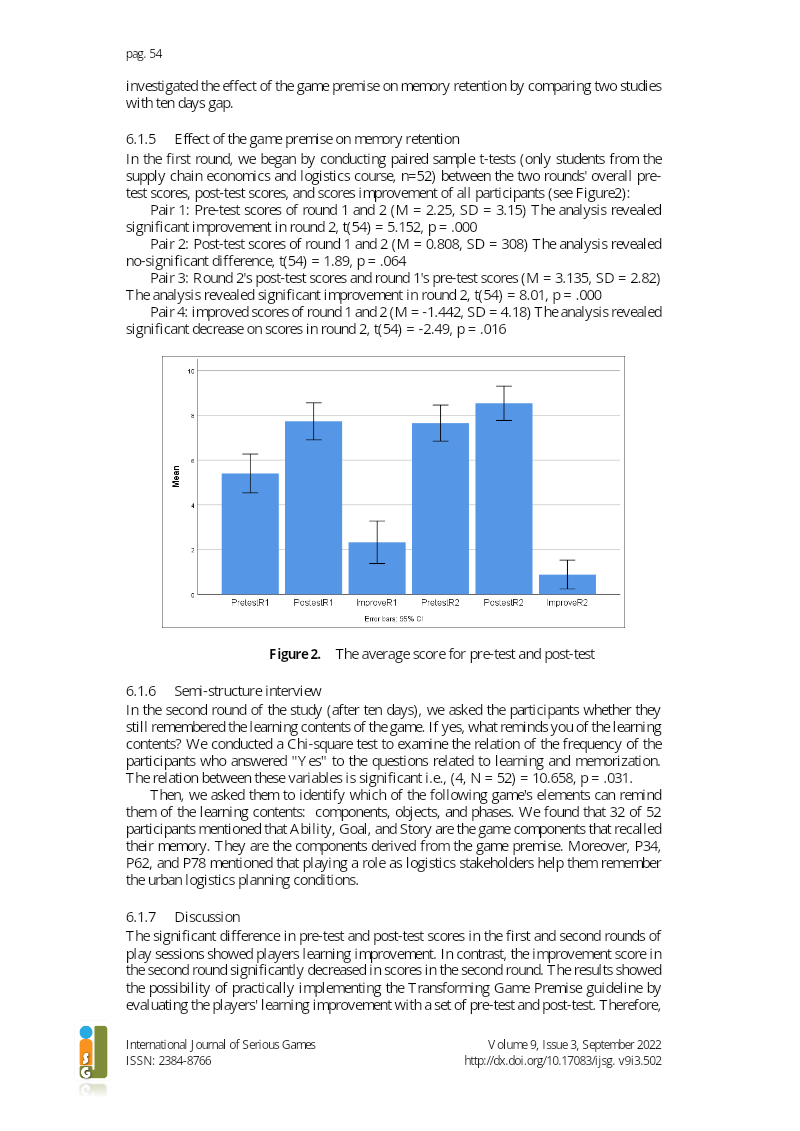
The TwinSpace framework enables rapid prototyping by decoupling physical inputs from virtual game entities.
Designers can iterate on gameplay mechanics without rebuilding core systems. This allows for quick adjustments to interface configurations.
1 / 5
- 01The TwinSpace framework enables rapid prototyping of mixed-reality multiplayer games by decoupling physical inputs from virtual game entities, allowing designers to iterate on mechanics without rebuilding core systems.See it on page 1
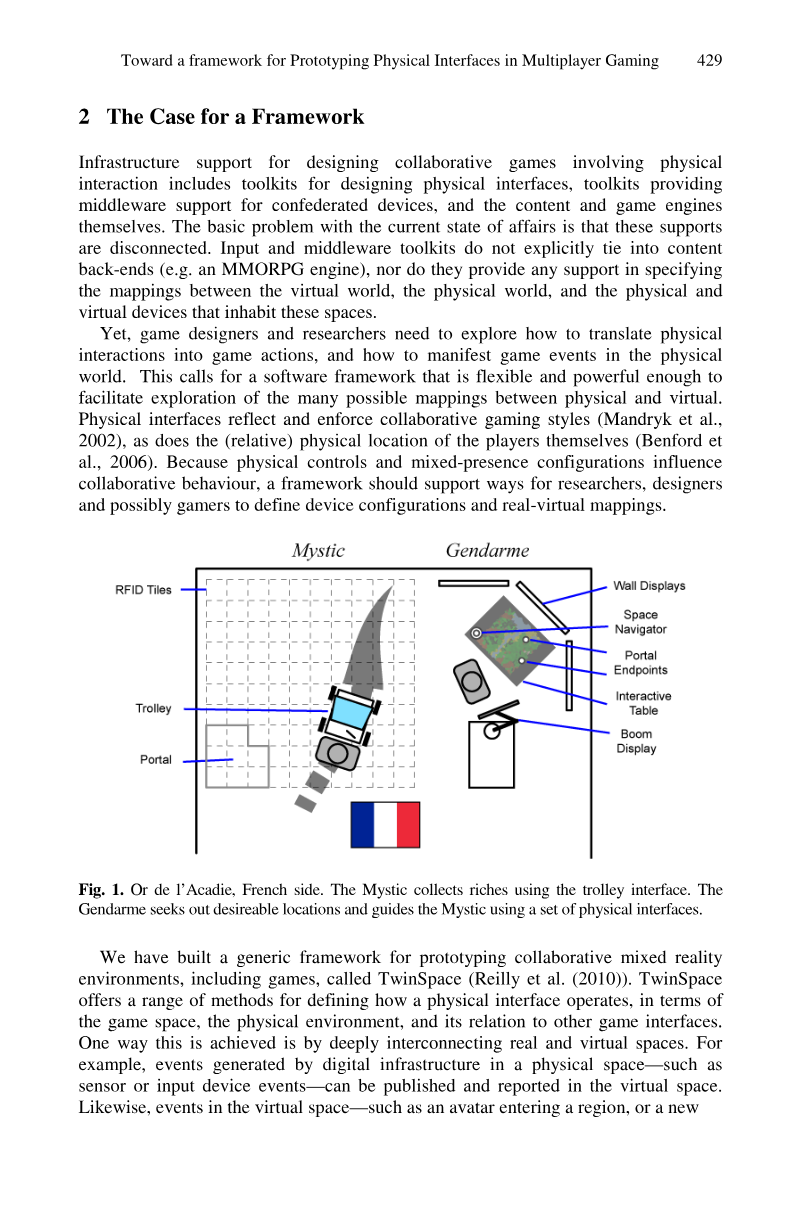
- 02The framework successfully integrates heterogeneous hardware, such as RFID tiles and wall displays, to facilitate asymmetric gameplay roles as demonstrated in the prototype 'Or de l'Acadie'.See it on page 2
- 03Scalability is currently limited by message latency and synchronization issues that worsen as the number of connected sensors increases.See it on page 4
- 04Development workflows are hindered by the lack of a standardized translation layer, which complicates the integration of diverse input and output components with mismatched data formats.See it on page 4
- 05The absence of a global naming mechanism forces developers to rely on hard-coded identifiers, creating significant friction in the prototyping and configuration process.See it on page 4
- 06Future mixed-reality development frameworks must prioritize standardized communication protocols and unified entity naming conventions to support complex, multi-sensor environments.See it on page 1
Ask AI about this report
Summary
The TwinSpace framework serves as a platform for the rapid prototyping of physical interfaces in mixed-reality, multiplayer gaming. The primary thesis posits that current game development toolkits fail to bridge the gap between physical interaction hardware and virtual game engines. By repurposing an existing framework designed for mixed-presence collaborative work, the research demonstrates that developers can effectively intertwine real and virtual objects, define spatial mappings between physical and digital environments, and integrate heterogeneous sensor arrays to foster novel collaborative gameplay styles.
The framework’s utility was evaluated through the development of three game prototypes, including a scavenger hunt titled Or de l'Acadie. This game utilized diverse physical interfaces—such as RFID tiles, wall displays, and specialized trolleys—to facilitate asymmetric roles between players. The study highlights that the framework’s ability to decouple and re-map physical inputs to virtual game entities allowed for rapid iterative design, enabling designers to quickly adjust gameplay mechanics and interface configurations without rebuilding core systems.
Despite these successes, the prototyping process identified three critical technical limitations that hinder current development workflows. First, the framework struggles with message latency and synchronization as the number of connected sensors increases, raising concerns regarding scalability. Second, the system lacks a robust translation layer to resolve format mismatches between diverse input and output components. Finally, the absence of a standardized, global naming mechanism for entities forces developers to rely on hard-coded identifiers, which complicates the prototyping process. These findings suggest that future iterations of game-design frameworks must prioritize standardized communication protocols, sophisticated data translation layers, and unified naming conventions to fully support the complex requirements of mixed-reality multiplayer environments.