1 free read left. Create a free account for unlimited reading + AI research.
Create free accountReport Dataspelsbranschen
1 free read left. Create a free account for unlimited reading + AI research.
Create free accountReportDataspelsbranschen
The industry continues to expand.
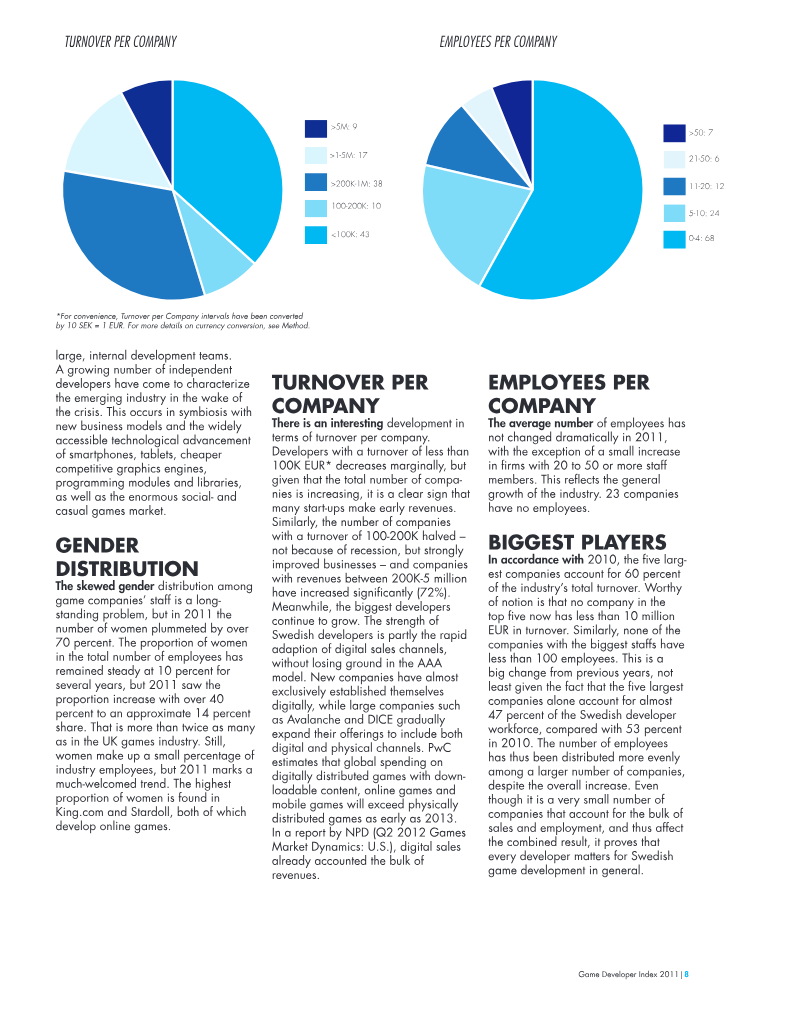
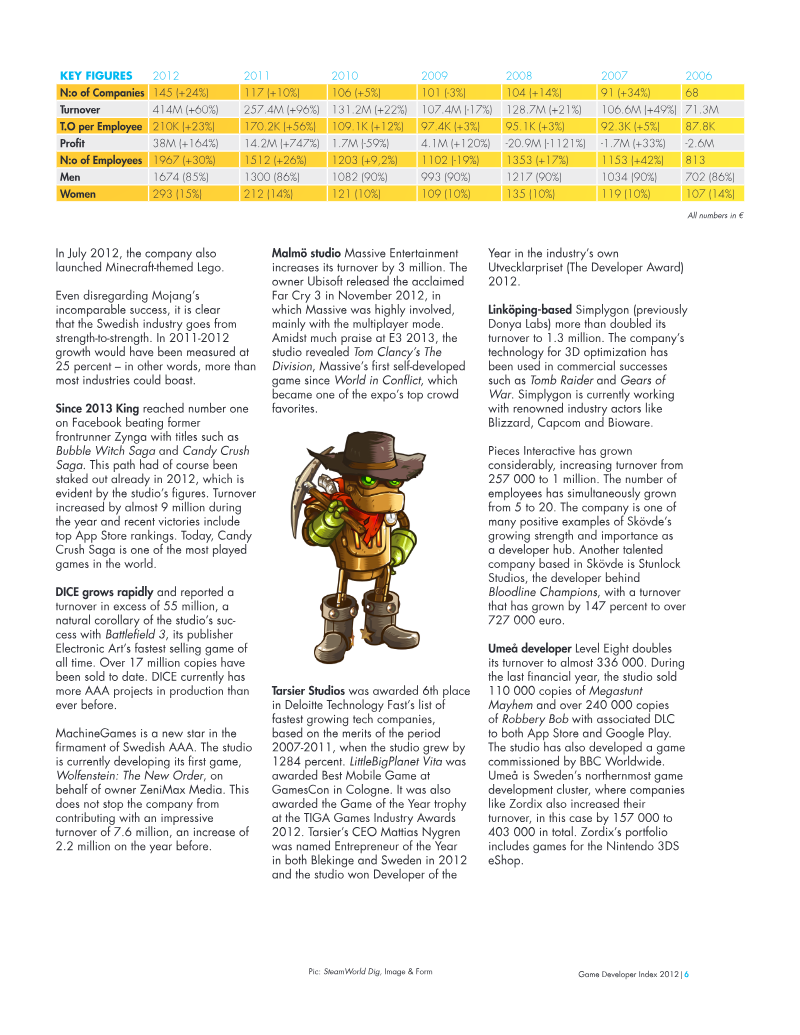
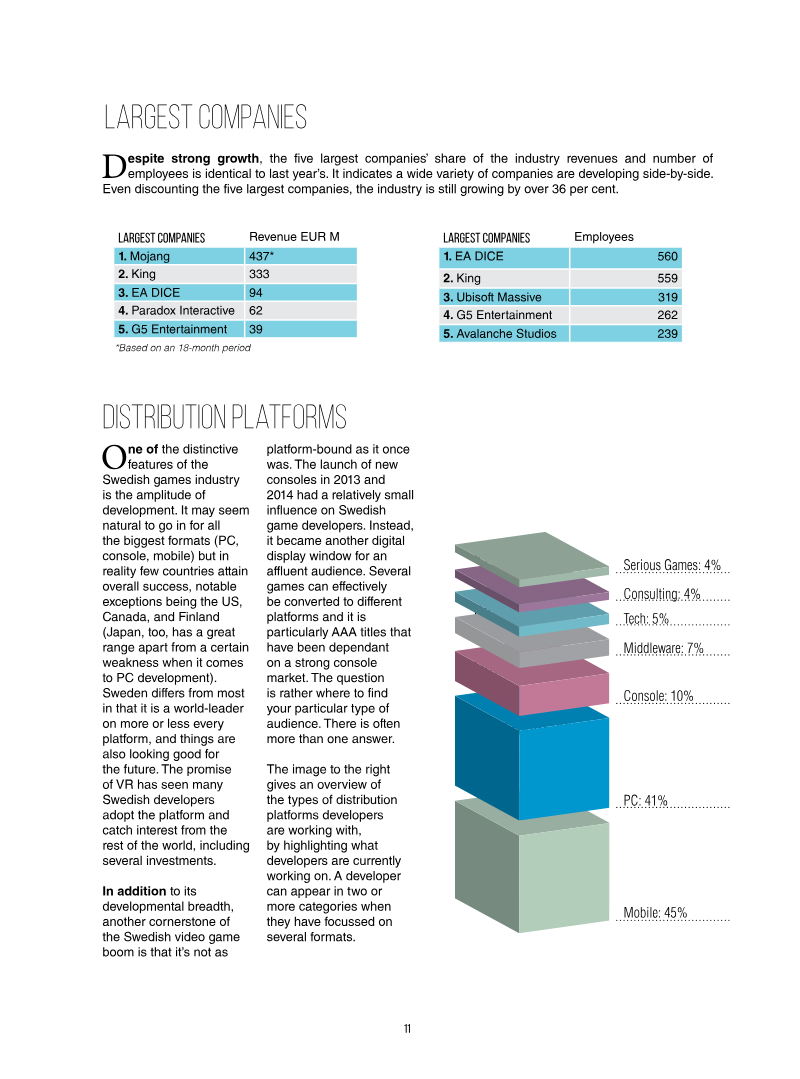
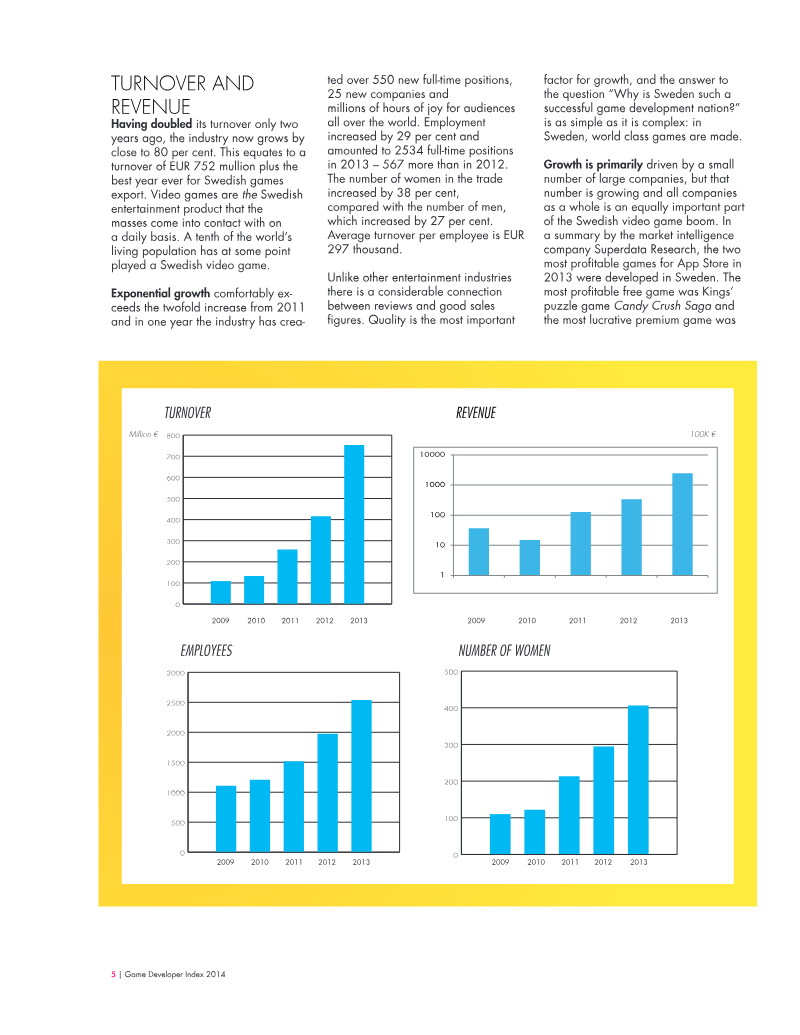
The Swedish game industry reached a pivotal milestone in 2011, characterized by record-breaking financial performance and a fundamental transition in business models. Total turnover surged to 257 million EUR, representing a compound annual growth rate of nearly 30 percent over the preceding five-year period. This expansion was mirrored by a 26 percent increase in the workforce, which reached 1,512 employees across 257 active companies. The sector’s success is anchored by a diverse ecosystem ranging from global AAA powerhouses like DICE to independent sensations such as Mojang, both of which have solidified Sweden’s reputation as a premier hub for international digital content.
A defining characteristic of this growth is the decisive shift from traditional retail to digital distribution, mobile platforms, and social gaming. Developers are increasingly adopting service-oriented models, utilizing microtransactions, downloadable content, and free-to-play mechanics to extend product lifecycles and enhance monetization. This evolution has necessitated the adoption of sophisticated performance metrics, including daily active users and effective cost per mille, to navigate rising user acquisition costs and platform fragmentation. While the industry remains somewhat polarized, with the five largest firms generating 60 percent of total turnover, the broader ecosystem continues to benefit from a maturing network of specialized subcontractors and innovative financing strategies like crowdfunding.
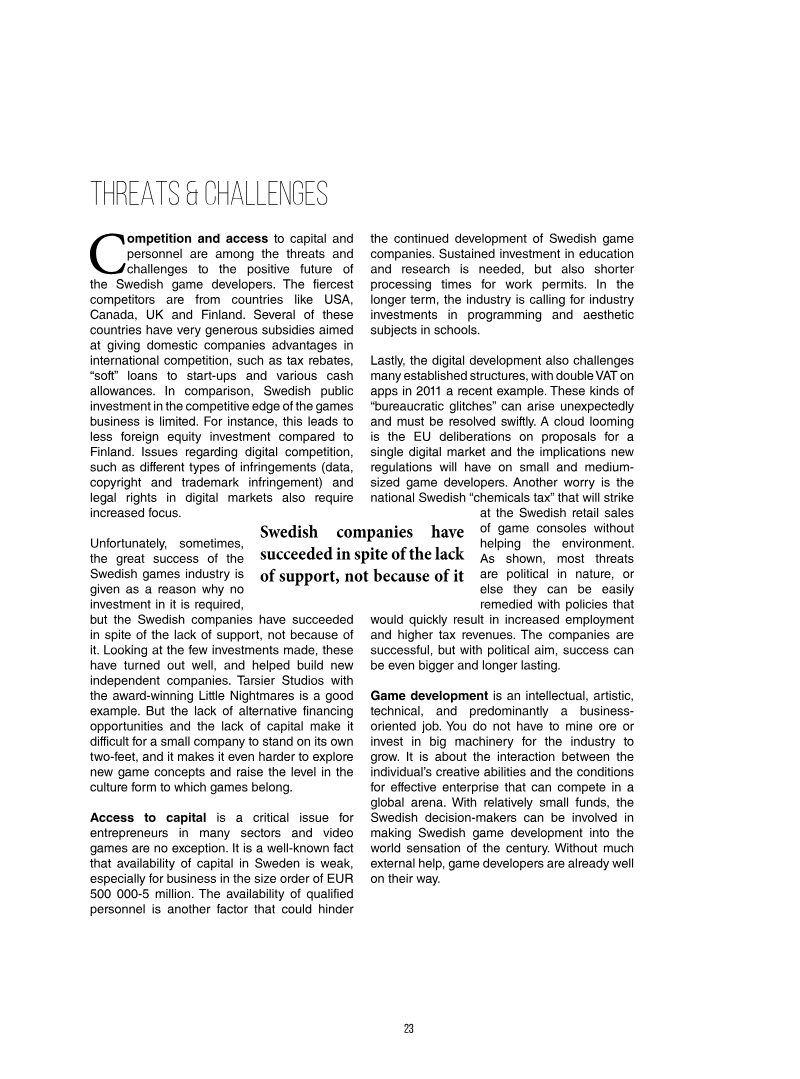
Despite this robust trajectory, the industry faces structural hurdles that could impede future scaling. The primary constraints identified are a tightening supply of specialized talent and limited access to capital. Sustained growth will depend on the sector’s ability to address these human resource and financial challenges while continuing to adapt to the demands of ubiquitous, cross-platform gaming. Nevertheless, the industry remains well-positioned to outperform the broader Swedish economy, provided it can maintain its momentum in international markets and successfully navigate the complexities of an increasingly digital-first landscape.
Dataspelsbranschen · 2025
Dataspelsbranschen · 2025
Dataspelsbranschen · 2025
Dataspelsbranschen · 2025
Dataspelsbranschen · 2025
Dataspelsbranschen · 2025
Dataspelsbranschen · 2024
Dataspelsbranschen · 2024
Swedish Games Industry · 2024



Swedish Games Industry · 2024
Dataspelsbranschen · 2024
Dataspelsbranschen · 2024
The Swedish Games Industry · 2024