Report1 pages
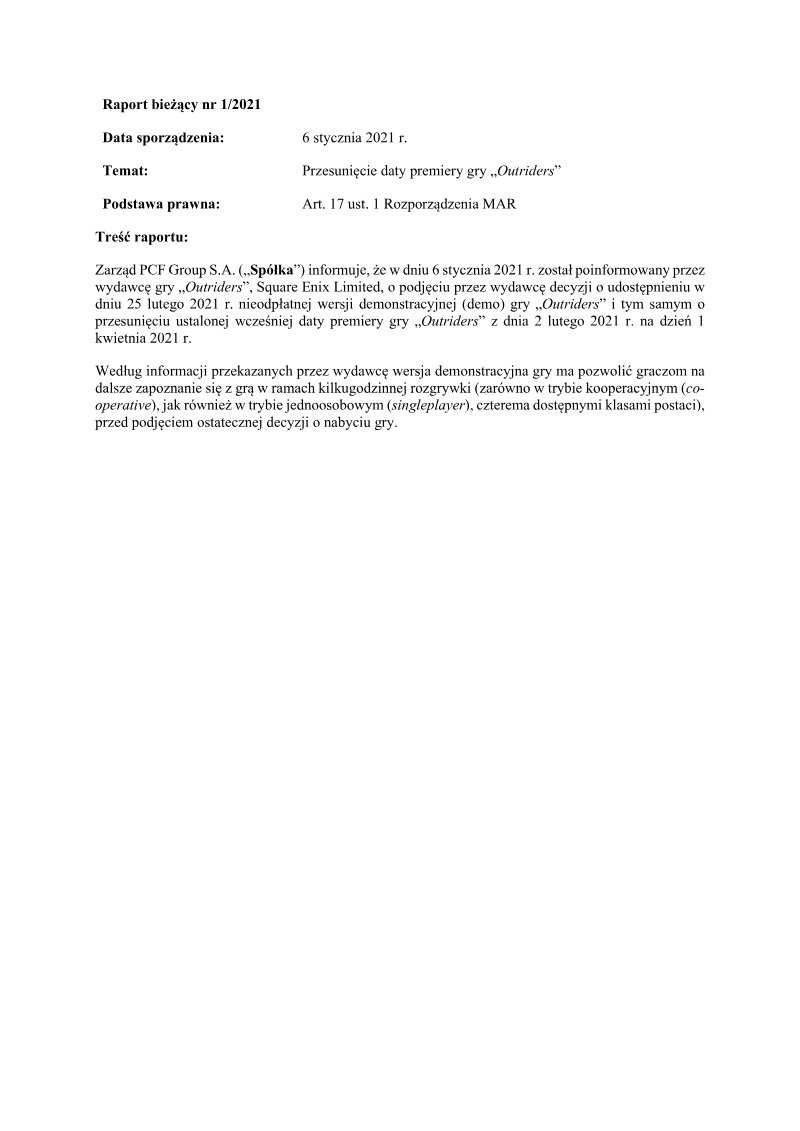
Raport Bieżący Nr 1/2021: Przesunięcie Daty Premiery Gry Outriders
- Square Enix Limited has postponed the official release date of the game 'Outriders' from 2 February 2021 to 1 April 2021.
- A free demo for 'Outriders' will be released on 25 February 2021 to assist consumer purchase decisions.
- The demo will feature several hours of gameplay, supporting both single-player and cooperative modes across all four character classes.
PCF Group

Report13 pages
Rise of the Co-Op Games
- Cooperative games significantly outperform the market, accounting for 36% of all units sold on Steam in 2023 despite representing only 6% of total releases.
- The average co-op game on Steam sells 40,000 units, which is eight times the 5,000-unit average achieved by non-cooperative titles.
- Market success is highly concentrated, with Palworld alone accounting for nearly half of the 40 million co-op units sold during the first half of 2024.
Video Game InsightsJan 2024
Report2 pages
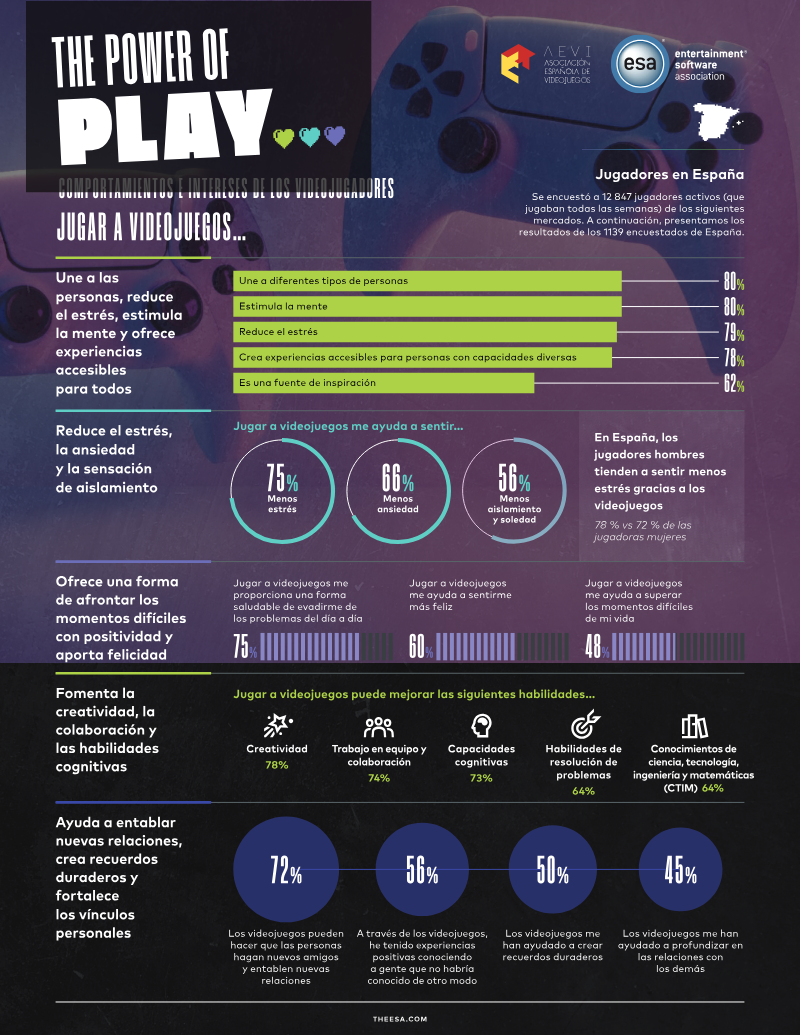
The Power of Play: España
- Gaming is primarily used for emotional regulation in Spain, with 78% of men and 75% of women reporting that it effectively reduces stress and anxiety.
- Social connection is a major driver for the Spanish gaming population, with 62% of men and 55% of women citing it as a primary motivation for play.
- Online multiplayer engagement is significantly higher among men, with approximately 80% reporting they play with others online, whereas women show a stronger preference for solo play.
AEVIJan 2024