Key insights
6 slides
Market outlook
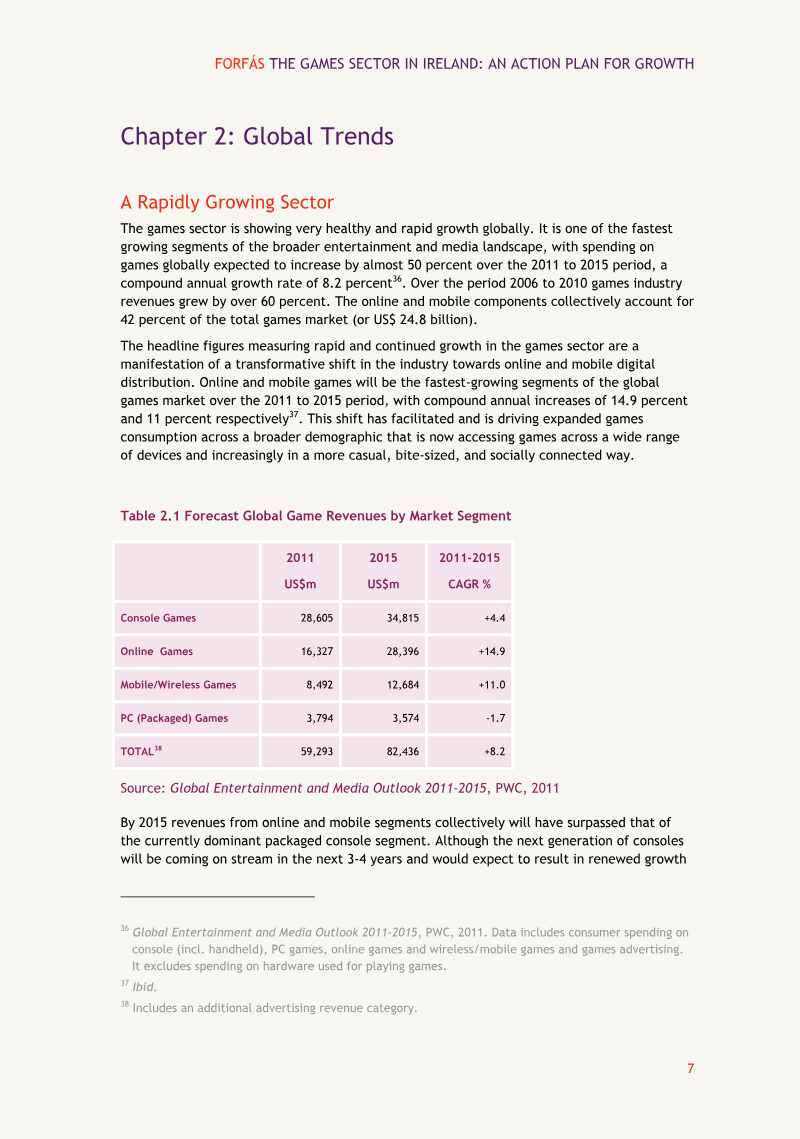
Global games revenues are forecast to reach US$82.4bn by 2015.
Revenues are forecast to rise from US$59.3bn in 2011, with online and mobile segments overtaking packaged console games.
Growth segments. Online (14.9% CAGR) and mobile (11.0% CAGR) segments are forecast to overtake packaged console games.
1 / 6
- 01Global games revenues are forecast to grow from US$59.3bn in 2011 to US$82.4bn by 2015, with online (14.9% CAGR) and mobile (11.0% CAGR) segments overtaking packaged console games.See it on page 36
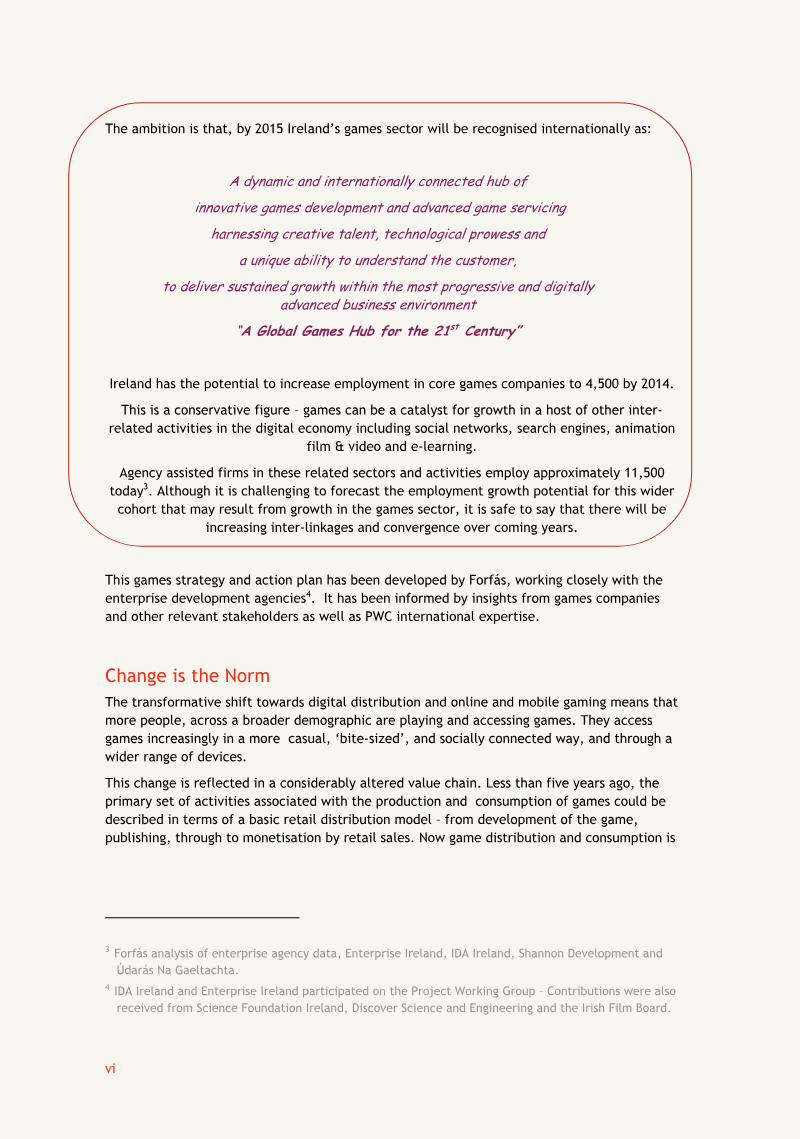
- 02Ireland's core games employment has grown fivefold since 2004 to just over 2,000 people in 2011, with a target of 4,500 by 2014.See it on page 7
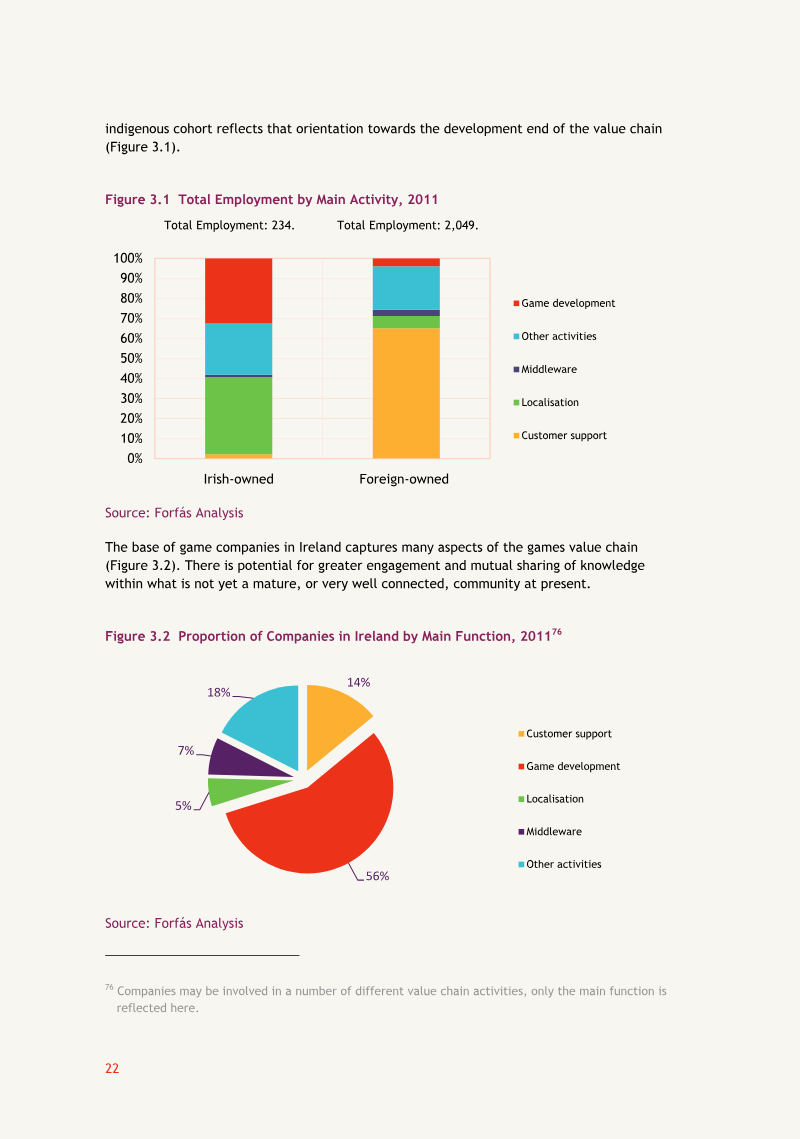
- 03Foreign-owned firms account for roughly 90% of Ireland's games jobs, concentrated in customer support, localisation, and game servicing, while indigenous firms are mostly micro-firms focused on development.See it on page 51
- 04Creative game development in Ireland remains small relative to competitors such as Canada, France, and South Korea, making the sector's growth dependent on foreign direct investment rather than automatic.See it on page 71
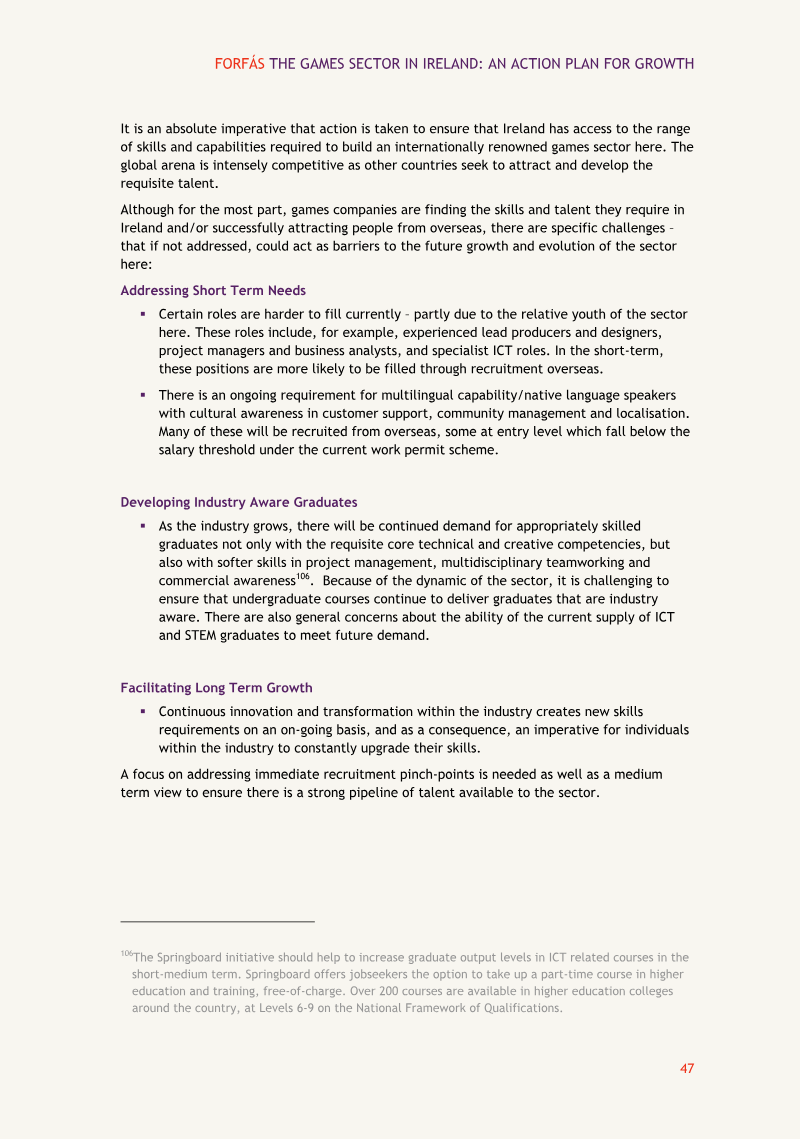
- 05Talent shortages in senior production, design, and multilingual roles, a competitive labour tax wedge, underused relief programmes, and the lack of EU State Aid-compliant creative content incentives weaken Ireland's appeal to games firms.See it on page 76
- 06Early-stage online and mobile start-ups struggle to get funding because iterative business models do not fit standard venture capital expectations, and R&D tax credits are poorly suited to creative, iterative development.See it on page 58
- 07The report recommends a coordinated strategy led by a dedicated two-year Cluster Development Team, alongside skills development, a review of Enterprise Ireland's Competitive Start Fund, copyright litigation reform, and closing Ireland's broadband gap with comparable EU countries.See it on page 17
Ask AI about this report
Summary
Forfás's action plan for Ireland's games sector argues that the industry is growing rapidly and that Ireland can become a global games hub for the 21st century, but only if policy is deliberately redesigned to capture the opportunity. Global games revenues are forecast to rise from US$59.3bn in 2011 to US$82.4bn by 2015, with online (14.9% CAGR) and mobile (11.0%) segments overtaking packaged console games. Against this backdrop, the report frames growth as neither automatic nor guaranteed, and it recommends a coordinated, agile strategy led by a dedicated two-year Cluster Development Team.
Ireland's core games employment has grown fivefold since 2004 to just over 2,000 people in 2011, with a target of 4,500 by 2014. This growth is driven largely by foreign direct investment: foreign-owned firms account for roughly 90 percent of jobs, concentrated in customer support, localisation, and game servicing. Indigenous companies are predominantly micro-firms focused on development, and creative game development remains small relative to competitor countries such as Canada, France, and South Korea. The broader ecosystem, including related sectors like remote gambling, adds a further several thousand workers, though games-specific attribution is difficult to measure.
The report identifies talent, finance, and policy fit as the main constraints. Senior production, design, and multilingual roles are often filled from overseas, and a competitive labour tax wedge, underused relief programmes, and the absence of EU State Aid-compliant creative content incentives weaken Ireland's appeal. Early-stage online and mobile start-ups struggle to secure funding because iterative business models do not fit standard venture capital expectations, and R&D tax credits are poorly suited to creative, iterative development. Its recommendations span skills development, a review of Enterprise Ireland's Competitive Start Fund, copyright litigation reform, and closing Ireland's broadband gap with comparable EU countries.