Game Development reports and market data
Documents
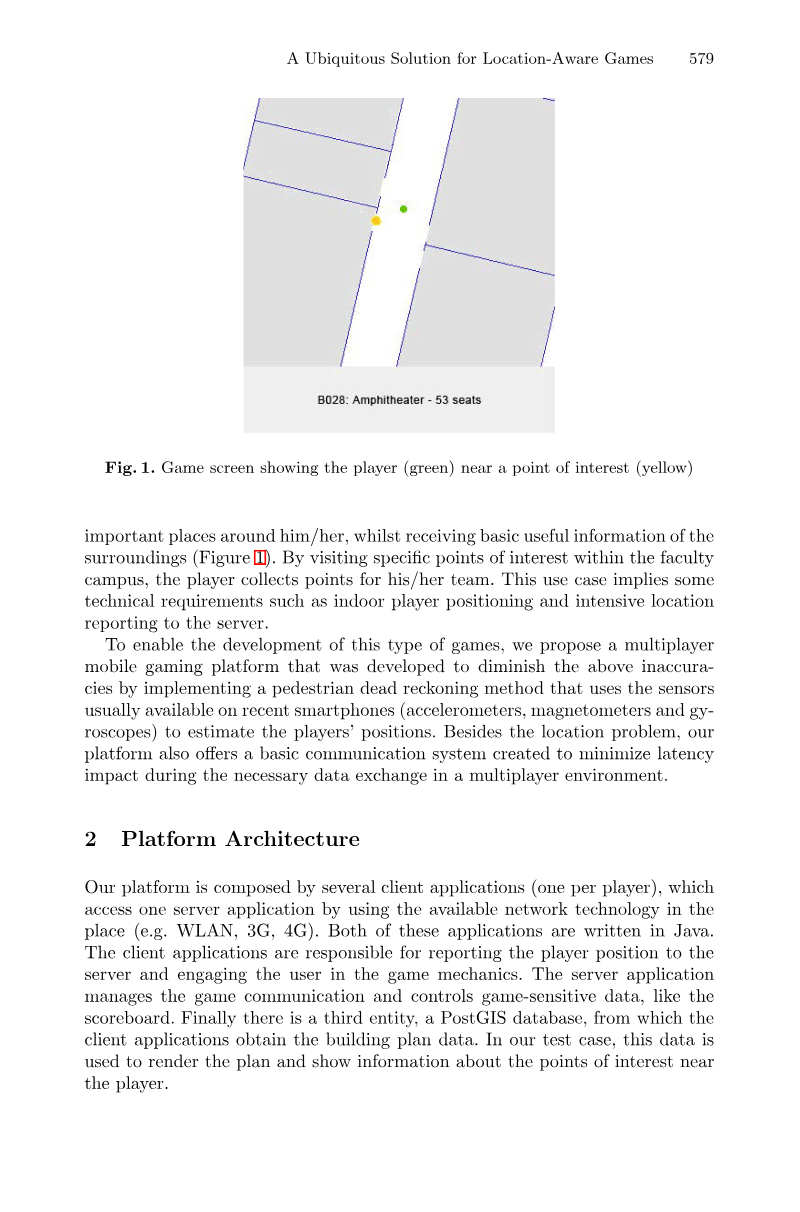
A Ubiquitous Solution for Location-Aware Games
This research presents a technical framework designed to overcome the limitations of GPS and wireless positioning in location-aware mobile gaming, particularly within indoor environments.
- Integrating smartphone accelerometers, magnetometers, and gyroscopes into a Pedestrian Dead Reckoning (PDR) system provides a viable alternative to GPS for indoor location-aware gaming.
- The PDR framework improves accuracy by using a direction cosine matrix for sensor fusion and a magnetic disturbance detection technique to ignore unreliable magnetometer data.
- Step detection is managed via a state machine, while step length is calculated using a weighted linear regression model that accounts for individual gait dynamics.
2nd Workshop on Game Development and Model-Driven Software Development
The second workshop on Game Development and Model-Driven Software Development (GD&MDSD) serves as a collaborative platform for researchers and industry professionals to explore the integration of model-driven engineering into the game production lifecycle.
- Model-driven software development (MDSD) is being positioned as a solution to manage the increasing complexity and multidisciplinary nature of modern game production.
- Adopting MDSD techniques allows developers to shift focus from low-level technical implementation to higher-level problem domains, improving iteration speeds and documentation.
- The integration of domain-specific languages (DSLs) and automated code generation reduces manual implementation errors and streamlines development workflows.
MDSD for Games with Eclipse Modeling Technologies
The application of Model Driven Software Development (MDSD) to 3D game development offers a strategic solution to the industry’s persistent challenge of cross-platform compatibility.
- Model Driven Software Development (MDSD) addresses cross-platform compatibility challenges in 3D game development by using a Platform Independent Model (PIM) to automate the generation of platform-specific code.
- The Eclipse Modeling Framework ecosystem—specifically Xtext, ATL, and Xpand/Xtend—enables the creation of tool chains that translate high-level game requirements like geometry and animation into optimized artifacts.
- MDSD is particularly effective for managing shader programs, simplifying the process of targeting diverse graphics API versions and varying hardware configurations.
Mobile Gaming with Indirect Sensor Control
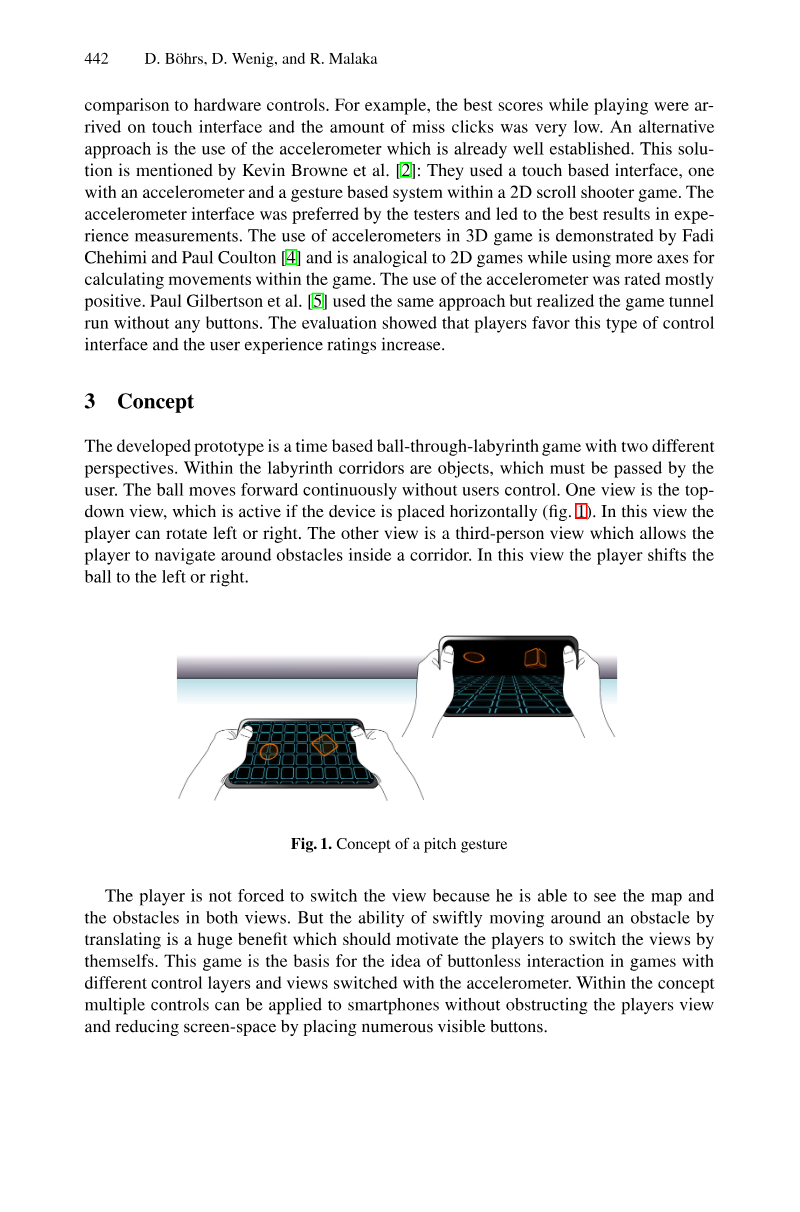
This research explores the development of intuitive, buttonless control interfaces for 3D mobile games, addressing the common challenge of balancing complex input requirements with the need to maintain an unobstructed field of view.
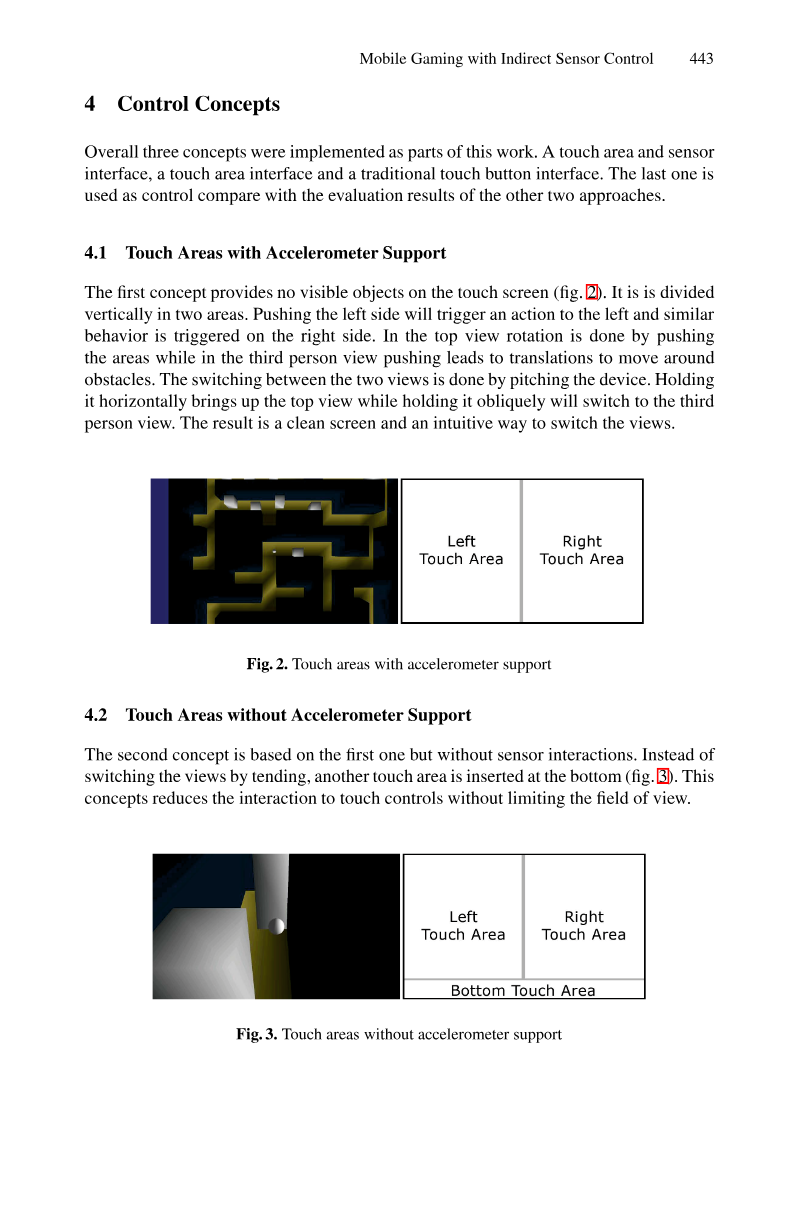
- Integrating accelerometer-based indirect control with touch-area interfaces allows for buttonless 3D mobile game designs that preserve screen real estate.
- Offloading view-switching tasks to the device's tilt sensor reduces the reliance on static on-screen UI elements, potentially lowering input errors and increasing player comfort.
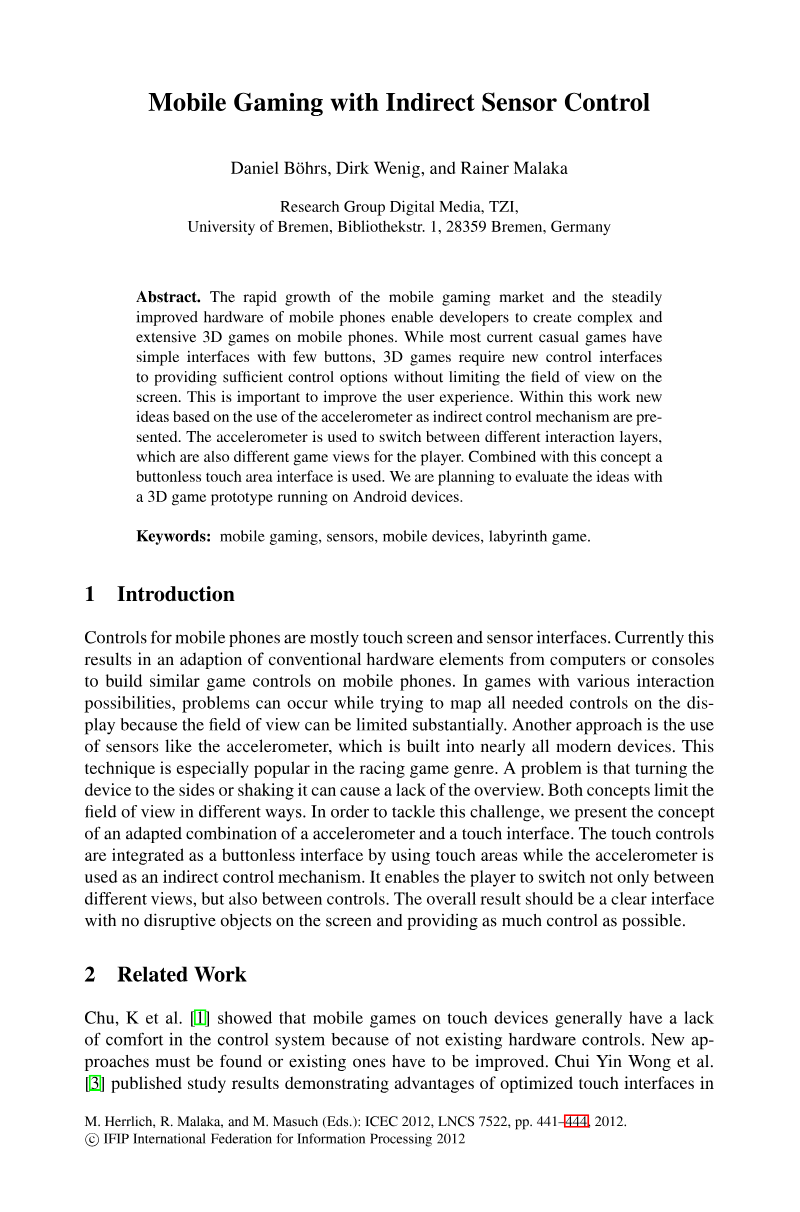
- The research evaluates three specific control schemes—a hybrid accelerometer-touch model, a touch-only model, and a traditional six-button layout—to determine the most effective interface for complex mobile mechanics.
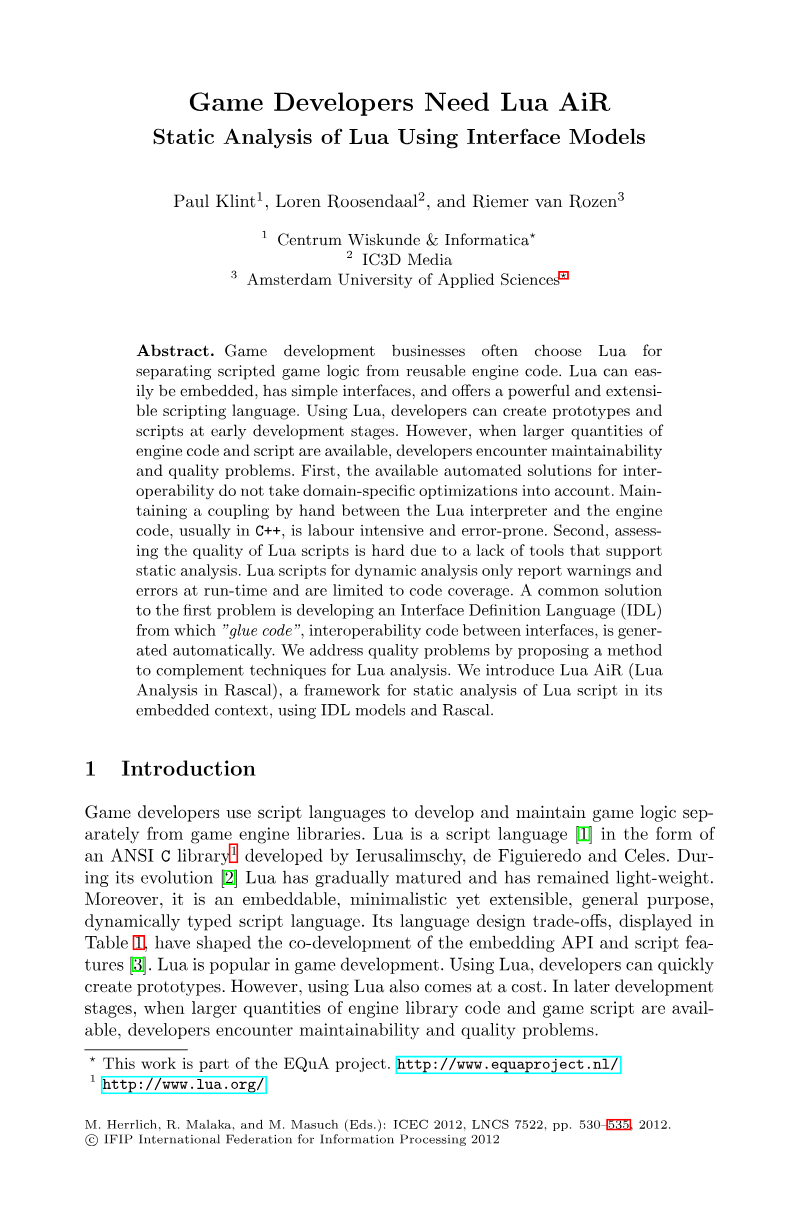
Game Developers Need Lua AiR: Static Analysis of Lua Using Interface Models
The game development industry frequently utilizes Lua for its flexibility and ease of embedding within C++ engines.
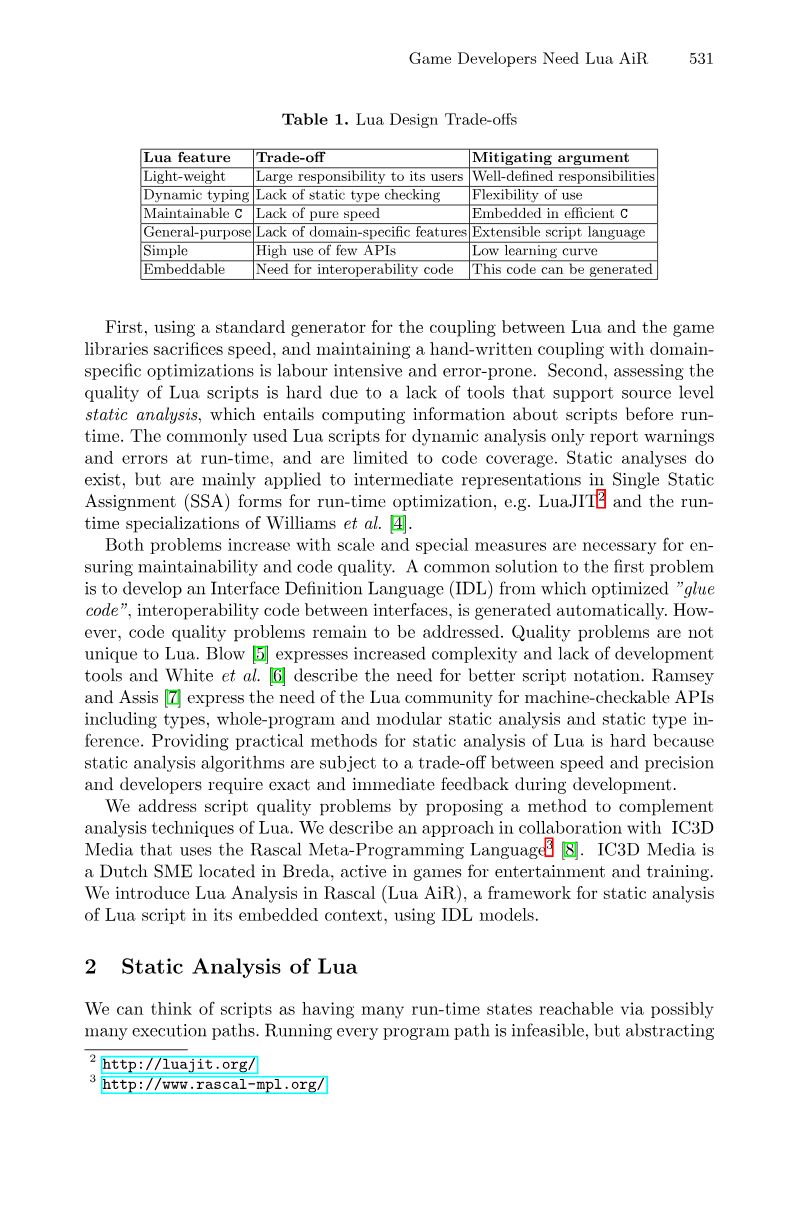
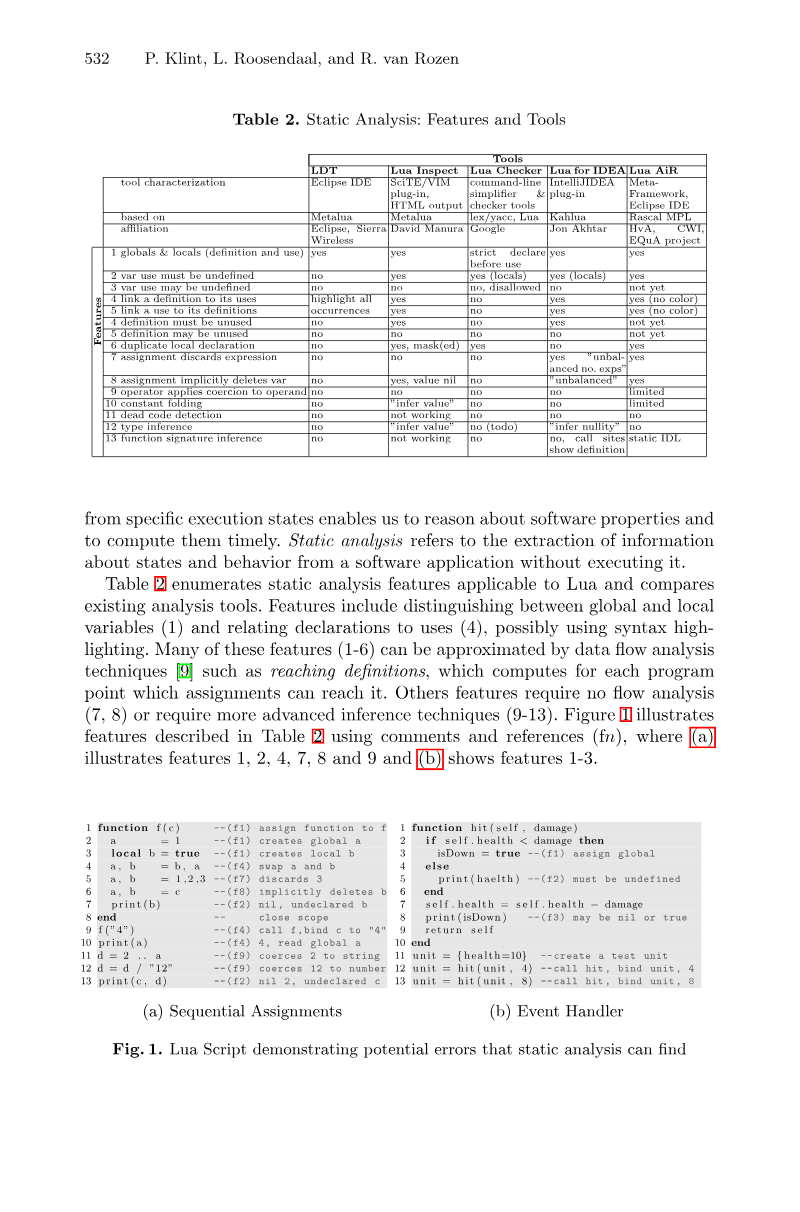
- The Lua AiR (Lua Analysis in Rascal) framework provides static analysis for embedded Lua scripts, addressing the industry-wide challenge of identifying errors before runtime.
- Lua AiR utilizes Interface Definition Language (IDL) models to bridge the gap between C++ engine libraries and Lua script logic, enabling formal validation of function call arguments.
- The framework leverages the Rascal Meta-Programming Language to perform parsing, abstract syntax tree generation, and control flow analysis to detect undefined variables, scope errors, and type mismatches.
Integrated System for Automatic Platform Game Level Creation with Difficulty and Content Adaptation
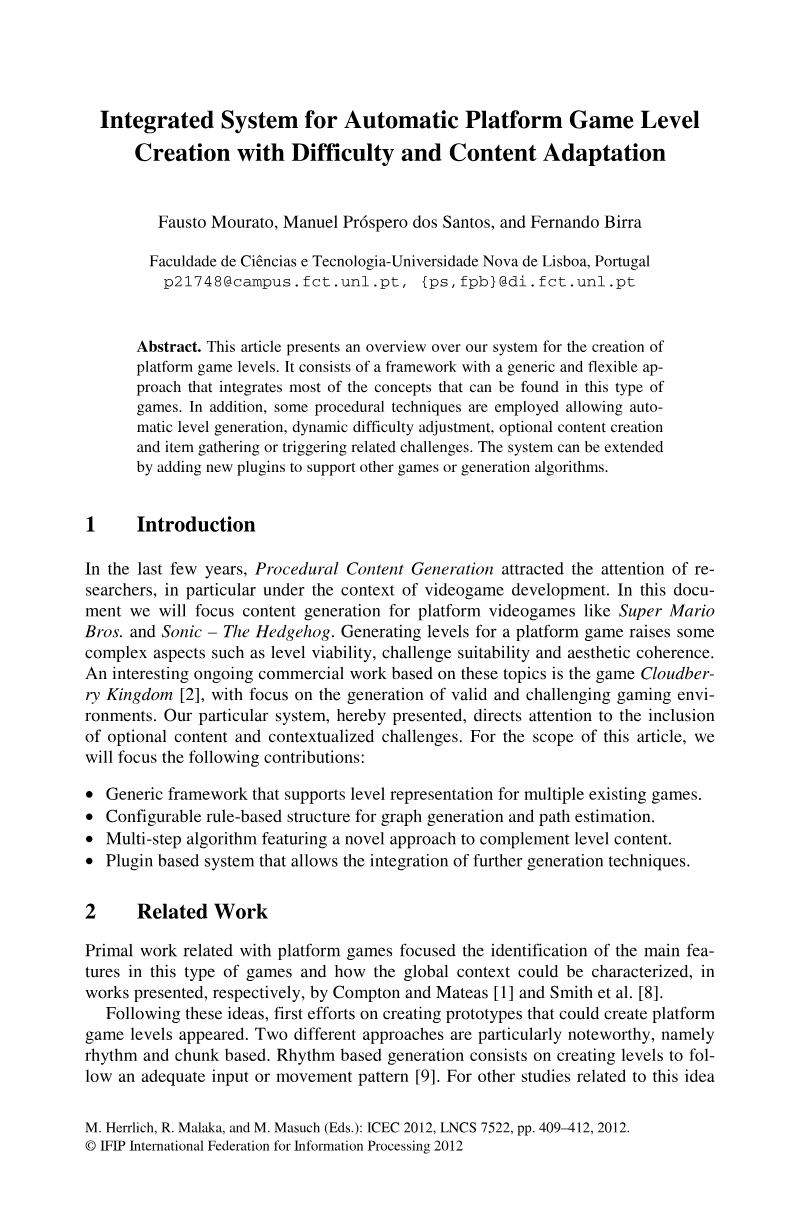
This research presents a flexible, integrated framework designed for the procedural generation and content adaptation of 2D platform game levels.
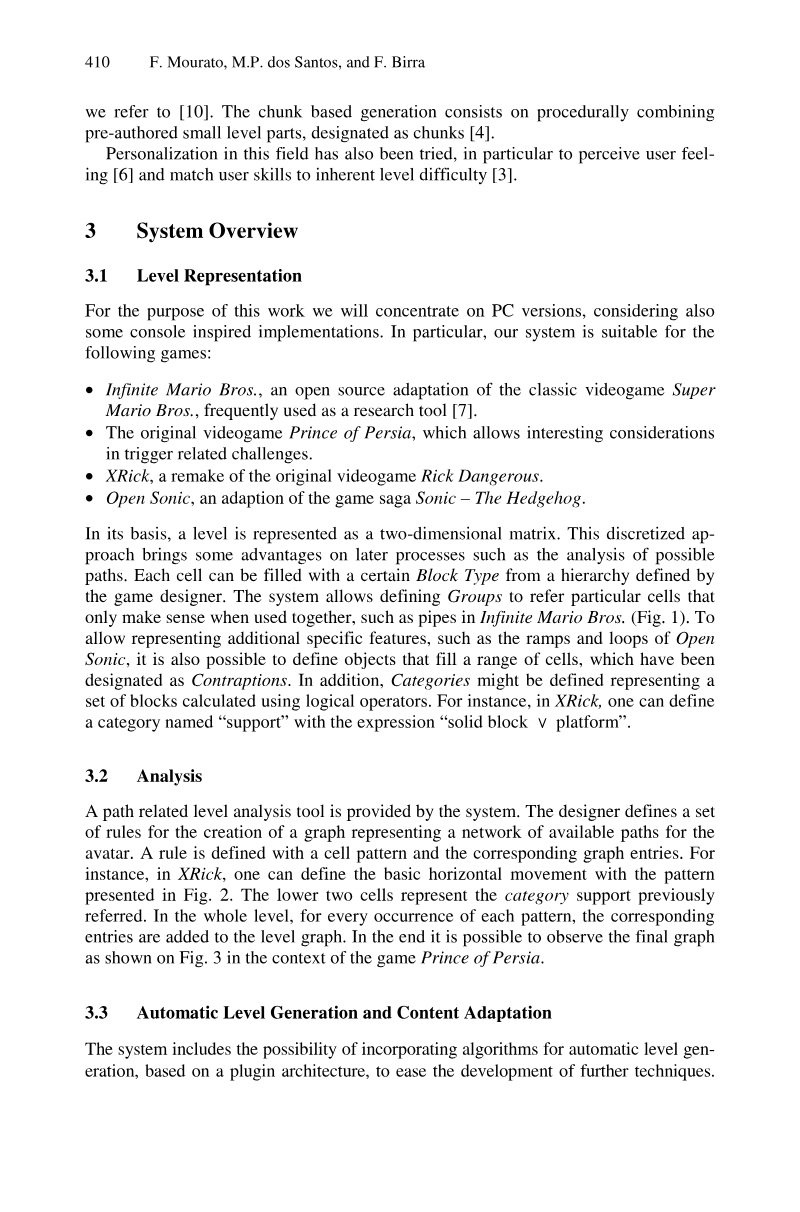
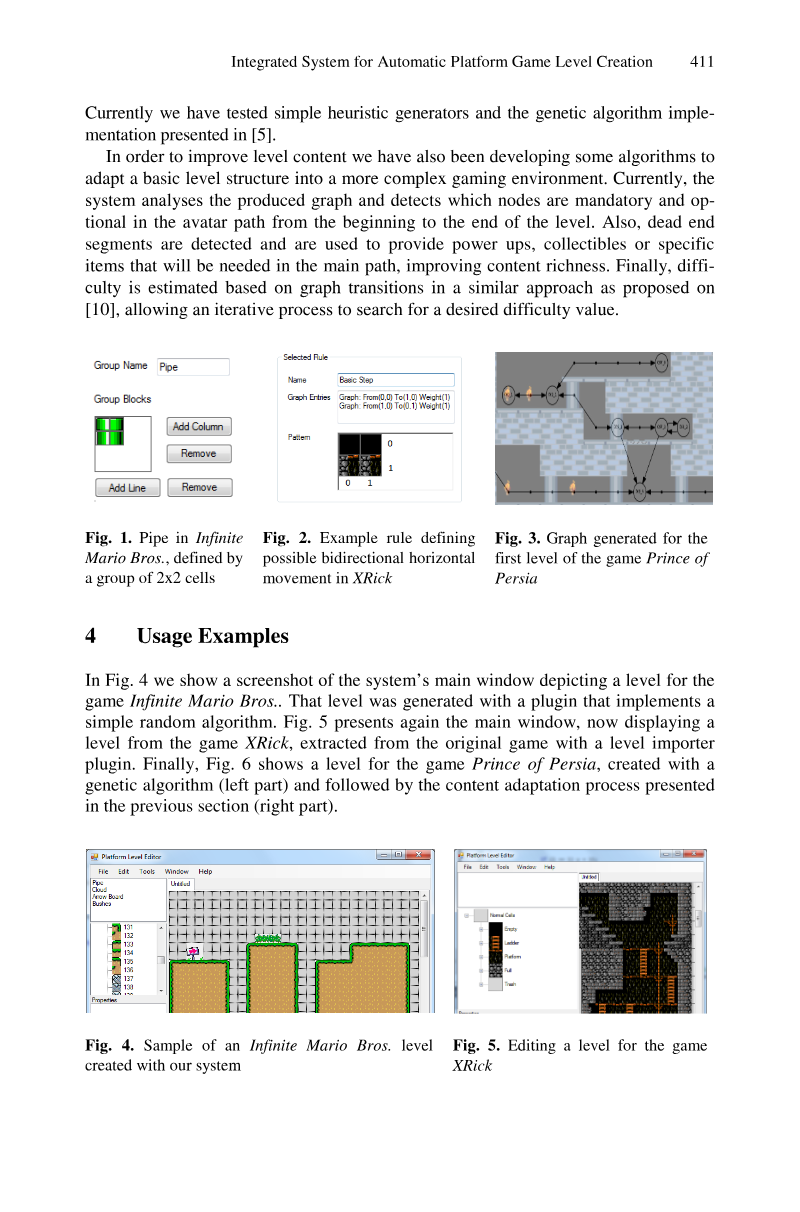
- The framework utilizes a modular, plugin-based architecture to support procedural level generation across diverse 2D platformers, including Infinite Mario Bros., Prince of Persia, XRick, and Open Sonic.
- Levels are represented as discretized 2D matrices, allowing the system to define and deploy complex game elements like blocks, groups, and contraptions universally.
- A rule-based analytical engine maps all potential player paths as a graph, enabling the automated identification of mandatory routes versus optional dead-end segments for item placement.
Writing Real-Time .Net Games in Casanova
The Casanova language is presented as a specialized tool for real-time game development, designed to address the complexities of entity interaction, long-running behaviors, and state management.
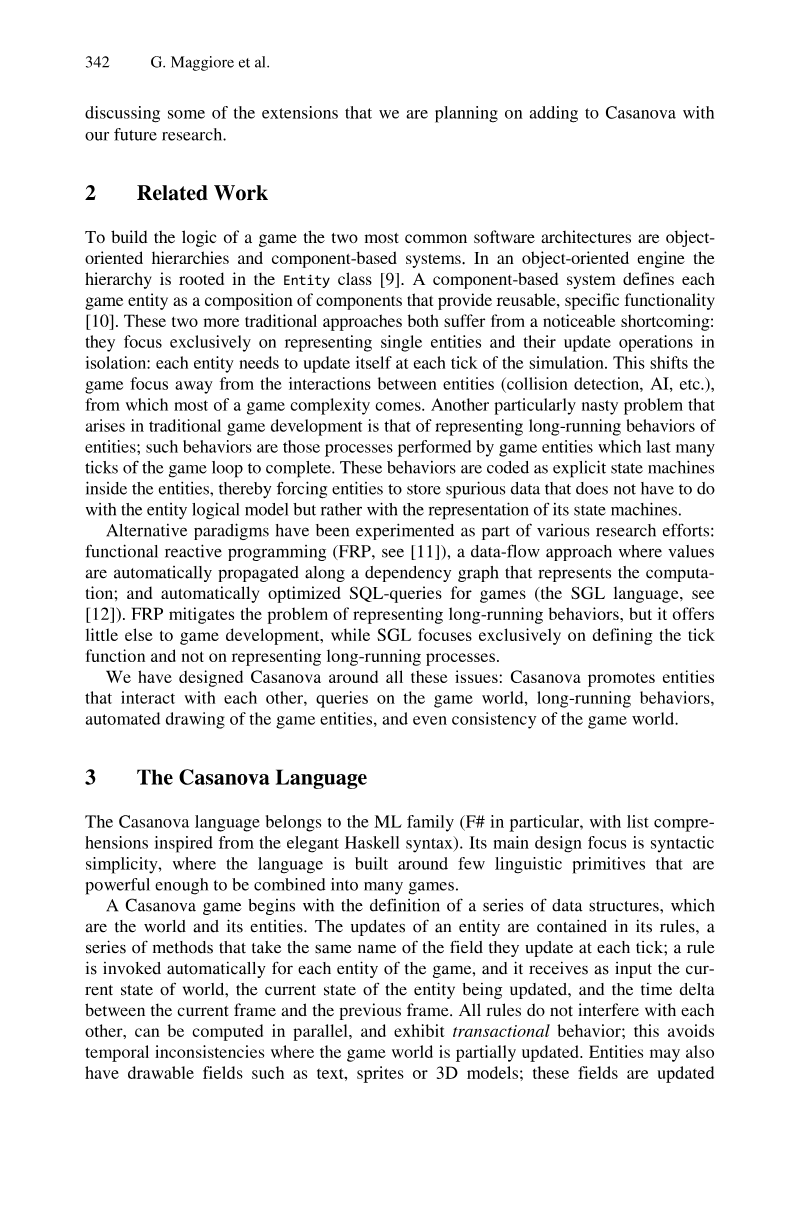
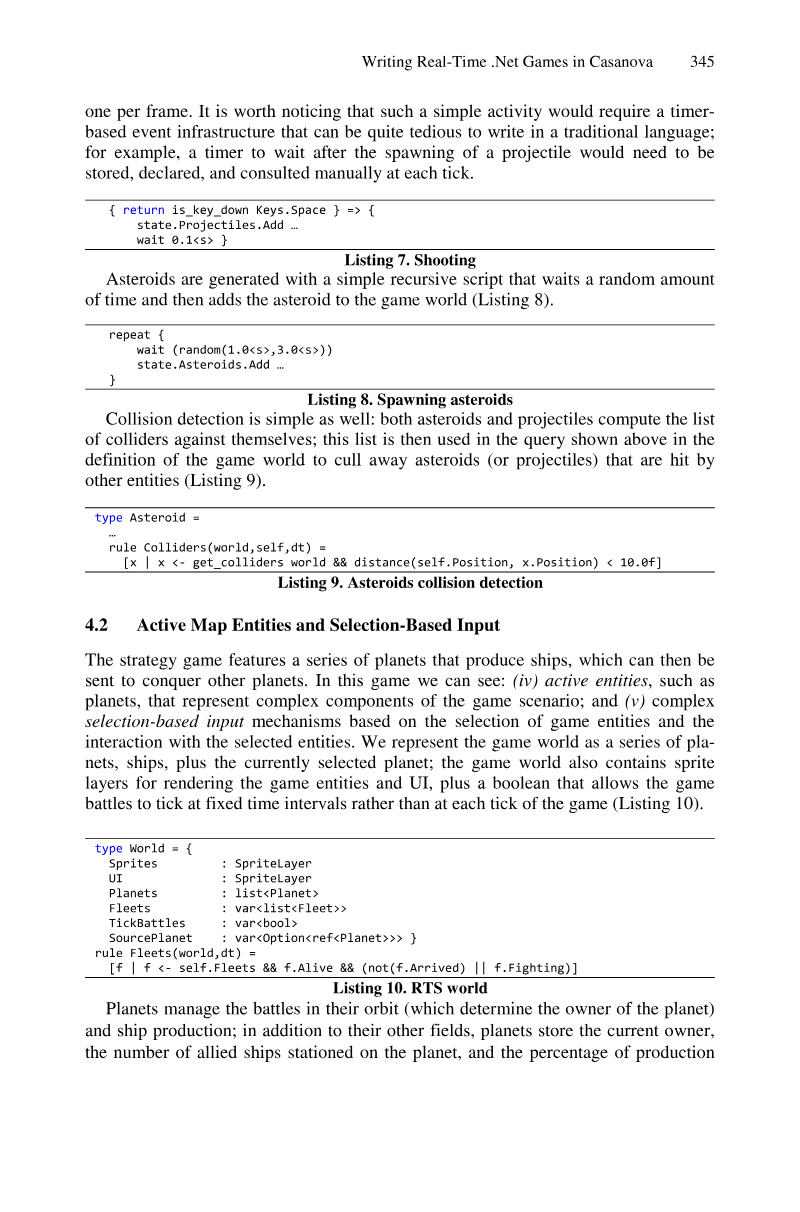
- Casanova is a domain-specific language for real-time games that utilizes a declarative, rule-based approach to automate entity updates, collision detection, and rendering.
- The language reduces code verbosity compared to C# by eliminating the need for manual state machine management and explicit game loop traversal.
- Casanova supports transactional updates and parallel computation, which effectively prevents temporal inconsistencies within the game world.
Design and Evaluation of Parametrizable Multi-genre Game Mechanics
The research introduces a novel framework for designing digital games that allows for dynamic blending between genres through the use of parametrizable game mechanics.
- A new framework enables dynamic genre-blending by using floating-point variables to adjust core mechanics like movement, puzzle complexity, and AI behavior in real-time.
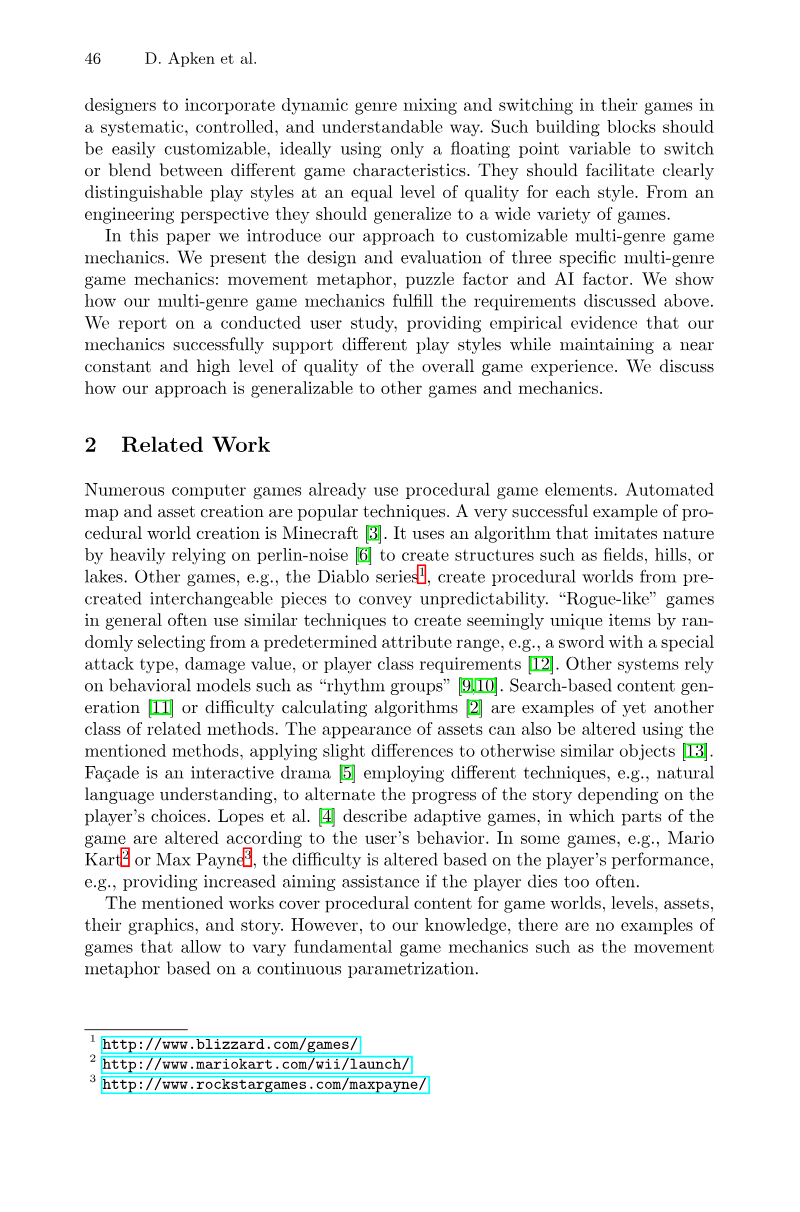
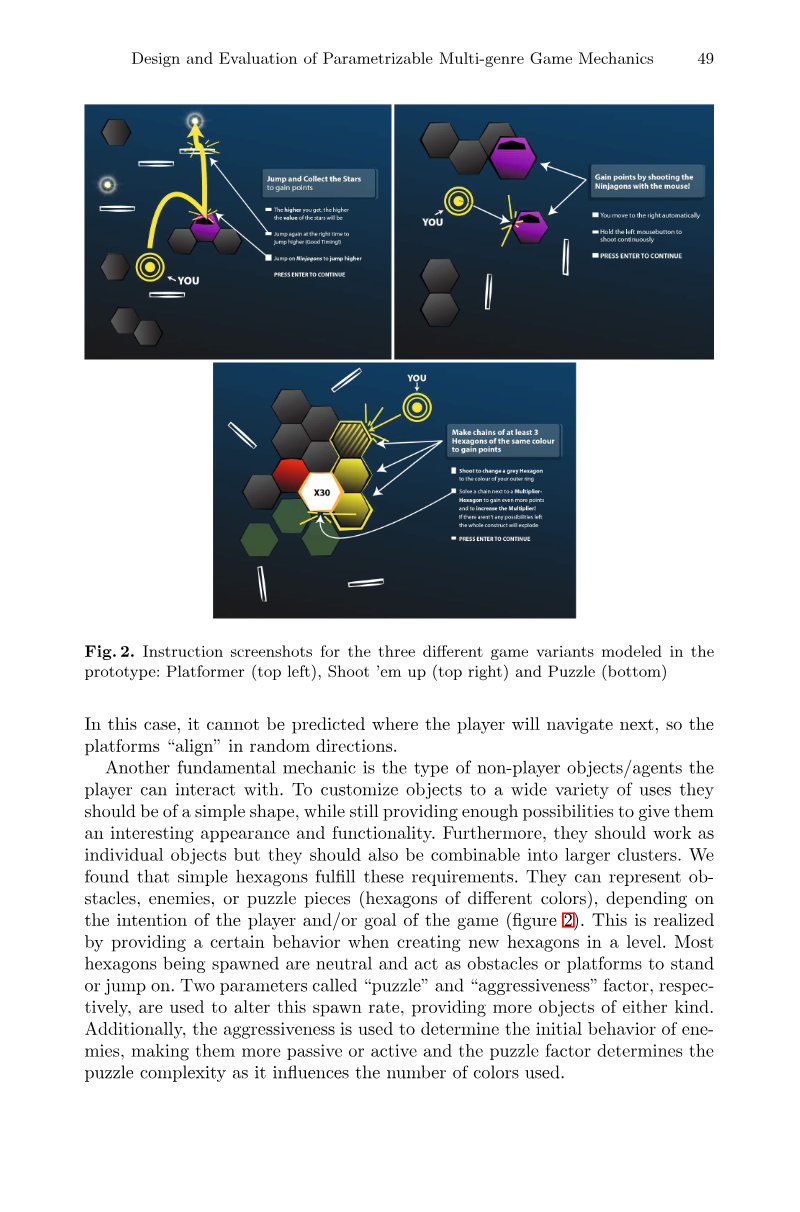
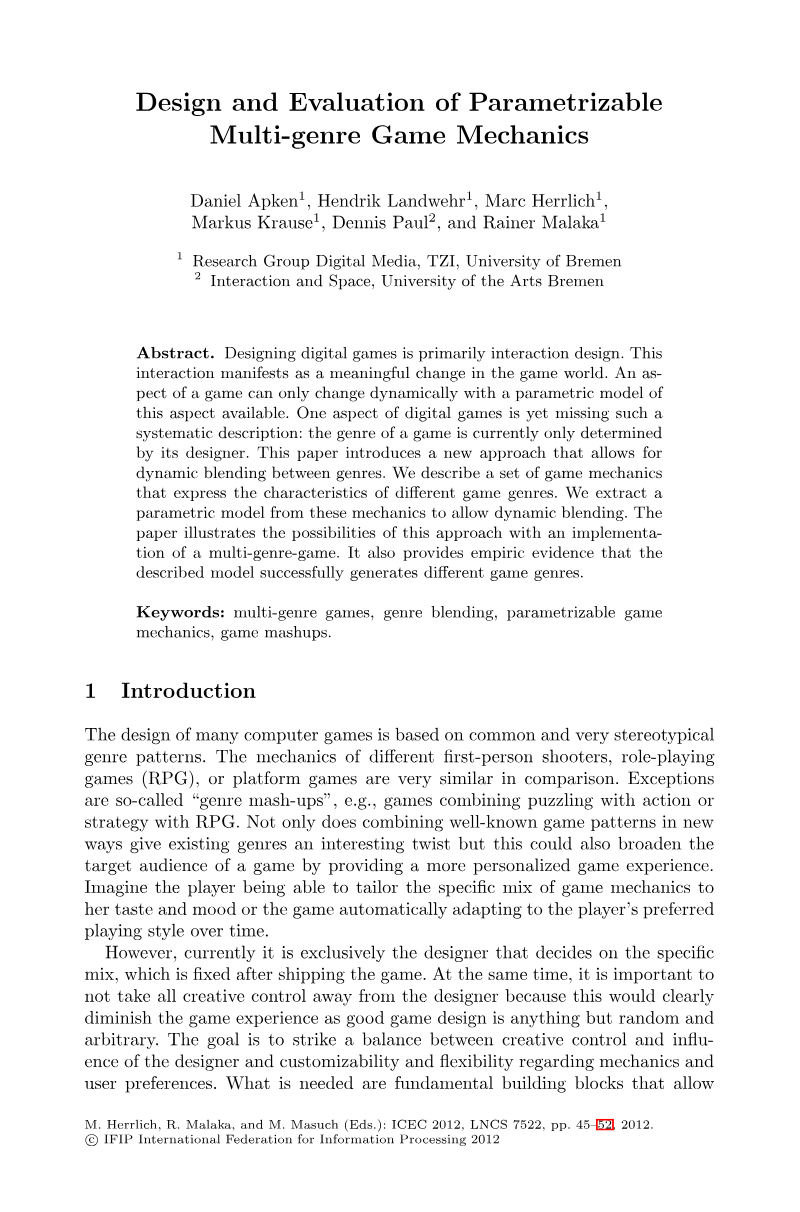
- The model successfully generated three distinct gameplay experiences—a platformer, a shoot 'em up, and a puzzle game—using only three parameters: gravity, puzzle factor, and AI aggressiveness.
- An empirical study of 44 participants confirmed that players could clearly distinguish between genre-specific concepts like jumping, shooting, and logical thinking within the prototype.
A Parallel FIPA Architecture Based on GPU for Games and Real Time Simulations
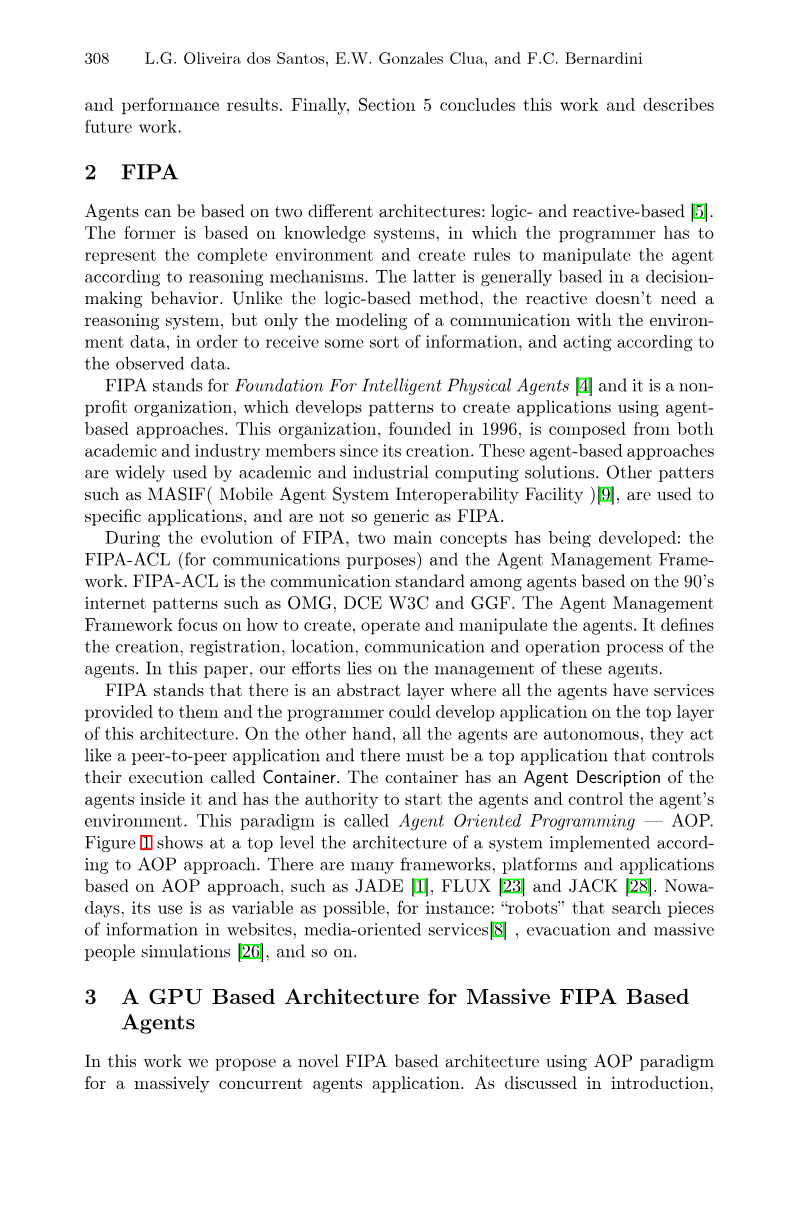
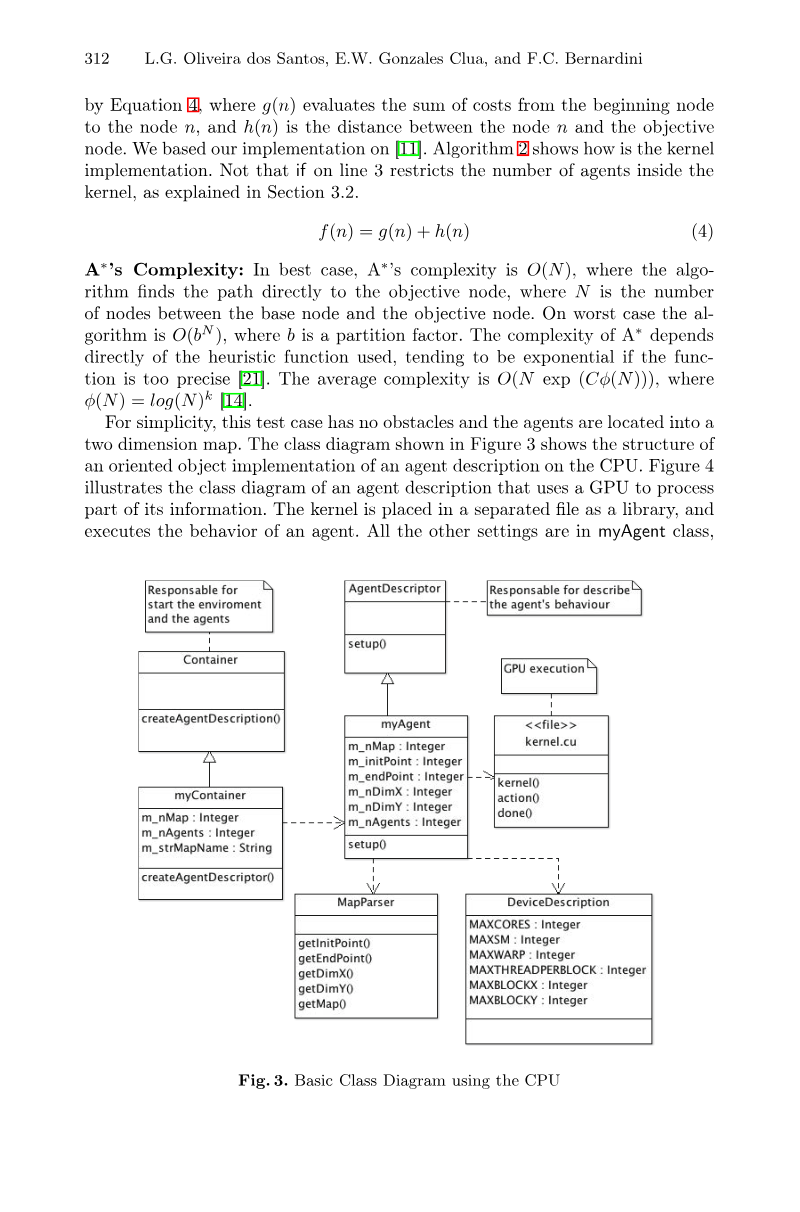
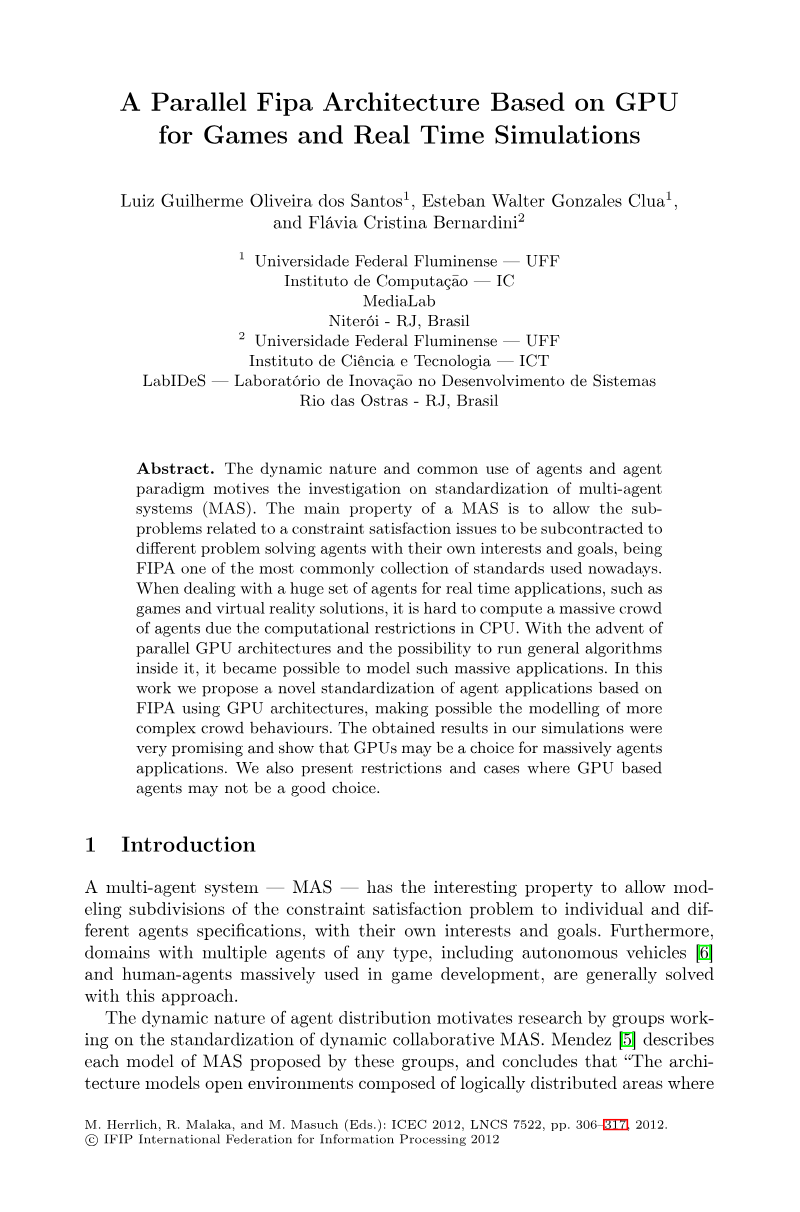
The research introduces a novel architecture for implementing Multi-Agent Systems (MAS) based on the Foundation for Intelligent Physical Agents (FIPA) standard using Graphics Processing Unit (GPU) computing.
- Mapping FIPA-based Multi-Agent Systems to GPU-based SIMD architectures allows for real-time simulation of up to 1,000,000 agents, outperforming CPU-based systems by two orders of magnitude.
- While CPU execution times for agent pathfinding scale linearly and become prohibitive at high volumes, GPU-based architectures maintain consistent, real-time performance across massive agent counts.
- The proposed framework utilizes CUDA threads to manage agent lifecycles, proving highly effective for high-density simulations with uniform agent behaviors.
Future Trends in Game Authoring Tools
Game authoring tools serve as essential frameworks for streamlining development, enabling non-technical users to create digital games, and reducing coordination overhead among multidisciplinary teams.
- Future game authoring tools must integrate advanced computational techniques to support complex game designs while minimizing cognitive load for users.
- Procedural content generation is a critical development area that will automate asset creation and reduce the industry's reliance on specialized experts.
- The adoption of AI-driven model checking is necessary to detect semantic errors and logical dead-ends, particularly for managing the complexity of multiplayer game logic.
PULP Scription: A DSL for Mobile HTML5 Game Applications
PULP is a domain-specific language (DSL) designed to simplify the development of interactive HTML5 mobile applications, specifically targeting educational games for children aged 3–7.
- PULP is a domain-specific language (DSL) that abstracts complex JavaScript, state management, and cross-platform media handling to allow non-technical designers to build HTML5 mobile games.
- The toolset utilizes the Eclipse platform, Xtext, and Xtend to automatically convert text-based scripts into functional HTML5 and JavaScript artifacts.
- An informal evaluation showed that content authors with no programming background could learn the language and modify interaction logic within approximately one hour.
Brain-Computer Interface Games: Towards a Framework
This framework addresses the existing disconnect between the brain-computer interface (BCI) research community, which prioritizes technical signal analysis, and the game development community, which focuses on user experience and design principles.
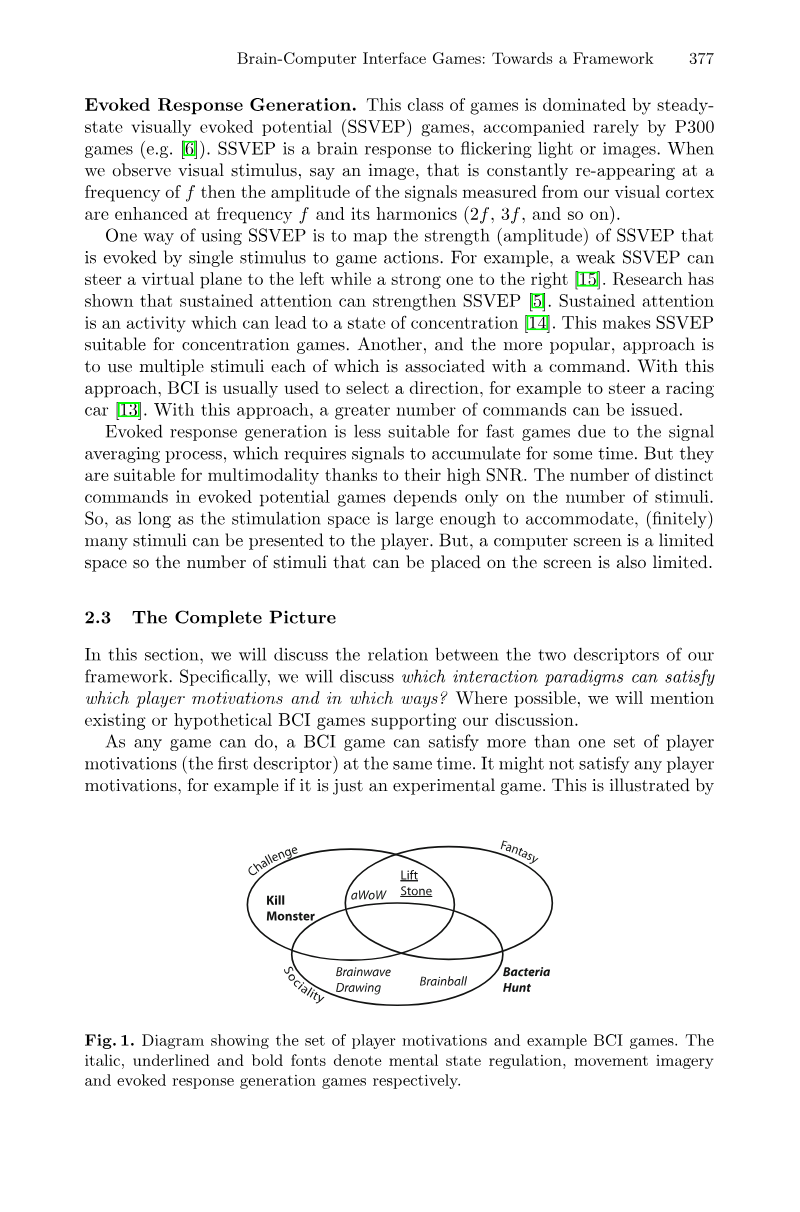
- Successful BCI game design requires aligning specific interaction paradigms—mental state regulation, movement imagery, or evoked response generation—with player motivations of challenge, fantasy, and sociality.
- Developers can mitigate BCI technical limitations, such as high recognition error rates and latency, by embedding these constraints directly into the game’s narrative or task structure.
- Mental state regulation is the most effective interaction paradigm for games focused on relaxation and social engagement.
Writers
Games and companies
Games