Loading the document
Key insights
5 slides
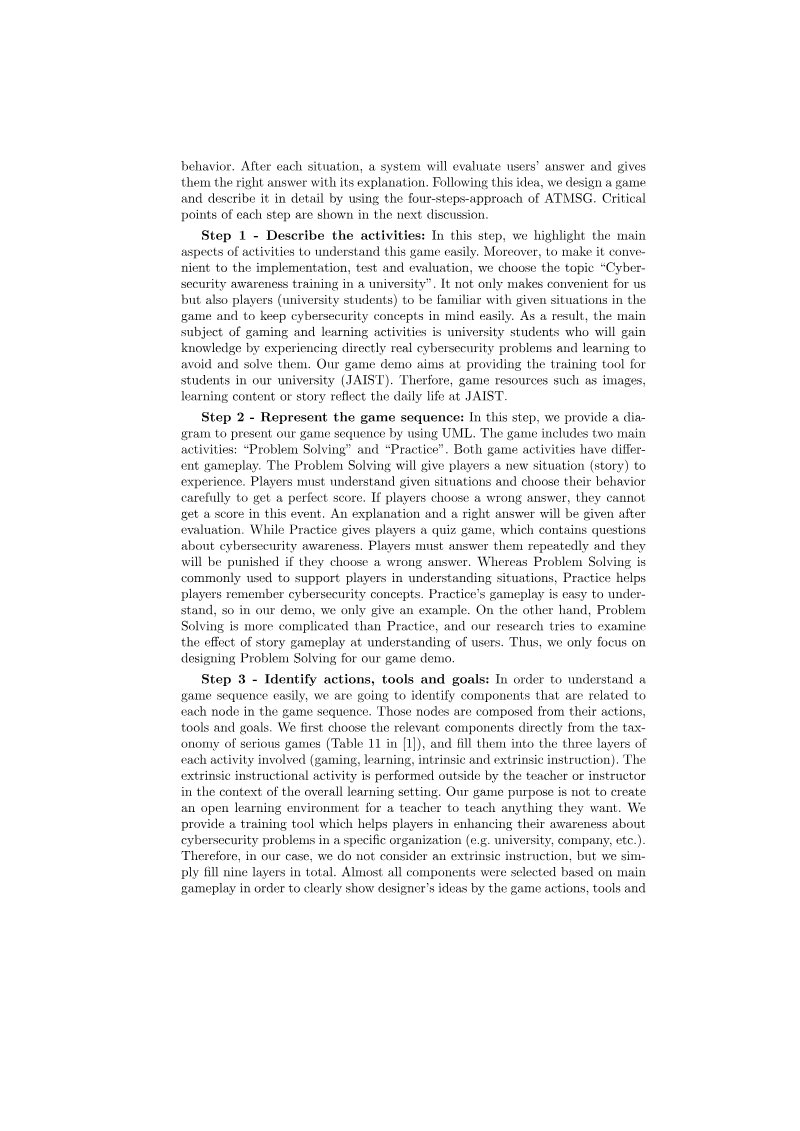
The problem
Alternate Reality Games often face extreme complexity during development.
This complexity frequently leads to extended development timelines or, in many cases, project failure.
1 / 5
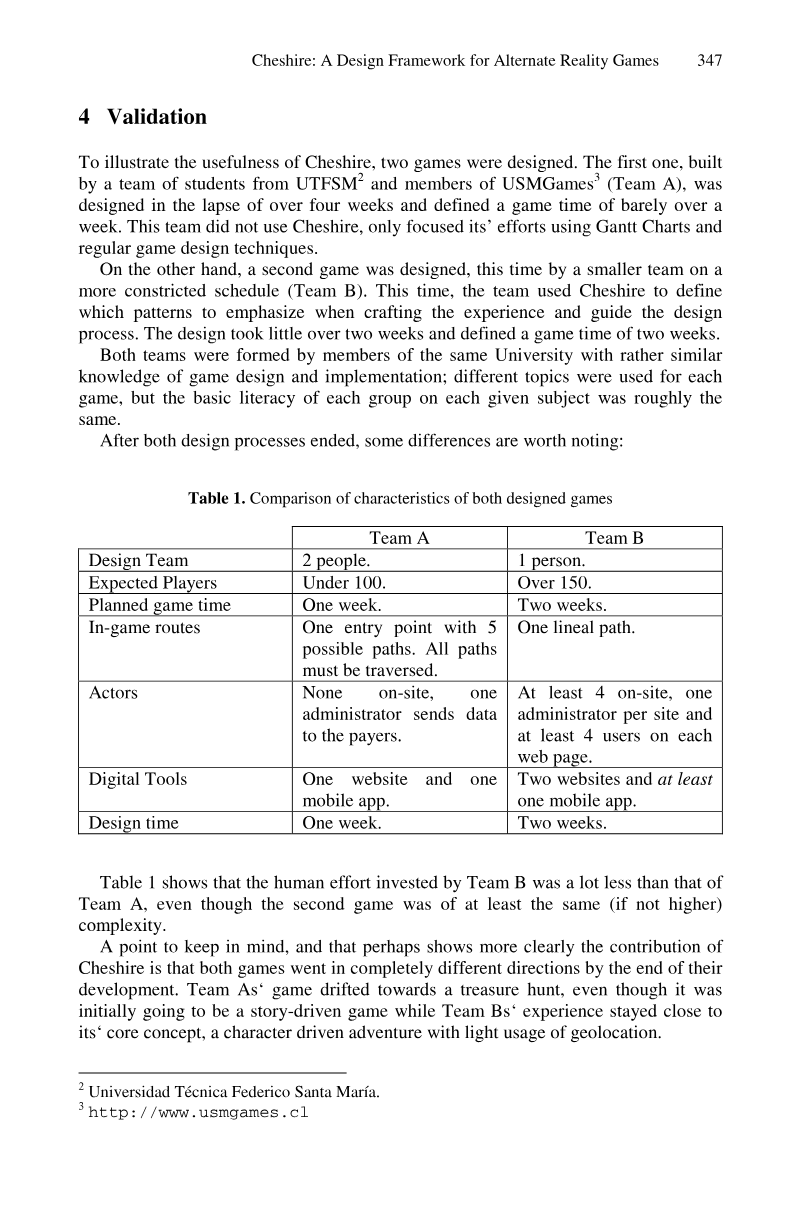
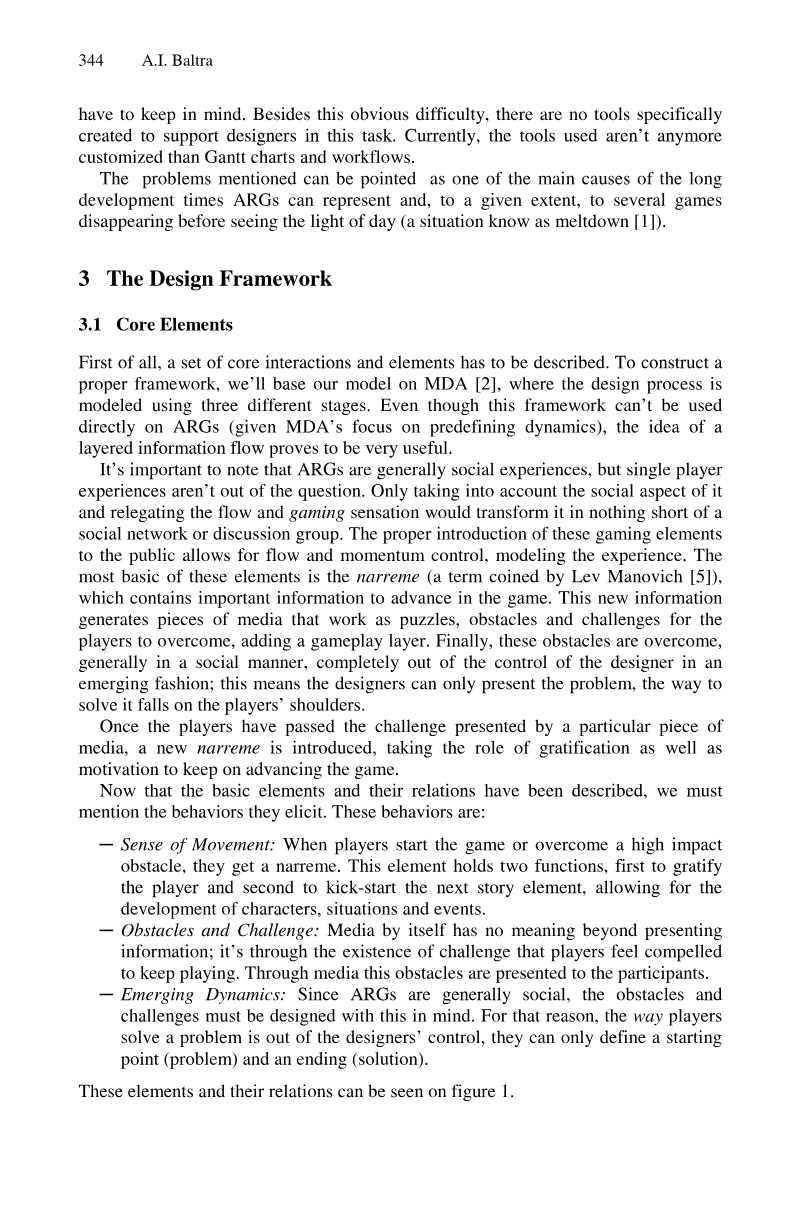
- 01The Cheshire framework reduces ARG development complexity by categorizing game elements into narremes, media-driven obstacles, and social dynamics to maintain creative fidelity.See it on page 1
- 02Designers can use a three-axis Cartesian model to map and balance social interaction patterns, specifically collaboration, group activities, and competition.See it on page 4
- 03Comparative testing showed that teams using the Cheshire framework achieved higher player engagement and a more complex, character-driven experience than those using traditional project management tools.See it on page 5
- 04The framework serves as a strategic tool to prevent narrative drift, successfully keeping projects aligned with original design goals rather than devolving into simple treasure hunts.See it on page 2
- 05Implementation of the framework leads to lower human resource expenditure during the development process compared to conventional design methodologies.See it on page 5
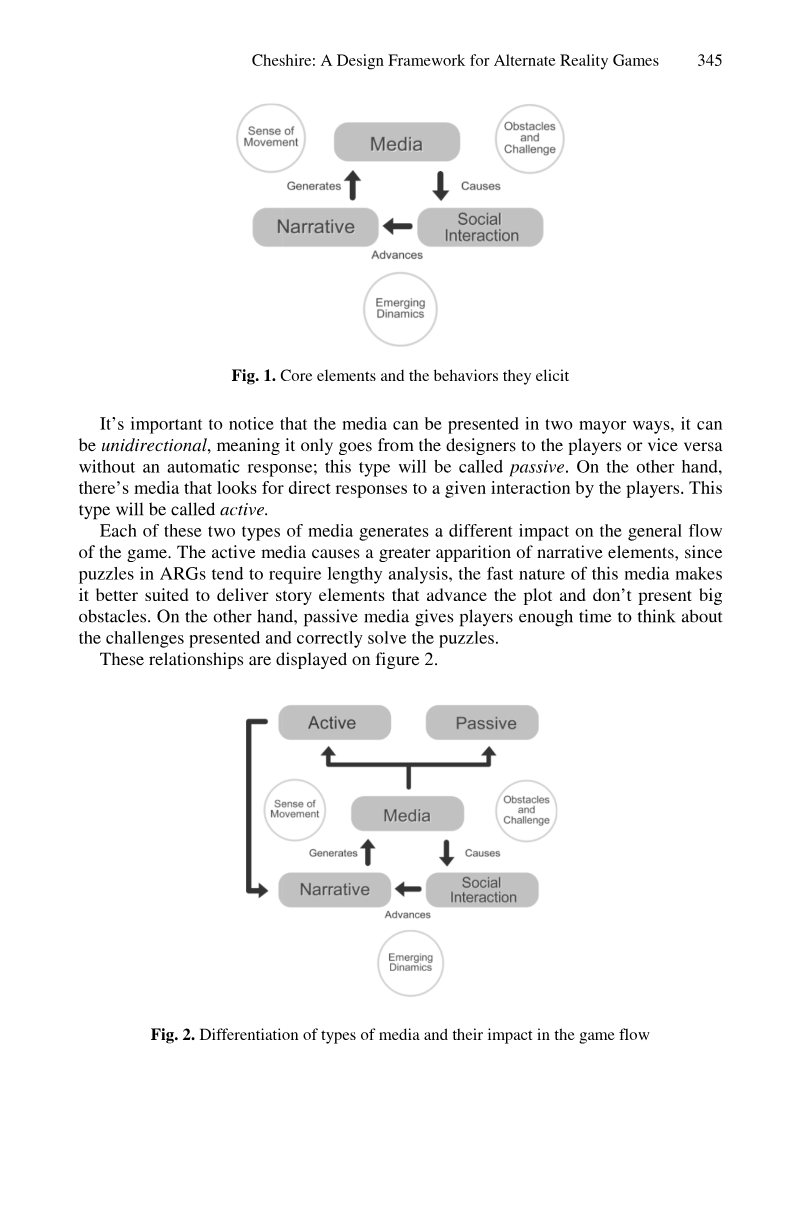
- 06The framework provides specific guidelines for balancing active and passive media to effectively control narrative pacing and player engagement levels.See it on page 3
Ask AI about this report
Summary
The design of Alternate Reality Games (ARGs) is frequently hindered by extreme complexity, often leading to extended development timelines or project failure. To address these challenges, the Cheshire framework provides a structured methodology for categorizing game elements and aligning them with established design patterns. By modeling the experience through core interactions—specifically narremes, media-driven obstacles, and emerging social dynamics—the framework enables designers to maintain fidelity to their original creative concepts while managing the flow of the player experience.
The framework utilizes a three-axis model based on social interaction patterns: collaboration, group activities, and competition. By mapping these categories onto a Cartesian plane, designers can visually represent the emphasis required for specific game elements. This approach allows for the classification of games based on their pattern usage and provides a clear guideline for balancing active and passive media to control narrative pacing and player engagement.
Validation of the framework was conducted through a comparative study of two student-led game design projects. The team utilizing the Cheshire framework achieved a more complex, character-driven experience with significantly higher player engagement and lower human resource expenditure compared to the team relying on traditional project management tools. While the control group’s project drifted from its initial narrative focus into a simple treasure hunt, the team employing the framework successfully maintained alignment with their core design goals. Ultimately, the framework serves as a strategic tool for the early stages of development, offering a necessary structure to navigate the inherent difficulties of ARG production and ensuring that the final output remains consistent with the designer's intent.