Game Development reports and market data
Documents
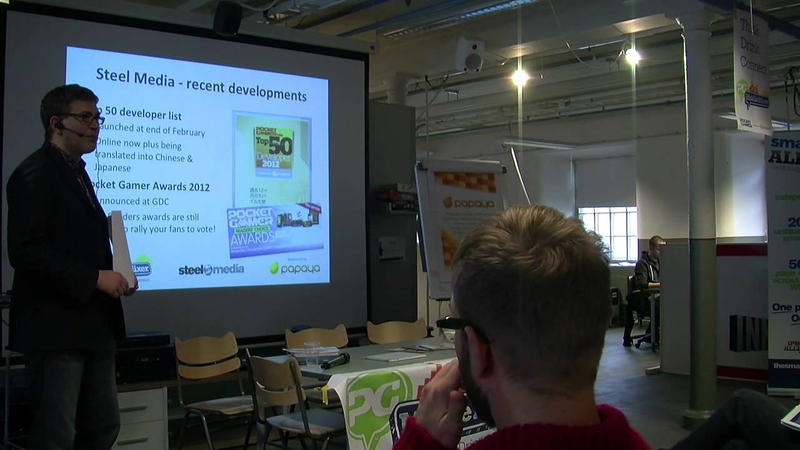
Pocket Gamer's Mobile Mixer 2012 - Welcome to Tampere
The 2012 Pocket Gamer Mobile Mixer in Tampere, Finland, served as a strategic networking and knowledge-sharing platform for the regional and international mobile gaming industry.
- The 2012 mobile gaming landscape emphasized a shift toward data-driven development, utilizing review aggregation services and developer ranking lists to track market performance and critical reception.
- Global expansion strategies in 2012 necessitated that mobile developers prioritize partnerships within Asian markets, specifically targeting growth opportunities in China and Korea.
- The Finnish gaming sector, supported by organizations like Manse Games and major players such as Rovio and Nokia, served as a primary hub for regional industry scaling and professional networking.

Pocket Gamer Biz interview Gary Liu, COO of Cocoa China
The Chinese mobile gaming market is experiencing rapid expansion, with projections indicating significant growth from current levels to an estimated 5 billion RMB by 2013.
- The Chinese mobile gaming market is projected to grow to 5 billion RMB by 2013.
- Android is currently outpacing iOS in growth and market importance within China, necessitating a strategic shift toward cross-platform development.
- Cocoa China is launching a multi-language game development tool, codenamed A2 SP2, in May 2013 to enable single-codebase deployment across all major platforms.
Spec Ops: The Line - I: How to Restart a Franchise - Extra Credits
Spec Ops: The Line serves as a critical case study in how to successfully revitalize a dormant franchise by intentionally subverting the conventions of the modern military shooter genre.
- Revitalizing a dormant franchise in a saturated market requires offering a distinct, provocative perspective rather than attempting to replicate the formulas of established industry leaders like Call of Duty or Battlefield.
- The game utilizes the aesthetic and mechanical expectations of the modern military shooter genre to systematically subvert player expectations and deliver a narrative-driven critique of warfare.
- Perceived mechanical flaws, such as banal gunplay and a lack of traditional 'fun,' were intentional design choices used to mirror the grim reality of the game's subject matter and themes.
Mechanics as Metaphor - II: Creating Narrative Depth - Extra Credits
The integration of mechanics as metaphor serves as a critical strategy for elevating narrative depth in video games.
- Developers should prioritize mechanics as metaphors to convey complex themes, moving beyond reliance on traditional cutscenes and dialogue.
- A singular, well-defined conceptual focus—such as alienation or psychological delusion—must be established early in production to ensure art, sound, and code align to reinforce the narrative.
- Designers should shift away from rigid, hand-holding gameplay models and instead create spaces of possibility that encourage player interpretation.
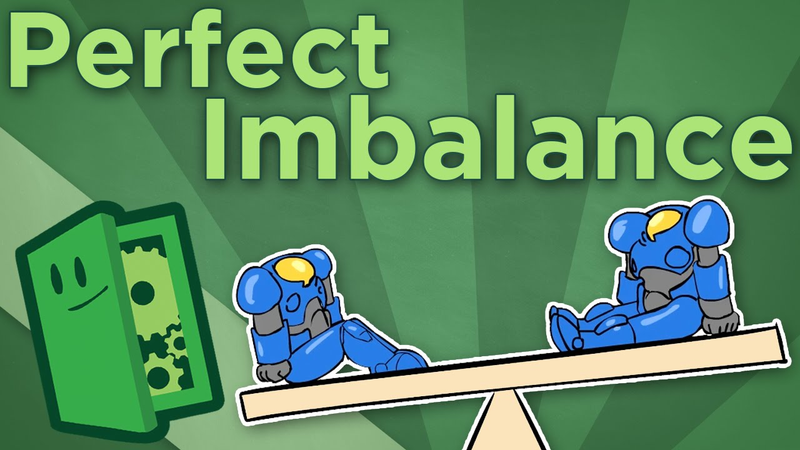
Perfect Imbalance - Why Unbalanced Design Creates Balanced Play - Extra Credits
The concept of perfect imbalance posits that game design benefits from intentional, subtle deviations from strict numerical parity.
- Perfect imbalance prevents games from becoming 'solved' systems by replacing rote memorization with a dynamic, self-correcting meta-game.
- Designers should limit power deviations to a 10 to 15 percent range above a mathematical baseline to ensure variety without creating broken, game-ruining elements.
- Cyclical imbalance drives player engagement by creating a natural feedback loop where dominant strategies attract counters, which then shift the meta-game.

PocketGamer.biz at BoBHack 2012
The Best of British game hack, held in 2012 at the Mind Candy offices in London, served as a collaborative initiative to showcase the creative talent within the British mobile gaming industry.
- The 2012 Best of British (BoBHack) event brought independent mobile studios together at Mind Candy’s London offices to develop a cohesive suite of interconnected mini-games within a 48-hour timeframe.
- Participating studios included Kwalee, Mobile Pie, Spilt Milk Studios, and Big Pixel, all of which collaborated to showcase British development talent during the summer of 2012.
- The project was designed as a series of games with increasing difficulty levels, intended to drive public engagement and app downloads for the collective suite.
Power Creep - The Trouble with Expansions and Time - Extra Credits
Power creep represents a significant design and economic challenge for persistent online games, occurring when new content renders existing elements obsolete through superior numerical performance.
- Power creep occurs when new content introduces superior numerical performance, rendering existing game elements obsolete and devaluing historical player investments.
- Relying on raw stat increases to drive progression often leads to the rapid abandonment of legacy content and can trigger a mass exodus of the player base.
- Designers can mitigate power creep by introducing 'incomparables,' which are gameplay elements that provide distinct, non-numeric utility rather than simple stat upgrades.

Politics - How to Make Your Voice Heard - Extra Credits
This analysis addresses the perceived disenfranchisement of the American public regarding the political process, specifically within the context of digital rights and censorship.
- Local and state-level elections are the most effective venues for individual influence, as outcomes in these races are frequently decided by margins of only a few hundred to a few thousand votes.
- Voter apathy is a primary barrier to political efficacy, as historical data indicates that the majority of 20th-century presidential elections could have been altered if the unregistered population had participated.
- Direct communication methods like phone calls and emails are significantly more effective than online petitions because they allow for the verification of residency within a representative's specific district.

Hard-Boiled - Why Are There So Many Gritty Video Games? - Extra Credits
The modern video game industry is increasingly defined by a trend toward "hard-boiled" aesthetics, characterized by excessive grit, nihilism, and graphic violence.
- The industry frequently equates maturity with excessive grit, nihilism, and graphic violence, mistakenly viewing these superficial elements as substitutes for genuine intellectual depth.
- True narrative maturity requires a balance of gravity and levity, as humor and absurdity are essential for humanizing characters and improving pacing.
- A primary driver of the 'hard-boiled' trend is 'Hollywood envy,' where developers mimic cinematic tropes in a misguided attempt to gain cultural legitimacy.

Spectrum Crunch - The Implications of Limited Bandwidth in 2012 - Extra Credits
The rapid proliferation of mobile devices and high-bandwidth content has created a critical infrastructure challenge known as the spectrum crunch.
- The United States faces a critical wireless bandwidth deficit as the physical limitations of radio frequency transmission fail to keep pace with a 20,000% increase in network traffic between 2007 and 2012.
- The gaming industry faces significant barriers to innovation, as high-fidelity 3D experiences, real-time multiplayer, and cloud-based gaming require consistent, high-quality connections that are increasingly difficult to maintain.
- To manage the spectrum crunch, carriers are responding by raising prices and eliminating unlimited data plans, which threatens to restrict mobile access and force users to rely on local Wi-Fi for large downloads.

EC Fund Update - Indie Game Publishing - Extra Credits
The initiative to establish an indie game publishing entity, funded through community crowdfunding, was launched to test the viability of a more equitable publisher-developer relationship.
- The initiative to establish a community-funded indie publishing entity was ultimately discontinued due to the operational complexities of balancing legal requirements, professional commitments, and high project failure rates.
- The project aimed to test a sustainable, equitable publishing model by focusing on small-scale game development with budgets ranging from $20,000 to $30,000.
- To mitigate risk, the selection process mandated a functional demo as a prerequisite, prioritizing tangible proof of concept over abstract creative pitches.
ARGs - II: What are Augmented Reality Games? - Extra Credits
Augmented reality games (ARGs) represent a digital overlay on the physical world, functioning in real time to enhance or modify a user's perception of their environment.
- Augmented reality games (ARGs) are evolving from simple GPS-based map overlays into sophisticated systems that integrate real-world data, such as retail product scanning and location-specific information, into gameplay loops.
- The transition from handheld devices to wearable technology is critical for shifting AR from an immersion-breaking activity to an ambient, constant companion in the user's daily life.
- AR design holds the potential to incentivize positive behavioral changes, including increased physical activity, environmental exploration, and educational engagement.
Writers
Games and companies
Games