1 free read left. Create a free account for unlimited reading + AI research.
Create free account
Spec Ops: The Line - I: How to Restart a Franchise - Extra Credits
Key insights
6 takeaways- 01The narrative draws direct thematic inspiration from Joseph Conrad’s Heart of Darkness to address complex psychological and ethical issues, including post-traumatic stress disorder.
- 02Revitalizing a dormant franchise in a saturated market requires offering a distinct, provocative perspective rather than attempting to replicate the formulas of established industry leaders like Call of Duty or Battlefield.
- 03Forcing unnecessary features like tacked-on multiplayer into narrative-focused titles diverts critical resources from the core campaign and weakens the final product.
- 04The game functions as a meta-commentary on the genre, using the player's own participation in familiar gameplay loops to force a confrontation with the consequences of their actions.
- 05The game utilizes the aesthetic and mechanical expectations of the modern military shooter genre to systematically subvert player expectations and deliver a narrative-driven critique of warfare.
- 06Perceived mechanical flaws, such as banal gunplay and a lack of traditional 'fun,' were intentional design choices used to mirror the grim reality of the game's subject matter and themes.
Ask AI about this video
Transcript
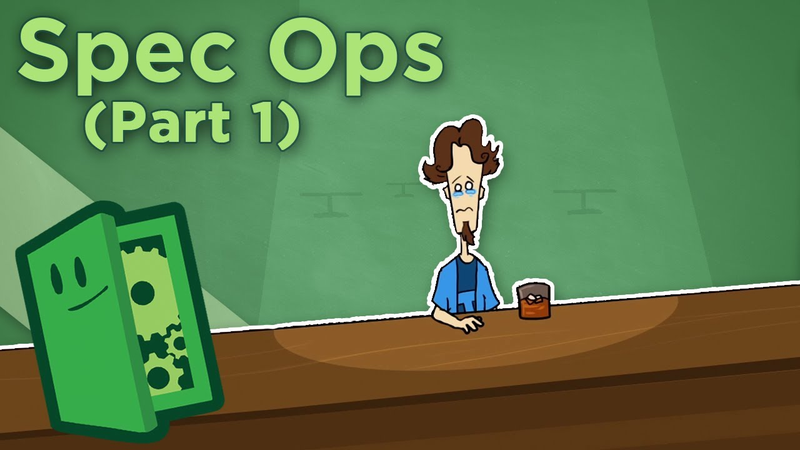
Holy hell, I did not see this game coming. Spec Ops: The Line is really something, you guys. I don't even know how to start talking about it. It is not at all what I was expecting. I think most of us are a bit jaded by now. If I see desaturated box art with a grim dude in modern military gun-holding pose, I feel like I know exactly what I'm going to get when I pop that disc in. In many cases, especially with the lower-quality games in that genre, I feel like I could break them down in a paint-by-numbers fashion. But man, this time I could not have been more wrong. And what's incredible about it is that the dev team knows exactly what expectations you're going to be walking into the experience with, and then they turn those expectations on their head to make a point. So, we're going to talk about Spec Ops: The Line at length, and we're going to do it with art assistance by our new friend here, Arwedis Brezdekis. We tried to think of a way to do so without spoilers, but that would be more or less impossible and severely handicap the discussion we're itching to have. So, here's the plan. This week, we're going to talk about as much as we
possibly can without spoiling anything. Next week will be a spoiler storm. Cool? Okay, so first, let's talk about the frame of mind you have to be in to get the most out of Spec Ops because one of the things we found most fascinating about it was the fact that it asks you to be in a totally different mindset than most any other AAA game you've played. It is straight-up not very fun. Engaging as all hell, but not fun. All right, so if you haven't heard of Spec Ops: The Line, a little bit about the game. Some of you might remember Spec Ops as a middle-of-the-road shooter series from the PlayStation 1 era. There hasn't been a new entry in the series since 2002, and man, what a way to restart the franchise. So often, we see a series die a slow death because the teams behind them decided to play it safe and compete in the same arena as Call of Duty and Battlefield, as if that were somehow less risky. Well, Spec Ops is many things, safe is not one of them. It's based on Joseph Conrad's Heart of Darkness. They even went so far as to name one of the characters Conrad just to make sure you know it, and it deals with issues ranging from post-traumatic stress disorder to the use of white phosphorus, which was a huge ethical question for the US military in the Iraq War. And most of your enemies turn out to be Americans, specifically US
soldiers. That detail alone had to send some people in marketing running for the hills. I'm just going to say it, green-lighting this took balls. I don't know if the team just initially convinced people that it was going to be, you know, a Call of Duty competitor of some sort, or if the folks at 2K were just on board with this whole crazy experiment from the beginning, but wow, hats off to you guys. In far too many boardrooms, this game would have been chopped down to scraps and then pasted back together as a low-budget Modern Warfare knock-off. It would have come out, no one would have bought it, and then a week later no one would even remember it existed. This is the way to restart a franchise. You know you can't compete with Call of Duty or Battlefield, you don't have the massive budget, you don't have the installed fan base or the marketing, so you decide to go big or go home. And you go big in a smart way. You don't try to out-Call of Duty Call of Duty. The only way to make a shooter that has any chance of breaking into the market today is to not compete with those games, to do something radically different that fills some other player need. Because frankly, the majority of Call of Duty and Battlefield fans are still going to be playing the latest entry in their favorite series right up until the next one comes out. There is no competing directly with that. Now, I've seen a lot
of reviews of this game that dock a bunch of points for its weak multiplayer mode. With all due respect to the game reviewers who said this, many of whom we know personally, and they're great folks, but that's insane. Come on, don't do that. Who said every shooter has to have a multiplayer mode, much less one that's equal or superior to the campaign? We didn't mark down GTA IV for its lackluster multiplayer mode. We don't think any less of Half-Life just because deathmatch exists. If Silent Hill II had forgettable multiplayer tacked on, would you think any less of the game today? If not, if the game isn't worse for it being there, you can't be taking points off here. Just take the mode for what it is, a tacked-on extra, like bonus materials on a DVD. Any additional resources they might have poured into that multiplayer mode would have been diverted from the solo campaign, and the game absolutely would have suffered as a result. Just please don't perpetuate the idea that every shooter needs multiplayer. The industry actually does listen to that kind of thing. Multiplayer modes are a major investment of development resources. When someone from corporate wanders in and says, "We need multiplayer or the reviewers are going to hate it." other aspects of the game are guaranteed to suffer. Take this as a personal plea from a developer who's seen it happen too many times. Reviews
like these are the very reason you see tacked-on, unnecessary, and forgettable multiplayer in so many shooters. On that note, I'm pretty sure that Spec Ops: The Line will suffer a great deal from the fact that it just looks so much like a modern military shooter on the surface. I think a lot of reviewers went in prepared to judge Spec Ops as a Call of Duty clone, just like I did. And they came away saying, "Yep, that sure was a mediocre Call of Duty game." rather than evaluating it on its own merits, which is almost ironic because Spec Ops: The Line is actually the harshest indictment of modern military shooter games that I've ever seen. Harder than anything Fox News has ever been able to muster. What's so very strange and, in my opinion, courageous about Spec Ops is that it uses all of the tropes we expect from a paint-by-numbers modern military shooter to point out things about the genre and help drive the narrative, which is why you can't evaluate this as a Call of Duty game. Because the reviewers are right. It's a pretty bad Call of Duty game. The gunplay isn't as good. The enemies come in obvious video game-y spawn points rather than the chaotic set piece moments we're used to seeing. And perhaps most importantly, its principal way of engaging the player isn't through fun. This game is great in a lot of ways, and it can be very, very
gripping, but it is distinctly not fun. Even the running and gunning have been reduced to a banal slog, but even that helps to reinforce the game's point. What's really crazy about this game though, and what impresses the hell out of me, is that they spend the first hour or two of the game trying to look like a low-budget Call of Duty rip-off, just so they can pull the rug out from under you later. And turn all of your expectations on their head. Using modern military shooter gameplay to point out just how ludicrous modern military shooter gameplay is when contrasted with the real thing. Yager, I don't know how you folks ever convinced people to let you ship this, but wow. Bravo. All right, next week we rain down spoilers like, well, you'll see. If you haven't had a chance to check out Spec Ops yet, I'd love to say just go out and buy it because I feel like they deserve your purchase, but admittedly this is a game you can easily beat in a weekend. If you're a little stretched for cash, borrow it from a friend or see if you can track down a Blockbuster that hasn't closed yet and rent a copy. The game is full of flaws, but we're in the doldrums of summer here. If any of what I'm saying has piqued your interest, check it out. If for no other reason than to be able to join the discussion next week. I guarantee you, it may not look
it, but this is something unique. And for those of you who do play it this weekend, when you hear a character say the line, because you wanted to feel like something you're not, he's not saying that to your character. That line is pointed at you. I'm not sure I've ever had a game punch me in the gut so hard. Thank you Armless Jeff for helping us out. We'll see you guys next week.
Summary
Spec Ops: The Line serves as a critical case study in how to successfully revitalize a dormant franchise by intentionally subverting the conventions of the modern military shooter genre. Rather than attempting to compete directly with industry titans like Call of Duty or Battlefield, the developers utilized the aesthetic and mechanical expectations of the genre to deliver a subversive narrative experience. By drawing thematic inspiration from Joseph Conrad’s Heart of Darkness and addressing complex subjects such as post-traumatic stress disorder and the ethical dilemmas of modern warfare, the game distinguishes itself as a bold, narrative-driven experiment that prioritizes artistic intent over traditional commercial tropes.
A central argument is that the game’s perceived mechanical flaws—such as its banal gunplay and lack of traditional "fun"—are deliberate design choices intended to mirror the grim reality of its subject matter. The game lures players in with the familiar trappings of a standard military shooter before systematically dismantling those expectations. This approach highlights the industry's tendency to force unnecessary features, such as tacked-on multiplayer, into titles where they do not belong. The analysis posits that penalizing games for lacking robust multiplayer modes encourages developers to divert resources from the core campaign, ultimately weakening the final product.
The game stands as a harsh indictment of the modern military shooter genre, using the player's own participation in familiar gameplay loops to confront them with the consequences of their actions. By intentionally avoiding the polished, high-octane spectacle of its competitors, the title creates a unique, uncomfortable, and deeply engaging experience. It demonstrates that for smaller-budget titles to survive in a saturated market, they must offer a distinct, provocative perspective rather than attempting to replicate the formula of established market leaders.
















Comments